
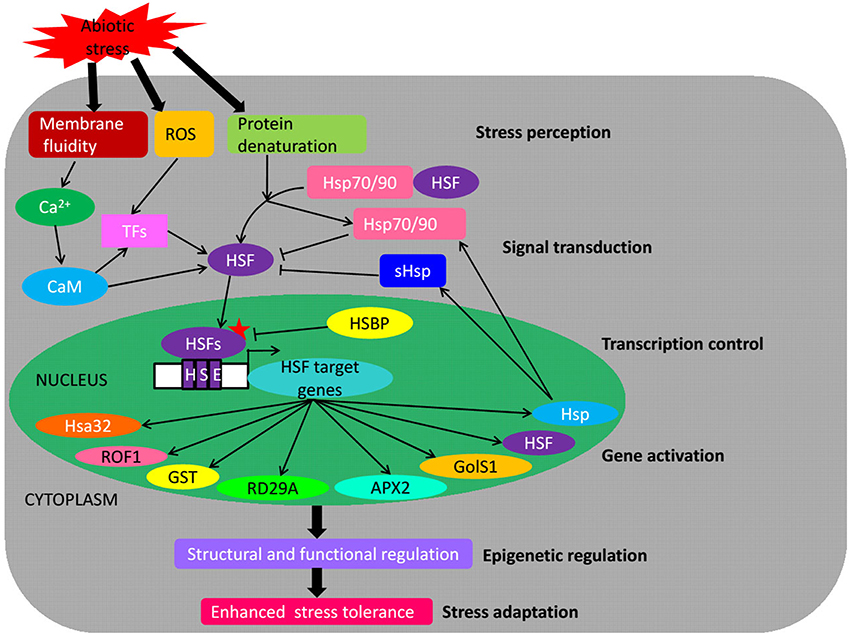
Schematic representation of HSFs as key components in transcriptional regulatory networks during abiotic stress. The scheme integrates both positive (arrows) and negative (bars) regulatory mechanisms. Abiotic stresses provoke a rise of cytoplasmic calcium, ROS accumulation and proteins denaturation inside the cells which convey stress-induced signals to responding genes, directly targeting HSF proteins marked with an asterisk. HSFs induce the activation of various genes playing a central role under abiotic stress conditions, thereby enhancing the abiotic stress tolerance. ROS, reactive oxygen species; CaM, Ca2+–calmodulin; TFs, transcription factors; Hsp, heat shock protein; sHsp, small Hsp; HSE, heat stress element; Hsa32, heat stress- associated 32-kD protein; Rof1, FK506-binding proteins; GST, glutathione-S-transferase; RD29A, drought-regulated gene 29A; APX2, ascorbate peroxidase 2; GolS1, a galactinol synthase; HSBP, HSF binding protein.

