
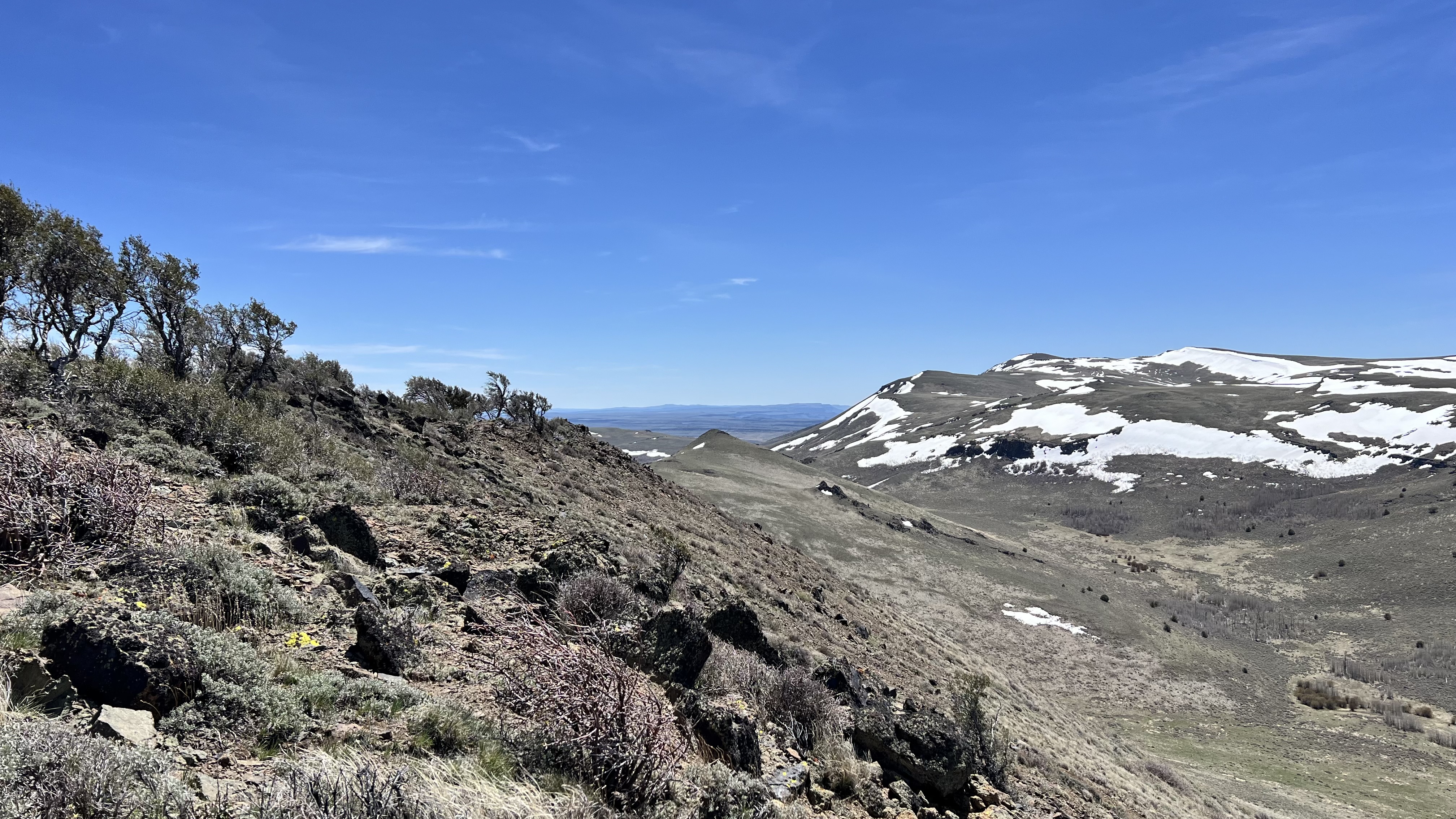
High in the Warner Mountains, Mountain Mahogany edging the near rim, looking across to Hart Mountain.
I spend a lot of time these days thinking about the meaning of life, understanding that the purpose of one’s life, is not a singular question, but one of the whole of it. Far too much time is spent with the concerns of one’s individual life; one’s accumulation of wealth, power, accolades, stuff….We are social animals, members of interwoven human groups, but are far more than that. Each of us are an integral part of ALL of the life around us. At the core of the question is who we are and what we ‘should’ do. Given all of the failures and goings on that bombard us today, all of the ‘takers’, abusers of power, the automatic almost banal destruction of the life around us, the losses accumulate and easily overwhelm us. Our’s today is a world of shrinking possibility. Calamity and catastrophes confront us from every direction. What is one to do?
I hear people complaining about ‘whiners’, those who complain about the ‘unfairness’ of life. The ‘complainers’ themselves take as given that life isn’t fair, never was and never will be…and we all just need to ‘get over it’! Our only ‘choice’ is to blindly surge ‘ahead’, our ‘path’ determined by this flow of ‘progress’, accumulation, consumption and distraction. T0 the complainers these ‘whiners’ thus announce their weakness, their unfitness and are then justifiably ‘prey’. What this ‘signals’ to me is that the capacity for empathy, for seeing and valuing others as worthy and even necessary has largely eroded, the potential population qualifying for such ‘inclusion’ shrunken drastically. Empathy as Hanah Aerndt has written is essential for a healthy functioning, civil society…absent it, a society declines into barbarism. When a player in the Trump administration like Musk publicly claims the opposite, that empathy is a disease that weakens societies, it illustrates the absolutely crassness, indifference, even revulsion he feels for people in general, including Americans. More disturbing than this is that so many Americans don’t seem to see this in him and his actions.
This alternately angers and saddens me. All of these people who see a mean world, an unfair world, who see only opportunity for loss or taking, who honor only ‘strength’, and gauge that in terms of the possession of the wealth and power to take even more, chasing after a goal that can never be sated, an endless competition with only winners and losers. Sympathy, empathy, compassion, altruism, as characteristics of weakness? No! Without these, civil society, meaningful community, don not exist! One cannot possibly satisfy that need, the demand for endless ‘more’. It is comparable to the cancer cell in our bodies, released and unregulated, growing simply to grow, until the body, the community, the society, so compromised by its far out of balance demands, succumbs. Unregulated growth, rapacious consumption and the denial of the health of the whole…that is where America stands today, where the person suffering cancerous growth within their own body’s battles. What will we ask ourselves at the end, when death, in its inevitability, gives us time think and evaluate our lives, when we face our imminent ends, if it does not sneak up on us and take us quickly?
The question will always be, did we spend our lives in a worthwhile manner. Was ours a meaningful life? What did we do with this precious, one time gift? To answer that requires that we must understand what life is, not just our individual life, that of selfish limited purpose, but the broader question of what life asks of us, of what are we a part? Our ‘selves’ does not end where our skin meets the surrounding atmosphere. We are a part of the world beyond us and dependent upon it. A ‘whole’ life requires that we acknowledge our connection, and ask, what, ultimately, all of this is for. To see our relationship with the lives of those around us, our family and community. The human community, even the one that includes all of this world’s people is a ‘small’ one, because there is a vastly larger one going on around us that makes our lives possible, without which we could not exist.
Life is not about ‘me’ or even the human species. It is the ongoing energy, the process of creation, that goes on continuously around and within us. We are not a collection of individuals with fixed qualities. When we look at ourselves, at others, we tend to see discrete individuals, but that is due to our ‘chosen’ and limited perspective. We occupy our bodies and live in time. We tend to see ourselves as existing with ‘solid’ lives, with a kind of fixed dynamism. As we age we become aware of death, ours in particular as we observe it around us as a phenomenon suffered by others, at first, something to be absolutely avoided by us. In a sense, we become involved in a kind of race or competition to add to our lives, that which seems essential to what we have come to understand adds value to our own lives, and these ‘things’ come to define us, who and what we are. We see our faults and weaknesses and, understandably, attempt to shore them up or disguise them from others.
Beginning as children, we tend to interpret the world in terms of ourselves and in this way are selfish. Our lives grow ever more complicated as expectations and demands are laid upon us, as we experience the world around us. We observe what others do, what seems to work. We make decisions about others and ourselves and attempt to protect ourselves, very often learning that the world is not there for us and so we must fend for ourselves. We were born with an innate sense of wonder, felt awe for the world around us and, with that, a boundless curiosity, all of which elders and our peers tend to undermine, they having suffered their own bad experiences with the world. They attempt to ‘protect’ us. To strengthen us from the difficulties of life they believe are on their way for us, or, in too many cases, having so suffered themselves, they simply lash out at us, their children, for our ‘childish’ ways and views, in unfair retaliation for what they have lost, unable to acknowledge their own responsibility for this loss of hope, imagination, wonder. Far too often we become ‘dream crushers’ and our children suffer because of this. The world, many come to believe, is ‘cruel’. We are born sinners and must seek salvation from outside ourselves and the flawed human community. Life is hard and then you die.
Such notions shape our society powerfully and drive us away from healthier and meaningful pursuits and purpose. When value can only be found in death, in an imagined afterlife, then it is lost from this world. Purpose and meaning become unavailable to us. We then take on the idea that love, as a driving force in our lives, is secondary or worse, a cruel joke. Life is hard. Life is cruel. And, because it cannot be found here, love, meaning, purpose…then it is best to take whatever you can and defend those you can from ‘them’! But that is a surrender of that which we are all here for! A surrender of LIFE, for a much smaller promise, a promise dependent upon an unverifiable outcome. Faith in lieu of a rich life lived honestly, openly, lovingly.…In doing this we give up everything.
Faith is believing in something despite ‘evidence’ to the contrary, or a lack thereof, in our observable reality. It in fact, too often expects the ‘failure’ of this reality and in doing so causes us to give up on this life around us, this life from which all meaning and purpose depend. We have been ‘suckered’. Sold a ‘package’ that is false, a package that claims that meaning and purpose is found outside of this life, that it can be attained only through death, that we can stave it off through the acquisition or taking of power and wealth here and now. That comfort and security can be found in the pursuit of more. That ‘convenience’, popularity, consumption, the pursuit of individual security, the hoarding of more, the sacrifice of others, never the giving sacrifice of one’s self to others, that these are acceptable ways to ‘survive’ in this life. This we are taught we must do. The real living world will eventually disappoint us, crush us. In this life, despite all of the violence, denial and abuse we may suffer, and that which we may inflict on others, all we must do is take this simple pledge to the ethereal, and be saved, our worthiness, our contribution, our actions and intentions, throughout our lives, ultimately of no consequence. What god would so devalue his/her creation? A god that serves a much smaller and selfish human purpose, one fraught with endless contradictions, all of this whisked away in a single moment, last minute decision…but it can’t. And we suffer in this life because of it.

Calcohortus macrophyllus, our local Desert Mariposa Lily
Life is a process. Physicist and biologists understand that we exist only in the moment. That our bodies, even our consciousness, are an ‘unfolding’ over time, an ‘effect’ of the larger processes of life, of which we are a part. Our bodies, those of every living organism on Earth, are in a state of constant change, of flux, growth, deterioration and repair. We are non-equilibrium, complex, asymmetric systems, oscillating between the ‘livable’ margins, capable of self-organizing and self-repair, as long as conditions are supportive, as long as the organism can remain within its particular narrow limits. All exist on a ‘knife edge’, oscillating between life and death, energy flowing through matter, proteins, fats and carbohydrates, ‘held’ loosely, in dynamic patterns consistent with our DNA and the possibilities inherent to the structure of the universe. Doctors call this oscillating process, homeostatsis. It is no rigid state. It is a dynamic responsive one. Our bodies themselves are in continuous flux. Cells and tissues dying, oxidizing, being repaired and replaced. We are living ‘chemistry’ experiments, animated, organized, structured, driven by the energies that will ultimately bring us to our deaths, the next iteration, those generations waiting in the wings, ready to replace us. An ‘expression’ of life, supportive of all others, linked in every moment to all of those around us, whether we see it or not.
Being ‘healthy’ is then doing that which keeps us within those parameters which define the ‘livable’ edges of homeostasis. To remain healthy one must keep those parameters as wide as possible, while remaining ‘recoverable’. The narrower they are the more subject to life ending perturbations we are, putting our lives into nonrecoverable stress. Like everything else in life, this does not mean that we should avoid stress, because it is by ‘operating’ at our margins, our limits, that we are tested and strengthened…if, we provide ourselves the proper nourishment and rest, that is the ‘materials’ with which we can rebuild and repair ourselves and the rest we require for recovery. Stress, appropriately applied then strengthens us, improperly, weakens and kills us. A life of ease, convenience and comfort leads to a narrowing of these parameters, making us more susceptible to weakening, disease and death. This is true for every organism. All require adequate ‘testing’, stressing, nutrition and rest.
Because we live in ‘place’, in particular living communities, these are essential factors in our lives. These set the conditions for our lives and make accessible the nutrients and materials which we require to sustain ourselves in a health state, in homeostasis.
Today our lives have become far less attached to any particular place. Our politics, our economies, our social connections, our material dependencies have become much broader. Our technologies have enabled much of this, ‘freeing’ us from the ‘limits’ of place. We have become ‘global’, free to consume what we need, what we demand, from wherever we can get it and those are largely anonymous places, places we value for what we can take from them, the needs and requirements of which we are blind to and largely disinterested in. We can do this because of our economy which utilizes massive amounts of energy to make this possible…’cheap’ energy. Energy that ‘dissolves’ distance and cheapens place. Erasing the value and relationship of place, rendering distance a non-factor.
We are becoming ever less attached to where we actually reside. Place, in many ways, has become simply a temporary address, its particulars and people less of a factor than at any other time in history. We generally look at place then in terms of what they offer us without recognizing our ‘debt’ to them, the ‘cost’ of our ‘occupation’, our use. For many of us in this ‘modern’ world, we could live anywhere and obtain what we ‘need’…other than ‘relationship’. Being free of relationship isn’t quite right, because we can never be so truly ‘free’. We still require what we must. We have become dependent upon our economy for that which it provides us, the means and materials we have come to require. We no longer look locally for material satisfaction, nor do we look locally to those around us to collectively meet those needs. And, because of this we devalue them. They are no longer ‘important’ to us and so we see them differently. We become more likely to allow their sacrifice because we have surrendered our connections to them. We actually ‘do’ less and less for ourselves, in terms of meeting our daily needs. We simply buy them off the shelf or the even more broadly spread, distant and vague, internet, from a seemingly limitless list of packaged and curated items designed to meet our need. We want. We pay and they simply, arrive. We have chosen convenience, fashion and what is readily available through the economy. Unaware of what has been lost, that cannot be packaged and sold. We have adapted to our economy which serves its own demands, primarily that of ever increasing profit. We no longer look to do for ourselves and those around us. We forget the importance of place, its needs, its limits and our dependence upon it. It ‘only’ requires our participation, that we ‘trade’ ourselves, our labor, our ideas, for money with which we can buy theses things, our compensation, our pay rate determined by the owners and their representatives whose singular drive is to maximize profit, i.e., minimize costs and maximize sales.
The ‘human’ economy, the one that serves to meet the needs of the people effectively, places that purpose in the position of highest priority is concerned about a different level of efficiency. Alongside the health and security of its members it works to insure the same of the overall environment that provides the resources by which a people attains and maintains good health. It does not overdraw from its accounts. Profits are not ‘creamed’ off. They are rather left in place, within the the system or reinvested into it to assure its continuing productivity. We too easily forget this when we decrease our local dependence and acknowledge only an unlimited supply from an unknown and little valued elsewhere, which can be sacrifice/consumed and is often done so at cost to those unknown people and living communities ‘elsewhere’. The economy endlessly growing in a limited world. Such an economy, like any cancer, cannot endure indefinitely.
We are a part of something much larger than any individual. As individuals we interact in relationship with others, but the quality of these interactions have been reduced, largely abandoned. Rather than looking to our local community and place to meet our needs we look to the sprawling, disjointed, economy. The economy has become of primary and almost singular importance, understandably, as we have largely abandoned our historical relationships with each other and place….The health of the local community, the health of one’s place, has largely been sacrificed. We have been made dependent in unexamined ways upon this ravenous, ever expanding, economy, convinced of its superior service and utility and our ability to solve its problems, despite the fact that historically, this is a singularly, developing event. Our confidence built upon faith and hubris. Community, in its local and broadest sense, and place have been left behind. Health, homeostasis, unlimited growth in a limited system, are simply accepted as givens and go unexamined. But it cannot be forgotten that we play necessary roles in the larger process, a process we can never wholly understand, in the health/performance of the entirety, as a part of it. The earth is a whole, a system, with limited resources, some of which are renewable, if harvested sensitively, monitored and allowed the time to be replenished, the essential systems protected so that they might do so, taking only what the system can afford. Health. Reciprocity. Gratitude. Living within limits respectful of life, not unregulated, a human economy driven by the concept of maximizing profits, the extraction of value, while dismissing the inherent and essential value of the elements that comprise the earth’s living systems.
We are individual ‘expressions’, essential moments in the unfolding future. A part of the whole of life on Earth, a part of its processes. We are a part of an energetic ‘wave’ moving through time, animating the particular products and processes available here and now. We exist only in the continuously unfolding moment. DNA, amino acids, proteins, fats, carbohydrates, various ions and electrolytes, all in dynamic balance, at any moment capable of collapse and disintegration should the balance of matter and energy move too far beyond very tight parameters, should we ‘harvest’ or ‘take’ too much. With the proper ‘push’ the ‘parts’ assemble into a coherent whole. Is what we do supportive of these processes, this unfolding? Do we work to support it or destroy it? Are we celebrating it?
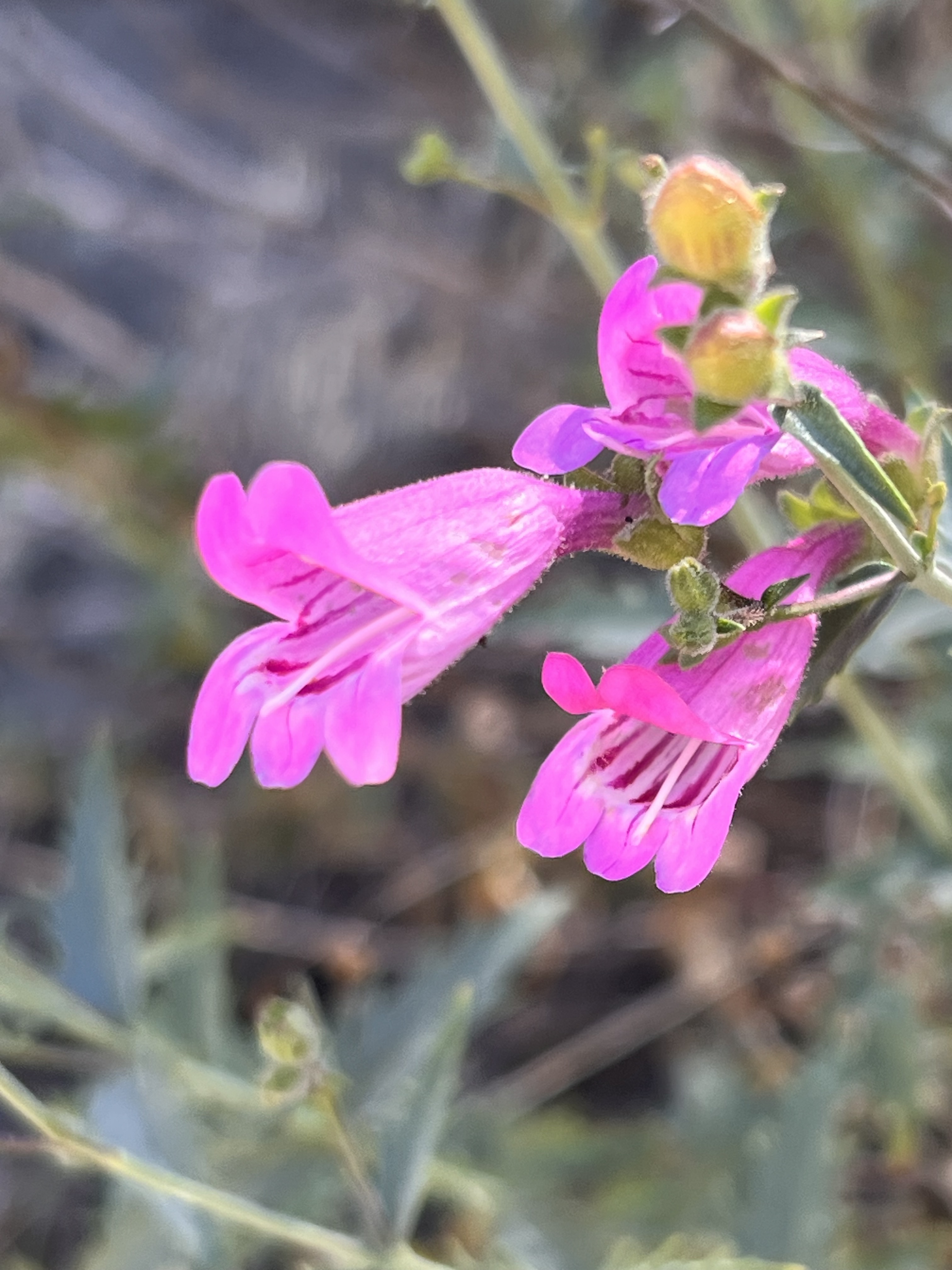
Penstemon richardsonii, one of our desert Penstemon typically found in canyons in shattered scree or growing from rock walls.
Every individual life is important, has a role to play. As an extremely complex system nature has built in many ‘redundancies’. Nature is in this sense, not fragile. The seeming chaos that abounds around us, is essential for its healthy existence, for its continuation. When we remove these redundancies we begin to destabilize the overall system. Much can be reduced before collapse, but determining that critical point is impossible. What we do know is that these removals, consumptions, contaminations and challenges to its healthy functioning, compromise the health of the whole and the individual. Like the larger system we as individuals are also able to continue on in compromised states, but for how long and at what cost? We all exist in time and are then gone. Our experience of time is personal and limited, necessarily. Our ability to assess these limits is difficult and begs the question, if such activity compromise the whole and the individual, why continue the activity? As individuals, when we cling to this particular life, we simultaneously are undervaluing the lives of others around us and the processes essential to them, over the long term.
In such a world our goal must be to understand our role, to recognize our unique qualities in ‘this’ moment and act in ways supportive of life and its unfolding, not just yours, or mine, or even whatever human community we identify with, but of all of life. Studying the life sciences can give us a broader perspective and deeper understanding of what is truly essential and beautiful. Our lives then can become more meaningful, because we live them in support of these broader life forces. We necessarily must live as givers, contributors, celebrating the beauty of life around us.
Is this naive? After all there is ugliness and violence in this world as well. We cannot attain the ‘best’ outcome, realize our maximum potential, or even have lives that provide us the needed security to realize such outcomes, when we ignore the violence. But a narrow focus on such priorities, will result in stunted and meaner lives. Our efforts must be more expansive, our intentions more inclusive if we are to attain these things for ourselves AND those we love and care about. By excluding other individuals, other communities, other species and their necessary processes, we set the table for at best a limited success and at worst, total failure. It then serves us to seek to learn and understand, to accept the limits of our own particular individual lives, and come to value others…all others. We cannot judge. We do not have the wisdom to do so, nor the right. In recognizing the rights of others we support them and sacrifice ourselves in large and small ways to better their lives and in so doing assure the unfolding. We give rather than always take.
We can change the way we live our lives, organize society our economies. Our ways today were not always so. We are not the same from moment to moment. Wouldn’t it be better to reexamine how we live, what we prioritize, what we fear and react to? Become a healing, positive, force in our lives rather than ‘surrendering’ our individual ‘sovereignty’, our ability to determine our own lives, rejecting a smaller, meaner, contracting world, choosing instead an expansive one. Seizing opportunities to make our lives, all of our lives better, healthier.
The Haudenosaunee (Iroquois) traditionally emphasized what they called the Seventh Generation Principle, that when making a decision one should attempt to consider the impacts to the seventh generation, that one’s decisions should be sustainable over the long term. Not doing this threatens the existence of those to come. In this way they attempted to honor and respect those to come and those responsible for the ‘largess’. All elements of the environment were recognized as ‘peoples’ and as such, must be accorded the respect deserved of any being.
Today we make expedient decisions based on what is most profitable today and we evaluate them quarterly. We do not burden ourselves with ‘what if’s’ regarding the future. Economic decisions are reduced to decisions about money, profits in the short term. Money and investment are fluid. Allegiance, if there is any, is owed to owners and stockholders. A society’s members are reduced to consumers, singular, expendable elements of a financial activity, not its purpose for being. The purpose of an economy is thus stood on its head. Profit drives the economy. Human need is reduced to a secondary function, necessary demand. The earth is reduced to an expendable resource base, a provider of raw materials and energy from which to reap profits.
Profit places its demands in the form of growth on society and the planet. It is defined economically as that amount of revenue that remains after costs are accounted for, only businesses and lawmakers have worked very hard to ‘exclude’ many costs and to minimize others. In many indigenous cultures, acting consistent with some version of the Seventh Generation Principle, profit is what is returned to the community and the earth. Profit, in this sense, is what is necessary to sustain the system over the long term. It is not removed for the pleasure and use of owners. Ownership is a shared responsibility.
In our present economy maximizing profit while minimizing costs, has little to do with fairness or equity. In fact the latter two requirement are denied out right. Costs are put on those unable to defend their own right to health, security and a livable future, whenever possible. In our modern world, profit is increased via a growing human population or, when place becomes less relevant, by penetrating markets elsewhere and ‘cost cutting’. Cost cutting is applied to what is legally allowed and to minimizing labor costs via pay cuts or cuts to benefits. Pollution the release of contaminants into the environment, is a production cost ignored or refused by the business, put on the local environment and community, which is unlikely able to correct it due to issue of toxicity and quantity.
As energy use increases, markets disperse. New products are continuously being created and marketed, chasing profits. Goods and services are not tailored to meet local demand. Demand is promoted. Convenience. Fashion. Novelty. Repackaging and branding. Influencers. Pop culture…all drive the expanding economic engine. If more luxurious products and services are more profitable, and they generally are, then that is what is provided and the less profitable, survival products and services, less likely to be produced and distributed. Each addition becomes expected, another entitlement. Families, adapted to this ever increasing ‘more’, spending more time ‘earning’, demanding higher wages, putting themselves in competition with the almost countless unknown others, putting more divisive pressures on communities, communities that have been stripped of so many of their previous functions. In this way consumers, former community members, become ever more dependently tied to the expanding, and distant, economy, while communities and their capacity to provide are forgotten and no longer trusted. Such communities become a temporary, geographical artifact of relatively little consequence in our lives, bereft of daily service and function, more as ‘decoration’ and placeholder, as well as yet another investment to deliver profit, its purpose of domestic shelter, becoming lost along the way.
A few days ago Elon Musk smugly posted:
“We’ve got civilizational empathy going on…
The fundamental weakness of western civilization is empathy.
…a bug in western civilization which is the empathy response.”
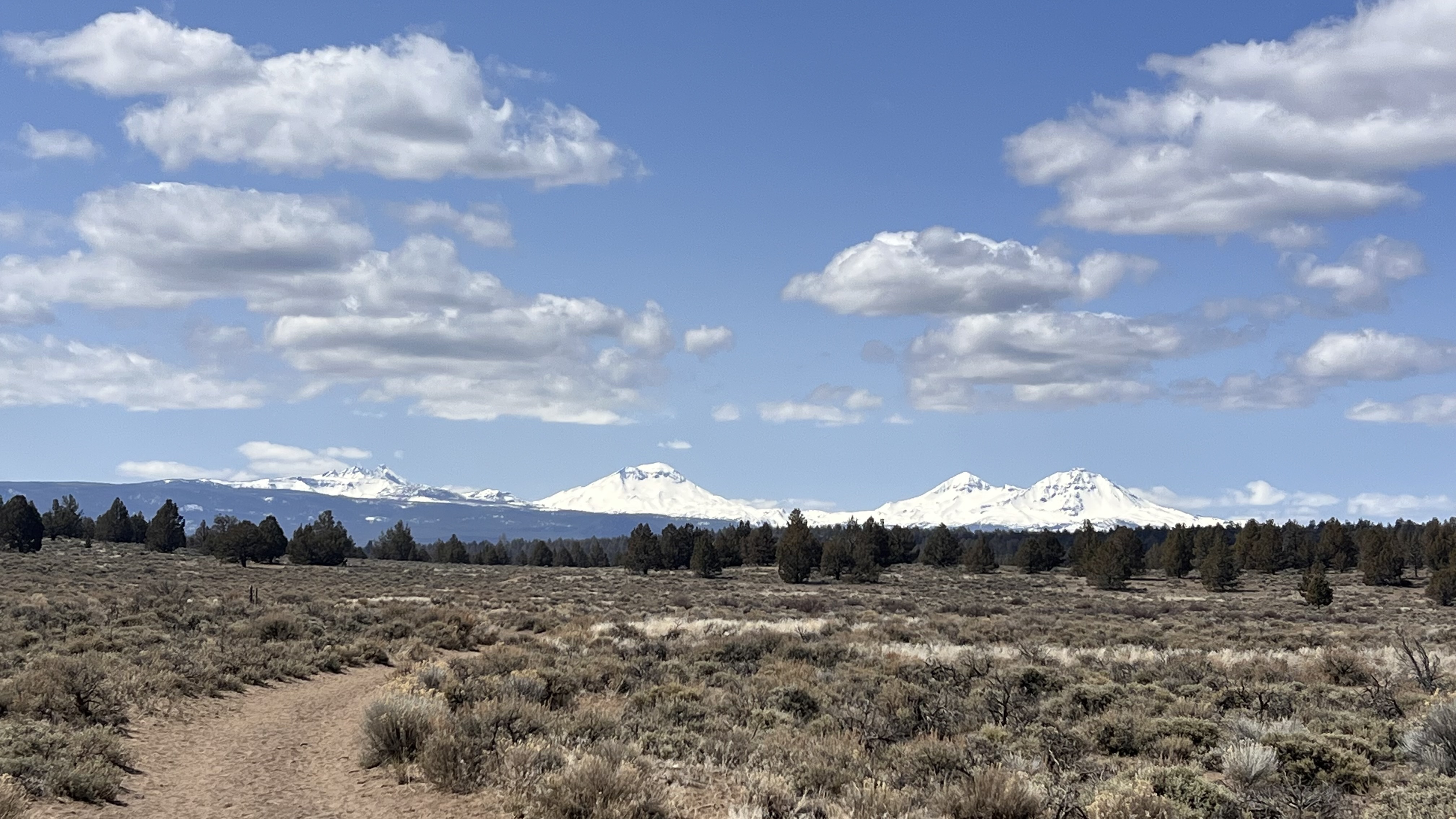
Looking south toward the 3 Sisters in a shallow bassin with its deeper soils surrounded by the higher ground of Juniper forest. This area was likely grassland before disruption and the lack of fire has allowed Sagebrush and Rabbitbrush to come to dominate. As they grow they outcompete the grasses.
Empathy, one of the core Christian values, the expectation that Man love and watch out for each other, is in Musk’s warped mind, a disease of character to be weeded out justifying the chaos he is creating, intended to bring out the ‘true’ nature of people, and realize that yes, we must work to rid ourselves of the superfluous, the waste, the leeches and deadweight with their interminable cries for support. Musk does this without the slightest acknowledgement to the fact that ‘his select few at the top’ have placed these people in the lowest societal rungs. It is his class that claims the powerful high ground for themselves, simultaneously ignoring the essential roles the poor and working class have always served and continue to serve in the creation of wealth, the wealthy, after all, having never actually produced anything of much direct value through their own labors. Nothing and nobody is of concern to him. This is the way he sees the world. Two dimensional, the decision makers and the waste.
Hanna Arendt, the renowned sociologist who studied the Nazis, their ‘character’ and how they came into power, claims the opposite, that when society loses its capacity for empathy it declines into a state of barbarism.
Musk, Trump and their various cronies and tools see the world similarly. A world devoid of health, beauty, diversity, creativity, abundance, joy, hope. There’s is strictly a world of utility, a took, a puppet, reflective o the smallness and shallowness of their own characters. They are everyone of them takers without the capacity to give, confounded by the human capacity to love and celebrate.
Empathy, along with the concepts of community, civility and conviviality are essential elements of any healthy society. These qualities are not an element of our modern economy. Nor are health and integrity, wholeness. You cannot ‘build’ a better society, you cannot make anything ‘Great’ in their exclusion. They are the social glue, the connections and links that define relationships in a healthy, vibrant society. These are not things that can be attained through executive orders. They cannot be bought in any market. They must ‘grow’ organically within the social body of the public. They are rooted in us, the members of our communities and in the places in which we live and those roots must be nourished. Like anything else of value, that lives, they are dependent upon those of whom they are a part. They ‘live’ in their expression through our lives while at the same time enriching the community so that it might so continue.
Opportunities are lost when we deny, delay and defer, but when we act in support of life in the face of irresponsible and destructive acts of others, acknowledge our own role and responsibility in this world and the problems we face, and choose to act responsibly, to do what we can, we keep the door open to possibilities far beyond our small and singular imaginings. Problems, as unlikely as it may seem, begin to resolve themselves when we choose to act. Their solutions lie in our collective actions our willingness, our readiness and can sometimes define themselves out of being as we act harmoniously and in support of life. It is within the nature of healthy, whole systems to resolve issues in this way. It is not prayer, it is action and through those collective actions that a ‘new’ wholeness can be attained again. ‘Greatness’, what does that even mean?But, wholeness, health, become self-evident as we pursue and exhibit them. We need not delay until we have a complete ‘plan’ to address every possible problem. To do so serves only the selfish narrow plans of those still focused solely on their own power and wealth, those who, in its limited way, the present system serves, however shortsightedly. This is what we ‘owe’ future generations of all species. This is where meaning and purpose are lost and found. It has always been so and always been our choice.
A well lived, purposeful life, is one spent in service to others, in support of theirs and all that supports them while fully acknowledging all of that which supports us. It asks of us our ‘best’, which requires critical self examination, so that we might best contribute to the health and beauty of the whole. It requires that we be ‘givers’ not takers. In this collective ‘giving’ all needs will be met and all persons will be supported in their life journey’s fullest ‘expression’. In short it asks us to follow the ‘golden rule’ in all of its childlike naiveté. That is the ‘faith’ it requires of us, a faith in others and in life, an investment life values.Wah
 GardenRiots