
“From the viewpoint of the evolutionary biologist it is reasonable to assume that the sensitive, embodied actions of plants and bacteria are part of the same continuum of perception and action that culminates in our most revered mental attributes. “Mind” may be the result of interacting cells. Mind and body, perceiving and living, are equally self-referring, self-reflexive processes already present in the earliest bacteria.”
—Lynn Margulis and Dorian Sagan, “What is Life?”, 1995
 From what do sentience, awareness, consciousness and intelligence come from? Are these capacities a product of an organism’s complexity? At what point does it first appear? is it a property inherent to even the simplest organic chemicals? of peptide chains and amino acids, of atoms themselves?What of the organizing principle that seems to guide embryogenesis, the growth and form of every living individual of every species? Is it in action in the most ‘simple’ interactions between organic chemicals and the energy flowing through them, that favors one form over another and animates those same forms once they meet some critical minimal level of complexity? Is this evolution towards complexity and ‘awareness’ an inevitability? A product of its component parts and the energies within it? [This is an idea that is separate from the notion of an inevitable ‘progress’ of life, always moving ‘forward’. Progress is a human notion, an assessment and a valuation of the change around us, not a ‘goal’ of natural selection and the animating ‘flux’ of energies within the universe.] Rudimentary awareness must exists at some necessary and basic level in the simplest single celled organisms…even in plants.
I look to that which is shared between all organisms and question the idea of the animal brain, and its neural system, as the basis for these things and its purported absence in plants, fungi, bacteria, viruses and archaea, as lacking in them. The brain itself and associated nervous system is a unique and complex structure present only in ‘higher’ animals. This bias in favor of the brain and neural systems, especially that of the human brain, as the seat of awareness and consciousness, ignores the requirements of any organism. We are biased in our insistence that these capacities must be located in a singular physical organ and no other. A singular occurrence in the universe. A huge conceit on our part, that this capacity exists in us alone, in and organ and tissues we could could physically evaluate, one which we ‘carry’ internally within us as we move freely about. The body, any body, is a vessel which contains life and is shaped by it. Life is both of the body and transcendent, existing beyond it. Life exists within the continuously unfolding moment. Life is not a ‘thing’ so one can hardly expect awareness, consciousness and intelligence to fit neatly into a limited organ, however we define it. The roots of this reach back into the study of evolution, ecology, cell biology, neurobiology, the metabolism and thermodynamics of life and the expanding field of quantum biology.
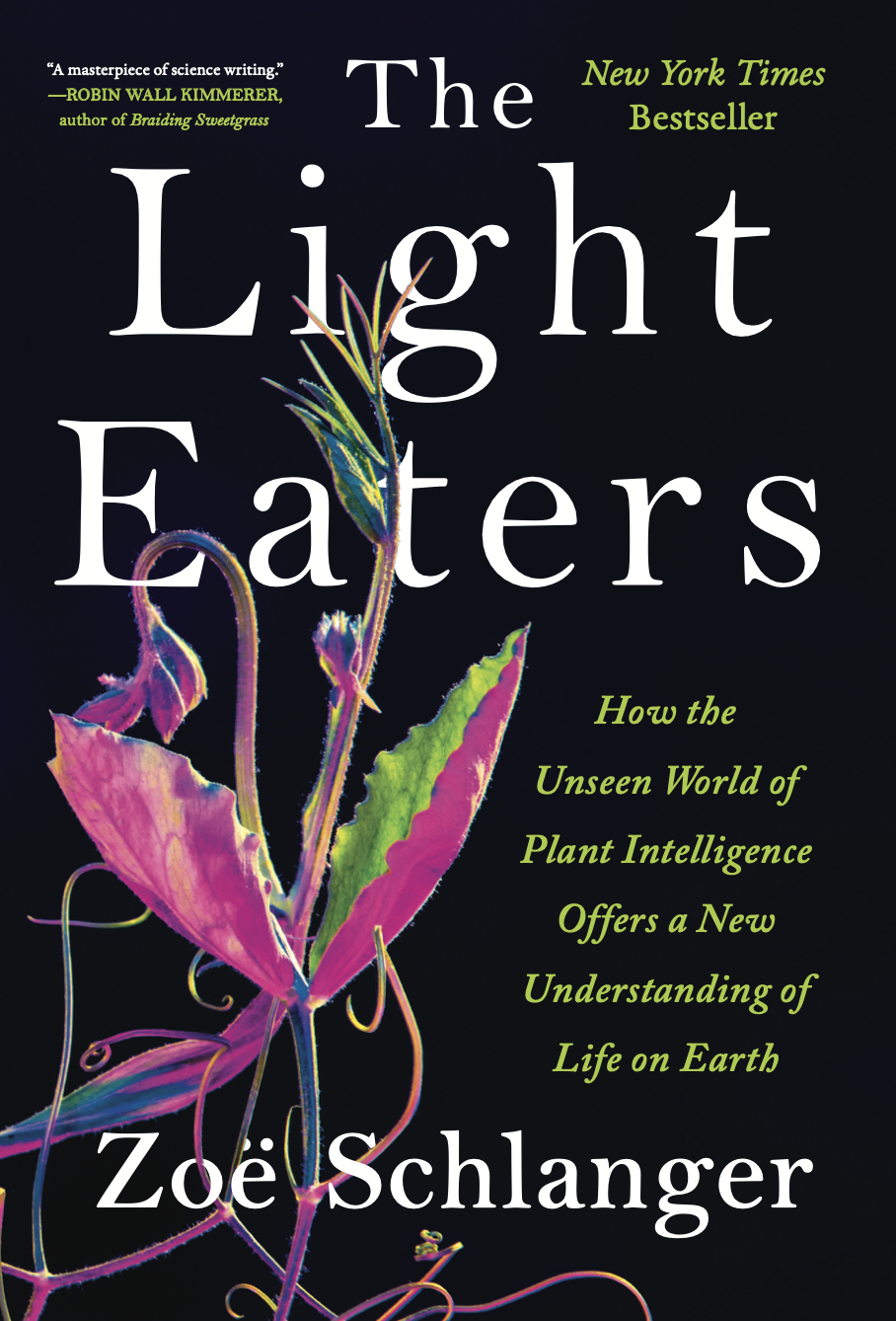
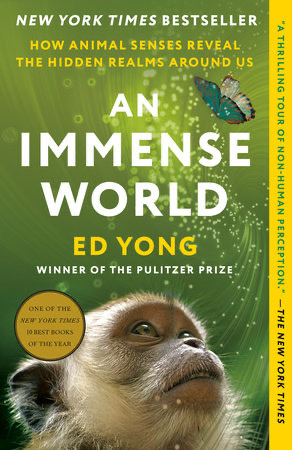
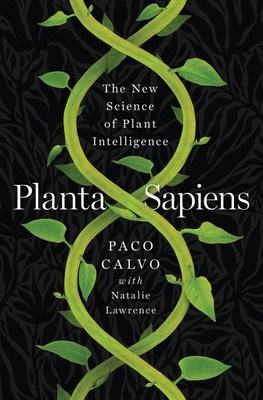
This latest thought piece has been inspired by three recent books I’ve read, Ed Yong’s, “An Immense World”, Paco Calvo’s, “Planta Sapiens” and Zoe Schlanger’s, “The Light Eaters”. I am not a scientist. I’m a student driven to make sense of this world. The connections and conclusions I make here are mine, although they may be suggested by the writings of others.
____________________________________________________________
Plant sentience, awareness, consciousness, communication and ‘intelligence’ haven’t been just controversial topics, they have historically been rejected as possibilities, plants being regarded as inert, merely reactive objects, when compared to ‘actors’ such as humans, by European culture which placed them slightly above rocks. Botanists today are beginning to reassess their capacities and function more openly, as they look at what being ‘alive’ might mean for any organism, opening the door wider for research into such things. These are studies made all the more difficult because the terms in question are not even firmly understood in the world of animals and humans, which possess neural systems and brains non-existent in plants.
Assumptions guide us all as we maneuver around these questions. Assumptions can lead us down false trails to conclusions not in evidence in science, just as they can in our daily lives. Things assumed as givens are generally given some slack and are not fully examined, as when the same ideas and processes are suggested for other life forms. Are the brains and neural systems lacking in plants sufficient reason to exclude these ‘mental’ processes from plants? Can they not occur in tissues, patterns and ways different, but comparable to, the processes occurring in animals? In humans? Are we even correct in our assumptions of how these processes work in the animal world? Must these activities be resident, confined to neural tissues and brains? Just because there is ‘activity’ in the neural tissues and brains of animals that seem to correspond to activity elsewhere in the animal body, as an animal perceives, reacts, ‘decides’ and acts, does that mean that this is where all of these things actually take place? Can there not be analogous tissues and structures that support these processes? Couldn’t these processes extend beyond these physical structures? Exist as flows of energy and patterns more generally in space and time, around and within an individual? After all, individuals are directly related to the space and time they occupy in a very dynamic relationship. Individuals are, in a very real sense, ongoing and unfolding ‘events’, occurring over time, not fixed entities, but beings of ‘informed’ energies, much as is all matter in the universe; could this more energetic, less physically manifested aspect of an organism’s life, exist throughout and around one’s physical self? In ‘fields’.
We are scaled as we are and perceive only what our limited senses can detect. When we process this sensory information we convert it into something ‘knowable’, patterns that make sense to us or at least aid us in such a way that we can respond to. We in a very real sense learn to perceive our world from the inputs we sense. Through living we ‘experience’ the reality in which we are embedded. We interpret that experience, assign it shape, meaning and value. We fill in the blanks of our perceptions so that we might act, and in this way, we come to ‘know’ the world. Our perceptions are never ‘complete’ in any given moment. We, in a sense, assemble them, with the aid of memory, of past events. This is ‘colored’ by all things including, and importantly, our interactions with our fellow humans.
We share an ‘agreement’ about our world so that we might communicate and understand it. What we come to see, is a shared agreement, not the ‘real’ world itself, but a ‘representation’ of it. We know the world as a ‘snapshot’, a moment in time, a shared construct, that we infer from the input we perceive. We cannot observe beyond the surface of ourselves into our essence without a great deal of specialized technological intervention and interpretation. The world and life extend far beyond our capacity to directly perceive them. A newborn child ‘learns’ to perceive its world. The accumulation of perceptions, of the understood events in time, allow us to navigate our world. As a very mobile species this is absolutely essential for our survival. Our awareness, our capacity to perceive and the limits of our perception, go directly to our ‘fitness’. This simple fact does not mean that the ‘world’ is limited to what we perceive, only that we cannot directly perceive what is beyond our capacities. To do so, is so far, unnecessary for our survival. Much exists beyond the limits of our senses.
There is much to grapple with here. The plant world, while we share much with them biologically, is one that exists on a different plane. Their ‘struggle’ for existence is a different, but parallel path. There is no reason to believe that what holds for us will strictly for them. The study of evolution shows us, among other things, that there are multiple patterns and pathways that have developed over time in response to similar conditions, ‘translated’ over time by the genetics, patterns and ‘habits’ of the species. We are shaped by conditions and need. The success of various ‘solutions’ to shared problems are repeated in form. There are shared links of genetics, conditions, pattern and need which lead down analogous paths.
When considering these things in various organisms, two points come immediately to mind: one, plants are fixed in place and/or directly connected to their environment and so are in more clearly defined, limited and dependent for survival upon those ‘local’ relationships, on propinquity, putting a greater survival emphasis on the adjacent ‘community’, a community whose effect decreases in impact with distance. If we were to measure the effects of such impacts at an increasing radius from the individual the relationship would become evident. The associated plants, the fungal and much of the microbial world, insects and relatively sessile organisms, within that space, form a complex and dynamic network of supportive and competitive relationships which go to shape the ‘world’ of each. The mobility of resident larger animals, coming and going, results in much more varied impacts, which can be greatly increased via their numbers and the frequency and intensity of their ‘use’ of the place. All members of an individual plant’s community go to define the dynamic and diverse conditions, which it must ‘negotiate’ in order to survive, its particular biotic community necessarily responding to all members in a relationships characterized by their diversity, complexity and density.
This is opposed to the relative freedom of movement possessed by most animals which can shift their position and strategies for success to meet their particular individual needs. Such animals operate across a larger space and so are less directly connected to that place, though connected they must be. Much of this ‘need’ to move is driven by the fact that animals are heterotrophs that must seek out food sources or die, while plants are autotrophs and produce what they require through photosynthesis and their immediate environment. Animals are, however, still very much and necessarily linked to place for their existence. Their relative mobility permits their consumptive strategy. In the case of humans this spatial independence can lead us into a false sense of independence and detatchment and the possibility that we aren’t reliant upon it.
The second point is, that while plants don’t have a ‘brain’ or centralized neural structure, it is a mistake to assume that they lack the facility to interact in an engaged and responsive manner with their environments as they most certainly must do. Attributing this processing to our brains is presumptive. That the brain and accompanying nervous systems are an animal adaptation to this ‘demand’ for processing, for animal success, greatly aids our capacity for more complex and rapid responses. That it is the center and ‘home’ of this processing and not just another structure that supports thinking, intelligence, consciousness, etc. is not proven by these structures existence. We repeatedly tend to evaluate other species by our own limited standard and perspective. We assume, often with little evidence, based on our own biases, perspective and capacities, rejecting the alternatives and possibilities of others, and take our own as givens, as superior.
Does sentience and the processing of sensory information upon which an organism ‘decides’ what it will do, require a central processing unit that resides within the physical bounds of the organism itself? What is actually happening in a brain? Are the firing of neurons, or their analogs, throughout the body, not just in the brain, different than those in the brain? What of all of the other structures and functions within an organism? Is the process of sensing, thinking, signaling, communicating separate from the whole organism itself? Is sentience, awareness, consciousness, a product of the individual’s complexity, any outgrowth of its living? A necessary outcome? Not some separate process, but one integral to the living/functioning of the organism? Is sentience a product of the whole that comprises the individual? Is all of this a product of the body itself and the world within which it is immersed, continually?
Organisms are immersed in their community, whether fixed in place like a plant, or hyper-mobile as we are with our technological assist. Can this mobility really separate us from the larger living world? Our readiness to deny such connections does not negate its necessity. Are we not always immersed in it? in relationship? An integrated whole? How can consciousness be separate, a unique quality, ‘floating’ abstractly and disconnected. Is it ‘correct’ to assume that individual organisms are bound/limited by the physical limits of their bodies, their skin, their bark, their various epithelial tissues? Essential, necessary and secondary processes which we utilize do not all occur within the bounds of our physical bodies. They aren’t just ‘extensions’ of ourselves, but are a fully integrated part of ourselves. Self and place intimately and directly linked.
Many of our essential processes occur within our bodies, but do so only because of other organisms which reside within us, upon whom we are dependent for our good health. We animals ingest our food, digest it internally with the aid of other organisms in our ‘guts’, bacteria that collectively form our ‘gut micro-biome’, digest and break down our foods into forms that ‘we’ can utilize, which ‘we’ then distribute throughout our bodies to our billions of cells providing them with the resources and power they require for life, countless coordinating actions keeping ‘us’ all in balance, in homeostasis. Our internal processes a kind of ‘mirror’ of our place and role in the world beyond our skin.
Plants don’t ingest food. They ‘select’ the necessary building blocks which they need to ‘build’ and power themselves, what they require, transforming them in continuous processes on demand, just in time, as needed. They are autotrophs. Fungi, like plants, don’t get up and move, but they do explore the soil extensively in their search for food. They are heterotrophs and must consume their food, but they don’t ingest it, they excrete various acids and digest more complex organic molecules/compounds, which they have sought out, grown toward, outside of their bodies, their vast networks of mycelium, and then absorb them. Sometimes they participate in shared/mutual relationships with other organisms which produce the carbohydrates they can’t produce themselves in exchange for the minerals and materials they can ‘mine’ from their surroundings in exchange. Biological commerce. All of this requires complex relationships, communication and signaling, internally and externally, so that these organisms can thrive. While plants and fungi may not ‘move’ to procure what they require, they have significant capacity to sense what they need and grow toward it, abandoning fruitless efforts growing where there is little for them. There is no singular pathway. But all require that organisms sense their surroundings and in respond in such a way that they may live, in the process, doing so in such a way that the larger biotic community in which all things live, is supported. This is not random.
All organisms share a basic cellular structure, their component cells even more so. This is a distinguishing feature of all life on earth. All cells require the capacity to regulate themselves, their bio-chemical reactions within themselves, that collectively amount to their living processes and their ‘activity’ regarding their outside world, as they grow and/or move about their immediate ‘world’ seeking to satisfy their various needs while avoiding that which is detrimental. These cannot be completely random occurrences. To do this they must and do in fact ‘sense’ the conditions both within their body and outside them. With this ‘information’ they must ‘decide’ and then activate their response. Single celled organisms do this just as do the cells that collectively form massive multi-celled organisms. This is as true for bacteria, as it is for a Blue Whale, a Coast Redwood or us. Much, and even most of this sensing, internal communication, signaling, responding, at a cellular level, goes on beneath our level of consciousness, our cells simply act singularly in their own best ‘interest’…maintaining their internal functioning within the limits particular to their own existence, in a state of homeostasis. In more complex, multi-celled organisms, the organism has an increasing capacity to signal/command actions of the whole which may modify the function of the individual cell. There is a coherence. A rightness.
As complexity of the individual organism increases, as cells increase in terms of both numbers and ‘specialization’, cells having specific varying functions, they must necessarily and collectively function as an integrated whole, all cells within those same limits, in homeostasis, in energetic, dynamic balance. This requires a higher and higher level of internal communication and coordination so that the individual may function as an integrated whole. Individual, independent, single celled organisms are in a simpler and more direct relationship with their environment and the conditions it presents, responding to the chemical ‘balance’ within its bound cellular structures, and those outside it, within which it is ‘immersed’. Actions occur across its membranes, moving from more energetic states to lower, across ‘gradients’, differences, ‘action potentials’ released in timely concerted action creating an appropriate response, a sustaining action. Multi-celled organisms, proceed in much the same way, while their more complex, specialized cells and functions, require much more complex and nuanced interchanges within and without its ‘borders’ to remain within homeostasis, a much more complex task.
Individuals, whatever their size and complexity, do this. Even within a single cell, the variety and shear number of chemical reactions is staggering. To accomplish the simplest ‘mechanical’ movement/response, a cell, through its many mitochondria produce and release thousands of ATP, the little, battery like energy packets which power so many necessary and ongoing functions. While at the same time, in signaling a needed action a single change in an ion, can result in a nearly instant cascade of changes, triggering a like change from one part of a cell to another and to the next. This switching, while seemingly simple in itself, occurs within the cell, in a ‘sea’ of constant change, of flux, within the margins of life. No single sensory input is determinate. Temperature, pH, electrical charges, movement, light or its absence, its frequency, gravity itself, movement and inertia, sound, touch, scent, stressors of all kinds, all of these and more, are transmitted through the organism and its environment, sending signals throughout the body. Each ‘signal’ triggering an adjustment, a response, which collectively regulate and guide the organism. All of this energy racing around and through the body, combined with the requirements of its own metabolism, respiration and various other functions, occurring within the functional limits of the cell/body, providing the organism with a kind of dynamic inertial force, that keeps it alive. Collectively these energies work in a way comparable to a spinning gyro, only one with many more ‘dimensions’, keeping the organism ‘upright’ and alive. An organism’s body, its genetics, shape this and in turn are shaped, perpetuated, by it…and ‘it’ is a composite of itself, its environment and its internal conditions which include factors which are not wholly ‘its’ own, but a ‘blending’ of the organism and its environment. True separation is myth and its imposition, brings death.
With complexity, ‘information’ necessarily increases. In response patterns and ‘pathways’, form and function, arise and are supported. While genetics largely determines the component parts, the proteins, it is through the energetic engagement with place and its conditions, an individuals experience with these, that more complex patterns arise and the physical body takes its particular form, over time evolving to accommodate new patterns and conditions, patterns that exhibit some stability over time. This is a piece of ‘natural selection’. A slice of time and what is wrought. Tissues and organs arise and evolve in response to these. In the case of communication, sentience, awareness, intelligence, consciousness, the body and facilitating tissues and organs evolve in response to the need that these capacities serve. Multi-celled animals that possess even the most primitive brains, evolved those over time in response to need, to facilitate the needed volume and complexity of the processes their survival requires and supports, just as plants evolved their own solutions to the problems borne of their collective existence.
These so called ‘higher’ functions began at a much simpler level. The brain became the nexus in many multi-celled animals, the place of coming together for all of this information in response to the ‘load’. The brain and its supporting neural network was a response to an individual’s genetics, environment and its increasing complexity. Our brains, neural network of synapses share basic structural and functional similarities, but each is unique. We not only ‘think’ differently’, our synapses and neural networks are individual and uniquely shaped by our relationships with the wider world, our individual experience and the network itself, by our very ‘thinking’ and our decisions to not do so. Our brains allow for opportunity. They provide capacity, but do not connote ‘superiority’. Like our bodies, our brains are shaped by our use. Less developed life forms have existed literally for billions of years longer than we have, following their own particular pathways and patterns. We are not more successful…only more complex. We are a different ‘expression’ of our lineage. Our physical selves are a response to all that preceded us. We are of the same stuff. The processes of internal regulation, and integration with the larger environment, has always required this process. The mammalian/human brain represents one evolutionary pathway. A response to the needs of the species to live in its particular environment.
Just as various species have evolved the ‘eye’ and various other receptors to ‘see’ and sense a range of light wavelengths that play important roles in their lives, we have evolved our particular brain. It did not happen between one generation and the next, but over many and such changes became replicated over time as supporting condition continued and the change continued to serve the organism, individual differences, as always across a range from individual to individual, need, and success leading the way. All other extant organisms have followed their own paths and are similarly ‘successful’. Each functions in a relatively complex world, often in worlds which are much more complex than ours, divining sensory information from their surroundings far beyond our own abilities, yet we too often consider them inferior.
________________________________________________
When we separate our existence from place, from the many factors that act on and through us, we put ourselves at risk. Such ‘freedom’ is illusory, permissible only because of our collective arrogance/ignorance, our rejection of the knowledge gained, via science, the study of life and our place in it, a rejection of relationship with and our place in the world, a state of being that puts us in a weaker position in terms of our survival, compromising our ability to adapt to a changing world. For many independence seems ‘obvious’. This represents a voluntary effort by a species to ignore the world and its limits within which we live. This puts us in an increasingly perilous position, ignoring the work of natural selection. Freedom of movement, is a necessity for survival for our species, however, not to the degree we’ve taken it, to a denial of place and our dependent relationship, ultimately, upon it. Yes, it allows us to move about in search of food and the resources we need to live. It expands our options, but in asserting this ‘freedom’ to the degree that we are….Place will always been an essential factor in our survival, however it is defined. Movement and independence, are remarkable, qualities, and necessary, ‘freedom’, but not taken to the extreme of an absence of relationship and dependence. The latter are key to health and life. Perception and the informed response that it enables, is essential to the life of any organism. Relationship, internal and external, are not possible without the awareness and processing capacity, however it is defined, essential and central to life. None of these things can be removed.
Sensing, signaling, intra- and inter-cellular communication, the communication between individuals, with one’s environment, has always, and will always remain, essential to an individual’s and a species life. These functions from the beginning have an internal aspect as well as an outside one essential for balance, homeostasis, which increases, broadening and expanding with increasing complexity. This is not a linear expansion, but one that compounds, much as a neural network does, with or without a nervous system or a brain. Individuals need to be understood not simply as independent individuals, whole and complete, but as biology has shown us, as continually unfolding ‘moments’. We exist in a continuous energetic state of ‘becoming’…and dying. We exist on an energetic cusp. Life pulses through us as a ‘wave’ with energetic highs and lows. We ‘ride’ them through time like a ‘surfer’ does a wave. That moment the entirety of our existence. We are patterns in a continuous state of flux. Self-organizing. Self-maintaining…until the pattern degrades to a non-sustainable point where collapse occurs, catastrophically. This is where communication, awareness and response come in. Life continues only within those very narrow limits that support it.
The individual does not end at its physically definable limits. An individual, in a very real sense, is a collaborative ‘project’. We are the product of an unfathomable number of interactions. This is true of any living, organic, individual, whatever its level of complexity. What we are is a product of our ‘being’. Our genetics takes us only so far. Our actions. Our decisions. Our relationships, all of these combine to form the living individual. Self awareness is a part of this. We are a product of our past and that past informs our future. Growth and development, embryogenesis and homeostasis, happen and exist in the moment. The ‘richness’ of all of our relationships with ourselves, each other, our place, go to determining who/what we are. When we learn, create, decide, act, we engage ourselves with the larger world around us, to a greater or lesser extent.
For us humans our degree of complexity has manifested what we refer to as consciousness, intelligence. We are a response to our particular lineage, our history and complexity. It is a more or less uniquely manifested survival strategy. Other organisms have followed their own. None are ‘better’ than the other. All are successful.
The human brain seems to be a response to our complexity, a nexus point in our process of living, but it is not the entirety of the process. Is the brain comparable to a tool, in which the ‘thinking’, deciding, commanding actions occur? Or, physical part of a larger process. Does thinking, coordinating, deciding, responding, creating, initiating action all occur there or are these functions similarly seated in the larger system which we are an integral part of? We exist beyond our own skin when we are more fully engaged, when we are open to all of our relationships. When, however, we live blindered by our own physical selves, we are reduced, more mechanistic, less engaged, less alive.
Other species, other life forms have different genetics, different relationships, different perspectives. Many, including most plants, are not hampered as we are by our freedom of movement and our ability to process the abstract and the trap of valuing it over the living, the ‘real’. Other life forms are more directly connected to what is essential than we are as a result of the independence we claim. We are relatively recent ‘experiments’ with tremendous capacities and equally daunting downsides. In our ‘civilized’ form we have cut ourselves off from much of the world and in doing so handicapped ourselves. We talk about our huge brains or abilities for abstract thought and logic and fail to recognize the trap we have laid for ourselves. Sentience, awareness, thought, consciousness, intelligence, we have whittled down to a mechanistic function of our brains and are unable to recognize the essential role of relationship, of place and all that is necessary and beautiful in and of this life.
If we realign our thinking, we can begin to understand that awareness occurred before our lofty brains. Need precedes ‘technology’, or in this case, our brains. Biology evolves with need. As I wrote above this energized pattern, this function, in our case, has over time, evolutionarily, lead to the development of a more complex neural system and brain. It is a biological artifact of free moving animals. Plants, fixed as they are too place, do not face this same limitation/opportunity that free movement allows or the complexity that then demands a brain and neural system for survival. This doesn’t mean that they aren doing this. Their systems have evolved to meet a different set of requirements and limitations, as the move ahead in their lives providing proven essential biological functions to the community of life. We live largely on the earth’s surface. Our sense organs, primarily our eyes, function only in open space, on the surface. We see the structure of a plant available to us while much of what they do, much of what they are capable of, lies beyond our ability to perceive it without technological assistance and the openness to consider it.
If we dig them up carefully we see a plant’s root system that penetrates the soil. If we are more careful still, we can see the fungal mycelium that live connected, in an intimate relationship with those roots, which greatly expand the plant’s capacity to collect nutrients, including those that are otherwise unavailable to the plant. But we have an even more difficult time ‘seeing’ the relationship of root and mycelium with the larger world of the surrounding soil, all of its component parts and the countless organisms that live within it. The dividing line between plant and soil, blurs….The plant does not exist without it. The soil, and the life it contains, is shaped directly by its relationship with the plants roots and fungal mycelium. They are inseparable.
Roots are active. They are animated. They literally explore the soil in search of supportive conditions while altering those conditions in ways supportive of life. They are responsive. Dynamic. In communication with the soil, the water and minerals within it and the nearly countless other organisms living therein. In some cases they form direct links to others of the same species, especially if their genetics are even more direct, in terms of familial linkage, which permit them to share resources with those in need, while also creating antagonistic conditions to reduce competition with other species. They sense likeness. Roots grow toward soil volumes with more promise in terms of moisture, air and nutrients, avoiding those less hospitable, often without themselves coming into direct contact with them. The growing root tips ‘decide’ growing toward what will sustain them and abandoning those soil volumes of less promise. The effectively ‘taste’ the soluble minerals and compounds in the soil water. The roots are in ‘communication’ with their photosynthetic top growth, searching out and finding what they require. Science is proving this.
Above ground we define individual plants by the limits of the physical spread of their canopy, their branching, and are only now beginning to understand their use of volatile, airborne, chemicals to communicate threat and opportunity to their neighbors, their ability to grow toward light and in some cases, their ability to ‘search’ out supporting structures they can use to climb toward the needed light. Our biases, our own limited perceptual abilities, limit our understanding of the life of other species around us. The more different the species under consideration, the more likely we are to dismiss its abilities.
While we share so much of our cellular structure with other organisms, our capacity to perceive the world is limited by our own selves. Our ability to think and consider the abstract, that which lies beyond our abilities to perceive, presents us with the opportunity to expand our understanding of the world, if we choose to. And that is the crux of our current problem, because our tendency is to reject the other. Our capacity to perceive and process is linked and limited by our ‘is-ness’, not our simple physical bounds, we extend beyond that. Our minds, our potential to expand our understanding is a part of ourselves that we have not fully embraced. The relatedness that this would reveal to us, should we decide, then moves from the abstract to the real. It does not change reality, all things are related whether we recognize those connections or not, but our understanding of the world, when we do this, is widened and deepened. Our current bias today diminishes us and our existence, our place, its conditions and the life that comprises our ‘community’. Think of you can of a horizon, that should we embrace it, we come to include it, through a process of discovery, a process that requires only that we open ourselves.
____________________________________________________________
Successful function underscores and reinforces evolution. A loss of function or purpose leads to the decline of what once proved useful. Appendix, stomach, brain, the formation of an ovary in a flower, are all reinforced by successful use. When they lose this usefulness, other structures, other patterns and pathways come to the fore. These are often driven by long term changes in environmental conditions and the relationships they engender in the larger living community. A brain arises out of need and develops in measure to its ‘success’ over millions of years. While brains and neural networks are characteristic of mammals and other complex, multi-celled animals, there is variability in their form, location, size and precise function. Animals are a latter development in the evolution of life on earth.
Change is also driven by physical stressors on a population. More recent studies and experiments have shown that stresses can induce epigenetic changes in a population’s progeny. The stressed adult population in a sense, communicating this stress history to its progeny, not changing its genetics, but changing the young’s adaptability, altering the individual’s response, its ‘expression’ of its genetics, making it different than its parents, different from that of an unstressed population and they do this by altering which genes they switch on and off, producing different proteins, which give them different abilities to respond.
Plants are far older than animals, by hundred’s of millions of years. They followed a different and essential pathway. Animals developed ‘from’ primitive plants, their lineage, branching off from early plants, AFTER many basic cellular functions were established. We, collectively, then share much with plants. Those earliest plants share much, if not most all of their earliest internal functions, with those that populate the world today. Plants have continued to evolve, but have kept their defining characteristics by which we can identify them today. Many, if not most of those earliest plants no longer exist, but their several lineages do in related forms. There are plants that exist today which preceded insect, amphibian, mammal, reptile and bird and bird species which live today. Plants followed a different ‘regulatory’ pathway. Plants aren’t inferior…they are different and have proven, over time, to be even more successful over their far longer tenure here on earth. Like the more complex ‘brained’ animals, plants as energized, patterned, dynamic organisms, possess similar ‘higher’ functions within their energized structures and relationships. Their internal flow of energy permits and maintains their existence from moment to moment, just as it does in us.
Thermodynamics, the study of energy flow and its effect on matter, which makes up the bodies of organisms, defines this energetic relationship, that separates living from non-living. It goes to defining the process of living itself and the pattern of successful structures, the reoccurrence of patterns between different related species and the occurrence of homologous patterns in only very distantly related species, species separated by tens and even hundreds of millions of years. Sentience, awareness, communication, intelligence even intention are a direct outgrowth of this basic requirement, this essential element of any living organism. Our pursuit of these ineffable capacities, our insistence to place them within a particular organ and its most directly associated cells and tissues, is our own particular bias. The whale and the redwood, the bacteria, do not search for such a simple and direct linkage, they simply exist in place, in an extremely complex milieu. They are, in the simplest terms, of their place. Their awareness rooted therein.
From what does consciousness arise? I seriously doubt that it is locatable in a single organ. It is a product of wholeness and complexity. It arises incrementally with the complexity of the organism, out of necessity, its roots discernible in the function and interaction, the relationships, of the simplest single celled organism,. Every organism shares the basic structure of the cell. Multi-cellular organisms, have additional demands, requiring the capacity to sense, signal, communicate and regulate one another, in order to maintain their coherence, to ‘permit’ its continuing existence, to remain alive. Every organism must operate within very limited margins and to do this must coordinate their functions or spin out of control into death. The more complex the organism the more complex its capacities to regulate itself must be.
In medicine they refer to the concept of homeostasis. I use it above. Life is a balancing act. We exist every moment between life and death, in our case between heartbeats. We grow, we ‘repair’ ourselves, we reproduce, all within limits. Life continues to unspool ahead of us. Individuals come and go, necessarily as the process of evolution continues. It is a mistake to think that we understand it all. It is incumbent upon us to attempt to understand what we can so that we work in support of our own lives through sustaining the processes we require. In doing this, we do the same for our surrounding and supporting world, so that it might continue. The idea that ours is a ‘dog eat dog world’, that only the strong ( the physically most dominant and aggressive) survive, or in Hobbes view that life in a “state of nature,” would be “nasty, poor, solitary, brutish, and short” as a result of violent competition for resources; is only a part of the puzzle of life. Were life only reductive, consumptive and competitive, without the generative, creative, cooperative aspects, life would have ended its experiment long ago. It is only with the two that balance is maintained, that life is sustained. Death is necessary, but our focus on it, our avoidance of it, our denial of it, our weaponizing of it, assures an overall decline. Through our recognition of our connections, the necessity of diversity and complexity, our valuing of them, the necessity of the positive aspect can be allowed to play its role. This is becoming ever more important as we increase our numbers, the power of our technologies and with them our capacity to effect the conditions under which coming generations will have to live…or not. Our freedom of movement, our ability to impact the living conditions on the planet, are both potentially an asset and a threat to all life on the planet.
To argue about the ‘seat’ of consciousness, what constitutes intelligence, and our own superiority, while ignoring life in its fullest sense, while refusing to understand it, ours and all others, how we are linked, each playing valuable roles, puts everything at risk. These are social and political problems, and these too are an outgrowth of our increasing complexity and the ‘threat’/‘opportunity’ that we present. This larger social ‘self’ has moved beyond these limits, beyond the margins necessary for the health of life. In ignoring this, denying our relationship and failing to act in response to these changes, we compromise Earth’s capacity and are in the process of ushering in a ‘correction’ and whatever chaos that will entail as the Earth seeks a new path. We have become mired in our squabbling, blind to the damages, having become dangerously separated from the life central to the healthy existence of ourselves and literally, everything else. Relationship. Awareness. Responsiveness are biologically essential factors in life on this planet. Life, health and beauty, the criteria by which we should judge our own behavior, has been set aside, secondary to what passes for discussion today, even though they are, and always will be, at the heart of existence. Any human rationale which sets aside life, health and beauty, is in conflict with biology, and pushes us toward extinction, and that is forever. The unnecessary loss of any species, a population or culture, isn’t ‘tragic’, it’s inexcusable and comes with a cost. What can be said when such a loss is brought on by our own action or inaction, by our selfishness, our refusal to consider it. To permit such losses calls into question our oft claimed superiority.
Sensing, awareness occurs within engagement, in relationship within and between the cell and the countless others, the organism and the conditions within which it lives, We live, we grow, we repair, reproduce, nurture, consume, create and die in place, within the context which exists between us and place. Within place we are sustained, grow, are strengthened, weakened and ultimately succumb. We are ‘of’ place’. The stronger that relationship, the stronger that bond, the more secure our collective health, and vitality as a species. Our lives, our personal stories are in this way effected, not determined, but shaped through our engagement. Who we are, what we do, what we ‘become’, is a ‘product’ of our genetics and our experience with place, as is the food we as animals, as humans eat. Experience, meaning, the length and quality of our lives, is thus shaped by where we live and how we engage with it.
Organisms, all organisms, in order to survive, must sense their environment and respond to meet their needs while adapting to the conditions around it. Each must do this continuously in order to maintain itself, keep its energy flows in balance, staying within its operational limits, its parameters, as well as in order to respond to present dangers. To do this it must be continuously integrating all of its inputs and responding within those limits. Part of this is accomplished through participating with other members of one’s species, and one’s larger community. A healthy organism, when confronted with a substantial threat or change in conditions, must sense and respond to it in a coherent and considered way, internally and externally in relationship with its broader community and physical conditions of its place. If each individual cell or tissue responds independently, selfishly, favoring itself over all others, the organism and its community can fall into ‘conflict’ and risk collapse. Whether at a molecular, cellular, organismic, community or planetary level, this is given.
Errors, selfishness, those ‘decisions’ which favor one over another, system wide corrections, which can be catastrophic, should all serve as signals and be responded to in a timely, and considered, manner. Nature does not select favorites. What is favored in one moment may be out of ‘balance’ in the next. Homeostasis is a product of a healthy collective at all scales. A healthy collective is comprised of a range of actors. Those acting beyond the margins lose support and are eliminated, or perhaps simply lose their needed support. This is the way of biology and natural selection and natural selection is always in play. Life after all is a product of the energetic flux of the organism, in its entirety. Our social, political and economic lives, in order to prevail over time, must be consistent with that metabolic flux of energy and matter which sustains the individual and larger system as a whole. While we will all individually die, we can choose how we conduct ourselves. Our fate as an individual is given. It is the collective, our relationship with it over which we have control should we choose..
Some have argued that the patterns that have arisen from complexity may go toward determining, at least in some part, what comes next. The physical patterns that are our cells, tissues, organs, our collective selves, go to determining what we are, how our parts go together, how they function and regulate themselves. Those patterns which are us, are in turn in relationships with our surrounding world. We are not independent of them. We function with them and are in fact inseparable from them. When removed, when our contact with that world is somehow diminished, its connection and impacts diffused, we are ourselves altered, changed as are our capacities to respond to the world, at every level and scale.
________________________________________________________________
Memory, Place, Relationship and Context, the Coherence of Thought, Music, Poetry and Rhythm. The Practice of Wholes and Energy in Thought, Consciousness, Awareness, Creativity and Existence, Idea and the Noosphere (the “sphere of human thought” encompassing all collective human intellect, culture, and technology). The existence of ‘Knowledge’ within its own realm which interacts with the physical and living worlds.
Muscle memory, the unconscious repetition of a movement and our adaptation to the conditions in the moment; the state of ‘being’, of existing in one’s body, in place and time, a combination of the unconscious and conscious, of effortlessness and effort. The coherence of movement over time, across space, movement, dance and athletics, of music and poetry, the art of creativity and becoming. Living in the ‘zone’, outside of one’s head, in the moment…that ‘zen’ thing, being connected. Epiphany. Insight. Intuitive leaps. The moment where understanding comes together. Where sense is made and the effort, the difficulty of learning, falls away, the new idea becoming evident, obvious, simple even, direct and clean…beautiful and effortless. Where does this happen? Some argue in support of the concept of a noosphere, the idea that knowledge, knowing, exists around us and is available for us to ‘tap’ into, permitting timely discovery of ideas and serendipity. An energetic ‘sphere’, invisible, pervasive and intimate, a limitless ‘data center’, a product of our being, of all of life, shaped, and of, ‘idea’ and pattern. An effective extension of ourselves and all other beings. It happens in the release, the moving from one pattern, well worn, to one newly created, inclusive of the past, the previous, but greater, more effective. Life and biology, are a process of recombination, of simpler patterns building into larger more inclusive and complex patterns, elegantly. In ways that ‘make sense’. Allowing us to shed older, more restrictive ideas and limits. When we attune ourselves to this level of awareness, of being with, we have access to that which is greater than ourselves. We exist, not outside of ourselves, but in a greater, larger, self with which we resonate, build, create, and understand. Such a connection holds us in relationship with. That which once seemed beyond us becomes clearer, becomes coherent and consistent. It is a returning to the/our source. And so we operate harmoniously, consistent with the structures and flow of life within our cells, our bodies and world.
Memory, our recollection of experiences, of our learning, is of the noosphere, limited by our relationship with place, time and other. Memory is found embedded within our relationships with…Memory exists outside of ourselves, within these relationships, our recollection of it connected to cues in the world, our relationships and our map of neural pathways. Linked. Integrated. The genius savant, the musician playing without sheet music, perfectly, the dancer flowing across the dance floor, every step and gesture, perfect and beautiful, these are moments of beauty and coherence, accessible to those attuned to them and their bodies, accessed by very few. Our experience links us back through memory. The past is recalled through these connections, coherent wholes, never random data points. Forced memorization, valued by so many, lacks any organic quality. Its subjects exist outside of time. Irrelevant ‘bits’. Relationship with place and time permits a kind of personal ‘archive’ or our past events, an archive that shapes memory and provides us with the means to recall it. Without relationship to place, to time, relationship indirect and diffuse, minimized, scattered, ‘unrelated’, these ‘keys’ are weak and more easily lost, our ‘stories’, our ability to recall them and events, without anchor or means for retrieval. What prompts me as I consider and write this, the product of which, can even surprise me…where did it come from?
In indigenous, oral cultures, memory remains more vital communal. It is the vehicle by which culture is remembered and passed on…communal storytelling. Through it daily experience is linked to history and the natural world. Whole, integrated and intact, a melding of place and experience across time to that larger than the individual. Who one is becomes integrated with place, but not determinative. Story unfolds through relationship. We are, become, ‘of’ a place, ‘of’ a people and time.
In our modern, global, transient world, we have linked our reality, our relationship with our world, to a singular, abstract and more remote ‘truth’ and have lost our personal relationship with it. We have lost our connection to ‘local’ what is most essential to our existence and in a very real sense, become unmoored. Familiarity and certainty eludes us. Suspicion and fear often take its place. Consequently, the world within which we now live has become more abstract to us, our lives more loosely connected to place, as our science, or shared societal knowledge of our place and time, becomes more misunderstood and forgotten, our direct experience now untethered from our collective unknowing. The collective dissolving around us. In losing our human ‘scaled’ connection, we have lost much of our relationship with the world and can become confused by our own and the cleverness of others. Memory, knowledge, wisdom, truth, have become themselves abstractions, separate and adrift, from culture, experience and place. Our over emphasized independence, our personal liberties, have set us free of others and place, while simultaneously cast us adrift in the abstract world of idea and we lose our way to communicate, doubt the language, that alone can heal and rejoin us. We look for meaning and purpose only in ourselves and in some singular, greater, ‘other’, and, having once found ‘it’, surrender ourselves to it, blind as we have become to the larger and more complex, integrated whole of life and place, of our dependence upon this other in our rush to embrace the ‘one’ solid thing we can now identify, ourselves, having given up, having surrendered all that we share with the life and place around us. That is where meaning, memory and purpose lie, as it always has, in our relationship with place and the ‘other’ that comprise it.
Meaning and purpose are found in the life around us, in that which is supportive of it. Our ‘selves’ do not end at the limits of our own skin…we extend out into the world we occupy, whether we choose to recognize it or not. When we don’t we become lost, weaker. Memory, relationship exists, if we allow it, in between us. When we diminish our relationship with place, with the larger life, with the other, we diminish ourselves. This isn’t just a metaphor. It is direct and real. We will always be ‘of’ a place, of a time, a part of a whole. We are of it, no matter how diminished the place, or community, has become.
The ‘freedom’ we have to move about is a strength and a weakness, depending upon how we choose to ‘use’ it. It is, in a sense, a tool, albeit one we carry within ourselves, but a tool all the same. And like any product of our technology, its usefulness and threat, lies within how we use it. It is a part of our set of survival strategies. We can move about. Find what we need. Move away from that which is dangerous, but it has also allowed us to diminish the value of a place, to abuse it, to take more from it than we should thus diminishing it, while providing us the ability to move on to another place of promise, in the process surrendering the limits and promise inherent to any place, surrendering our connection. We have shaped ourselves into a people that seek ‘freedom’ of opportunity, personal ‘liberty’ and so have come to reject our relationship with the place we live and its attendant responsibilities, responsibilities that relationships will always demand. We have become a transient people. We have rejected our responsibility for other, no longer recognizing our relationship with them along with what such a loss costs us. There is nothing inevitable about our situation, our relationship with other and place. It is still a choice. We just need to remember that we are more than our individual selves. We exist in relationship. Memory, history, exists there as well. Without them we are truly alone and vulnerable as a people. As individuals we will always be ‘fragile’ and lead limited lives. We, as individuals, are not the entire story. We are words on the page of something much larger, a whole of which we are an important, but small part. We must always bear in mind that accepted or not we remain related, connected through relationships and are doing damage when we forget or ignore this.
_______________________________________________________
Science is an inherently conservative process. It ‘doubts’ the new and novel, demands that it ‘prove’ itself, accepting only direct, logical methods, to do so. Experimentation requires structure, rigor and control, testing one variable at a time to assure that results can safely be attributed to what one is testing. Of course the the ‘real’ world doesn’t do this. Variables aren’t controlled. Multiple factors are at play at any given moment. Outcomes are more difficult if not impossible to identify. The rigor of science does eliminate many, many, unfounded claims and assumptions. But reexamining something ‘fresh’, considering other possibilities, requires stepping outside the accepted ‘box’ of thinking and exposes those who do so to criticism. The ‘idea’ comes first from insight and hangs in front of the scientist tantalizingly. As an idea, it ‘solves’ certain problems, but its novelty can leave it indefensible, given our current knowledge and ability to consider it via our limited, always limited perceptions and technologies. New ideas often come from other fields, a cross fertilization of thought, that opens the window to ideas earlier rejected.
We need to keep in mind that because something is unprovable right now does not mean that it is wrong. Carl Sagan once wrote that, ‘An absence of evidence is not evidence of absence’…because we cannot ‘prove’ a connection, a theory, does not mean that it is wrong. It may mean that we simply don’t at this time have any way to test it. This doesn’t mean that should we refuse to accept its ‘proof’, the evidence of its correctness, that it is wrong. Understanding will always require effort.
It is also common to confuse correlation with causation, meaning that one can mistakenly believe that because two things happen together (correlation), one must directly cause the other (causation). This is a common logical fallacy, as an observed link doesn’t prove cause and effect.
When ever we discuss unfamiliar ideas these two errors of thinking can come into play and we must guard against them. The use of the scientific method, science’s approach to who it works, how it judges the correctness of acceptance and advancement is intended to guard against such errors. Theories can be proven while they can also stand for years or decades beyond our ability to test. That is he nature of its practice. This combined with the fact that all things, all knowledge, can never be available to us in any given moment goes to defining the world of science. Advancement, new theories and discoveries, require a ‘base’ from which to observe and that base itself changes over time with the advancement of science as well as with its rejection. Knowledge is progressive. All ideas are ultimately linked as are all ‘things’.
Schlanger’s book, as well as the work of others working in this ‘field’, has been attacked by critics and some reviewers, with claims that they are trying too hard to make their case, in effect, cherry picking ideas from researchers who support the idea of plant ‘intelligence’. There is, however, a ‘growing’ body of science behind these claims today. These same critics would seem to be blind to their own assumptions and ignorance of the botany, biology and related involved fields. These questions effect how we see ourselves and how we approach our lives and so put into question the foundation upon which we live our lives. These ‘limitations’ work to stymie any advancement in thought and theory. Are plants intelligent? Does intelligence not mean that one takes in a situation, assesses its impact and responds in such a way that is to the best interest of the ‘actor’, or at least to the degree that is possible? These authors and those others conducting the science examining these questions, do not require that their ‘subjects’ be able to ‘explain’ their choices, their responses. If fluency in language is a ‘requirement’ for intelligence, then we humans are safe in our position upon our self-constructed podiums. If we cannot understand their response, if their behavior otherwise indicates a range of responses, that vary with their conditions, our denial of their process says more about us than it does theirs. Our denial of them simplifies our place in the world while devaluing the place of all others. What does this mean for our own lives and how we live? Schlanger and others argue that to have this conversation we must first understand the terms we are throwing about. Our identities are rolled up inside them. Changing them suggests that we may have to reexamine our own lives and our relationship with the world.
We are a compartmentalizing people. We want everything to fit in clearly defined boxes, but we are hardly in a position to do this because we can’t precisely define what each box is, what it is we are trying to fit in it and what value there is in doing so. Is this work idle speculation? No. The research being conducted into these problems today is based on what we have already examined and found to be ‘true’ within the framework of science, an understanding that we know to be incomplete, and understand can never be complete. This does not support discounting the work of those taking the risk and following their curiosity and asking the questions in their pursuit of other possibilities, along with the implications for the future of life on this planet…our future. We gain nothing in the belittling and selfish denial of doing so. Anyone paying attention, studying these problems, knows that our current popular conception of life on this planet is incomplete, dangerously so. Individuals and society act from this base.
Scientific inquiry is our best path to improve our understanding of this world and the life that populates and determines so much of what is going on today and what is possible for our future. We ignore and dismiss this work at our own peril. Given our numbers and powerful technologies, the threat to all of life we pose,the possibility of getting it wrong, should be motivating to us all. The research being done today must be supported. Our world is changing far too fast for us to remain complacent. Will it all of their work be fruitful and ‘correct’ in every case? Of course not. That is the nature of experimentation and learning. Advancement will always require some readjustments, some letting go of what we previously assumed. We need to see this more as a process and less of of a fixed problem in which one side is right and the other wrong. That makes learning and moving ahead all the more difficult.
Science does not ‘rush’ from one new idea to the next. Again, it is a conservative process. We propose, we observe and we assess. When we gain in confidence, we then present to others for their consideration and review. New ideas rightly meet resistance, challenges. It is not a contest, in which one ‘side’ overwhelms the other. It is ideally a reasoned process and the ‘best’ idea, in terms of ‘fit’, given the world we know and our understanding of it, is adopted. The public definitely has a stake in the outcome, but it should not get to determine what that ‘truth’ is. Truth is not subject to personal opinion. Truth must be consistent with our larger understanding of life…what fits and serves it. One person does not get to decide. It requires engagement and understanding. Understanding comes from relationship and effort, selflessness. As an individual we are one of several billion, with our own biases and preferences. Truth is universal and future driven. Truth recognizes and respects health and beauty, favors evolution, the continuation of life, not of any given individual, but of the collective process. Good science, bad science, is determined by outcomes that serve this larger process, not yours or mine or anyone else’s. The process of discovery, of learning, of journeying into the wonder of life and this existence, the mysteries of relationship, the common links of life, these are the things that drive basic science forward. They have little to do with personal gain or power. That is the realm of politics and ego.
More and more as Schlanger presents here, the life of the individual organism, of the individual plant is ever so much more complex than we have previously understood. “Plant behaviorists’ continue discovering and describing sensory capabilities of plants we could hardly imagine, sensory information that plants somehow process and use to shape their response and growth in their own particular place. This processing of complex inputs go toward determining a plant’s ‘behavior’, its response often expressed in directed growth and the production and release of particular chemicals. Is this conscious as we think of it? Whatever that means? No, probably not, but then much of what we ourselves do, biochemically, is beyond our awareness and control as our bodies act on ‘our’ behalf. Many, if not most of our own sensory perceptions do not result in conscious decision making that lead to a particular action, internal or external. We would be totally overwhelmed if our every function required such a ‘decision’. Never-the-less this processing takes place somewhere, somehow, as evidenced by our behavior. It is reasonable to assume that plants, as organisms, must do likewise to remain balanced on that knife edge of existence, in a constant state of dynamic flux within livable limits. How this must have come about is a question of evolutionary history.
I borrow heavily from Schlanger here from her discussion on pages 213 and 214:
Darwin argued for the survival of the fittest as a driving force in evolution. We have commonly interpreted that to be primarily an issue of competitiveness, but Schlanger writes that fitness “doesn’t mean what we thought it meant–it’s not about whoever manages to demolish their neighbors. This is more like survival for a while, until something changes. In a way, it’s an opportunity to shift our perspective; while changes are causing a complex drama of decline and abundance at the level of individual plant species, in the end, the thing that survives is the biome, the whole community of life…in varying states of composition. This makes me think of the ‘chance variation’ that drives Darwinian evolution….This is a continual process; random mutations are being tried and dropped from–or kept in-species’ lineages, all the time. Competition isn’t the focus, though it is sometimes the factor that makes a new trait worth keeping. Still, change is constant, random, irrepressible, and it happens to be the dominant force driving species evolution.
“Change, for a species or a field, is never finished. Complexity–the marriage of the extreme idiosyncrasy of species and the constant fluctuations of a zillion variables in their environment–may be the whole point. Very little seems to be predictable….Natural systems are really complex, and our theories aren’t. And that’s the problem. Complexity itself may be the answer.”
JA Cahill, a Canadian plant ecologist adds, “Mentally it is a struggle to get your head around it. But at the same time, I think that we hurt ourselves in ecology, not just plants, but in community ecology in general, by relying a lot on super simplified models that were great at the start in the fifties and sixties, when they were put forward to help frame thinking of a new discipline. But people still use them and think that they are likely representative of what’s going on in reality.” Plants, Schlanger adds, are not always at war, and they don’t always respond to difficulty the same way. They are individuals, responding as ‘best’ they can to all of the information available to them.
“Increasingly, colleagues in the plant sciences are showing how complex plants really are. The surprisingly adaptive mechanics of their bodies, their ability to precisely respond to their environment and their capacity for spontaneous decision-making suggests that the old way of seeing plants as simple and predictable organisms must be tossed out.”
We have largely rejected the possibility of any kind of ‘mind’ in plants, but if that is true then there is something else, very similar at work in plants, making it possible for them to exist as they do in such a complex and changing world. Ecologist Sonia Sultan, who Schlanger introduces to us in her chapter 10, ‘Inheritance’, writes how we need to get over our hangup with the possibility of plant ‘intelligence’. She proposes the concept of ‘agency’, the capacity to act on one’s behalf in response to the conditions one finds itself in. “It’s not intentional, and it’s not intelligent in the way most people use that word. But it’s agency”. Sultan distances herself as much as possible from anyone trying to portray plants as little ‘humans’. Agency is an organism’s capacity to assess the conditions it finds itself in, and change itself to suit them. Without this there is no life. Yes, we do this all the time. So do plants.
 GardenRiots