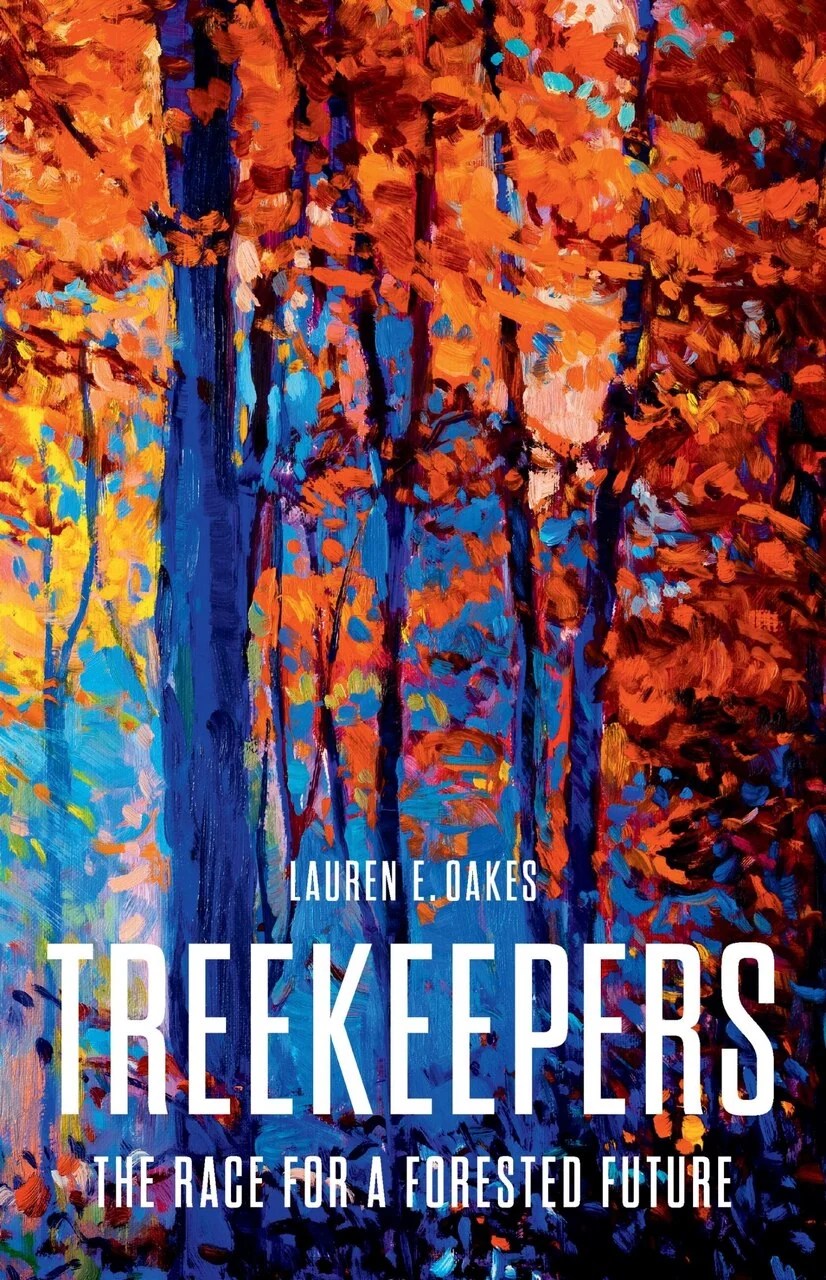
Reading Lauren Oakes, “Treekeepers: the Race for a Forested Future”, was a bit of a bi-polar experience for me, with periods of amazement and hope, interrupted by depression and hopelessness….To be fair this wasn’t all a result of the book, as there’s no way I could separate out my reading experience from the roller coaster ride of social, political and economic upheaval that characterizes our current ‘Anthro-Trump-pocene’ period…and the ‘reality’ that climate change is taking on a ‘life’ of its own, no longer a simple linear response to our irresponsible Carbon burning, resource consuming, habit. Oakes is a conservation scientist and a science writer. She is also a mother searching for a way out of the impending crisis that awaits us if we continue on failing to act intelligently, respectfully and with enough urgency, that we can avoid the worst outcome of what is definitely bearing down on us. Oakes spent 4 years interviewing ‘experts’, yes that dubious group of would be influencers, whose work is to head off climatic disaster through the use of the conservation, renewal, restoration and expansion of Earth’s reduced and still declining forest base, the natural systems and cycles that have supported life’s development, what role they could play in forestalling what appears to be on our way and even ameliorating the damage already done. What she tells here is the story of an evolving approach to a ‘solution’, one that has been rife with misunderstanding, conflict, misinformation campaigns, innovation and setbacks, a process that is not just redefining the problem and its potential solution, but the processes and ‘mechanics’ of how we might do this. Trees, once presented as a silver bullet, in a simple replacement program, are not and cannot staunch the Carbon ‘bleeding’. They do, however, still remain an important component of a larger program. Continue reading
Category Archives: Book review
A Consideration of Uncertainty and Probability After Reading Taleb and Labatut
Probability and uncertainty pervade in this world…not the chance and randomness of the gambling and gaming worlds, but the unfettered randomness of life. In gaming there are fixed/limited odds of an occurrence…in life, not so much. In the world of the geneticist, patterns prevail, but certainties of structure, function and character, don’t. For the theoretical quantum physicist, uncertainty dominates all things. They speak in terms of possibilities and probabilities. Literally nothing is fixed or truly solid, not the air you breathe, your very body, nor the ground on which you stand. Fixity, certainty, is illusory, only apparent as a function of scale, of perspective, of knowledge. As humans, with our limited lifespans, we crave it, behave as if it were so and, with regards to our future, seek to predict it or even determine it. But there is so much beyond our control. Beyond our knowledge. Continue reading
James Rebanks’ “Pastoral Song” and its Message to Us For Change
A friend suggested I read James Rebanks, Pastoral Song: A Farmer’s Journey”, more than a year ago….It went on to my list, with 150 other titles. Inclusion doesn’t put it into some methodically followed cue. Some titles, my interest shifting, fall off the list, others jump to the front, other times, simple availability at the library, brings one my way. I always have two or three in process. I’m dogged and rarely give up on a book once begun so I’m reluctant to read a book based only on someone’s recommendation. With this one finishing wasn’t in question.
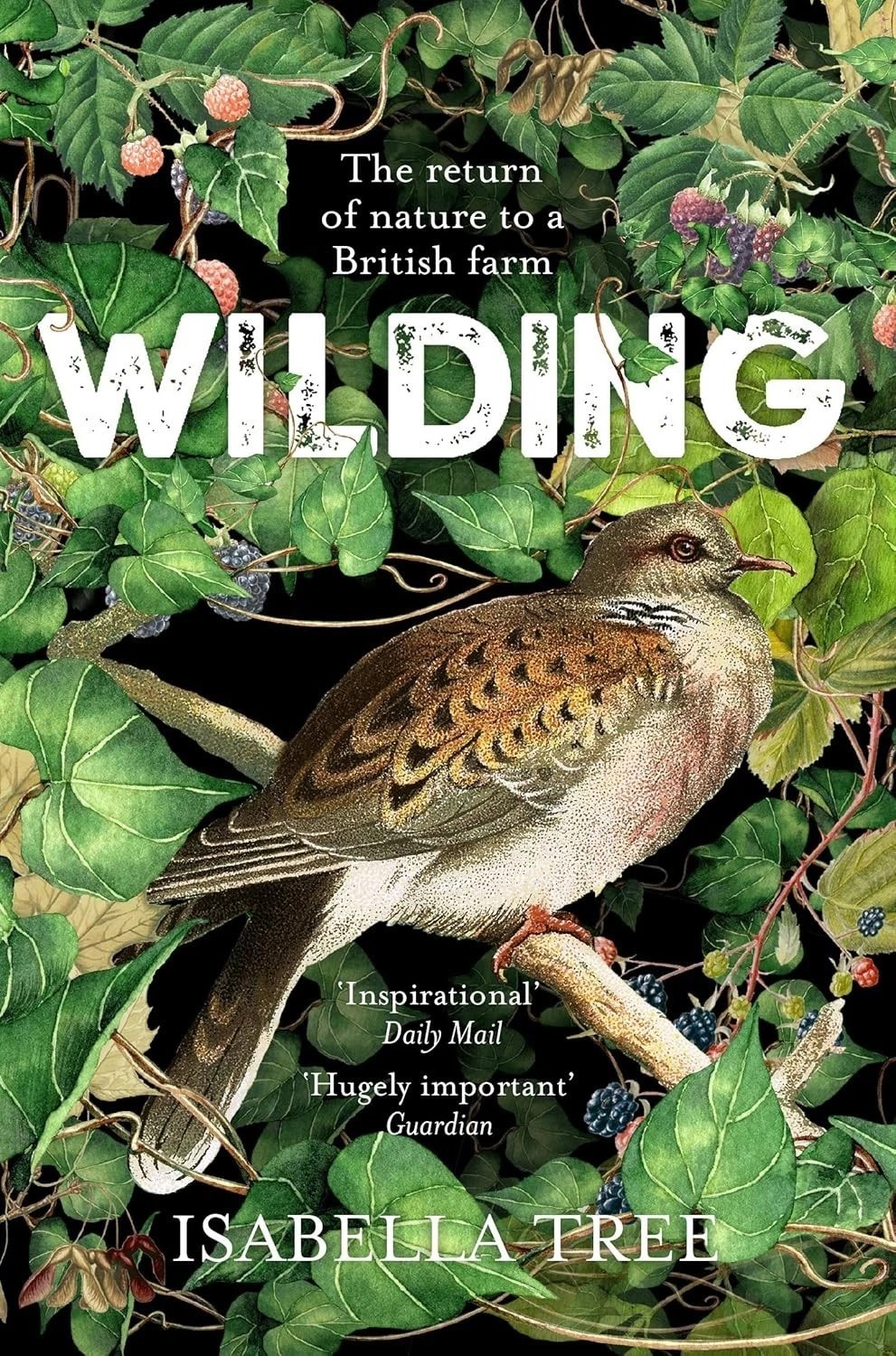
This book is a great companion to, “Wilding:
The Return of Nature to A British Farm
by Isabella Tree, which I read in February. Both discuss the problem of survival for small farmers in an economic world that favors efficiency, minimizing costs, externalizing that not understood or valued, in order to maximize profits. In both cases the authors come to reject the path laid out for them and choose another that prioritizes the health and welfare of the farmer, the land, in its broadest sense including the overlooked and essential lives of the countless wild things that comprise it. Continue reading
On Johnjoe McFadden’s, “Life is Simple: How Occam’s Razor Set Science Free and Shapes the Universe
As a science nerd I found this a fascinating read. Enlightening. I’ve read a lot of science over the last few years and most of these books focus on what the author knows best, on their particular field, their expertise. There are those scientists, more all of the time and science writers today, who are taking a more wholistic view of their subject, joining together all of the ‘bits’ that they are understanding in ever greater detail, and looking at what is emergent, what is a product of the whole, that isn’t revealed in our focused, atomistic, reductionist, traditional approach favored, in fact almost demanded, by those doing science. The author of this book, McFadden, isn’t one of those reductionists.
While his expertise is in molecular genetics, McFadden does not shy away from those other ‘experts’ attempting to put the pieces together to better understand the whole. He himself has done that in an earlier book that he coauthored with, physicist, Jim Al-Kalili, “Life on the Edge: The Coming of Age of Quantum Biology” and in another earlier book, “Quantum Evolution”, which is still on my to read list. In this book he looks more widely at the practice of science, how it influences our understanding of the world/universe/life, how resistant science and society have been to change and how our study of the universe and all that it contains, leads us, at least potentially, to a better, more coherent practice. He builds this around the ideas first formulated by the Franciscan Friar, William of Occam, some of whose ideas later became the standard today commonly known as ‘Occam’s Razor’. Continue reading
Everything is Related, Of and Part of the Whole: Beyond Inheritance, Our Ever-Mutating Cells and a New Understanding of Health and the Economics of Life

One of my most current reads and the book that prompted this posting.When Darwin wrote “Origin of the Species” in 1859, he clarified and developed ideas that had been kicking around by those studying natural history and the origin of life, even the possibility of it’s evolution. Lamarck, von Humboldt, Darwin’s own grandfather, Haeckel and others had been speculating, arguing about certain pathways to ‘now’, but without having done that much serious research into life’s intricate relationships. There’s were less bold challenges or conceived theories. Christian orthodoxy shaped the thinking of the time, and opposing it, well that wasn’t done. Creation was pronounced a one time event, that all life forms that existed, had from the beginning by the grace and workings of God. But Darwin, himself a devout Christian, and Alfred Russel Wallace, did do the research, did examine the relationships in depth, adding their insights, the idea of ‘natural selection’, a process that ‘sorts’ through the accumulations of adaptations across a community and populations, ‘selecting’ those that give them a competitive advantage. These, over time would produce progeny at higher rates and would come to dominate a population and species. Since then one question led to another, as is the way of science. Where do these adaptations, these mutations, come from? How frequent are they? Aren’t our chromosomes ‘protected’ from this random degradation and mutation? Are mutations truly random? What drives them? Evolution ‘shows’ that over Earth’s 4.5 billion years, life has evolved towards greater complexity, organisms innovating new structures, variations and with it an increase in the sheer bulk of life, as more species create and fill more niches. Life on life. This can’t then be an entirely random event. Wouldn’t a truly random process result in no net ‘gain’? Wouldn’t it be a 50:50 proposition? One step forward, one step back? What is going on in this mutating?
Roxanne Khamsi, in “Beyond Inheritance”, takes the reader on a guided tour of our rapidly evolving understanding of the mutation of our cells and what it means. Mutation is an essential fact of life, one central to natural selection and the ongoing health of every living individual, and, perhaps our demise. Mutation, however, is commonly understood to be a negative, a degradation of the ideal held in our chromosomes. What’s going on here? Is it necessary or is it bad?
Mutation, it turns out, is pervasive. Every species, every tissue every cell and cell type is subject to it. We’re not talking about what occurs in ‘germ cells’, our egg and sperm, those all important passers on of our genetic code. There are 30-40 trillion cells, in a mature human body, depending on our size, colonized by a like number of bacterial cells. These cells too, as they are going through a continuous process of metabolizing, internal and external maintenance, repairing and replacing themselves, are much more prone to mutation in this endless process of living. Some human brain cells are thought to survive over the course of our entire lives, but all of the rest, are being replaced at widely varying rates. Those epithelial cells of our intestinal lining are replaced every 3-4 days; we replace around 170,000,000,000, 170 billion red blood cells in our bodies, EVERYDAY. Every single cell replaced in our body, requires that the cell replicate its DNA, the two sets of chromosomes each containing 3.1 billion base pairs, the rungs in the helically shaped ladder of DNA’s structure. 3.1 billion base pairs, each consisting of a specific four ‘letter’ group of Adenine (A), Thymine (T), Guanine (G), and Cytosine (C), a 4 digit quarternary code….Perfect replication of each cell, billions and trillions of times over our lives…‘mistakes’, mutations happen. Organisms, cells, are not machines. We have this idea that machines can perfectly produce products endlessly, but that is wrong. Our continuous ‘cloning’ of our cells is far more precise a process. As the bumper sticker once so popular used to say, Shit happens…and the numbers within a complex, multi-celled animal such as ourselves, are astronomical. Mutations happen. We get stressed, sick, exposed to toxic substances, free radicals, physical trauma, various types of radiation, we age, become sedentary, our systems slow, we slow…as the necessary processes of life go on, within bodies and cells. Most must replicate themselves perfectly over our lives. Nevertheless, given the numbers, mutations accumulate. Some of these enable our continued ‘good’ health, some are benign, while others become ‘negative’ change agents, altering the operation and conditions within us, in what can be very harmful ways. Continue reading
On Wilding and the Return of Nature: Thoughts on an Idea
Talk of environmental crises is everywhere, climate change, mass species extinctions, losses of critical habitat, the privatization of once public resources and landscapes (and their subsequent ‘pillaging’ by corporate entities), critically dropping aquifers, what a chaotic climate may mean for world agriculture and our food supply, a world beset by an increasing rate of diseases and diminishing efficacy of the tools we have to combat and treat them….it is daunting and depressing. At the same time, generally barely mentioned in mainstream media, are notices of studies and ideas of what we can do to not just lessen these problems, quite a few of which are being implemented, but to repair the organic and global systems, whose faltering is leading to these increasing problems and potential catastrophes. To make head way on these is going to require a much more concerted effort by most of us. What, many are asking, can we do to usher in a return to a healthier, better functioning, world…before any looming system ‘course corrections’ do the ‘work’ themselves, eliminating the human problem, that ’we’ have collectively become.
Isabella Tree’s, “Wilding: the Return of Nature to a British Farm”, which prompted this post, supports an approach in which mankind takes on a more responsive and respectful, while simultaneously, a less active role, in the management of the landscape. A ‘less active role’ because what she’s describing requires that we step back, relinquish some control, and allow the powers of nature to heal itself, stepping in where, when and how we must when those ‘forces’, diminished to the point where they are ineffectual, need the support…but no more. She calls for us to trust that our own evolved status is a product of the natural world, a potent nature with the inherent capacities and tendencies, to create, balance and heal, in like proportion to what it ‘takes’ and consumes; that we reclaim our ‘membership’, our historical relationship with this place and all of the life with which we share it. We are active agents of change and must, to the same extent, do the necessary work to heal those wounds, we’ve inflicted upon it through our economic demands and industrial power. Her story here is one of a shared fate and a faith in life, which is illustrated time and again as she and her husband, Charlie Burrell, work to understand the land and life they are beginning to re-envision, more as curious students than confident ‘experts’. The process quickly becomes one of open discovery as they attempt to understand the health of the place they previously managed as a farm, with the economic expectations of a modern world that has itself become disengaged from life, seeing it narrowly in economic terms that had long ago been separated from ecological reality, limits. and the richness of a place. Continue reading
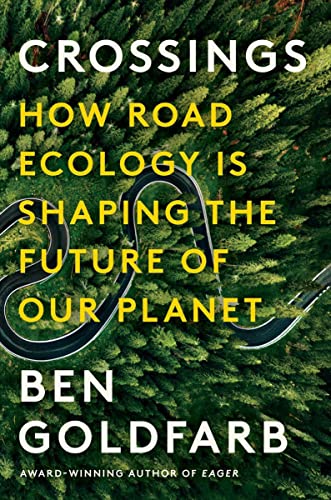
Crossings: How Road Ecology is Shaping the Future of Our Planet, My Thoughts on Goldfarb’s Book
Had I not read Ben Goldfarb’s 2018 book, “Eager”, I probably wouldn’t have picked this one up. Why would I want to read an entire book on ‘roadkill’? But I trusted him. And so I read it.
I found his writing here crisp and engaging, like his other work, but I was still hesitant and did my reading in fits and starts. I’ve read several books lately about impending environmental crises and I didn’t really have the energy to do another, but I did finish it and found it a worthwhile and satisfying experience. Amongst these earlier books was Slaght’s, “Tiger’s Between Empires” which returned repeatedly to the problem of how devastating even the relatively little travelled roads of Russia’s remote Primorye Province are for its endangered population of Amur Tigers. In the world of ecology, roads routinely bring death to the wildlife they literally impact, as well as because of the discontinuities they create in the landscape, physical and chemical changes they visit upon the animal’s environment and the surrounding biotic communities. This is about the wholesale implementation of a technology ‘alien’ to the animal world, that purports to meet the ‘needs’ of humans while making little allowance for the uncounted species that reside alongside them. Continue reading
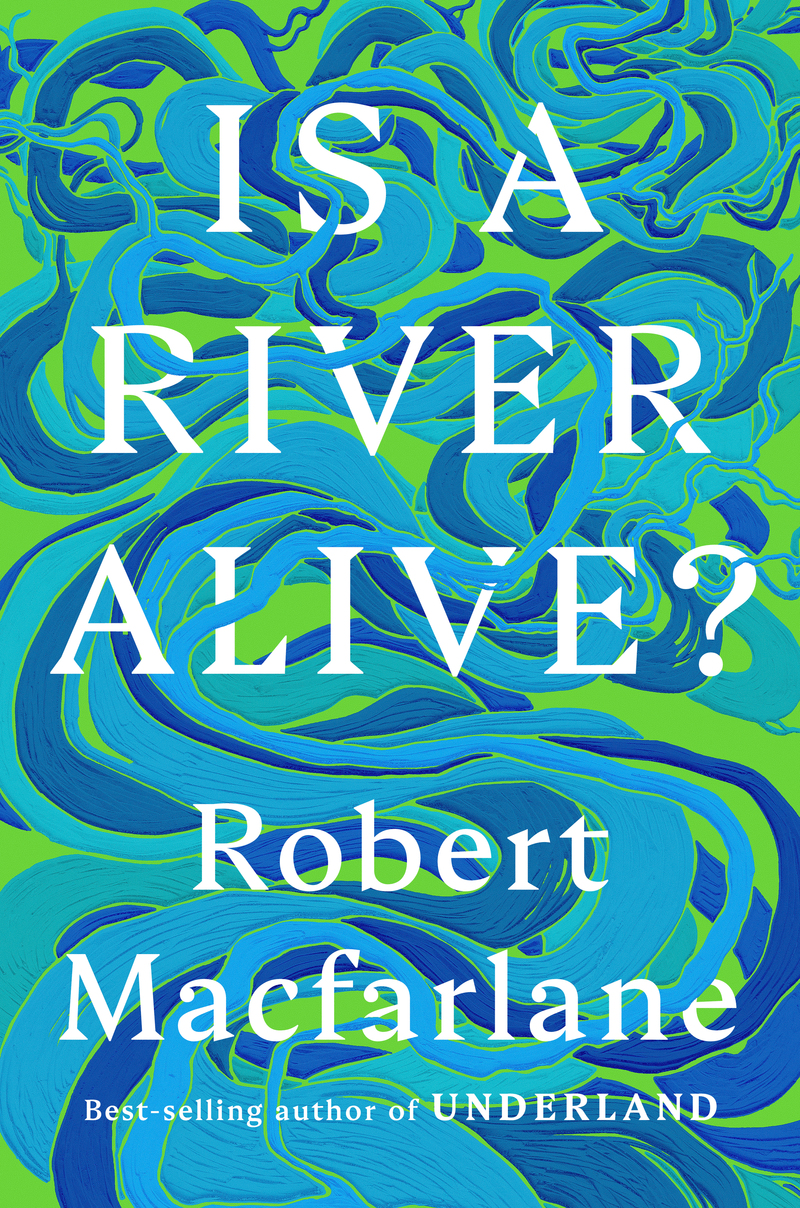
Is a River Alive? On the Rights of Nature, an Adventure Story and a Shifting of the Dominant Paradigm
Being a horticulturist, a student of ecology, evolution and all of the usual life science topics, my reading list is long with books I find and others recommended to me by friends. This most recent is one of the latter, “Is a River Alive?”, by British writer Robert MacFarlane. I hadn’t read any of his other books and my friend John thought I’d enjoy it…I did. I listened to it and, as it was read by MacFarlane himself, he added a bit of rhythm and emotion in his reading that would not have been there were I reading it in book form. This is particularly significant as you read the more emotionally driven sections, which, in this format, the ‘Canadian’ section, turns out to be a rollicking, adrenaline laced adventure story.
While focusing on rivers, this is a book about the rights of nature, legal and otherwise. Why, does the growing community of such thinkers and activists, seem to think nature, in all of its forms, from fungi to mountains, rivers to oceans, the grandest to the most minuscule living species, deserve rights comparable to we humans? What makes them so special? MacFarlane and his compatriots, would turn that around, instead asking what makes we humans so special as to deserve that which we deny literally all others? Their only value, in how they serve us….The rights of nature proponents do not argue simply for their own favorite species or place, many of those so advocating, and protesting, come from thousands of years old indigenous traditions, peoples who have always recognized the links between all living things and those places and forces which permit and support them. And this isn’t because they are simple, backwards, savages or naive. Such thinking is not born out of the heads of green patriots, earth firsters and narrowly focused academics. This is a movement based on memory, connection, of those living in relationship with, in which respect for all things comes first, a world in which life is a gift, to be treasured…all lives, all species, all places, it is a remembering that no one individual, species or place is so special that any and all others may be sacrificed for its needs, its demands, its hungers. Continue reading
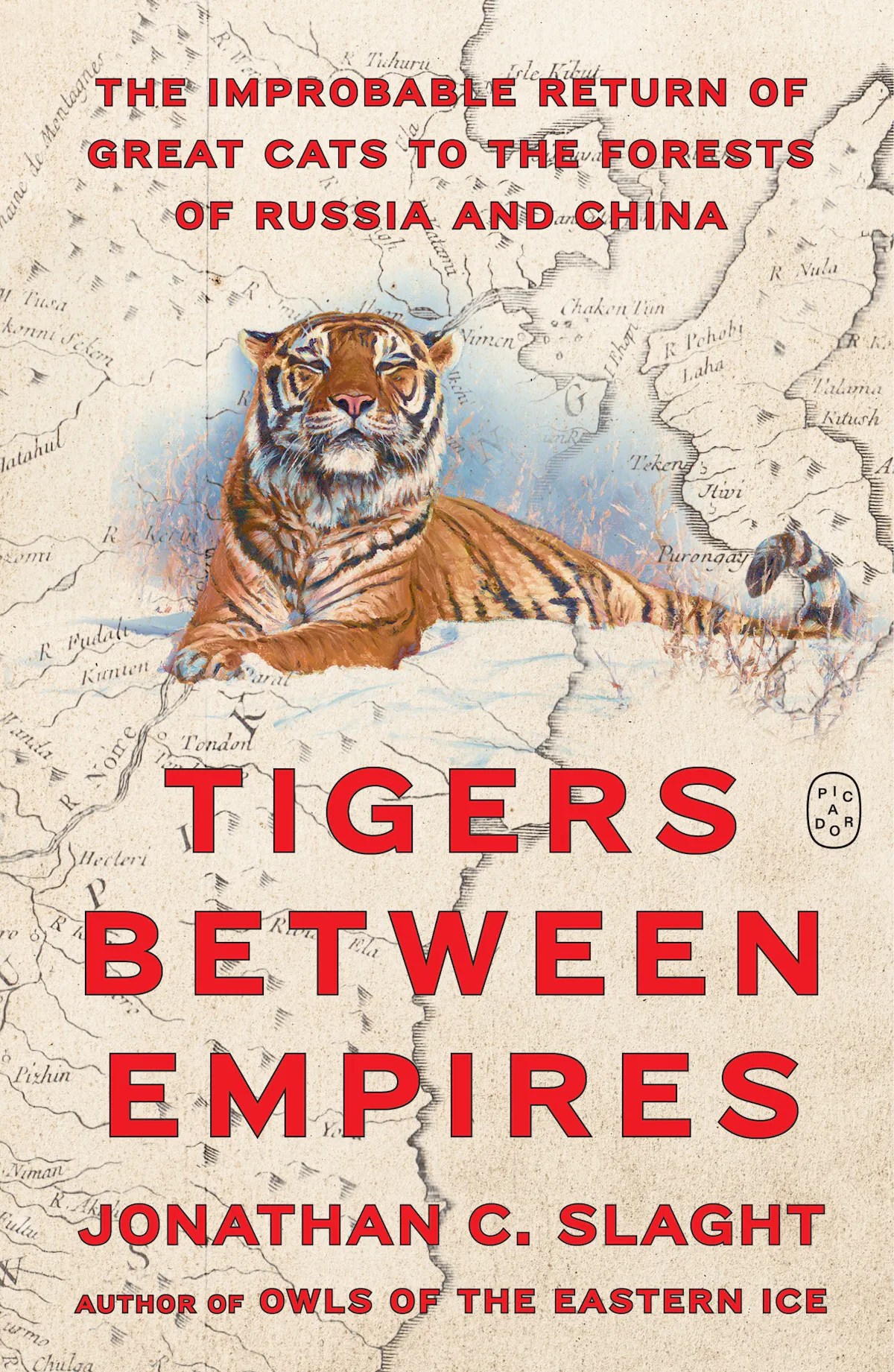
Tigers Between Empires
Three years ago I read Jonathan Slaght’s book, “Owl’s of the Eastern Ice’, a book that takes the reader into the inhospitable wilds of Russia’s Primorye Krai, the province immediately north of the Korean Peninsula, its multiple mountain ranges pushing up against the Sea of Japan. With a latitude the same as Oregon and Washington, its winters are far more severe. The book guides you through the mountains and snow, along with the researchers and conservationists, both Russian and American, studying the Blakiston’s Fish Owl, the world’s largest owl, and as the name implies, one that hunts fish in the region’s streams
.
I’ve just finished Slaght’s second book, “Tigers Between Empires: the Improbable Return of Great Cats to the Forests of Russia and China”. Set in the same rugged country, Slaght takes the reader along on a 30 year effort of study and conservation of the Amur Tiger, previously called the Siberian, a region they don’t exist in. You go with them tracking, setting snares next to scent trees, around kills the tigers are still feeding on, and narrow game trails the tigers prowl, as the researchers learn and refine their capture techniques along the way, sometimes at great danger to themselves as they attempt to capture one of the 200-500 pound cats. No one had ever done this before. Snaring, anesthetizing, weighing, measuring, assessing their health and attaching radio transmitter collars so the can track them across their ranges. Continue reading
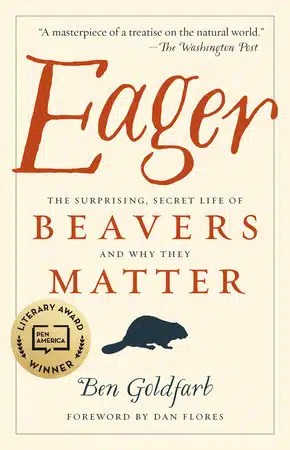
The Eager Beaver: Sociology, Ecology and the Role of Relationship in Life and Community
Ben Goldfarb’s, “Eager: The Surprising, Secret Life of Beavers and Why they Matter”, is an excellent model for other authors who write on ecology for the interested lay public. It is also an excellent entry for the novice into the world and thinking of ecology. As in any other ecological examination of a species, Goldfarb tells us about the roles and relationships the beaver has in their particular landscapes, how they fit in. In doing this he tells its history, that is, its historical role in the lives of us humans, and we in its, alongside those it shares intimately with the other species of its biotic community. It is a book very much about this important animal’s relationships, and, by extension those of our own and every other species on the planet. The beaver’s, or as the author also refers to them, the Castorid story, (the latinized name of our North American species is Castor canadensis, its old world counterpart, the other species, Castor fiber) is closely linked to our own. We, as the ‘dominant’ player in our landscape, have overlooked the beaver’s pivotal role in the world of water including the rivers, streams, ditches, ponds and seeps that ‘water’ the desert. Beavers were essential in the historical landscape and now, in their absence, our landscapes are often very much diminished. Wildlife, and even farmers and ranchers, who have often vilified them, are slowly beginning to understand the benefits their presence can provide, benefits that far out weigh any negative impacts they bring with them. People are, however, stubborn with long and selective memories. It is not easy for anyone to let their misconceptions go and accept what you have always rejected as patently false. Continue reading