
 The 20th century brought to the fore the supremacy of genetics, the time in which the secret of life was about to be explained by the DNA held within the double helix of our chromosomes. With our mapping of the human genome, at the last century’s close, after only a short time of examination and study, the secrets of life would begin to be revealed and, with them, the keys to defeat disease and, through our manipulations of these genes, our ability to design improvements that would make us resistant, or even immune, to many of our maladies. Available to us as well would be the ability to select desirable qualities in our progeny. It might even make possible the knowledge and technologies to stop, or even reverse, aging. Genes held the key within their previously unknowable ‘blueprint’ guiding the development of each individual, of every species. Industries have sprung up around this. Billions, even trillions of dollars, stand to be made as we approached our coming futures. But, as is so often the case with science, advances in knowledge bring with it entirely new questions, and what once promised to be explicable, becomes shrouded in an unexpected haze of complexity.
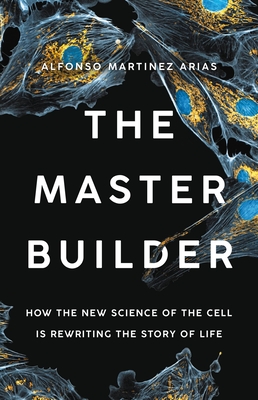
In this book author, biological researcher, Alfonso Martinez Arias, explains what happened, over the course of his 40 years long, so far, career, over which biology has begun to see, borrowing from Richard Dawkins’ phraseology, the organism itself as the ‘blind watchmaker’. DNA is not the ‘Rosetta Stone’ of this new biology. It is a key component of the much more complex and organic process which redefines DNA, not as the preeminent captain guiding the ship of life, but instead, in the more limited role of the code for a set of ‘tools’ and materials essential to the development, the genesis, of life and its ongoing maintenance. In it are the instructions for a rich tool box of proteins that serve as essential elements for the formation of the organism, as well as for the hormones, the chemical signals by which the cell and organism ‘call’ for what they need, precisely where and when they need it. Arias characterizes DNA as the ‘hardware store’ which provides the instructions for the material and tools that the organism can ‘choose’ from in its own self creation and from which it relies upon to maintain itself over the course of its life. In Arias’ ‘story’ it is the cell and the carefully aggregated collection of cells that comprise a multicellular organism, that makes the choices. It is the cell, that through complex chemical signaling, calls for what it requires, precisely when and where it needs it. It is the inherent wisdom of the body.
This is a fascinating read. Those of you who have been following my little adventure, are aware of how often I say this. I try not to ‘waste’ my time following false leads and rely on authors whom I respect, who ask the bigger questions, as to which direction and which author and books, I should consider next. Biology, while still concentrating on the atomistic approach, analyzing its subjects at a micro scale, a process that has yielded many important insights, the new biology is beginning to understand that the answers to the larger questions will not be found there. Organisms, and all that follows form them, cannot be revealed in an arithmetical approach. Life is not a one plus one equals two phenomenon. Nor is it a simplistic linear, if this then that, phenomenon. As Arias discusses in his book, doing lab experiments in vitro, in the lab with strict controls, gives us a very limited look into the complex interactions of life’s processes with in the cell and organism. A multicellular organism, such as ourselves, contains literally trillions of cells and trillions more seemingly unrelated cells of bacteria, yeast, fungi and viruses, many or even most of which, are essential, for the healthy functioning of a complex organism’s functional self. These may seem ‘random’ relationships, and at a certain level they are, but they form a functional whole, a whole which results in, for the most part our own homeostasis, our health.
Over his career Arias spent many years in his lab with his co-researchers, post-docs, masters candidates as well as in cooperation and in friendly competition with other labs around the world at various institutes and universities, studying the esoteric science of embryology, of how an organism develops from one egg cell fertilized by one sperm cell into a ball of undifferentiated cells that comprise a blastula, which then begins the process of gastrulation, in which the individual begins to differentiate, forming a top and bottom, left and right halves a primitive gut and the precursor cells from which all other cells will develop on cue, in the correct positions, in the precise number, before adding other specific, differentiated cells, produced by the organism’s stem cells.
He, and many others, spent many years studying available organisms, with rapid enough life cycles that they could study them over reasonable, human scale periods, testing different hypotheses, on organisms that would not get them in ethical or legal trouble. As you might expect, most of the impetus driving such research comes from our desire to understand the human condition. One of the insights that came early on was that from fertilization up into gastrulation, virtually all animal organisms follow a very similar pathway. In fact at this stage, through gastrulation, it is very difficult to distinguish one multicellular animal/organism from another. Interestingly, while species vary in the earliest stages, such as those differences between those small, but observable and transparent, eggs of fish and amphibians, compared to the much larger, hard shelled eggs of birds and reptiles, and the tiny eggs of mammalian species, secreted away in the mother’s ovaries and their embryos, follow a very similar developmental path. Differences begin to accrue after gastrulation and the process continues, as each individual follows the path of its species. The earliest phases remain remarkably similar. This process, Arias, points out, illustrates the common heritage of all.
He goes to some length, without resorting to the detailed esoterica of the processes involved, laying out how this occurs, discussing the hows of inter and intra-cellular communication, the movement and capacities of various cell types and their coordinating proteins. It is a complex and dynamic balancing act that continuously references the cells themselves, the tissues and organs, which they comprise, the individual as a whole and the environment and community within which it resides and could not live, at least for very long, outside of.
Interestingly, research is revealing that the genetics of all of these species of multicellular animals are all but identical. Why? Because the materials and tools each species uses in its development, metabolism and maintenance processes, are all but identical. What accounts for differences in phenology, in appearance, resides in the cell and individual organism, in its being. Arias writes of how the organism, in its own development, sculpts through time and space, using very similar tools to arrive at very different ends, in terms of outward appearance and function. These body types, cells, tissues and and organs are, as he points out ‘emergent’, products, if you will, of the process itself, in a continuous process of unfolding, each moment ‘emerging’ from the previous. It is not the genome that determines us, but how it is used in this process by the cells and organism itself in the context of its wider community and the extant conditions.
Researchers have discovered a host of unexpected outcomes, which directly challenge the primacy of the gene in an organism’s development, such as how, for example a gene that figures prominently in the formation of the human eye, is identical to the gene in a fruit fly that creates its complex of multiple tiny eyes, consolidated into two large ‘eyes’. This pattern repeats across many species, for many different tissues and organs. And, how did they discover this, by substituting the protein called for in one species for the one in another and testing the performance. The protein is chemically the same. In other cases an organism will utilize a ‘tool’/protein for an entirely different purpose. The cell/organism is often able to adapt the ‘tool’/protein for its own purposes. The genome of an organism then does not determine the future of the organism. The cell/organism determines how and where it will be used and what it will be.
Arias dedicates some pages to disease and the idea of genetically heritable diseases, that the appearance of this gene or suite of genes, or their mutations, lead to a particular cancer say. What science is finding is that there are very few diseases, or for that matter, characteristics at all, that can be definitely attributed to a specific gene or suite of genes or their mutation. Most such conditions are not heritable, as we had once been lead to believe. In fact many such diseases and conditions are the result of mutations within the many billions of cells that make up our bodies, the ‘somatic’ cells, which are not involved in reproduction. Thes somatic cells are routinely repaired or replaced at a variety of rates as we age. For example, the cells of our intestinal wall are replaced in their entirety, every 5-7 days; which in this endless process of cell division, mutations occur. The duplication of the chromosomes within the individual nuclei, results in the production of many millions, eventually billions of duplicates. Naturally, in this process, some will suffer mutations. This will not occur to all of them and certainly won’t all at once, but it will in a gradual and accumulative way. These may or may not be individually significant in terms of disease, but given their collective occurrences over our lives, at some point, this will lead to compromises of those cells, tissues and organs, a diseased state. All of this mutation, degeneration, is going on continuously within our bodies at varying rates.
Those chromosomes in our gametes, our egg and sperm cells, however, remain separate from this process or continuous replacement, protected in our gonads, to be passed on to our offspring through the process of reproduction. These are separate from all of the functional, somatic, cells that make up the working, functional, organism. This is one of the reasons those like Dawkins once viewed life in terms of the selfish gene, the entire purpose of an organism being the perpetuation of the gene. The ‘new’ science supports an alternative view.
The science and ‘promise’ of 20th century genetics was that with this key solutions would be found for many, if not most, of these conditions and diseases. Arias ventures into the land of speculation being presented by private companies and self promoters, of designer genes, a future in which parents may choose their children’s genetics thus leading to a transformation of what has been a far more random process of natural selection. Arias is careful here, conservative, and respectful, of the billions of years old process of natural selection that has brought us to the world today. And within it is a warning against hubris, and the profit motive, that drives so much of today’s world, in which our collective actions are short term and selfish. Science, today, as it loses its public funding, falls ever more under the control of those attempting to gain ready profits, selling the public tantalizing and seductive futures that it cannot possibly deliver.
The world that Arias begins to describe here is one of wholeness and complexity, full of wonder. Whether looking at it at a cellular, organismic or living community level, it is a world of complex feedback loops, positive and negative, a system that depends on richness and the freedom to express itself in a ‘healthy’ manner. Our reality today is that of a world that everyday slides closer to one in which only the human matters, in which only a subset of that human community, the priorities of the richest and most powerful determine every outcome. This assures a loss of diversity and vitality as health, homeostasis, depends upon the widespread and full functioning of all of its members.
At the end of his book Arias cites other authors for the interested reader to pursue, among them Sidhartha Mukherjee, an oncologist, who has, among other books, written, “The Song of the Cell”, in which he too calls for an examination of what, increasingly, appears to be a central role for the cell in our biology, our genesis and health. Both authors are calling for a more wholistic approach. Take your time. Read these.
I would also strongly recommend reading, “The Way of the Cell: Molecules, Organisms and the Order of Life”, I review both of these in earlier posts, Franklin Harold’s look into basic cell biology. He too calls for a more wholistic approach stating flatly that there is no way that a complex cell, organism and its operation, are determined by its DNA. Both of these will provide you with a fuller understanding of the complexity of the workings of the cell and its essential role in organisms.
A few quotes from, “The Master Builder”, by Alfonso Martinez Arias.
From Chapter 3 ‘A Society of Cells’, pg. 100-102
One important feature of genes, the transcriptional control region…[go to determining]…when and where a gene should be expressed; they are the handles the cell uses to decide what to do with the gene. […] It is thought that changes in these handles are an important way to re-deploy genes for new functions. As much that we know about genes, this is not in doubt, but it is proteins, not genes that give cells the ability to organize themselves in time and space in new ways. The emergent structure and function of cells controls the subsequent use of genes, not the other way around, and control regions are the means for the cell to access genes. How else can we explain the fact that many genes from other organisms remain so effective after being imported into different species?
Understanding how animal (and plant and fungal) life emerged, demands that we see genes not as the instructions or blueprint for an organism, but rather as the instructions or blueprints for the tools and materials that cells use to build organisms.
….So it was that to truly unleash their creative power, cells made use of—or in the way evolution does, probably invented or discovered—signaling systems: BMP, Notch, Nodal and WnT, which arise at the same time as the multicellular organisms. How and whence these molecular devices came into being are not known, but their existence allowed cells to play with and master space and time.
….Command over time and space is only the beginning—armed with signaling systems, cells are able to monitor and control the spaces they create in response to changing conditions that they sometimes create themselves.
….With the advent of signaling systems evolution, gifted cells with the tools to remake their world through exchanges of information, and importantly, with the ability to control the activities of genes in space and determine the pace of the schedules that their programs generate: cells use and control genes.
Page 110,
Building animals and plants requires the creation, arrangement, differentiation and coordinated activity of many cells and cell types. These arise after the germ cells have been set aside in a self contained area of the organism. The germ cells [in a human the egg and sperm cells each carry 23 chromosomes, which will be combine with 23 from the other during fertilization] have no input into how the organism is built. Indeed, during the only time that germ cells make use of the genome they use hardware dedicated to protecting DNA from being altered and performing meiosis. The function of the germ cells is to ensure that a pristine copy of the genome is sheltered from the hustle and bustle of animal construction, and as a matter of fact, as soon as the germ cells emerge, they shut down forever the possibility of becoming any other cell. They close down the genetic programs that lead to the generation of different cells. In the rest of the organism, though cells can do with the genome what they will, so while every other type of cell in the body harnesses the genome to further multicellular cooperation, the germ cells and gametes are harnessed by the selfish genome, which uses these special cells as their vehicle for time travel untouched by the creative processes associated with the generation of the organism from the point of view of the cell and the organism. The genome is a toolbox that cells use to make a hand [or any other tissue, organ or body part] and the egg is simply the […] payment for accessing it.
Page 187
….the cells are the ones who count and read signals from their neighbors and assess their position in the community, sensing not only the chemical signals they exchange with each other, but also the physics of geometry, tension, pressure and stress within and across the group. It is the cells, that in agreement with their position and surroundings, reach into the genome to turn on or off the tools they need to build tissues. We know that the cells are in charge because they are capable of changing what they are doing if they’re moved from one location in the blastocyst to another or if their society of cells is split in two.
There is some complex jargon in here, but as I’ve counseled before, be patient. The author has done a good job at making this accessible to the interested general reader. You need not be a Phd. candidate in cell biology to reap valuable benefits. The most important lessons are big picture ones which speak to complexity and the relationships all organisms share. There will be no quiz at the end.
 GardenRiots