Category Archives: Uncategorized

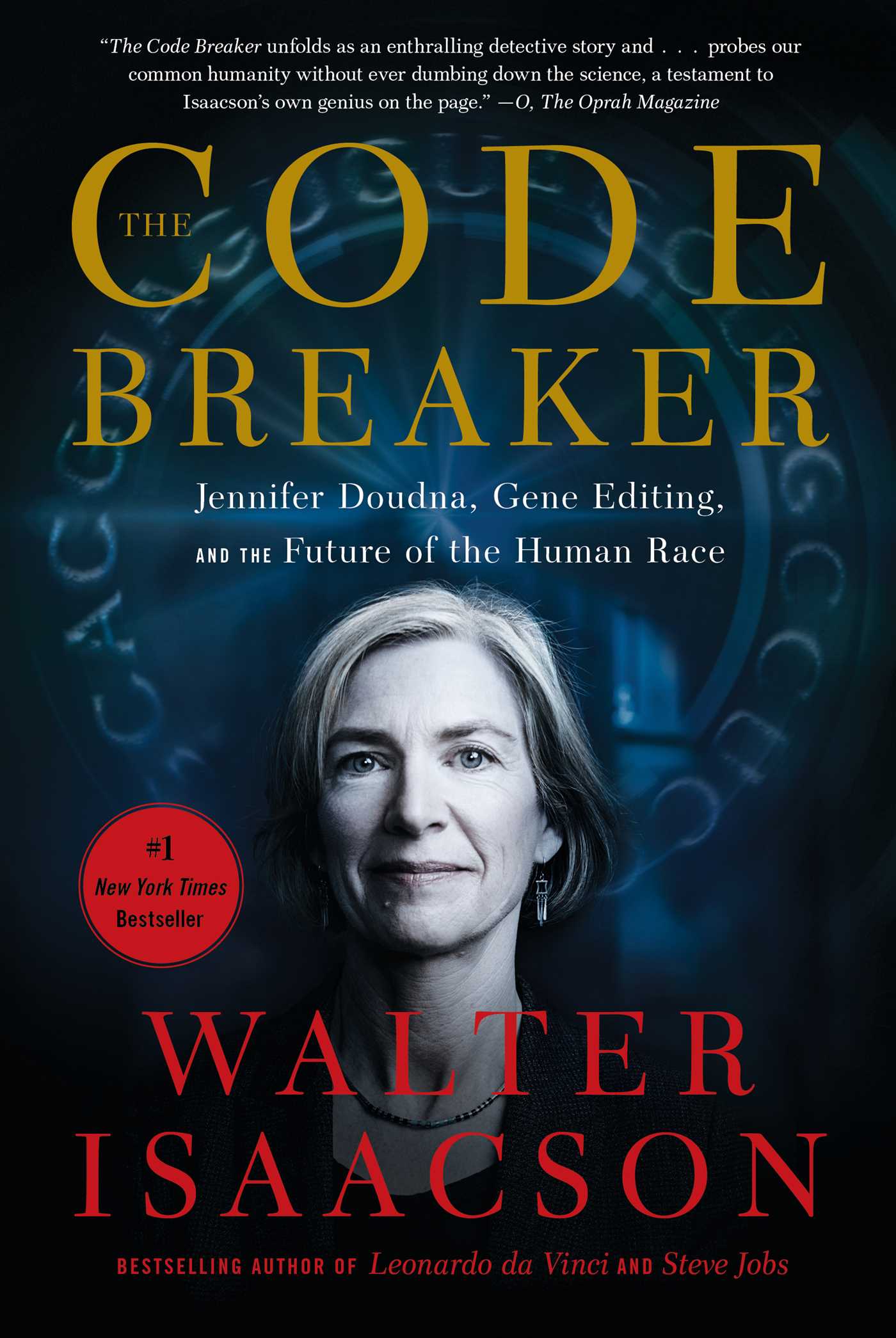
The Code Breaker: Jennifer Doudna, Gene Editing, and the Future of the Human Race, a Review

As a horticulturist, and total science nerd, I always have a book related to the life sciences in process or on ‘deck’. I don’t understand the aversion so many prople display toward the sciences, the ridicule they so often heap on those who conduct the studies and their preference to simply take the unfounded stories and opinions of someone they ‘know’ over the studied and supported work of science.

Expertise and science are often publicly attacked as efforts by the ‘elites’ to assert control. Science they claim attempts to intentionally complicate. There is, they seem to insist, nothing of value in the work of scientists….Really? So we discredit them and cut their funding, while loudly denying that their work has any value at all. Scientists are, they claim, blind to what is obvious to anyone. They seek research grants to study frivolous topics, so that they might avoid having to get a real job. We reward ignorance.

Where do the technologies our lives depend upon come from? Yes, science is hard, especially if you can’t be bothered with understanding its complexities and how its work is done. But, because you may not understand something, doesn’t make it any less real or valuable. Where is the waste or sin in wanting to understand? It improves lives and drives our economy through the development of the technologies it has spawned. When society rejects science, the prople who do it leave, to other countries, our economy stalls and we fall behind.

Science is not anti-religion. There will always be space for the unknown, for mystery. Explanation does not eliminate the miraculousness of life. If anything does that it is ignorance and an insistance on a world thst denies all of its amazing complexity.

Science cannot deliver all of the answers. It will always spawn more qustions as it deepens our understanding. It does allow us, however, to make more informed decisions, to improve our lives if we implement it effectively, fairly and responsibly. When we don’t, that’s a failure of politics, not science.

Read this book. Educate yourself. This book speaks to how science and those who do it, work most effectively. It speaks to possibilities for our lives and our health, what we could do if we weren’t so frightened of science. It speaks to the amazing diversity of life, of what people and organisms share, how we could improve the quality of all of our lives. It examines the motivations of those doing science, the competition and necessity of collaboration. It is an exciting read as teams compete to understand and, driven by humanity’s collective need to develop better tools to defeat COVID, how cutting edge tools, and the scientists who developed them, did so. No, Trump didn’t save us. The universities and private labs did while in collaboration with some of the big pharma companies. Trump’s administration stood on the sidelines or in the way. The author does not address the political problem directly, but it is revealed in the telling of the larger story.

https://www.theguardian.com/books/2021/mar/11/the-code-breaker-by-walter-isaacson-review-a-science-page-turner?fbclid=IwY2xjawLyThpleHRuA2FlbQIxMQABHkZ41LuyxiElPX4XJVs6MrxD1pcI-GVXrK67I_bUG_qUL85ZI37Ib84qpf6F_aem_qjbkulnHrBj4tNQP1v1RiA

What to Do? What to Do? On the Meaning of One’s Life

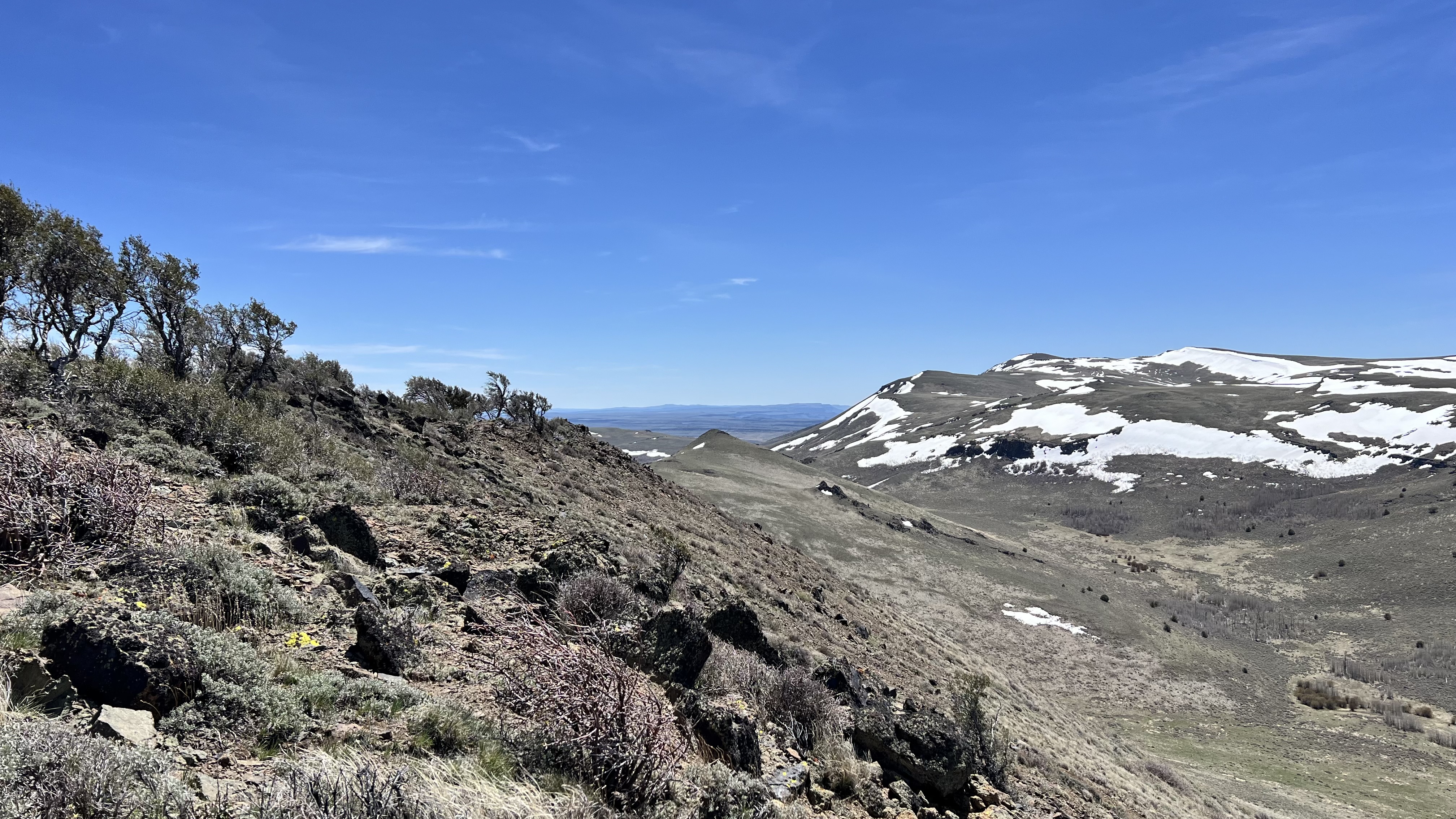
High in the Warner Mountains, Mountain Mahogany edging the near rim, looking across to Hart Mountain.

I spend a lot of time these days thinking about the meaning of life, understanding that the purpose of one’s life, is not a singular question, but one of the whole of it. Far too much time is spent with the concerns of one’s individual life; one’s accumulation of wealth, power, accolades, stuff….We are social animals, members of interwoven human groups, but are far more than that. Each of us are an integral part of ALL of the life around us. At the core of the question is who we are and what we ‘should’ do. Given all of the failures and goings on that bombard us today, all of the ‘takers’, abusers of power, the automatic almost banal destruction of the life around us, the losses accumulate and easily overwhelm us. Our’s today is a world of shrinking possibility. Calamity and catastrophes confront us from every direction. What is one to do? Continue reading

Some Thoughts on Social Media and the Pending Collapse of America

I posted this elsewhere in shorter, less developed form, as a comment on a friend’s post and decided to post it here, more fully, on my page. It describes one of the ways in which I see how our society has strayed off the ‘path’, how we have substituted virtual, social engagements, for direct human engagement with both the place we live and the people and life ‘of’ it. In the process it has helped bring us to the doorstep of a bleak dystopian future. More and more Americans have adopted virtual relationships replacing the real and necessary relationships of healthy communities and a vibrant functional society. We are succumbing to the irresistible siren call of social media’s ‘brave new world’, losing ourselves to the algorithms and machinations of Facebook, Instagram, Tik-Tok and X, the former beast that once was Twitter, each run by megalomainacs of almost unimaginable conceit. These and other lesser known ‘engines’ driving social media prey particularly on our weaknesses as human beings. Their ‘generals’ have taken various social and psychological studies and used them not to heal us, but to take advantage of us for their purposes. Seduced we participate, not just willingly, but enthusiastically, voluntarily becoming entangled without understanding the cost it demands of us. We are caught up in the untested experiment of virtual society that is steering us into a startlingly unpredictable and frightening future. Which is the ‘best’ social media platform? Is there one? Can we ever get what we want/need from any of them? Is there a way out? How do we regain control of our lives? Especially when so many seem perfectly ‘happy’ with the game that consumes them? Unaware and fatalistic?

Our economy and technology are predicated on constant change and the dissatisfaction that we feel in consuming it. It ‘tells’ us that it will satisfy our need, while doing the opposite. The initial flush of excitement we feel, soon dissipates and leaves us hungry for the next. We never find satisfaction. Our consumption is never enough and we are never sufficient in ourselves. While engaged with social media we are continuously under a bombardment of ads, algorithms and various methods of psychological ‘warfare’, prods and judgements and, as a result, we learn that we are insufficient. Social media today has become a ‘need’, a product we consume that promises connection while at the same time it often works to undermine local community, which has been a cornerstone of our species over the entirety of our existence.

It is one thing for us who grew up, having formed our basic personalities, our approach to the world and patterns of thinking, before we adopted computer use and social media which followed. It is very different for those unformed young people who engage with it today, absent these basic social structures and our individual neural networks derived from these relationships. Such a ‘base’ has historically developed over time through the repeated social contacts found throughout local intact, functional, communities. We are as a people today, increasingly, unmoored, more isolated from the people around us, wider society, and the landscape itself. All suffer from this loss. Initially the computer and the evolving internet, was a tool to help us think, an incredible connecting resource, a new tool supporting communication, and it still could be. Much of our contact with it has transformed into a technology that sustains ‘its’ growth, and the profits of those who guide it, while shaping us to meet its ‘needs’. For younger people without an already formed social and neural base, it has begun to determine our relationships, our world outlook, how we view ‘other’ and even determines how we think. Our relationships are increasingly ‘virtual’, selected for us, by a system with its own priorities. It plays a dominant role in the formation of our neural pathways, while direct and local social interaction is minimized, our choices less ours, as the algorithms make them for us.

Neural pathways are shaped in ways analogous to muscles, they form and are reinforced over time through use, or atrophy with its lack. They, in a very real sense, determine or at least limit, the ways in which we each think, help define how and what we think. They set the stage for our imagination and in so doing help determine the limits of possibility. In a world of such dominant social media, what is imaginable, or within our capacity to consider, becomes narrowed down to that of the dominant algorithms. Imagination, perception, our ability to problem solve, our options, all narrow down to fit within the algorithm. In a more open, free, connected society, the possibilities, the solutions are expanded. In a society fully engaged to social media the possible future is narrowed and in our present state, that future is far more dystopian, even apocalyptic. Our brains, particularly those of the young, are thus engineered to fit the algorithm, its possibilities. That which is outside of these pathways, our patterns of thinking, our experience, in a very real way, do not exist to us. The virtual world, the ‘world’ of algorithms, the world outside of our choosing, becomes ‘real’ for us, while the physical, biological world, the world of unimaginable relationships and possibilities, in which we physically exist, upon which we depend for sustenance, shrinks away from our awareness, our concern and our control. More and more begins to simply ‘happen’ to us, beyond our awareness, our control and we yield, not because we must, or because they are no options, but because we have become ‘blinded’ by our consuming relationship with the variously determined realities of social media.

We older adults, are less affected in these ways having pre-established patterns in place, but we aren’t immune to them. In fact we can become very dysfunctional as our more entrenched belief systems, our ways of thinking, our world views, come into continuous conflict with the virtual worlds of social media. We didn’t see this aspect of this powerful technology coming. We don’t ‘understand’ and as we age, many of us tend to retreat from its onslaught. Our internal conflicts can lead us to rebel and reject these technologies in their entirety, along with those who promote its use. Our response often takes the form of rejection and a retreat to an imagined before. Social media impacts each and everyone of us. The sharpening disparities and conflicts very often result in a rejection of the entire ‘package’, the good with the bad…and there is much good that has genuinely benefited society, but the selfish predatory nature of social media in its current form, as it enriches its owners and bestows a level of power on the few this world has never seen before, once again simplifies these questions into a black or white, either/or, all or nothing question. We are overwhelmed with ready access to so much information today, more than any of us can cope with. It is presented with such rapidity and with little attempt to understand it, that it becomes ‘worthless’. We become ‘numbed’ to it and reject it out of hand. These social media corporations do this intentionally, so that they might gain power, as the majority retreats and gives it up. Younger people don’t see this change because they are more fully integrated into social media. Their ‘base’ is different. They have a learned dependence on it which they take for granted, much as do those older of us, whom without examination, cling to our own social conventions of the past. Today we are drowning in information, data and fact. Social media, seductively, both adds to this problem and promises a way out as we increasingly become engaged in our own chosen, individual worlds, looking for a calm in the storm of information. We seek distraction from the confusion of a world that intentionally pushes us into one that intentionally creates chaos.  There appears to be no common thread working to reform and join the disparate parts into coherent, knowable, wholes. The world of social media  has changed us and how we interpret the physical/real world around us and therefore, how we react to it. The physical, organic, living world around us has been likewise confused in the process, so that a disconnected population no longer shares an understanding of its value and our dependence on it. On many days our transformation from organic, living, closely related and dependent beings seems complete as place degrades and that which we need becomes in ever greater demand while also becoming less available. Social media has become instrumental in this process. As life becomes more threatened, as resource scarcity increases, as the ‘threat level’ associated with ‘other’, we look for ever more distraction, the ‘treatment’ we seek, we desire, necessarily more potent and direct as the consequences of our disconnection accumulate. Social media is our collective drug of choice. We have incorporated this technology into our functional being. Physically implanting that technology into our bodies is not a very big ‘next’ step. Some even look forward to it.

In ‘playing’, the social media game we’ve accepted its rules, accepted the ‘role’ it assigns us. How we see our lives, how we define ourselves. Our purpose, is then shaped by the game and we give up a key part of ourselves. Such constant change, its continuous stimulation, our ever increasing dependence upon it, keeps us off balance, dissatisfied and divided. For all of its ‘promises’ to connect us into virtual communities, it leaves us more alone. We are, after all, biological creatures. We are not devices. Not complex loops of algorithms. Social media as promoted, is a disruptor, a weapon. Its potentiality as a tool for the healing of society, its betterment and the more widespread ‘flowering’ of individuals, is unfulfilled. It is in fact actively discouraged by social media platforms today. Their goals do not include our ‘self-actualization’, our fulfillment as human beings pursuing our fullest expression of our unique capacities and abilities. Our use of it gives us a false confidence that we are in control of our lives, that we are fully engaged, but, in doing this, are in fact surrendering an essential part of ourselves, our humanity, to it, in proportion to the degree that we have engaged with it.

Self control, self-actualization, the realization of our ‘dreams’, any sense of fulfillment is found by living one’s life directly, in the physical, organic, living world, with direct consequences, exploring ourselves in the process of attempting, failing, learning and succeeding, independent of abstract, virtual, gate keepers, influencers, marketers and politicians, who would have us look to them for direction and purpose. It is an error to think of one’s virtual community as a viable pathway to a full life, a life of independence. Social media gains power over us as we disengage from our local human community, as we become disconnected from the living world with which we would have otherwise been immersed, as we reject other human beings, members of the larger community, mentors and teachers, collaborators and competitors, surrendering the clear and connected relationships of an active , engaged life, for those chosen, by algorithms and our ‘peers’, choices which, more and more become choices made outside of us, by a collective other.

In doing all of this the owners and developers of these technologies, these ‘services’, have consciously cultivated a dependence on them by we the users. Our need feeds their profits. We come to believe that we must have them. Marketers and advertisers work to package us, to smooth our edges and conflate our desires into one. In contradiction to their pronouncements, they seek less engagement with us. They seek to shape us rather than accommodate our unique qualities. That requires more of them, which translates into more cost, less profit. They are dependent upon our collective and shared desires. They seek to sell us packages they can provide easily and in mass. It is the nature of mass marketing. The individual merged into the masses. Like purveyors of goods and services, social media have taken a similar approach and have created a need, a demand for their service, that absent our engagement with them, would not exist. No one ‘needs’ social media, not like we do air, water, food, shelter direct human relationships, so our commitment to social media requires deeper, long term engagement to establish and sustain our relationship with it and now they have that. As I said above, we don’t really need the supporting technologies implanted in us, we have already chosen the path they’ve made for us. We carry our devices everywhere, readily supplying them with what they need to know about us to perfect their algorithms and cement our relationship to this self-described ‘benefactor’, capable of meeting our every need…as long as they fall within their system’s capacity provide and control it.

The next step is AI. Many are eager to adopt this and give up ever more of what makes us human and unique individuals including the creativity which gives many of us our sense of fulfillment, contentment and joy. In the process we give up another of life’s challenges as we forget what such adoption costs us, the satisfaction, purpose and value, that only comes from effort and doing. Today they are selling effortless creativity, while ignoring the benefits such endeavors provide us, selling us reformulations of the past as our personal inventions. What will they sell us next? What else, that defines us, are we willing to give up?

We are not digital creations. We are analog, animal, organic beings that live in engaged relationships with all others around us, dependent on those points of contact, participants in an economy that joins us to meet our mutual and individual needs. We are social animals, in dependent, voluntary relationships, without which we are far less. We are parts of teams, communities, schools, associations, neighborhoods, professional organizations, individuals with shared interests, necessary relationships that define, support and empower us, without which we are far smaller. Our demands for individual liberty come to nothing without the ‘whole’. Without the collective, without our shared relationships, we are small and lack the capacity to fully realize ourselves. We ignore this at our individual and collective peril. We cannot escape this fact by rejecting those around us and picking and choosing between offered digital alternatives, which themselves exist in a disconnected virtual world…but for our willing participation. We are the seat, collectively, of all power, the goods and services, the benefits associated with any society. Life requires direct relationship in every way and we are ultimately nothing of consequence without it.

From 0’ – 3,000’ in 70 Million Years:  Building Oregon, Dry Canyon, The Shaping of Redmond and the Geology of the Paleo-Deschutes, Part 1 

This first installment is more general, addressing plate tectonics and the various forces and processes active in the Pacific Northwest. As a horticulturist with a strong interest in the biological sciences I also make an attempt to link the two. Biology and geology are inseparable. While geology is largely determinative, at a microscale biology has a direct effect on soils and the micro-climate. Geology is the overall, and changing structure, while biology is the ‘living’ surface, the interface between the mineral and the thin, living ‘skin’ between earth and space. The following two installments will look more specifically into the local and regional geologic forces in play. The third installment will be the most focused on the Canyon and our immediate locale.

Story is essential to the process of our understanding, it is the linking of the bits of memory together into a coherent whole, how we can share it with others and confirm or restructure it, otherwise it’s just data bits, useless in a social context and confusing to our understanding. Without story we are reduced to being merely reactive, unable to share/communicate, perceiving then reacting in the moment. Even without a group to share it with, story allows us to remember, learn, plan and act. Without it we live out of relationship, like bumper cars across the landscape. To move beyond this we must be engaged with our place. In relationship. Sharing a story with the place and organisms with which we occupy it. Language provides us with the tools to do this or simply to examine it in our heads. How do you tell the story of a place? Not the human ‘his-story’ but that of the physical land, on and with which, it occurs. We tend to think of the land on which we live as a stage, fixed, static, that this place, has ‘always’ been this way. But that is far from the truth and Oregon, the Pacific Northwest, is the geologically ‘youngest’ region of the North American continent. It has a particularly dynamic story…one that is ongoing, proceeding at a pace largely below our notice, unless we do a deep dive into its past. Continue reading

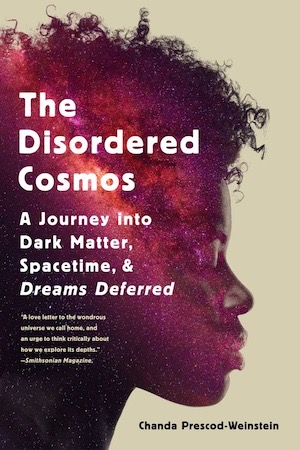
“The Disordered Cosmos: A Journey into Dark Matter, Spacetime & Dreams Deferred”

I was not looking for this book. I rarely buy anything on Amazon, but I do use it frequently as a search tool. Bezos doesn’t need any of my money…he has more than enough without the meager amount my book buying habit could send his way. I use the library, rarely buying more than a few books anymore in a year. “The Disordered Cosmos: A Journey into Dark Matter, Spacetime & Dreams Deferred”, turned out to be a valuable surprise. I’m always searching for books that crossover between physics and biology, that examine that complex academic space between the too often clearly demarcated, and isolated, sciences, books that address the question of, ‘What is life?’. This isn’t one of those, but it is about physics, how we do it, how the world we live in colors it and how those ‘physics’ are used to shape the world we all live in. I found this book, in that space labelled, ‘Customers who viewed this item also viewed’. It was not what I expected.

The author, Chanda Prescod-Weinstein, decided to be a particle physicist when she was ten years old. She was a precocious child who loved math and the physics of the quantum level universe, from an early age. I know, weird. She would talk to her fellow students on the bus about quarks and such. The fact that she succeeded in her professional quest, at least so far, is remarkable given the circumstances of her birth, her family economics, being the daughter of a Black Caribbean mother and an Ashkenazi Jewish father, growing up in a mixed Latino neighborhood of East LA. Add to this that she was primarily raised by her single parent mother who was a social activist, suffered a life changing accident when hit by a car while riding a bicycle, identifies as agender while presenting as femme and was raped by a professor in her department. That’s a lot of hurdles to overcome. Continue reading

Addressing the Disparity: If Food, Shelter, Health and Education are Necessities for Humans…

On Fulfilling our Debt to Each Other and Supporting a Healthy Society and Economy

Economics, we are often told is a very complex science. It can be, but at its most basic level it is simple. An economy is the mechanism by which societies create and distribute the products and services demanded/needed by its members. It is a functioning system, an instrument of the ‘social contract’ to which members commit and, in so doing, support the other members via their participation in the economy.  It is a quid pro quo arrangement. You scratch my back I scratch yours played out broadly at a societal level, not one of backroom deals and personal enrichment. It is the structure by which we get the money we require to meet our own needs. It is the means by which we can responsibly meet our needs while supporting others. Money is the medium by which most transactions occur, legally, in our economy, though this doesn’t include the many daily ‘transactions’ we grant each other gratis, to our friends and those others we choose. It is through our participation in the economy that we acquire the money, social capital and good will we use to satisfy our needs. Again this is part of the social contract by which all participants must agree.  The system requires trust, a degree of fairness, an expectation that these transactional commitments, be substantial, that the participants with whom we enter such agreements, follow through. All members therefore must be treated fairly in order for the system to continue working. Violate this ‘contract’ and you can lose not just credibility and trust, but you in some cases suffer incarceration. This contract is subject to continuous tweaking and adjustment. We do this through the legislation of laws and by agreeing to binding contracts. We are all then, our lives, a product of the economy operating within which we live. The wealthy, the poor and the rest of us. Continue reading

An Introduction for Gardeners to the Eudicots and the New ‘Phylogeny’ of Angiosperms: Clades, Cladograms, Flowers and Extinction, part 2

Clades and Cladograms: Helpful Concepts to Understanding Phylogeny and the Hereditary Links Between Plant Groups

Cladistics is a system of classification…of course it is…that relates species to one another based on heredity and lines of inheritance.  Before you dismiss this as a totally boring topic, consider that these are tools, that with a little study, can go a long way in clearing up the murky waters of taxonomy and systematic botany.  Cladograms are a diagrammatic, graphic devices to visually display the relationships of closely related organisms, like the one below, and can be helpful to us in our efforts to understand the phylogeny and evolution of plants.  The ‘branches’ of a Cladogram represent clades, all of the descendants are of a chosen ‘root’ species.  Each clade must be monophyletic, complete, including all of the descendants of the root or ‘stem’ ancestor.  The APG demands precision.

Clade-grade_II

“Cladogram (family tree) of a biological group, showing the last common ancestor of the composite tree, which is the vertical line ‘trunk’ (stem) at the bottom, with all descendant branches shown above. The blue and red subgroups (at left and right) are clades, or monophyletic (complete) groups; each shows its common ancestor ‘stem’ at the bottom of the subgroup ‘branch’. The green subgroup is not a clade; it is a paraphyletic group, which is incomplete here because it excludes the blue branch even though it is also descended from the common ancestor stem at the bottom of the green branch. The green subgroup together with the blue one forms a clade again.” (emphasis mine) This is from Wikipedia, generally a good source for an overview.

Continue reading

Experience: Gardens, Mentors, Peers and Friends…Essential Elements to the Growing Gardner!


Gardeners find inspiration and support from all over, from nature’s expansive landscapes to the very personal and intricate jewels of fellow gardeners, to botanic gardens and the nurseries that often fuel our ardor.  We visit gardens locally, and travel when we can, seeing and experiencing what other regions and countries offer.  Sometimes it is the human culture and its exuberance which seems to drive a place’s horticulture and gardens in directions and extremes different from ours, while our growing conditions are very close…in other gardens site conditions can be very different than our own pushing the palette far from that possible in our own.  By traveling we are ‘opened’, taken out of the familiar and our senses ‘sensitized’, as we take in the new and see the familiar in new ways.  Travel can make us more receptive.  After a Fall trip to New York, followed by one to McCall, Idaho, this Spring we visited parts of central and coastal California, later taking a couple weeks driving up across the Olympic Peninsula to Vancouver Island, peppering it with gardens new and familiar, adding another island, Salt Spring, on our return. 

Like our gardens, we gardeners ‘grow’ over time, learning and changing our practice, our experiences ever evolving.  Important to this process are those others we meet along the way who take the time to share their knowledge and experience with us, perhaps including plants or seeds, but more often simply their enthusiasm for what they do, and the sharing of their gardens.  This is important to us because the practice of gardening can be a ‘lonely’ art and the world of plants is far bigger and more complex than any one of us….If we are to do it well we must seek out the aid and friendship of others.  The emotional connection to what we do, creates a ‘tension’, that can be a source for the energy that drives us…and the addition of a little supplemental ‘fuel’ along the way can go a long way. Continue reading

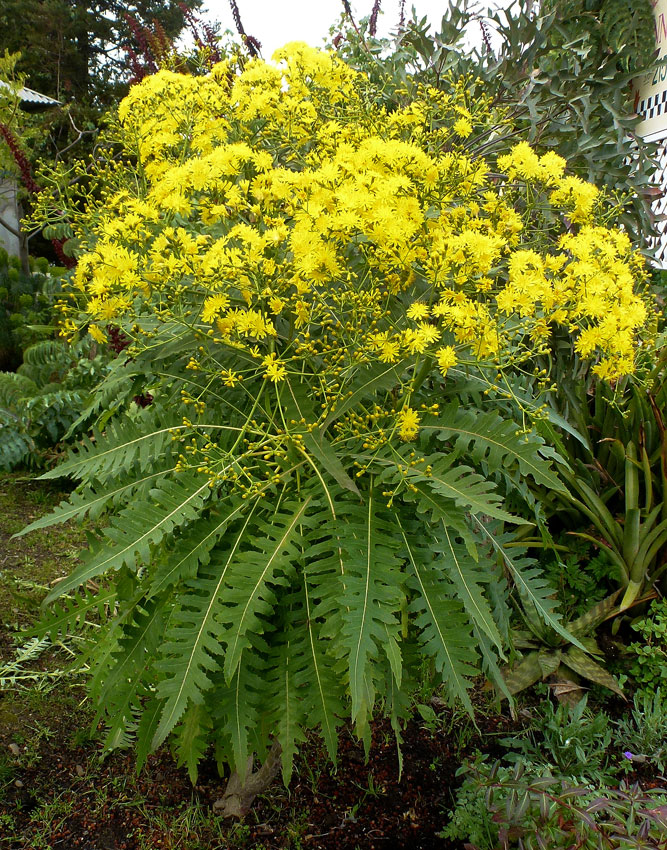
Sonchus palmensis: One of the Giant Tree Dandelions

Sonchus palmensis from the Annie’s Annuals catalog.


At the Northwest Perennial Alliance’s Study Weekend in 2018, Jimi Blake’s slide of this plant reminded me of seeing this plant growing in the San Francisco Botanic Garden in Golden Gate Park.  It was a standout and prompted me to immediately start looking for it.  Annie’s Annuals carries it and I discovered that it was a zn 9b plant, cooling my ardor somewhat…still…..I returned a couple years later to the Botanic Garden, rekindled my interest and made a stop at Annie’s on our return trip to home, but it wasn’t available, so it went back to  my wish list.  Then Jimi’s presentation at the Seattle Study Weekend moved it up in the queue.

I am most familiar with the species of Sonchus that are weeds.  I have pulled more than my share of Annual and Prickly Sow Thistle, Sonchus oleraceus and S. asper, but like many genera Sonchus contains several plants of horticultural merit.  Most Sonchus are annual species, a few are perennial and fewer still are ‘woody’ species all of which occur on the Canary Islands alone, like Sonchus palmensis. Continue reading

My Red Abyssinian Banana: Testing its Limits to Cold This Winter.

It’s alive!!!

My Ensete appears to have survived my mistreatment/testing of it having left it in the ground until Tuesday after Christmas. The photo shows that it has pushed 3/4″ of new growth since I cut it back and placed it in its corner in the basement. The NOAA weather station at PDX reported 17 freezing minimums to that date, eleven prior to December 20, ranging form 22º to 32º, nine of them below 30º, four below 25º. Over this period my local temperature, bizarrely, dropped to 30º, once, maybe. A second cold spell hit here from Dec. 20-27, again less severe than that at PDX, but closer. The Reed College weather station recorded five freezing minimums over this period, 32º on Dec. 12, 30º on Dec. 21, 28º on Dec. 24, 30º on Christmas and 27º on the 26th. Reed College is about 3/4 of a mile south of me on similar terrain with the same aspect. The freezing, cell shattering, of my plant’s leaves was very evident after this latest cold snap. During December’s first cold spell I was generally a degree or two warmer than the Reed station’s minimums. Over the second cold period my area was more consistent with the PDX temperatures, but still on the warm side. So, yay! My red Ensete has indeed survived 5 significant freezing minimum temperatures, as low as 27º! Those of you who dig yours in October take note, your gardens can benefit from these statuesque specimen much later into the local winter season here…and, return to their garden locations earlier as well.
 
How do I know its alive? Bananas are all monocots and their dividing/growing meristematic bud is on top of the rhizome, just above ground. If this bud freezes your plant cannot grow any longer. As I pointed out, mine has been growing, slowly, in my cool basement. Would it have made it down to one night at 25º…I don’t know. It is also difficult to say how many more days it could have survived down into this minimum range. Remember that it isn’t just the absolute minimum temperature we need to worry about, but the duration as well. Three of the coldest days had very cold highs as well just making it above freezing allowing the cold to penetrate tissue more deeply.
Here is the link to the values reported at the Reed College weather station in December.  Here is the link for the values from the NOAA station at PDX.