
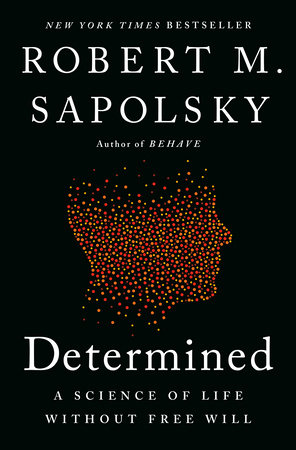
 Long ago I took a couple philosophy classes at U of O; one on existentialism, in which we read several novels and discussed their themes; and another, an upper division, class on ethics, because I was curious…I dropped the ethics class after sitting around the table in seminar discussing particular authors’ thoughts, like Kierkegaard and Butler. Majors seemed to take pleasure in making fun of what I got from them in discussions. Hated this. I still have trouble reading philosophy. It seemed like a game to them in which they argued a position to show off their cleverness, their superiority, the ideas themselves of relatively little importance…while hiding their biases. It must have been so self-assuring for them to ‘know’ these author’s precise thoughts and bash those who don’t get it…or saw something different (like the newbie, me). To quote someone isn’t to understand, it is only miming, presumably in hope of getting a reward. I read for understanding. It’s not a competition. So, this book, “Determined: A Science of Life Without Free Will”, taking a science approach to evaluate a philosophical concept, was difficult to begin. The author, neuro-biologist Robert Sapolsky, argues that those philosophers and theologians who claim that people have free will to do whatever they desire or set their minds to, are wrong. This appealed to me immediately.
Sapolsky is not just being a contrarian here although he writes with self-assurance and confidence stating his own biases right up front. He begins with broader strokes describing the gist of the believer’s arguments, in a general way, before dismantling them. They, despite all of the studies and understanding gained through research in genetics, brain science, biology, environment, sociology and psychology, looking into a subject’s socio-economic status, one’s particular culture, what may have happened to you recently in a similar situation, despite all of this ‘free-willers’ will say that we still make our own decisions, and because of this, we are creatures of ‘free will’. Some, those he terms ‘incompatibliests’, because they are trying to ‘shoe-horn’ free will in while accepting the science supporting the opposite, simply insisting on it. In taking a ‘free will’ position they claim that whatever disadvantages we may carry through our lives, our failures and errors are our own, just as are our successes and rewards. Sapolsky claims foul and then goes on, from every level, to show just why they are wrong. It is, he says repeatedly, ‘turtles all the down’, a shorthand for all the reasons from a matter of a few seconds before you made a choice, to what happened a few days prior, to what happened to you during your formative years, the hormones your body released under stress effecting the genetic regulators which effected your brain development, to your blood sugar levels when making the decision, to how your particular neural network continues effecting your brain response, to how the stresses of ones home life effect your brain chemistry and the decisions you can make, to your race, the particular culture and the behavioral options ‘available’ to you as practiced by your peers and people, all of these things go to how each of us think, how we view ourselves and even unconsciously shape the way we see our own world. It isn’t about just genetics and environment. There are so many epigenetic, beyond genetics, factors involved. One of Sapolsky’s major stated reasons for writing the book is to show how wrong we are when we judge not just others, but ourselves and what kind of damage this does to us individually and as a people. This is not a sermon. Not an academic lecture, but a thorough and thoughtful, as well as personal discussion of the problem as he sees it and he accomplishes it with humor and unrelenting focus. He does not let the reader off easily.
There are sections here on neuro-biology, (he is a neuro-biologist and taught courses at Stanford to neurosurgery students) how our neurons develop connections/synapses and how these decline. (Be kind to yourself when you read some of this, such as when he is discussing particular neurotransmitters and inhibitors as he takes you through step by step, noting that even he has to check each one before committing it to page. Don’t try to memorize these he counsels. Just focus on the larger ideas.) He discusses the brain chemistry, the chemical signaling that goes on in every organism in its cells and neurons, generally utilizing the same chemicals/neurotransmitters, across species, how these form complex webs. ‘Action potentials’ in neurons. How the neural activity in our brains are in continuous flux, firing along a multitude of intricate paths, no one action triggered by a single ‘switch’. How ‘switches’ can form along backdoor routes reinforcing a particular response, one that is ‘learned’ and reinforced from frequency of use or lost from disuse over time. In other chapters he discusses brain development, particularly the various lobes of the frontal cortex, how it develops over the years from 15-25, in a sense customizing itself to an individual’s conditions, impeding or enhancing our overall performance; its links to the hippocampus, the amygdala and other centers so important to decision making; the complexity of their connections and the roles that hormones play in their development, how they enhance and inhibit the performance of these centers over time and as a result, directly, our behavior.
He discusses on many pages what free will even means and how if brain function/decision making is determined/limited by all of these factors, we still can’t accurately predict what a person will do. Everyone of us has a unique developmental history that went into shaping us, which continues over our lives. We will have tendencies, limitations, ‘pathways’ we will follow consistently under similar conditions. He takes a couple of chapters, probably his weakest, which he acknowledges, to discuss quantum effects in the brain and to discuss the idea of the emergence of complexity in nature, the underlying physics of what is moving life forward, which has gifted us with these incredibly complex bodies and systems, born out of seeming chaotic nature. Out of that ‘chaos’ comes the complexity he writes of. For us, the word chaos, carries crazy, out of control, randomness, but this is not the chaos that physicists and mathematicians describe at work. Out of chaos comes an inexplicable elegance, comes order, pattern, adaptability, vigor, creativity, purpose, each organism, each human unique in an endless line. Organisms and their behavior are not predictable, but they are probable. The so called ‘chaos’ at the tiniest/quantum level, averaged out in dynamic response. Everything intimately linked. In relationship. Were ‘free will’ a product of the random ‘chaos’ free-willers insist on, then pattern would be forfeit, communication lost, everything subject to random change. It is not simply a matter of exerting free will over all of these other ‘determining’ factors.
I have found major shared themes in my reading over the last few years on the science of life. Sapolsky isn’t arguing our lives are predestined, limited, dead ended, Hobbesian short and brutish, but one that is infinitely varied, evenly beautiful at times…if we would only let it be so. Yes many are born into, grow into, a far meaner and limited pattern, but growth and change are possible, if we can stop the ‘judging’. He is a student of life, ever hopeful, while staring straight on at the ugliness and violence around us. He’s no Pollyanna. He is hopeful, that if we would only open our eyes and see what is really going on within each other we would find the grace to celebrate it and defend it, not punitively, against that which would tear it down. Justice is not about retribution or revenge, nor about some immediate, visceral ‘pleasure’ one might gain in punishing someone. A better world is within our reach. Will we ever get rid of all of the ugliness, no. We are human and as such are frail, but this life could be so much better if we stopped with the judgements and looked into what is really going on around and within us. We are a social species and as such, live in relationship with others and this world. To deny this is to invite death. Our over emphasis on us against them, our impossible and destructive insistence on individuality above community, on personal liberty, power and position, an undeserved responsibility for the conditions of our lives, out of our personal control and often beyond our own awareness, is how we got to where we are today. Individuality is impossibility outside of the context of others. We sustain such a ‘blindered’ view by denying that same ‘right’ to others, judging ourselves superior, the others as less than. It’s long past time we tried another path and Sapolsky is helping to illuminate the way. Ultimately he is asking us to be kinder to one another and ourselves and the rewards will be far greater than we reap on our present path.
 GardenRiots