
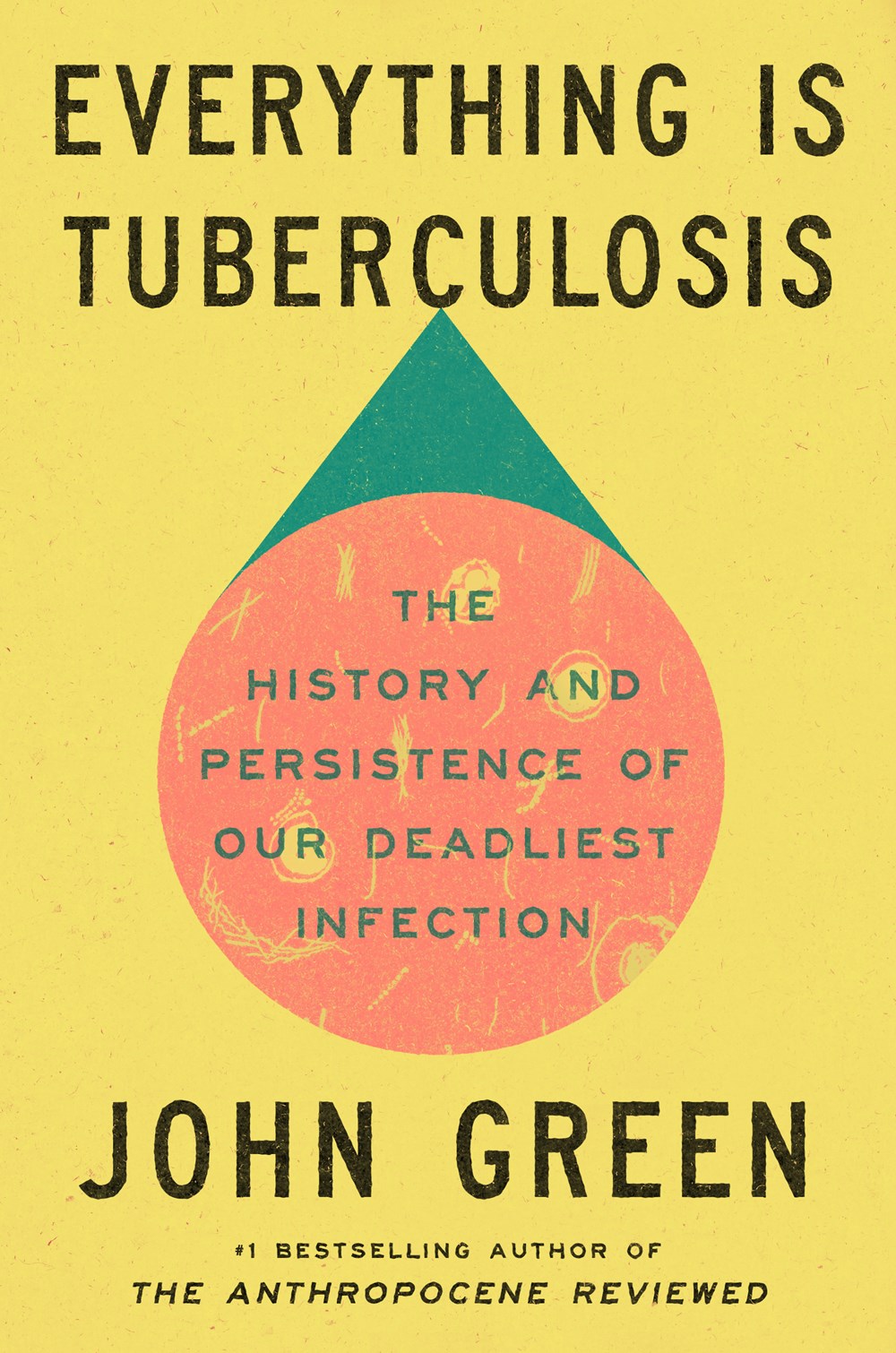
 John Green’s, ‘Everything is Tuberculosis’ is a great piece of writing. It is also an excellent, expansive and accessible introduction to the world of tuberculosis. By number, it’s the world’s most deadly disease, but one that is often overlooked by those of us in the wealthier, western countries, where it is largely controlled. This is a history of the human experience and the way that we have gone about treating it, or not. Tuberculosis (TB), is a disease that was an undeniable fact of life around the world for the majority of ‘modern’ human existence, before germ theory and our ability to develop and implement effective treatments. There was literally no place in the world ‘untouched’ by it. It killed indiscriminately. Author Green, mostly known for his young adult fiction, tackling problems of teen angst, love, loss and grief, here goes beyond this, asking the question, that since TB is treatable and curable today, generally even those forms that have developed resistance to several of the drugs used to control it, why is it still killing 1.25 MILLION people around the world every year? The answer isn’t difficult to find, but it reveals an ugly fact of modern life. The disease still kills to the degree that it does today because of prejudice, poverty, underfunded health care systems, a misguided reliance on cost ‘effectiveness’ when deciding who is ‘worth’ treating and a pharmaceutical industry far more interested in protecting and increasing its profits than it is in working to bring about a healthier world.
TB today is a disease of poverty, of crowded living conditions, of malnutrition, a disease that preys heavily upon those who lack access to a supportive health care system, an injustice, a failure to understand the basics of disease transmission and the capacity of bacterial diseases to mutate and develop drug resistance. We fail to understand that when the care of the poor is inadequate, when treatment falls short, the disease has millions and millions of more opportunities to mutate and become a disease that, most assuredly, will once again become a disease that threatens us all, rich and poor, without mercy. As Green points out this is largely due to our rich and dominant western society’s structural failure to act responsibly and compassionately, because of our economy which undervalues others and down plays the danger that our shortsightedness will inevitably bring about.
TB is not going to go away on its own. It infects far more of us than you might think. It is generally only those whose health is compromised, with weak immune systems, that the disease is able to tear down, who become symptomatic. Far more carry it than those who manifest symptoms. This is one of the reasons why the social problems he discusses are so important in the world today. We still blame the poor for their plight and they still suffer from the misguided belief we have that we can dismiss them without harm to ourselves. We refuse to accept that we are our ‘brother’s keeper’ and that poverty, and the huge disparity in wealth and health, exists to meet the needs of an economy that does not really value life. Green’s book brings together biology, medicine and the social, political and economic inequities that define our world. He concludes the book with the statement that TB is curable today, that the lives lost to it every year are a choice we make…that we could make differently.
Green’s telling makes this immediate and personal the ‘story’ regularly returning time and again to, Henry, a young man he met in Sierra Leone with TB. He visits and interviews doctors and nurses, health care administrators around the world who are working with TB in the world where TB is still a massive killer; the survivors and advocates who have worked with governments; agencies, organizations like Doctors Without Boundaries who work to get the treatments where they are needed. This is a major problem and he writes of how the treatments are where the disease isn’t and the disease is where the treatments aren’t.
Early in its history, without effective treatments, people came to ‘blame’ the victim. It carried with it a stigma, making sufferers pariahs in their communities, as if the debilitating disease itself were not bad enough. Sufferers often become shunned outcasts. Those who caught it were some how deserving, that it was god’s punishment for sin, or a racial disease reinforcing the idea that certain races, non-white, were inferior. In other cases they attributed it to certain personality types and it went to defining an inherent weakness in artists, who seemed according to popular culture, particularly susceptible…but they weren’t. Historically it struck everybody. The disease was so common often decimating entire families, such as the Bronte sisters. Artistic talent came to be connected to suffering. Those ‘suffering’ for their art often perished from the disease, but there wasn’t a causal relationship between the two. Artists may well have been ‘sensitive’ to the world around them, but it was more likely poverty or living conditions that set the stage for their sickness.
For decades TB, was commonly known as ‘consumption’, a wasting disease, in which the sufferer literally ‘wastes’ away, unable to eat, increasingly unable to get the oxygen from their lungs which the disease destroys, in some cases weakening the bones of the body, sufferers, suffocating, while other times literally drowning in blood and fluid, their lungs rendered nonfunctional by scarring. In some cases writers romanticized the disease and spoke of the almost ethereal beauty of its sufferers, the pale skin, rosy cheeks and apparent large eyes as they approached death, the flesh on their skulls wasted away. This of course was all untrue. There was nothing beautiful about such a death. There was no trading of physicality for a higher creative, spiritual, existence. Such deaths were generally painful and extended.
TB is a disease that can take years to kill unlike so many of the diseases which act with ferocity and rapidity. TB’s is a lingering death, it advances slowly and inexorably…and is treatable and curable, if we cared. In many African countries with the rise and broad spread of HIV AIDS devastating people’s immune systems, if they caught TB, the diseases advance greatly accelerated and they could die in a few weeks vs. a few years. Many of our persistent social problems are much the same, in that if we collectively valued those who suffered we could eradicate them and, in the process, come to understand that in caring/healing others that our own lives are improved.
This is one of the major points of this book, every problem we face as people has multiple aspects to it and they cannot be solved in a singular, mechanical way. Our problems are integrated, part and parcel, with our society. If we do not change the conditions under which a problem thrives and treat it only symptomatically, we may cure that ‘patient’, but there will continue to be more that follow unless we also address the underlying conditions that set the stage and support the problem itself…and in the case of bacterial and viral diseases, they possess the vitality and adaptability to mutate and produce successive generations that can more aggressively attack us. Such diseases contain the capacity change themselves much more rapidly than we do producing the next generation only once every 20-30 years. Along with such capabilities as horizontal gene transfer in which bacteria can share genes between two existing individuals, bacteria can regenerate thousands of times and more. To tilt the ‘curve’ in our favor the prudent thing to do would be to tilt conditions in our favor collectively and minimize the diseases ability to respond and adapt. Without doing this we will lose the numbers game.
With all of the Trump, RFK jr. bullshit going on in the world of public health, this particular issue has been pushed to the forefront, the issue of valuing all people and making proven treatments available to all in need. With compassion and empathy bizarrely under attack today it is important to be reminded that diseases are not political. Trump has shut down USAID an organization that has provided much of the funding that goes into treating and controlling diseases like TB, Malaria and Cholera internationally. Diseases aren’t political. They serve their own ends and to be used as a tool wielded against the poor and defenseless is especially cruel. The administration doesn’t get any brownie points for their actions today. They aren’t paving a pathway to heaven in gold. No. As in so many things the damage we do to one is suffered and borne by all. In the world of disease and epidemics (pandemics) this is even more directly true. While Bacterium tuberculosis may be the source of infection, it is our policies and practices today that set the world’s population up for the pervasiveness and devastation of this disease. ‘We’ give it its power to destroy.
 GardenRiots