
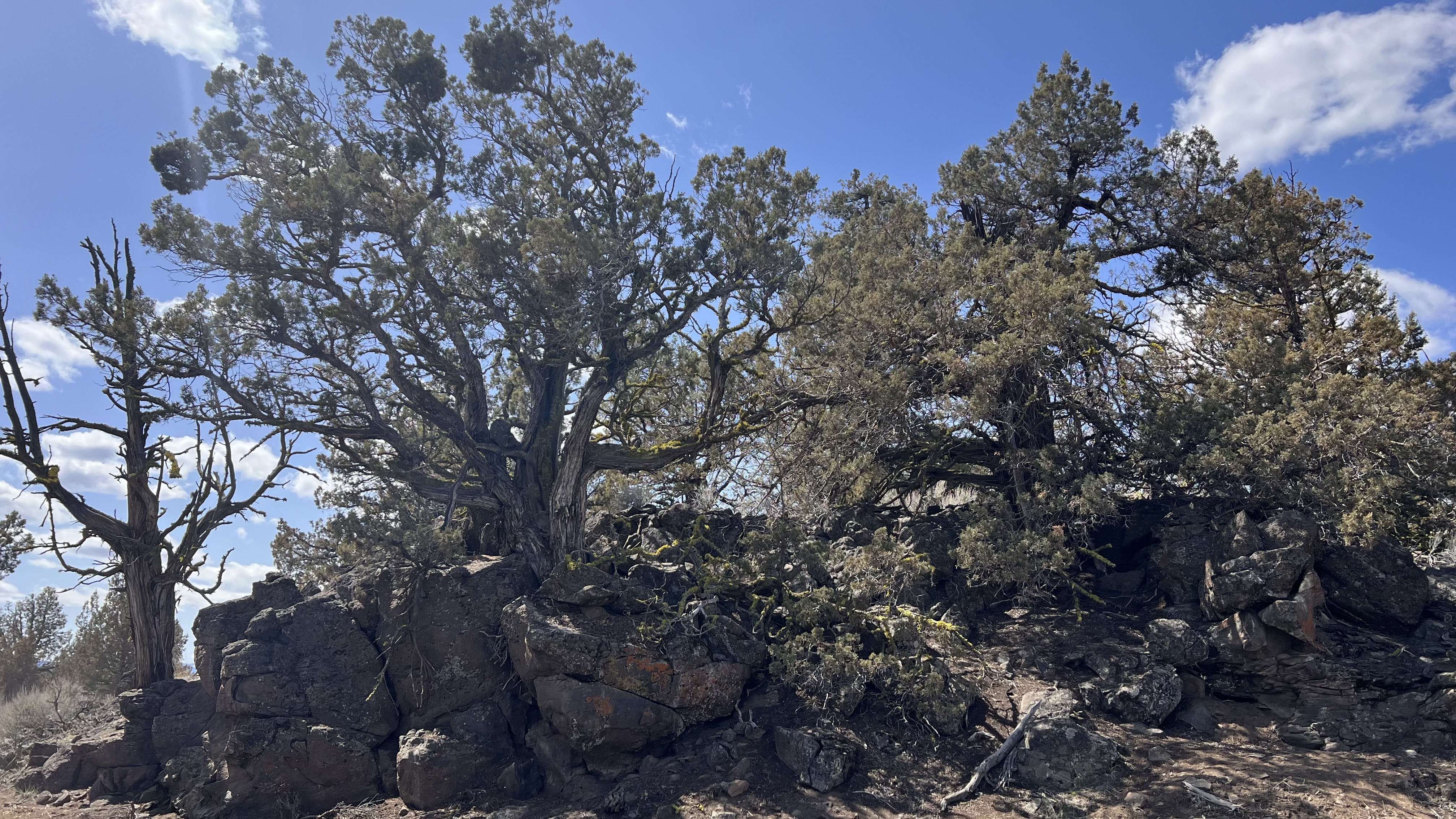
Old growth Junipers near Cline Buttes. These two rooted down long ago on top of this lava flow. Much of the lavas here were produced during the Deschutes Formation over many thousands of years more than 5 million years ago. Surface lavas, cliffs and slopes define the area with a few sediment filled basins dominated by Sagebrush and Bitterbrush.
The Western Juniper is the singular native tree of Dry Canyon and the immediate Redmond area. I grew up with it here in Central Oregon. When we moved here in ’61 i remember driving north after passing through miles and miles of various Pine forests, which eventually yielded, riding in our VW bus, as we left Bend. Bend sits within the ecotone, the relatively narrow transition zone, between Ponderosa Pine forest and Juniper steppe. What were these trees? Coming from California’s Salinas Valley, the landscape could hardly be more different to a six year old. So different in form and detail, Junipers squatted darkly across the landscape, nothing like the tall, majestic Pines or Oaks I was more familiar with or even the Lodgepole Pine we drove through across the pumice plain of the LaPine area.
[This section of Hwy 97 has been designated by the state as the Redmond–Bend Juniper State Scenic Corridor, (who knew?) as a prime, and accessible stretch of ‘old growth’ Juniper, a forest with many trees over 150 years old, dating from before ‘our’ arrival and ‘disturbance’. Understand that 150 years old is still ‘young’ for a Western Juniper. There are over 600 acres of state and county lands that comprise it, much of which lie adjacent to much larger parcels owned/managed by the US Bureau of Land Management. These trees grow on land covered by the geologically recent Newberry volcano flows and are topped, if at all, by very young, wind blown and shallow soil.]
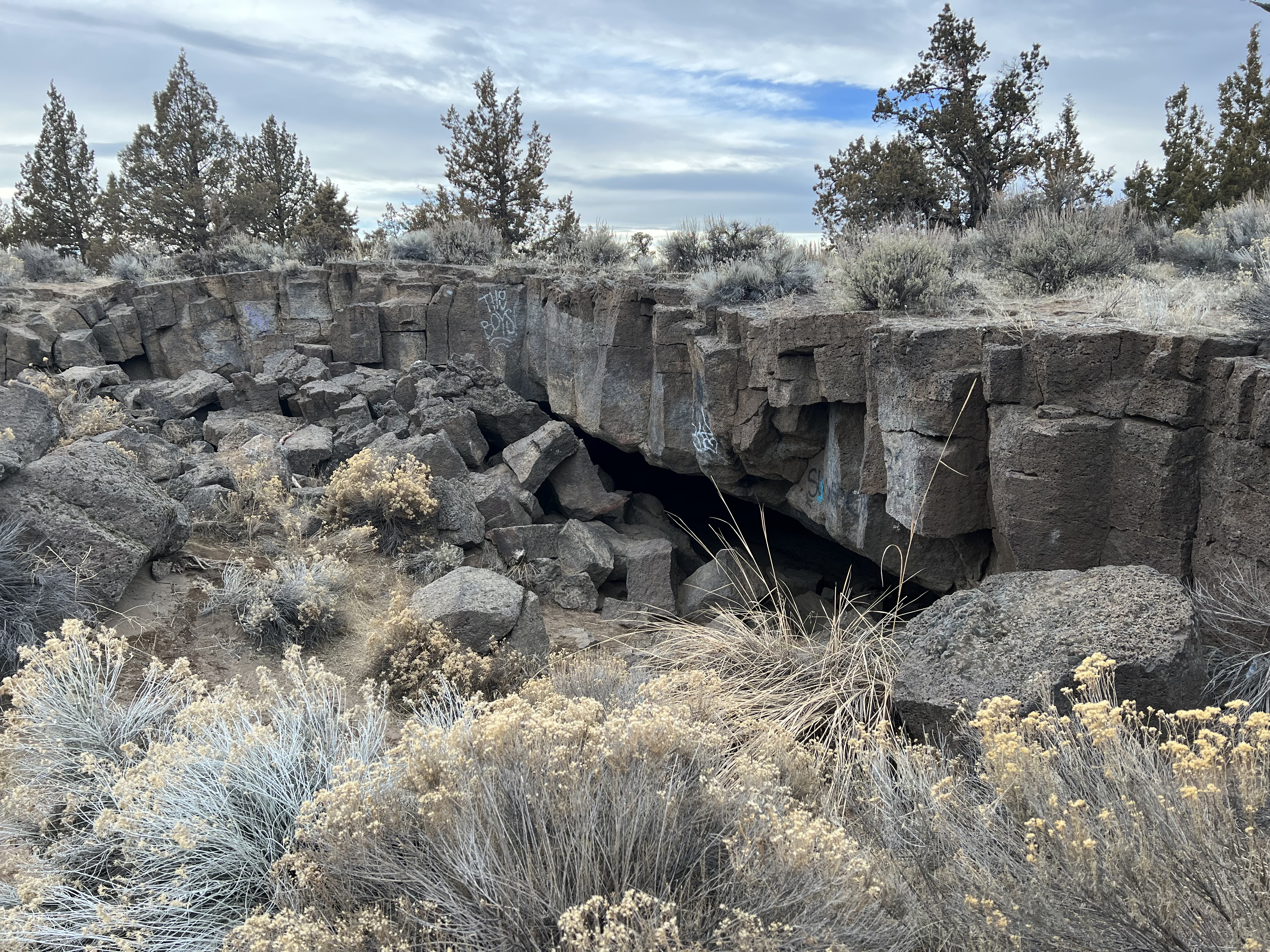
The site of the Redmond Caves, lava tubes supplied by volcanic vents on Newberry around 70,000 years ago. This scab land is characteristic of the landscape between Bend and Redmond with surface basalt older Juniper on thin soil.
Over the years I’ve made the drive to Bend countless times, west to Sisters and east to Prineville, Junipers, the steppe community and basalt, dominating, other than where irrigation allowed for pasture and hay fields on parcels that were broad enough, and had soils deep enough, to allow for healthy rooting and some minimal amount of moisture retention. The Juniper becomes less common where agriculture takes over in the Powell Butte and Cloverdale areas, both places where soils were able to accumulate. Traveling north to Madras was a little different, especially after crossing over Juniper Butte and dropping into the Madras Basin with its deeper soils. This was and still is prime agricultural land further aided by its lower elevation which afford a slightly milder climate and longer growing season. The highway also crosses the sprawling Crooked River Grasslands, once homesteaded, but reverted back to government ownership after the drought of the 1920’s and failure of most of the homesteads during that extended drought period. This area, over more recent years, is being more actively managed to keep the Juniper from taking it over, a gargantuan task, with inadequate funding. I didn’t think much about any of this as a kid and what this place would look like had irrigation water never been diverted out of the Deschutes River canyon or from the Crooked and John Day Rivers to the east on to their adjacent bottomlands, to ‘green’ the desert.
[Some fields in the region have been more recently abandoned with the ongoing drought and the land owner’s loss of rights to irrigation water. Our system of water rights favors ‘senior’, older rights. Agricultural productivity is much less of a factor in determining those rights. Those farms to our north weren’t connected to the canal systems until CCC crews finished their construction work after WWII and so have ‘junior’ rights. There was limited water available earlier to farms in the Culver area pumped up out of the Crooked River canyon near Opal Springs a system that is still in operation.]
Redmond was surrounded by a ‘sea’ of Juniper, Sagebrush, Rabbitbrush, Bitterbrush and its several plant communities, but it was the Juniper that defined the place for me. Small ‘farms’, primarily pasture and a little hay, were scattered around the small town of just over 3,000. Plowing and discing with all of the shallow rock here was problematic. Teenagers were some times paid to ‘pick rocks’ from fields which would work their way to the surface over the years with the annual freeze-thaw cycle, the rocks being added to nearby fence rows. No other tree species would be found here locally away from a water source. These, and very similar conditions exist across much of the arid intermountain west, down through Nevada, the Great Basin region, further south and east. The more southern reaches, while remaining arid and continental, have take on a monsoonal precipitation pattern, where the meager rain that does fall does during summer.
In arid portions of Oregon it is the Western Juniper which dominates. Other states and those areas with somewhat different growing conditions have other species of Juniper. Also found in Oregon, at higher elevations is, the more shrubby, Juniperus communis, which is resident of much of the colder temperate northern hemisphere, and Juniperus scopulorum, which in Oregon is native only to the Wallowa Mountains, while also found on and adjacent to the Rocky Mountains to elevations of 6,500′, Other species such as the Alligator Juniper, Juniperus deppeana, is resident to the mountains of the desert SW between 4.500′ and 10,000′ and the Utah Juniper, Juniperus osteospermum, which grows through Utah, into Colorado, northern New Mexico and Arizona where it is often associated with Pinyon Pine and rarely into the very far SE corner of Oregon.
In Central Oregon water brought the opportunity to grow what otherwise never could have been. With the rise of the middle class and the purchasing power it afforded, the landscape nursery industry grew rapidly in the Willamette Valley eventually becoming one of our economically largest industries and the third largest producer of nursery stock in the country. Much of the industry’s production is sold out of state, notably 17% of the nations shade trees are produce here. Arid eastern Oregon is a very small market so we get the leftovers intended largely for elsewhere. Area residents then have ready access to trees, shrubs and herbaceous plants grown for other markets with other conditions. The toughest and the most ‘useful’ such plants, like orchard trees, came first. Siberian Elms, Lombardy Poplars, which along with Weeping Willows, proliferated on farmsteads along with orchard trees in early years. These homesteads, with water access, planted windbreaks and for summer shade and maybe a tree that reminded them of the home they left. Poplars and Willows could be reproduced literally by plunging fresh cut stems into moist soil. The common Siberian Elm readily seeded itself under moist enough conditions, which are relatively minimal, but still ‘wetter’ than our norm. A few other more water thrifty trees like Black Locust arrived. Today you can find these and others withering and dying on abandoned farmsteads, now without irrigation water, unable to get what they require. Some of these survived in the Canyon with the supplemental water, that was once purposely delivered there. But that has changed.
Pastures once there occupied much of Redmond’s Dry Canyon. Today they are gone the Canyon converted to public Park use. Now a few small areas receive infrequent stormwater from city streets, which is often insufficient for these struggling few trees, while one notable location receives regular irrigation overflow from atop the west rim, during our long dry summer. This remains Juniper country. Only if we could go back in time and visit the Canyon when the paleo-Deschutes carved it… would we find other tree species and these would be those that we locally commonly associate with stream and river banks. For 75,000 years now, the river ‘pushed’ to the west, Juniper has been the lone tree species found there. Other species ‘could’ live here from other arid/dry regions in the West, but they never found their way under ‘natural’ conditions the barriers too great.
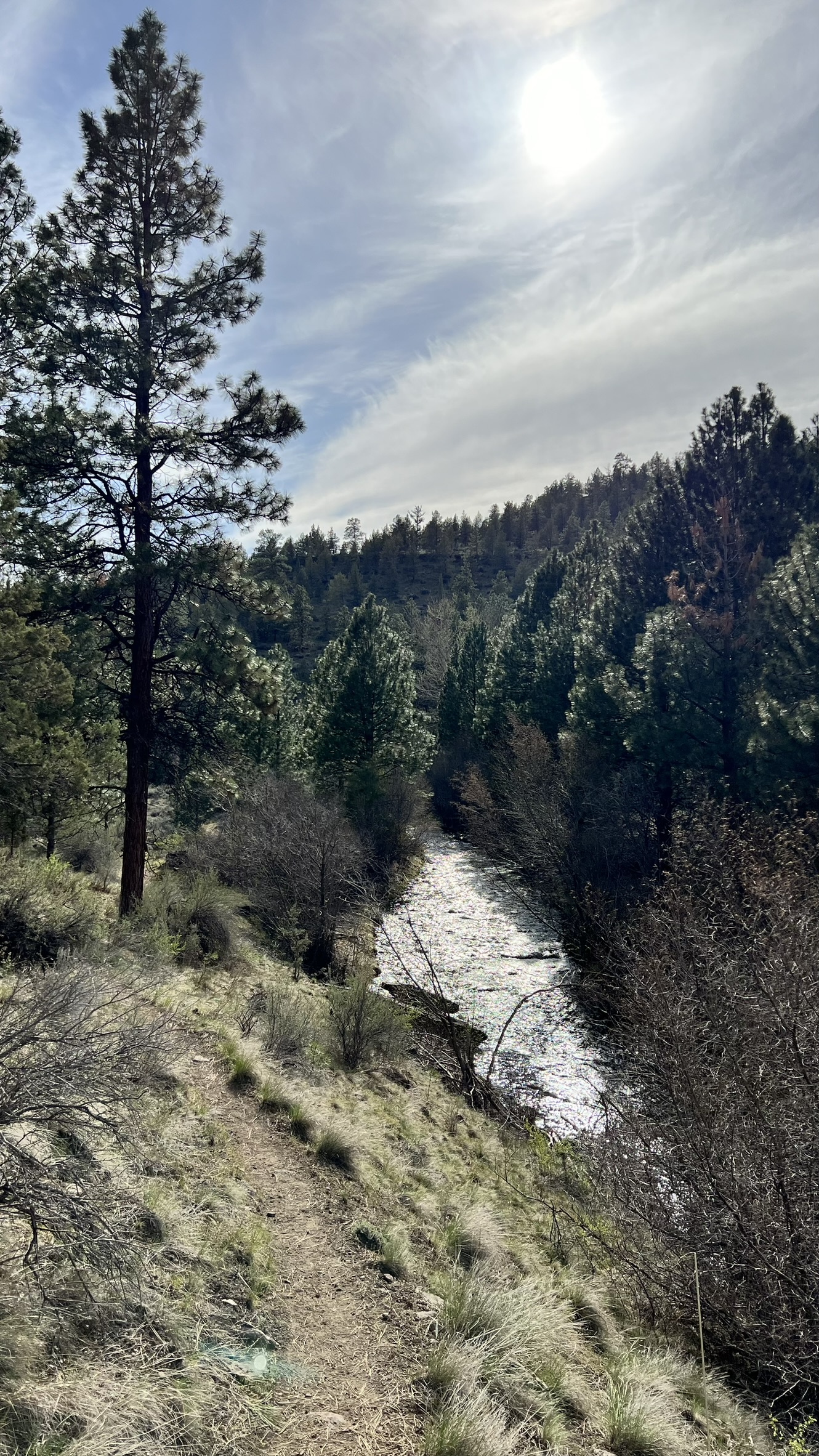
Whychus Creek just NE of Sisters, Oregon on its way to joining the Deschutes. The creek originates in the Three Creeks area below Broken Top and the Tam Macarthur Rim south of Sisters. This area is within the ecotone having a mix of Juniper and Ponderosa Pine like the one on the canyon rim left.
Other trees are often included in lists of area natives, but it must be understood that these occur in wetter parts of our region, such as curvy narrow band of the Ponderosa/Juniper ecotone bisecting Bend. Sisters too lies just west of this narrow transition zone. These areas are wetter than us. Trees such as Black Cottonwood, Populus trichocarpa, is another water dependent species as is the Quaking Aspen, Populus tremuloides, which is associated with higher elevations as well; Mountain Alder, Alnus incana, is resident in wet areas, at higher elevations in eastern Oregon; White Alder, Alnus rhombifolia, occurs only along river and stream banks; Water Birch, Betula occidentalis, grows in wet areas and along stream banks as found in the Black Butte Ranch area; Paper Birch, Betula papyrifera, is limited to two very small areas one in the northern Blue Mounatins and one along the Minam River; and we have numerous Willow species, Salix spp., the natives of which are all shrubs found along waterways and wet areas where they can get the needed moisture. Vine Maples, Acer circinatum, are almost always included on our lists of to plant trees, but they are native to higher, wetter, locations where the mountains can wring more moisture out of passing clouds…not here. Plant these and they will require supplemental water, just like the imported exotics from the eastern US, northern Europe and eastern Asia. All of those places have wetter growing seasons than we do. Different climates have seasonally differing precipitation patterns and totals. Trees that require, evolved with, wetter growing seasons, cannot be coaxed or trained into changing this.
As one of the most mobile animal species, we have lived in and survived, at least for brief periods, nearly every place on the planet, often bringing other species with us, intentionally and not. We have survived in otherwise inhospitable places by bringing the necessary products of technology with us, often times even food and water and ‘adapting’ those places to meet our needs when we choose to stay. Trees, plants, other species, on their own, are without the tools and technologies we have to do this. They must rely on their own physical capacities, their genetics, and the communities they associate with. All organisms have limits to the extremes they can survive, having narrower margins within which they can thrive. Where conditions are unsupportive, they die, as would we without the aforementioned tools and technologies.
One of the biggest, though less direct changes/threats we have introduced to our region, is that of exotic species. Along with our tools, technologies and plans we have brought seed for crops and pasture, favorite flowering plants as well as live grafted trees, livestock and feed, our families and the tools we have come to depend on. Everyone of these, in transporting them here and in our habit of moving things about, have provided the opportunity for weeds, in the form of seed, and their various propagules, to carve out a place for themselves. Many perennial weeds can be moved about by moving bits of root, a piece of a dislodge root crown, sometimes even from a piece of viable stem tissue, stuck to tires or in the dirt we’ve graded and moved from place to place. They arrive as ‘stowaways’. In some cases they are adaptable and vigorous enough to find a home. In intentionally altering or even unintentionally, disrupting the landscape to meet our purposes, we have so change it that the original plant communities no longer survive on their own or are at a major competitive disadvantage.
Well, won’t these ‘disadvantaged’ natives just adapt to the changed conditions? If they go locally extinct, aren’t there plenty of other places where they can continue to thrive? There’s no need to worry, right? That’s a dangerous assumption as our local population continues to increase and the ‘demands’ we put on this place increase with it. Many of us don’t consider it our responsibility to do anything about these ‘problems’, or just write such losses of landscape and species off. Aren’t others paid to do this? And if these plants and their communities really were necessary, they’d survive, right? The ‘weak’ are lost and the strong survive. Nothing of value or necessity then is really lost? Species adaptation takes generations and is not certain. And, it cannot happen when the changes are severe enough or continue one after the other.
Species, especially when change is too rapid ,or too far outside their margins, will have compromised health, making them less competitive. This is as true for a native wildflower as it is for us. As species are lost the communities, of which they were a part, become less stable, because it is not just competition which occurs between species, there are important, even essential, relationships between species, relationships upon which others are dependent. Living communities themselves contribute essential ecological services which the community may require; perhaps in shading and cooling the soil surface; reducing surface evaporation; retaining/recycling nutrients via their own tissues which they shed, the continual growing and shedding of roots and fungi, their exudates they produce in this process, transforming and maintaining the structure of the soil not just making them available for their own use but doing so for others over their lifetimes; providing food and shelter for wildlife; collectively supporting the countless soil micro and macro-organisms which are key to soil biological processes and directly effect the health of the plant communities through their soil/root/mycorrhizal connections. Members of living communities can’t simply go to the ‘store’ when what they require is not found around them. When those ‘services’ are gone, the community suffers. Individuals suffer. Without this communal interplay, these advantages, individuals and their ‘neighbors’ may die out locally. Many native species are quickly lost when sites and their necessary communities are disturbed, especially when that disruption extends over time. Seed can only lie dormant in the soil awaiting supportive conditions for a limited period. When we are the reason for such losses, it becomes our responsibility to provide for the others that which was once naturally occurring. To steward the landscape and return it to if not its former state, at least an improved state of health. It is not just about an ethical position of doing the right thing for other species, it is ultimately about our own survival and health. They are inseparable.
We have modified the landscape to meet our needs/demands, scraping away native plant communities for agricultural and other development purposes, bringing water to the ‘desert’, while often intentionally excluding wildlife and removing that upon which they depend. The adaptable and vigorous Western Juniper has taken advantage of these changes where it can as other species have lost out. The Juniper has not changed and become an aggressor. They are merely responding to the changes we have imposed. We ‘blame’ them for the problems we have created. Since we ‘arrived’ with our practices and plans, greatly limiting the natural cycling of fire, introducing new species, both weeds and desirable exotics, the Juniper has taken advantage. Many, even most other native plant species, have suffered under this changed regimen often disappearing where the disturbance is strongest and of longer duration, literally losing ground to the far more aggressive weeds that have ‘followed’ us.
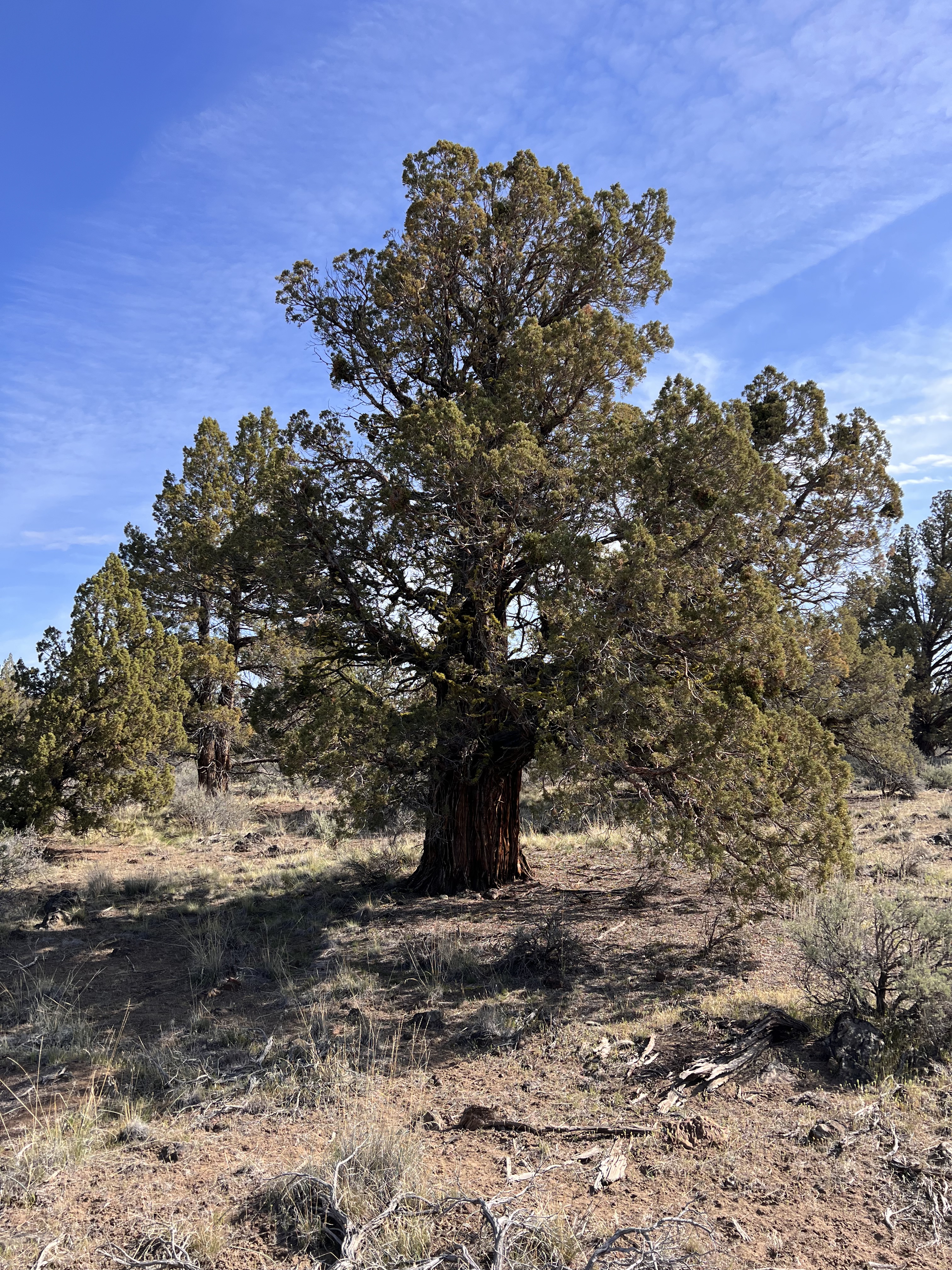
As they age and suffer damage, Western Juniper gain character, leaving the straight, uniform structure of youth behind. Slow growers, thick and stubby trunk growth is common. Old growth Western Junipers take on unique structure, making many individually recognizable…no two seem to be the same.
Mostly undisturbed stands of Juniper still exist in the area such as on the BLM Cline Buttes area where many mature ‘old growth’ Juniper still exist growing on the thin rocky soil in an open pattern, with intervening broad spreads of a mix of Sagebrush species, Rabbitbrush, Bitterbrush and other natives occupying openings in the bare soil between them. In such surviving healthy stands, the ground level community is less dense, more open and provides less fuel for inevitable and expected fires. On such healthy, less dense, mature Juniper woodlands, what fire occurs, is more limited by the lack of fuels, the resultant fires more limited and less intense. The climate, the terrain with its limited more shallow soils which support less dense growth of flammable species, not to mention our own less frequent ‘use’ of such sites and the opportunity for fire ‘we’ can bring, allow these stable old growth Juniper stands to continue. But in Dry Canyon, sections of which served as pasture under flood irrigation conditions for many years, this pattern is extremely disturbed. Singular, older Junipers still exist here, but they are often crowded by thin, straight trunked far younger trees which gained hold with the disturbance we brought, out competing native grasses, shrubs and herbaceous perennials and annuals. These provide a potential fuel source for more destructive and intense fires. It isn’t the Juniper itself, it is our disruption of natural processes and our lack of informed management which create these crowded, flammable, thickets.
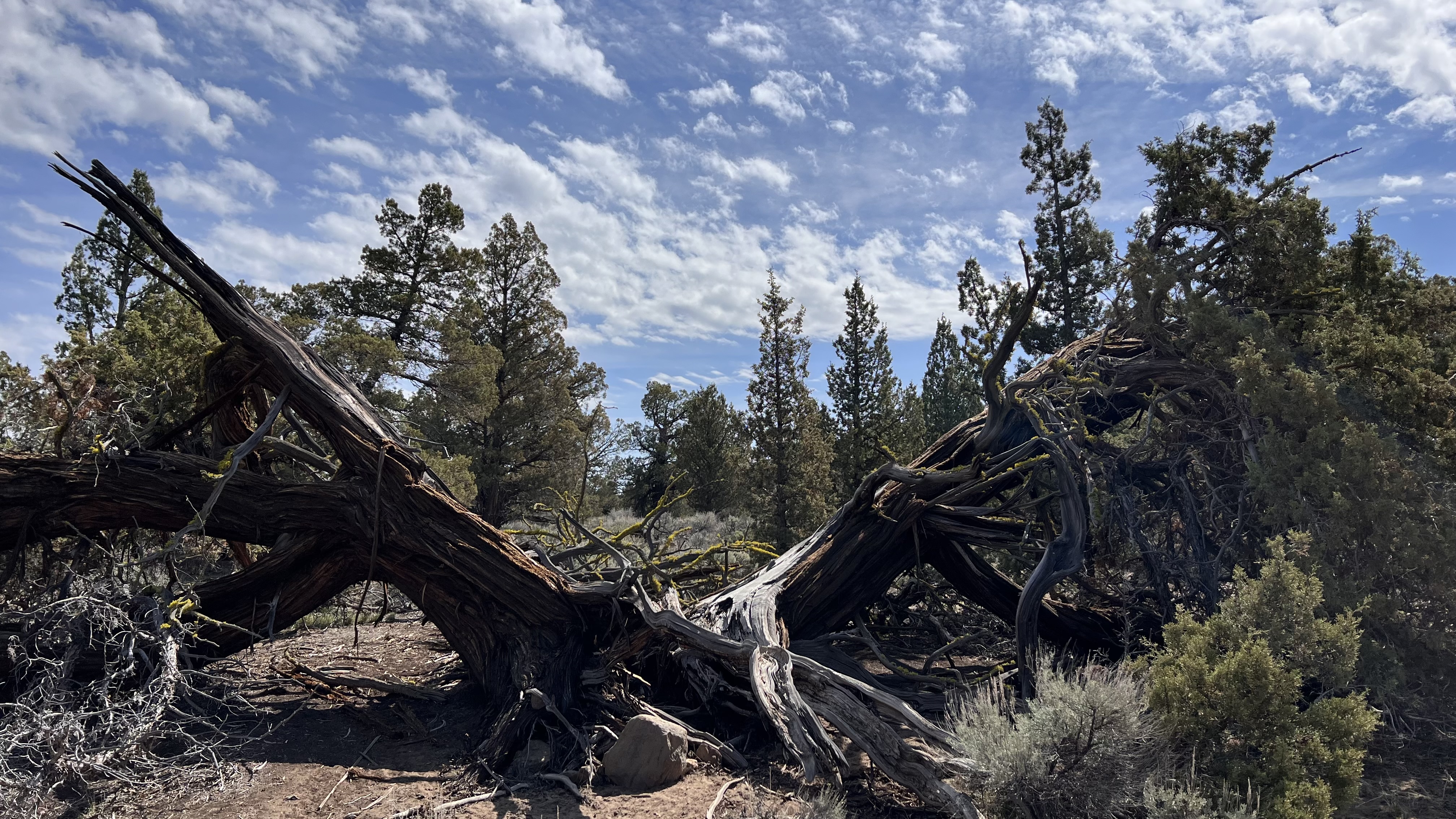
This ancient Juniper split and sundered by weather events and inherent weaknesses in this individual’s structure, is never the less still very much alive and will likely continue on being so for many decades to come, much of its structure dead. Even in death Juniper can remain standing for many decades, our dry climate and the trees oils acting to preserve its tissues.
Western Juniper are not thirsty ‘weeds’ taking what belongs to other plants. They are thrifty, well adapted trees, members of several of the high desert plant communities. Not surprisingly, they are competitive here and often adaptable enough to thrive under the altered conditions we’ve imposed. They are able to take ‘advantage’ of the water we add to some the landscapes we’ve created and can often ‘return’ to those we abandon. They can grow relatively fast with straight trunks in irrigated yards and pastures. Sometimes, however, it’s too much and they die, their carcasses standing dead for many years. Having not evolved with such plenty, they may grow ‘rapidly’ and weak, in other, wetter, cases the Juniper’s roots rot unable to tolerate the surfeit of water. Locally Junipers have often come to dominate landscapes in which they were previously absent, at least to our brief understanding of this place. Landscapes are dynamic while we tend to manage them as static. We regularly fail to acknowledge our role in the changed conditions and their effects on native plant communities, communities which both inhibit and support the presence of Junipers. Our use of irrigation, the practice of grazing, the introduction and establishment of exotic weedy and invasive species and the suppression of fire, has tilted the balance in favor of the spread of Juniper. It isn’t their ‘fault’.
It is interesting to note, looking back at the nursery industry, which is so important to our state economy, how rare finding anyone producing our native Juniper is. It isn’t done. There is literally no market. We attribute no economic value to Western Juniper. What does it do for us, economically. To most or many, nothing. So why worry? We live in the arid West, where water is ‘the’ limiting factor and finding climate adapted plants appropriate for our conditions…well, you have to look, hard. And it isn’t just Juniper that people abstain from using, we have historically collectively held our noses up at most of our arid native species whether they come from the local High Desert or the sprawling Great Basin spreading across Nevada, into Utah, Colorado, New Mexico, Arizona or California. Try to find a Pinion or Gray Pine, our local Low Sagebrush or even any of our several native bunch grasses. No, many of our Intermountain West natives aren’t locally available at all, or are offered by only a few small nurseries, who grow their own for the few ‘woke’ property owners out there, while the rest of us are relatively content to buy the lush green stuff we know from elsewhere and is offered by the truckload locally.
People move here for the outdoor recreation opportunities, the sunshine and dry climate, but everywhere around us in our yards, our gardens and public spaces, what we seem to want is lush and green, the opposite of desert. Publicly we have made feeble ‘gestures’, perhaps to assuage our consciences. We want to appear to do the ‘right’ thing, but neither our hearts nor our pocketbooks are into it. We find more reasons to plant ‘green’. Green is more fire resistant and who’s going to argue against that? In this world, our much maligned Juniper, Juniperus occidentalis, is a weed, a water ‘spendthrift’ who we’d all be better off without! But, thankfully, this attitude is beginning to change. Local codes and ordinances are beginning to change.
No, if we want to separate out and target overly ‘thirsty’ tree ‘culprits’, we need look no further than most of the trees and so many of the shrubs and herbaceous plants we typically plant in our landscapes, almost all of which come from much wetter regions and require far more water than typically falls here through precipitation. We have the tree – water equation wrong. As a general rule of thumb broad leaved deciduous trees, especially those with the larger leaves typical of our ‘preferred’ ‘shade’ trees, are summer growers from areas with significant rainfall during the summer growing season. Most all of these come from far east of the Rocky Mountains, northern Europe or parts of Asia where it rains sufficiently in summer to support their luxuriant growth. Putting out an entire tree’s worth of leaves in spring is extremely demanding for a tree, but it’s the superior strategy where they evolved because of their annual pattern of rainfall especially where winter temperatures also plummet and retaining large leaves becomes problematic. That is why there are relatively few western native broadleaved deciduous trees in arid regions. Those that we do have here, like our several Alders and Willows, even Aspen, Birch and Cottonwood, occur near streams, lakes and seeps where their roots have ready access to water when they need it. Even tough local deciduous natives like our Western Hackberry, Celtis reticulata, tends only to grow in eastern Oregon down in canyons near rivers like the John Day with water very nearby. Our Junipers belong here!
The Western Juniper is an evergreen conifer, it’s cones, in its case, in the form of its so-called Juniper ‘berries’. It retains its ‘leaves’ in the form of closely adpressed ‘scales’ year around which cling tightly to its twiggy new growth. In this way it is always ready, whenever the moisture does show up, to grow, but it doesn’t need much. 7″-15″ or so over the year is plenty and it can survive, once established, for drought periods that stretch on…to a point. Too dry and no tree, with their requirement, can survive. More than this and locally the Ponderosa Pine dominates. This ‘readiness’ is a trait of all evergreens. They don’t have to invest first in producing leaves…they’re leaves in their own limited, but effective form, are already present. The Juniper and the closely related Cypresses, which grow on arid landscapes from southwestern Oregon down through California, into Arizona, New Mexico with various species growing on into Mexico, are all adapted to dry/arid climates. Other species of Juniper are common throughout the Great Basin into Mexico as well. All of these are extremely conservative in terms of their water use. Their tiny, ‘hard’, scaly, ‘leaves’ with a protective epidermis, relatively few stomata, safeguard these trees from most of the heavy loss of water suffered by the more commonly considered shade trees, which through their processes of photosynthesis are extremely profligate in comparison. No, if you simply don’t want to grow Juniper or any another better adapted tree from the arid West, just say so! Don’t make up stories about the tree that defines much of the West. Our Juniper is a western icon along with the several species of Sagebrush which often accompany it.
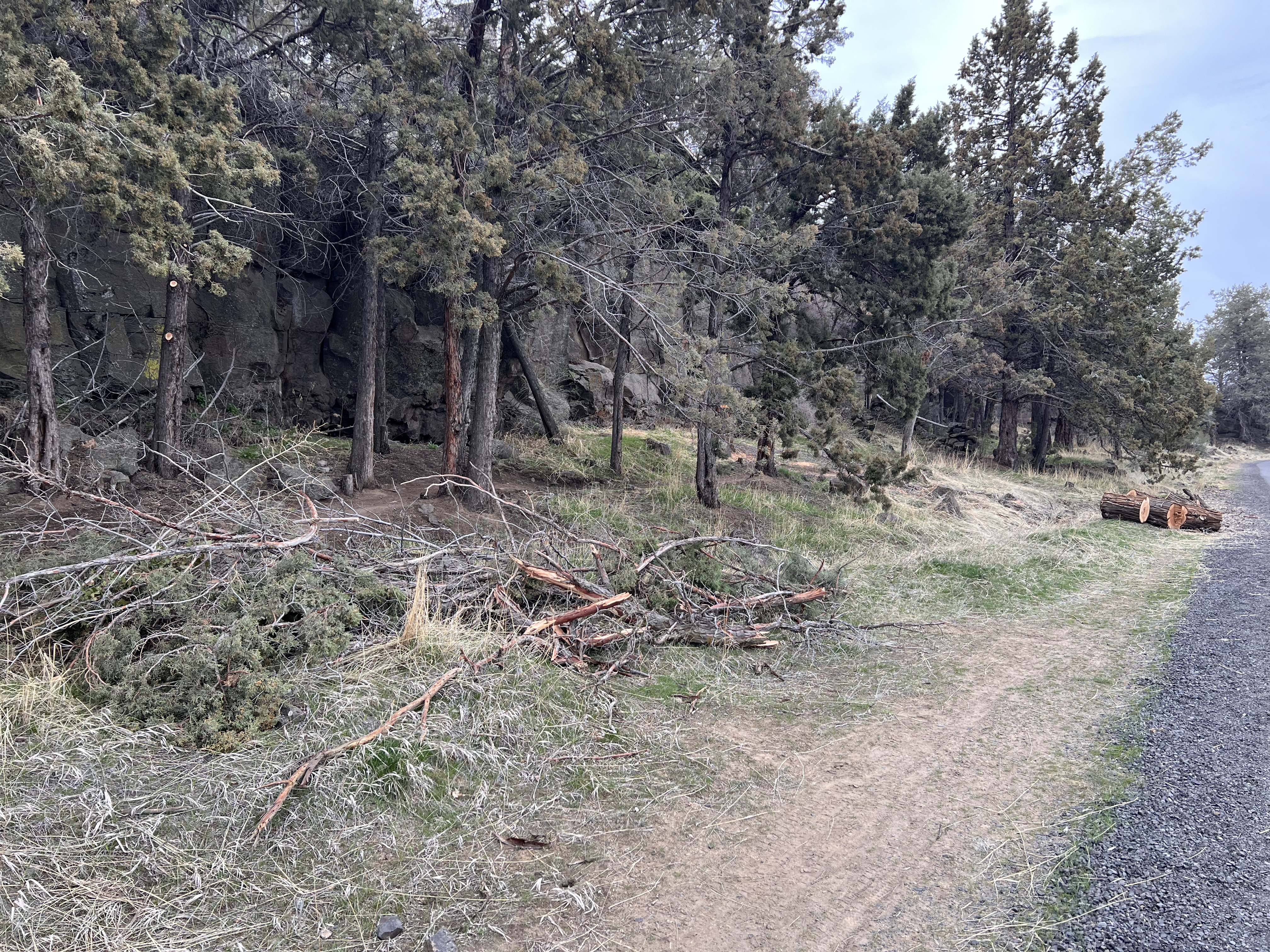
These Juniper, in Redmond’s Dry Canyon, are ‘young’ trees, probably all less than 100 years old. They likely began growing after this section of canyon floor was converted to pasture. Here they crowd the edge, where rather than removing them, the trees have been ‘limbed up’, a very unnatural look for these trees and a pattern that is too dense discouraging healthy and diverse undergrowth. Notably, the only tree in this section removed was one of the larger, older, trees in this section.
Today, when brought up in casual conversation, the Juniper is the greedy ne’re-do-well, dominating our landscape when left unchecked, sucking up our meager rainfall, causing our water table, which supplies ‘our’ water needs through our wells, to drop, while also leaving plant communities without what they require and adding little more to our lives than their bulk and volatile oils to our wildfire problem.
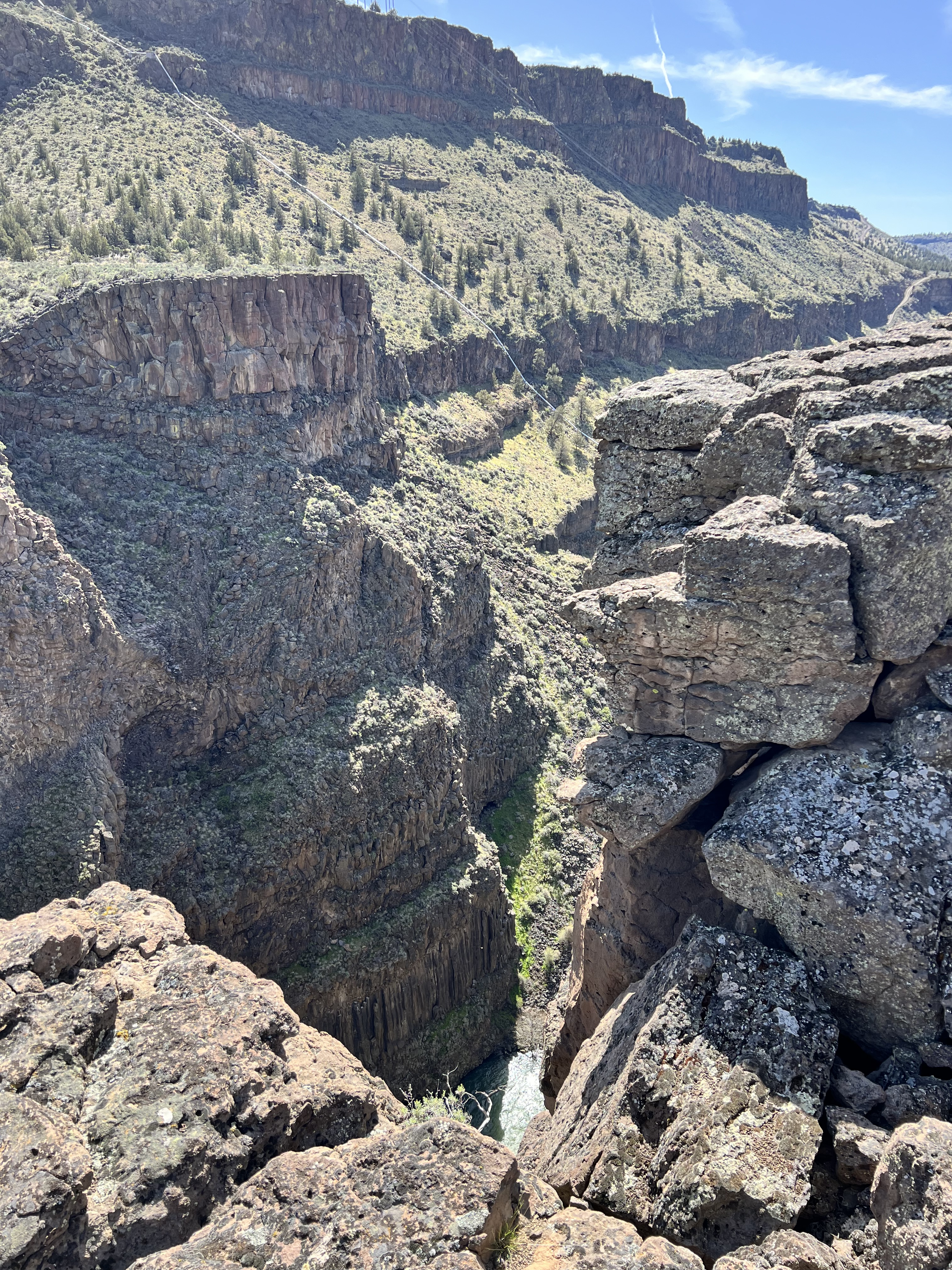
The Crooked River at the pump out site of Opal Springs. You can see the pipe on the far slope still climbing up out of the canyon from the river some 500′ below.
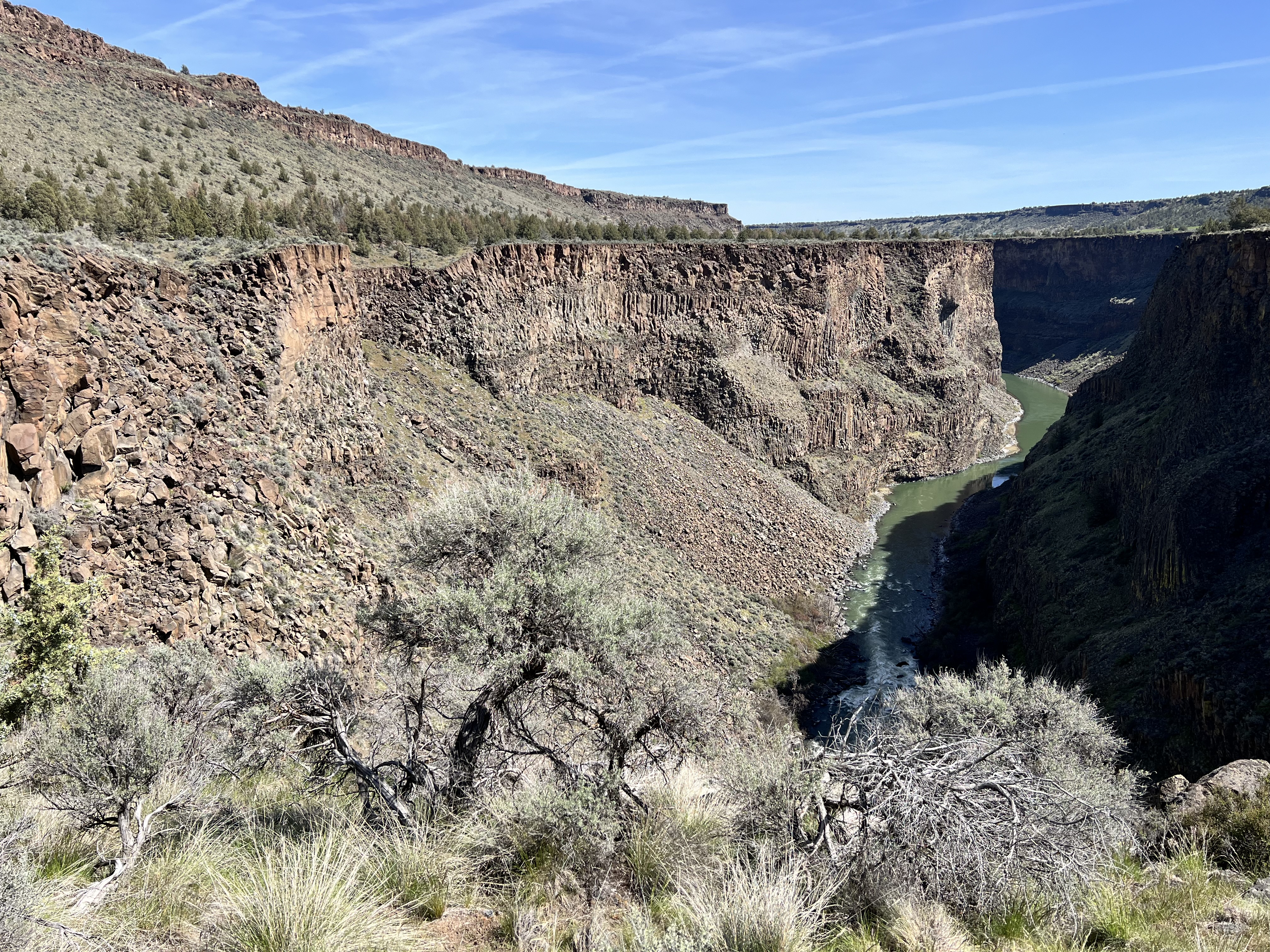
A little upstream from the Opal Springs site and the ‘bench’ which was the original limit for the pumping technology of the time.
[Our local water table is supplied by the snow and rainfall falling on the Cascades, percolating down through the earth’s many layers, collecting and flowing below ground, directed by the area’s underlying layers of rock. Were our local supply of water dependent on the local precipitation alone there would be little to nothing available for our human use once the landscape has taken what it needs. No the water table is dependent on unseen factors, that and our own increasingly heavy pumping, removal, of water from it.]
That the Juniper is an essential part of this region, is often turned into a ‘joke’. Many have come to recognize it as a ‘weed’, even some water conservation organizations…a weed, like any other, that we would be better off without. Few seem to regard it with the respect it deserves here as a member of our plant communities over the last 12,000 years or more, since at least the retreat of the glacial ice of the last Ice Age, or perhaps longer, as at its maximum extent, the ice sheet never extended this far south. No between the advocates for ‘fire safe’ and more than a few well intentioned water-wise programs and promoters, the claim is that we would all be better off without this tree of dubious value. In doing this we deny its historic and ecological role, as well as our own role in our current problems.
Like so many other species which were once far more common, ‘we’ have come to see them as a threat, a ‘taking’ from what is deservedly ours, to our way of life and even our safety, and as such, deserving of eradication. Like so many of our once common apex predators and those many species unsuited for domestication, ‘we’ have made a determination that this world would be ‘fine’ without them. For many, our highest priority, should be that the landscape, and its life, serve ‘us’ directly. Anything else is considered wasteful. Such a collective attitude shows how removed we have become from the complexities and necessities of life on this planet. Yes, the world must ‘serve’ us if we are to survive, but like any other ‘equation’, both, or more accurately, all sides of that equation must balance out, or it fails. Our endless ‘taking’ will always result in an imbalance and the possibility of failure, collapse, as the forces and cycles correct and form a new balance, which in this case, could mean with or without us.
Now, having gone to our Juniper’s defense, they can be a problem, but as I’ve stated above that is largely because of the changes we’ve imposed on the local landscape. That does not mean that we throw out the ‘baby’ Juniper with the bathwater. It is an important component of the local landscape and plays valuable roles here. Even if it didn’t, by simple right of any living organism and its far longer history with this place, it must be granted its place. So how should its presence be managed?
There are many examples in recent decades of abandoned farm fields and pastures once cleared and planted with non-native species, which have been abandoned due to economic reasons, or loss of water rights, on which more aggressive native, and weedy species have returned and gone largely unmanaged. On some of these today there are dense stands of even age, very young Juniper. These lands tend to be less steep and basin lands, with deeper soils, which attracted farming in the first place. These were probably originally native grasslands or Sagebrush Steppe before they were developed. These lands had their own fire regimen, grasslands burning more frequently than Steppe which would burn far more frequently than the surviving old growth Juniper woodlands. These young, even age stands, are anything but natural and stable landscapes. They are ripe for fire…relatively intense fire. We ourselves have become a fire averse group controlling and eliminating fire wherever we can. Our management of these lands needs to be more attentive to the conditions on the site, the possibilities for the future and far more consistent in terms of our management goals and strategies. Today, with a few exceptions, we’re all over the place and the results reflect it, having no coherent management plan that respects the conditions. We often manage in ways that both ignore the damage done as well as our responsibility tor it. What this ‘says’ is that these landscapes don’t matter.
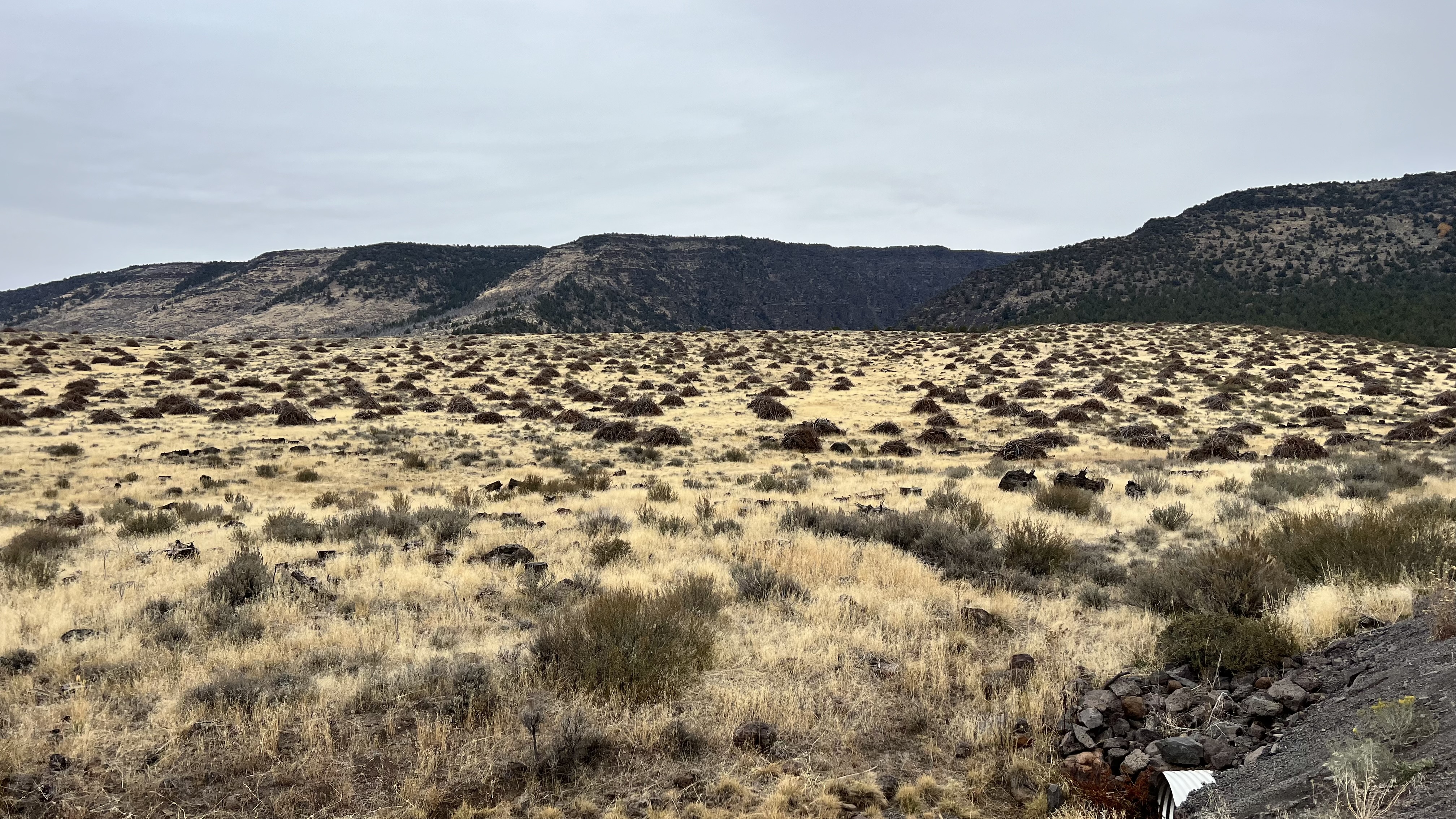
Here in the valley below the mouths of Big Indian and Little Blitzen Gorges, at Steens Mountain, the BLM is managing Juniper, removing it from areas of historic range lands. These were mostly younger trees. Contractors came through, cut and piled them for later burning. In doing this the fire will be more controllable and leave more of the desirable species to more quickly recover. This is, however, a very labor intensive solution.
As mentioned above Western Juniper have moved into, and are beginning to dominate, around four times the area they covered in the 1930s, 1.4 to approximately 6 million acres and expanding. Fire once ‘managed’ these lands keeping Juniper more confined to the thin soiled rocky areas with low fuel levels on the ground, leaving the the deeper richer soils available to grassland and sagebrush steppe. The ‘borders’ between these areas were never ‘fixed’. We are the species that likes to draw lines that confine. We have difficulty imagining dynamic landscapes. Now, with 150 years of minimal management and the general exclusion of fire, Western Juniper has exerted its dominance. In any living system there are ‘checks’ on dominant species. If there weren’t there would be nothing else. This back and forth is part of the dynamism, diversity, complexity and vitality of any biotic community. Now we are faced with ‘dealing’ with this Juniper ‘interloper’ on some 4.5 million acres of land, a service the fire cycle once provided free of charge. 4.5 million acres, over 7,000 sq.mi., 196 billion sq.ft., spread across rugged, largely unroaded and often inaccessible, back country. Given a chainsaw and 100 acres of such land to manage/clear would be overwhelming for most people and the cost of paying people to do such work across the entirety is budget breaking. Doing this would require 45,000 people…plus the planners, monitors and others to keep us focused on prioritizing the work. So, what do we do?
This takes me back to the separation the vast majority of us have from the natural world. We are busy. We don’t have time for this. Don’t we pay taxes and have agencies to deal with this? We do and underfunded as they are to do this work, we can all see the result. We all need to be more engaged. We need to prioritize this and fund those who can…or the landscape will continue to decline, along with species loss and the quality of our lives, while we focus on extracting from it what we want.
As the bringers of change/disturbance it is our responsibility to set things right, to regain ‘balance’. Western Juniper are an important part of several of our healthy native plant communities and like any such community, stability is a necessity, a dynamic stability, which is a quality of life itself. Every organism lives on this ‘edge’. We are in a continual state of ‘falling’ and rising, living and dying on a knife edge. life continuing as long as its structures and energy requirements can remain between the margins of too much and too little. While native landscapes are dynamic and responsive to change, they are only so within limits. Western Juniper can be very long lived, There are remaining communities in the region with many members 500 to 1,000 years and older. Some have been found as much as 2,000 years old elsewhere. Some of the oldest in our region are found just east of Bend on Horse Ridge with its thin soil covered rocky slopes. These communities are of mixed age trees, relatively widely spaced. Obviously, in a stable, mixed age woodland. In such communities neither more young trees can be added than there are trees that die, nor can they die off in mass. Studies show that while there are definite ‘recruitment’ periods when younger trees germinate and grow on toward maturity, periods which generally occur over extended ‘wetter’ periods of many years, while trees do decline and die over extended drought periods. None of these tend to be catastrophic. It is a long term process which extends far beyond the lifetimes of any single human. Junipers reached this stability on rocky landscapes, often on higher elevations, where slightly more precipitation falls. Drier, more arid landscapes will tend to default to Sagebrush and grassland which require less water. Broad areas of southeastern Oregon desert are devoid of Juniper because it’s just too dry. All native landscapes are complex. If we are to successfully steward our native landscapes we must take the long view.
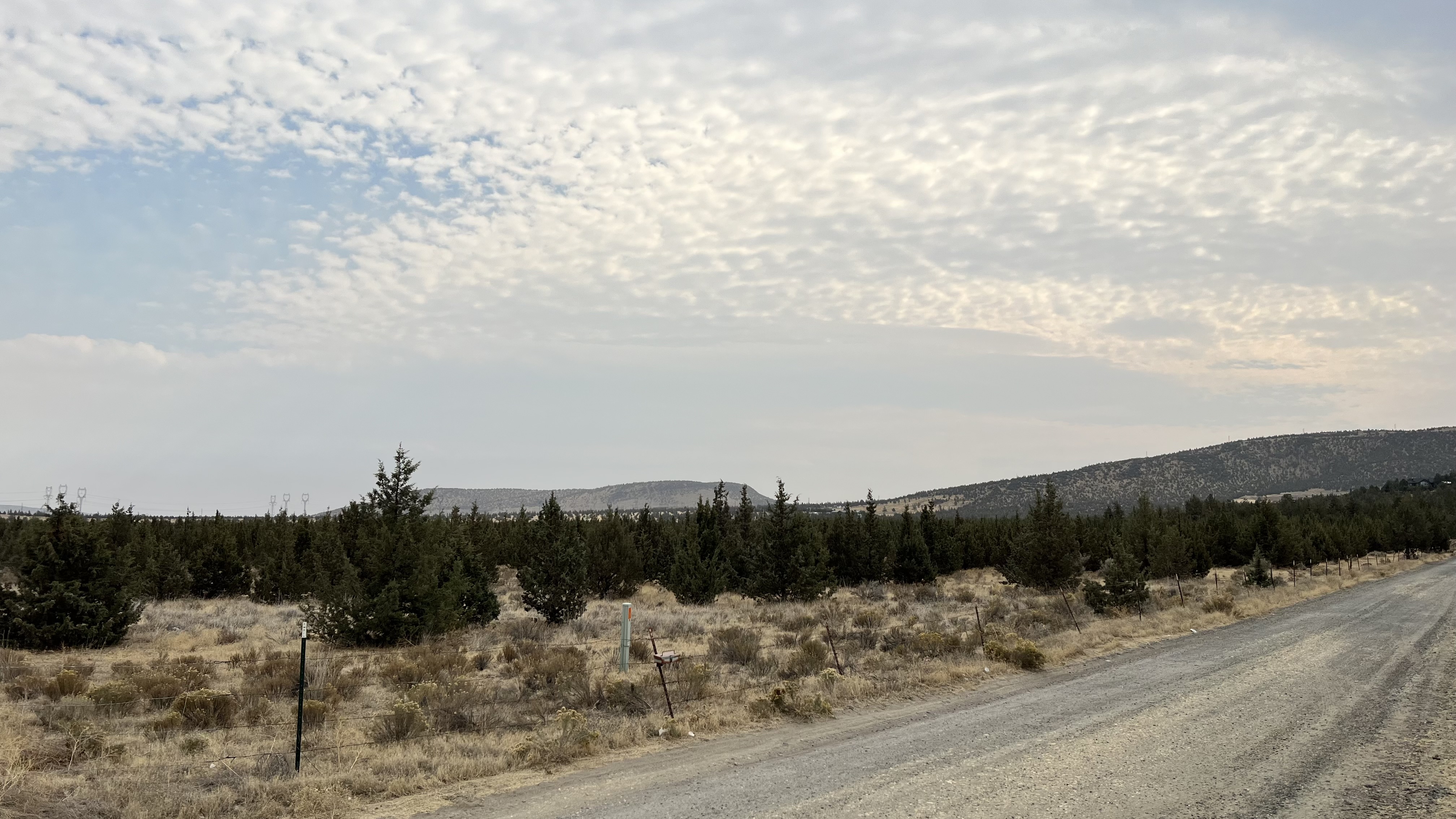
In Crook County, just north of Powell Buttes and east of the same named farming community is defined by the several volcanic cones and buttes dated from the Crooked River Caldera and the much later Deschutes Formation and lava flows from Newberry a few miles to the east. This was a broad basin, converted to farm land, some pieces of which like this one, has been abandoned and is now dominated by an even age, very young, developing Juniper forest.
Therse areas are populated with their former grassland and shrub-steppe communities lost, the wildlife communities dependent upon them radically altered, because we have disrupted them and the cycles that shape and maintain them. We brought in livestock and grazing which ate the grasses down removing the fuel source which started the fires limiting the Junipers. We exacerbated this via vigorous fire control practices as we developed/disturbed the landscape. We cleared thousands of acres of land, worked it, and later abandoning it, watched them revert to Juniper. We brought in, intentionally or not, multiple species like Cheatgrass, Bromus tectorum, which out replaced the over grazed bunch grasses, which were unable to withstand the grazing pressure of domestic cattle and sheep. Other weeds followed, and those which could, dominated the remaining native species. If we hope to succeed in regaining a healthy balance, less dependent on our constant care and intervention, we’ll have to take on fire’s role and actively steward the land. Refereeing the changes we’ve set off and acting with the health of the landscape in mind. Juniper belongs on historic rocky, thin soiled sites. Those with deeper soils that could support healthy grassland and shrub steppe should be managed by us to support those communities. Some conservation groups and government agencies are working toward this, developing protocols, that support these preferred and once more common landscape communities. Exotic invasives remain a problem. All of us, if we care about the region’s future have a role and responsibility in this.
[In a recent conversation with a someone from Colorado, he noted that their Juniper, Juniperus osteospermum, along with their native Pinion Pine, are considered by many to be problematic in the same way that Western Juniper is here and programs are beginning to be implemented to limit their spread to range lands. The reasons for their spread there are largely the same as here, the control of ‘wildfire’ and grazing pressure on the landscape, without any active coordinated management to balance out this ‘radical’ change in conditions. These areas, on down into the mountains of New Mexico and Arizona, are also suffering from an extended drought, with much reduced and inconsistent monsoonal storms which supported the natural landscape. Conversations from past trips to the SW suggest to me that forested areas there are suffering. Ponderosa Pine are in decline along with Pinion and Juniper, dying off with a lack of ‘recruitment’ of new individuals, leaving large forested areas in decline.]
Juniper is not a ‘bad’ tree. Ecology and health come down to all of the relationships between member species, with their site and ua as human ‘occupiers’ and actors. We play a central role in this process and the decline in the diversity and health of these landscapes in which we live. If we have any hope of regaining these ‘lost’ landscapes or even of retaining the health of those still intact remaining native landscapes, we must act. If we want to ‘move’ the Dry Canyon landscape, or any landscape, into a more dynamic and balanced state of health, we must study the examples around us and take on the role nature previously provided. We can no longer afford to place ourselves outside and above nature. We are today, and always will be, a part of nature. Without our thoughtful and considered action we will continue the pattern of decline and imbalance losing landscapes, wildlife and their habitat whether we intend to or not. We are a necessary part of a healthy landscape. We have responsibilities for them. We can’t continue livingJuJ here while denying this and expect our landscapes to go on being ‘magically’ self sustaining. We have abandoned nature.
In conclusion
As humans we share so much with the other species of the world, wild and domesticated. We often think of ourselves as being products of our DNA and our families, our immediate social worlds, and as such, as very different, superior, to the countless species around us, and, in a sense, we are. But that does not mean that we have some how freed ourselves of the limits and concerns of the places in which we live. The ‘forces’ which shape us as individuals work in much the same manner that they do on all other organisms, but that shaping environment is far bigger than we tend to think. Our environments include the tools and technologies, the dynamic social institutions we live in as surely as the Juniper does this physical space. While these shape our environment, that affected environment shapes us. Everything we do, and the consequences of our actions, act on us. A Juniper or a coyote, any ‘wild’ species are without the ‘tools’ we have. They are unable to effect their environment to the the scale and in the way that we can, but they do through their simple existence. The physical environment, including those ways in which we have disturbed or modified it, in turn, works more directly on them. They don’t possess a comparable ‘tool kit’ to modify it in the ways we have. They don’t wear clothes, they don’t possess transformative building, transport and communications technologies with which they can shape and alter their environment. Any individual’s environment is very much a ‘given’. Even as humans we can only consciously effect a small portion of it. But the tools and technologies which surround us act on our lives just as emphatically as do those of the climate. We move through our lives largely unconscious of all of these forces. We respond to them, in a way much as we respond to gravity, we don’t question it. Such things are often below the level of our notice. And, in so doing, we have changed the ‘rules’ by which we live our lives…a freedom and a curse.
As I pointed out above, we can shape our own environment in ways which allow us to endure the otherwise unendurable. We can temper the natural environment’s extremes for us as individuals and as communities and societies. In this way we become individually less responsive to the demands of the physical and biotic world of which we are a part. We have become less sensitive to and aware of it as we go about our lives and with this we are granted more free time to engage in activities which have little to do with our own actual survival and the health and conditions of the places we choose to live in. If we need or want something, we have created economic systems which provide them for us, with little direct effort, beyond a few clicks on our computers. We create, highly modified bubbles, systems of bubbles, in which we live, over laid across the physical and living world. It is as if living under water with the aid of scuba systems for so long we have forgotten what it would be like without such aids. We don’t even consider it. In this sense we have become less connected to the world around us upon which all other living things are in direct dependence, ‘forgetting’ our own dependence. That physical world can then get twisted and reduced into the role of a backdrop, below our level of awareness, something there for our entertainment or economic purposes alone. The biggest difference between us and the wild has become that degree to which we can now shape the forces which shape us and thereby, in becoming isolated from them, have become the biggest danger to our own lives and those of the remaining wild.
“Guidelines for Juniper Management in Oregon and Washington”, BLM 2013
“Ponderosas and Junipers: An ecotone of family memory”, By George James Kenagy, 2024. From the Oregon Humanities website.
“The Tree That Ate the West”, by Rebecca Heisman
 GardenRiots