Category Archives: Natural History

The Nutrient Cycling Role of Fire in Central Oregon’s Arid Landscapes

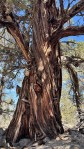
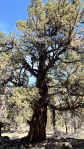
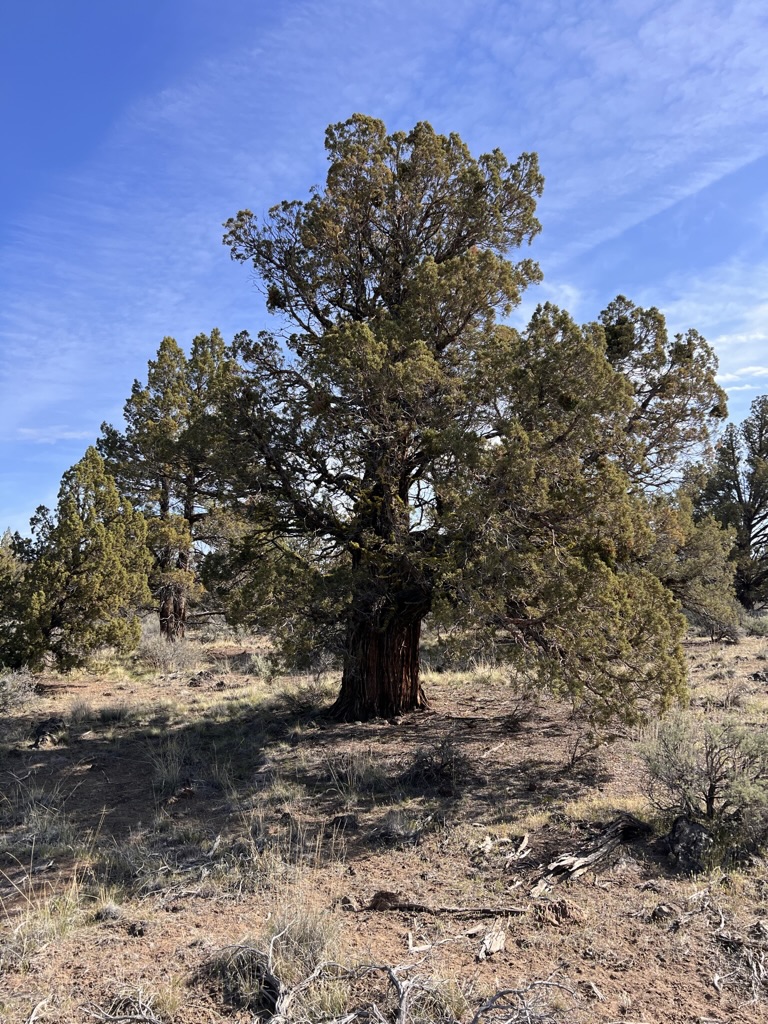
A Juniper like this one, growing out on BLM land around Cline Buttes, attains this squat and sturdy stature only after hundreds of years. Growing as they do on shallow, raised rocky areas, not only do they grow slowly, but there tendency is to caliper up. In irrigated pastures, these grow overly fast, spindly and upright. Look at that taper!

Ecologists will regularly claim that fire plays an essential role in the life and dynamics of the Juniper woodland, our sagebrush steppe and the grasslands of our arid and semi-arid plant communities, that without it, the landscape will deteriorate. Okay, but what does that mean? How can fire actually lead to a landscape’s improved vitality and diversity? What does fire actually do and what happens when it is eliminated? The short answer is that fire, in burning the collected fuels on the ground, breaks them down and returns them in nutrient form to the soil and the cycle of life. It provides the space necessary for a healthy and diverse landscape. To get there requires more thinking.

First some essential definitions and clarifications are needed: what are these ‘types’ of landscapes that together can be found in the arid reaches of Central Oregon; all landscapes are dynamic, evolving, changing over time according to the forces in effect on them, they are not static or fixed; what is meant by arid and semi-arid; fire, what is it, what is actually occurring when something ‘burns’; what is going on at a molecular level when an arid landscape burns; if this is so necessary, what fulfills this role in wetter landscapes; what’s the relationship between fire, rot and digestion; how, and does it, serve the nutrient availability and the necessities of organic growth. In understanding these basic parts we can better understand the self-renewing CYCLE of life as an ongoing process and how disruptions to it negatively influence its capacity to continue. Continue reading

On Wilding and the Return of Nature: Thoughts on an Idea

Talk of environmental crises is everywhere, climate change, mass species extinctions, losses of critical habitat, the privatization of once public resources and landscapes (and their subsequent ‘pillaging’ by corporate entities), critically dropping aquifers, what a chaotic climate may mean for world agriculture and our food supply, a world beset by an increasing rate of diseases and diminishing efficacy of the tools we have to combat and treat them….it is daunting and depressing. At the same time, generally barely mentioned in mainstream media, are notices of studies and ideas of what we can do to not just lessen these problems, quite a few of which are being implemented, but to repair the organic and global systems, whose faltering is leading to these increasing problems and potential catastrophes. To make head way on these is going to require a much more concerted effort by most of us. What, many are asking, can we do to usher in a return to a healthier, better functioning, world…before any looming system ‘course corrections’ do the ‘work’ themselves, eliminating the human problem, that ’we’ have collectively become. 

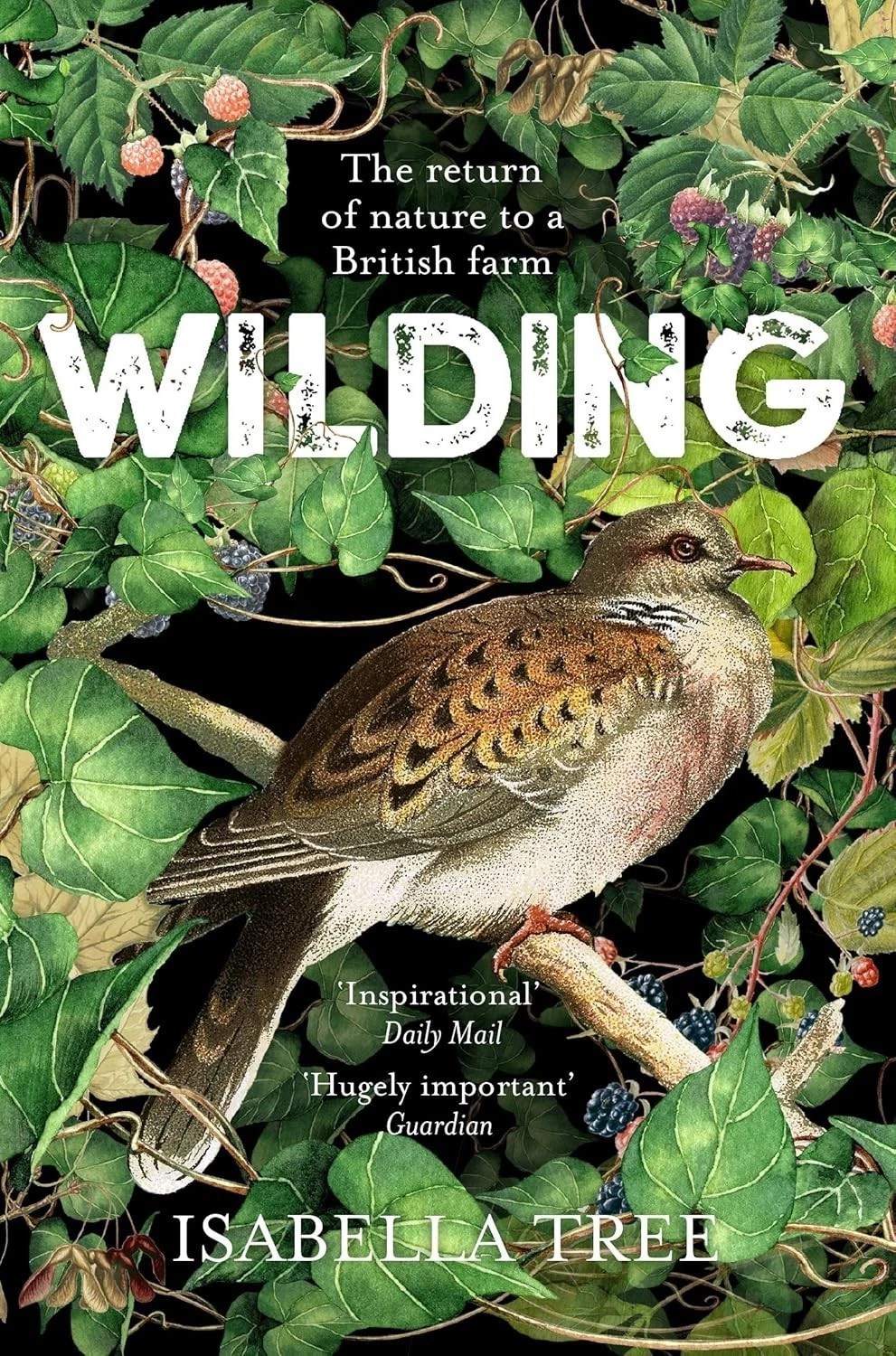
Isabella Tree’s, “Wilding: the Return of Nature to a British Farm”, which prompted this post, supports an approach in which mankind takes on a more responsive and respectful, while simultaneously, a less active role, in the management of the landscape. A ‘less active role’ because what she’s describing requires that we step back, relinquish some control, and allow the powers of nature to heal itself, stepping in where, when and how we must when those ‘forces’, diminished to the point where they are ineffectual, need the support…but no more. She calls for us to trust that our own evolved status is a product of the natural world, a potent nature with the inherent capacities and tendencies, to create, balance and heal, in like proportion to what it ‘takes’ and consumes; that we reclaim our ‘membership’, our historical relationship with this place and all of the life with which we share it. We are active agents of change and must, to the same extent, do the necessary work to heal those wounds, we’ve inflicted upon it through our economic demands and  industrial power. Her story here is one of a shared fate and a faith in life, which is illustrated time and again as she and her husband, Charlie Burrell, work to understand the land and life they are beginning to re-envision, more as curious students than confident ‘experts’. The process quickly becomes one of open discovery as they attempt to understand the health of the place they previously managed as a farm, with the economic expectations of a modern world that has itself become disengaged from life, seeing it narrowly in economic terms that had long ago been separated from ecological reality, limits. and the richness of a place. Continue reading

Crossings: How Road Ecology is Shaping the Future of Our Planet, My Thoughts on Goldfarb’s Book

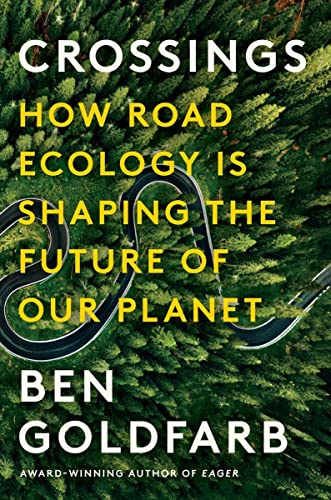
Had I not read Ben Goldfarb’s 2018 book, “Eager”, I probably wouldn’t have picked this one up. Why would I want to read an entire book on ‘roadkill’? But I trusted him. And so I read it. 

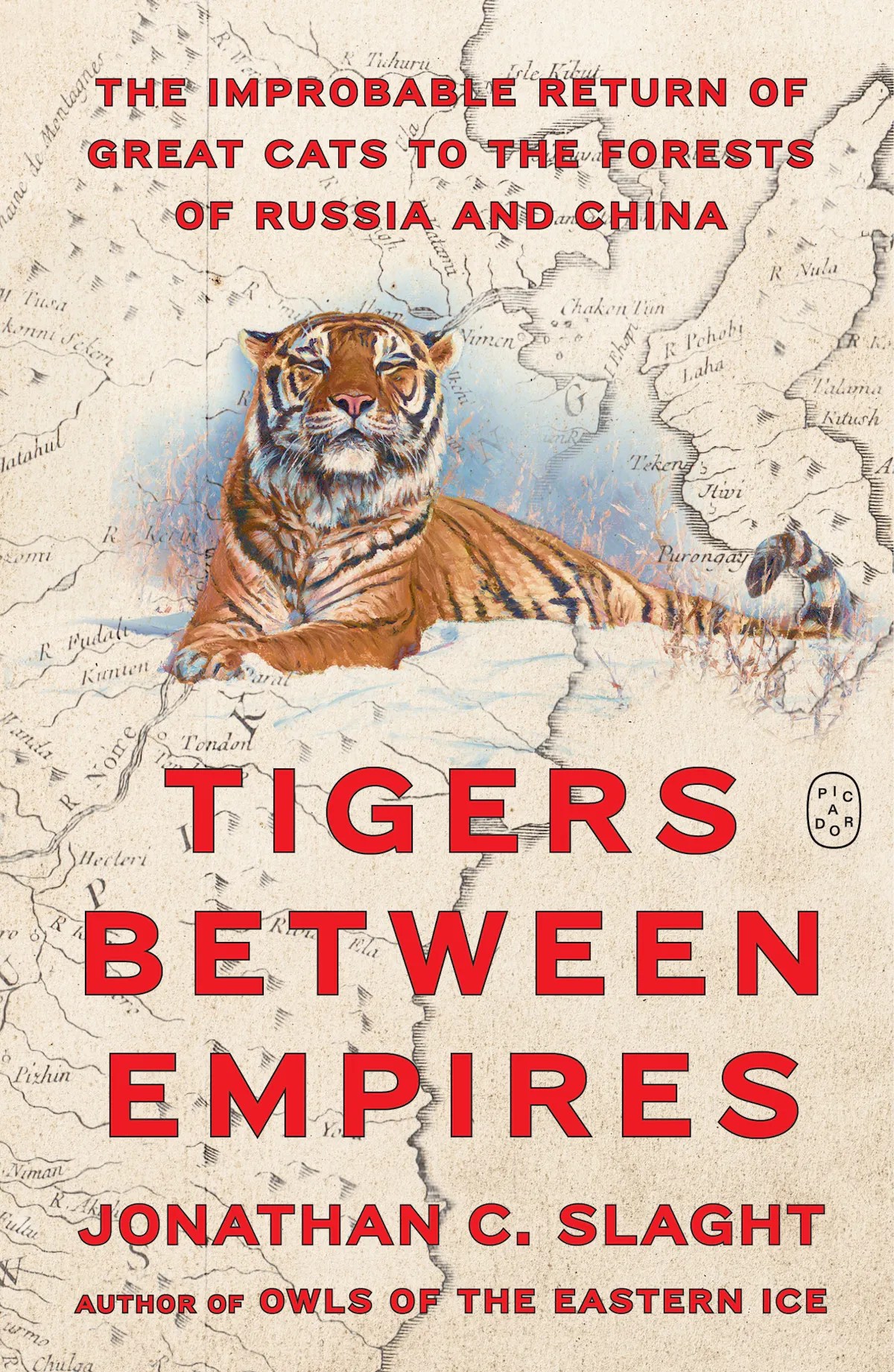
I found his writing here crisp and engaging, like his other work, but I was still hesitant and did my reading in fits and starts. I’ve read several books lately about impending environmental crises and I didn’t really have the energy to do another, but I did finish it and found it a worthwhile and satisfying experience. Amongst these earlier books was Slaght’s, “Tiger’s Between Empires” which returned repeatedly to the problem of how devastating even the relatively little travelled roads of Russia’s remote Primorye Province are for its endangered population of Amur Tigers. In the world of ecology, roads routinely bring death to the wildlife they literally impact, as well as because of the discontinuities they create in the landscape, physical and chemical changes they visit upon the animal’s environment and the surrounding biotic communities. This is about the wholesale implementation of a technology ‘alien’ to the animal world, that purports to meet the ‘needs’ of humans while making little allowance for the uncounted species that reside alongside them. Continue reading

Is a River Alive? On the Rights of Nature, an Adventure Story and a Shifting of the Dominant Paradigm

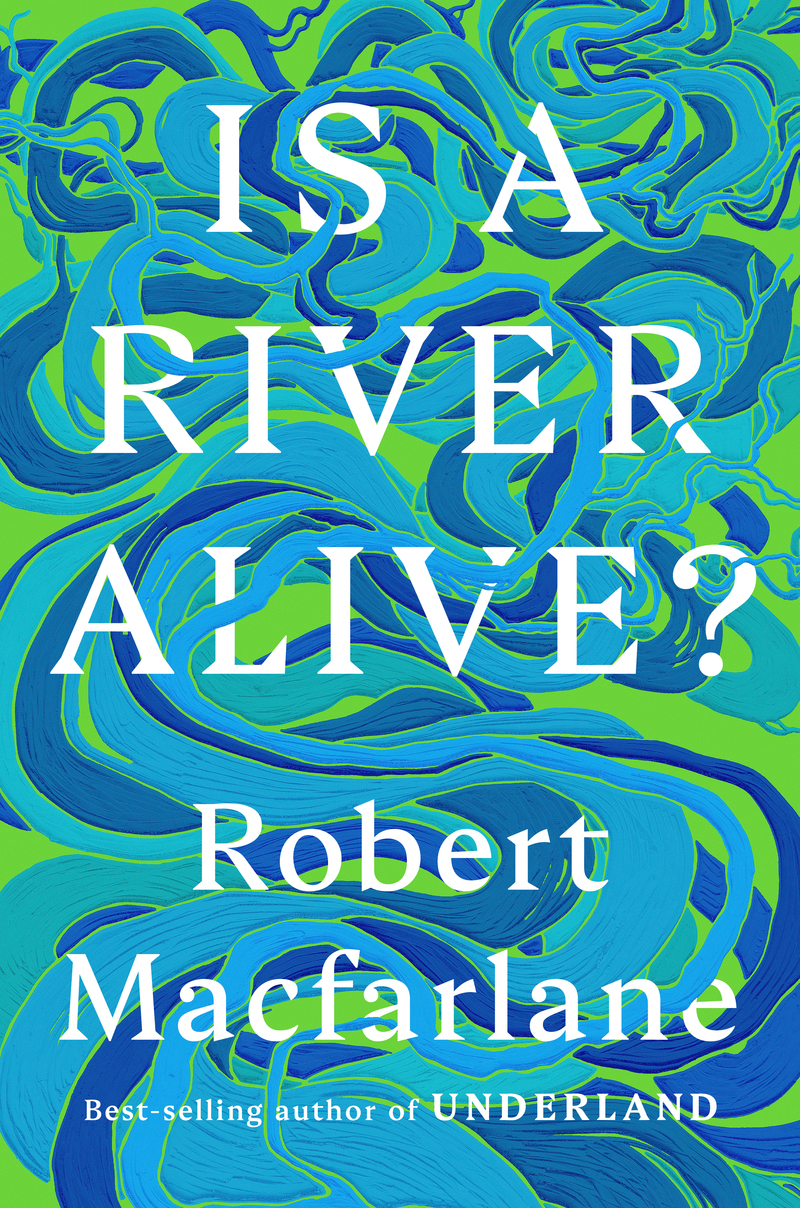
Being a horticulturist, a student of ecology, evolution and all of the usual life science topics, my reading list is long with books I find and others recommended to me by friends. This most recent is one of the latter, “Is a River Alive?”, by British writer Robert MacFarlane. I hadn’t read any of his other books and my friend John thought I’d enjoy it…I did. I listened to it and, as it was read by MacFarlane himself, he added a bit of rhythm and emotion in his reading that would not have been there were I reading it in book form. This is particularly significant as you read the more emotionally driven sections, which, in this format, the ‘Canadian’ section, turns out to be a rollicking, adrenaline laced adventure story. 

While focusing on rivers, this is a book about the rights of nature, legal and otherwise. Why, does the growing community of such thinkers and activists, seem to think nature, in all of its forms, from fungi to mountains, rivers to oceans, the grandest to the most minuscule living species, deserve rights comparable to we humans? What makes them so special? MacFarlane and his compatriots, would turn that around, instead asking what makes we humans so special as to deserve that which we deny literally all others? Their only value, in how they serve us….The rights of nature proponents do not argue simply for their own favorite species or place, many of those so advocating, and protesting, come from thousands of years old indigenous traditions, peoples who have always recognized the links between all living things and those places and forces which permit and support them. And this isn’t because they are simple, backwards, savages or naive. Such thinking is not born out of the heads of green patriots, earth firsters and narrowly focused academics. This is a movement based on memory, connection, of those living in relationship with, in which respect for all things comes first, a world in which life is a gift, to be treasured…all lives, all species, all places, it is a remembering that no one individual, species or place is so special that any and all others may be sacrificed for its needs, its demands, its hungers. Continue reading

Tigers Between Empires

Three years ago I read Jonathan Slaght’s book, “Owl’s of the Eastern Ice’, a book that takes the reader into the inhospitable wilds of Russia’s Primorye Krai, the province immediately north of the Korean Peninsula, its multiple mountain ranges pushing up against the Sea of Japan. With a latitude the same as Oregon and Washington, its winters are far more severe. The book guides you through the mountains and snow, along with the researchers and conservationists, both Russian and American, studying the Blakiston’s Fish Owl, the world’s largest owl, and as the name implies, one that hunts fish in the region’s streams

.

I’ve just finished Slaght’s second book, “Tigers Between Empires: the Improbable Return of Great Cats to the Forests of Russia and China”. Set in the same rugged country, Slaght takes the reader along on a 30 year effort of study and conservation of the Amur Tiger, previously called the Siberian, a region they don’t exist in. You go with them tracking, setting snares next to scent trees, around kills the tigers are still feeding on, and narrow game trails the tigers prowl, as the researchers learn and refine their capture techniques along the way, sometimes at great danger to themselves as they attempt to capture one of the 200-500 pound cats. No one had ever done this before. Snaring, anesthetizing, weighing, measuring, assessing their health and attaching radio transmitter collars so the can track them across their ranges. Continue reading

Nature’s Ghosts, Sophie Yeo’s Look into Ecology, the Loss of Species and Habitat, in a World that is more than mud, leaves and atoms.


An ecological study tends to start with a particular species, a place or biotic community and then goes on to define it in terms of its relationships with its various members and the place itself, with its physical conditions. Sophie Yeo, the author of, “Nature’s Ghosts: the world we lost and how to bring it back”, does that, but where most of the books I’ve read take a narrower view and focus on a particular species or place, Yeo takes a both ‘local’ and a more global view as well as one that goes back deeply in time. Hers is not a book limited strictly to ecology as we generally understand it, because she is interested in it as a tool, a tool for reclaiming what has been lost, the ‘Ghosts’ of her title.

As a horticulturist, who took care of landscapes, this book has strong appeal, because not only does it look at life and all of its integral relationships, she includes us, the humans, who so often set ourselves separate in the rarified and an exceptional world of our own making. This is also a critique of this decision in which she writes to show us where and how we belong in this world, how we once were very much a part, how we behaved as a ‘keystone’ species, actors in a landscape, shapers, ‘creators’, and how now, as consumers/destroyers, because of our self ascribed position as superior beings, we became removed and exceptional, a threat to the our other community members, as we changed the world into one that allowed them less and less space. It’s a tall order, what she sets out to do here, but I think she largely succeeds and she does so in a way, with language that is almost lyrical, beautiful at times, and like a ‘bad’ scientist, introduces herself into her story, along with the emotion and clarity that being a new mother can give one’s self.  Continue reading

Redmond’s Dry Canyon Firewise Management Plan, a Critique and Call to Action

Those who follow such things know that I’ve been involved in the preservation and enhancement of Redmond’s Dry Canyon, joining with others to form the Friends of North Dry Canyon Natural Area as an advocacy group, working to educate the public about its qualities and fragility, while also providing ‘boots on the ground’ with clean up projects and the control of threatening Invasive plants. Most recently we’ve been supporting other groups and participating with a guided naturalist walk, a bat walk and a recent Botany and Birds, walk with the High Desert Chapter of the Oregon Native Plant Society and Queer as Flock, a bird watcher’s group. We’ve been advocating for better signage, a trails management plan and for increased efforts to control the illegal use of electric and gas powered motorcycles in the Canyon. Additionally we have be doing the Juniper survey work for the City, to help create a plant data base linked with the City’s GIS program to aid them/us in the development of an effective management plan for Dry Canyon. We’ve only been recently notified, along with the rest of the public, that the City has a new Dry Canyon Firewise Management Plan (a PDF is linked below), which we were assured included participation by foresters, local natural resource and conservation groups…yet, somehow, they’ve produced a one dimensional plan with the singular priority of eliminating the chances of a catastrophic fire, while ignoring virtually all other priorities!!!! Continue reading

The Eager Beaver: Sociology, Ecology and the Role of Relationship in Life and Community

Ben Goldfarb’s, “Eager: The Surprising, Secret Life of Beavers and Why they Matter”, is an excellent model for other authors who write on ecology for the interested lay public. It is also an excellent entry for the novice into the world and thinking of ecology. As in any other ecological examination of a species, Goldfarb tells us about the roles and relationships the beaver has in their particular landscapes, how they fit in. In doing this he tells its history, that is, its historical role in the lives of us humans, and we in its, alongside those it shares intimately with the other species of its biotic community. It is a book very much about this important animal’s relationships, and, by extension those of our own and every other species on the planet. The beaver’s, or as the author also refers to them, the Castorid story, (the latinized name of our North American species is Castor canadensis, its old world counterpart, the other species, Castor fiber) is closely linked to our own. We, as the ‘dominant’ player in our landscape, have overlooked the beaver’s pivotal role in the world of water including the rivers, streams, ditches, ponds and seeps that ‘water’ the desert. Beavers were essential in the historical landscape and now, in their absence, our landscapes are often very much diminished. Wildlife, and even farmers and ranchers, who have often vilified them, are slowly beginning to understand the benefits their presence can provide, benefits that far out weigh any negative impacts they bring with them. People are, however, stubborn with long and selective memories. It is not easy for anyone to let their misconceptions go and accept what you have always rejected as patently false. Continue reading

On Rediscovering the World We’ve Been Ignoring: An Introduction to the Life Sciences and Our Need For It

Science is the study of life and the world around us, an exploration of the reality of the universe conducted from different ‘directions’ with the intent of understanding its endless aspects. Today, however, science in seeking to ‘peel back its layers, in attempting to clarify our place in it and improve the conditions within which we live along with our relationship with it, and each other, many have dismissed the effort and our effort to continue ‘doing’ science has become contentious. Knowing and its pursuit, has become a kind of ‘blasphemy’. Science has become politicized along with so much else. Many completely dismiss it as a wasteful effort, an attempt by elites to purposely complicate our lives with distractive and destructive nonsense, the value of expertise dismissed. For them life seems simple and obvious. Science, many claim, is an effort by ‘elites’ to obfuscate and to remove decision making ever further from the ‘people’…in doing this we are replacing curiosity and understanding with a willful ignorance, generalized fear and a ‘trust’ in those who simply, and loudly, claim to hold the answers, who demean all others and promise to return us to some ‘golden age’ fantasy of the past. They ‘reduce’ language, surrender clarity, replacing it with volume and repetition, shrink both what is acceptable for discussion and the lexicon with which we do so, rendering communications more open to confusion and misinterpretation, to manipulation. Language and speech, limited, regulated. Science can’t afford this. (Nor can any vital society.) Doubt and insecurity will overwhelm us, until we reclaim our right to knowledge. Reason, science and critical thinking, offer us a way out, a way to reclaim our agency, without destroying the world. Continue reading

On Our Western Juniper Survey in Redmond’s Dry Canyon

This is an explanation of the importance of the survey work being done by the Friends of North Dry Canyon Natural Area, FNDCNA, and it’s role in the creation of a broader management plan, and a fire management plan, that addresses both community safety needs, as well as those of the Western Juniper and Sagebrush steppe plant communities in Dry Canyon. This is a 160 acre portion of the Canyon Park that stretches 3.7 miles, north to south, through the City, a remnant of one of the canyons formed by one of the previous courses of the paleo-Deschutes River, (There were at least two, one some distance east of Redmond’s location, joining with the Crooked River at present day Smith Rock State Park. The current Deschutes River flows 4 miles to the west of this location through a canyon carved in its earlier stages by Tumalo Creek.) Continue reading