
Mowing weakens the native plant community and aids the growth of weeds.
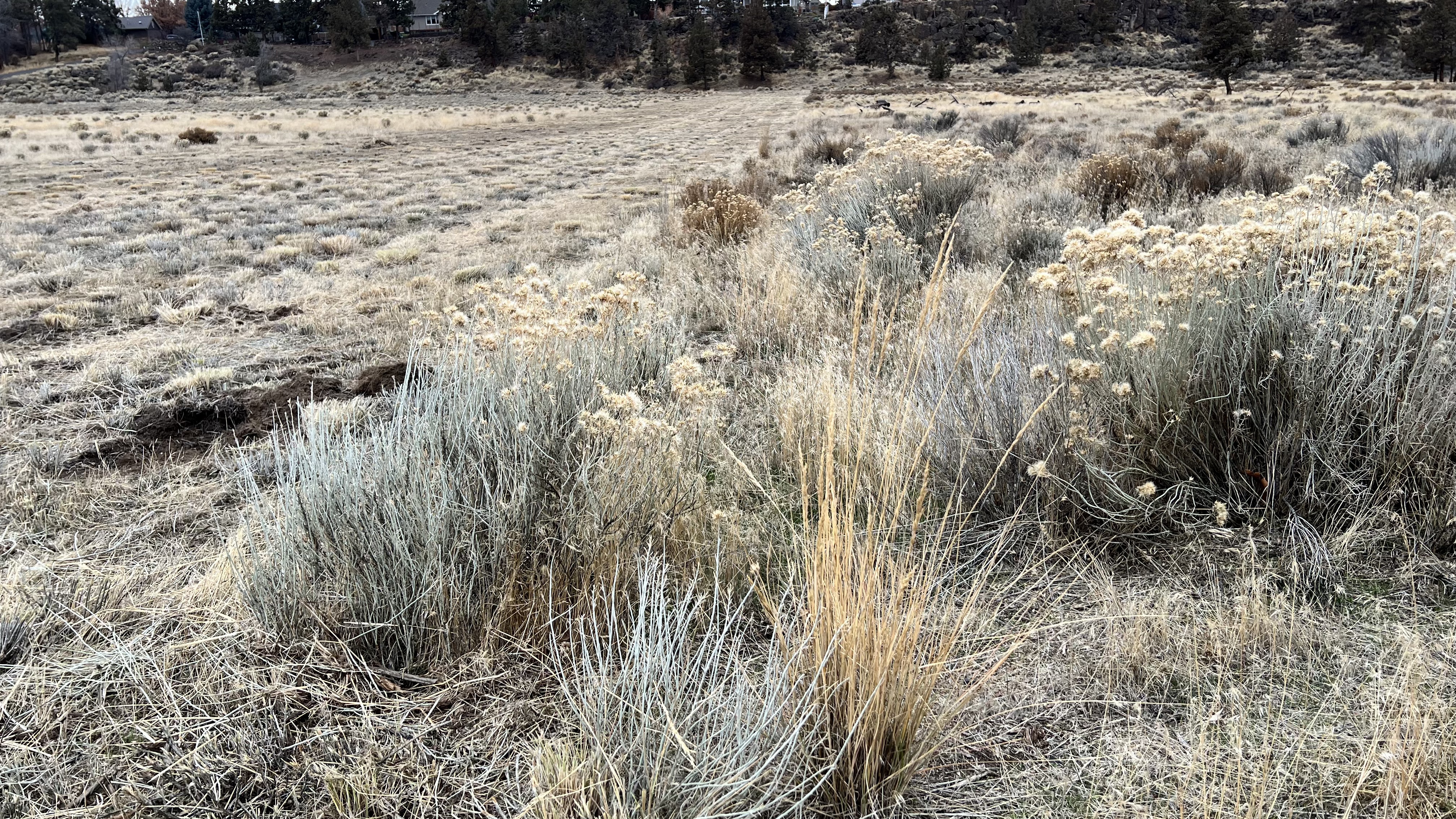
Mown adjacent to unmown. Aggressive spreaders will fill in more quickly and because of the weeds already in place, they will sieze a larger proportion of the mown area as they grow and spread.
While recently walking home through the Canyon, last month in December, I noted 8 new strips, presumably ‘fire breaks’, mown across relatively flat and uniform sections of bottomland, each maybe 50’+ wide, spanning the bottom between the paved eastern path and the the main dirt western bike path. While I understand the thinking here, removing ground level fuels, this is a single purpose treatment that works counter to the Park’s purpose as a natural area preserve. Mowing down the Rabbitbrush, a ruderal, transition species of the Sagebrush Steppe plant community, delays the development of a healthy native plant community and encourages an increased array and density of weeds and invasives. Mowing this way provides open space for weed species already in Dry Canyon, as well as those not yet here, giving them larger ‘launch points’ from which they can spread into the rest of the Canyon. Mowing weakens natives, which are naturally slower to rebound from the damage than the aggressive weed species.
Mowing can reduce a landscape’s fire potential by cutting down ground level fuels, particularly that of grasslands. It does so by reducing the height of fuels and their surface contact with the oxygen immediately available for combustion. Without oxygen, no fire, Where oxygen is limited, what fire can occur, is of lower intensity. When mowing is done in winter the desiccated grasses tend to already be knocked down by weather. In high summer, when they have just finished their growth cycle, they are more dangerous, fueling fires of greater intensity. The frequency and intensity of fire is also affected by air temperature, the moisture content of fuels and humidity as well as wind. Summer is when these factors are all maximized. Winter, when this mowing was done, presents conditions least supportive of fire: relatively high humidity, cool to cold air temperatures, moist fuels with fuels naturally ‘bent’ lower with the least air contact. In fact this is the time most suitable for controlled burns and the burning of brush piles as the fire is least likely to escape and burn out of control. With the conditions already not particularly supportive of fire, mowing provides little advantage. This, combined with the negative impacts of mowing down natives, calls this practice, and its timing, into even further question. There is also the damage mowing equipment does to the ground which encourages weed germination.
The native community requires infrequent fire to limit the dominance of Juniper and minimize the buildup of organic material on the ground.
Sagebrush Steppe plant communities are fire prone while at the same time their health is dependent upon its cyclic occurrence. However, fires which occur too frequently prevent the possibility of healthy communities and support those plants best adapted to frequent fire, like invasive Cheatgrass. So, yes, ‘fire bad’…but not entirely.
Typically Sagebrush Steppe and native grassland communities, with a Juniper seed source near enough by, its seed being spread by the birds that consume the ‘berries’, will become dominated by Juniper in 60-90 years without fire. That’s what has been happening all around us. Birds with their quick functioning guts defecate, spreading the seeds in the Juniper ‘berries’ they’ve consumed, in flight and where they perch on fence wires and overhead lines. This often results in Juniper lined property lines. Juniper are generally killed outright by fire. During years when moisture conditions are favorable seeds germinate and the young trees can establish. In drought years this is less likely. After a fire the Sagebrush community develops over a period of years. Native grasses and herbaceous plants recover first, with the surviving Rabbitbrush, gradually increasing, ‘preparing’ the way for Sagebrush which fire kills. Depending on the soil conditions, Bitterbrush can be a major component of some local communities, although they tend to be more common on rockier soils. Junipers expand into adjacent burned areas, abandoned fields and others on which fire has been controlled. Then fire comes through again, ‘rebooting’ the process. Fire must then be limited or the shrub phase never occurs.
Mowing will encourage fire’s frequency, by allowing the invasion of flammable weeds like Cheatgrass. Cheatgrass grows more quickly and thickly on a site than natives, flowering and maturing seed rapidly, taking moisture and nutrients that would otherwise be utilized by slower natives, before drying and becoming readily combustible fuel for any fire. Mowing is not an answer. By removing the dormant top growth, even in fall or winter, it opens the ground to sun and its energy to power the growth of germinating of cool season weeds, those that tend to start in fall and late winter.
Additionally, mowing does not replace the role of fire. The native bunchgrass grassland, Sagebrush Steppe and Juniper woodland communities grow on relatively poor, mineral soils. As the organic content of soils increase the soils become more moisture retentive, have higher nutrient levels and begin to support other micro soil organisms which don’t favor native communities. What we do changes growing conditions, and through them, what can and will grow here. Fire consumes organic matter on and in the top soil layer. Mowing then becomes part of the problem especially on already seriously disturbed sites like the Canyon. It ‘selects for’ more opportunistic and aggressive plants, those locally problematic weeds, like Cheatgrass, can lead to unfavorable changes in the soil biome and the plant communities themselves.
Native bunch-grasses are normally more widely spaced than Cheatgrass plants and other weedy annual grasses making fire less likely.

This mown strip is immediately north of the Maple Street Bridge. The area beneath the bridge is already a dead zone with a thin population of weeds. This strip is an area I had been concentrating on reducing the infestation of Western Salsify, Tragopogon, and eliminating a small coloby o Knapweed, Centaurea sp., Mowing this seems doubly unnecessary as the bridge already provide a ‘break’. This really does assure that the weeds present will increase. Just south of the bridge you can see an area congested by a dense stand of young Juniper, around what I presume is a municipal sewage pump station, which if there is a fire, could put the facility at risk.
Our native bunchgrass and Sagebrush Steppe communities often appear ‘barren’ to the uninformed as they tend to have visibly bare soil between plants. This is the result of robust root systems below ground which fill the soil. Plants that do sometimes grow in-between do so in a balanced way having found/created spaces/niches in which they can thrive, complete their life cycles. Those dominant plants that define the community above and around them set the parameters for these more limited niche fillers. Native annuals tend to be very mobile, produce a lot of seed, germinate and grow only where conditions are supportive, often becoming absent as more dominant species grow and expand. Other native annuals simply go through their life cycles relatively quickly in spring/early summer before the demands of larger natives crowd them out.
Cheatgrass and other exotic weeds disrupt these relationships and have the characteristics and vigor to disrupt these relationships and dominate. It is not a matter of them be ‘better’, but of them being relatively well adapted to the disruptions we have created in the landscape. Native are a part of the community and live within previously established relationship. Weed aren’t better than natives. They are simply taking advantage of broken relationships. Their presence is not an indicator of nature’s ‘healing’. They are a sign of our disruption of long established relationships. Yes, eventually, without continuing disruptions, new communities with their relationships will develop, after many, many generations, but they will look very different than today’s. Disruption assures that healthy, dynamic communities are far off. So, when we continue activities and work that disrupts communities, our actions are in opposition to them and populations and those relationships which can support them are denied. Chaos then reigns and the most aggressive, available plants will dominate. That which previously was supported will be undermined, species and opportunities, lost.
Aligning our goals with our work. What do we want?
Why then are we compromising the health of the desired plant community in an attempt to limit fire? We don’t want fires that will threaten, damage, homes and private property, so, yes, we should do what we can to limit larger, higher intensity, fires, but at what expense to our stated mission or purposes? Looking at the worst case scenario, a fire would escape the confines of the Canyon and burn homes. A rock lined canyon, is bounded by non-flammable rock, so the likelihood of a fire escaping is relatively low, if we limit the spread and stand density of Juniper on the bottom, as well as those that crowd the rims. At a ground level, dry grass, weeds and the little bit of low brush in the bottom, can readily burn, especially after mid-summer on, when these materials are dry, but such fires will exhaust themselves quickly as the ‘fuel’ is burned. Again, reducing Cheatgrass will reduce the frequency of ground level fires.
Juniper, particularly thick stands of it, can enable more intense fires capable of moving out of the Canyon to private property.
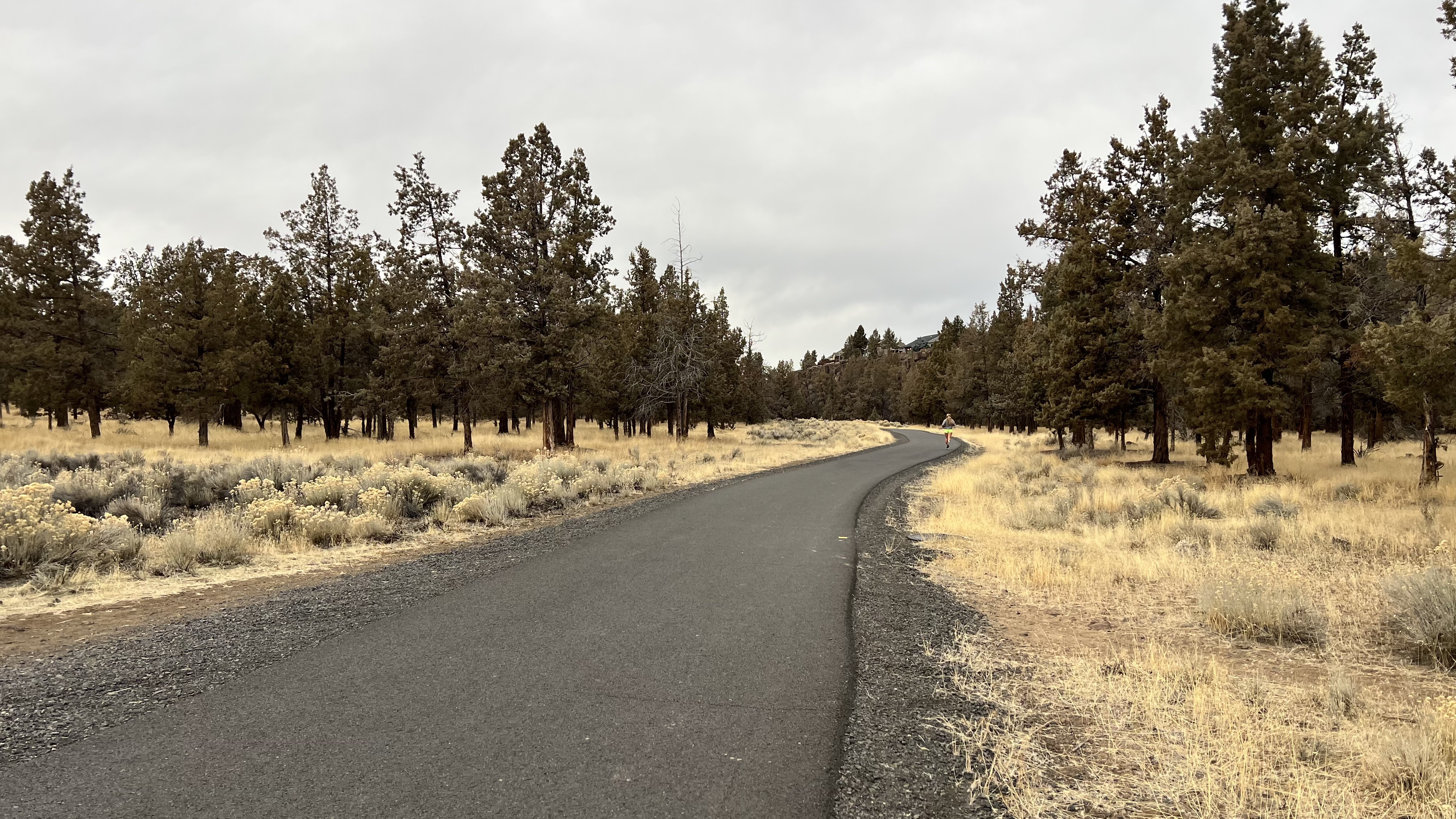
Walking north in Dry Canyon, approaching the Wastewater Treatment plant you enter a Juniper woodland with scattered older Juniper and a lot of younger infill which has increased stand densities to dangerous levels. The most recent practices intended to address this is simply limbing some of the trees up, rather than removing them. While many trees will sprout back after cutting down, Juniper will not.
Junipers provide more fuel, that can burn more intensely, over a much longer period than the members of the Sagebrush Steppe and grassland communities. Their height provides more combustible surface, which can intensify the fire, and because fire tends to accelerate uphill, thick stands of Juniper can carry an intensifying fire up to and above the rims to adjacent homes, especially when there is more Juniper/fuels on top of the rim. Juniper contains volatile, flammable oils, which make it burn hotter and faster. Mown down, or not, Rabbitbrush and ground level fuels will not carry fire up the rims to surrounding homes. The shrub layer will always be limited, thin, in the tumbled broken basalt that ramps up toward the rims. Therefore a thoughtful plan of Juniper removal and control would far better address the fire problem than simply mowing strips.
Thick stands of Juniper are unhealthy, tend to occur on deeper soils where they then dominate Sagebrush/Grasslands until fire burns them. Rocky shallow soils support more open Juniper stands and smaller amounts of ground level fuels and so less frequent and less intense fire.

Below the east rim. This woodland is contiguous with the larger overly dense woodland near the Wastewater Treatment plant, with trees ‘climbing’ up the slope. There are more on top of the rim. This is the perfect set up for a fire that will burn nearby homes.
These thick, crowded, stands of Juniper are unhealthy and do not normally develop in regional native communities, so removing them moves the Canyon community closer to that condition which it would reach without our historical intervention and the absolute suppression of all fire. Periodic fire eliminates Junipers from those deeper soiled areas which typically support grasslands dominated by native bunch grasses, because there is more ground level fuel than on rocky, thin soiled areas. The fires are more likely to start and escalate from there, burning these young denser stand of invading Juniper. Native bunch-grass lands provide less fuel on the ground than the quick and densely growing Cheatgrass. By eliminating fire altogether we eliminate the natural control of Juniper. If we then want to eliminate larger, catastrophic, fires we must take on the role of fire and let it play its part where we can.
Grazing and the elimination of fire have contributed to the rapid expansion of acreage dominated by Juniper all across the eastern Oregon landscape. Grazing first decimates the native bunchgrass communities opening it to the invasion by Cheatgrass. It is estimated that Juniper woodlands cover four times the acreage that they did in the 1930s. These areas of ‘recent’ spread, tend to be basins and plains with deeper soils which support more rapid and more densely growing stands of Juniper. Fire suppression also allows junipers to volunteer readily on poorer sites over wetter periods. This includes slopes leading up to rockier terrain. Juniper woodlands likely covered maybe a fifth of what they do today if you go back to before we arrived with our grazing and fire suppression, practices. Over the last 50 years or better, we didn’t view this as a problem worthy of much attention, but now our own population occupies so much more of the landscape, while water resources are over committed and declining, Juniper is a problem. It is a problem of our own making as it dominates more landscapes threatening other plant communities, suck up available water and pose a greatly increased fire threat to our homes we have built amongst the Junipers. Homes are now common in dense juniper stands. Few people seem concerned. Fewer still are cutting and thinning out the juniper around homes. We continue ignoring our role in creating the problem.

Wax Current growing on a ledge midway up the broken rim.
Native shrubs like Desert Spray, Wax Current and Oregon Grape, do grow in the broken basalt below the rim, however these are very inhospitable locations. These provide limited fuels for fires. Where the do grow tends to be in the protective shade of Junipers, without which the conditions tend to be more harsh reducing the likelihood of these shrubs. Elimination or the limiting of Juniper in these areas then will tend to reduce ground level fuel areas here, again reducing the fire threat to homes above. When we interrupt natural processes, our roles and responsibilities must change to take those on, if we want a healthy landscape.
Native landscapes are dynamic, in perpetual states of change. Over time grasslands will gradually infill with a mix of native shrubs, forming mixed communities which will continue to include native grasses along with annual and perennial herbaceous natives, but at reduced levels. Historically, where Junipers grew and persisted, is on those lands with thin rocky soils, canyon rims and basalt lava flows that stand above the surrounding area. On such areas ground level fuels are fewer, more widely scattered, so that any fires that do occur will be smaller with lower intensity. Such fires may consume a Juniper or two, the wider area protected by their spacing. Under such conditions, should fire move up into their branches, the trees are widely spaced enough that flames are far less likely to jump from one tree to the next. It is a matter of ground level fuels and stand density. On such lands you find hundreds of years old trees. The elimination of even the chance of minor fire, is incompatible with a healthy landscape.
To prevent dangerous fires and improve the health of native communities, stop practices that encourage Cheatgrass.
Mowing before seed production can decrease the Cheatgrass population, but that must be done before the seed crop is ripened and Cheat goes through its cycle quickly. As an annual t is dependent upon regular seed production. Some portion of ungerminated seed may survive until the following year, but each year without additions to the soil seed bank reduces the population. But Cheatgrass is everywhere and doing this is very difficult. The early mowing will also compromise many of the emerging native annuals and weaken the native grasses which must then spend additional resources replacing structures mown away. Regional range land managers and conservancies have been experimenting with different protocols to limit Cheatgrass and Juniper spread while encouraging native bunchgrass communities.
Not all Junipers are bad. Manage the Canyon to encourage healthy mature stands of Juniper and the Sagebrush/Grassland community.

This old Juniper is near the rim of the Deschutes River Canyon in the Cline Falls, Maston, area. Hiking anywhere over here you see many such widely spread old growth Juniper growing on the thin soiled rocky landscape. In the background you see many younger, conical, Junipers that are filling in putting the entire area at risk. BLM, like the Forest Service, has a long history of fire suppression and it is setting up such areas for catastrophic events. They have been aware of this in more recent years and are working to reduce the risk, but there is a backlog of literally millions of acres on which ‘corrections’ need to be carried out.
So, if you want a management program that supports both the native plant communities and reduces the frequency and severity of the fires, stop the arbitrary mowing of fire strips, support those practices that tend to limit the spread of fire prone Cheatgrass; remove the Juniper from deeper soiled areas where they don’t belong, leaving them on the raised, rocky areas, while even there, removing the spindly volunteers that increase the stand density and support fire. Stands with fewer mature trees, with adequate space around them, will contain minimal fuel materials, because the soils are too thin, poor, to support them. At the same time these remaining Juniper will be able to fulfill their historic roles for the wider biotic community. It would also be prudent to reduce the density of Junipers growing next to, and on, the broken basalt slopes below the rim top and working with property owners, on top of the rims, to reduce/remove Junipers and Cheatgrass near their homes. We have largely removed fire from its necessary regional role. If we have any interest in maintaining healthy plant communities here, we must take on fire’s necessary role, using it where we can in a controlled manner while actively thinning/removing combustibles where we can’t use fire.
Doing this requires an integrated approach to get the desired effects while minimizing damage to other elements.
This requires a plan, not just a bunch of guys with chainsaws. Not all Junipers are bad. Identify the old growth/mature Junipers that should be protected, Then develop a removal program that targets the most spindly trees, say those at or below 6” in diameter. Cut and remove them. Haul the chips offsite. Mulching the ground thickly with them will discourage the growth of desirable native grasses, forbs and shrubs. Or, alternatively, follow the protocol practiced by BLM and the Forest Service, when they cut and pile the undesired trees in discrete piles; let them sit and dry for a year or two; then burn them over winter when conditions are least likely for fires to spread uncontrolled. Forests in the arid west normally burn, with low intensity fires, keeping them open and less prone to killing high intensity fires. (Yes, there are exceptions such as when fire occurs in these Juniper thickets and the commonly occurring thick stands of Lodgepole Pine. One shouldn’t build homes in these areas.) This has been demonstrated thousands of times, but again, you need a plan and a long term commitment to follow it.
Limbing up Junipers is a partial solution. Reducing stand density is better
Juniper naturally branch close to the ground. Don’t limb them up to simply remove ‘ladder fuels’. That creates artificial conditions, decreasing habitat value for birds and other wildlife. Fire safety is gained by wide spaced trees, rock and low fuel levels on the ground. In this case also, as a public park, limbing them up opens sight lines and will encourage the likelihood of ever more ‘desire trails’, with people using them, trampling the native community creating more and more space for aggressive weeds.
Phase this in so as not to encourage desire path proliferation.
Lastly, don’t do this all at once. Phase it in. By phasing in these changes, nature, with our ‘help’, in its random and gradual way, can ‘work’ to establish conditions a healthy community requires. Blank slates do happen in nature, such as when there are massive landslides, and large catastrophic fires, but in those cases the reservoir of plants that can recolonize it is limited to those natives that have been in the area all along. Today, with communities severely disrupted and many weeds and invasives well represented in the soil seed bank, natives and their communities, are at a competitive disadvantage. It is probably impossible to create a healthy native community on our own, but if we work at removing the ‘impediments’ to the process, stop doing the things we know that contribute to the problem, we will give the process a chance, adding in the elements, species that we can, where it makes sense. This requires both a sensitivity to local conditions and a willingness to learn and understand what is happening in these communities. Having said this, phasing this ‘thinning’ of Juniper will gradually open space and canopy to allow the gradual inclusion of other desirable native species. Stand density effects what can and will grow in these areas. It is imperative that staff, volunteers and park users understand the process. Knowing what grows here, what ‘belongs’ and what doesn’t, is essential.
Educate the public and staff so these ideas/practices become understood and ingrained.
There is a necessary public education/outreach component to this. The general public has an important role in this and not just adjacent property owners, although their participation is more necessary to protect the larger community from wildfire. Respecting the needs and limits of the Canyon’s native communities is essential in the long run to maintain the health of the Canyon. Again, all things are linked. It is not necessary to get them all right, right now, but it is to begin now, by stopping those practices and uses that are detrimental to our goals.
If fire ‘control’ is the only priority, the ‘ideal’ solution, would be to mow the entire Canyon, cut/remove all of the trees and plant grass/lawn, irrigate and keep it green throughout the dry summer season. Of course this would work against the City’s goal of reducing lawn areas and their necessary water use, in addition to completely tossing out the natural area goal. It would require a massive investment in infrastructure, specifically an irrigation system across its 170 or so acres. Such a strategy would also ‘solve’ the problem of invasives in this limited area, or at least simplify it, as the ‘lawn’ would be maintained through cultural practice and the regular use of herbicides, excluding the invasives, again at the cost of losing its value as a ‘natural’ area and the habitat for wildlife. Following only one priority will always compromise others. An integrated approach is a must.
I am not a staff member and so I don’t know how Parks as a management system functions locally. Much of its decisions and practices are opaque to me. I would like to think that they aren’t driven by, ‘because we’ve always done it that way,’ but there does seem to be a kind of arbitrariness to practice. A year ago in August I sent an email to Jessica MacClanahan, Director of Public Works, stating related concerns about the weed management plan and got a response from Dusty Hood, Parks and Facilities Division Manager, that they did not have a formal plan, but were putting one together, that would be completed by the end of December, 2023. Has it been? I don’t know. I have not noticed a change in weed management practices over the last year.
If there is a fire management plan, it is a ‘stand alone’ plan that isn’t integrated with other priorities and plans. This goes to a concern several of us had while the Park’s Master Plan was being reviewed earlier last month, December ‘24, that the City needs a Dry Canyon Management Plan if it ever hopes to make progress toward any natural area goals, or even if it is content with maintaining the status quo. Nothing stays the same, especially regarding a Park of limited size with a continuously increasing population and its consequent frequency of use. Impacts increase and accumulate. The overall Park system, in terms of acreage, has grown so fast over the last few years, that what worked once no longer does, or at least not as well. Demands and ‘use pressures’, have changed the ‘game’. The forces and stakes at play are greater because of this growth. Opportunities deferred, become opportunities lost.
 GardenRiots