Global climate change, in our current political climate, has been relegated to a
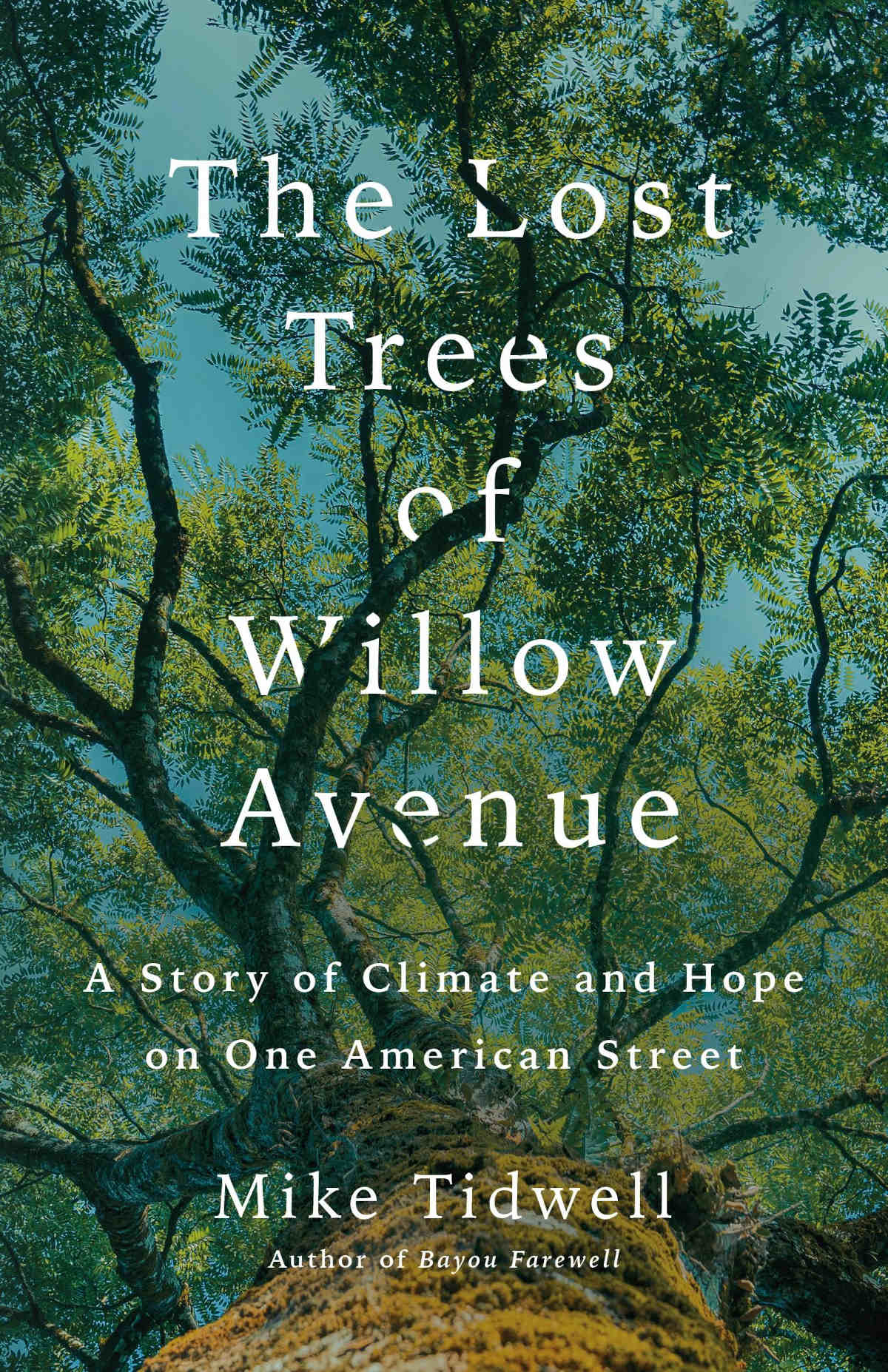
secondary status. There is so much ‘shit’ hitting the fan right now that it gets largely lost in mainstream media coverage. The science that supports it, continues, although at a slower rate. Our transition from fossil fuels to renewable energy has slowed along with the republican denials, their actions to ‘deBidenize’ America, cutting funds appropriated through the Inflation Reduction Act, ‘seed’ monies to fund needed infrastructure investment, along with their cuts to the funding of research into the supporting science and technologies. The topic has been rendered into one of ‘belief’ as if its consequences will have no real world effects, a simple argument of the uninformed, like ‘Ford beats Chevy’, pointless and personal. Author Mike Tidwell, an obvious long time ‘believer’ and lobbyist, has worked over the last 30 years to move the political dial toward climate action, amongst his neighbors, his home state of Maryland and Congress. Here, in his recent book, “The Lost Trees of Willow Avenue”, he tells his and his neighbor’s story, in his DC area neighborhood, of the real world impacts they’ve observed and are attempting to combat. Amongst his neighbors are Congressman Jamie Raskin, his friend, Ning, a college prof who has been working tirelessly on getting a novel carbon sequestration program up and running, a local state legislator who has been working to get massive scale wind generators built off shore and others working in smaller ways, dealing with the fall out of a climate already changing around them which, among other things, is causing crazy weather perturbations, changes in rainfall and temperature swings that are leading to things like a large increase in Lyme disease, because the milder winters are killing fewer of the disease carrying ticks, while also leading to the massive die off of mature trees across their neighborhood. Continue reading
Category Archives: Book review
The Serviceberry: Abundance and Reciprocity in the Natural World, A Review
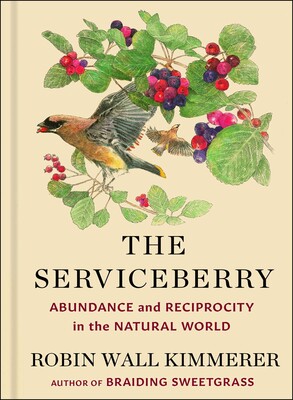
Robin Wall Kimmerer is a botanist, ecologist, a teacher and a member of the Potawatomi people of the Great Lakes region, from whom she learned her people’s particular world view, one once common amongst many indigenous peoples and in stark contrast to that of our present day dominant culture, which has lead us to powerfully shape our our world today. Her three popular books, “Gathering Moss”, “Braiding Sweetgrass” and her latest, “The Serviceberry”, present to the reader a glimpse into the natural world as seen from this ‘alternative’ world view. All three are enlightening reads and not overly technical. They are ‘invitations’ to see the world from a different perspective. The latest is the smallest, a book barely over 100 pages, with large type and in a small page format…a quick read, unless you pause to give what she presents some additional thought. The best, and the one I read first, is “Braiding Sweetgrass”. Continue reading
The Seat of Awareness: On Plants and What We can Learn from Them
“From the viewpoint of the evolutionary biologist it is reasonable to assume that the sensitive, embodied actions of plants and bacteria are part of the same continuum of perception and action that culminates in our most revered mental attributes. “Mind” may be the result of interacting cells. Mind and body, perceiving and living, are equally self-referring, self-reflexive processes already present in the earliest bacteria.”
—Lynn Margulis and Dorian Sagan, “What is Life?”, 1995
From what do sentience, awareness, consciousness and intelligence come from? Are these capacities a product of an organism’s complexity? At what point does it first appear? is it a property inherent to even the simplest organic chemicals? of peptide chains and amino acids, of atoms themselves?What of the organizing principle that seems to guide embryogenesis, the growth and form of every living individual of every species? Is it in action in the most ‘simple’ interactions between organic chemicals and the energy flowing through them, that favors one form over another and animates those same forms once they meet some critical minimal level of complexity? Is this evolution towards complexity and ‘awareness’ an inevitability? A product of its component parts and the energies within it? [This is an idea that is separate from the notion of an inevitable ‘progress’ of life, always moving ‘forward’. Progress is a human notion, an assessment and a valuation of the change around us, not a ‘goal’ of natural selection and the animating ‘flux’ of energies within the universe.] Rudimentary awareness must exists at some necessary and basic level in the simplest single celled organisms…even in plants.
I look to that which is shared between all organisms and question the idea of the animal brain, and its neural system, as the basis for these things and its purported absence in plants, fungi, bacteria, viruses and archaea, as lacking in them. The brain itself and associated nervous system is a unique and complex structure present only in ‘higher’ animals. This bias in favor of the brain and neural systems, especially that of the human brain, as the seat of awareness and consciousness, ignores the requirements of any organism. We are biased in our insistence that these capacities must be located in a singular physical organ we could hold in our hands and physically evaluate, one which we ‘carry’ internally within us as we move freely about. The body, any body, is a vessel which contains life and is shaped by it. Life is both of the body and transcendent, existing beyond it. Life exists only within the continuously unfolding moment. Life is not a ‘thing’ so one can hardly expect awareness, consciousness and intelligence to fit neatly into a limited organ, however we define it. The roots of this reach back into the study of evolution, ecology, cell biology, neurobiology, the metabolism and thermodynamics of life and the expanding field of quantum biology.
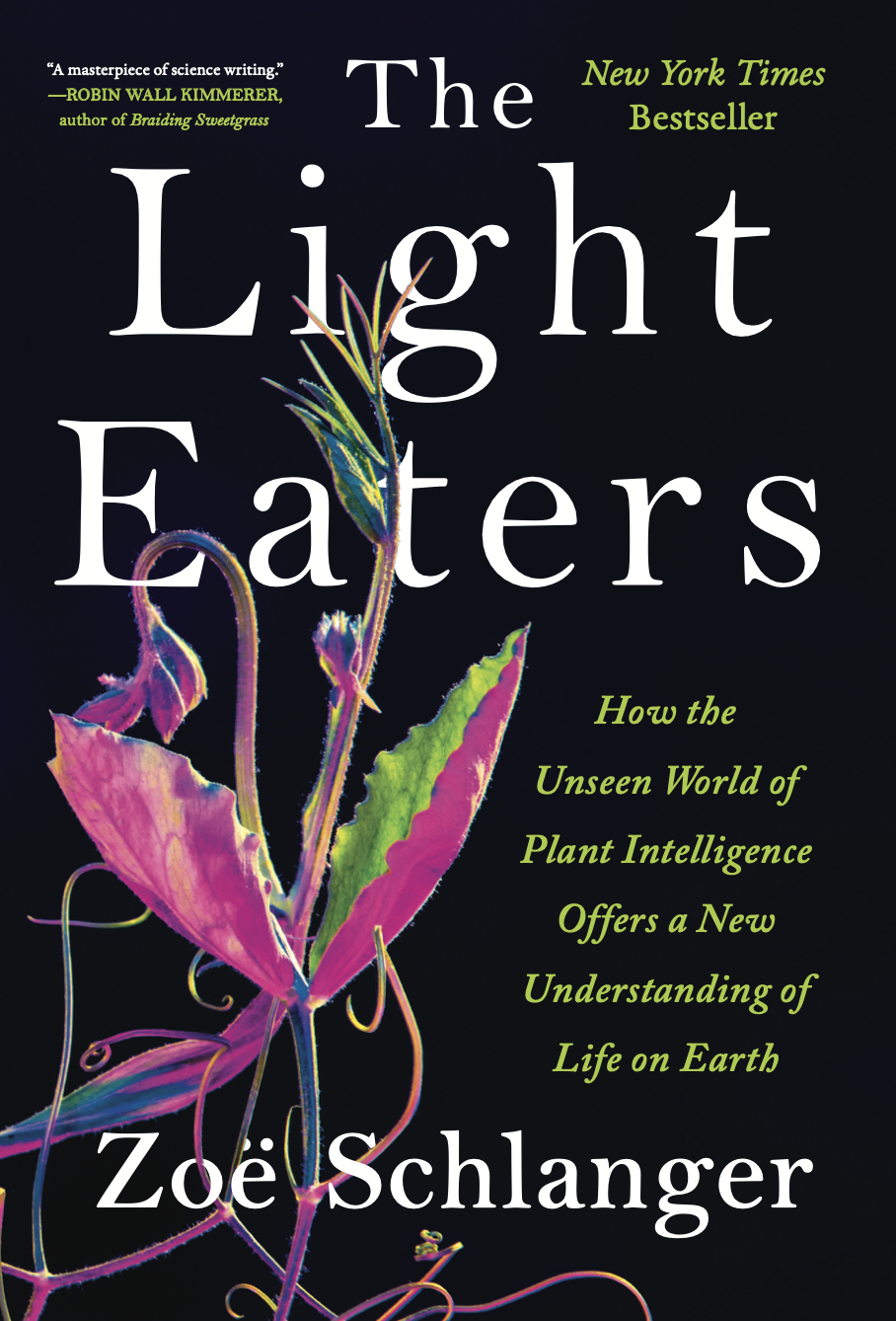
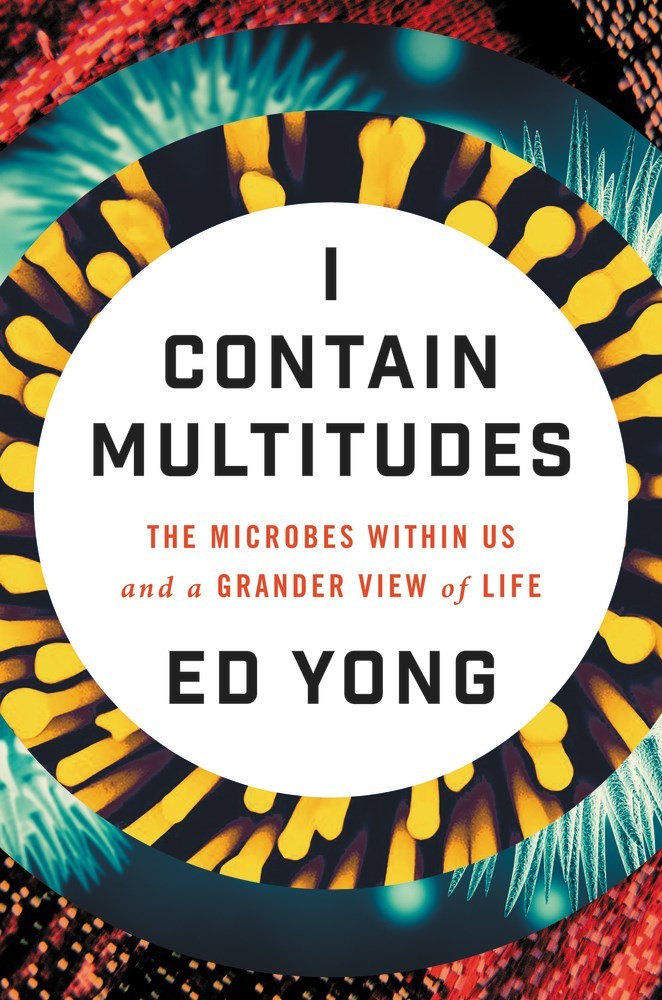
This latest thought piece has been inspired by three recent books I’ve read, Ed Yong’s, “An Immense World”, Paco Calvo’s, “Planta Sapiens” and Zoe Schlanger’s, “The Light Eaters”. I am not a scientist. I’m a student driven to make sense of this world. The connections and conclusions I make here are mine, although they may be suggested by the writings of others. Continue reading
Crisis Averted and Other Good Books to Help Prepare You (Us) for the Next Pandemic
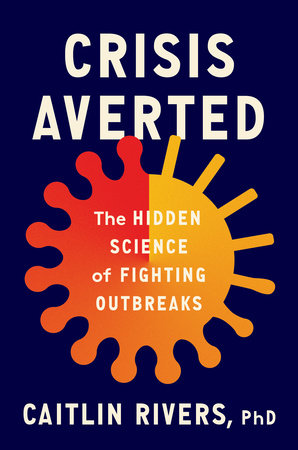
COVID-19, it’s pandemic, the fumbling attempts to head it off, all of the politicizing, the race to develop a vaccine, its distribution and administration and the curious and potentially disastrous attempts to undermine our confidence today in vaccines proven decades ago or for any disease, seem to be a fact of life today. While public acceptance of advice and programs advocated for by epidemiologists has always been difficult, many of us unknowingly owe our lives to their efforts, efforts that were they not made in years past, would have resulted in a world whose present populace might not be here, or if they were, in significantly compromised health and numbers. That is the nature of an epidemiologist’s life. Public doubt, fear and speculation, their work’s value invisible to the vast majority of us, because of what did not happen. Continue reading
Being Transgender: On Gender Dysphoria, Biology, Evolution, Human Survival, and a Look at One Person’s Story
Yesterday, our local book group met to discuss, “Tall Annie: A Life in Two Genders”, with its author and her husband of 18 years. The book is about her often painful, very personal, story of growing up with gender dysphoria, a recognized condition now, but not then, in which a person is born with the genitalia, the physical features of their sex, in conflict with their own gender identity, how they see themselves. These are two separate qualities, one’s physical sex and one’s gender. I won’t get into how one’s physical sex can be intergraded, except to say that an individual, every individual, is born along a continuum between the two poles of being, female and male, some individuals born intersex, with neither male nor female fully formed genitalia, genitalia that may only be partially functional. We are each more or less male or female. Sex and gender are not a simple either/or questions. Continue reading
John Vaillant’s, “Fire Weather: A True Story from a Hotter World”
‘Global warming’ and ‘climate change’ have become trigger phrases, hot buttons for millions of Americans. What were originally coined as descriptive, short hands to signify a complex climatological process induced and accelerated by human action, has been thoroughly politicized. Today they separate ‘us’ from ‘them’.
For those on one side, the earth, is a closed, limited and complex system we are ‘pushing’ beyond its inherent abilities to maintain dynamic balance within margins which organisms can live in a vital, healthy state, biological processes continuing in a familiar manner. This ‘side’ understands that we are adding vast quantities of carbon to the atmosphere causing the earth to retain more heat, heat which ‘spins’ the entire system faster, potentially beyond the limits that life evolved with. Such a more ‘carbonized’ atmosphere resembles that here of many millions of years ago, of a warmer earth, that was nonsupportive, too warm, for the vast majority of organisms which exits today. Too much carbon released into the atmosphere? These effects are easily demonstrable in a lab experiment. These people have some understanding of what they must do to slow and halt these changes, what we must do to ameliorate the damage we’ll inevitably face. Pushed too far the system won’t return to the old ‘normal’ in a few weeks, months or years. It will be with us for generations to come. Continue reading
The Gene: An Intimate History, a Review
I finished reading Siddhartha Mukherjee’s book from 2016, “The Gene: An Intimate History”, a dense, engaging book, written in a prose style, conversational, thorough, accessible and personal, exceedingly rare qualities to find in a book covering such technical topic. Mukherjee, trained and worked as an oncologist, won the Pulitzer Prize for his earlier book on cancer, “The Emperor of all Maladies: A Biography of Cancer”. He is currently an associate professor of medicine at New York Presbyterian Hospital/Columbia University. Understood to be the ‘best’, or most complete and thorough history of genetics, our understanding of it and the ethical questions of its increasingly influential applications in medicine, society and evolution. Of such broad scope in the changing landscape of medicine and its science, it has expectedly, become subject to an array of criticisms. The practice of science is not perfect. Our understanding is forever evolving and as much as promoters might insist that theirs is solid and fixed, our knowledge will always be imperfect. We circle around a topic, defining it closer and closer, but never quite understanding it fully, questions leading us to more questions, our knowledge shaped by what we already ‘know’, and very occasionally propose entirely new ways of explaining, new theories, that dislodge previous established theory. Continue reading
An Immense World: A Review of Ed Yong’s Latest Book
I’m a member of a natural sciences book group. We all share a mixed range of personal experiences as hikers, Gardners, horticulturists, ecologists, wildlife biologist and a fascination with the natural world. There are always so many good titles to choose from. I’ve written of several in the past. Our current book is Ed Yong’s, “An Immense World”, a look into the senses and perceptions of organisms, to understand how an animal ‘sees’ its world. of course, we can only do this from our own limited, human biased vision heavy view of the world. We should never assume animals ‘see’ the world as we do. Many animals primary sense isn’t vision at all. In this book Yong writes of how even when we share particular sense organs with other animals, our perception is very different. Perception is something beyond the senses. It occurs after sensing, an attempt to make sense of the world around us in a way that works for us with our needs and limitations…It is not the world itself. Perception gives us our personal understanding of the world. It is shaped by the combination of our several senses and our need to understand. In evolution what ‘works’ shapes us. We, the biological we, that is, all organisms, are in turn shaped by the world around us…our bodies, our sense organs and our understanding of the world around us. We are shaped by necessity and possibility. While discussing this Yong writes repeatedly of a species’ and an individual’s ‘Umwelt’, our individual view of the world around US. Each is distinct. Individual and limited, making it near impossible for us to imagine another’s, but this does not give us permission to dismiss that of others…any others. Continue reading
Origin Story: The Trials of Charles Darwin, A Review
Evolution, natural selection and Darwin are often triggers for many conservatives. On their announcement people will often enter into angry diatribes which nearly just as often sets off others into a defense of shared ancestors, adaptation and descent, sometimes with a reciprocal attack against a determining role for God. It quickly moves into a polarized argument, one side embracing a christian, all knowing and powerful God who created all things in their particular ‘fixed’ forms, with man in God’s ‘image’, railing against those who would have us descending from monkeys, as if one day a monkey simply ‘birthed’ a modern human, an idea that completely ignores the substance of Darwin’s theory. The public argument seems to remain the same despite the passing of decades with little change, the battle lines firmly established, arguments entrenched. So, it is interesting to read, “Origin Story: The Trials of Charles Darwin”, by medical doctor and author, Howard Markel, which came out earlier this year, 2024. This divisive, get nowhere, pattern was set from the very beginning. Continue reading
Climate Change and the Limits to Life: a couple reviews and examination