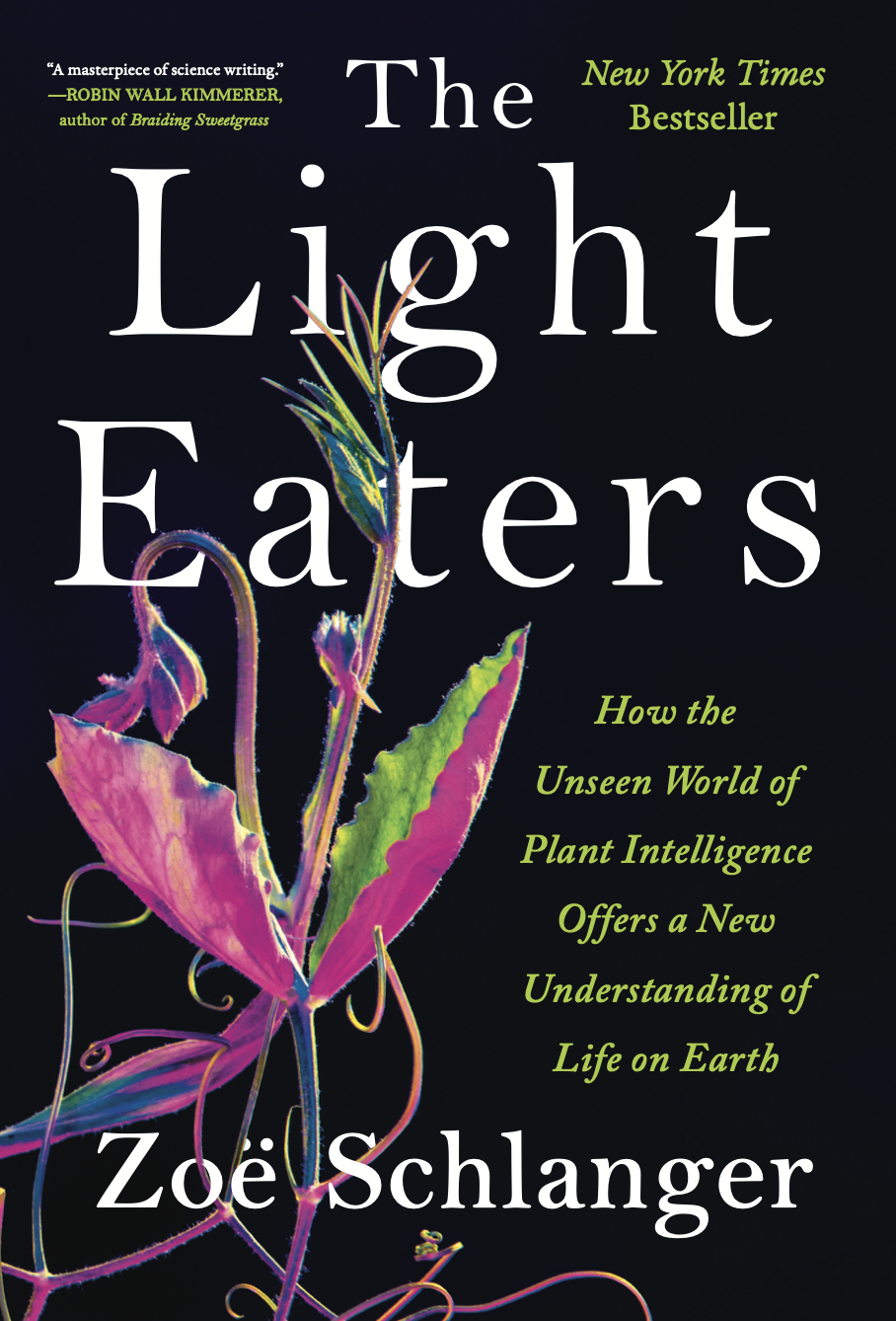
Yesterday, our local book group met to discuss, “Tall Annie: A Life in Two Genders”, with its author and her husband of 18 years. The book is about her often painful, very personal, story of growing up with gender dysphoria, a recognized condition now, but not then, in which a person is born with the genitalia, the physical features of their sex, in conflict with their own gender identity, how they see themselves. These are two separate qualities, one’s physical sex and one’s gender. I won’t get into how one’s physical sex can be intergraded, except to say that an individual, every individual, is born along a continuum between the two poles of being, female and male, some individuals born intersex, with neither male nor female fully formed genitalia, genitalia that may only be partially functional. We are each more or less male or female. Sex and gender are not a simple either/or questions. Continue reading
Category Archives: Book review
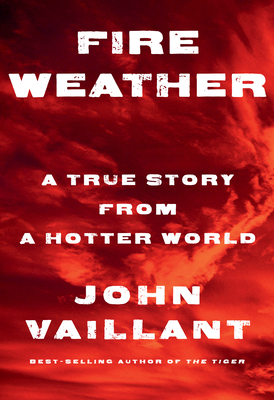
John Vaillant’s, “Fire Weather: A True Story from a Hotter World”
‘Global warming’ and ‘climate change’ have become trigger phrases, hot buttons for millions of Americans. What were originally coined as descriptive, short hands to signify a complex climatological process induced and accelerated by human action, has been thoroughly politicized. Today they separate ‘us’ from ‘them’.
For those on one side, the earth, is a closed, limited and complex system we are ‘pushing’ beyond its inherent abilities to maintain dynamic balance within margins which organisms can live in a vital, healthy state, biological processes continuing in a familiar manner. This ‘side’ understands that we are adding vast quantities of carbon to the atmosphere causing the earth to retain more heat, heat which ‘spins’ the entire system faster, potentially beyond the limits that life evolved with. Such a more ‘carbonized’ atmosphere resembles that here of many millions of years ago, of a warmer earth, that was nonsupportive, too warm, for the vast majority of organisms which exits today. Too much carbon released into the atmosphere? These effects are easily demonstrable in a lab experiment. These people have some understanding of what they must do to slow and halt these changes, what we must do to ameliorate the damage we’ll inevitably face. Pushed too far the system won’t return to the old ‘normal’ in a few weeks, months or years. It will be with us for generations to come. Continue reading
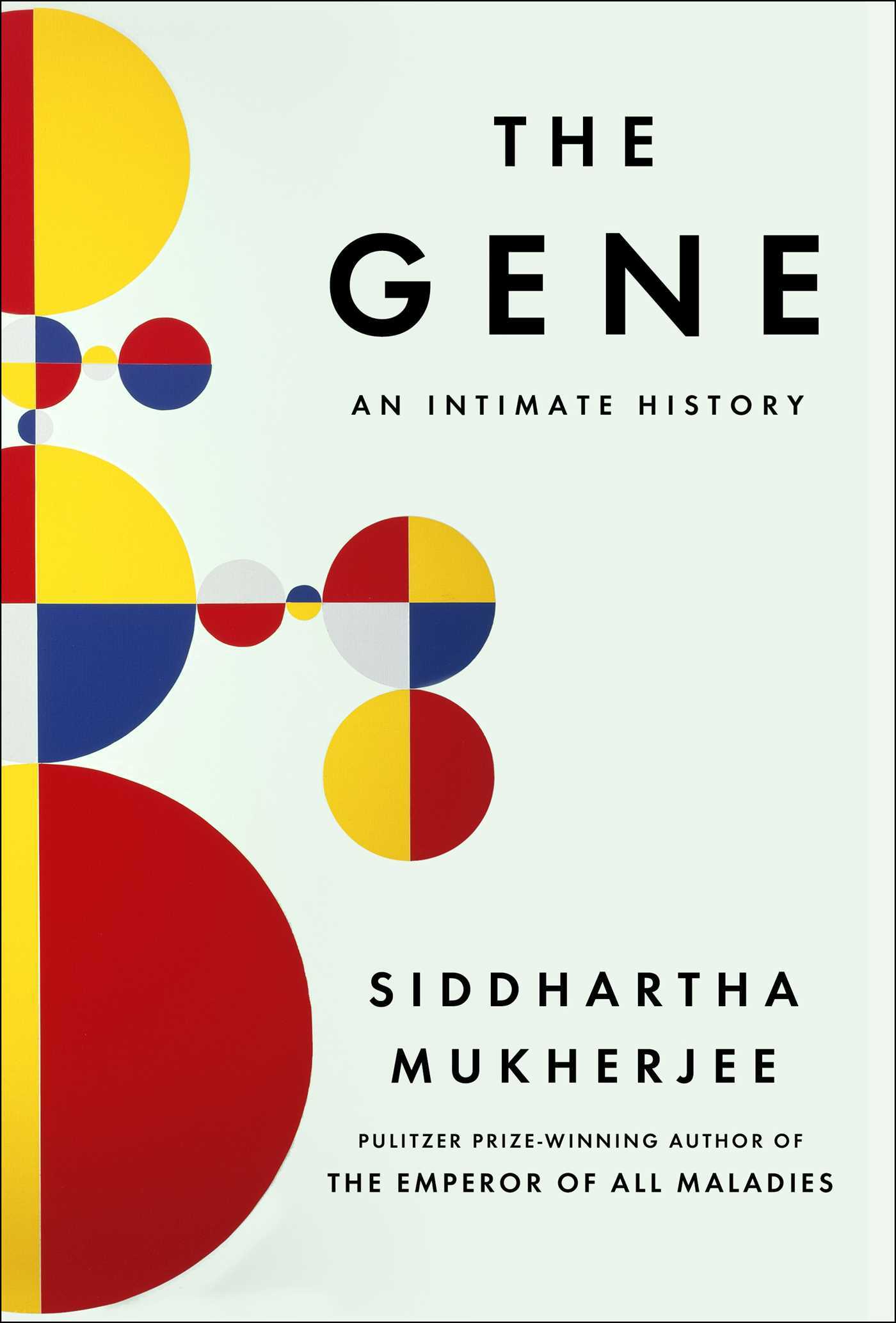
The Gene: An Intimate History, a Review
I finished reading Siddhartha Mukherjee’s book from 2016, “The Gene: An Intimate History”, a dense, engaging book, written in a prose style, conversational, thorough, accessible and personal, exceedingly rare qualities to find in a book covering such technical topic. Mukherjee, trained and worked as an oncologist, won the Pulitzer Prize for his earlier book on cancer, “The Emperor of all Maladies: A Biography of Cancer”. He is currently an associate professor of medicine at New York Presbyterian Hospital/Columbia University. Understood to be the ‘best’, or most complete and thorough history of genetics, our understanding of it and the ethical questions of its increasingly influential applications in medicine, society and evolution. Of such broad scope in the changing landscape of medicine and its science, it has expectedly, become subject to an array of criticisms. The practice of science is not perfect. Our understanding is forever evolving and as much as promoters might insist that theirs is solid and fixed, our knowledge will always be imperfect. We circle around a topic, defining it closer and closer, but never quite understanding it fully, questions leading us to more questions, our knowledge shaped by what we already ‘know’, and very occasionally propose entirely new ways of explaining, new theories, that dislodge previous established theory. Continue reading
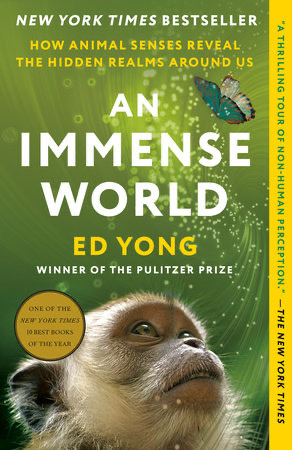
An Immense World: A Review of Ed Yong’s Latest Book
I’m a member of a natural sciences book group. We all share a mixed range of personal experiences as hikers, Gardners, horticulturists, ecologists, wildlife biologist and a fascination with the natural world. There are always so many good titles to choose from. I’ve written of several in the past. Our current book is Ed Yong’s, “An Immense World”, a look into the senses and perceptions of organisms, to understand how an animal ‘sees’ its world. of course, we can only do this from our own limited, human biased vision heavy view of the world. We should never assume animals ‘see’ the world as we do. Many animals primary sense isn’t vision at all. In this book Yong writes of how even when we share particular sense organs with other animals, our perception is very different. Perception is something beyond the senses. It occurs after sensing, an attempt to make sense of the world around us in a way that works for us with our needs and limitations…It is not the world itself. Perception gives us our personal understanding of the world. It is shaped by the combination of our several senses and our need to understand. In evolution what ‘works’ shapes us. We, the biological we, that is, all organisms, are in turn shaped by the world around us…our bodies, our sense organs and our understanding of the world around us. We are shaped by necessity and possibility. While discussing this Yong writes repeatedly of a species’ and an individual’s ‘Umwelt’, our individual view of the world around US. Each is distinct. Individual and limited, making it near impossible for us to imagine another’s, but this does not give us permission to dismiss that of others…any others. Continue reading
Origin Story: The Trials of Charles Darwin, A Review
Evolution, natural selection and Darwin are often triggers for many conservatives. On their announcement people will often enter into angry diatribes which nearly just as often sets off others into a defense of shared ancestors, adaptation and descent, sometimes with a reciprocal attack against a determining role for God. It quickly moves into a polarized argument, one side embracing a christian, all knowing and powerful God who created all things in their particular ‘fixed’ forms, with man in God’s ‘image’, railing against those who would have us descending from monkeys, as if one day a monkey simply ‘birthed’ a modern human, an idea that completely ignores the substance of Darwin’s theory. The public argument seems to remain the same despite the passing of decades with little change, the battle lines firmly established, arguments entrenched. So, it is interesting to read, “Origin Story: The Trials of Charles Darwin”, by medical doctor and author, Howard Markel, which came out earlier this year, 2024. This divisive, get nowhere, pattern was set from the very beginning. Continue reading
Climate Change and the Limits to Life: a couple reviews and examination

On the book, “Cancer and the New Biology of Water
I began this book with a lot of energy which was sustained through the book’s first part, ‘A New Understanding of Cancer’. Having read fairly extensively on cell biology and the ground breaking work of Gerald Pollack’s study of water, its biological importance and four phases, I found Cowan’s presentation here lacking, describing it only in very broad, simplistic strokes. For me he ‘hints’ around the edges of the problem and asks the reader to simply take his word for his claims. The problem, he says, lies in unhealthy intracellular water….Okay, but what’s that about? Why does that matter? It is just water after all…right? His doubting and questioning of mainstream medicine and its rigid adherence to the oncogene model of cancer, I’m in agreement with. Mainstream medicine and science can become dogmatic and not only reject alternative theories, but work actively against their investigation. Scientists and doctors are not immune to the problems ego can often drag along. What I was hoping for was more specificity, more explanation of how Pollack’s work on water’s fourth phase, not only contributes to, but is essential for, health of the cell and the larger organism’s. It’s not here. Instead the bulk of his little book, it’s only about 170 pages of text, is on alternative therapies, which he introduces, again, without much of an attempt to tie it into his idea of the centrality of intracellular water.
I have another issue with his book, not his idea, in that he spends too much time bashing mainstream science, while at the same time his argument is based on science. I find this disturbing, especially given today’s political atmosphere in which bashing science is so common by those on the far right. They would argue that it’s all about belief, the proper belief. This problem for me was underscored by how he presents his alternative therapies of promise. The reader is left with either believing or not believing him. While he does argue for more extensive testing of these alternatives, he is simply asking us to believe him, not the mainstream docs, concerning the efficacy of these therapies. There is science to support his claims, but it isn’t here. Health is an incredibly complex and important topic. Western civilization has chosen a particular path which, in this case, Cowan correctly points out, has produced the questionable results he criticizes, in terms of cancer, its proliferation and treatment, but it is not enough to simply, and stridently, insist that the problem does not lie in genetics, that it instead lay within the health of the cell and the state of its intracellular water. He needed to spend a lot more of his pages explaining what this means, the science of water and the big question he asks early on, ‘What is life?” His case is strong, but, in my opinion, inadequately presented.
He barely mentions Pollack who operates a water lab at the University of Washington which has done so much work on water, its physical capacities, suggesting important and central roles in biology and life processes. Pollack’s two books: “Cells, Gels and the Engines of Life: A New, Unifying Approach to Cell Function” and “The Fourth Phase of Water: Beyond Solid, Liquid and Vapor”, are both relatively accessible sources if you have a basic understanding of biology, atoms and molecules. Pollack’s writing is accessible. Unlike so many scientists he possesses a capacity to explain relatively complex problems in laymen’s terms. This is what Cowan needed to do with his book.
https://www.ncbi.nlm.nih.gov/pmc/articles/PMC4244968/
Notes on Complexity: A Scientific Theory of Connection, Consciousness and Being, Thoughts on the Book
[My ‘reviews’ are not strictly book reviews. I’m not trying to distill the author’s ideas down into a simpler ‘bite-sized’ piece or discuss their ‘style’. These are my thoughts after having read these books. My attempts to make sense of them, usually after several rewrites, as I work to fit them into what I already ‘know’, an attempt to make the ideas presented in this book, consistent with those which I’ve read by other authors. They include ideas not covered by this author. Rarely, if ever, can you come to an understanding from a singular perspective. This is a link to an annotated bibliography on my Blog of several of the more significant books which have influenced me on this topic,]
Complexity theory? Do we need a theory to determine what is complex? No, that’s not what this is about. Theise’s book does not layout a system for determining what should be considered complex/complicated or not. This is a book about systems and structures in nature and how they come about. He discusses how mainstream science has fallen short in explaining this and why, the author believes, without changes in approach, we will continue to fall short. He goes on to present an alternative, or, rather, a ‘sister’ approach which can provide a previously excluded way of ‘knowing’, and in so doing, can account for the ‘gaps’. The problems are not just that this is a difficult concept to understand, but that at the most basic, quantum, level, that at which nothing can be divided smaller, where all things ‘begin’, actions and processes do not follow human logic and contemporary expectation….
I remember reading the book “The Limits to Growth” in the early ’80’s, which introduced me to ‘systems theory’, an approach which required looking at all of the parts and actions within a system, consider their relationships and how they work together, in order to understand its ‘working’. A system could be ‘modeled’, mathematically and the long complex equations run on a computer. There were generally multiple possible models to run. This gave us a degree of ‘predictive’ power, but these would always be approximations, because no model could be perfect and every situation, every starting point, would result in a somewhat different ‘answer’. I followed this with James Gleick’s book on Chaos Theory and its ‘ability’ to explain certain types of patterns, which appear spontaneously in nature, while introducing me to the idea and maths of ‘fractals’. There were multiple books on ecology which necessarily take a wholistic approach. James Lovelock and Lynn Margulis, published their book on Gaia Theory, a product of their collaboration which began in the 1970’s, a theory of the Earth itself functioning as a self-regulating system, as if it were a gigantic, single, organism of which we ourselves are a part. All of these were related, coming out over a short span of years. These were ‘new’ hypotheses and theories, never before seriously considered by science back then, but now being investigated, their validity, and the answers they suggest, impossible to ignore.
Science often advances this way. Seemingly radical ideas, rejected by the majority of the mainstream…until resistance worn down, their validity demonstrated through thoughtfully conducted and reviewed experimentation, the scientific community then coming around to more broadly adopt them and reshape science and our understanding. (Some argue that this ‘process’ requires some number of the old guard to literally die, younger minds being more free to consider the new.) Margulis and Lovelock’s ideas were just too far out there for most at the time. For many, such thinking then belonged to the realm of metaphysics, or fanciful science fiction, frivolous exercises in thought and belief. Exploring these ideas, testing their validity, only became possible with the computational capacity of ever more powerful computers and an openness to branches of thought once rejected by science. ‘Game Theory’ and cybernetics played a role in all of this as well. Complexity Theory has far more capacity to explain how matter and functional systems emerge, or manifest, than mainstream science could historically. Nature, through the conditions and forces in play at any given moment, ‘drive’ the universe toward order along with the ‘creation’ of complex structures and functions, at the cost of energy spent, ‘held’ in the new structures and dissipated away as lost heat. All of countless processes linked to one another through a myriad of relationships and the feedback loops which comprise them. The universe continues to evolve, and as it does, it continuously spins off everything in it, from sub-atomic particles to human beings over time, a process which it itself is directly influenced by its evolving ‘self’.
Determined: A Science of Life Without Free Will, a Review and Look Into its Consistency With the Sciences
Long ago I took a couple philosophy classes at U of O; one on existentialism, in which we read several novels and discussed their themes; and another, an upper division, class on ethics, because I was curious…I dropped the ethics class after sitting around the table in seminar discussing particular authors’ thoughts, like Kierkegaard and Butler. Majors seemed to take pleasure in making fun of what I got from them in discussions. Hated this. I still have trouble reading philosophy. It seemed like a game to them in which they argued a position to show off their cleverness, their superiority, the ideas themselves of relatively little importance…while hiding their biases. It must have been so self-assuring for them to ‘know’ these author’s precise thoughts and bash those who don’t get it…or saw something different (like the newbie, me). To quote someone isn’t to understand, it is only miming, presumably in hope of getting a reward. I read for understanding. It’s not a competition. So, this book, “Determined: A Science of Life Without Free Will”, taking a science approach to evaluate a philosophical concept, was difficult to begin. The author, neuro-biologist Robert Sapolsky, argues that those philosophers and theologians who claim that people have free will to do whatever they desire or set their minds to, are wrong. This appealed to me immediately. Continue reading
Otherlands: A Journey Through Earth’s Extinct Worlds, a Valueable Entry into Understanding This World
I mostly read non-fiction, books on history, the ‘natural sciences’, about life. I get my fiction in the form of television and movies, graphic novels and no, there is a lot more out there other than the limited, repetitive genre of super-heroes from the DC and Marvel universes. I’m drawn to the speculative stories, alternative tellings of this world, of life lessons, attempts to reimagine the past, or invent possible futures, stories that question what we are generally taught in this life. But really, I’m a science guy, reading those authors who draw from the leading edge of science, and the scientists themselves, who are skilled enough communicators, not something that necessarily is companion to those ‘doing’ science, those who can clearly discuss what they’ve learned and present reviews of entire fields of study, which strive to show the reader how our understanding of the world is changed. Continue reading