
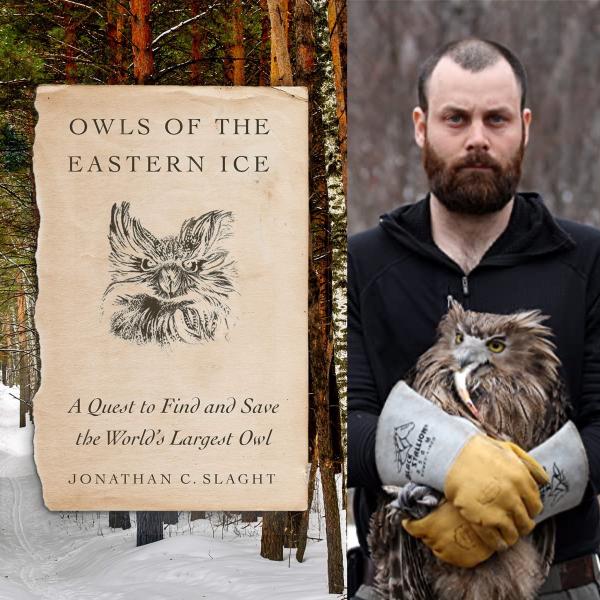
 This is a story about the effort to understand and protect Blakiston’s Fish Owl, the largest owl in the world and its endangered population living in the Russian territory of Primorye Krai which lies along the Sea of Japan, north of the Russian port city of Vladivostok. It is a remote, sparsely settled and wild place, isolated from the rest of the world, and Russia as well, at a latitude close to our own, stretching 559 miles, between 42º and 48º north latitude. The author, Jonathan Slaght, a PhD candidate at the time, spent years in Primorye first in the Peace Corps and later working on a variety of wildlife projects before he took on the owls, a several years long study he undertook in association with the University of Minnesota, teaming up with Russian experts, and a loose international group of others doing research on other species resident there, like the Amur Tiger. His crew of Russian field workers, most of them hunters, skilled sportsmen, skilled as well in traveling through the wild landscape and survival there, were invested in the work they were doing. These people become his friends over the several years, despite or maybe because of their quirks, while both assisting and ‘training’ him as they do their primarily winter field work, under very harsh and often dangerous conditions, gathering data in the long months he spent back in the US. Along the way he lays out the work he must do to create an effective conservation plan, the goal of which was to secure the owl’s future, an owl about which relatively little was known. Continue reading
The Owls of the Eastern Ice:A Quest to Find and Save the World’s Largest Owl, Jonathan Slaght, a review
Leave a reply


 GardenRiots