
I begin this post in my usual way of attempting to incorporate the science presented in Lane’s book into my own understanding of life. That’s what I do through the first portions of this piece. Then I stray….discussing how I understand the process of homeostasis and what I see as the extension of this, relationship as integral to complexity itself, developing from necessary sensitivity, the ‘awareness’, necessary for internal communication, signaling, responsiveness and, ultimately, the coordination of internal functioning and cognition, sentience and ,ultimately, intelligence. It is a process of accretion, with increasing complexity. The links between related ‘things’ are then not just physical, they are energetically connected. I’ll leave this now for later.
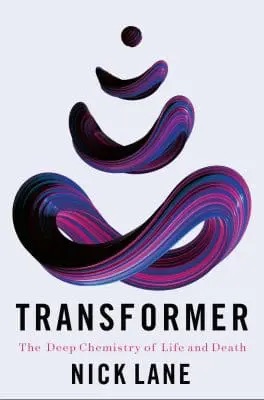 I’ve just finished reading evolutionary biochemist, Nick Lane’s latest book, “Transformer: The Deep Chemistry of Life and Death”. It is not light reading. There are diagrams of chemical reactions, often with descriptions that urge the reader to not get overly hung up on them, the terms and steps. They are not simple processes. One transformation following another, necessarily, in precise order, until removed for other processes, other needs, the remainder augmented by what is required to continue on. Uninterrupted. Billions of times per second. He writes about the quantum hopping occurring in reactions instantaneously. Shared electrons. The flow of protons in the continuous ‘flux’ of life. The processes changing ‘directions’, spinning off secondary products, closing and reopening paths as the cell and organism works to maintain homeostasis, interpreting the seeming chaos of activity into the sustenance of life. It is a ‘story’ of constant metabolic change, patterned and ‘free’, the work of homeostasis that takes place within every organism. There is a lot here I write of not in the book, but which I’ve picked up in my other reading. And, again, I’ll remind you that as an intuiter, I combine ideas, works from disparate sciences and follow my own paths. This is another part of my journey to understanding this world.
His other books have been more accessible, for this reader anyway, but to move ahead in one’s understanding of life’s complexity, one has to have an understanding of the concepts and big ideas involved. Life isn’t magic. Its study can be simultaneously intimidating and fascinating as well as a wondrous process when look closely. I’ll be rereading this one to pick up more bits later. Continue reading
 GardenRiots