Category Archives: Practice

Adaptive Management and the Dynamic Maintenance of Sustainable Landscapes


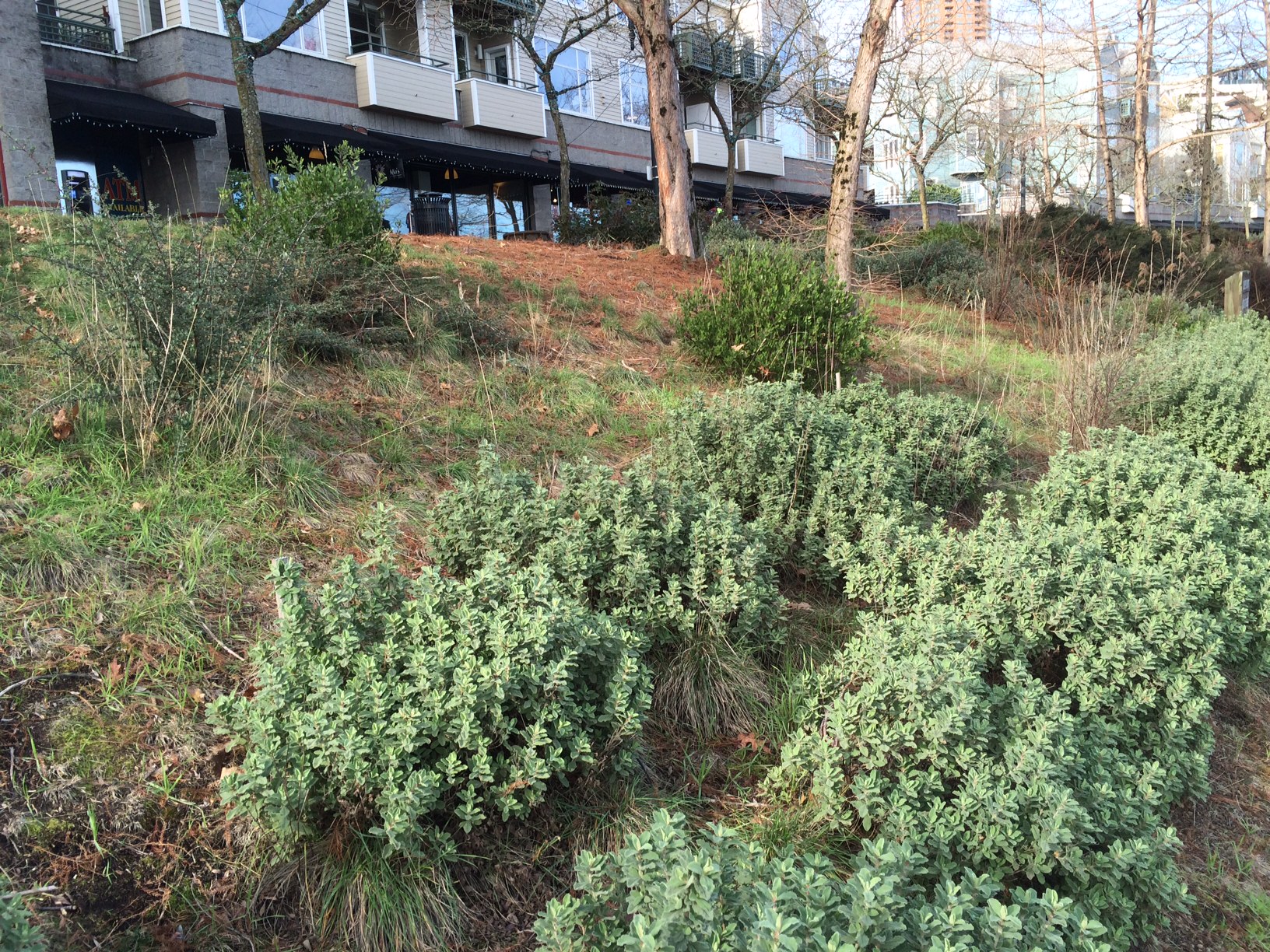
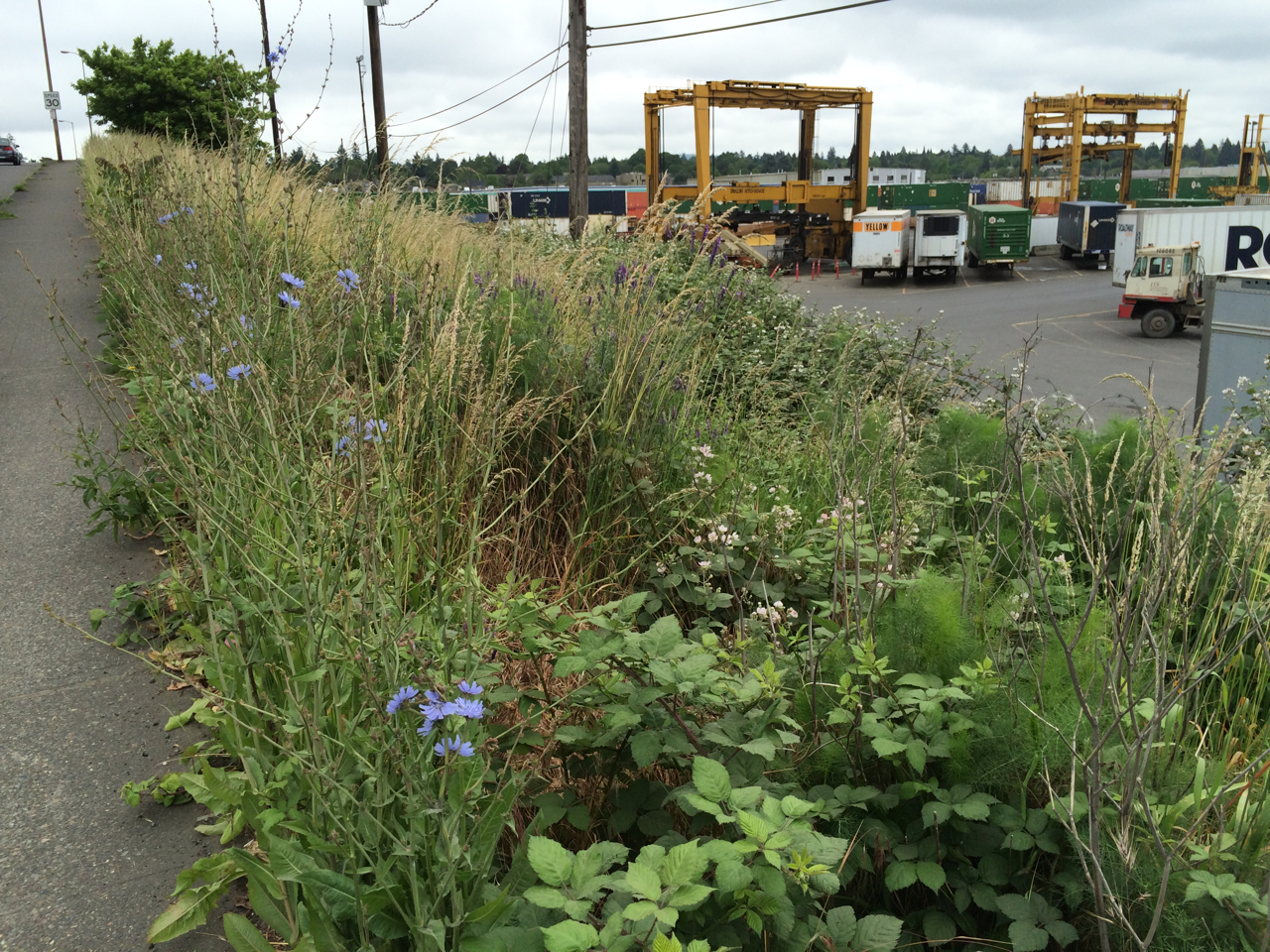
The second grassy bay, below the Harborside Restaurant, between the Taxodium clumps from the south end. A sweep of Cistus pulverulentus 'Sunset' at the bottom, Ceanothus cuneatus 'Blue Sierra' at the left and two Arctostaphylos x 'Harmony'. The grasses are Kohleria macrantha, native, Festuca rubra commutatta and a few nasty invaders.

The second grassy bay from the south end, below the Harborside Restaurant at Riverplace, above the marina, between the Taxodium clumps. The ’04 planting included no shrubs or perennial forbs in this area.  It was a monoculture of Koeleria macrantha, a native early season bunch grass that goes dormant by mid-July leaving the entire area vulnerable to invasion by weeds and offering no ‘barrier’ to either people or dogs, which enter frequently. A sweep of Cistus pulverulentus ‘Sunset’ at the bottom, Ceanothus cuneatus ‘Blue Sierra’ at the left and Arctostaphylos x ‘Harmony’ have been added to this site along with Festuca rubra var. commutata a low, fine textured spreader to help fill in the spaces and scattered native perennials.

We, all of us, are part of the landscape.  Just as individual plants belong to a local native plant community, and its place, so do we. That we live in highly disturbed and contrived landscapes does not change the fact that we live in relationship with it, that we are a functioning part of it. Deny this as we may, many of us as a group likely admit to very little connection to our ‘place’. It’s just where we live, for now. Our understanding of it and any involvement with our landscape, other than as a simple stage for our lives, is minimal, a condition which has become pervasive in modern society. Some professionals, who work with children have come to refer to this state as NDD, or Nature Deficit Disorder, a dissociative relationship now that was once basic to human survival. Today this condition is pervasive and our landscapes, as a result, severely disturbed, damaged and compromised, lack the capacity to return to their former state. There is a general ignorance amongst the public and our leaders of the severity of the problem and our necessary role and responsibility to correct it.  We are locked into a strategy that views landscape as incidental, the natural world as backdrop for our activities, not central to our well-being.  Today landscapes, as long as they meet our grossly simplified idea of our needs, a modern minimalist aesthetic, that does not over tax our ‘pocketbook’, are forgettable. From a horticultural viewpoint this is becoming an increasingly deteriorating disaster, something that not only we can do something about, but one that is imperative that we do so.  Adaptive Management describes a responsive relationship between people and the place in which they live. It is centered on a positive and workable strategy we can adopt that addresses this situation and turns it around, reengaging us with our landscape. Continue reading

A Look into Colony Collapse Disorder (CCD) and the Use of Neonicotinoids: A View from two Extremes, part 2

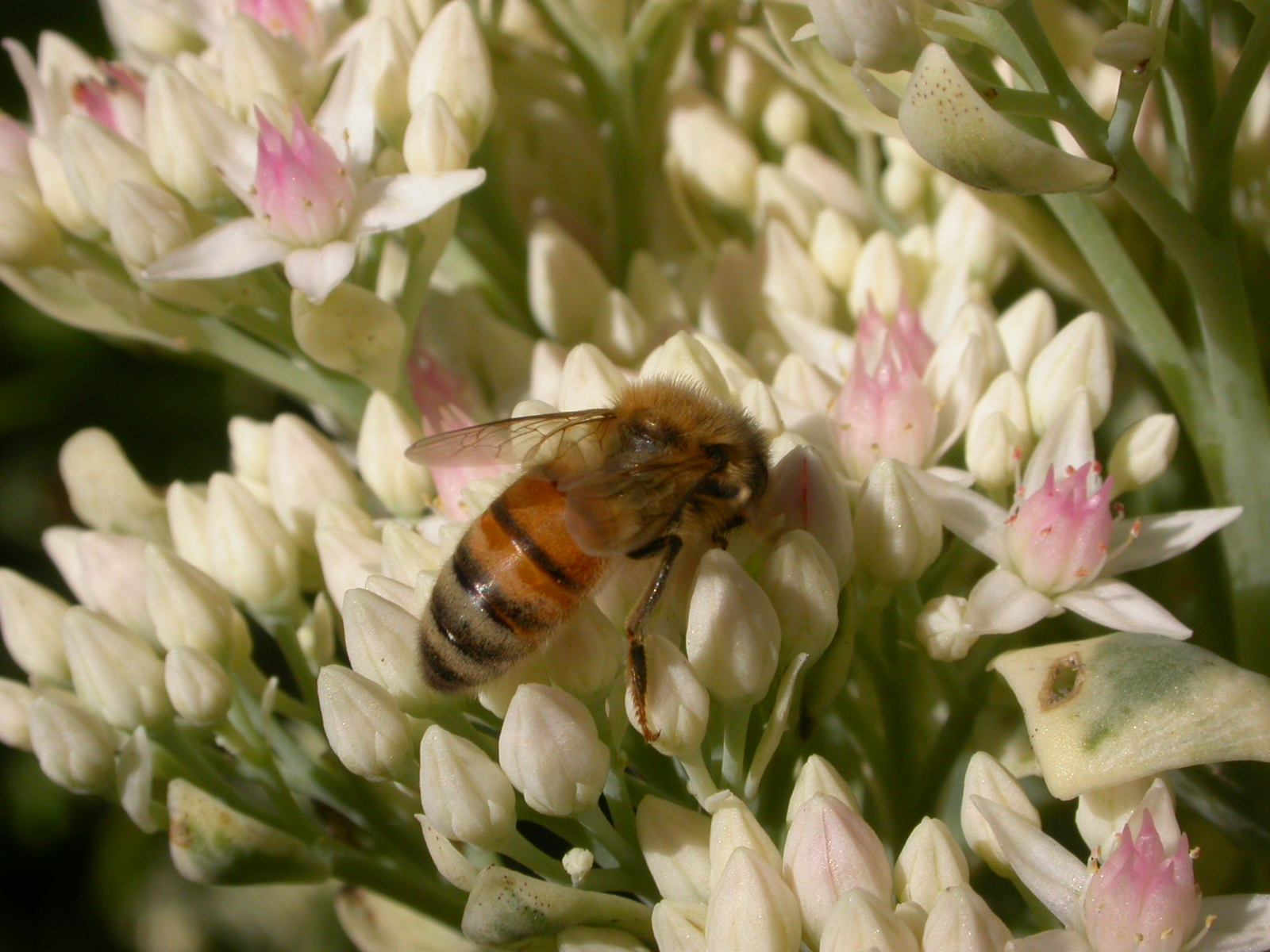
A bee working the large inflorescence of a Heptacodium miconoides.

A bee working the large inflorescence of a Heptacodium miconoides.

This is the second and last installment of my look at Jon Entine’s articles and the strategies he employs.  Here is a link to the first of my postings on this.

Part II: Bee Deaths And CCD – Flawed Chensheng Lu Harvard Studies Endanger Bees

By Jon Entine | November 24th 2014

Last week, in Part I of this two part series, “Bee Deaths Mystery Solved? Neonicotinoids (Neonics) May Actually Help Bee Health”, we explored the claims by Harvard School of Public Health researcher Chensheng Lu, heralded by anti-pesticide and anti-GMO advocacy groups, for his research that purportedly proves that the class of chemicals known as neonicotinoids are killing bees and endangering humans. And we saw how many journalists, our of ignorance or for ideological reason,s promote dicey science. 

(Some advocacy groups have latched on to Lu’s work looking for legitimacy and support. There has been a growing community of resistance to much that has been going on in the agro-chem-gentec industry that pre-dates Lu and his research. They have been challenging the multi-billion dollar industry on multiple fronts. On the other hand, it only takes a little checking to discover that Lu is often viewed as a ‘liability’ within the scientific community and a hinderence to their efforts by many in the community who have been advocating for good science in the political process that regulates these industries. They did not choose Lu nor do they now claim him as their champion. Entine, in his previous article strategically chose Lu as a ‘straw dog’ to represent his opposition, the “anti-pesticide and anti-GMO advocacy groups”, a target that he could then ‘tear down’ and then apply to the opposition groups as a whole, as if Lu, with his biases and ‘sloppy science’ were truly representative of them. In these articles, at least, Entine gets to choose. This strategy is becoming increasingly common when ‘industry’ and their front men, under attack, seek to ‘confuse’ the public thus reducing political pressure that might seek to limit them and their ability to conduct ‘business as usual’. Continue reading

Palms I Have Grown: A Look into Trachycarpus and its Intimates


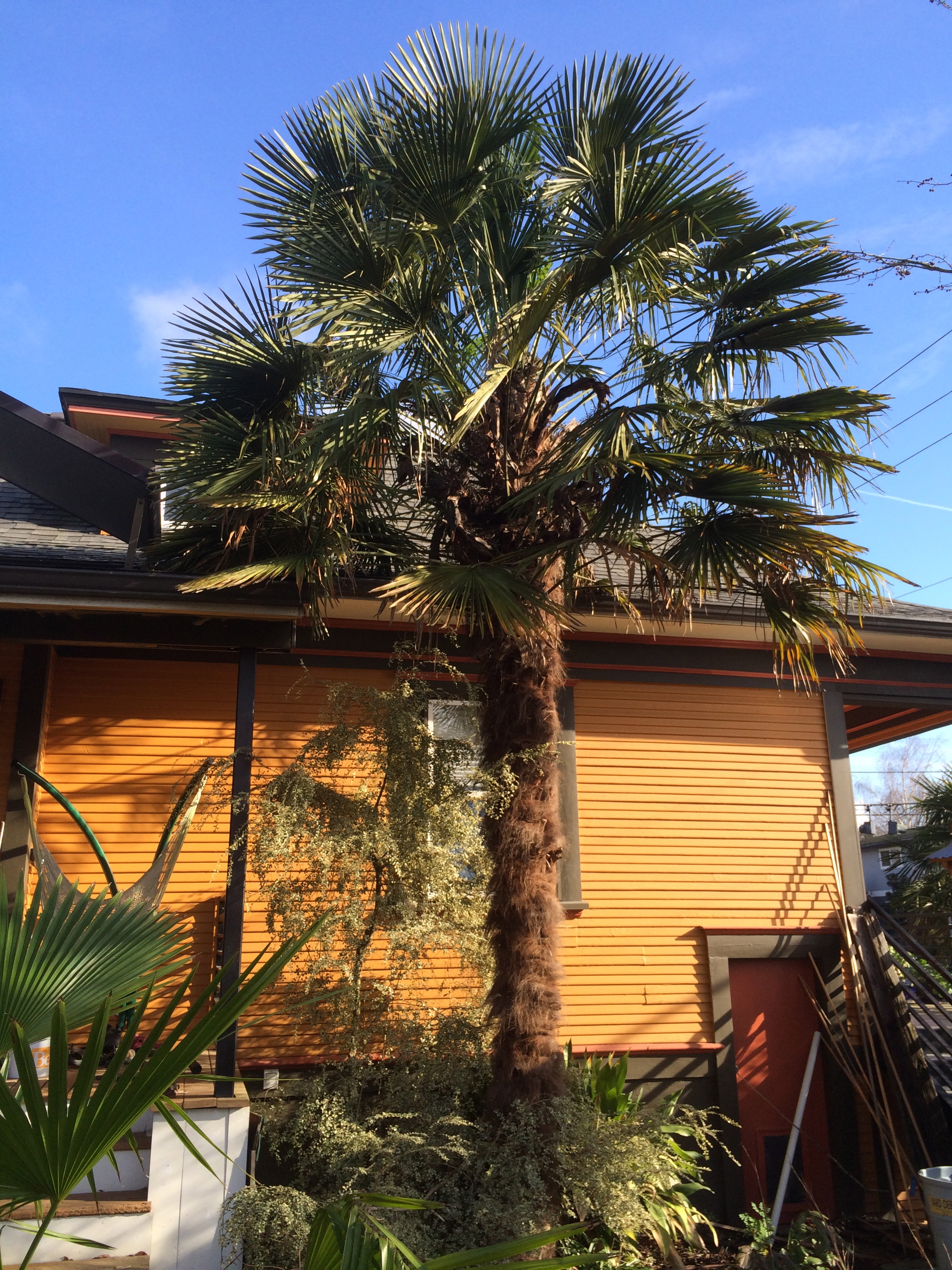
Trachycarpus fortunei - My oldest tree.  The house's gutter is at 13'.  This is the most robust, stoutest, of the 5 T.f. that I have with the broadest canopy.  It's male.  I've just finished cleaning up its rattiest older fronds.

Trachycarpus fortunei – My oldest Palm tree. The house’s gutter is at 13′. This is the most robust, stoutest, of the 5 T.f. that I have with the broadest canopy. It’s male. I’ve just finished cleaning up its rattiest older fronds.  I remove 15-20 every year and have been annually while it’s been in its adult active growth phase.  It will slow down when it begins to approach its maximum height and maturity.

Continue reading

Seed Banks and the Future of our Gardens and Landscapes

Another article in the ‘Over Thinking Series’

Old growth coastal Douglas Fir forest biome, the Ponderosa Pine – Juniper Sagebrush ecotone, your meticulously cared for back garden and the neglected median strip running down a divided street all occupy our ‘landscape’ and include soil unique to their sites.  The soil type and structure is relatively easy to describe as it is defined by its physical properties…its biological components are considerably more complex and change over time in the long and short term as a landscape ages and/or suffers human disruption…and, can, in turn, affect some of the physical properties. (see:  The Biology of Soil Compaction.) Continue reading

Observations on the Cold: Leonotis, Salvia and Rhodocoma – Pot Culture & Hardiness

Leonotis menthafolia x 'Savannah Sunset'

Leonotis menthafolia x ‘Savannah Sunset’ after Christmas still displaying its robust foliage.

Monday – Dec. 29, ’14 – low 33° – high 43°

Tuesday – Dec. 30, ’14 – low 28° – high 34°

Here’s one of my little experiments of ‘neglect’.  Sometimes the pots are just too big and heavy to haul down to my basement storage, not to mention the limited space there, so I position them up against my house, under roof overhangs, out of the wind and rain.  Many things I grow in pots, can take a few degrees of freeze overnight, but when we are supposed to have a period of prolonged freezing, when highs are forecasted to remain below the mark, I haul many of them in, otherwise outside they stay.   Then, out they go when it warms back up above freezing to a protected spot.  The pots in question, the biggest/heaviest, have been out all winter so far, sequestered under the roof on our deck.  They were not pulled in or covered during the first substantial cold snap and I’ve been surprised so far.  This is Tuesday noon-ish and it’s 34deg.

The Leonotis menthafolia ‘Savannah Sunset’, zn 8a, a name recognized by Annie’s Annuals, my source, but known by others as Leonotis ocymifolia var. ocymifolia, looks perfect and is still blooming at 5 1/2′ tall !!! silly plant.  Last year, with our two significant winter cold snaps, I lost one of these in the ground in a sunny exposed site.  That one received infrequent summer water and so was probably stressed going into last winter.  This Leonotis ranges from Kenya south into South Africa in the eastern half of the continent so it is somewhat more expectant of summer rains.  It prefers well drained soils.  This one shares a pot with a Cuphea ignea, zn 8, 9 or 10, (hmmm what’s the dealio?) which too is still green and blooming along with an unhappy Aeonium ‘Zwartkop’, zn 9, not blooming and looking a little peaked, no doubt suffering from too much shade in addition to the cold/dry provided by the roof overhang. Continue reading

Weeding in a Dynamic Landscape: A Goal Oriented Strategy

The Over Thinking Series, part two

Weeding seems simple enough, but that’s the problem with simple things…they often aren’t.

Ugh! Gronk see weed??? !!!Gronk pull weed!!!

It isn’t rocket science, but we’re not stamping out widgets on a production line either…the first one the same as the 13,649th one. Landscapes are living systems containing many complex relationships and feedback loops. Just because most people don’t pay attention doesn’t mean that it’s simple. Continue reading

Gardening Is Not for Wimps!

I’ve been spending a lot of time lately schlepping plants around, dug a large Taro, my Red Banana, a Heliconia, dug and divided a large Bromeliad, moved a 5 year old Furcraea in a large ceramic pot downstairs to the basement, planted a 20 gal Palm, a 10 gal Astelia and a 4′ b&b Golden Irish Yew that felt like its root ball was full of lead …doing the Fall drill…and feeling it.  I’m getting older.  I retired last spring and, though still active, I’m not as active as I was even recently.  I laid down my scooter two months ago at about 30mph…my shoulder is still not the same after having slammed into the asphalt.  I’m not swimming or doing my other stretches and exercises as much because it causes me shoulder pain….Shit!  I’m still trying to learn patience, maybe that’s the problem…the ‘trying’ part. I looked up an article I wrote and had published in the HPSO Bulletin Fall 2009, reread it, and decided to post it here again, as is.  I, hope that it will be helpful to all of you.  It’s about our bodies and this thing that we do, gardening, coping and things we can do to improve the relationship they share. Continue reading

Wintering over your Red Abyssinian Banana (Ensete ventricosum ‘Maureli’)

My Ensete mid-summer, still a baby

My Ensete mid-summer, still a baby

Ensete ventricosum comes from the Ethiopian highlands, the country which was once known as Abyssinia, conditions considerably more mild than the zn 8a or 8b I experience here in inner SE Portland, so here’s what I do:

Fall weather here can be very volatile.  The stable, dry, monotonous even days of summer are shifting and the swings can occur quickly, so I suggest that you pay attention.  In general, I like to limit the time my plants spend in storage so I will often leave these in the ground up until the night before a predicted hard freeze when the temperature is expected to drop into the mid to upper 20’s F.  Repeated and scattered low temps into the upper 20’s  can accumulate and do damage, so keep this in mind.  Storage doesn’t improve a plant’s health.  In fact, once dug and stored it is a period of decline until once again they can be replanted outside and put on new growth.  Many of my containerized plants shuffle back and forth, spending only periods of sustained freezing weather in the ‘warmest’ storage place, the basement.  Plants acclimate slowly so putting them in and out only works if they are protected for relatively brief periods…too long in a ‘warmer’ place and their metabolism is awakened, their ‘hardiness’ reduced, thus increasing the likelihood that their return to outside will be damaging.  With plants like the Ensete, the tropicals I grow, once I bring them in, they stay in until I determine to put them out. Continue reading

Tool’s of the Trade: Shovels, Implements of Construction…and Maintenance

(I wrote this piece a few years ago. It was last printed in the Fall 2012 HPSO Bulletin.  It is updated here for my Blog.)

Cut from a piece of sheet metal the failure point is at the bottom of the 'arrow'

Cut from a piece of sheet metal the failure point is at the bottom of the ‘arrow’. Yes, I know this is a square point, but the are built using the same process.

I broke my shovel at home last week digging out a smaller-growing bamboo, Semiarundinaria yashadake ‘Kimmei’. It was at least ten years old, the shovel that is, and I broke it the way most people do, prying with it. I’m not nearly as hard on shovels as I used to be; I know their limits, but I was tired of this shovel. It was one of those thin-gauge “stamped” shovels that hardware stores sell these days to consumers, inexpensive and cheaply made; the kind of tool a person could buy many times over the course of their gardening life. I have broken several in the past jumping on them, with two booted feet, while trying to cut through heavy soil and roots, or like I did here, levering to hard before the object of my attention was adequately cut free of its earthly ties. Stamped shovels flex due to their thinness. Any flexion causes an inefficient transfer of energy when attempting to drive the blade against resistance. Think wasted energy and more effort. Stamped shovels have a soft fold where the smooth curve of its bowl bends into the vee that becomes the sleeve that then wraps around the shovel handle. This shaping of the blade adds some rigidity that the same material flat doesn’t possess. Any such bend in a piece of metal, however, becomes the weak point. This is where the metal breaks. Finding a quality replacement requires special ordering or buying through someone who serves the nursery or landscape trades.

Continue reading