Category Archives: Site Analysis

The Nutrient Cycling Role of Fire in Central Oregon’s Arid Landscapes

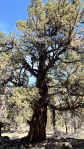
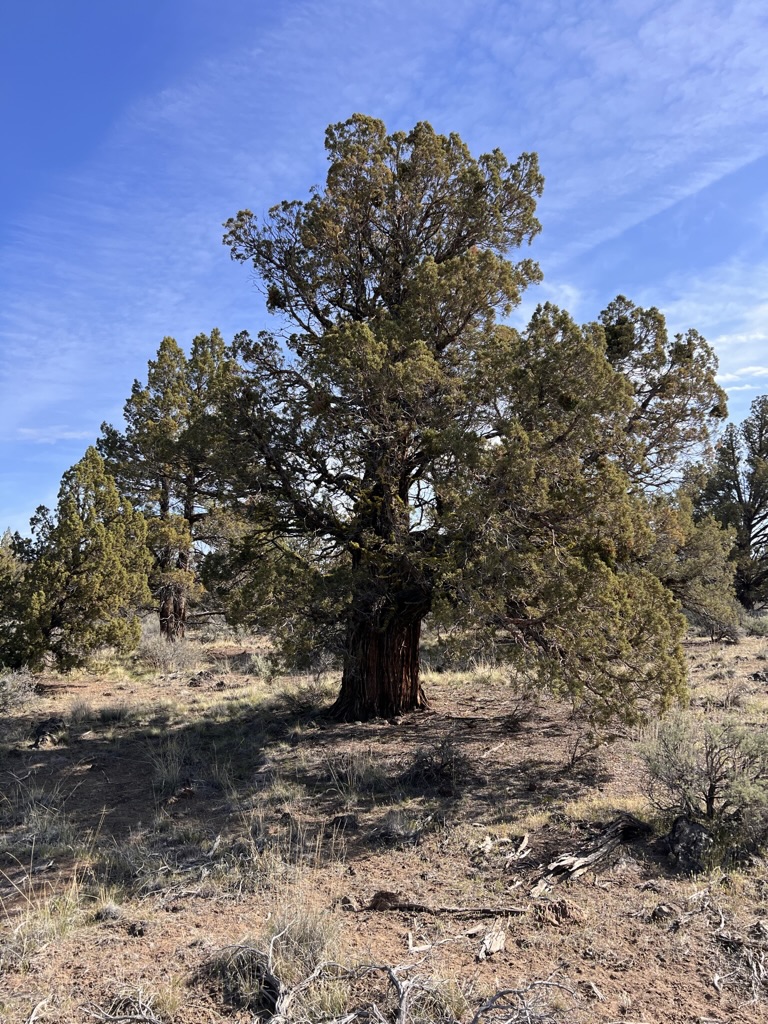
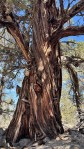
A Juniper like this one, growing out on BLM land around Cline Buttes, attains this squat and sturdy stature only after hundreds of years. Growing as they do on shallow, raised rocky areas, not only do they grow slowly, but there tendency is to caliper up. In irrigated pastures, these grow overly fast, spindly and upright. Look at that taper!

Ecologists will regularly claim that fire plays an essential role in the life and dynamics of the Juniper woodland, our sagebrush steppe and the grasslands of our arid and semi-arid plant communities, that without it, the landscape will deteriorate. Okay, but what does that mean? How can fire actually lead to a landscape’s improved vitality and diversity? What does fire actually do and what happens when it is eliminated? The short answer is that fire, in burning the collected fuels on the ground, breaks them down and returns them in nutrient form to the soil and the cycle of life. It provides the space necessary for a healthy and diverse landscape. To get there requires more thinking.

First some essential definitions and clarifications are needed: what are these ‘types’ of landscapes that together can be found in the arid reaches of Central Oregon; all landscapes are dynamic, evolving, changing over time according to the forces in effect on them, they are not static or fixed; what is meant by arid and semi-arid; fire, what is it, what is actually occurring when something ‘burns’; what is going on at a molecular level when an arid landscape burns; if this is so necessary, what fulfills this role in wetter landscapes; what’s the relationship between fire, rot and digestion; how, and does it, serve the nutrient availability and the necessities of organic growth. In understanding these basic parts we can better understand the self-renewing CYCLE of life as an ongoing process and how disruptions to it negatively influence its capacity to continue. Continue reading

On Wilding and the Return of Nature: Thoughts on an Idea

Talk of environmental crises is everywhere, climate change, mass species extinctions, losses of critical habitat, the privatization of once public resources and landscapes (and their subsequent ‘pillaging’ by corporate entities), critically dropping aquifers, what a chaotic climate may mean for world agriculture and our food supply, a world beset by an increasing rate of diseases and diminishing efficacy of the tools we have to combat and treat them….it is daunting and depressing. At the same time, generally barely mentioned in mainstream media, are notices of studies and ideas of what we can do to not just lessen these problems, quite a few of which are being implemented, but to repair the organic and global systems, whose faltering is leading to these increasing problems and potential catastrophes. To make head way on these is going to require a much more concerted effort by most of us. What, many are asking, can we do to usher in a return to a healthier, better functioning, world…before any looming system ‘course corrections’ do the ‘work’ themselves, eliminating the human problem, that ’we’ have collectively become. 

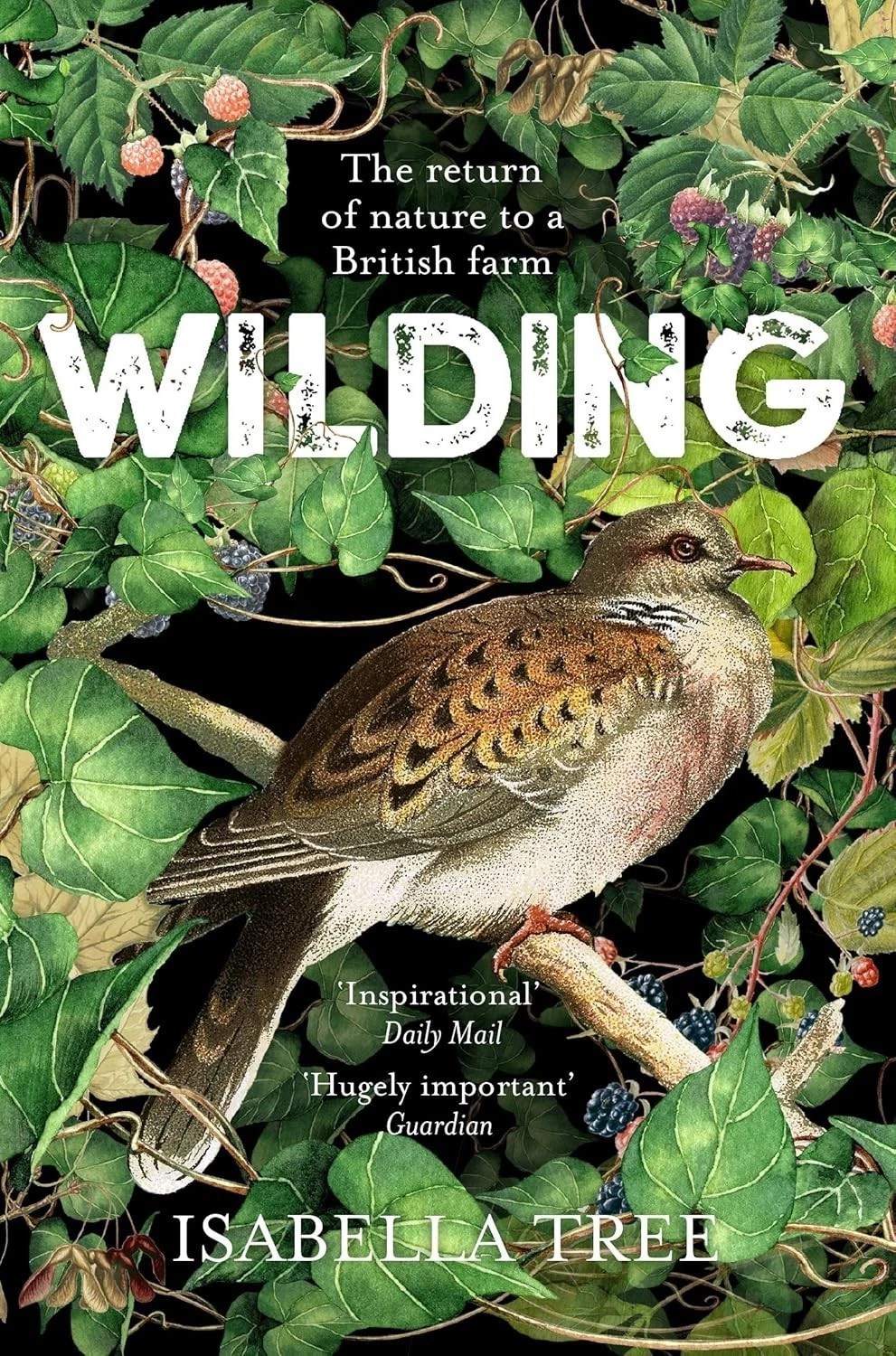
Isabella Tree’s, “Wilding: the Return of Nature to a British Farm”, which prompted this post, supports an approach in which mankind takes on a more responsive and respectful, while simultaneously, a less active role, in the management of the landscape. A ‘less active role’ because what she’s describing requires that we step back, relinquish some control, and allow the powers of nature to heal itself, stepping in where, when and how we must when those ‘forces’, diminished to the point where they are ineffectual, need the support…but no more. She calls for us to trust that our own evolved status is a product of the natural world, a potent nature with the inherent capacities and tendencies, to create, balance and heal, in like proportion to what it ‘takes’ and consumes; that we reclaim our ‘membership’, our historical relationship with this place and all of the life with which we share it. We are active agents of change and must, to the same extent, do the necessary work to heal those wounds, we’ve inflicted upon it through our economic demands and  industrial power. Her story here is one of a shared fate and a faith in life, which is illustrated time and again as she and her husband, Charlie Burrell, work to understand the land and life they are beginning to re-envision, more as curious students than confident ‘experts’. The process quickly becomes one of open discovery as they attempt to understand the health of the place they previously managed as a farm, with the economic expectations of a modern world that has itself become disengaged from life, seeing it narrowly in economic terms that had long ago been separated from ecological reality, limits. and the richness of a place. Continue reading

Redmond’s Dry Canyon Firewise Management Plan, a Critique and Call to Action

Those who follow such things know that I’ve been involved in the preservation and enhancement of Redmond’s Dry Canyon, joining with others to form the Friends of North Dry Canyon Natural Area as an advocacy group, working to educate the public about its qualities and fragility, while also providing ‘boots on the ground’ with clean up projects and the control of threatening Invasive plants. Most recently we’ve been supporting other groups and participating with a guided naturalist walk, a bat walk and a recent Botany and Birds, walk with the High Desert Chapter of the Oregon Native Plant Society and Queer as Flock, a bird watcher’s group. We’ve been advocating for better signage, a trails management plan and for increased efforts to control the illegal use of electric and gas powered motorcycles in the Canyon. Additionally we have be doing the Juniper survey work for the City, to help create a plant data base linked with the City’s GIS program to aid them/us in the development of an effective management plan for Dry Canyon. We’ve only been recently notified, along with the rest of the public, that the City has a new Dry Canyon Firewise Management Plan (a PDF is linked below), which we were assured included participation by foresters, local natural resource and conservation groups…yet, somehow, they’ve produced a one dimensional plan with the singular priority of eliminating the chances of a catastrophic fire, while ignoring virtually all other priorities!!!! Continue reading

On Ornamental Trees and the Remaking/Unmaking of Place: Revising the City of Redmond’s Tree List, part 2

How Much to Water?

Recommending trees from climates with significantly wetter growing seasons needs to stop if we are to continue growing our population. Landscapes as designed, and managed, are the single largest user of residential water. Recommending trees which ignore this problem is irresponsible. Lower water use residential landscapes are possible. Local codes and recommendations must, however, reflect this priority.

Additionally, how much to water is a bit of a mystery to all of us and especially so to non-gardeners. How much? How often? Our watering practices should be determined by the local precipitation and the tree’s needs. What is commonly done, however, is that we water for our lawns and that largely determines what our trees receive, unless we have separate drip systems. A tree’s root system doesn’t stay neatly between the lines. They quickly extend out well beyond the span of the tree’s leafy canopy. In many cases even 2-3 times as far, taking up water and nutrients. A roots of a tree, planted in a small bed, adjacent to an irrigated lawn area, will move out into the lawn. A tree isolated in a xeric bed with only a few drip emitters, will quickly demand more than such a meager system affords it and such a tree, if it requires summer moisture, will struggle while competing with its nearby  ground level growing neighbors. Again ‘neighbors’ should share compatible requirements so all can thrive on the same ‘diet’ and moisture regime. Continue reading

On Ornamental Trees and the Remaking/Unmaking of Place: Revising the City of Redmond’s Tree List, Part 1

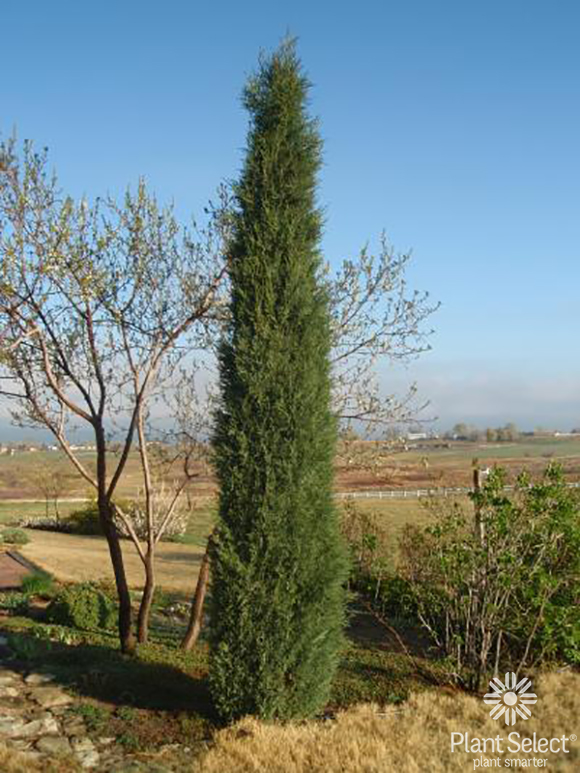
Perhaps an odd tree to start this with, Juniperus scopulorum ‘Woodward’, is not a ‘shade tree’. It is not deciduous. It is a narrow, fastigiate form of Rocky Mtn. Juniper that, growing to a height of 20′ with a 2′-3′ spread can serve as a formal accent in colder climates like ours, a ‘replacement’ for the more tender Italian Cyperss, and it can do quite well here with very little supplemental water.

Trees, specifically ornamental shade trees, have become an expected and desired part of our urban lives, at least util their leaves fall and await our cleanup. Many associate long tree lined streets and avenues with urban living. Broad Maples. Lofty Elms. Plane Trees and, in tighter spaces, perhaps Cherrys, Crabapples and flowering Plums. Urban trees provide several notable ‘environmental services’ increasing our comfort level with their cooling shade, their capacity to remove pollutants from the air, cover and nesting places for birds, food sources for the insects which the birds rely on and the sequestration of carbon. Trees are generally viewed as a public good, necessary even for our lives. We can get quite emotional about them. So it seems a bit ‘wrong’ to suggest that this ‘ideal’ may not always be ‘best’ or even desirable.

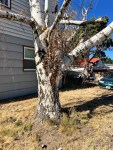
Broadleaved deciduous shade trees are ‘naturally’ members of mesic, temperate to cold-temperate regions of the world. That is where they evolved and where when we plant them out, where they do best. When we begin planting them outside of their historic natural ranges, especially when we ignore the conditions, the disparities and the extremes between their natural ranges and those where we choose to plant them, then we can have some serious problems. The trees may struggle along, or if we remain committed to making up for our local area’s lacking, usually in the form of supplying more water, they can do reasonably well. But this suggests possible real problems as one moves further away from the conditions of a tree’s natural limits and increase the numbers planted out. Where is this water coming from and what are the impacts of removing this water from its normal and healthy cycling of which it is a part? What will be going without? And, is that cost worth the losses it creates? Our selection and planting decisions depend on how we value that which is lost! In short, the typical deciduous shade tree of our imaginings do not belong here in a desert. Continue reading

Weeds: What We Need to Do at DCVS

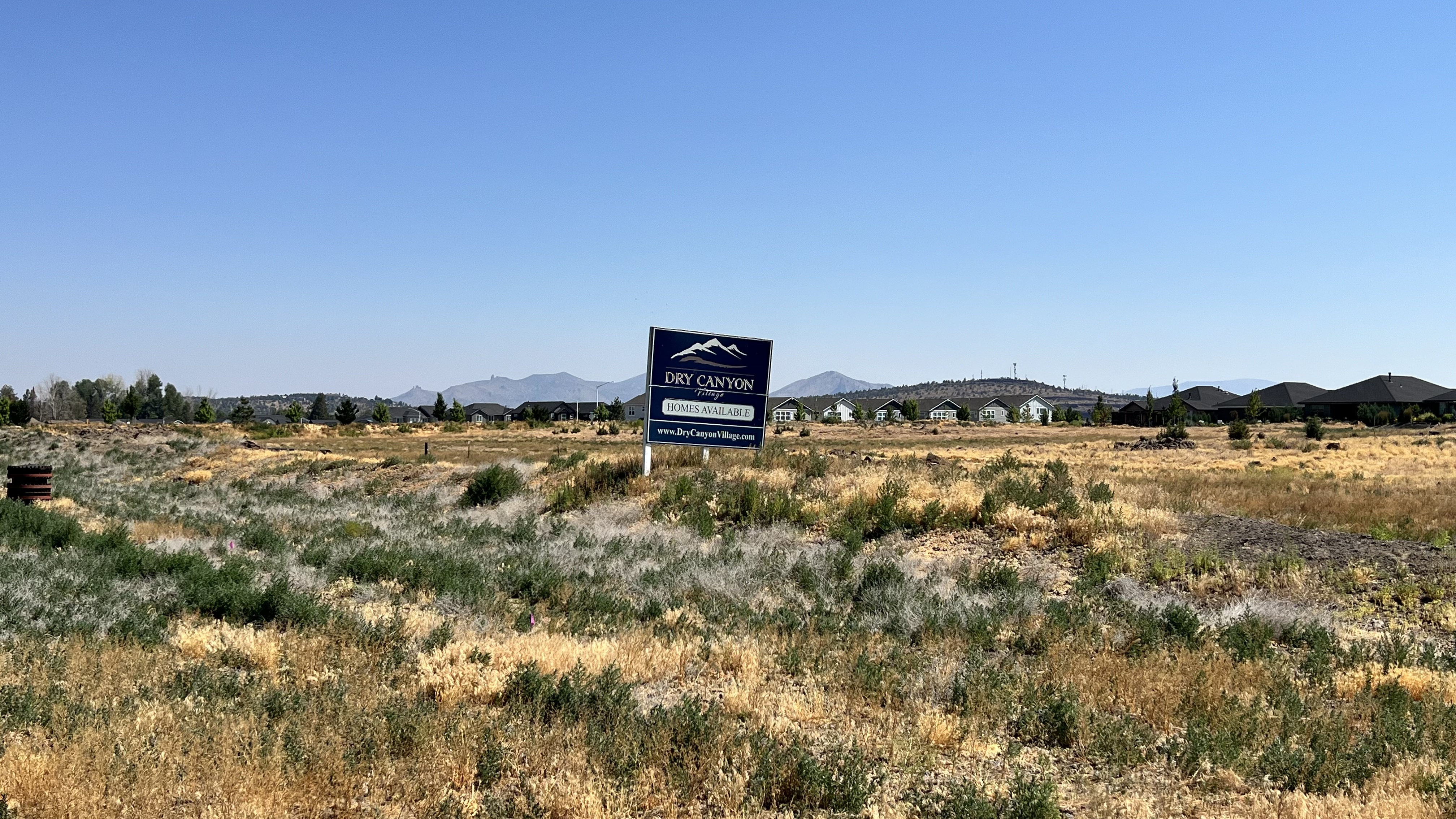
Looking NE from the gate at Northwest Way, other than a handful of juvenile Juniper there is literally nothing native of value across this roughly 9 acre spread. The other two undeveloped phases are equally bad, having a similar mix of weeds.

The question I keep hearing is, ‘What do we do?’ Many, if not most people living here now, have expressed frustration and more about the Dry Canyon Village South, DCVS’s, landscapes, specifically the berm, the mini-parks,  the Circle and the 25+ acres of undeveloped, uncared, for property we share space with. They ask me because they know I cared for Park landscapes, as a field horticulturist, for almost 30 years, Parks which often included natural areas of over 100 acres, to little neighborhood parks and intensively developed and used urban parks in the downtown core. I also haven’t been shy about my criticism of the lack of care, or of even a plan, for the neglected property we are saddled with. Anyone who has cared for a landscape can see the problem here. Leaving disturbed and neglected properties on their own is not a plan and can lead only to their further deterioration and continuing, worsening, ‘weed pressure on the adjacent developed landscapes. Continue reading

Weeds, Weeding and the Health of Our Public and Private Landscapes: an example from the ‘hood

Every gardener is a weeder. Gardens are created landscapes, often expressions of the individual gardener or, lacking of intent and design sense, those of a chosen designer. We live in our landscapes as active, responsible, creators, participants and stewards. Gardeners are trying to create a particular look or to grow particular plants native to their area, or with ornamental value or food plants to feed themselves and their families. Some of us are simply pursuing what we understand to be a healthy relationship with one’s place, to undo the damage and allow a new healthy and vital landscape to grow. These are landscapes of our choice. Our intention and control results in various volunteers and weeds finding their own place and so follows the need for weeding. 

We watch carefully, monitor the impacts of our work, attempt to understand what result is moving us closer to our goal and which might be indicators of further loss. Landscapes and gardens are incredibly complex systems and anyone who claims to have all of the answers is fooling himself and you. Our landscapes are broken, by us and our predecessors. The Pandora’s Box of weeds and disruption was burst open long ago. The only way ahead is to find a new path.  Weeds are here filling the niches we have collectively made and maintain for them. The more one is surrounded by aggressive, well adapted weeds, the more time we must spend controlling them. While this can be significant, gardeners mostly take the work in stride, a necessity to reach our goal, a goal which may be the simple act itself, of working in concert with our place…open to its teachings. Gardening, is a way of life, a smaller scale version of farming and the management of large ‘natural areas’ with their attendant commitment, rhythms and demands. Continue reading

Spruce Park, Redmond’s Newest Park and Our Neighbor: a horticultural critique

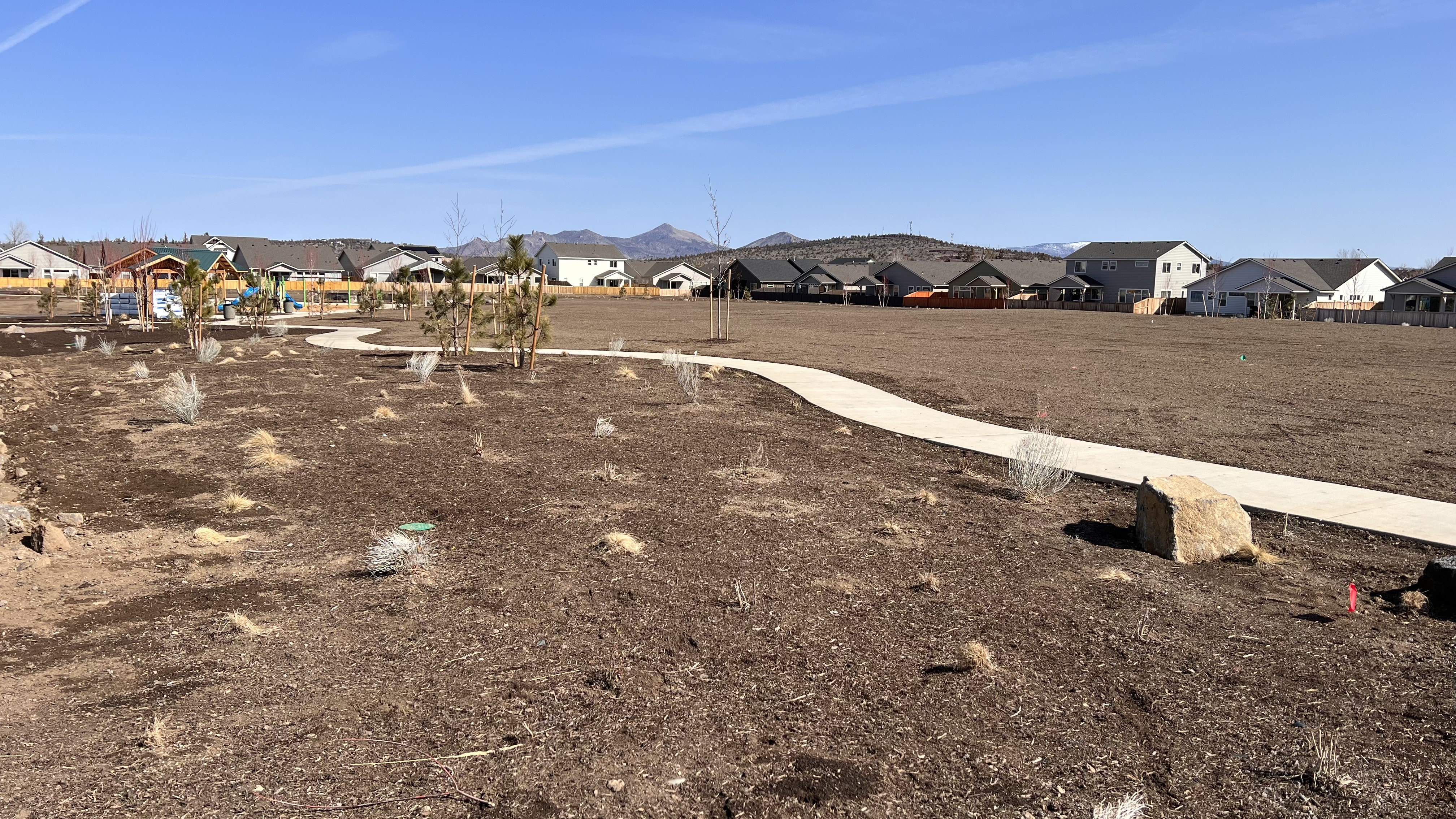
Redmond’s Spruce Park looking NNE from the SW corner toward Gray Butte and Smith Rock in the background. The border beds which follow much of the loop path are ‘native’ plantings according to the conceptual plan. It is common to claim that most of the plants are natives in designed natural areas, but native is not synonymous with ‘natural’. Although natives are used here concessions have been made including such plants as Echinacea purpurea ‘Pow Wow Wildberry’ and Rudbeckia ‘Goldsturm’. In a strict sense Ponderosa Pine aren’t native to this immediate locale either, they require more precipitation than we normally get and the Autumn Blaze Maples are a hybrid of two northeastern North American species.

A landscape, in nature, is a whole, functioning system, capable of perpetuating itself, through out the seasons and years, relying entirely on its own conditions and the cycling of energy and resources occurring on and within it. This is also the definition of a modern sustainable landscape. Ideally they require no inputs or energies supplied from offsite aside from the sun, precipitation and the normal cycling onsite of nutrients and water. A human made, contrived landscape, as all of those built by us today are, may be ‘judged’ by how well they function on ‘their own’, by how well they fit this ideal. Labor and outside inputs necessary to maintain a landscape are then indicators of how out of balance, how far from ‘ideal’ nature and genuine sustainability, a landscape is. A contrived landscape, which ignores the relationships integral to a healthy landscape community ‘demands’ more and more maintenance and support. Given its design and use, a landscape which ignores its site and relationship requirements will deteriorate from the intended design, losing to death component plants while gaining, increasingly, more unwanted available weed species. Design, conditions and use are essential to determine, in this sense, what a ‘good’ landscape is. Continue reading

Why Bad Things Happen to Good Plants?: On Root Problems, Root Washing, Nursery Practices and Customers

“To be, or not to be? That is the question—Whether ’tis nobler in the mind to suffer The slings and arrows of outrageous fortune, Or to take arms against a sea of troubles, And, by opposing, end them?”  Hamlet.

Is the question we face as gardeners as simple as, To ‘root wash’ or not to ‘root wash’, before planting?  To some today it has become ‘heretical’ to suggest that it might not be just a necessary corrective, but an unmitigated good…and not doing so dooms a plant to failure.  The practice of ‘root washing’ in its present form, is relatively new to gardeners.  Horticulture, which is a system of techniques, traditions and science, that goes back to our own species’ first intentional involvement growing and selecting plants, has not always included it.  Practices develop over wide spans of time.  Many are retained, others pass away. Root washing has been around as a method to assess damage to root systems, to ease and make more efficient division, to study root growth or cleanse them of particular infestations.  ‘Bare-rooting’, during a plant’s winter dormancy in temperate regions, has historically been done in the field when harvesting or transplanting many deciduous trees and woody plants for shipping and ease of transport.  In some circles today root washing has become an almost literal flash point, pitting proponent against opponent, ‘science’ against ‘tradition’…yet another fracture line to divide society. The road of the absolutist, as with many other human practices, tends to create conflict as evidence of correctness is lobbed back and forth.  My own view is that, like so many other things today, the subject is somewhat ‘grayer’. Science can be on both ‘sides’, or neither, and reality is rarely so simplistic. Continue reading

Agapanthus for the Maritime Pacific Northwest: Not all of these are well suited for us…or are they?

A fellow gardener asked the question about whether there were a list of sure thing Agapanthus, plants that a beginner could confidently choose and have success with in most of the maritime PNW.  I’m going to say no.  All of these are South African natives and while many of us can grow these in our gardens, because our conditions overall are marginal, a gardener is going to have to possess a good understanding of their site in particular and some knowledge of the cultivars that they are choosing.  I’m going to borrow here from Manning and Goldblatt’s book, “The Color Encyclopedia of Cape Bulbs”, which discusses the bulbs of the Cape Floristic region and those adjacent areas spilling over into other parts of South Africa. Agapanthus species are native there, endemic in fact, occurring naturally no where else in the world.  I’m also relying here on the SANBI website, the South African Natural Biodiversity Institute which has put together an incredible national program, which all countries should be building for their own countries.  Being a South African plant aficionado I visit it frequently. To this I add my own observations and speculations, having grown several Agapanthus over the last 25+ years in Portland: These come from warm temperate and subtropical areas in South Africa, 10 species total, 3 limited to the Cape itself, all of which tend to occur in rocky grasslands.  Other botanists have downgraded 3 of Manning and Goldblatt’s species and given them subspecies status recognizing only 7 species. Continue reading