Category Archives: Site Analysis

My Garden: Behind the Scenes

Photo thanks to Josh McCullough

Photo thanks to Josh McCullough

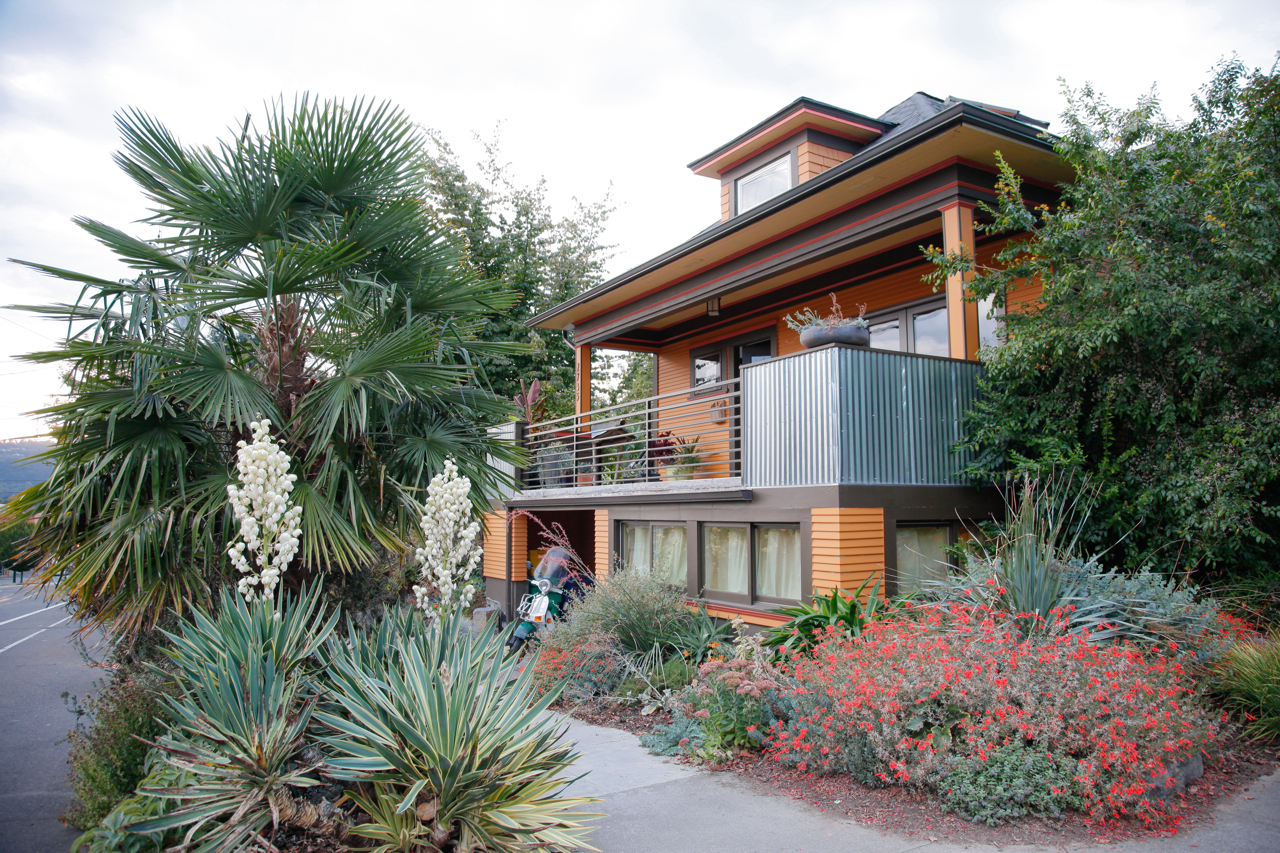
Overall, mine is a sunny warm garden.  Like any landscape or garden it is defined or described by its: place, design and plant choices. Where these three all come together, you have a garden. Each one presents itself as, what some might view, a daunting array of options or possibilities.

What exactly do I include under ‘place’?  Certainly climate, exposure, aspect, slope, soils and the ‘history’ of gardening and ‘disturbance’ on the site. It also includes the larger surrounding landscape, the context within which it is located and the physical ‘features’ built and natural with which it will be a part.  The story of a place is important.  Place, is the major limiting factor in a garden. Gardens are also defined by the choices we make. Each choice precludes others. In a very real sense gardening is a process of limitation. ‘If this then not that’.  What we need to be aware of is that these, design and plant choices, these limitations, can either work together or compound each other when not made with awareness.  When design and/or plant choices ignore place, the gardener must overcome all of the ‘conflicts’ this choice has put in to play, or face ‘failure’.
Continue reading

Adaptive Management and the Dynamic Maintenance of Sustainable Landscapes


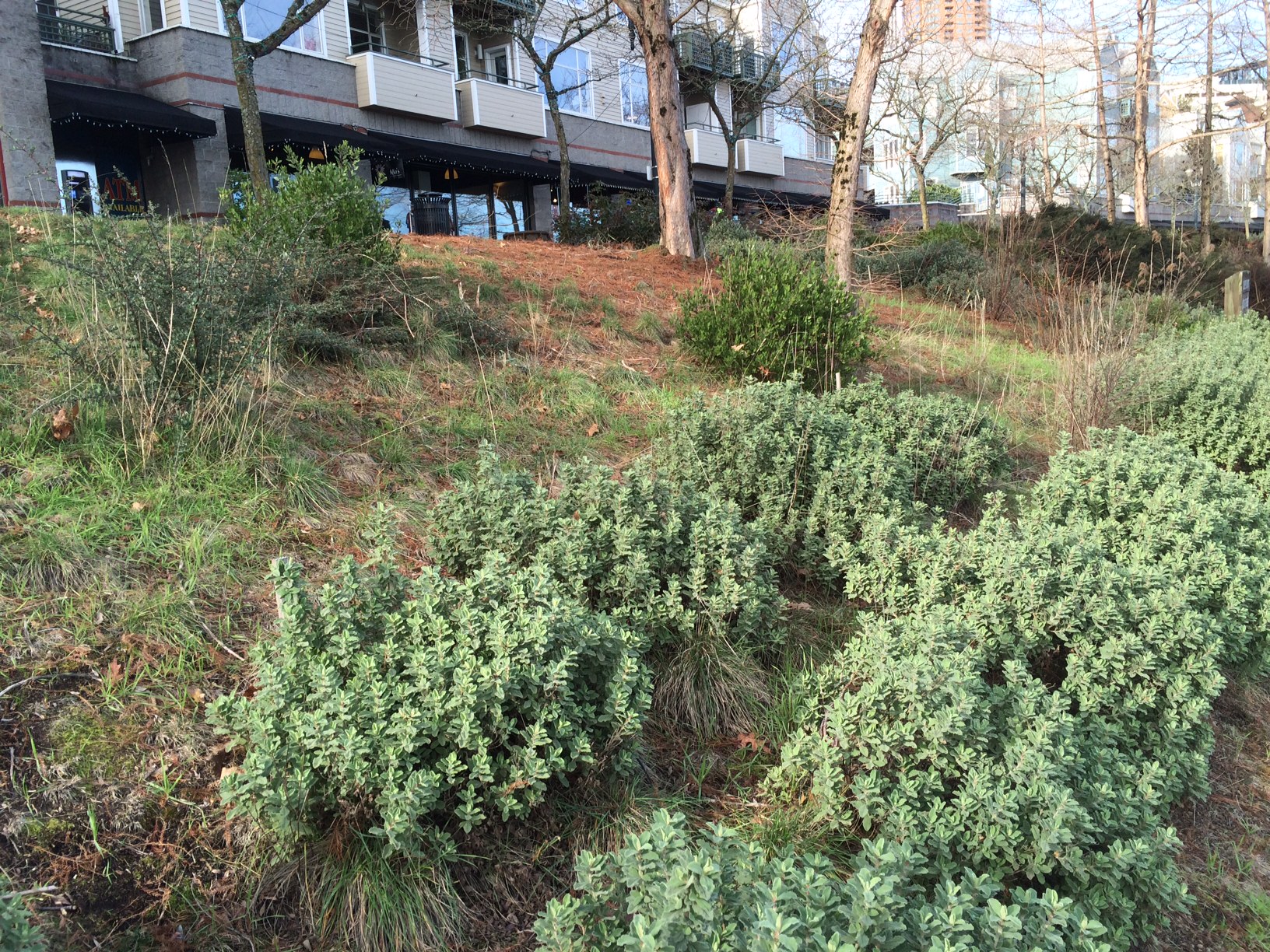
The second grassy bay, below the Harborside Restaurant, between the Taxodium clumps from the south end. A sweep of Cistus pulverulentus 'Sunset' at the bottom, Ceanothus cuneatus 'Blue Sierra' at the left and two Arctostaphylos x 'Harmony'. The grasses are Kohleria macrantha, native, Festuca rubra commutatta and a few nasty invaders.

The second grassy bay from the south end, below the Harborside Restaurant at Riverplace, above the marina, between the Taxodium clumps. The ’04 planting included no shrubs or perennial forbs in this area.  It was a monoculture of Koeleria macrantha, a native early season bunch grass that goes dormant by mid-July leaving the entire area vulnerable to invasion by weeds and offering no ‘barrier’ to either people or dogs, which enter frequently. A sweep of Cistus pulverulentus ‘Sunset’ at the bottom, Ceanothus cuneatus ‘Blue Sierra’ at the left and Arctostaphylos x ‘Harmony’ have been added to this site along with Festuca rubra var. commutata a low, fine textured spreader to help fill in the spaces and scattered native perennials.

We, all of us, are part of the landscape.  Just as individual plants belong to a local native plant community, and its place, so do we. That we live in highly disturbed and contrived landscapes does not change the fact that we live in relationship with it, that we are a functioning part of it. Deny this as we may, many of us as a group likely admit to very little connection to our ‘place’. It’s just where we live, for now. Our understanding of it and any involvement with our landscape, other than as a simple stage for our lives, is minimal, a condition which has become pervasive in modern society. Some professionals, who work with children have come to refer to this state as NDD, or Nature Deficit Disorder, a dissociative relationship now that was once basic to human survival. Today this condition is pervasive and our landscapes, as a result, severely disturbed, damaged and compromised, lack the capacity to return to their former state. There is a general ignorance amongst the public and our leaders of the severity of the problem and our necessary role and responsibility to correct it.  We are locked into a strategy that views landscape as incidental, the natural world as backdrop for our activities, not central to our well-being.  Today landscapes, as long as they meet our grossly simplified idea of our needs, a modern minimalist aesthetic, that does not over tax our ‘pocketbook’, are forgettable. From a horticultural viewpoint this is becoming an increasingly deteriorating disaster, something that not only we can do something about, but one that is imperative that we do so.  Adaptive Management describes a responsive relationship between people and the place in which they live. It is centered on a positive and workable strategy we can adopt that addresses this situation and turns it around, reengaging us with our landscape. Continue reading

Palms I Have Grown: A Look into Trachycarpus and its Intimates


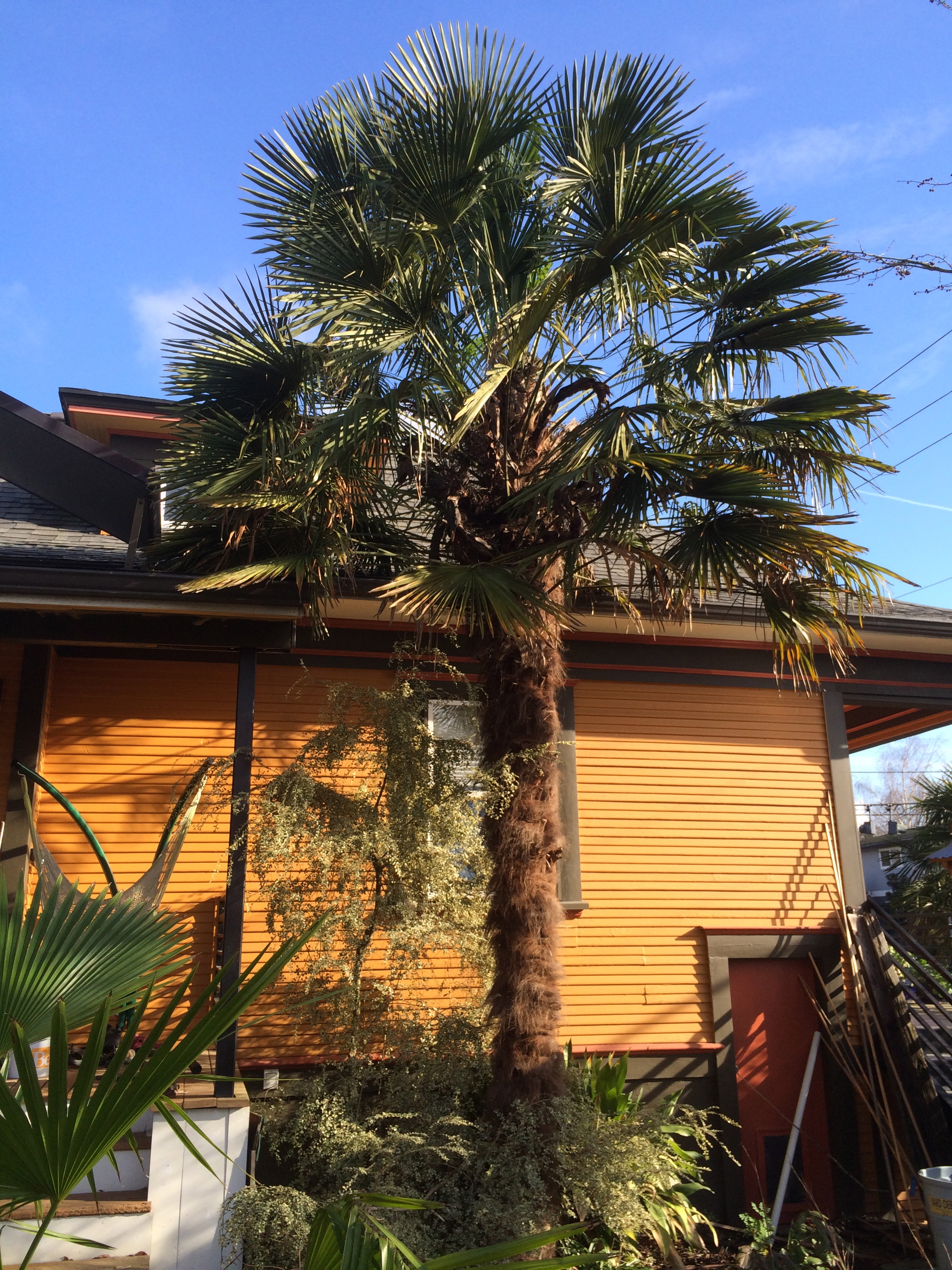
Trachycarpus fortunei - My oldest tree.  The house's gutter is at 13'.  This is the most robust, stoutest, of the 5 T.f. that I have with the broadest canopy.  It's male.  I've just finished cleaning up its rattiest older fronds.

Trachycarpus fortunei – My oldest Palm tree. The house’s gutter is at 13′. This is the most robust, stoutest, of the 5 T.f. that I have with the broadest canopy. It’s male. I’ve just finished cleaning up its rattiest older fronds.  I remove 15-20 every year and have been annually while it’s been in its adult active growth phase.  It will slow down when it begins to approach its maximum height and maturity.

Continue reading

Seed Banks and the Future of our Gardens and Landscapes

Another article in the ‘Over Thinking Series’

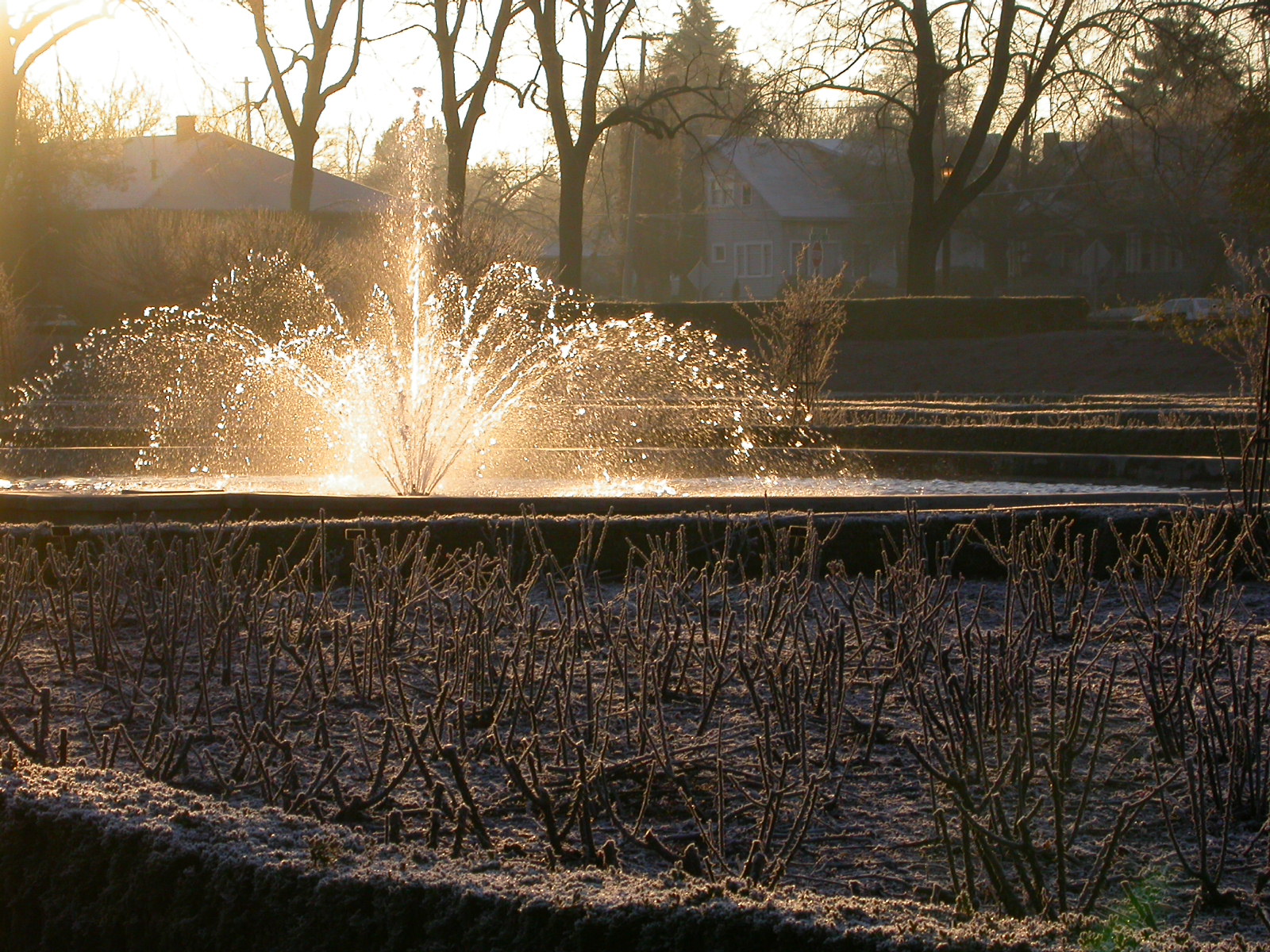
Old growth coastal Douglas Fir forest biome, the Ponderosa Pine – Juniper Sagebrush ecotone, your meticulously cared for back garden and the neglected median strip running down a divided street all occupy our ‘landscape’ and include soil unique to their sites.  The soil type and structure is relatively easy to describe as it is defined by its physical properties…its biological components are considerably more complex and change over time in the long and short term as a landscape ages and/or suffers human disruption…and, can, in turn, affect some of the physical properties. (see:  The Biology of Soil Compaction.) Continue reading

Butia x Jubaea: A Pinnate Palm for Portland – First Test…for me

Butia capitata at my front stairs along with a new Beschorneria yuccoides 'Flamingo Glow' and a Agave parryi 'Hauchucense'

Butia capitata at my front stairs with a new Beschorneria yuccoides ‘Flamingo Glow’ (I had just removed a Beschornieria septentrionalis, divided and potted the starts up. The replacement has more flamboyant foliage.) Iris douglasiana ‘Canyon Snow’, various low Sedum, Asarina procumbens, x Halmiocistus ‘Merrist Wood Cream’ and an Agave parryi ‘Hauchuca Blue’

My friend Steve has urged me to periodically write about my experiences in the Denial  Zone…so here’s a little something:  We all know you can only go so far with the whole tropical thing in Portland if you’re not going to invest in a greenhouse.  Those of us who try to mimic the tropical look realize that we have to seek out the temperate and a few sub-tropicals that give us that ‘feel’.  Bold foliages are key.  Architectural plants, and just as important strong foliage contrast.  This is not the place for subtlety.  Strappy, fuzzy, split and dissected, compound pinnate and palmate, glossy, drip tipped, bold variegation and wild patterns…over the years observant nurseryman and plant hunters have brought us a smorgasbord of unusually foliaged plants.  Plant breeders have pushed the limits crossing hardy species in ways that mimic their tropical cousins, I’m thinking Hibiscus here.  But still there are certain plants, certain forms and silhouettes, that are hard to replace.

Palms are one of these.  Many of us grow various palmate forms like genus Trachycarpus, T. fortunei, most commonly, while others have used T. wagnerianus, T. takil and T. princeps.  There are many others but of unproven hardiness.  Another form of Palm are those with costapalmate fronds, of these I have a Sabal minor doing fine at home slowly getting bigger in the ground for the last four years, (It’s more than ten years old.  I’m of the age now where I just say something is ten years old because it’s easier than checking.  It may actually be 12-15.) and a Sabal x ‘Birmingham’ I have high hopes for probably destined for a few more years in the pot before I try it out in the ground.  (The genus Sabal includes the Palmetto Palm native to the coastal southeastern US. They tend to be slower growing than Trachys, preferring more heat, often with larger more deeply segmented fronds. For those of you who don’t know, costapalmate are intermediate between palmate and pinnate.  The stem extends into the frond where the segments separate and fan out.  This extension may be slight as it is in Sabal minor. Instead of having the segments radiating evenly from one point at the base, the ‘base’ is slightly elongated stretching it as if it were briefly considering being pinnate.  A casual look might leave the observer thinking that something is slightly off with what appears to be a palmate leaf.) Perhaps others will be found growing in the extremes of their home ranges that can take zn7 and 8 consistently with smiles.  I planted the aforementioned Trachys over the last several years in and near Waterfront Park’s bowl.  (Actually, the T. princeps is new this spring.  Cross your fingers.) They are consistent and durable performers…even through last winter.

Continue reading

Katsuras as Street Trees: picking the right tree

photo 1

Sometimes it pains me to take walks.  I was on my way home from the Imperial Bottle Shop and Tap Room, walking down SE 26th south of Powell Blvd when I came across these four Katsura trees planted in a 4′ wide parking strip, no curb parking with a painted bike lane right next to the curb.  Katsura trees 24″ from the bike lane.  How is that going to work?  Trees grow.  Branches extend and caliper up.  Branches hit bicyclists and pedestrians in the face and people crash and or break branches. (Yes, I know these can be limbed up over time but we all know how often that doesn’t happen and what are these trees going to look like if all of the branches are cut off of the street side up to 14′ for traffic clearance.  Trucks regularly use this street.)  And then there’s the whole it’s just the wrong plant for the growing conditions thing.  Katsuras grow in the mixed woodlands of Japan with moderate temps and summer rainfall.  So that looks like 3 strikes out of 4 pitches.  Landscape architects still love these…so do I, but planting them in positions with reflected heat with limited root runs through compacted mineral soils!!!! It’s 90 degrees today, their foliage is stressed even with their water bags filled around their bases.  I have seen many more bad examples of Katsura use over the last 25 years than i’ve seen appropriate.  If you’re going to plant them plant them in a woodland or along the edge where they will be protected from intense direct  sun and make sure they have a long cool root run.  This is so wrong.  Now we’ll all have to watch these limp along getting by stressing until they die or become so damaged someone removes them. Continue reading

Evaluating Your Garden Site

Perhaps the most important question any gardener can ask is, “Where do I garden.” While this may not be as sexy as choosing the plants we’ve always wanted or re-creating a spectacular garden we’ve seen, it is absolutely essential over the long term for the health and success of your garden or landscape. While we can stray from the limitations of our sites, it will cost us. So it is still important to know our sites, to make the necessary modifications whether they be protection from winter winds, improving soil drainage to whether or not we will even need to irrigate, how often and how long. If you go to considerable expense to install your landscape and it fails to meet your expectations, you will need to re-evaluate either your site, your expectations or both.

There is more to gardening than locating yourself on the Sunset zone map and simply plugging in plants, though this is where many of us start. Continue reading