Category Archives: Spirituality

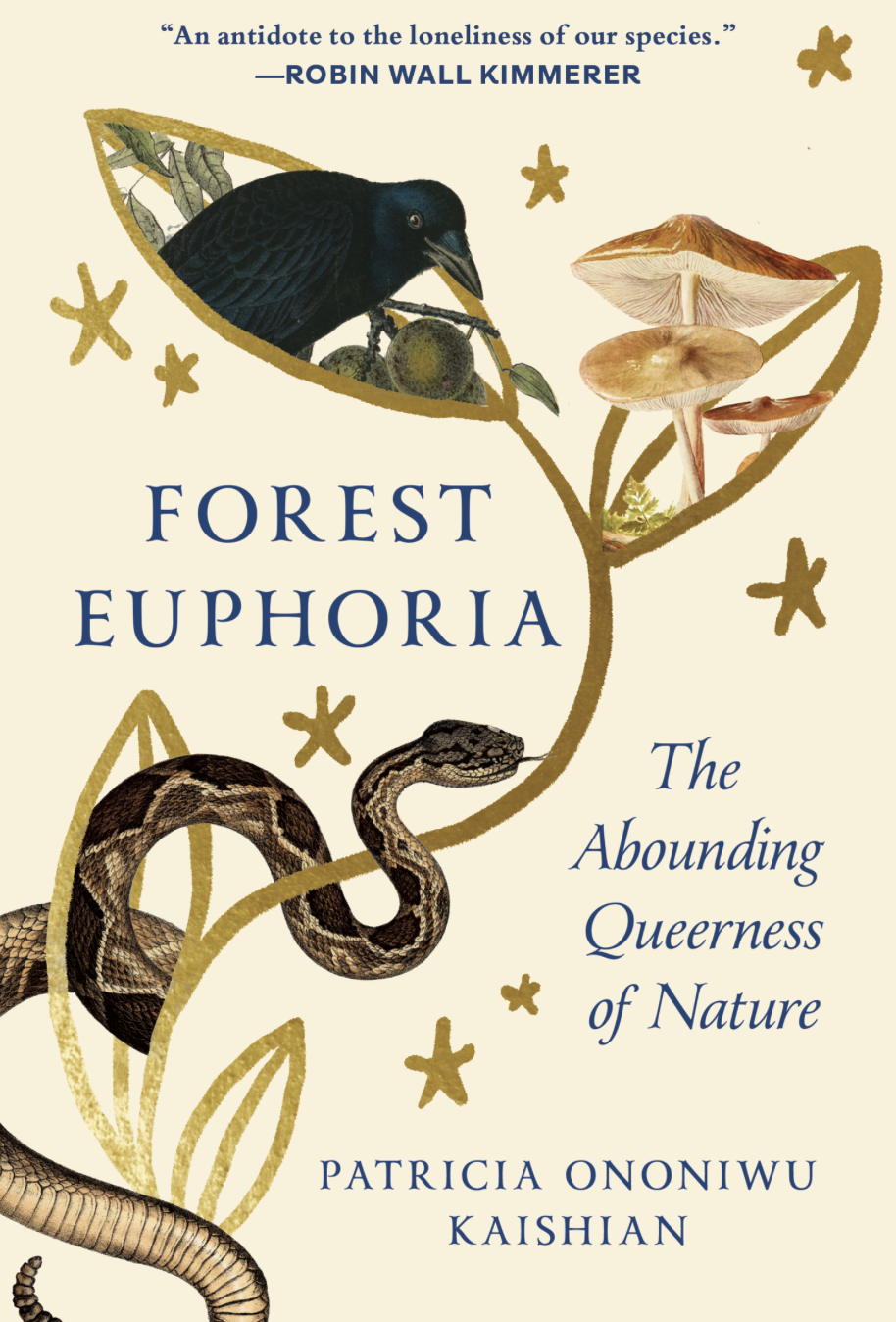
On the Danger of Being ‘Normal’ and Exclusive: The ‘Queer’, Diversity and its Essential Nature

  • I’m a thematic reader, certain topics appeal to me. My tendency is to dive in when they fit into the puzzle that intrigues me, particularly the big one about life; what it means to be alive; what organisms share in terms of their biological function as well as what connects us…all of us, as a species and more broadly across species; the ecology of life, how we fit together, necessarily; how this life would not exist  were we truly individuals, separate, isolated, independent organisms and how we delude ourselves when we insist otherwise. One book often leads me to the next. Sometimes several. So I read about quantum physics and how as we integrate that into biology, it transforms that science, adds an element of ‘magic’ to it. Neurobiology. Ecology. Evolution, The embryogenesis of that single egg cell to the the dividing undifferentiated blastula, to a mature organism with its multiplicity of differentiated cells, unique tissues and specialized organs. Metabolism. Gender and sexuality. Perception and consciousness, its complexity and variety. Relationship, function, communication, internal ‘signaling’ and ‘switching’.  How concepts of sentience and beauty, language and art, the soul, all spring from the complex act of living…. Integral to it. How species and individuals all play roles, simultaneously in every level of ‘community’ in which they belong/participate, indispensable and replaceable, all related parts of an ongoing, evolving, process; one that we are so embedded in that we cannot possibly discern the value of anyone ‘member’s’ contribution, each an element in the larger dance, a ‘process’ which itself, is the point. As Shakespeare once wrote in his play, “As You Like It”:

All the world’s a stage,
And all the men and women merely players;
They have their exits and their entrances,
And one man in his time plays many parts….

We do not and cannot know the ending. There is none, or rather each ending marks a beginning, any guess that we might offer of an ultimate purpose, of a goal, remains unknowable, beyond the continuing unfolding of life…endless change.. Progress? It’s difficult to say as the earth system collapses and ‘reboots’ over time. The expression of the whole is observable only in moments, in its parts.

The aphorism, ‘it takes a village to raise a child’, begins to get at what it means to be alive, that we all depend on each other, connected, related through the dynamic processes of being, of the flow of energy and its ‘in-forming’, its translation into matter and form. We are each a unique expression of this process. If we are ever to fulfill our potential, if we will ever be able to discern what that might be, we must recognize these connections. Our individuality is a selfish story we tell ourselves, one that fires our ambition to differentiate ourselves, to put ourselves ‘above’ others, to claim exceptionalism, and in so doing, lose the larger game playing out before us. As ‘individuals’ we are incomplete, hobbled in our larger social and ecological roles, we devalue ourselves when we fail,  and in so doing see ourselves as separate, individuals rather than the ‘collectives’ that we are. We may act individually, actions which are informed by both our past and the actions of all around us, but are in fact linked directly by lines of dependency, recognized or not. We are forever a part of something much larger than ourselves. We are bounded composites, never truly independent, as both individuals and a species, communities integrated into these unique wholes, even our consciousness is a product of this collective relationship. ‘Shaped’ by and shaping the conditions in which we live. The synapses in our brains both fluid and solid, responding to the world around us and with in, with our use and disuse. Connected in countless unseen ways, essential and impactful never the less. Continue reading

Notes on Complexity: A Scientific Theory of Connection, Consciousness and Being, Thoughts on the Book

[My ‘reviews’ are not strictly book reviews. I’m not trying to distill the author’s ideas down into a simpler ‘bite-sized’ piece or discuss their ‘style’. These are my thoughts after having read these books. My attempts to make sense of them, usually after several rewrites, as I work to fit them into what I already ‘know’, an attempt to make the ideas presented in this book, consistent with those which I’ve read by other authors. They include ideas not covered by this author. Rarely, if ever, can you come to an understanding from a singular perspective. This is a link to an annotated bibliography on my Blog of several of the more significant books which have  influenced me on this topic,]

Complexity theory? Do we need a theory to determine what is complex? No, that’s not what this is about. Theise’s book does not layout a system for determining what should be considered complex/complicated or not. This is a book about systems and structures in nature and how they come about. He discusses how mainstream science has fallen short in explaining this and why, the author believes, without changes in approach, we will continue to fall short. He goes on to present an alternative, or, rather, a ‘sister’ approach which can provide a previously excluded way of ‘knowing’, and in so doing, can account for the ‘gaps’. The problems are not just that this is a difficult concept to understand, but that at the most basic, quantum, level, that at which nothing can be divided smaller, where all things ‘begin’, actions and processes do not follow human logic and contemporary expectation….

I remember reading the book “The Limits to Growth” in the early ’80’s, which introduced me to ‘systems theory’, an approach which required looking at all of the parts and actions within a system, consider their relationships and how they work together, in order to understand its ‘working’. A system could be ‘modeled’, mathematically and the long complex equations run on a computer. There were generally multiple possible models to run. This gave us a degree of ‘predictive’ power, but these would always be approximations, because no model could be perfect and every situation, every starting point, would result in a somewhat different ‘answer’.  I followed this with James Gleick’s book on Chaos Theory and its ‘ability’ to explain certain types of patterns, which appear spontaneously in nature, while introducing me to the idea and maths of ‘fractals’. There were multiple  books on ecology which necessarily take a wholistic approach. James Lovelock and Lynn Margulis, published their book on Gaia Theory, a product of their collaboration which began in the 1970’s, a theory of the Earth itself functioning as a self-regulating system, as if it were a gigantic, single, organism of which we ourselves are a part. All of these were related, coming out over a short span of years. These were ‘new’ hypotheses and theories, never before seriously considered by science back then, but now being investigated, their validity, and the answers they suggest, impossible to ignore.

Science often advances this way. Seemingly radical ideas, rejected by the majority of the mainstream…until resistance worn down, their validity demonstrated through thoughtfully conducted and reviewed experimentation, the scientific community then coming around to more broadly adopt them and reshape science and our understanding. (Some argue that this ‘process’ requires some number of the old guard to literally die, younger minds being more free to consider the new.)  Margulis and Lovelock’s ideas were just too far out there for most at the time. For many, such thinking then belonged to the realm of metaphysics, or fanciful science fiction, frivolous exercises in thought and belief. Exploring these ideas, testing their validity, only became possible with the computational capacity of ever more powerful computers and an openness to branches of thought once rejected by science. ‘Game Theory’ and cybernetics played a role in all of this as well. Complexity Theory has far more capacity to explain how matter and functional systems emerge, or manifest, than mainstream science could historically. Nature, through the conditions and forces in play at any given moment, ‘drive’ the universe toward order along with the ‘creation’ of complex structures and functions, at the cost of energy spent, ‘held’ in the new structures and dissipated away as lost heat. All of countless processes linked to one another through a myriad of relationships and the feedback loops which comprise them. The universe continues to evolve, and as it does, it continuously spins off everything in it, from sub-atomic particles to human beings over time, a process which it itself is directly influenced by its evolving ‘self’.

Continue reading

On the Chaotic Unreality of the Real and How We Redefine It: Reimagining Reality in a Probable Universe

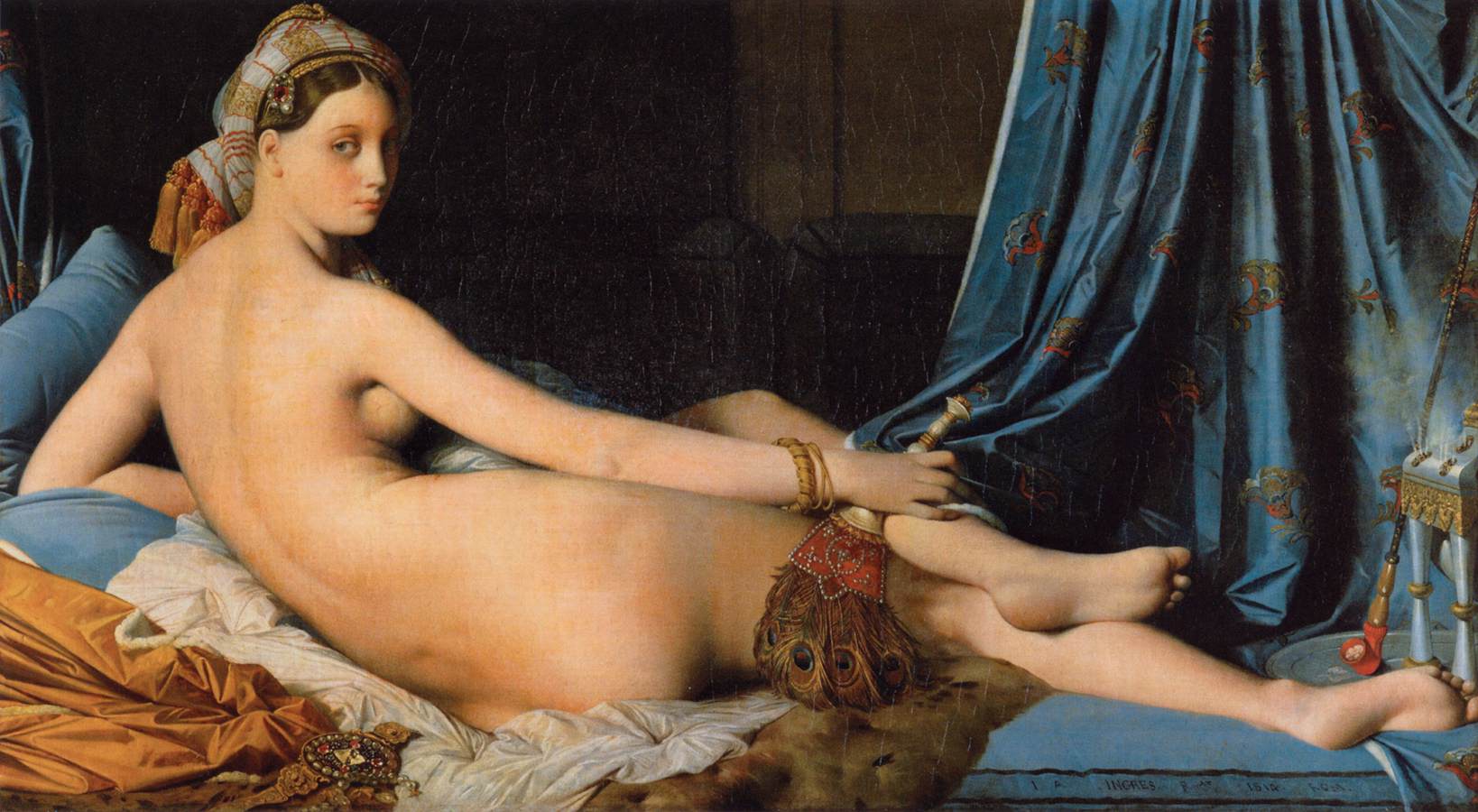
Jean Auguste Dominique Ingres, The Grand Odalisque. Ingres was a Neo-Classicist, who attempted to create images that mimicked ‘reality’ even as it distorted it for effect, lengthening her spine and her impossible twist of pelvis. Ingres began painting at the beginning of the 1800’s in a world coming to be dominated by Newton’s mechanical view of the universe. Realism would become a dominant style by the end of Ingres’ career. The solidity of reality. What is, is!

Because the pace of change in our scientific understanding of our world, and the technology which follows it, is increasing at greater rates in recent decades than at any other time in our history, it has become ever so more important that we have at least some basic understanding of that science and technology, that we as a society wield in this world…without this, we are literally blundering in the dark, blindly upsetting systems and cycles, upon which our lives depend, with little understanding of our responsibility for the decline or grasp of our own agency in setting the world back to rights.  The advancement of science is an outgrowth of our curiosity as a society.  It is a look behind the ‘curtain’ that too many of us take for granted.  The technologies that spring from these scientific advances carry with them consequences which amplify our individual impacts while providing us with promised advantages through a marketplace that too often only wants to sell and profit from its latest innovation, with little concern for its overall impacts.  As long as our basic world view, our grasp of science, remains stuck in the past, in the more ‘simple’ classical world of its roots, we are more easily swayed by advertisers and pitchmen who’s business demands that we not look too deeply.  We are not, and can never be, ‘experts’ in every field.  The demands and rigors of scientific advancement have a very high bar, but it is essential, especially in these days, that we understand basic concepts, that we have some grasp of how science has redefined the world making possible those technologies which we either wield clumsily, like a weapon of destruction, or more tactfully and respectfully like a surgeon and healer.  As long as science remains esoteric and remote, ourselves ignorant of its ‘message’ and, by extension, ignorant of our own impact on the world, we place all things at risk. Continue reading

On Ecology, Politics and Climate Change: the Links that Tear us Asunder

Warning!!! This is a rant! It’s political, economic, ecological and, most definitely, covers all of the connections between with climate change, these things and our future as a species.  I hope you choose to read it, but be forewarned!!

I woke up yesterday at 4:30am, unable to go back to sleep, so I got up and began writing this.  The state of the world, the absolute idiocy, meanness and short sightedness of politics today, the undeniable enormity of climate change and its inevitable impacts for every organism on the planet, drives me from paralyzing frustration, to near rage, to profound sadness and despair.  Most days all I can do is seek escape and I do this through gardening, reading eclectically, trying to follow some kind of routine, going for walks, a swim or a hike, sharing time with friends or delving into research on plants and the everyday miracles within them and their wondrously choreographed lives here on this planet….I spent my entire morning writing and rewriting this (and returned to it the following day, now today).  It is me ‘sharing’.  Yes, it’s a rant, it’s a bit of analysis, it’s a window into the world as I see it and it contains a hope I have…that I have to cling to most days, for this world and all that lives upon it, because what we have done, what we continue to do, is so profoundly destructive and disheartening to me. Continue reading

A Course Correction: The Wild and the Human, On Repairing the Relationship Between Politics, Economics and the Environment

“We are the odd ones, with bright eyes, that see the wonder of a bountiful world.  We don’t look through rose colored glasses…we’ve only removed the veil that breaks and blinds….Now, to cut the strings that tie us to the lie. ”  Lance Wright, Jan. 2019

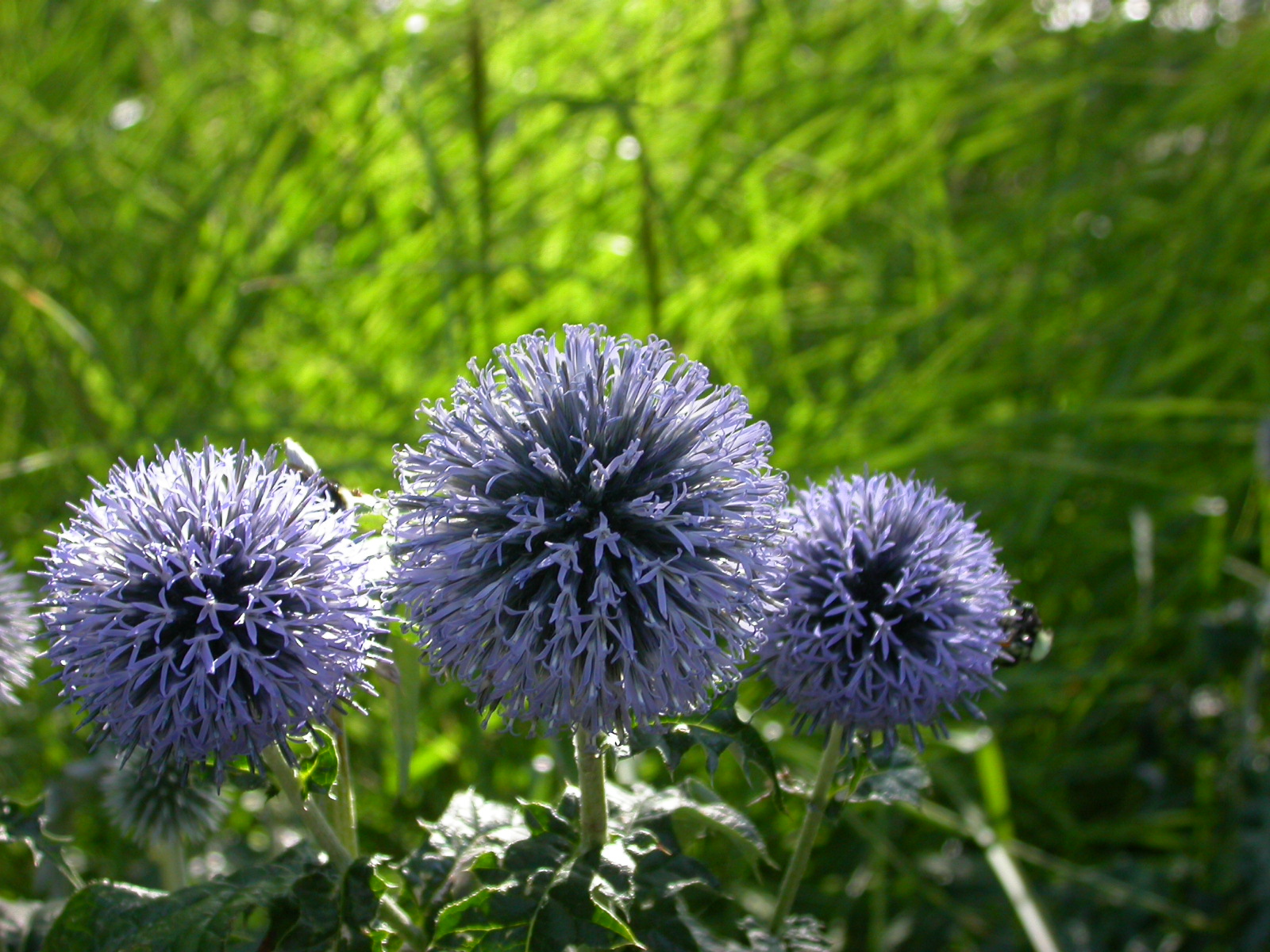
Echinops ritro in front of a Miscanthus gracillimus several years ago at Holladay Park. A series of perennial beds were created with help from a notable local designer. For a variety of reasons related to budget, staffing and vandalism, the beds declined.  Beauty, that necessary elixir, truly abounds, but we must be cognizant of the forms in which we accept it and be committed to what it requires to flourish.

Gardeners are my people…well, actually, so are botanists, horticulturists, entomologists, ecologists, the weekend outdoor adventurers who in regular moments of awe, pause to take in the daily wonder of the world…anyone, really, who works with or has become enamored with the living natural world (and I’m going to include geologists too, at least those not taking their livelihood from resource extraction).  I have a theory, that as our modern world becomes increasingly urbanized, and transformed by our use to that which supports urban living, more of us are becoming consciously aware of what we are losing, of the natural world that has been sacrificed, developed, along the way…and in ways, large and small, many, but still far too few of us, are choosing to make our lives reflect this understanding. We question the ‘stuff’ we have crowded our lives with, that ‘stuff’ we’ve spent our lives to procure while following the dream we’ve all been sold on.  Many of us garden on whatever we have available to us whether it’s a quarter acre, a Juliet balcony or a kitchen counter space.  We plant gardens for food or to support pollinators, to have something green and growing in our homes, we grow small succulents for their simple beauty, flowers for the vase or plants that provide cover and fruit for songbirds, there are many reasons…and we do this for the pleasure that it gives us, for the satisfaction that we are doing something to heal an increasingly ‘broken’ world.  Yet the world continues to spiral down into more ugly chaos, in spite of our increasing awareness…it is not enough.  I find myself drawn even more into the wonder and beauty of a single plant, the ‘miracle’ of life and the amazing complexity, the inter-relatedness of living communities…because, in spite of how our society views this planet and the countless organisms it routinely dismisses as secondary, and unnecessary or of little commercial value…life is in fact the center of meaning and value. Continue reading

On Our Expulsion From the Garden: How Our Ideas of the Garden Shape What We Do

There are those who argue that life is short and violent, that we have nothing to look forward to other than our deaths…so we might as well grab for whatever we can now!….that is the path of the nihilist and the greedy, it serves as an excuse, a rationale for their choices, following an ethic of ‘why the hell not!’  This is consistent with the ‘beliefs’ of those who feel the weak get what they deserve, that anything that opposes their idea of dominance, is weakness and failure and they pursue it with the righteousness of a ‘true believer’.  “Only the strong survive”.  If our gardens can teach us anything it is instead that, ‘He/She who has the graciousness to take only what they need and gives back whatever they are able to, live on through the love and lives of those and that which they’ve nurtured, helped, befriended and mentored along the way and in this way have helped build a richer, more complex and diverse world.’  Our true legacy will be best expressed in the richness and health of the world we leave behind, of those that we’ve loved and taught.  As competitive as the world is, it is this positive, cooperative, supportive aspect of life that makes it all possible.  While the world is divided into heterotrophs and autotrophs, those that must consume to live and those able to grow and metabolize that which they need from the world around them, it requires them both, working in a balance to sustain them all.  We humans, ultimately, cannot be any different if the world is to continue on. Continue reading