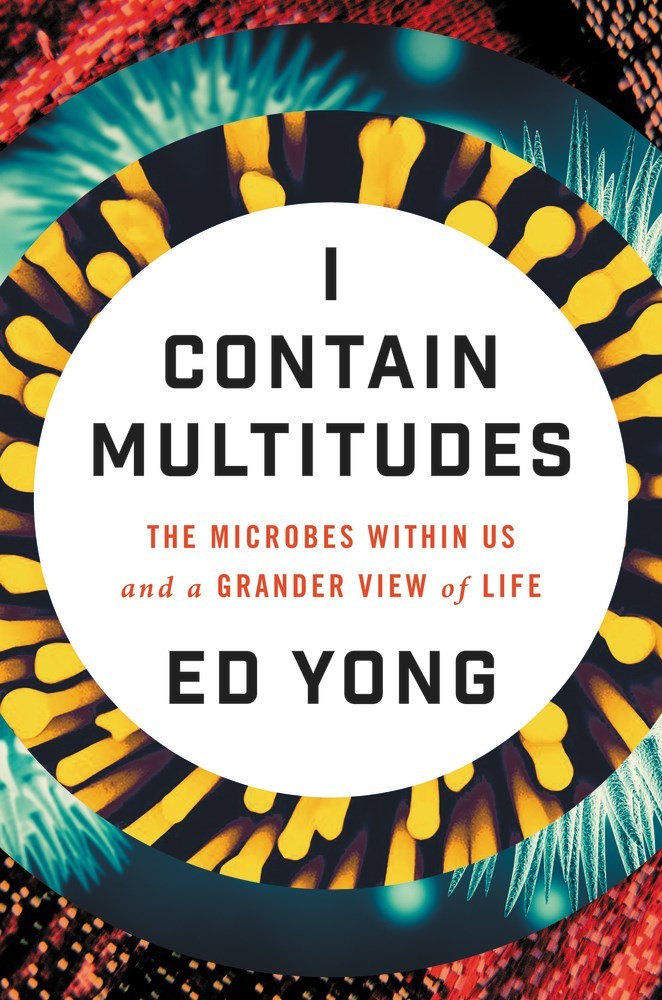
I Contain Multitudes: An Excellent Starting Point for the Beginner to Understand this Life

Ed Yong’s, “I Contain Multitudes” takes a different angle into the biology of organisms, looking not so much at the functioning of the individual as it does those countless single celled organisms, protists and tiny ‘critters’ that live within and upon us, bacteria, fungi, nematodes, viruses, dust mites etc. There are bacteria living within larger, multi-celled organisms with viruses living inside these….And these are not unusual relationships. Such relationships dominate all of life. Their exception is the rare event. Together, in their multiplicity, these constitute living communities, living in the very specific ‘biomes’, found on larger, seemingly independent organisms. Numbering in the thousands, millions, billions, even trillions, these tiny residents live in dynamic symbiotic, mutualistic, parasitic and antagonistic relationships with their hosts, often filling more than one role, depending on the host, the conditions and constitution of the biotic community. Whew! Yong’s book introduction, of the reader to this world, should lay to rest the idea that ‘we’ are truly ‘individuals’. The countless microbes that occupy and ‘invade’ us, have previously been considered unnecessary or consistently compromise our health, sources of disease.…The idea that we can ‘sterilize’ our way to better health denies the necessity of these organisms, or at least most of them, in the health of individuals.

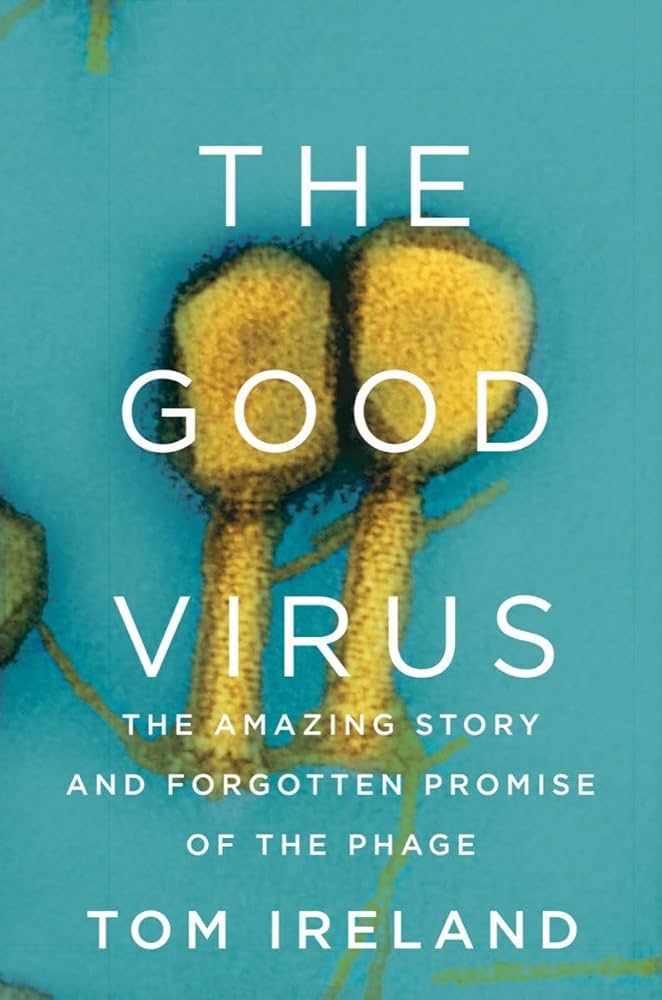
No, he presents a variety of cases which illustrate the absolute dependence of an individual on these microbes, bacteria that breakdown our otherwise indigestible foods into forms that we can then absorb and utilize. Others that may live on our skin, defending us from attack, by providing a defense against other microbes that could otherwise infect us. Their are microbes that infect other microbes (see Martinez Arias’ book, “The Good Virus”), tiny ‘organisms’ that infect that disease’s vector, killing it before we become infected or blocking the disease causing microbe from infecting the vector, keeping it free from the organism which can cause disease in us. Continue reading

The Good Virus, A Review and Thoughts About the Necessity of an Informed Public

Every book tells a story, even the driest academic tome…or rather, utilizes the form of a story. Humans communicate through story. It’s how we give some communicable ‘form’ to our thoughts which we can share. Without it everything is disconnected reportage of facts, personal impressions, emotions. Raw data. Zeros and ones. incomprehensible. To communicate through story requires that we share enough elements of the story, its language, form and ideas, with our ‘listener’, that they can understand what we are saying/writing. If it is too alien, communication does not happen. The listener/reader, hears the words, but the meaning eludes them. Meaning and experience are not shared. Without these, connection, communication, fails. The more esoteric the topic, the more important it is that both ‘parties’ share a common language, that  each is ‘educated’ to some degree, about the world the other is attempting to communicate. As science and technology become ever more specialized and schools and social institutions become more isolated from their larger communities, communication fails more often than not. Especially when the ‘other’ is viewed in a negative light, as untrustworthy. Communication then requires a leap of faith, because as our understanding of the world becomes deeper and more complex, we cannot all become expert in all things. There is just too much to learn. This is when effort, trust and faith, become essential. We must share a commonality, a trust in the other. As shared knowledge, and ‘ways of knowing’ decline, assumptions then dominate. Intentions then become suspect and the very possibility of community and communication evaporate. What we ‘see’, is what ‘we’ see, not what someone else does. Whether or not that is shared is the crux of the communication problem.  Continue reading

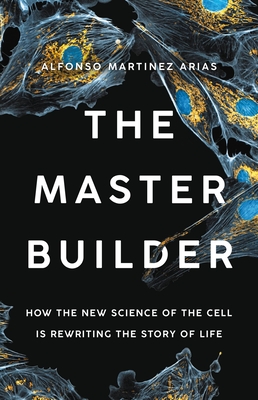
Master Builder: How the New Science of the Cell is Rewriting the Story of Life, Alfonso Martinez Arias, a Review

The 20th century brought to the fore the supremacy of genetics, the time in which the secret of life was about to be explained by the DNA held within the double helix of our chromosomes. With our mapping of the human genome, at the last century’s close, after only a short time of examination and study, the secrets of life would begin to be revealed and, with them, the keys to defeat disease and, through our manipulations of these genes, our ability to design improvements that would make us resistant, or even immune, to many of our maladies. Available to us as well would be the ability to select desirable qualities in our progeny. It might even make possible the knowledge and technologies to stop, or even reverse, aging. Genes held the key within their previously unknowable ‘blueprint’ guiding the development of each individual, of every species. Industries have sprung up around this. Billions, even trillions of dollars, stand to be made as we approached our coming futures. But, as is so often the case with science, advances in knowledge bring with it entirely new questions, and what once promised to be explicable, becomes shrouded in an unexpected haze of complexity. Continue reading

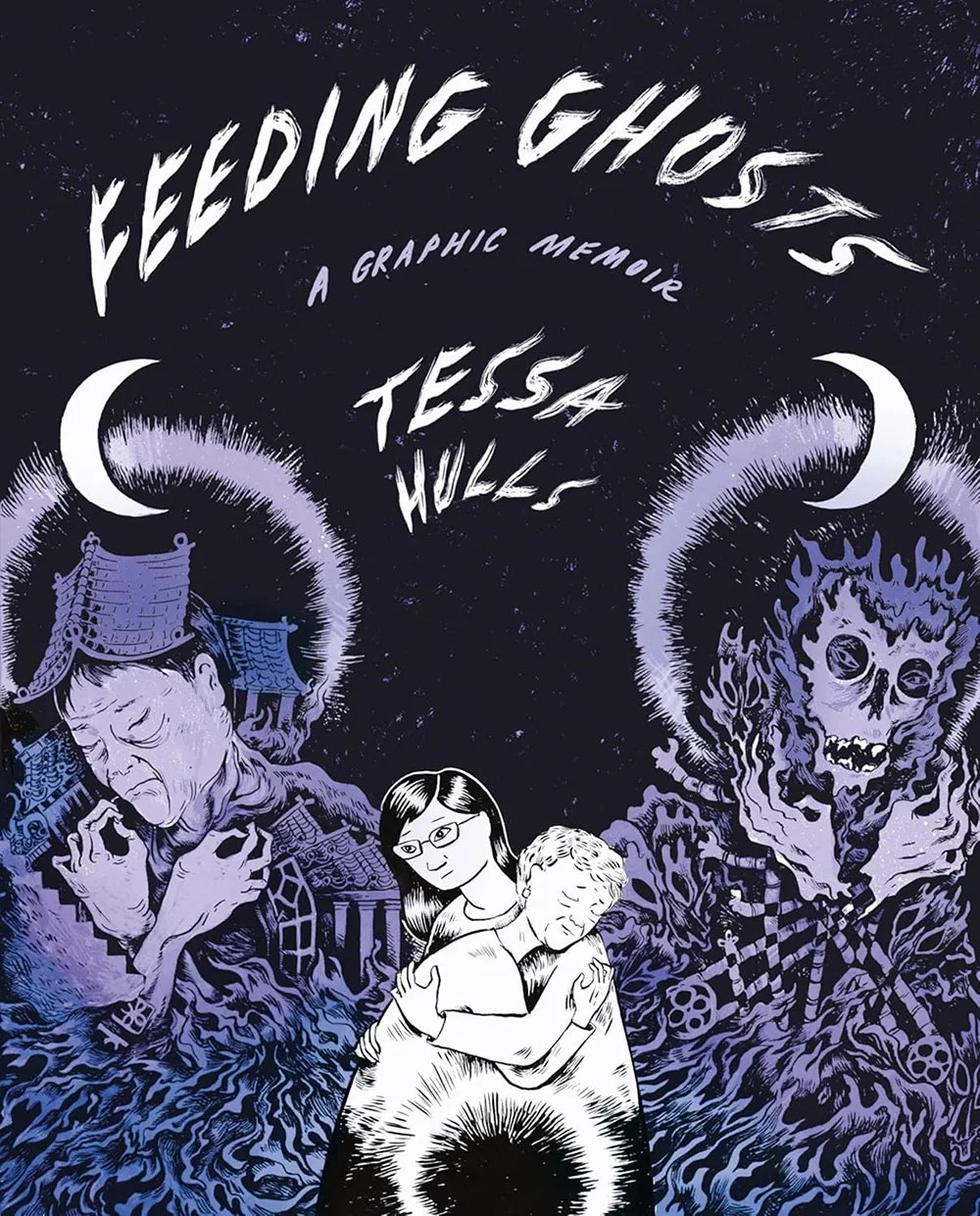
Feeding Ghosts, a graphic memoir

Feeding Ghosts is a unique creation, a graphic memoir, a memoir that utilizes the format of the graphic novel, one that many associate with Marvel super heroes, but often tackle substantive social issues. In this author, illustrator, Tessa Hulls, tells the story of her family’s experience with trauma and how its echoes are passed on to the children; the trauma of the parent, the damage it has done, and their response to it; their defense against the pain, the ‘story’ they tell themselves of their personal experiences, that truncates their life and their ability to parent and model healthy behavior. These limitations then go to shaping their children’s world as it ‘collides’ with the child’s innate capabilities and vulnerability, like a wave breaking on a shoreline shaping the child’s life and their ability to respond to the opportunities and traumas that arise they will be confronted with. When the parent is so limited, and all of us are, this shapes the beginning point of their children. And the ‘original’ trauma is passed on, in altered form, to the children, from which they form their own stilted baseline for their lives. Continue reading

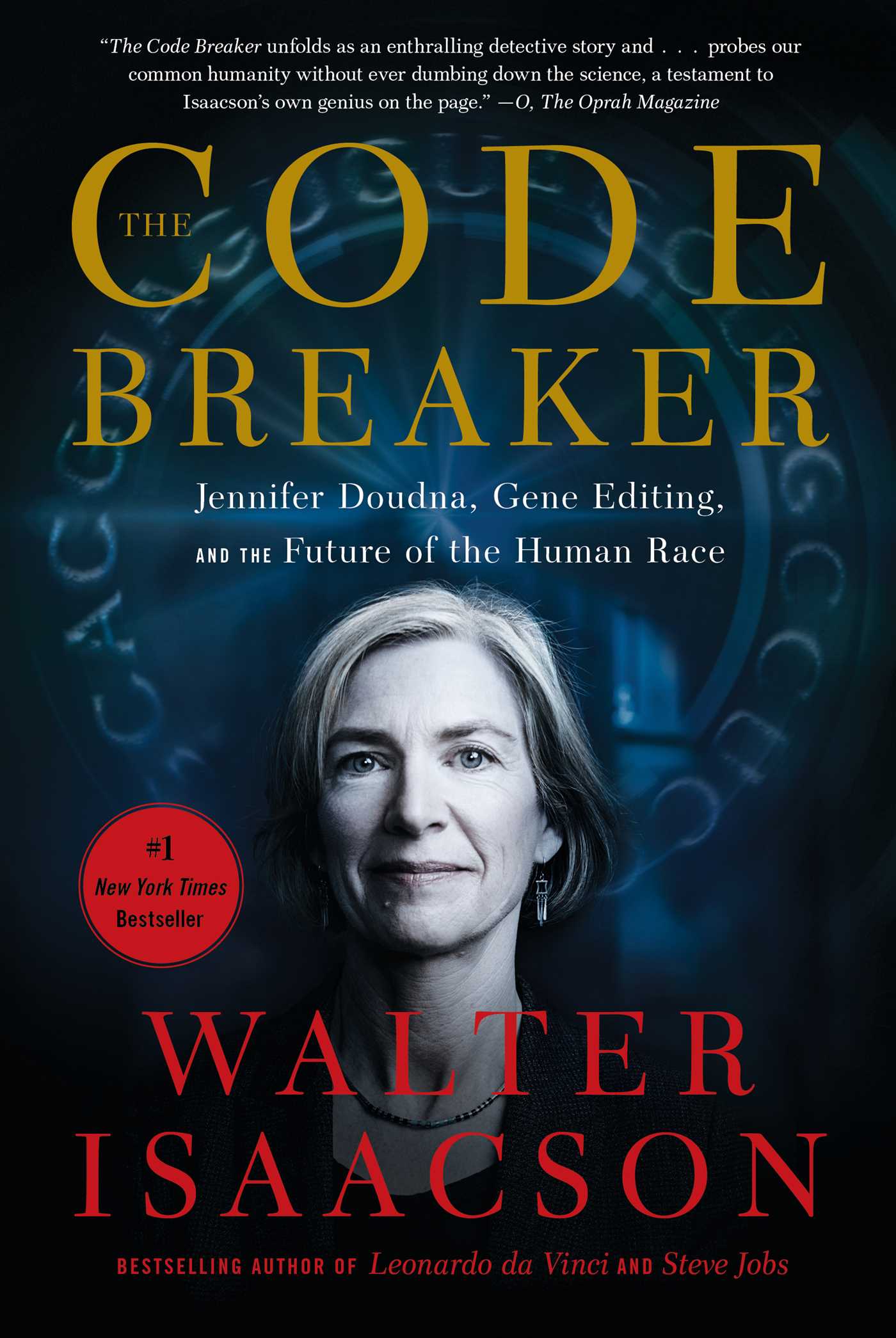
The Code Breaker: Jennifer Doudna, Gene Editing, and the Future of the Human Race, a Review

As a horticulturist, and total science nerd, I always have a book related to the life sciences in process or on ‘deck’. I don’t understand the aversion so many prople display toward the sciences, the ridicule they so often heap on those who conduct the studies and their preference to simply take the unfounded stories and opinions of someone they ‘know’ over the studied and supported work of science.

Expertise and science are often publicly attacked as efforts by the ‘elites’ to assert control. Science they claim attempts to intentionally complicate. There is, they seem to insist, nothing of value in the work of scientists….Really? So we discredit them and cut their funding, while loudly denying that their work has any value at all. Scientists are, they claim, blind to what is obvious to anyone. They seek research grants to study frivolous topics, so that they might avoid having to get a real job. We reward ignorance.

Where do the technologies our lives depend upon come from? Yes, science is hard, especially if you can’t be bothered with understanding its complexities and how its work is done. But, because you may not understand something, doesn’t make it any less real or valuable. Where is the waste or sin in wanting to understand? It improves lives and drives our economy through the development of the technologies it has spawned. When society rejects science, the prople who do it leave, to other countries, our economy stalls and we fall behind.

Science is not anti-religion. There will always be space for the unknown, for mystery. Explanation does not eliminate the miraculousness of life. If anything does that it is ignorance and an insistance on a world thst denies all of its amazing complexity.

Science cannot deliver all of the answers. It will always spawn more qustions as it deepens our understanding. It does allow us, however, to make more informed decisions, to improve our lives if we implement it effectively, fairly and responsibly. When we don’t, that’s a failure of politics, not science.

Read this book. Educate yourself. This book speaks to how science and those who do it, work most effectively. It speaks to possibilities for our lives and our health, what we could do if we weren’t so frightened of science. It speaks to the amazing diversity of life, of what people and organisms share, how we could improve the quality of all of our lives. It examines the motivations of those doing science, the competition and necessity of collaboration. It is an exciting read as teams compete to understand and, driven by humanity’s collective need to develop better tools to defeat COVID, how cutting edge tools, and the scientists who developed them, did so. No, Trump didn’t save us. The universities and private labs did while in collaboration with some of the big pharma companies. Trump’s administration stood on the sidelines or in the way. The author does not address the political problem directly, but it is revealed in the telling of the larger story.

https://www.theguardian.com/books/2021/mar/11/the-code-breaker-by-walter-isaacson-review-a-science-page-turner?fbclid=IwY2xjawLyThpleHRuA2FlbQIxMQABHkZ41LuyxiElPX4XJVs6MrxD1pcI-GVXrK67I_bUG_qUL85ZI37Ib84qpf6F_aem_qjbkulnHrBj4tNQP1v1RiA

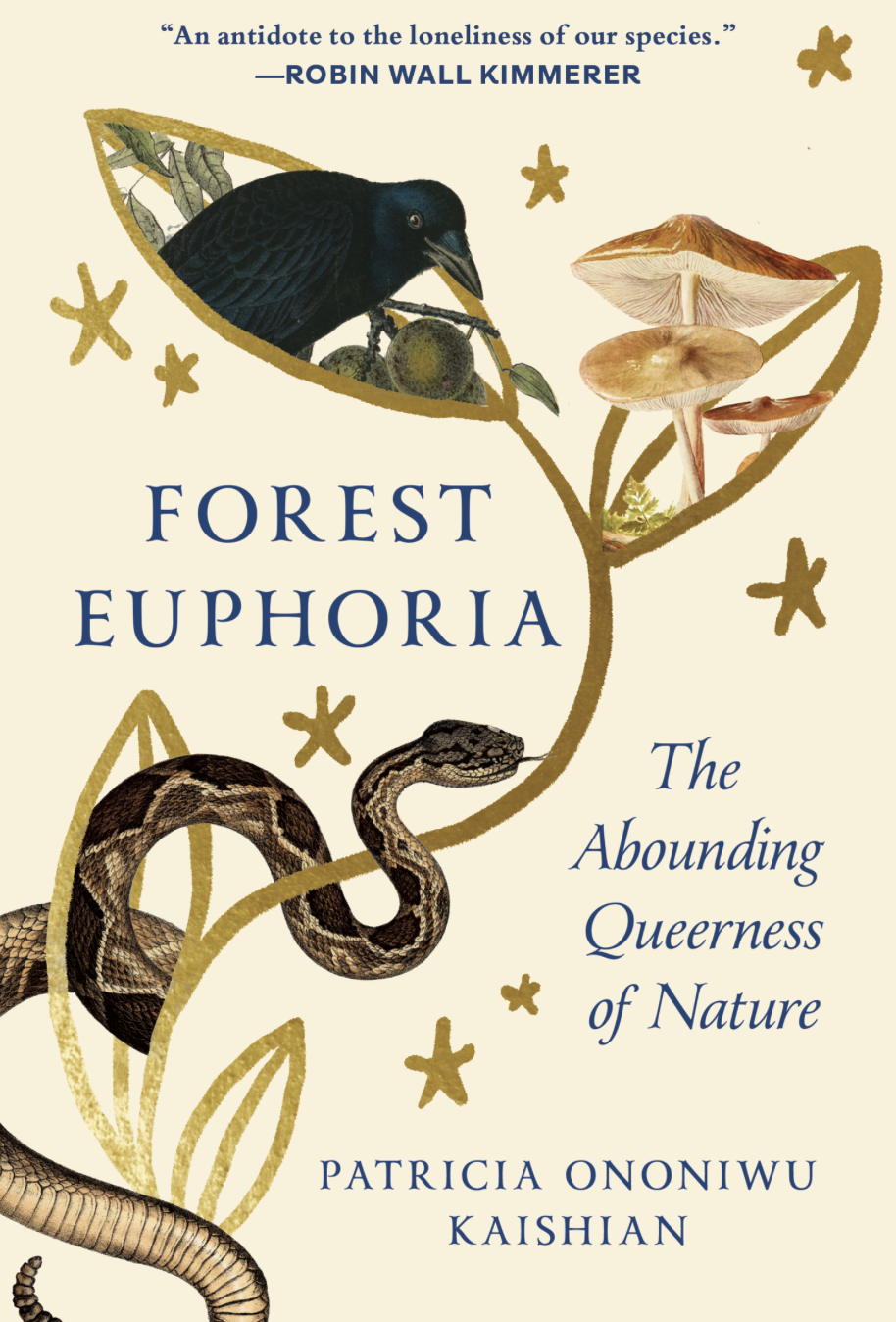
On the Danger of Being ‘Normal’ and Exclusive: The ‘Queer’, Diversity and its Essential Nature

  • I’m a thematic reader, certain topics appeal to me. My tendency is to dive in when they fit into the puzzle that intrigues me, particularly the big one about life; what it means to be alive; what organisms share in terms of their biological function as well as what connects us…all of us, as a species and more broadly across species; the ecology of life, how we fit together, necessarily; how this life would not exist  were we truly individuals, separate, isolated, independent organisms and how we delude ourselves when we insist otherwise. One book often leads me to the next. Sometimes several. So I read about quantum physics and how as we integrate that into biology, it transforms that science, adds an element of ‘magic’ to it. Neurobiology. Ecology. Evolution, The embryogenesis of that single egg cell into the the dividing undifferentiated blastula, to a mature organism with its multiplicity of differentiated cells, unique tissues and specialized organs. Metabolism. Gender and sexuality. Perception and consciousness, its complexity and variety. Relationship, function, communication, internal ‘signaling’ and ‘switching’.  How concepts of sentience and beauty, language and art, the soul, all spring from the complex act of living…. Integral to it. How species and individuals all play roles, simultaneously in every level of ‘community’ in which they belong/participate, indispensable and irreplaceable, all related parts of an ongoing, evolving, process; one that we are so embedded in that we cannot possibly discern the value of anyone ‘member’s’ contribution, each an element in the larger dance, a ‘process’ which itself, is the point. As Shakespeare once wrote in, “As You Like It”:

All the world’s a stage,
And all the men and women merely players;
They have their exits and their entrances,
And one man in his time plays many parts….

We do not and cannot know the ending. There is none, or rather each ending marks a beginning, any guess that we might offer of an ultimate purpose, of a goal, remains unknowable, beyond the continuing unfolding of life…endless change.. Progress? It’s difficult to say as the earth system collapses and ‘reboots’ over time. The expression of the whole is observable only in moments, in its parts.

The aphorism, ‘it takes a village to raise a child’, begins to get at what it means to be alive, that we all depend on each other, connected, related through the dynamic processes of being, the flow of energy and its ‘in-forming’, the translation of matter and form. We are each a unique expression of this process. If we are ever to fulfill our potential, if we will ever be able to discern what that might be, we must recognize these connections. Our individuality is a selfish story we tell ourselves, one that fires our ambition to differentiate ourselves, to put ourselves ‘above’ others, to claim exceptionalism, and in so doing, lose the larger game playing out before us. As ‘individuals’ we are incomplete, hobbled in our larger social and ecological roles, we devalue ourselves when we fail, individuals rather than the ‘collectives’ that we are. We may act individually, even ‘freely’, but our actions will always be informed by both our past and the actions of all around us. We forever linked across time and space, directly by lines of dependency, recognized or not. We are inevitably part of something much larger than ourselves. We are bounded composites, never truly independent, as both individuals and a species, communities integrated into unique wholes. Even our consciousness is a product of this collective relationship. ‘Shaped’ by and shaping the conditions in which we live. The synapses in our brains, responding and working to shape the world around us and with in. We are connected in countless unseen ways, essential and impactful never the less. Continue reading

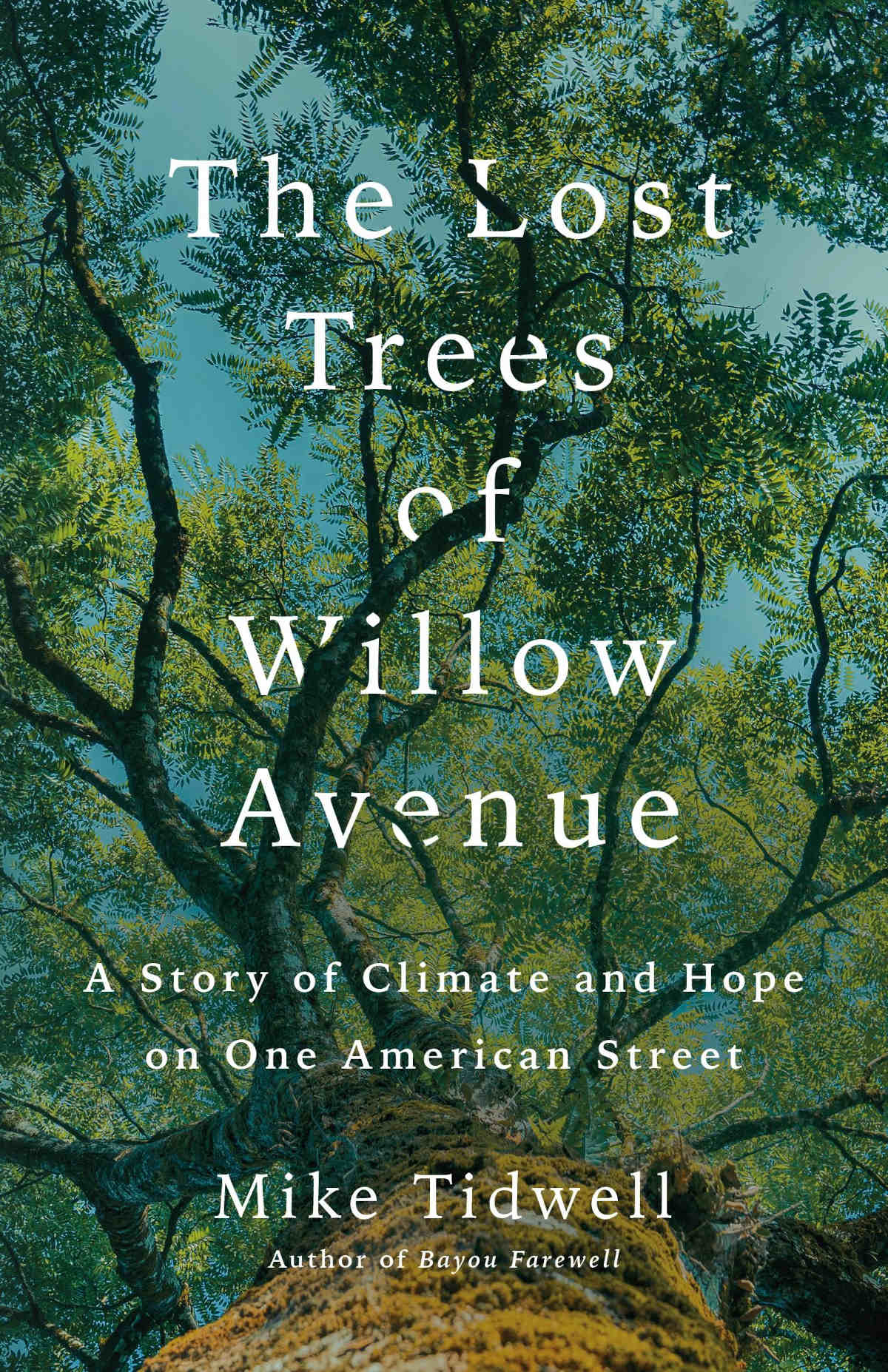
The Lost Trees of Willow Avenue, a Review

Global climate change, in our current political climate, has been relegated to a secondary status. There is so much ‘shit’ hitting the fan right now that it gets largely lost in mainstream media coverage. The science that supports it, continues, although at a slower rate. Our transition from fossil fuels to renewable energy has slowed along with the republican denials, their actions to ‘deBidenize’ America, cutting funds appropriated through the Inflation Reduction Act, ‘seed’ monies to fund needed infrastructure investment, along with their cuts to the funding of research into the supporting science and technologies. The topic has been rendered into one of ‘belief’ as if its consequences will have no real world effects, a simple argument of the uninformed, like ‘Ford beats Chevy’, pointless and personal. Author Mike Tidwell, an obvious long time ‘believer’ and lobbyist, has worked over the last 30 years to move the political dial toward climate action, amongst his neighbors, his home state of Maryland and Congress. Here, in his recent book, “The Lost Trees of Willow Avenue”, he tells his and his neighbor’s story, in his DC area neighborhood, of the real world impacts they’ve observed and are attempting to combat. Amongst his neighbors are  Congressman Jamie Raskin, his friend, Ning, a college prof who has been working tirelessly on getting a novel carbon sequestration program up and running, a local state legislator who has been working to get massive scale wind generators built off shore and others working in smaller ways, dealing with the fall out of a climate already changing around them which, among other things, is causing crazy weather perturbations, changes in rainfall and temperature swings that are leading to things like a large increase in Lyme disease, because the milder winters are killing fewer of the disease carrying ticks, while also leading to the massive die off of mature trees across their neighborhood. Continue reading

Our Central Problem is Economic

If you follow the pundits, social and mainstream media, the problem in America would seem be one of a splintered society, one fatally compromised by a mix of peoples that simply cannot be reconciled. The American ‘melting pot’ separated into battling bits, the ‘recipe’ that formerly held it together proven to be a ‘suspension’ of parts that never really belonged together and now, without, enough support, is failing…but is this true? If you go to a more primal, basic, level and ask what do people need, it always begins with survival and how when one’s survival, our security, feels in doubt, when we are confronted with overwhelming threats, fear begins to take us over. We become less nuanced and subject to manipulation, by slick talkers and those who would use us. Truth, becomes malleable as we struggle for something ‘real’, something ‘solid’.  Continue reading

Holodiscus microphyllus, Rock Spiarea in Dry Canyon

Another less common slope dweller is Holodiscus microphyllus, or Bush Ocean Spray, a deceiving name, or Rock Spiarea, which is also somewhat confusing. Confusing because Spiarea is the genus name for an entirely different genera of shrubs. So I call it simply Holodiscus. ( Botanical names can be confounding to the uninitiated. I’m not a big user of mnemonics, but I still remember first learning this plant’s close relative, Holodiscus bicolor, and the phrase immediately came to mind, ‘Holy Discus, Batman!” I know, silly, but I doubt I will ever forget that plant.)

This typically occurs on the eastern flank of the Cascades and in the mountains of SE Oregon. The common name, ‘rock’, suggests its preferred sites. I’ve not seen one in Dry Canyon bottomland. It seems most common below the east rim north of the Maple Bridge. Continue reading

That Gray Stuff? It’s All Sagebrush…Nope

Part of the Dry Canyon plant series

Everybody knows Juniper and I suspect that a lot of people who think they know Sagebrush, that ubiquitous gray shrub you see everywhere, may be confusing it with other plants, blurring all ‘gray’ shrubs into one. Now this may not seem to be a big deal, but if you are trying to manage a landscape with these in them or trying to create a landscape which reflects the local plant communities, then it becomes much more important that you know what you have so that you can evaluate your landscape’s condition and decide upon what you may need to do, or stop doing, to meet your goals. Continue reading