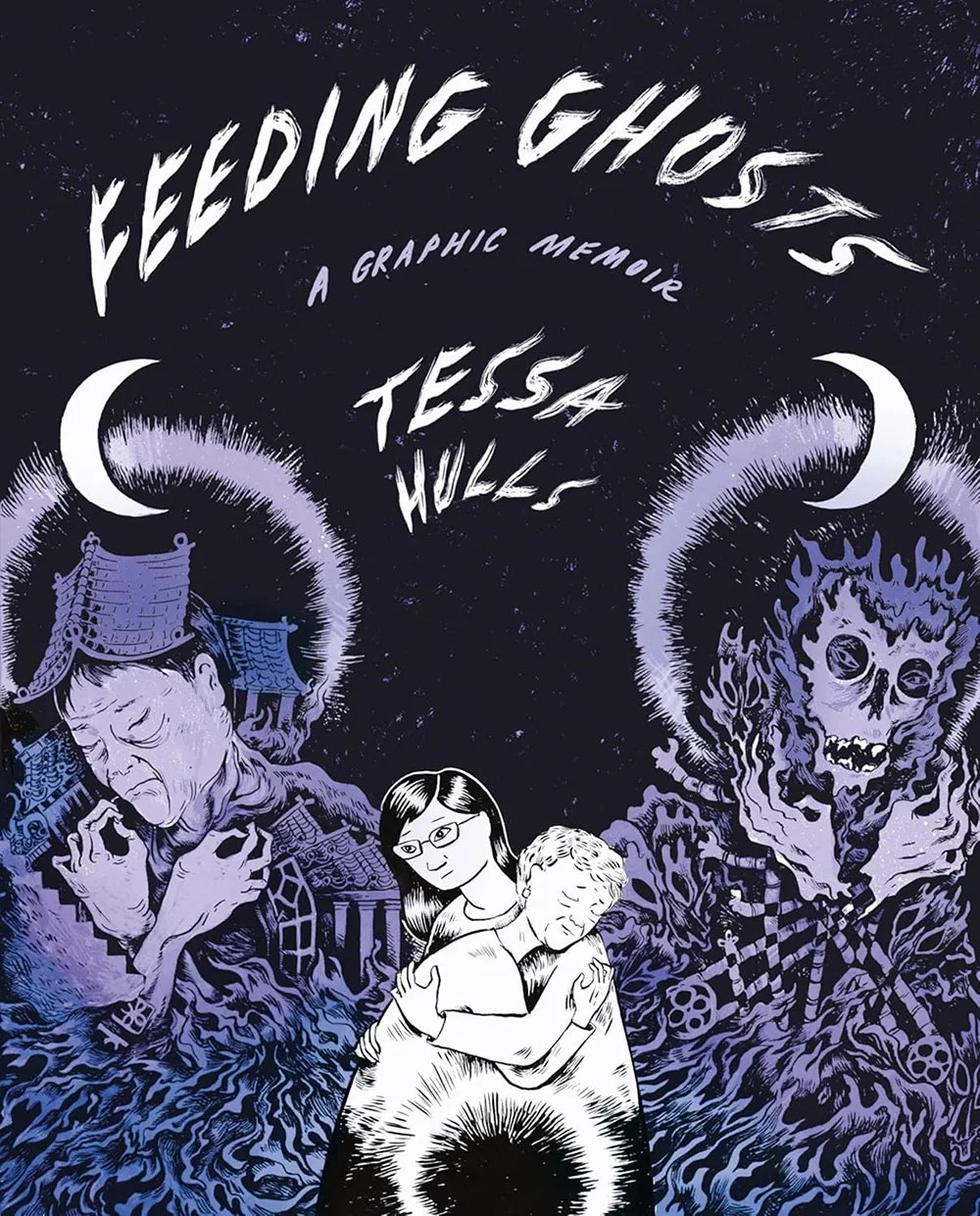
Feeding Ghosts is a unique creation, a graphic memoir, a memoir that utilizes the format of the graphic novel, one that many associate with Marvel super heroes, but often tackle substantive social issues. In this author, illustrator, Tessa Hulls, tells the story of her family’s experience with trauma and how its echoes are passed on to the children; the trauma of the parent, the damage it has done, and their response to it; their defense against the pain, the ‘story’ they tell themselves of their personal experiences, that truncates their life and their ability to parent and model healthy behavior. These limitations then go to shaping their children’s world as it ‘collides’ with the child’s innate capabilities and vulnerability, like a wave breaking on a shoreline shaping the child’s life and their ability to respond to the opportunities and traumas that arise they will be confronted with. When the parent is so limited, and all of us are, this shapes the beginning point of their children. And the ‘original’ trauma is passed on, in altered form, to the children, from which they form their own stilted baseline for their lives. Continue reading
The Code Breaker: Jennifer Doudna, Gene Editing, and the Future of the Human Race, a Review
As a horticulturist, and total science nerd, I always have a book related to the life sciences in process or on ‘deck’. I don’t understand the aversion so many prople display toward the sciences, the ridicule they so often heap on those who conduct the studies and their preference to simply take the unfounded stories and opinions of someone they ‘know’ over the studied and supported work of science.
Expertise and science are often publicly attacked as efforts by the ‘elites’ to assert control. Science they claim attempts to intentionally complicate. There is, they seem to insist, nothing of value in the work of scientists….Really? So we discredit them and cut their funding, while loudly denying that their work has any value at all. Scientists are, they claim, blind to what is obvious to anyone. They seek research grants to study frivolous topics, so that they might avoid having to get a real job. We reward ignorance.
Where do the technologies our lives depend upon come from? Yes, science is hard, especially if you can’t be bothered with understanding its complexities and how its work is done. But, because you may not understand something, doesn’t make it any less real or valuable. Where is the waste or sin in wanting to understand? It improves lives and drives our economy through the development of the technologies it has spawned. When society rejects science, the prople who do it leave, to other countries, our economy stalls and we fall behind.
Science is not anti-religion. There will always be space for the unknown, for mystery. Explanation does not eliminate the miraculousness of life. If anything does that it is ignorance and an insistance on a world thst denies all of its amazing complexity.
Science cannot deliver all of the answers. It will always spawn more qustions as it deepens our understanding. It does allow us, however, to make more informed decisions, to improve our lives if we implement it effectively, fairly and responsibly. When we don’t, that’s a failure of politics, not science.
Read this book. Educate yourself. This book speaks to how science and those who do it, work most effectively. It speaks to possibilities for our lives and our health, what we could do if we weren’t so frightened of science. It speaks to the amazing diversity of life, of what people and organisms share, how we could improve the quality of all of our lives. It examines the motivations of those doing science, the competition and necessity of collaboration. It is an exciting read as teams compete to understand and, driven by humanity’s collective need to develop better tools to defeat COVID, how cutting edge tools, and the scientists who developed them, did so. No, Trump didn’t save us. The universities and private labs did while in collaboration with some of the big pharma companies. Trump’s administration stood on the sidelines or in the way. The author does not address the political problem directly, but it is revealed in the telling of the larger story.
On the Danger of Being ‘Normal’ and Exclusive: The ‘Queer’, Diversity and its Essential Nature
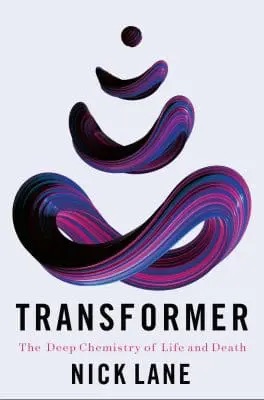
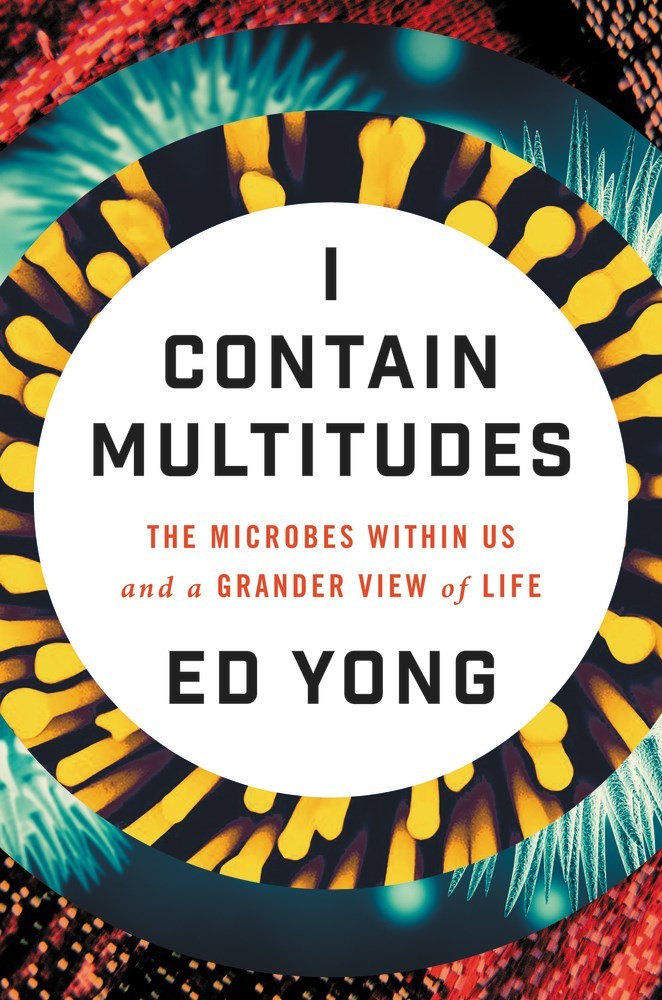
I’m a thematic reader, certain topics appeal to me. My tendency is to dive in when they fit into the puzzle that intrigues me, particularly the big one about life; what it means to be alive; what organisms share in terms of their biological function as well as what connects us…all of us, as a species and more broadly across species; the ecology of life, how we fit together, necessarily; how this life would not exist were we truly individuals, separate, isolated, independent organisms and how we delude ourselves when we insist otherwise. One book often leads me to the next. Sometimes several. So I read about quantum physics and how as we integrate that into biology, it transforms that science, adds an element of ‘magic’ to it. Neurobiology. Ecology. Evolution, The embryogenesis of that single egg cell into the the dividing undifferentiated blastula, to a mature organism with its multiplicity of differentiated cells, unique tissues and specialized organs. Metabolism. Gender and sexuality. Perception and consciousness, its complexity and variety. Relationship, function, communication, internal ‘signaling’ and ‘switching’. How concepts of sentience and beauty, language and art, the soul, all spring from the complex act of living…. Integral to it. How species and individuals all play roles, simultaneously in every level of ‘community’ in which they belong/participate, indispensable and irreplaceable, all related parts of an ongoing, evolving, process; one that we are so embedded in that we cannot possibly discern the value of anyone ‘member’s’ contribution, each an element in the larger dance, a ‘process’ which itself, is the point. As Shakespeare once wrote in, “As You Like It”:
All the world’s a stage,
And all the men and women merely players;
They have their exits and their entrances,
And one man in his time plays many parts….
We do not and cannot know the ending. There is none, or rather each ending marks a beginning, any guess that we might offer of an ultimate purpose, of a goal, remains unknowable, beyond the continuing unfolding of life…endless change.. Progress? It’s difficult to say as the earth system collapses and ‘reboots’ over time. The expression of the whole is observable only in moments, in its parts.
The aphorism, ‘it takes a village to raise a child’, begins to get at what it means to be alive, that we all depend on each other, connected, related through the dynamic processes of being, the flow of energy and its ‘in-forming’, the translation of matter and form. We are each a unique expression of this process. If we are ever to fulfill our potential, if we will ever be able to discern what that might be, we must recognize these connections. Our individuality is a selfish story we tell ourselves, one that fires our ambition to differentiate ourselves, to put ourselves ‘above’ others, to claim exceptionalism, and in so doing, lose the larger game playing out before us. As ‘individuals’ we are incomplete, hobbled in our larger social and ecological roles, we devalue ourselves when we fail, individuals rather than the ‘collectives’ that we are. We may act individually, even ‘freely’, but our actions will always be informed by both our past and the actions of all around us. We forever linked across time and space, directly by lines of dependency, recognized or not. We are inevitably part of something much larger than ourselves. We are bonded composites, never truly independent, as both individuals and a species, communities integrated into unique wholes. Even our consciousness is a product of this collective relationship. ‘Shaped’ by and shaping the conditions in which we live. The synapses in our brains, responding and working to shape the world around us and within. We are connected in countless unseen ways, essential and impactful never the less. Continue reading
The Lost Trees of Willow Avenue, a Review
Global climate change, in our current political climate, has been relegated to a
secondary status. There is so much ‘shit’ hitting the fan right now that it gets largely lost in mainstream media coverage. The science that supports it, continues, although at a slower rate. Our transition from fossil fuels to renewable energy has slowed along with the republican denials, their actions to ‘deBidenize’ America, cutting funds appropriated through the Inflation Reduction Act, ‘seed’ monies to fund needed infrastructure investment, along with their cuts to the funding of research into the supporting science and technologies. The topic has been rendered into one of ‘belief’ as if its consequences will have no real world effects, a simple argument of the uninformed, like ‘Ford beats Chevy’, pointless and personal. Author Mike Tidwell, an obvious long time ‘believer’ and lobbyist, has worked over the last 30 years to move the political dial toward climate action, amongst his neighbors, his home state of Maryland and Congress. Here, in his recent book, “The Lost Trees of Willow Avenue”, he tells his and his neighbor’s story, in his DC area neighborhood, of the real world impacts they’ve observed and are attempting to combat. Amongst his neighbors are Congressman Jamie Raskin, his friend, Ning, a college prof who has been working tirelessly on getting a novel carbon sequestration program up and running, a local state legislator who has been working to get massive scale wind generators built off shore and others working in smaller ways, dealing with the fall out of a climate already changing around them which, among other things, is causing crazy weather perturbations, changes in rainfall and temperature swings that are leading to things like a large increase in Lyme disease, because the milder winters are killing fewer of the disease carrying ticks, while also leading to the massive die off of mature trees across their neighborhood. Continue reading
Our Central Problem is Economic

Go to: https://www.federalreserve.gov/releases/z1/dataviz/dfa/distribute/chart/#range:2009.4,2024.4
to examine this interactive graph in more detail.
If you follow the pundits, social and mainstream media, the problem in America would seem be one of a splintered society, one fatally compromised by a mix of peoples that simply cannot be reconciled. The American ‘melting pot’ separated into battling bits, the ‘recipe’ that formerly held it together proven to be a ‘suspension’ of parts that never really belonged together and now, without, enough support, is failing…but is this true? If you go to a more primal, basic, level and ask what do people need, it always begins with survival and how when one’s survival, our security, feels in doubt, when we are confronted with overwhelming threats, fear begins to take us over. We become less nuanced and subject to manipulation, by slick talkers and those who would use us. Truth, becomes malleable as we struggle for something ‘real’, something ‘solid’. Continue reading
Holodiscus microphyllus, Rock Spiarea in Dry Canyon
Another less common slope dweller is Holodiscus microphyllus, or Bush Ocean Spray, a deceiving name, or Rock Spiarea, which is also somewhat confusing. Confusing because Spiarea is the genus name for an entirely different genera of shrubs. So I call it simply Holodiscus. ( Botanical names can be confounding to the uninitiated. I’m not a big user of mnemonics, but I still remember first learning this plant’s close relative, Holodiscus bicolor, and the phrase immediately came to mind, ‘Holy Discus, Batman!” I know, silly, but I doubt I will ever forget that plant.)
- The three darker shrubs, here are Holodiscus. There’s a Wax Current at the bottom of the pic still in flower just above it in light gray is some gray rabbit brush. more of each or scattered up slope. The tumbled boulders are part of the fragmenting canyon rim, originally deposited as a part of the Deschutes Formation around 5 million years ago, about 4.5 million years before the Deschutes River was redirected to its course here where it carved the canyon over a period of around 300,000 years.
- The leaves are very small and relatively thick, both of these traits are common among plants native to arid country, while many desert plants also retain their leaves, conserving nutrients and water. Like all deciduous plants Holodiscus must spend a lot of energy, and material reproducing leaves, before they can begin photosynthesis and replenish their starch/energy stores. Evergreens/evergrays are always ready to grow and take advantage of moisture and unseasonably warm temperatures at any time of the year.
- The Oregon Flora project has been compiling a descriptive list of all of the native plants in Oregon. Each red dot represents where a sample was collected from by botanists. Many of these samples are preserved in herbaria for research purposes. As with all such maps, these dots don’t mean that the plant will not be found someplace else. Botanists have not examined every square inch of the state.
- This will all pop open as little 5 petalled, ‘rose’, flowers.
- Holodiscus on the eastside slope early July, their buds expanding.
This typically occurs on the eastern flank of the Cascades and in the mountains of SE Oregon. The common name, ‘rock’, suggests its preferred sites. I’ve not seen one in Dry Canyon bottomland. It seems most common below the east rim north of the Maple Bridge. Continue reading
That Gray Stuff? It’s All Sagebrush…Nope
Part of the Dry Canyon plant series
Everybody knows Juniper and I suspect that a lot of people who think they know Sagebrush, that ubiquitous gray shrub you see everywhere, may be confusing it with other plants, blurring all ‘gray’ shrubs into one. Now this may not seem to be a big deal, but if you are trying to manage a landscape with these in them or trying to create a landscape which reflects the local plant communities, then it becomes much more important that you know what you have so that you can evaluate your landscape’s condition and decide upon what you may need to do, or stop doing, to meet your goals. Continue reading
The Cut Leaf Thelypody in Dry Canyon
[Plants of the Dry Canyon Natural Area – This will be the start of a new series focused on the plants of Redmond’s Dry Canyon. I’m creating them to be posted for ‘local’ consumption on the Friends of North Dry Canyon Natural Area. It’s a City Park including about 166 acres at the north end of Dry Canyon Park which the City has identified as a Natural Preserve. The group works as an advocate with the City, on public education and helping with on the ground work projects. I’ll identify each such post here.]
- This years new growth emerging with last year’s inflorescence dried and nearby
- Flowering in early stages. Later the terminal continues to extend and the seed pods develop below.
- An inflorescence displaying its almost ‘orchid’ like flowers
- A map showing locations from which formal collections were taken as part of the Oregon Flora project
The Serviceberry: Abundance and Reciprocity in the Natural World, A Review
Robin Wall Kimmerer is a botanist, ecologist, a teacher and a member of the Potawatomi people of the Great Lakes region, from whom she learned her people’s particular world view, one once common amongst many indigenous peoples and in stark contrast to that of our present day dominant culture, which has lead us to powerfully shape our our world today. Her three popular books, “Gathering Moss”, “Braiding Sweetgrass” and her latest, “The Serviceberry”, present to the reader a glimpse into the natural world as seen from this ‘alternative’ world view. All three are enlightening reads and not overly technical. They are ‘invitations’ to see the world from a different perspective. The latest is the smallest, a book barely over 100 pages, with large type and in a small page format…a quick read, unless you pause to give what she presents some additional thought. The best, and the one I read first, is “Braiding Sweetgrass”. Continue reading
What to Do? What to Do? On the Meaning of One’s Life

High in the Warner Mountains, Mountain Mahogany edging the near rim, looking across to Hart Mountain.
I spend a lot of time these days thinking about the meaning of life, understanding that the purpose of one’s life, is not a singular question, but one of the whole of it. Far too much time is spent with the concerns of one’s individual life; one’s accumulation of wealth, power, accolades, stuff….We are social animals, members of interwoven human groups, but are far more than that. Each of us are an integral part of ALL of the life around us. At the core of the question is who we are and what we ‘should’ do. Given all of the failures and goings on that bombard us today, all of the ‘takers’, abusers of power, the automatic almost banal destruction of the life around us, the losses accumulate and easily overwhelm us. Our’s today is a world of shrinking possibility. Calamity and catastrophes confront us from every direction. What is one to do? Continue reading