
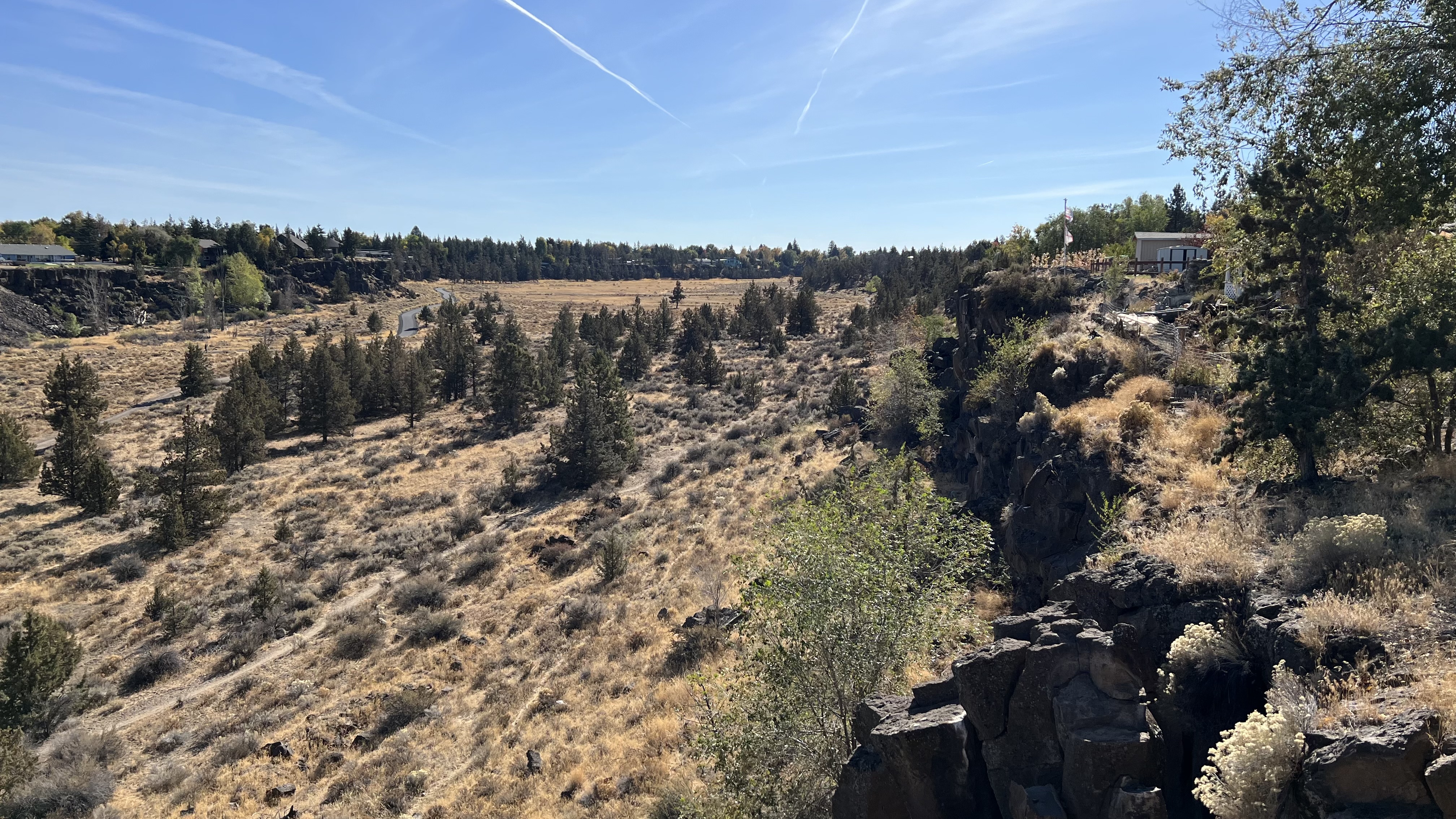
Redmond’s Dry Canyon looking south from the west rim on the Maple Street Bridge. The area in the immediate foreground burned this last summer.
If you garden, or maintain a landscape, you come to understand that not all weeds are the same. Each will have its own ‘strengths’, or perhaps you might call it ‘virulence’. Any particular weed, just like any other plant, will respond ‘positively’ to supportive growing conditions, conditions which often closely align with those which exist in its place of origin. Plant explorers and nursery growers are always looking for ‘new’ plants for landscape use. in a way, they have to walk a fine line. They must find plants, that with reasonable effort on the part of the gardener, can thrive across a range of conditions, unless they are looking for specialty plants, for narrow, niche, markets. The introduction of new plants must be somewhat measured, our enthusiasm tempered, because plants which are too adaptable, too vigorous, may possess the ability to escape our cultured gardens and find a place in the surrounding, uncultivated, landscape.
For Central Oregon, when we look beyond our regional natives, we must keep this in mind. Exotics from similar growing and climatic regions around the world offer both promise and threat. We want our plants to be successful, but not too. Sometimes through the process of trade, the movement of livestock and agricultural products, particularly aggressive species hitch a ride. A few weed seeds can be easy to miss. If they are aggressive enough and go unnoticed, a distinct possibility, it is likely that they wont be detected until a sizable local population asserts itself…and if no one is watching, that can be a fateful error. One group of plants, with many wonderful possibilities, also include species which can be exceedingly problematic here in Central Oregon, these are from regions sometimes referred to as Steppe.
Defining ‘Steppe’
There are several regions around the world. Each support a range of related communities comprised of different species which have evolved with similar traits to meet conditions very similar to those here in Central Oregon. One of our communities is identified as ‘Sagebrush Steppe’. All Steppe regions have an arid to semi-arid climate, they are dry. Our local community is dominated by several Sagebrush species, Western Juniper and a varying cast of supporting species including Bitterbrush and at least two Rabbitbrush species. These shared conditions have shaped their respective plant communities and while species may be adaptable, capable of finding ‘fit’, those from one Steppe region don’t directly fulfill a ‘role’ in another community. Given the opportunity, however, they may find a new place and role and, in the process, disrupt or block the historic relationships between the members of the former community. So, what conditions prevail across ours and other Steppe regions?

The canyon floor is variable, but as this pic shows, a solid layer of hardened lava underlies what soil is here, either blown in or washed in, a limiting factor on what can grow here. Rabbitbrush has moved in. Lava flowed multiple times from the Newberry volcano to the south, off and on over the last 400,000 years, first diverting the Deschutes to here where it carved the canyon out; then another flow which diverted the river again to its present canyon 4 miles west of here and then again, partially refilling the canyon here less than a 100,000 years ago.
By most any measure we are dry. We share with the other ‘Steppe’ regions of the world the common thread of having a strong ‘continental’ influence. Ours is a region whose climate is dominated by the large land mass of central and northern Canada, far from oceans and seas. While the Pacific Ocean lies relatively nearby, our ‘link’ to the land locked, cool-temperate and polar regions to our north, which powerfully shape our weather, is unimpeded. Steppe regions are subject to wide daily temperature fluctuations, low humidity and low precipitation. We are ‘screened’ by the Cascades from the Pacific. The mountains wring much of the moisture out of our air as winds carry it westerly from the coastline, reducing the maritime influence, which so powerfully shapes the climate west of the mountains. We lie within a pronounced ‘rain shadow’. The Columbia Basin, in which we reside, between the Cascades and Rockies, two significant ranges which run north-south, acts as a conduit for dry air from interior Canada, delivering cool to cold dry winters. What precipitation we get are the Pacific leftovers. The dry, continental, Canadian air has little to offer precipitation wise. Our daily temperatures, without the moderating maritime influence, can vary widely. Historically, freezes have occurred on everyday of the year here, including summer. Redmond’s record latest spring freeze is June 30. Our earliest freezing date was recorded on July 1. This does not make us immune from heat. We continue to set ‘new’ record local high temperatures along with the rest of the planet. Our consistently low humidity levels result in conditions which draw heavily on plants in terms of their evapotranspiration rates, wilting and desiccating plants throughout the year. We average 8” to 10″ of precipitation each year, most of it, other than that received by sporadic summer thundershowers, comes over the winter like the more western portions of the mediterranean Pacific Northwest. The dividing Cascades, and our elevation, 3,000′, make all of the difference.
Our native flora reflects this as do our soils which tend to have lower organic content, which translates into lower nutrient levels and reduced water holding capacity, in large part due to the more narrowly limited plant palette and the density of plant of plant communities. Communities tend to be simpler with wider spacing. Leaves are smaller and woody plants tend to retain them longer than on plants from wetter regions. (Those for which this doesn’t apply tend to go through their annual growth/flowering cycles quickly, often finishing in early or mid-summer as water availability becomes critical. Either that or they are located along streams and water bodies.) Combine this with a shorter growing season and there is less annual growth overall and so less material is shed, adding less to soils. To grow plants from regions that ‘require’ richer and moister growing conditions, maintenance must compensate for the shortfall, competition removed or reduced and fertility supported through the use of fertilizers. Successful weeds here possess the ability to thrive here sans such luxuries.
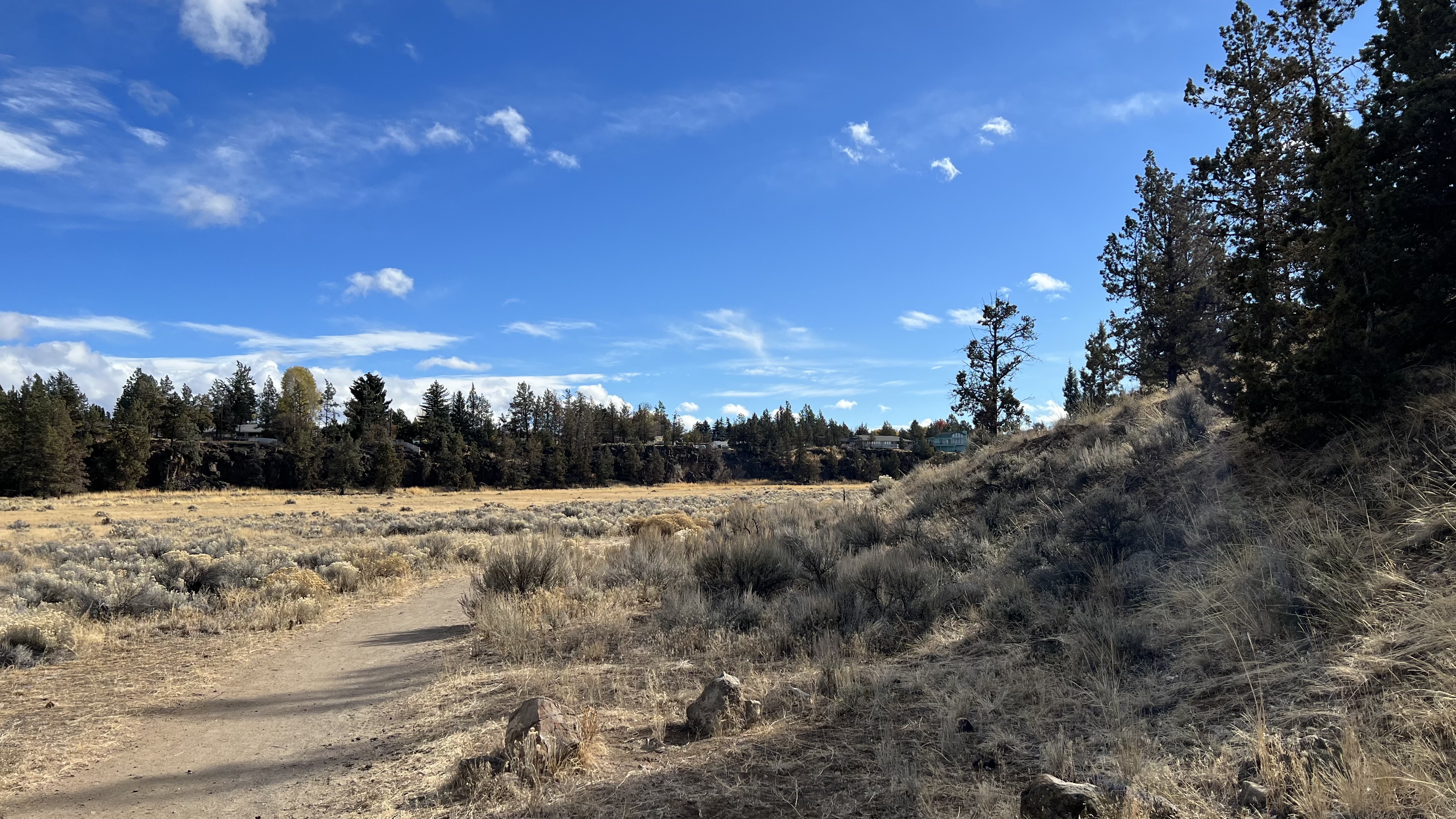
Match of the canyon floor is recovering from pasture use. These areas have relatively deep soils and are still transitioning with many weedy mustards, annual grasses like Cheat and planted grasses like Crested Wheat and Annual Barley. Native Bluebunch Wheat is scattered as are other natives. Gray Rabbitbrush, a native seral species has moved into much of it, but the weeds are dominant. Sagebrush and Bitterbrush are more at the edges and lower rim areas.
Steppe regions, like the other botanical regions of the world, have ‘selected’ their floras over the last several thousands of years, since the recession of the ice shield of the last glacial period. Local regional plant communities are comprised of plants which can succeed under these conditions. Plants from the several Steppe regions are not, however, equivalent to each of our species. Each will have competitive advantages and disadvantages which can prove to be incredibly disruptive or not. The Russian Steppe (including parts of eastern Europe and Central Asia), is such a case. The term ‘steppe’ is ascribed to similar semi-arid and arid, temperate regions around the world, among them our own Intermountain West, which includes the Great Basin (sometimes called the Sagebrush Ocean) and a portion of the western prairie adjacent to the Front Range of the Rockies on north into Wyoming and Montana. In the southern hemisphere there are those in Argentina (Patagonia) and the short grass and shrub areas of South Africa, known there as Veld.
An Introduction to the Knapweeds
There are four species of Knapweed commonly found in central and eastern Oregon which have found their way here from the Russian Steppe, any of which can dominate our local landscapes. These include Spotted Knapweed, Centaurea maculosa (syn. C. stoebe), Diffuse Knapweed, Centaurea diffusa, Russian Knapweed Centaurea repens, and Yellow Starthistle, Centaurea solstitialis. (The genus also includes Bachelor’s Button, Centaurea cyanus, which so far has not become the problem these have being more of a ditch weed). Russian Thistle, Salsola tragus, our ubiquitous ‘Tumbleweed’, sadly now iconic and emblematic of the ‘Old West’, is another Russian Steppe transplant. The all too familiar and dominating Cheatgrass, Bromus tectorum, the most widespread and destructive of the Steppe weeds, is another escapee/invader from the Russian Steppe. Once in a landscape these effectively work toward creating and maintaining conditions that ‘prefer’ them hastening the decline of native flora and with that, native fauna upon which many species depend. Some can absolutely dominate our regional landscape often crowding out everything else while contributing little in terms of either wildlife value or for grazing livestock. Ignoring them will only assure their march to increase and dominance. Again these are not native. Many are extremely disruptive of even intact native plant communities.
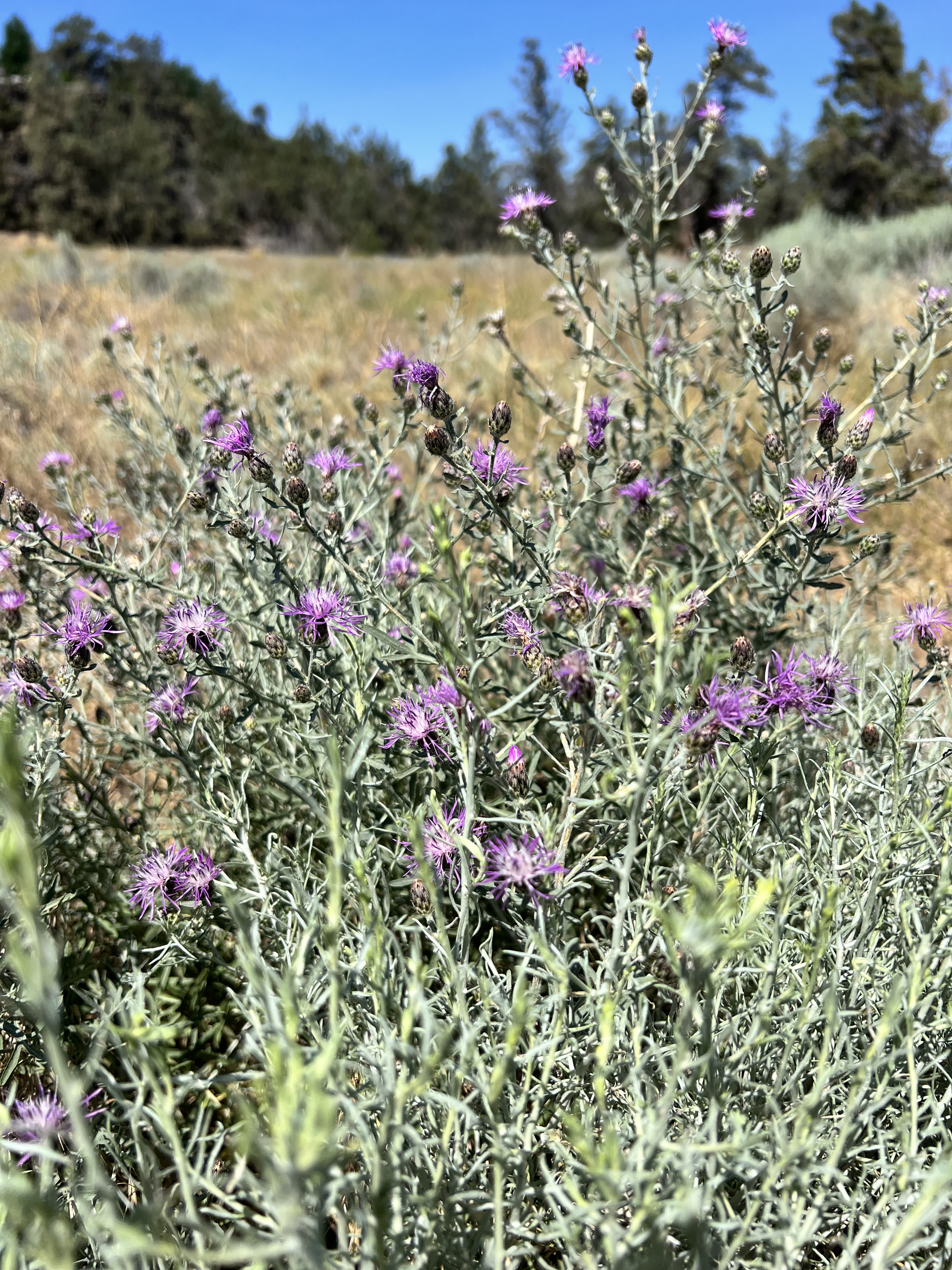
This Diffuse Knapweed was just north of the Maple Street Bridge…and no longer exists.
Landscapes such as Redmond’s Dry Canyon have been described by some with the vague term, ‘natural’, but make no mistake, this area is far from being an intact, healthy, native plant community. It is unstable, under the sway of many stresses and very vulnerable. The presence of Western Juniper, Big Sagebrush, Gray and Green Rabbitbrush, Bitterbrush, scattered patches and strips of native grasses and a few native wildflowers, does not make a viable native plant community. Especially when uncontrolled Steppe invasives are establishing. Intact native communities are somewhat resistant to invasion, but not invasive-proof, and those like Cheatgrass, the Knapweeds and others like Puncture Vine, Tribulus terrestris, are fully capable of invading intact communities here, hence their designation as ‘invasive’, a class, if you will, of supremely well adapted and aggressive weeds. Dry Canyon served as pasture which was grazed for decades prior to its service as a Park now with its pedestrian and bicycle corridors, amplifying and serving as conduits for weed movement. Paths penetrate the area, each bordered by the disturbed conditions in which these invasive thrive, aiding their spread along their length. Grazing, irrigation, the seeding of non-native pasture grasses and fire have aided and abetted the invasion setting the stage for today. Leaving such a landscape ‘alone’, ‘natural’, will not ‘allow’ it to return to its former state. It exists in a continuous state of disturbance. For progress to be made this disturbance must be countered with consistent, corrective action.
I’ve found a handful of sites within the Canyon, north of Highland, with Knapweed growing and flowering. Several are north of the Maple Bridge and are small. I pulled and cut them. I’ve pulled others at the top of the stairs adjacent to the Bridge at Hathaway Park. A few others are doing similarly. There are many acres to monitor. There is a much larger and more established population of Spotted and Diffuse Knapweed adjacent to the paved path, west of the Playground in Sam Johnson Park and next to the Pickleball courts. Outliers exist around these central contamination points. Here it grows so dense that only the occasional Common Mullein, Verbascum thapsus, can compete. (Mullein is itself another invader tolerated and even promoted by some. It’s another Eurasian escapee and competes with natives for space, water and nutrients here.)
First year rosettes cover much of the ground below the flowering plants which tend to be biennial or short lived perennials. They are very heavy seed producers. The previous year’s top growth adds its dead bulk to the mess. Because seed remains viable for seven years or so this site will require regular monitoring and control to eliminate it.
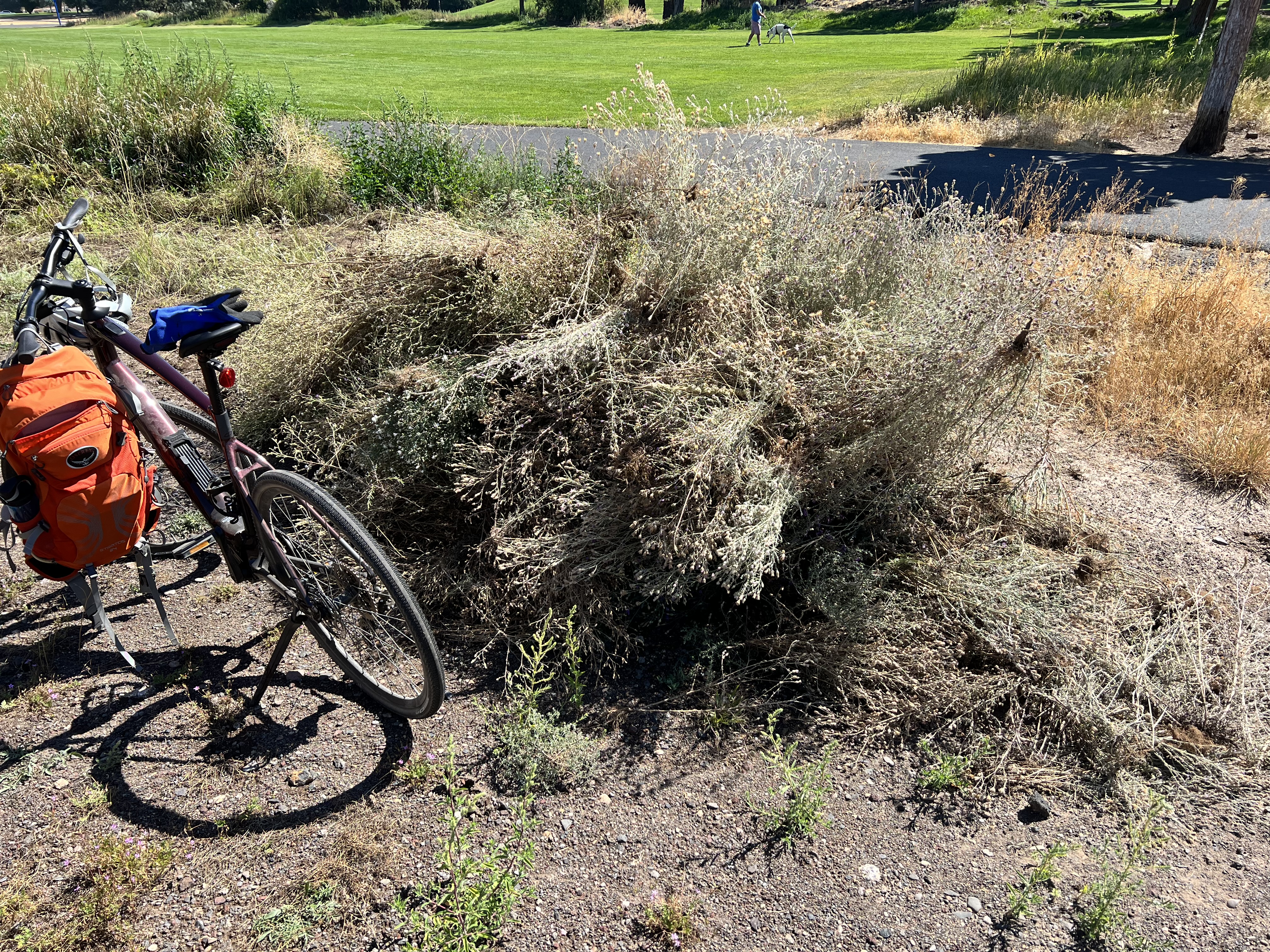
One of the piles I pulled, which then sat here for weeks.
It is important to note here that this particular Knapweed site is extremely disturbed. It appears to be an old graveled road bed or may be the product of trenching and utilities construction, filled with gravel. Such heavily disturbed sites are common in the Canyon often associated with the City’s sewer construction, below the Maple Bridge and adjacent to the ramps and stairs at Canyon access points. All of these support various weed populations different from the immediate surrounding area, generally with nothing native at all in the mix. They don’t require scrutiny to observe. They are readily visible. Local invasions and populations like these are usually attributable to soil differences and/or regular maintenance/disturbance.
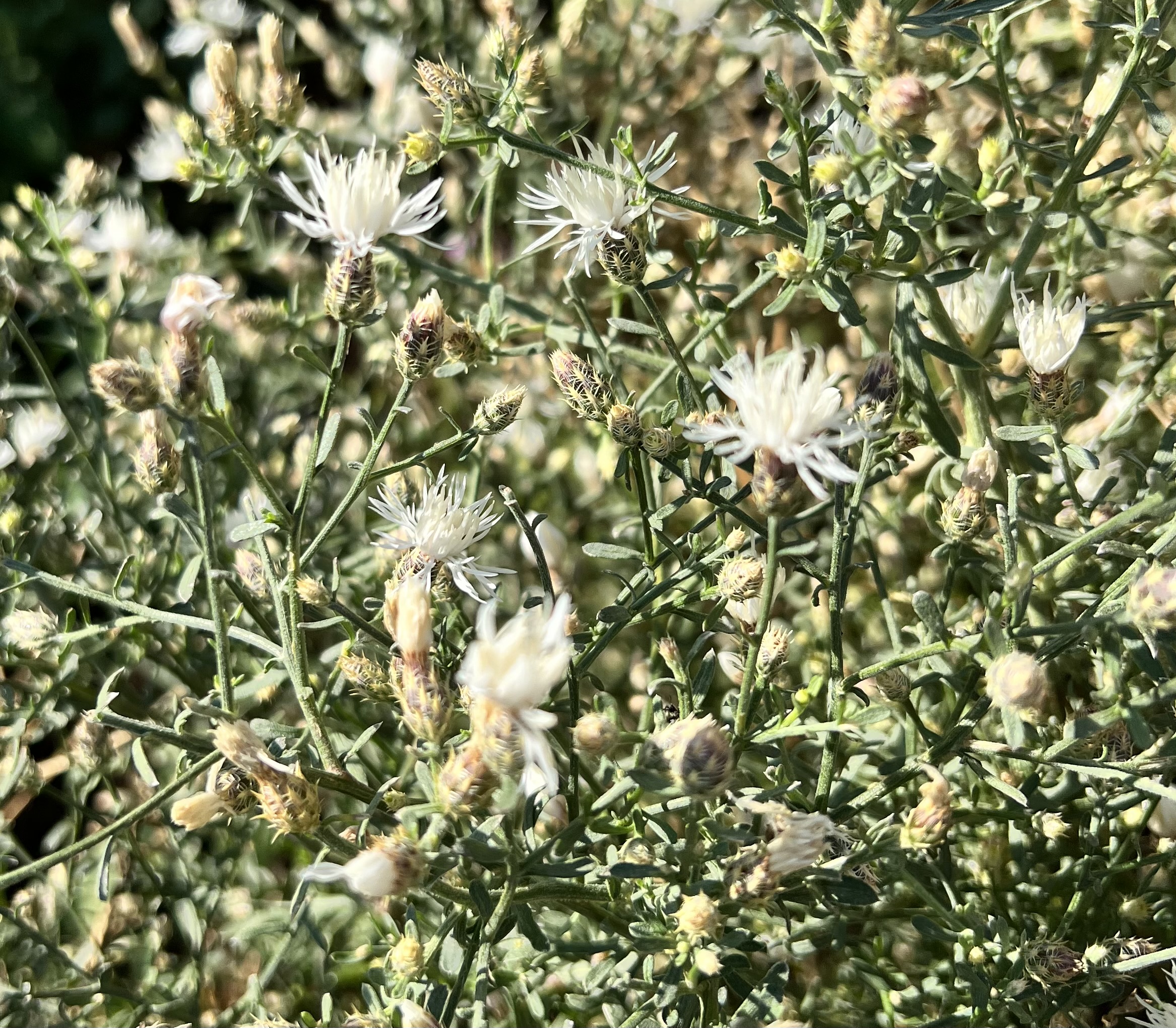
Diffuse Knapweed, Centaurea diffusa
Leaving a site this way assures that native species are far less likely to ever establish and form some kind of stable, dynamic, community. Such areas will always be occupied by the most ‘aggressive’ spreaders, those weeds most tolerant of the conditions. Pulling and spraying until the soil seed-bank is exhausted alone, won’t be successful, although it is a necessary tactic. (Living in any landscape requires that we take on an active and ongoing role. Much of our problem derives from our actual denial of such a role and responsibility. The greater the disturbance the greater the responsibility to act. See my post, “On Weeds, Disruption and the Breaking of Native Plant Communities: Toward a More Informed Working Definition of Weeds”.) The soil conditions need to be assessed and corrections made where needed…then, appropriate natives reintroduced while monitoring continues. It would be good to eliminate the irrigation overspray from the turf area across the paved path, from the Knapweed ‘hotspot’, as the additional water over the summer growing season, will favor weed growth. Such supplemental water, while it may help establish natives, will benefit non-native weeds in the long run, as natives simply don’t require it and may actually be compromised by its ‘availability’ over the longer term.
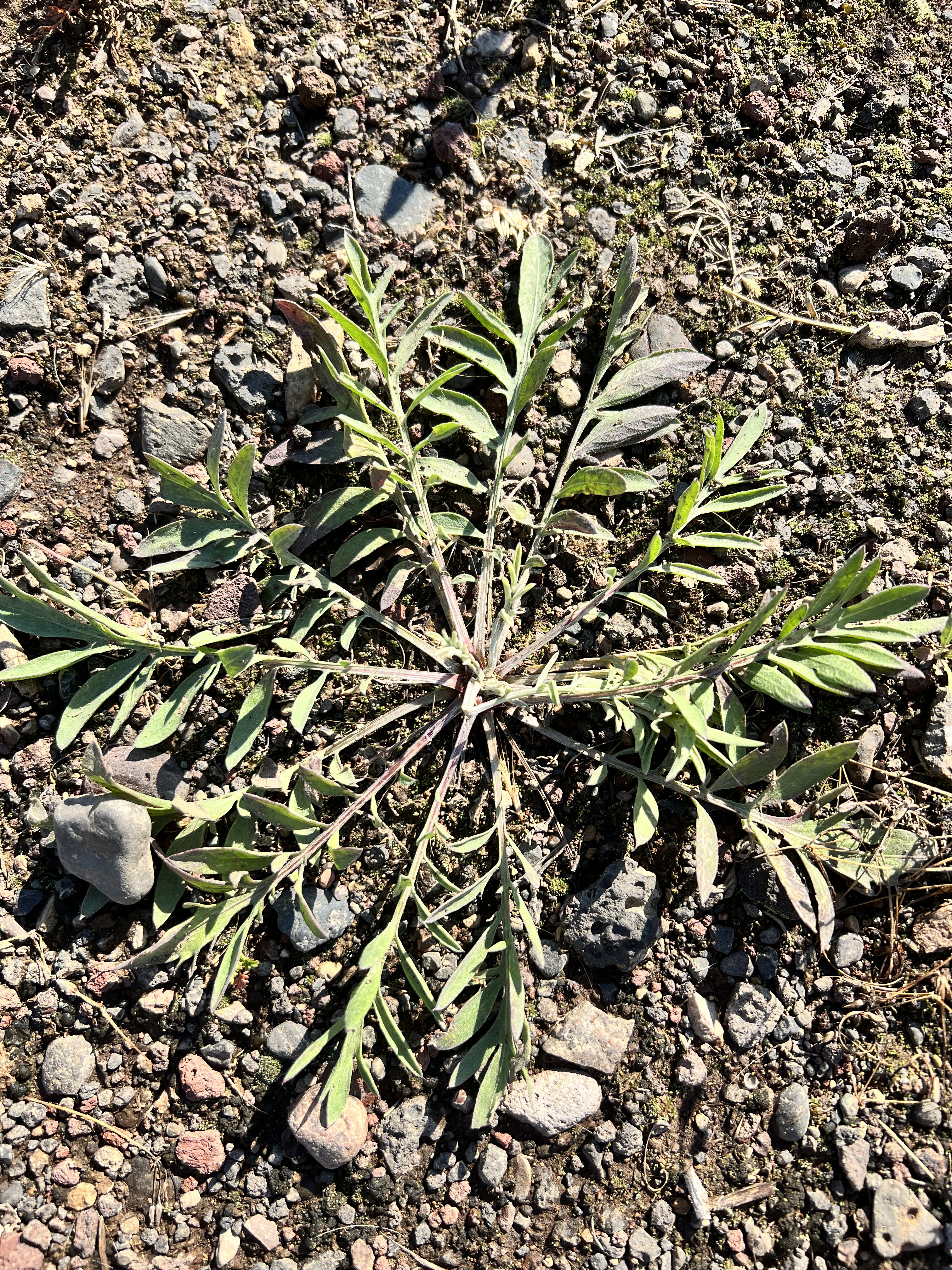
Knapweeds are all biennials. This is a first year rosette.
Knapweed, as well as other biennial and annual weeds, are dependent upon their production of seed. Fortunate for them, but not so for us, these are prodigious seed producers. Such a trait is characteristic of many aggressive and successful weeds. Perennial weeds have other vegetative structures by which they increase, ie., roots, rhizomes, stolons, storage tissues like bulbs, as well as sometimes possessing the capacity to sucker and root from stem and branch tissues. Of the Knapweeds only Russian, Centaurea repens, can do this. The other three local species can only increase by seeds. Stop the production of seed, and reinfection from off property seed sources, and the problem will become far more manageable.
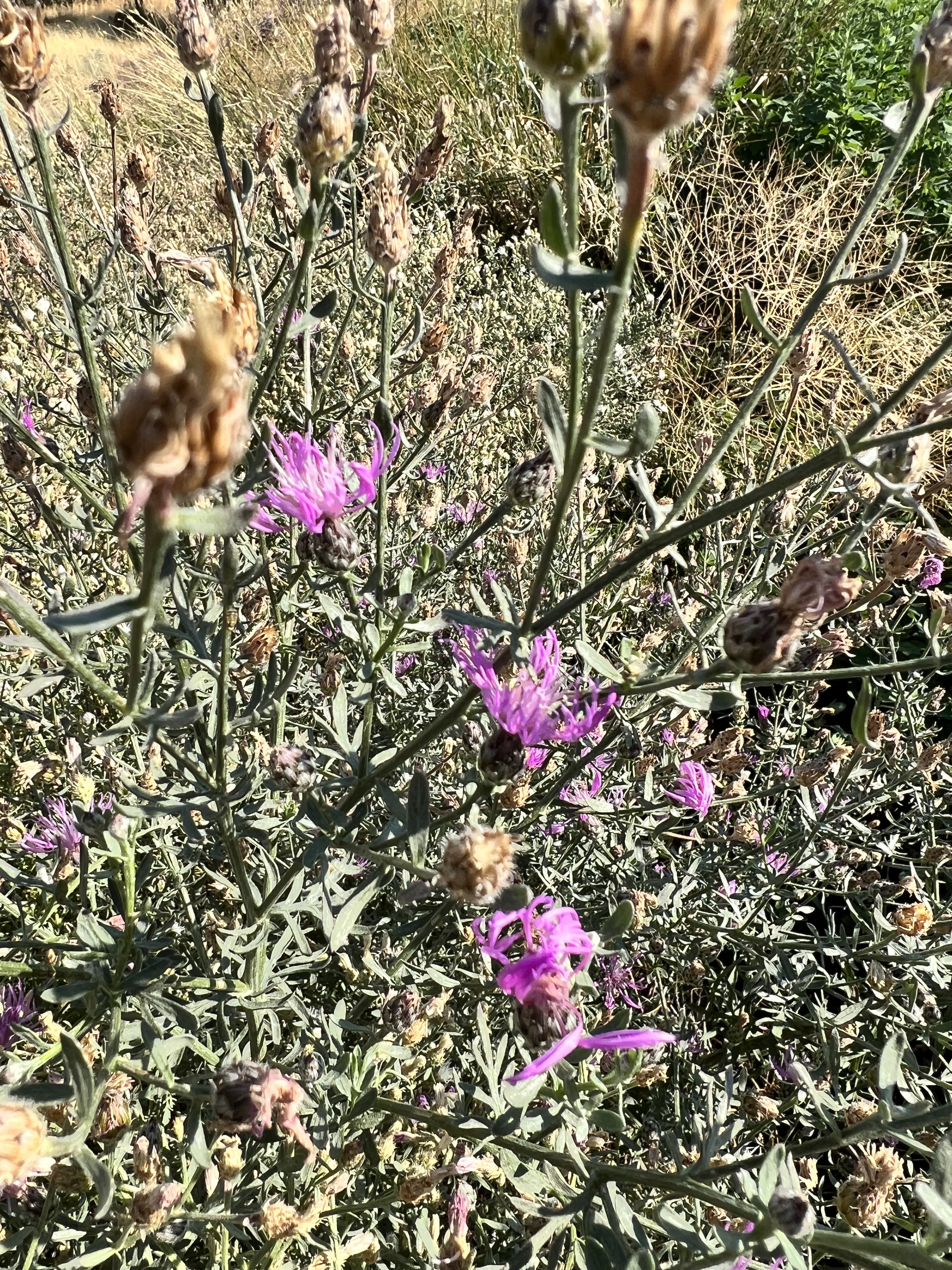
Spotted Knapweed, Centaurea stoebe (Syn. C. maculosa)
Other populations, on other properties, will be in the position to reinfect Dry Canyon or any other landscape that is left unmonitored. Monitoring will stay a necessary part of the ‘job’. Private property owners are generally slow to respond to weed threats. They don’t see the problem and have other priorities. Their properties can serve as centers of reinfection. The collective ‘we’ have brought weeds here with us and created the conditions in which they thrive while regularly maintaining the conditions they require through our maintenance practices keeping the land in a chronic state of disturbance…so we bear responsibility for managing them now and into the future. When our landscape is healthy and beautiful, we benefit, and we suffer when it is not, whether we understand this or not. We must do the work. If not us, who?
Dry Canyon cuts across nearly the entire City north to south. Unmanaged it can serve as a source of ‘infection’ for the entire area, a place where the weeds have found a refuge and may travel more or less freely, unless they are controlled. Anyone trying to responsibly maintain their own property will find themselves under continuous assault when adjacent and nearby properties are infected and uncontrolled. It is another one of those instances where one person’s ‘freedom’ to do, or not do, something can heavily impact others. For the City to do this is inexcusable.
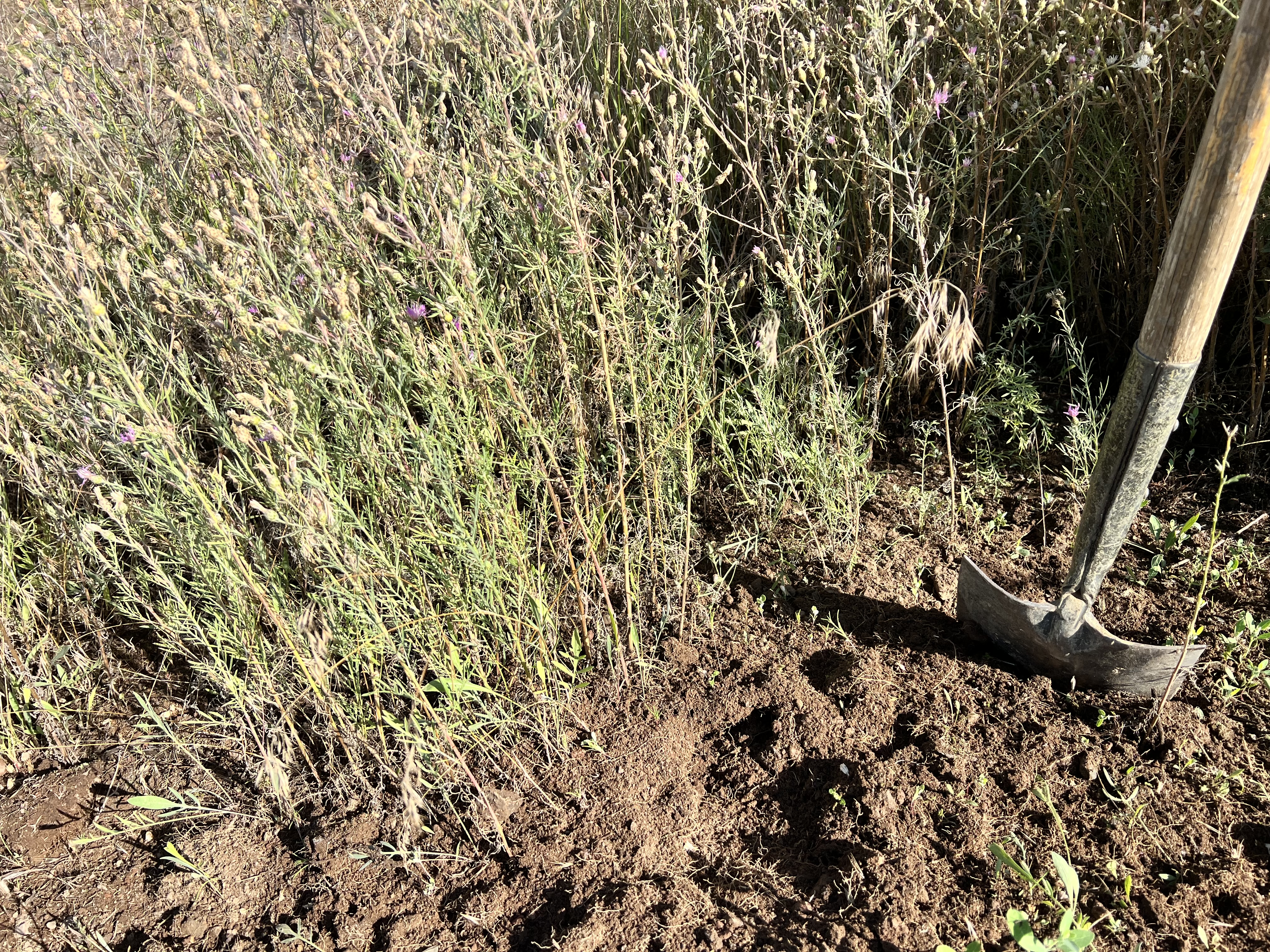
Diffuse Knapweed having seeded in heavily is growing here so densely nothing else can grow.
Because the Knapweeds are not widely established in the Canyon today, it can be managed relatively easily…its eradication, probably not. Waiting will make the same task much more difficult as sites within the Canyon increase, grow in size and more thoroughly contaminate the soil seedbank. Needless to say it will be far more expensive if we wait until later. I suspect, like most municipalities, Redmond’s financial resources are limited, which makes it all the more important to address it now before the severity of the problem expands to anything approaching the Cheatgrass problem.
What needs to be done?
Current maintenance practice in the Canyon, and other Parks, indicates a casualness or lack of urgency regarding weed control. Responsibility lies with all of us. If Redmond is to make progress on this some experienced, directed and motivated horticultural personnel are needed on staff. This is not a problem that can be solved with ‘bodies’ alone. Having experience with ‘community service’, prisoner crews, corporate volunteer groups, I know that success is consistent with these crew’s understanding and their dedication to the problem. In general such groups make poor weeders ‘seeing’ only the grossest problems. (A lack of training, experience and motivation leads to some ‘collateral’ damage. Desirable plants will be mistaken by some for the problem weeds. People just won’t see the difference.) Thoroughness is directly connected to success. Missed plants can literally result in thousands of weed seedlings. You cannot ‘force’ or simply demand quality work. You need people who know what they are doing and care if you are to be effective. This requires that the organization understands the importance of the problem and the value of Dry Canyon within the larger regional landscape and to residents. Only then, when the work is prioritized will progress be made.
The City needs to put together a management program that explicitly states this as a priority (I understand that work is underway on such a plan). Care of its more conventionally designed and utilized Parks currently show weed control to be misunderstood and of a relatively low priority, even in what appears to be its ‘signature’, Centennial Park, where weeds are often, unfortunately, left standing and going to seed.
Goals need to be set. The problems identified and a plan implemented. Weeds are different. They will likely require varying control strategies. Sites are different. Public use varies. All of these will combine in such a way that will require a variety of control measures…and regular monitoring by those who know the weeds and the sites. Large complex sites will likely need to be broken down into more manageable sectors where different weeds may be prioritized. Because of the dynamics involved and the scale, especially of large Parks like Dry Canyon, monitoring will need to be regular and consistent over the growing season. On smaller, more conventionally designed Parks, problems are simpler to identify and act upon. Dry Canyon because of its size, its varied soil conditions and communities, its fire history, its uses, including its formal and informal paths which serve as weed corridors, its long borders shared with many property owners, effective management becomes far more complex. One’s response to this needs to reflect that. With living plants time will always be an issue. Plants lives are seasonal and each is on its own timetable, not ours. Do what you can do and do so in a timely manner. What is the most effective use of your resources? It is extremely important to stop doing those things which don’t advance that goal or may even be counterproductive. Understand that despite our best intentions, our limited awareness pretty much assures that we won’t be in synch with the plants and their problems. What once ‘worked’ won’t anymore. Perhaps it never did. Stubbornness and pride won’t get you there. Very often, when work follows annual schedules, when work is done because, ‘We’ve always done it that way’, we compound the problem. Flexibility and commitment are both required in an adaptive management program like this.
Additionally, it is important to understand that the problems we face today, may seem the same as they were a few years ago, calling for a like response, but Redmond’s population has exploded in very recent years putting pressures on available resources that did not exist before while simultaneously greatly increasing demands for Park services. Active recreation is one thing. Sports fields are in short supply, but so are our needs for less ‘structured’ outdoor experiences, interactions with nature locally, as the area within the City itself, due to development, has less and less ‘nature’ to offer residents. This is doubly the case regarding regional landscapes, those places so many travel to for recreation, are coming under greatly increasing pressure by more and more visitors. I lived and played here throughout Central Oregon, 50-60 years ago, and almost every place one can go today sees far more regular use today, often use that pushes them beyond their capacity to recover. Others, are under so much pressure, that managers are now limiting use through fee and permit systems which leave few people happy. All of these areas are in decline suffering from the unrelenting pressures of users seeking escape. Today our cities and communities are places to be escaped in order to find relief….Shouldn’t we at least try to turn this around? As Redmond and area cities continue to grow how else can we preserve those places of value? Shouldn’t we work to protect and improve what we have here? We don’t need just open spaces, we need functioning examples of nature in which we can participate, in a positive manner, to develop healthy relationships.
Since Dry Canyon was developed as a Park, its amenities added, new more formal access points created and a trail system added, visitation and the consequent pressures that brings have exploded. Arid landscapes evolved without this. The growing conditions do not allow quick recovery. Damage has a very small window in which it may ‘heal’. Consequently, damage can accumulate and escalate, especially when users take no active role in maintaining the health of the place. Without some kind of limitation on activities and/or the widespread adoption of a more responsible role in the care and health of the Canyon, or any public place, decline becomes inevitable.
Organizing the public is an essential element in solving Dry Canyon’s problems. No City has all of the resources it ‘needs’ to fully address these problems, without significant public participation, especially in light of the fact that much maintenance is driven by the pressures and damages produced by the public through its use, over use and abuse. Our paying of taxes to support Parks is insufficient and paying them does not give residents/tax payers permission to do whatever they may want (In my years working in Parks elsewhere I more than a few times was confronted by a user angrily claiming that they paid taxes and they could do whatever they ‘F’ing wanted!) Responsible use has to be part of the equation.
On the Necessity of Friends Groups and Individual Responsibility
’Friends’ programs have an important role here. They can be important partners in public education as well as in monitoring and maintenance of Parks. For them to be successful requires City support, clear direction and messaging so that all parties understand their roles and the priorities. Nothing can kill such a program faster than when people are working at cross purposes or the City fails to follow through on promises. It is essential that all City staff and managers are on the same page. To address this Parks needs both an internal and public education and outreach program.
It needs to be understood that Parks are here for us all to enjoy and that enjoyment is incumbent on users understanding that they too have a responsibility, a role to play in their ongoing care and protection. The spread of many weeds is related to the kind of use a landscape is put to and how respectful users are of its limits. Use will always be important. The ubiquitous Tumbleweed, sadly emblematic of the West, is a very visible example of this as it is associated with heavy, chronic, disruption. In the Canyon this is readily observable as Tumbleweeds are common growing on the most disturbed sites and strips such as along path edges associated with bicycle riding, and uncontrolled ‘desire paths’. User ignorance can lead to a lot of damage.
Doing this will require more than just the paper exercise of setting priorities and creating master plans with vision statements, having them printed and celebrated. This is a necessary step, but it will mean nothing if it isn’t translated into functional documents, understood and implemented into the day to day work of staff and volunteers while being respected by residents and users. It will require the same commitment and persistence that the weeds exhibit in their efforts to spread and survive.
There are organizations and individuals working in conservation efforts on these kinds of landscapes today. They should be sought out and key lead staff brought in that can help train and ‘bring Parks staff up to speed’. Knowledge is imperative. We all need to have an understanding of both appropriate and good conservation and horticultural practice. What are the goals? How can they best be reached? How can we get our people there? We must be invested in learning and improving our practice.
We start by doing what’s within our reach, committing to an attainable goal and move on through a process of monitoring, prioritizing, well timed actions and review. This is a process sometimes termed ‘adaptive management’. (See my post on adaptive management from a few years ago.) It requires that we keep an ‘eye’ on the larger goal/vision. Participants need to be unafraid to acknowledge mistakes, redefine the goal, strategy and tactics to reach it…This isn’t printed in some proven and tried, available manual. This will require the freedom to adapt on the go always keeping in mind the long term goal of the ‘health’ of the landscape. Progress can’t be understood without documentation and documentation will be necessary going into the future if ‘success’ is to continue. Institutional knowledge is easily lost as staff retire or move on. Success requires that we are collectively in the position of stewards, responsive to the needs and demands of the place. It will require that we redefine what we support and permit in terms of public activity on a site. Politics cannot trump the needs and demands of the land without hugely increasing either the damage done or the costs incurred by allowing the practice to continue. Nothing is ever as simple as we might like it to be. Business as usual does not suffice.
Insurance companies and public health agencies learned several decades ago that it is far more cost effective to promote preventative medicine and the health of the client/patient than it is to ignore health and treat disease after it reaches a serious stage. The same is true for a landscape. It is also interesting to note that when a patient is sufficiently unhealthy, when they persist in damaging behaviors, health insurance companies work to get them off their roles. A healthy landscape will always cost us less to care for because its natural processes and cycles tend to be self reinforcing, rather like a rolling bicycle. Centrifugal force tends to keep it in balance.
On the Health of Organisms and Living Communities
The energies within a healthy functioning system work to sustain the system/organism. Organisms, the collective landscapes and communities they form, tend to act similarly. Life has persisted and evolved here for millions of years, long before our arrival as a species and our intervention as tool makers and disruptors. Many species, in some cases entire genera and families, have gone extinct for various reasons. (Paleontologists have found fossil evidence that even entire Phyla with body unique architectures and functions, unrelated to any alive today, once existed hundreds of millions of years ago.) To our own limited knowledge we stand alone…no single species has lead directly to the extinction of so many other species all by itself due to the disruptions we have caused. Usually such ‘imbalances’ are ‘corrected’ along the way. We truly are unique.
We need to understand something of our own collective power and of the fragility of life. Life pushed continuously to its margins does not result in stronger better species. It very often ends in death and, when widespread enough, extinction. Health supports future health. Of course we all ‘wear out’ and age, winding down in relatively few years. This is natural and part of the process. The living die and are returned to the soil or sea to support the next generations. It is, after all, more important that the ‘system’ persist and succeed than that a particular individual does. Our prioritizing of the individual is selfish, childish, and quite often, destructive of the whole. Compromised, diseased organisms/landscapes are less capable of fending off more disease. We can compromise the overall health of the larger system through our collective behaviors. What an individual does may have little impact, but we are an increasingly large, social, population, which shares behaviors, sadly, many of them destructive. It is quite simple to exceed the ability of a landscape to recover as our numbers increase. Disease serves the natural system empowering its capacity to limit growth. Our landscape systems are today often pushed far outside of their ‘natural’ parameters, compromising their collective health. As a tool making, problem solving, ‘rational’ species, we are capable of taking corrective action…or not. When we ignore the overall health of any landscape, how well it functions, its cycling of energy and resources within itself, by continually disturbing/degrading it, the landscape becomes ever more unstable and expensive to maintain. How long we can keep the landscape functioning under such circumstances is an unknown. Ignoring the need for a change of use and corrective action, will only assure collapse.
Nature operates within a system of reciprocity or balance. Birth and death are companion pieces. Every species of a healthy living community has a role and is ‘rewarded’ for its contribution by its species and family line and it is generally allowed to continue. This is not true when other species move the system out of balance. There is always a debt to be paid. Take too much and the system, and its capacity to meet demands, is reduced with it. It loses capacity and elasticity. One of the results of this is a ‘correction’, which biologically means a population collapse of the species no longer supportable by the compromised system.
Living systems, landscapes do no respond in a direct linear fashion. A healthy landscape has a certain amount of redundancy and resilience so our taking or using will seem to have little effect. This is true for any individual organism as well. These possess a kind of ‘momentum’, a tendency to operate within limits, the various systems and subsystems reinforcing one another, life supporting life…until it can’t. Once they are pushed beyond their healthy limits, there can be a cascading of problems. At that point regaining health, or integrity, will be no simple matter. Think of it as you might an aging person, we can tolerate only so much. The cause of death of many elderly people, is often multiple organ failure, many ‘systems’ failing at once. They are no longer capable of supporting one another. Individuals of a species are necessary and expendable parts of the the whole, the community, Each has a useful life. We tend to treat living organic systems linearly, but nature is not an assembly line as you might find in industry. It cannot be simply turned off and on, its parts changed out. It is far more complex than that and we ignore this fact at our own and its peril. As our population grows, along with its demands within a fixed landscape, stresses will continue to accumulate until a breaking point is reached. At that point ‘fixes’ will be difficult or perhaps, for all practical purposes, impossible. Again, do we take the time to seriously reevaluate, or merely continue on as we have before, because nothing really terrible has happened yet….
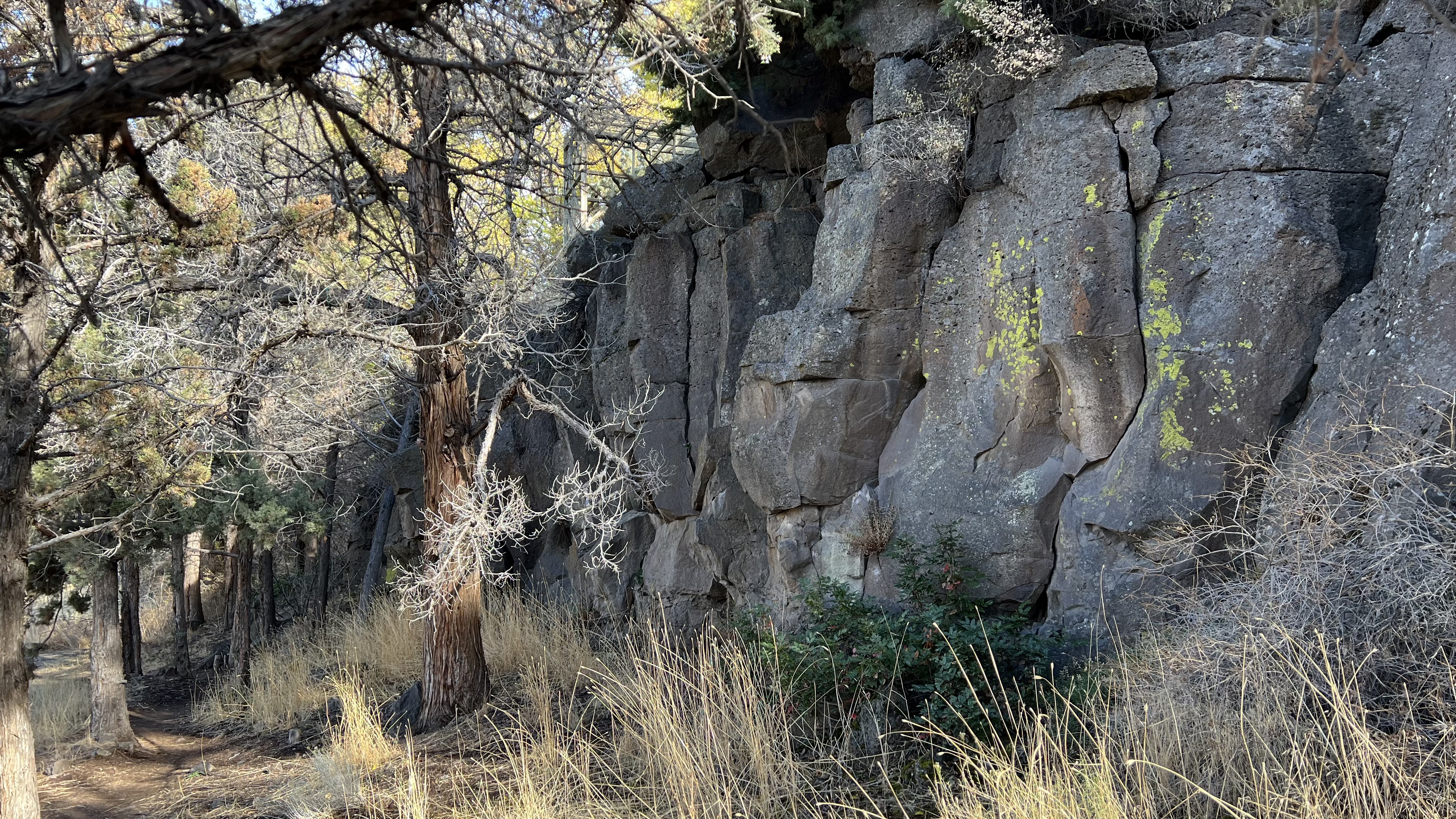
A typical view at the base of a section of relatively unbroken rim on the east side.
And you thought this was just going to be about Knapweed!!! All actions have consequences. A failure to acknowledge a problem, does not make it any less. Not making a decision is effectively a decision. What we do either works in support of life overall, or against it. The latter is unsustainable.
 GardenRiots