
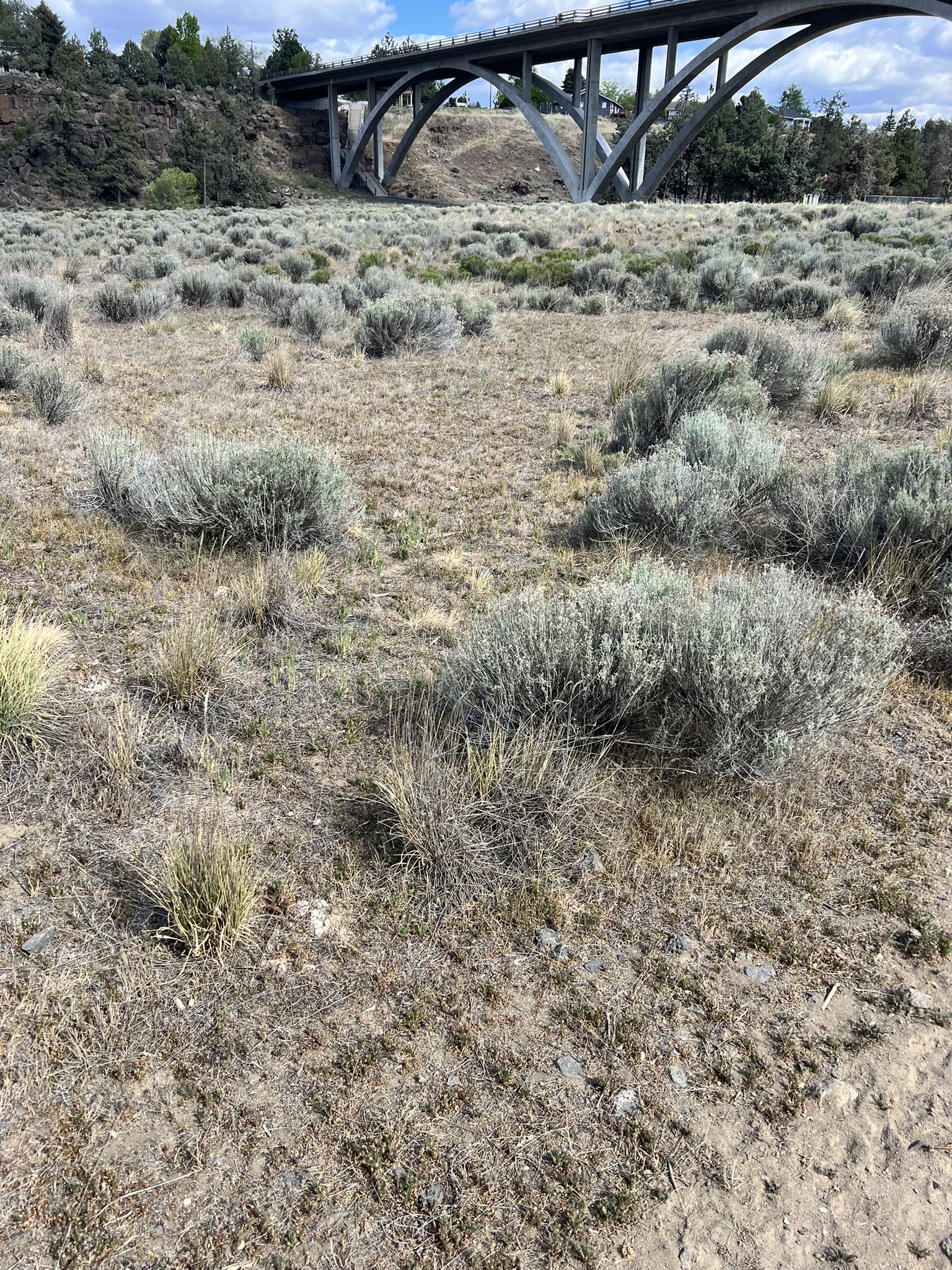
Taken May 17. Spare, limited growth, looking more like July than May. Dominated by the Gray, Ericameria nauseous and Green Rabbitbrushes, Chrysothamnos viscidiflorus..
We all know its been a drier and warmer than average Spring. In town people are often exclaiming about how wonderful its been, but in the Canyon the combination of dryness and unseasonable warmth are showing, if you know how and where to look. Dry Canyon has already taken on that ‘sere’ look, the soil and plants drying prematurely, annuals, the survivors that they are, seemingly knowingly rushing through their life cycles flowering at an earlier and shorter stage. The difference this year is subtle or maybe even unnoticed by many visitors. Whether you see it or not depends upon how many of the plants you know, where they should be and their ‘phenology’…what? Their growth schedule. Every plant species operates on its own internal ‘calendar’ when their seeds germinate, when those perennial growers ‘wake up’ and initiate spring growth, how they progress through the season, when they form their flower buds (and yes, grasses do flower, they just do so with flowers we don’t recognize, without petals, having other structures0, when their ‘fruits’ and seeds ripen.
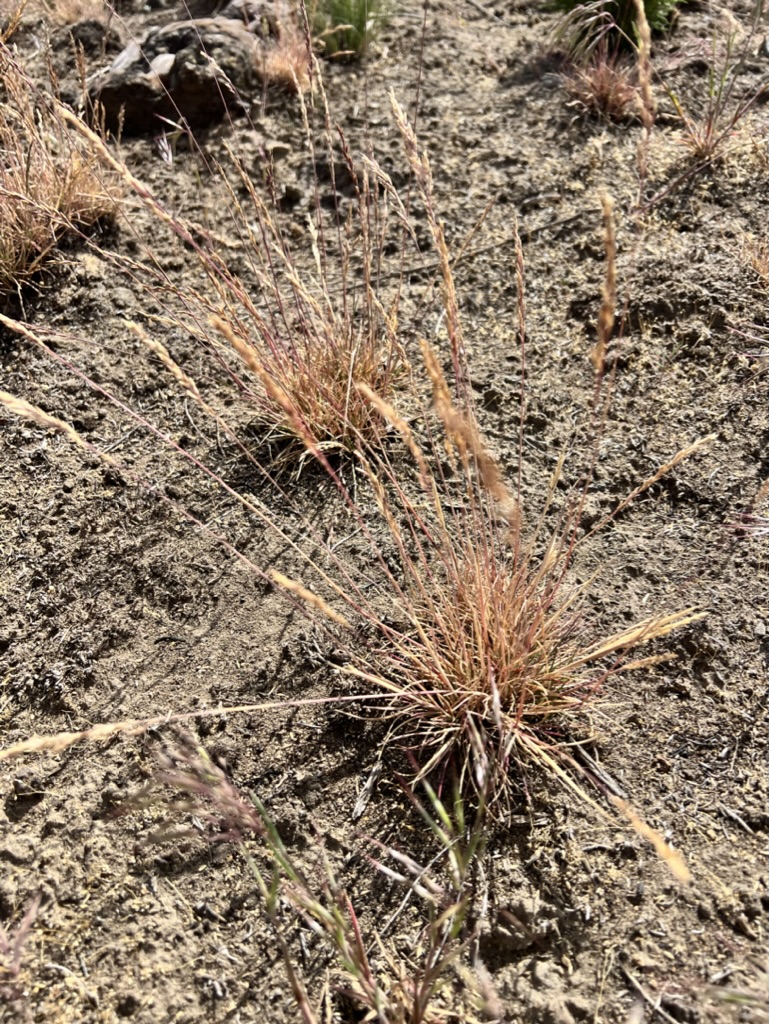
Sandberg Bluegrass, the native Poa secunda, has already completed its cycle. One of the very few natives returning to the burned area. Surviving likely because when the fire occurred it had already completed its cycle.
The grasses are a good subject to be looking at to see what’s ‘wrong’ this year. Poa secunda, Sandberg Bluegrass, a tough, small, native bunchgrass that takes advantage of early spring moisture, has grown quickly, way ahead of our other native grasses, completing its cycle before even the exotic and invasive upstart Bromus tectorum, Cheatgrass, can. As an early starter it was able to take advantage of what little moisture was available. This Bluegrass has already crisped and browned, probably ahead of ‘normal’. The Cheatgrass, meanwhile, is rushing through its cycle. Typically Cheatgrass grows to variable heights, to as much as 1 1/2’, but when it’s rushed, when the spring is abnormally dry, it will flower, begin to shade red and mature seed, when as little as 6” tall. That’s happening now. Two of Cheatgrass’s advantages are its early cycling, using up the available water and nutrients, before most of the native community can, and, it’s strategy as an annual, producing a heavy seed crop, which can then colonize the available open space created by fire and the absence of other plants.
Previous land managers have planted Crested Wheatgrass, Agropyron cristatum, a fairly competitive non-native, for its grazing qualities, fairly widely in Dry Canyon. That’s a relatively tall grower similar in stature to the native Bluebunch Wheatgrass, Pseudoroegeneria spicata, which is also there. Because these are larger and later growing than Sandberg and Cheat, they are more likely to be stunted when water is in short supply. And that’s what we’re seeing, both of these are already stressing.
Needle and Threadgrass, Hesperostipa comata, and Indian Ricegrass, Achnatherum hymenoides, are two other perennial native bunchgrasses in Dry Canyon. I’m not sure how these are doing as they aren’t so widespread and where they typically occurred, near the base of the slopes below the rims, they’ve been string-trimmed down for fire control purposes, a practice which, if continued would lead to their decline. Perennial bunchgrasses still depend on regular seed production so that they may colonize available space. While these tend to be far more deeply rooted than annuals and are so capable of reaching moisture more deeply held, which partially explains why they are below the rims where the soil is deeper, the string trimming and motorcycle use is compromising them. The spaces between the dominant shrubs across Dry Canyon’s bottomlands, Grey and Green Rabbitbrushes, Sagebrush and Bitterbrush, are growing on shallower soils atop the basalt below and which grasses ‘should’ be growing in the spaces is hard to say. These grass spaces appear ‘thin’, prematurely sere, and short, doing what they can with less. They are also commonly being dominated by invasive weeds with quick cycles, capable of taking advantage of those conditions. The overall look is sparse and weedy. But there are more keys….
Annuals and perennial herbaceous plants can fill a significant but lesser role in the present plant communities and the health and vigor of all are directly effected by drought and warmer than normal temperatures. Growth rates, and the metabolism that sustains the life of any organism, increases with rising temperature, to a point, while at the same time increasing the demand for water…water which is in short supply. Growth is, as a result, slowed. Size diminished and, if extreme enough, tissues are stressed and die.
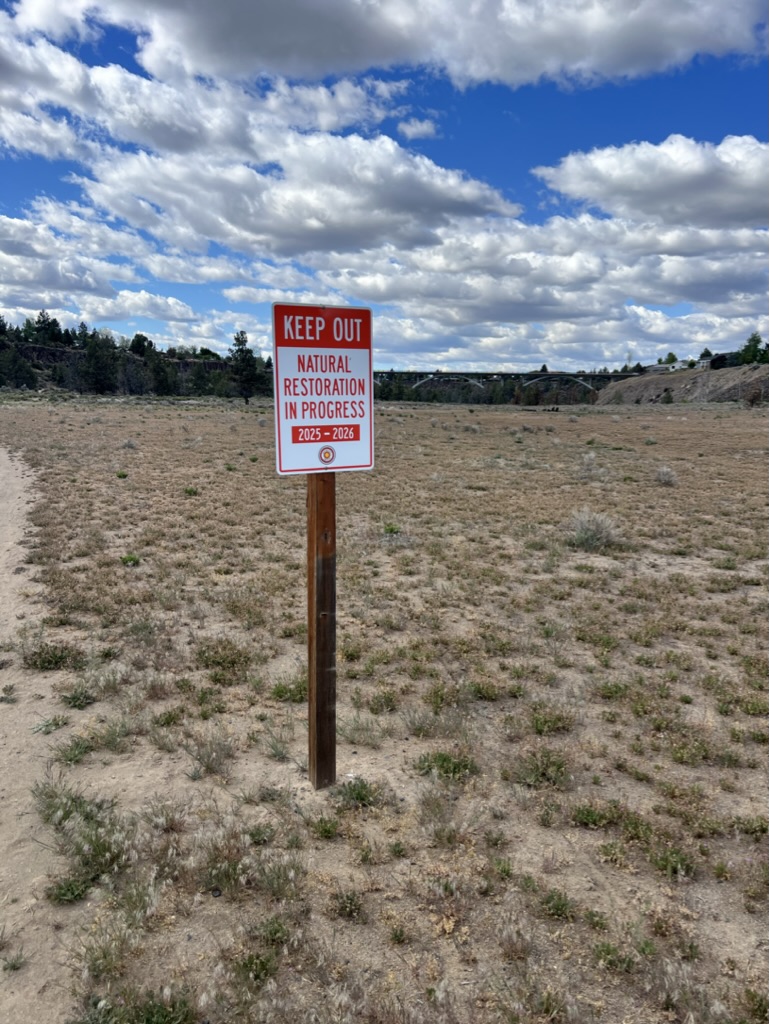
The site of one of last year’s Dry Canyon burns. I walked a transect of the burn noting what was here. Other than the resprouting of the Green Rabbitbrush, which typically survives lower intensity burns, there is very little of anything native growing here. The sign is a bit of wishful thinking.
While perennials may return after such stresses the following growing season, if not too severe, especially if precipitation levels return to normal, annuals will always be dependent on their annual renewal. Harsh, dry conditions, such as we are experiencing, generally results in lower numbers of successfully germinating seeds, more of those seedlings dying and fewer still establishing, with some seed heldover for the following year as ‘insurance’. Seeds don’t germinate strictly on some scheduled date. Each rely on a package of conditions which have proven supportive of their continuation. Daylight hours can be important for some species, and this is tied to the seasonal calendar, but so are soil moisture levels, the capacity of a seed to ‘imbibe’ what they need, as well as soil temperatures. Once having germinated they are extremely vulnerable before they eventually become established. They require supportive conditions over this period. These are ‘protections’ against germinating at the ‘wrong’ time of year, times that do not, on average, support growth sufficient that they may cycle and produce viable seed. Not every year is a ‘successful’ one. Many plants, especially those that are already existing at the ‘margins’ of their limits, can go several years without ‘recruitment’ and depend on the continuation of the existing population. Again, drought, especially prolonged droughts, can threaten this. This period will vary with the general longevity of individuals, which can be quite variable.
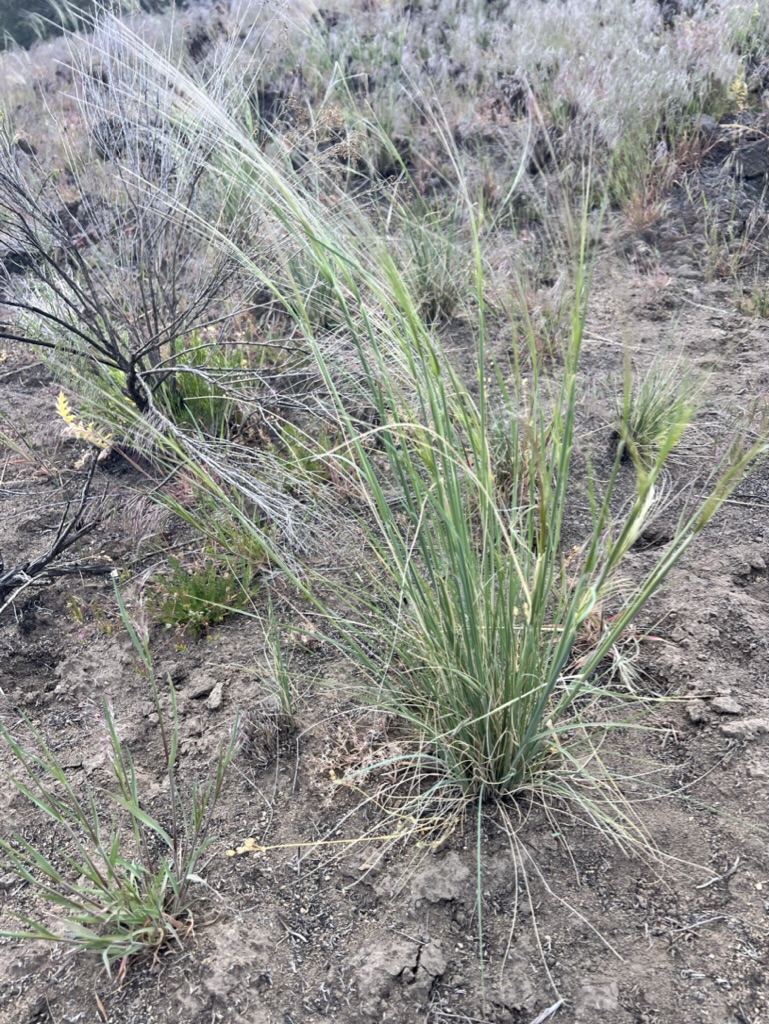
Needle and Threadgrass, Hesperostipa comata. A perennial native bunchgrass and potentially heavy seeder, found in the burn and the only one I saw on my transect.
To know whether populations of a species are down, you need to know where they were growing and how common they were. You need ‘benchmark’ data or at least staff familiarity, so that they can adjust their use and management practices in ways that are supportive of the overall community. The precise makeup of a local plant community will vary across a site, each location having slight variations in their conditions and different ‘histories’, possessing different species and combinations which influence what can follow. Drought can easily lead to a loss of diversity and numbers of any species locally. No one’s done a formal survey of the Canyon’s flora, but being familiar with it suggests that the numbers are down, if absences can be evidence.
Every natural plant community has its own degree of resilience based on the plants that comprise it, their health and condition as well as the ‘seed bank’, the reserve of seed held dormant, but still viable, in the soil. What seed is available is distributed by wind, carried on animals, collected and stored by others in caches or eaten, but remaining viable in their excreted feces. Not all seed germinates even when conditions are favorable. Some species have an extremely low success rate, while others germinate and mature at relatively high rates. Even more survives over drought periods and remain available for the following spring or fall, which ever is the ‘normal’ time. Conditions can vary in particular cases, soil being slightly too dry in one spot, or in the case of other species, which require light to germinate, having been buried a little too deep. In either case, these seeds ‘wait’. Any given location can only support so many of any one plant. Local communities are also determined by the vigor of its perennial plants. Drought can stress perennials weakening them as they go into the following growing season. This, combined with a decline in seed production, can over time, reduce the number and size of perennials. Perennials don’t simply contain an on/off switch, their response varies over time with growing conditions, making way for those plants more adapted to the pattern of conditions. All of these are factors in a species survival in any given plant community.
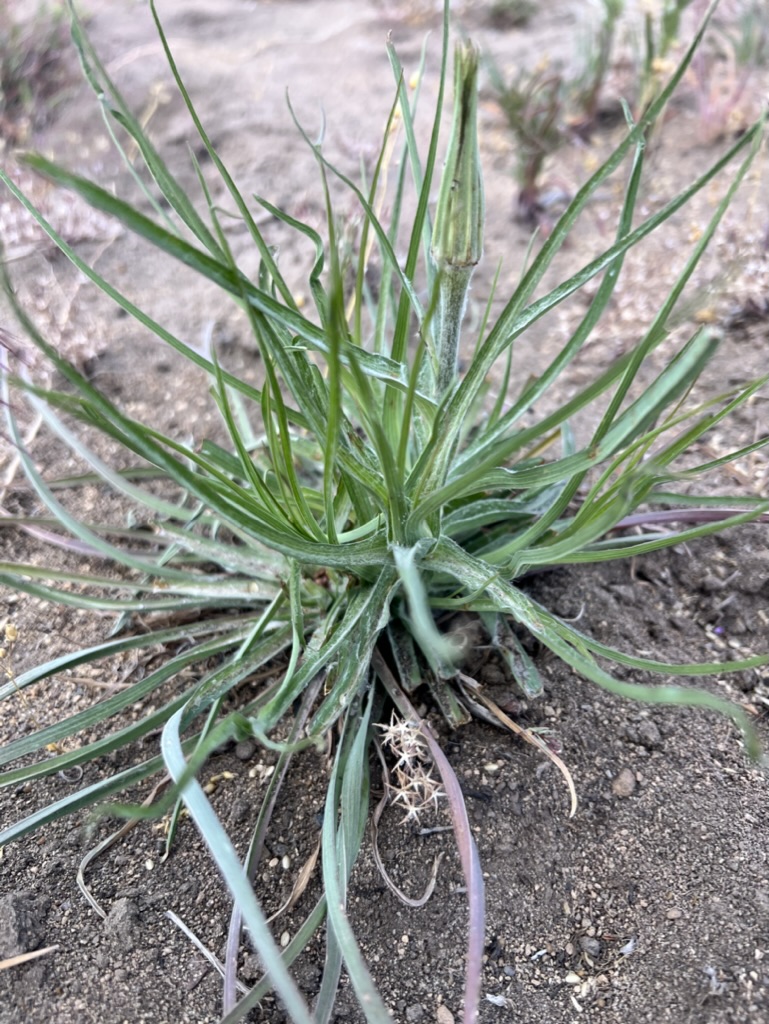
Tragopogon dubius, Yellow Salsify, another non-native weed that several of us have been pulling. Whether that’s the cause for their large drop in numbers or its drought, it’s hard to say. Drought conditions, when there are lots of exotic weeds tends to favor the weeds.
So at what point does drought stress begin to effect growth? There is no magic number. Plant communities and growing conditions vary from site to site, plant to plant as suggested above. Anything below optimal conditions will negatively effect growth (as will over wet soils, but that’s not an issue here). Our average of 9” of precipitation per year, given an average range of temperatures for here, would result in ‘normal’ growth. The same conditions anywhere in the Willamette Valley would be considered severe drought conditions and most local plant communities there would be dangerously stressed and likely lead to the loss of some species in their entirety especially if sustained over consecutive years. Plant communities have been ‘selected’ over time by the average conditions and the typical extremes that occur in place. It is also important to keep in mind that the pattern of precipitation and its form are also important. Much of our precipitation already falls over the cooler half of the year. A slight drop off of precipitation over the already dry summer months, when many plants of our communities are already shutting down, won’t make near the difference that a drop off during spring would, beyond making them more prone to fire as water content of tissues drops and local humidity with it making the landscape more subject to catastrophic fires. Spring is when growth demands are high. Annual or perennial, our local natives tend to be spring and early summer flowerers. Spring is when the bulk of growth locally happens. Reduce moisture then and the cycle itself can be disrupted. Water, in adequate supply when needed, is essential to all organisms, plant, animal and fungal. In a desert, such as ours, even seemingly minor reductions, can for a plant be life threatening. A shift in the pattern of precipitation can have a huge effect on the make up of the plant community.
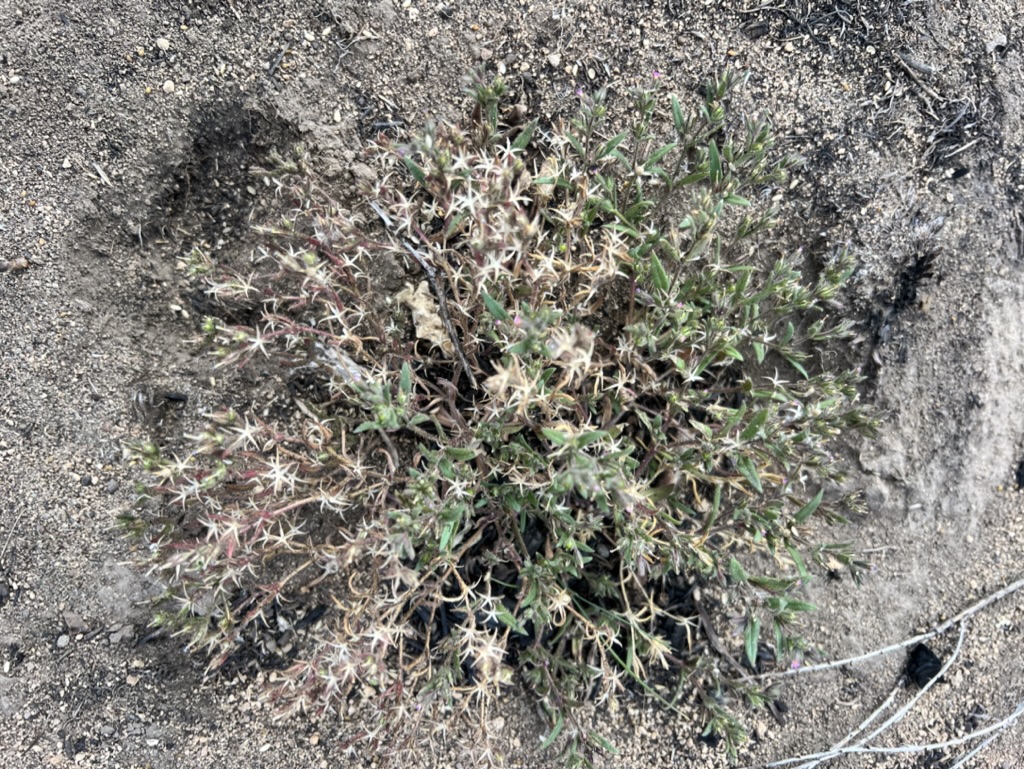
Microsteris gracilis, Slender Phlox, is a small low growing annual that is easily missed amongst the larger growing plants of the community. I was surprised to see so many of these across the burned area. I had at first mistaken their little pink flowers for those of the weedy Erodium cicutarium, which is very common all over the Canyon, especially along paths where the community is regularly disturbed. These are almost all well passed flowering, already drying into their tiny, prickly summer dormant form.These were quite common in patches across the burn, likely due to the lack of competition. This is often the role of native annuals, taking up space before the larger perennials can return.
It is important to understand that native plant communities, while they may seem ‘durable’, static even, are in a continuous state of adaptation. They are responsive to even the smallest of changes, they must be. It is a defining characteristic of how they came to be, of the processes of natural selection, which goes to determining, not just ‘who’ survives, but the character of those survivors, the communities within which they live and the relationships that define them. Their overall composition goes to determining what can follow at any given moment. This is why when such communities are disrupted, even destroyed and other species introduced, the dynamic is forever changed along with future possibilities. When these are minimal, the outcome will tend to be recognizable. When such changes are massive, as in the case of Dry Canyon and most of the surrounding regional landscape, the situation and outcomes become entirely unpredictable. In our case long term drought drastically changes future outcomes. In such a case those locally native species may also be under threat, even lost, and their re-establishment unlikely in a human scale time frame. Our landscape becomes a roiling mosh pit of possibilities, relationships upended. Native plant communities, regardless of where they occur, are dependent upon relatively stable conditions. The introduction of literally thousands of exotic species, the physical destruction of native communities, the continuing uses of said landscapes that compromise them, the addition of supplemental irrigation, the disruption of necessary fire cycles, the imposition of man caused climate change, all of these and more put the future of Dry Canyon, and all native plant communities and the wildlife dependent upon them, at risk. Dry Canyon is not simply a Park available to us for our use and pleasure, it is a barometer of our relationship with nature, the fact that so many of us now live lives estranged from nature and its cycles, ignorant of the necessity of living with nature as creatures ourselves of it. When you walk Dry Canyon take the time to look, observe and learn. Become attuned to it and its cycles. Start reshaping your own relationship with it. It is not there just for us. In a healthy world we can and must be there for it.

