Category Archives: Plant Selection

Losing Our Urban Landscapes: Sustainable Goals and Our Crisis in Leadership

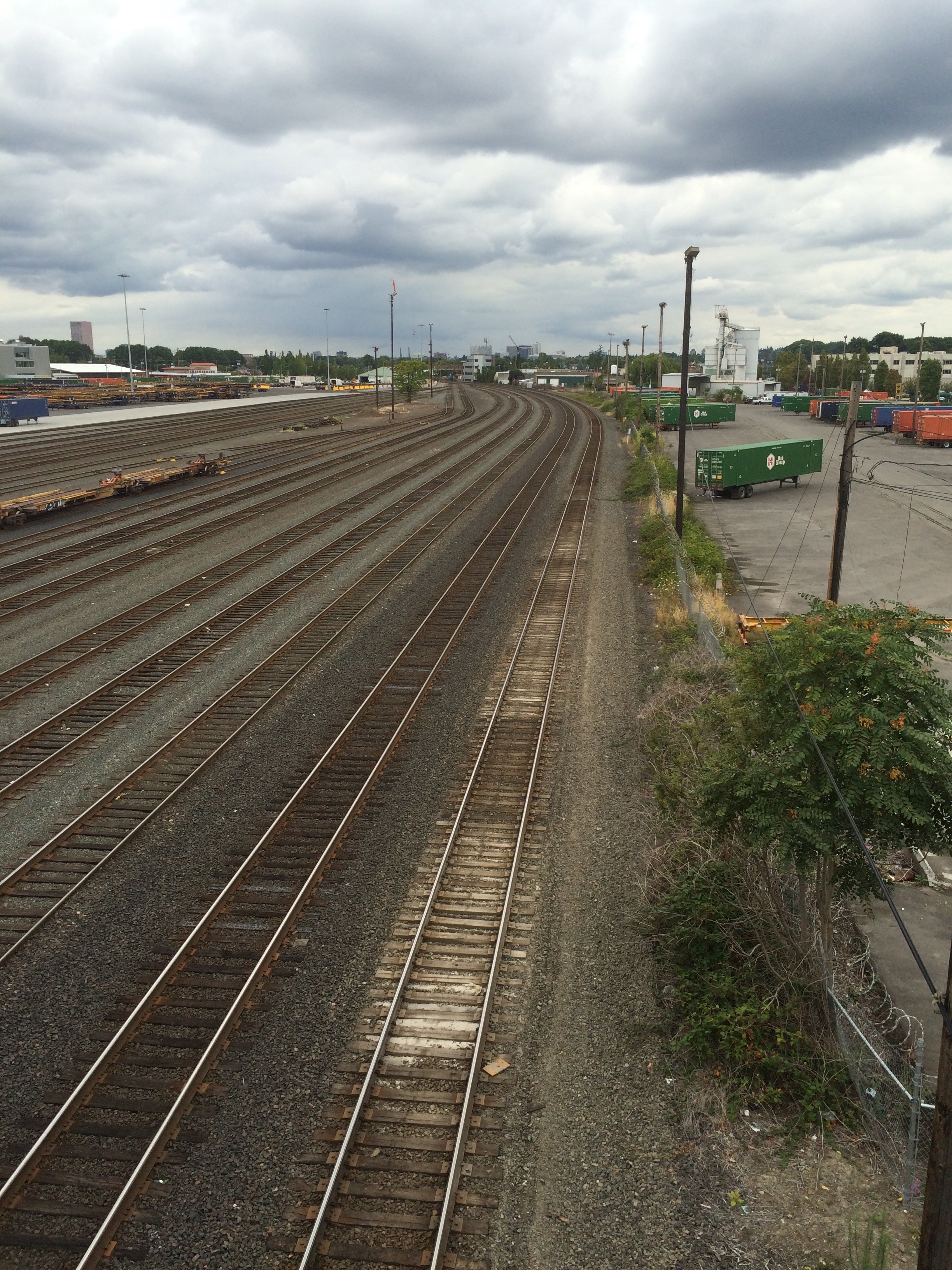
The Brooklyn switching yard. These areas must be kept clear. The fence line to the right, next to the container yard, is typical, here filled with common weeds, aggressive invasives and Tree of Heaven.

The Brooklyn switching yard. This ‘landscape’, in a modern utilitarian sense, is ideal.  These areas must be kept clear. The fence line to the right, next to the container yard, is typical, here filled with common weeds, aggressive invasives and Tree of Heaven…and it doesn’t matter.  It works and that is the priority.  Whatever results elsewhere…is not.

The following is intended as a template for action or a beginning point for a discussion that is long overdue.

Landscapes are more complex than most people realize.  They can go seriously awry in a very short time.  Undisturbed native plant communities are relatively stable and are able to respond on their own, as they have for millions of years…if the disturbances they suffer are relatively small.  Unfortunately these plant communities have been decimated in urban and most rural agricultural areas severely compromising their abilities to respond in a positive and effective manner.  The addition of invasive species to the region puts even stable, undisturbed plant communities at risk.  Because we are not all ecologists, or even gardeners, what can we realistically do to stop or reverse this process of landscape degradation?  The decline of our landscapes is linked to a long history of practices that have ignored the value of both our native and contrived landscapes, a belief in a right to ‘dispose’ of the land in whatever way we so choose and our denial that this destruction matters.  We have done this through our land management practices, our designs and the uses of the land itself even those that may seem unrelated, many that have become automatic in our society and are directly related to how we live, work and play today in the modern world.  Our active threat is inherent in the way that we do business.  Our attempts at correction are, too often, limited to only slight modifications that do not put any undue ‘pressure’ on our local economy, business or the privileges that we have come to see as ours.  We are a society that has, in short, become disconnected from the realities of life at the local level and what is required to support it.  We see a limitless nature that is there for our use.  Whatever we may need, we believe that we may merely buy from elsewhere, an elsewhere that is limitless though undefined.

To turn this situation around, or to make significant improvements, requires that we examine what we are doing now, that may be working against the goals that support life and landscape,…and stop.  We have to stop doing the things that are working to continuously disrupt the ‘healthy’ functioning of the landscape.  If we don’t do that then all of our attempts at improvement, all of our tweaking of our system, will come to nothing.  We cannot ‘save the patient’ with good thoughts while they bleed out. Continue reading
The Fields Park: Brownfields, Compaction & Drainage – a Missed Opportunity

IMG_4444

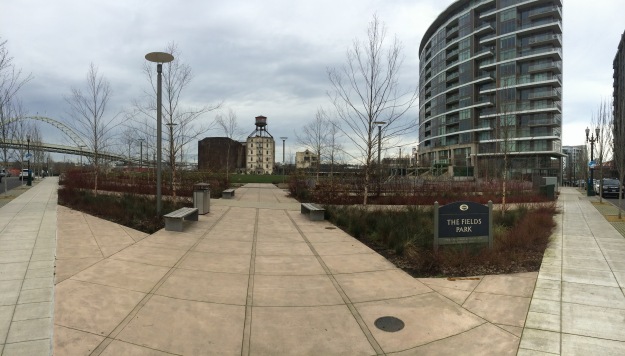
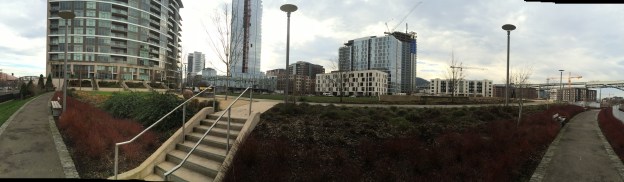
The Park enterance, framed by the four bio-swales (I can’t bring myself to call them ‘water gardens’ as they look very ‘un-garden like’) that take runoff from the adjacent hard surface as well as from the drain system installed across the lawn. They are planted with Betula nigra cultivars along with Cornus stolonifera ‘Isanti’, C. s. ‘Kelseyii and an Iris. As you walk through the Park you will move over eight different hard surface treatments!

The Fields (Click here to see the final design plan), completed in spring of 2013, is Portland’s newest Park in the north end of the Pearl District.   While I was still with Parks I did the horticultural review during the design process and was an on site inspector, periodically, during construction.  New Parks like this one require a huge time commitment by Parks.  Selection of designers, outreach to all of the stakeholders and many other meetings involving more technical aspects of such a project all in an effort to deliver to residents a Park that is beautiful, serves the needs of residents and is affordable in terms of long term maintenance.  Before  the project is offered to the design community functional goals are set for the Park and a general design theme is chosen.  Various firms offer proposals.  Concepts are bandied about.  Eventually, one is chosen.  In this case, the Office of Cheryl Barton, a San Francisco firm, was awarded the design contract (To see what they have to say about it). Continue reading

Iris x pacifica: Hybrids & Jewels of the West Coast

PCH Native Warrior w: Stachys Primrose Heron DSCN2479

Iris x pacifica ‘Native Warrior’ next to Stachys byzantina ‘Primrose Heron’  These Iris are very garden worthy and can combine beautifully with plants  with similar cultural requirements

(I wrote this several years ago for the HPSO Bulletin, when it was actually printed on paper, and thought re-issuing it today, edited and expanded, might be helpful to some as we are about to enter their flowering season.  The iris pictured on my Blog’s masthead is Iris x pacifica ‘Simply Wild’ poking out from the base of the Chilean shrub Fabiana imbricata ‘Violacea’)

Gardening is no more or less subject to the vagaries of fad and fashion than the other activities we dabble in.  Marketers prey on us luring us with plants possessing new and alluring characteristics, promises of larger flowers, more disease resistant, floriferous, more exotic or environmentally responsible, less maintenance intensive… the list goes on.  Gardening is a very personal endeavor and as such we will always be subject to such Siren calls.  There will be the righteous amongst us convinced of their own focused vision who seem to be immune (but what, we might ask, are they missing?) and there will be those who simply surrender completely to the beauty and bounty around them making themselves easy prey.  In the long run, who is to say who is right?   Our knowledge is imperfect and we are weak…. The act of gardening strengthens us, provides us with the opportunity to learn and in so doing puts us into relationship with the living world around us.  We become better gardeners capable of making better, though still imperfect, decisions.  Whether we garden to augment our own diets with what we grow or are trying our hand at healing a small piece of a damaged earth, or building a place of respite for ourselves and friends or trying to model ‘right’ behavior for our children and neighbors, we are out in our gardens and landscapes learning something of how incredibly complex this earth is…and that is all good. Continue reading

Pruning: The Aesthetic Choice, Consistency & Good Horticultural Practice

The Pruning Series, 3

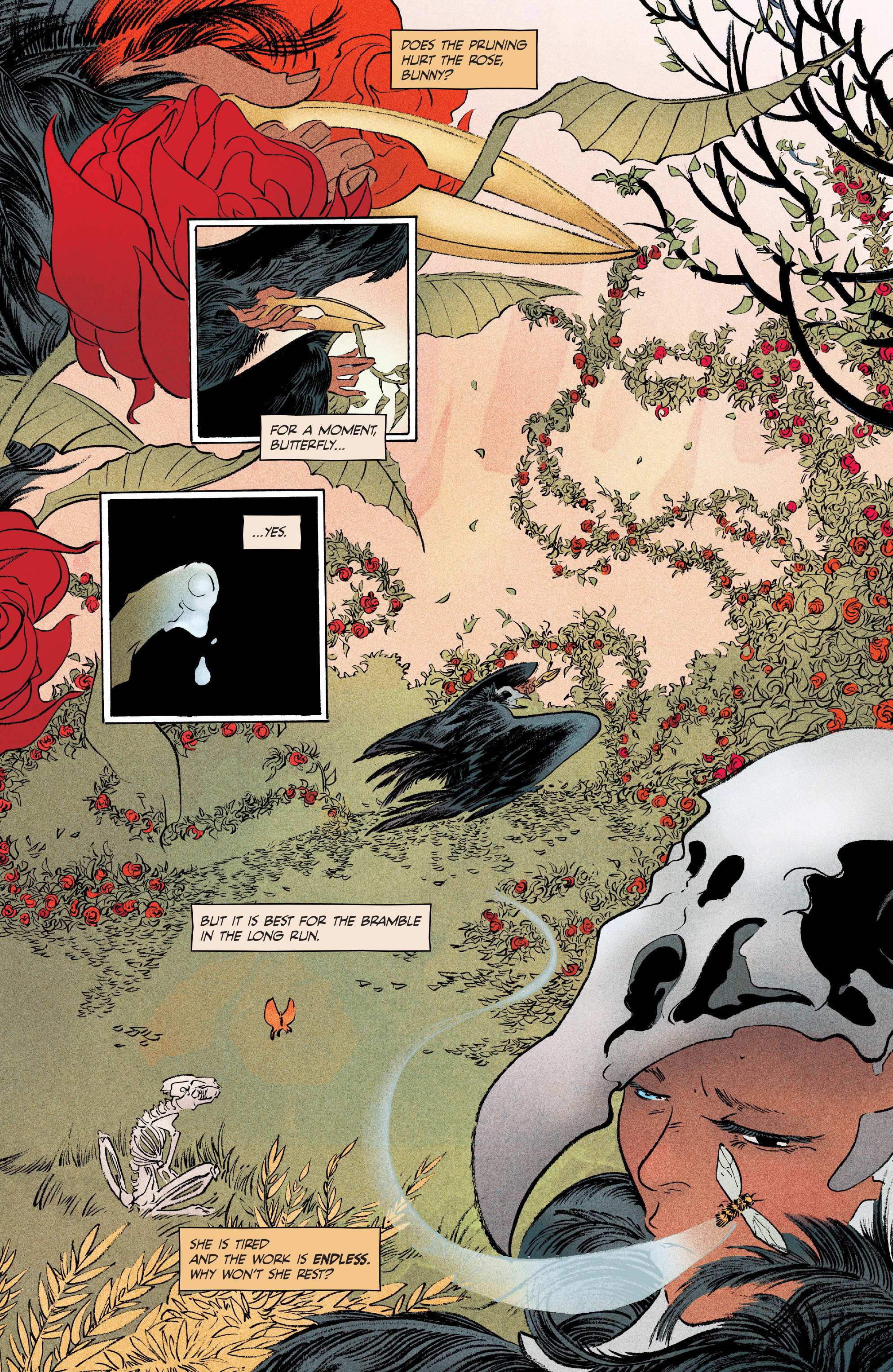
Illustrations from 'Pretty Deadly', written bj Kelly Sue Deconnick, art Emma Rios, colors Jordie Bellaire, Image Comics 2015

Illustration from ‘Pretty Deadly’, written by Kelly Sue Deconnick, art Emma Rios, colors Jordie Bellaire, Image Comics 2015, (007-002).  Straight-up classic art, whether oil painting or illustration, like these two pages from a graphic novel that I find beautiful, involve ‘craft and, an understanding of one’s materials and techniques, that are necessary for any artist to create work. In illustration, like this, the art must resonate with the story to be successful. Horticulture and pruning are no different.

Plants often present pruning challenges to the gardener.  I’ve already introduced the issue of understanding ‘why’ you are choosing to prune, the physical structure of a ‘normally’ growing individual and how it will respond to the cuts you choose to make.  There are several good books out there that discuss how and what constitutes a ‘good’ individual cut and what approach you might take with different types of growers…it should be the goal of any gardener to understand the technical details of pruning, so that they become ‘natural’, reflexive. (In an earlier posting, I discuss pruning tools and provide an introduction to what constitutes a ‘good’ pruning cut.) Like all artists we develop a style that may distinguish us from others.  Even understanding all of this and possessing the technical competencies there are the ‘aesthetic’ decisions the gardener/pruner must make.  Two different gardeners can prune in the same landscape and it can be obvious when they are finished that they have very different aesthetics.  The results can be ‘disjointed’ or harmonious.  Every plant, every branch, every internode, presents a choice and because each individual plant of a given species or variety, though it may grow following a shared genetic code, will grow uniquely in response to the physical conditions it faces…and the damage and pruning it has received over its life.  Like most things in life our control of a plant is limited and the more we attempt to control it the less like itself it will be. Continue reading

TriMet’s Orange Line Landscapes: SW Lincoln & 4th to SE Milwaukie Ave

[I had been delaying the posting of this entry as I was waiting to meet the project manager with TriMet.  As I’ve heard nothing back from him, I’m going ahead and posting.  It would seem that my earlier posts concerned him, but I suspect now that time has passed and the sky has not fallen…he has moved on to more pressing matters.  It is a common tactic not to engage ‘critics’ so as not to give them any energy.  Ignoring critics can be effective, albeit, a very frustrating treatment to the one who is being ignored.]

Part 3 of the Series

This is an introductory note.  Yes, I realize I started the series in the middle, in a linear thinking world this would have been the first posting, but I live nearest the middle portion of the Line…and I have my own motives. Those of you who don’t know me, I do not mean this to be overly critical in spirit.  I’m a person who is always thinking what next? How can I do this better?  I have similar high expectations of the organizations around me.  Organizations all tend to be conservative in action.  There is a reason mature bureaucracies have a reputation for mediocrity.  It is not my intent to question the intent of TriMet or of its hired contractors.  I am a big supporter of transforming our City into a more livable place and the Orange Line is part of that.  There is nothing to be gained through polarizing a situation or setting someone up as ‘the bad guy’ and putting them unnecessarily on the defensive…having said that, sometimes a ‘push’ is in order.  We live in times of rapid change, many of them destructive, and it does no one any good to not work toward the changes that they see as positive.  That is my intent here.

I began this series with a discussion of scale and how it acts as a magnifier.  I spent some time talking about the problems caused by compacted, heavily disturbed, soils and I emphasized the issues created by a history of bad weed management…this first section of the Orange Line landscapes, from SE 11th to its beginning at SW Lincoln and 4th is heavily impacted by these factors.  Built on heavily graded and or imported fill, often on abandoned industrial sites, on or adjacent to sites that have been out of control weed generators for decades, this section may pose the biggest problem for landscape maintenance of all.

It is dangerous to assume that a new urban landscape is created on a ‘blank slate’.  Merely scraping a landscape off and beginning anew does not return it magically to its ‘pristine’ condition prior to the arrival of ‘modern’ white American culture and all of our accumulative impacts.  To be successful some effort must be expended to ameliorate at least the worst of these conditions.  Even if we make our ‘best’ effort to do this, landscapes such as these with their ‘heavy’ impact histories will present a powerful challenge to those charged with maintenance.  It is easy to underestimate the severity of this problem.  We have developed an ‘alien’ aesthetic that really doesn’t belong anywhere and as such is outside the bounds of the function of the normal cycling of energy and resources common to nature.  We impose this aesthetic and our designs on our landscapes and then expend a great deal of energy, in the form of labor and chemistry, to maintain them, or they quickly degenerate.  In some ways it would have made maintenance much simpler to have buried all of the surface beneath concrete sealing the problems beneath it.  But then the priorities of urban tree canopy, the capture and ‘treatment’ onsite  of stormwater would have been negated, the possibility of groundwater recharge further reduced and the ‘softening’ of a very hard edged urban ‘landscape’ stymied. Continue reading

Selecting Trees: Surviving in Hell(Strips)!

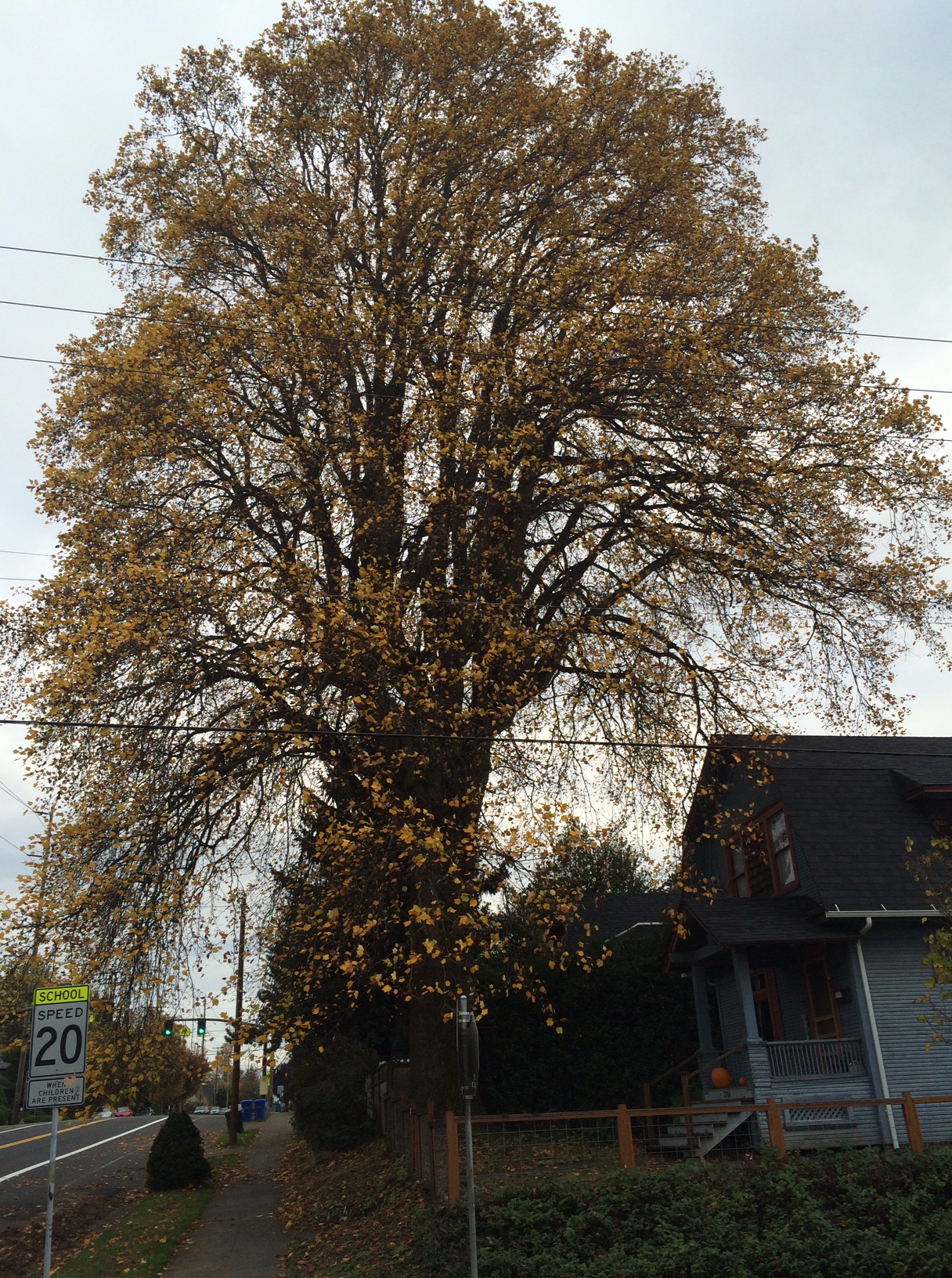
This Liriodendron tulipifera, a heritage tree in my neighborhood, has a canopy over 90' across. It is a beautiful and dominating tree dropping tons of drain clogging leaves and negating any need for actual street trees in the vicinity.

This Liriodendron tulipifera, a heritage tree in my neighborhood, has a canopy 90′ across. It is a beautiful and dominating tree dropping tons of drain clogging leaves and negating any need for actual street trees in the vicinity.  Little can grow in the dry shade beneath it.

I’m a horticulturist, a person trained and practiced in the ‘art and science of growing plants’…a classification to which trees belong. I’m not a ‘tree expert’ though I like to think I’ve learned a few things having spent most of my last 35+ years out working in the landscape, planting, caring for, diagnosing and designing, the bulk of which was maintenance, trouble shooting and tweaking landscapes so that they work ‘better’. Trees were always part of it…so I have opinions.

            [One of the lessons most of us learn on our journey to adulthood is to avoid the topics of religion and politics in casual conversation. These can be very divisive. In Portland the topic of trees can also elicit strong feelings amongst their advocates. The City of Portland has worked toward the protection of its trees. Here we have, in many cases, codified the planting, pruning and removal of trees in an attempt to stop the most egregious offenses and to expand the urban tree canopy. The City, through its Forestry Division, also works to help educate a public that too often has little to no connection to the green growing world. It is a huge task especially when so many other public institutions, like public schools, play almost no role. I spent the biggest part of my professional work life in Portland Parks and Recreation and I know that most Park’s staff have a passion for the work as well, even after years of working in a very political atmosphere with inadequate support. It would wear on anybody. So when I criticize aspects of the City’s tree program I want to be very clear that I am not criticizing the people or their intent.]

Portland loves its trees, except for the malcontents who view each leaf that falls on their property as an affront not to be tolerated, oh, and those developers looking to build and cash in on ever square foot of space that they can appropriate. Yes, these people are out there, just as are there opposite. Continue reading

Choosing Trees for Larger Public Landscapes (and your yard!)

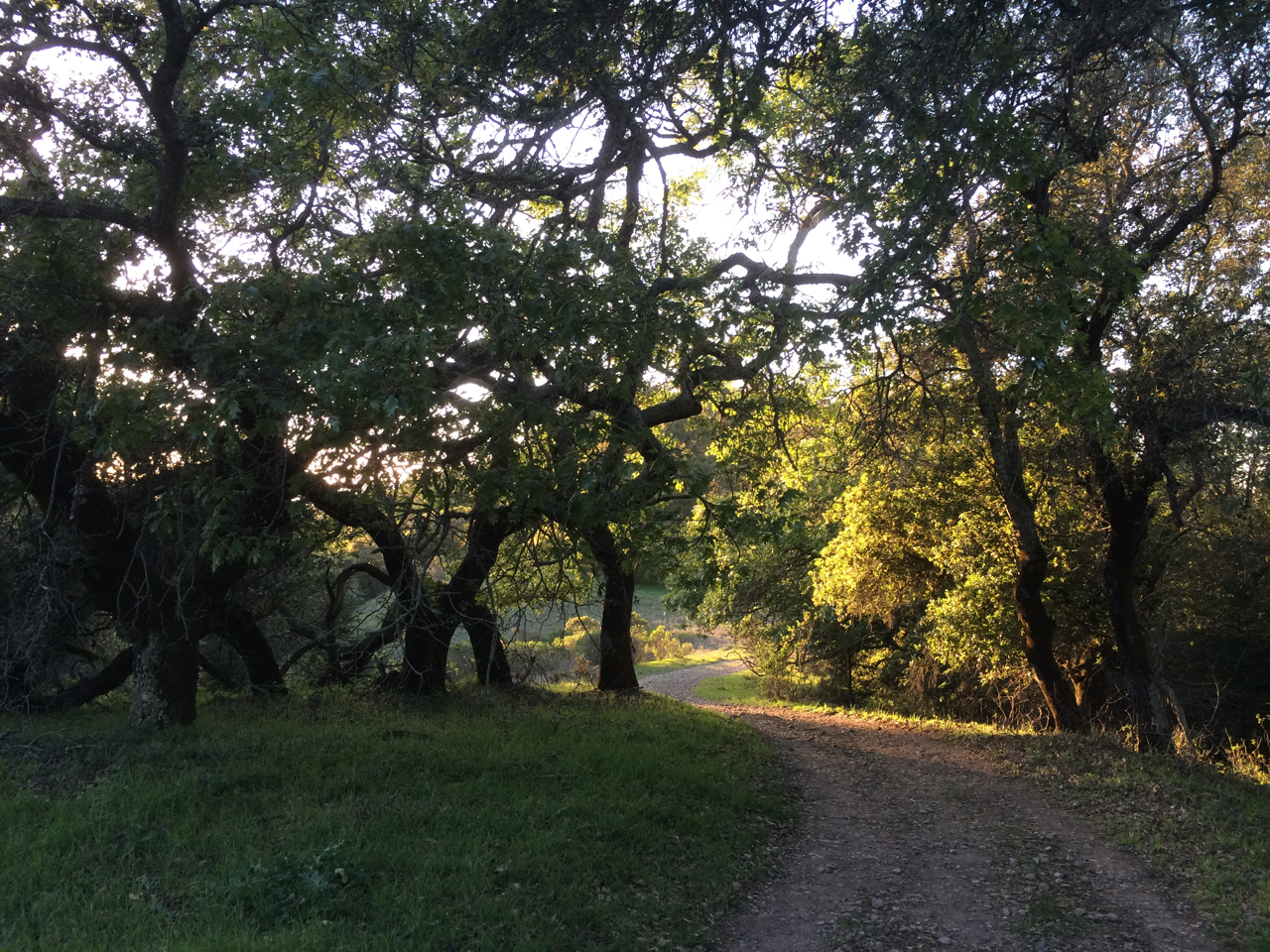
Still one of my favorite Oak photos. This one take in the late afternoon beneath a canopy of Interior Live Oak (I think) at Shiloh Ranch Park, last March.

Still one of my favorite Oak photos. This one take in the late afternoon beneath a canopy of Interior Live Oak (I think) at Shiloh Ranch RegionalPark, near Windsor, CA, last March.

A friend recently asked me if I had some favorite trees that I would recommend for planting on school landscapes, that would be like asking if I had favorite park trees, no I don’t…and I don’t have a list of proven performers either. A planting site being located at a school, only tells me something about the uses/abuses one can likely expect on a site, and nothing more. When we choose plants we need to be paying attention to a lot more than that. Many people are intimidated when it comes to choosing trees, there are so many and potentially, they live so long, growing from year to year…all of this tends to magnify the ‘weight’ of our decision.  People often look for short cuts because there are so many things to keep in mind when choosing. There are two major questions that need consideration first, the site conditions and design, what will the tree have to put up with and what do you expect? Continue reading