
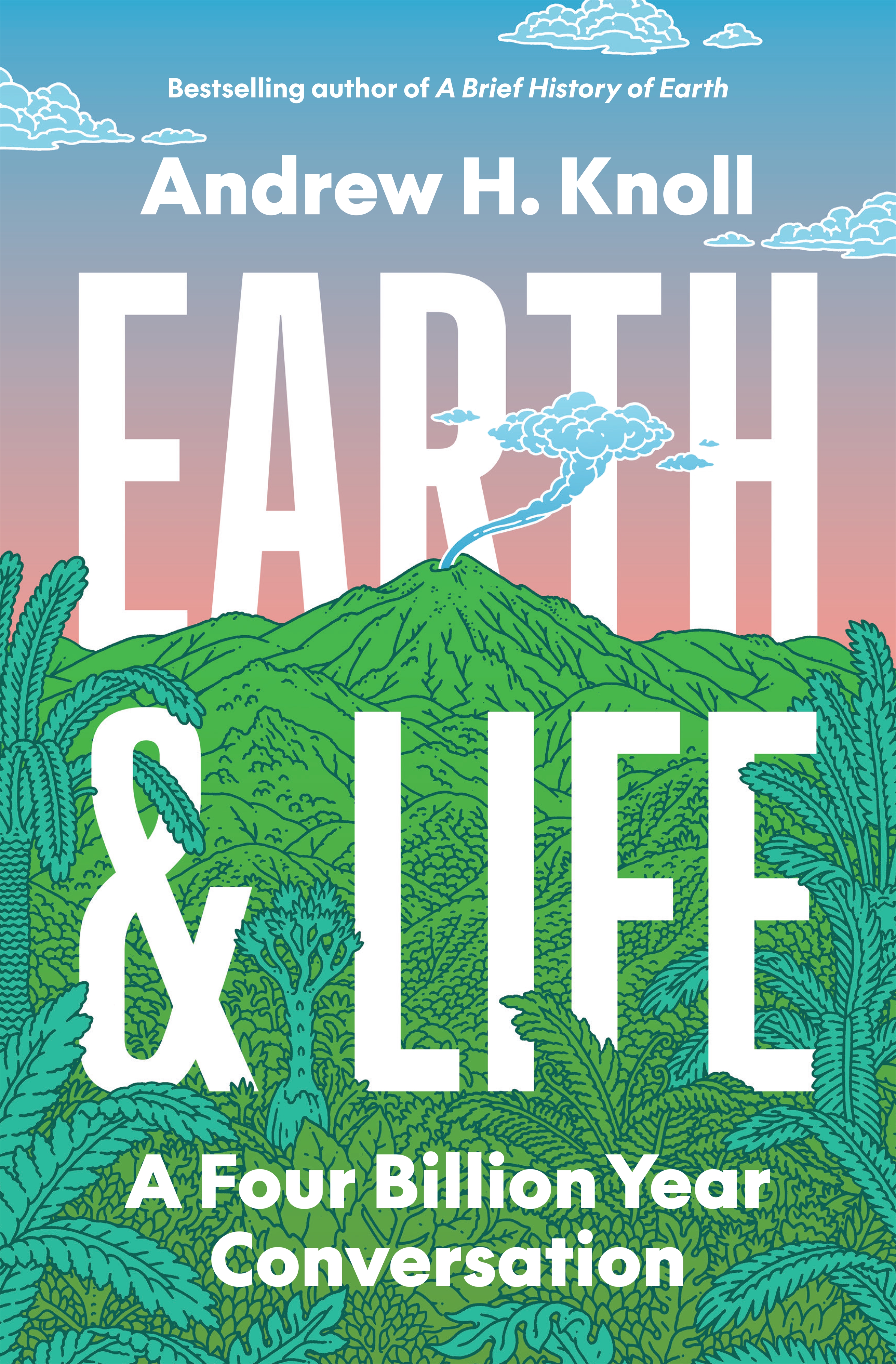
 [I’m using Knoll’s book here as a starting point, so it isn’t strictly a ‘review’.]
As people we tend to simplify things, explain them linearly through either deductive reasoning, taking an accepted rule and applying it to the available ‘evidence’; or follow the process of inductive reasoning, examining the evidence first and using that to make sense of the what we observe. The world itself is very complex and our tendency is often to assume certain things about it and then act on that. In a dangerous world, where genuine threats abound, if we attempted to analyze all possibilities, we might be dead before we decided what to do. Part of our process leads us to isolate problems, things, into different categories…to streamline it, speed it up. Some people simply call this ‘focusing on the problem’, ‘if it walks like a duck…’, but this can result in our ignoring the context…and missing something absolutely essential.
We do similarly with ourselves, when we view ourselves as independent individuals. Doing this doesn’t negate the fact that everything, every being, came from another and so exists in relationship ‘with’. Because we study particular individuals, groups and processes ‘separate from’ others, does not in fact mean that they are independent. The universe is a connected whole. While each of its ‘parts’, each of its processes, may seem to exist to us independently, ‘free’ from others, they aren’t. We are enmeshed in a matrix of relationships. No individual, no function, no process, can be understood entirely on its own. Nothing occurs in the absence of the ‘other’, of other actions and actors. The passage of time can reveal this, if we are looking. Even the controlled lab experiment happens within a context that goes beyond itself. Such isolation is a construct and its result can never define something in its entirety. We need to understand this when we examine life in a singular, narrow way.
Physicists talk about the ‘three body problem’, that as soon as you introduce a third variable, precise prediction becomes impossible. A similar result occurs even in simple two body problems when you extend them out over time, each subsequent interaction, adding ever more uncertainty. Complex systems are inherently impossible to predict precisely. Outcomes become more or less probable. Not certain. In systems involving life, the complexities, the outcomes, occur within limited ranges, between ‘survivable’ margins. These results cannot go to the extreme or death/extinction occurs. As humans we are biased toward a belief in our independence, our ‘freedom’ of thought, of action, and imagine a capacity to predict and control outcomes. We frequently exaggerate our ability to effect the world and interpret results in ways that ignore outside influences, other ‘actors’. Our ‘independence’ appears to give us choices and agency that we don’t actually possess. We are, in reality, intimately enmeshed in the universe and so can not be sole determiners of its outcome. Life is an inclusive process in which we each play a role. The reality is that we can never act truly alone. Our impacts echo across time, distance and type…and are moderated by those of others. Extremes are reeled back in by the system, as long as it remains overall in a healthy state/condition. Our effects are never truly our own. We remain, perpetually, under the influence because we are ‘of’ the same whole. We get into ‘trouble’ when we ignore this.
Viewed from space the Earth is a mostly ‘closed’ system, but for the hail of minor meteor strikes that contribute a variety of minerals and the essential addition of light, electromagnetic energy and radiant heat contributed by our sun. Life here exists within a living system of supports, conditions and feedback loops that deliver all of this within a system that is ultimately limited, Continual. The larger system remains within ‘livable’ margins, which have changed gradually over geological time, including global temperature, available water, the particular mix of atmospheric gases and more. All of an individual organism’s needs must be met by the ‘system’, ‘driven’ by the sun, within the context of the physical conditions on earth, its physics and chemistry, and the untold billions of organisms that contribute to it. Every organism must ‘fit’ the system, serving as role players, fulfilling needed functions, to ‘pay’ their ‘bill’. And they do…or they fail. An individual’s independence is illusory as each of ours is permitted only within limits lest the whole suffer.
We are of the earth and, as such, are limited expressions of it, while being necessary for the health of the whole. Every ‘member’, every action elicits a balancing response. In a sense our actions are guided by the system which, over various time scales, greater and lesser than our own, serve the system as it works toward gradually accruing greater resilience and complexity. Complexity adds to the system resilience. Individual errors, that which moves the system outside its ‘normal’ margins, sudden perturbations, generally fail to continue. Change to ‘new’ conditions successfully occur incrementally, minutely, as that which gives the system resilience also tends to conserve the normal, at least until there is a large enough ‘shock’ to move the system too far out of its equilibrium state. Then a major correction, perhaps of cataclysmic scale occurs and resets the system. So called extinction events. But normally, changes are incremental, and fit within existing niches, or through long term, integrated adjustments to the system, adjustments to populations, creations of new relationships, the very gradual introduction of new players, the slow evolution a new species and collective changes to its environment/landscape and the landform itself, the slow shifting of continents and the flow of heat through its oceans and atmosphere, locally available niches and conditions themselves changing.
Whether one considers the earth system as a ‘living’ system or not, it is one of incredible complexity, of a bio-geochemical nature, a complexity, that much like that of an individual living organism, is maintained by the continuous throughput of appropriate energies, the necessary recycling of materials essential to any complex closed system and, as a system, evolving over time, adding to its complexity, in ways consistent with its physical-chemical-biological makeup. It produces different structures that it maintains through a changing array of processes. Over time modifying even the basic chemistry of its waters and atmosphere at a geological time scale. It is self-regulatory, working to maintain itself within limited functional parameters, doing so through its many processes and ‘parts’ (Being a ‘part’ of a complex system doesn’t mean its independent). The earth system operates much like those of living cells and organisms, each organic, living, ‘individual’, forming, fulfilling a role/function, before dying, recycling its basic material, into more ‘available’ forms, which recombine into ‘needed’ molecules, in a way that makes micro-adjustments to the far more complex systems of earth.
The earth system itself evolves, its geology, landforms, atmosphere, its waters, all existing in a long term, dynamic of evolution and becoming. Its biosphere, its thin living ‘skin’, responding as a whole as well as in its parts. There is nothing simple about it. Life and earth exist in a dynamic struggle, a dialectic that works to resolve the excesses and shortcomings. The biosphere exists at the dynamic edge of the physical world. It is the active interface. Social scientists might describe this process of evolution, of balance and change, and becoming, as a dialectical process, one that considers and resolves conflicts, through all of earth’s elements, forces and processes, in a way that emphasizes a progression, an evolving whole, resolving conflicts and contradictions…or at the least, in a process very much like that of an organism as it ‘seeks’ homeostasis. Of dynamic, integrated, balance. At whatever scale one looks at it, life is about relationship and in this sense, it seems to have a purposefulness, we are reluctant to ascribe to it. That has always been our ‘problem’.
The Problem of an Uninhabitable Space and our Exploration of it (What That Means for Our Survival)
Space exploration can be considered an expression of the earth system, an ‘extension’ of life off earth, tentative forays beyond the limits of the existing physical system, upon which we are dependent. Such exploration necessitates the creation of like ‘portable’ conditions capable of supporting it/us. Life took 4.5 billion years to reach its state here today, its supports integrated through the process of evolution. As is often, even usually the case, when ‘life’ takes too large a ‘step’, the act fails, but such acts are the stuff of evolution. Evolution doesn’t happen in a human time scale. Making the leap to space, to life on other planets, planets which don’t possess the necessary, habitable, conditions, is a very tall order, probably impossible for us given our present state of ignorance regarding our understanding of how our own earth system functions, as evidenced by our undermining of its support systems. Our future ‘vision’ is limited. We have trouble comprehending the changes we have already imposed on earth. We remain ‘blind’ to the damages we’ve caused or, somehow convinced of our capacity to engineer away the problem…a problem we still fail to understand. The colonization of other planets presumes that we know much more than we now do about the necessary systems to generate and sustain life.
Again we are linear thinkers. We tend to think of life as a solvable problem, that what it requires is relatively simple and direct, ‘solutions’ engineerable by us. And so we tinker at creating mobile pods that can, at least for relatively brief spans of time, provide those conditions, but only with massive and continuous support from earth bound sources. It is an ‘ask’ far beyond us to create biosphere systems capable of recycling waste, providing the food and materials we require in the inhospitable conditions of space. Knoll introduces the reader to these problems in several chapters after he does a ‘quick’ run through explaining, to the degree that we can, what these conditions are on earth and how we think they came about. These earth systems, both physical and biological are self-sustaining when respected. Life is self creating, self-maintaining, self-repairing, but only as an adjunct of a healthy functioning earth…our machines are not up to that task.
Machines require constant maintenance, inputs of energy and material and still wear out and must be replaced by us. The earth system simply requires that it be respected. That harvest and profit taken, not exceed the system’s capacity to continue in an uncompromised state. In a sense the exploration and eventual colonization of other planets, must be an extension of the earth system ‘itself’, if we expect to live in a similarly integrated way. Terraforming sounds wonderful, but we really have no idea how to do it, or if it’s even possible. If a planet’s atmosphere and mass lack the necessary elements of oxygen, in its atmosphere, its water (which it may not have either) or in its core rock, you cannot create it from scratch. If it is bound in molecular forms within a planet’s rock, does the planet possess the chemical processes and the tectonics that can bring these rocks to the surface where oxygen can be freed from its molecular bounds? Our present day technologies when compared to the functional earth, are extremely limited, without the redundancy, resilience, the capacity to evolve/improve/adapt in a way that can sustain humans, that which we require for life over time. Failure at this time, with our current technology, is essentially certain. Not all goals are attainable in human time scales. It has taken 4.5 billion years for the earth system to evolve to today’s present conditions. Earth’s current processes and systems are ‘ideal’ for our ongoing survival today, at least until we stress them too much, but for the vast majority of earth’s existence conditions weren’t capable of supporting either ourselves or that upon which we depend. Desire is no assurance of success.
What This Ignorance of Earth and our Relationship Means for us Today
Caring for what one is dependent upon, must always come first. Natural selection is a process of continuous random change, of successive opportunities, and their losses, ‘adjustments’ to the larger system, undirected by human intention. Natural selection and the continuation of life on earth still depend upon ‘random’ mutations and actions. As Darwin argued these are generators the possibilities, that natural selection ‘chooses’ from. Without them the ‘game’ quickly devolves to zero. Possibility and failure are both necessary. Mutation, biological choice, random generation, is essential. Mutations are accumulative and may be individually of minimal importance, of little immediate utility, and wait in the ‘wings’. That ‘failure’, keeps the larger system within the margins and so works to support the system. Human intention cannot make the impossible successful. As conscious humans many of us think we are beyond such limits and realities. We do not know the future. Limiting our options, investing heavily in one specific outcome, is catastrophic should it fail…and failure in the earth system is likely. The billions of years of mutations/failure/success/evolution that brought life to its current state on earth, should serve as a cautionary ‘tale’. Disregarding such is a never before seen scale of hubris. It may indeed be possible at some distant time, but it is hard to imagine that we could ever accomplish it when we as a society disregard the complexity and wonder of the earth system with which we have been ‘gifted’. Conditions in space and on other planets, where life is not supported, are a ‘bridge to far’. Investing over heavily in doomed endeavors, increases the over all likelihood of species failure here, because it precludes other possibilities.
In biology and evolution, success is an intricate numbers game. When mutation and variation is limited, when social, political and economic alternatives are rejected, our chances for success are limited and so too is the survival of the species. Knoll doesn’t discuss the ‘social’ aspects of the earth system, of what ‘success’ means, but it is every bit a part of it. These are definers, shapers of group activity and, because of this, they go to defining the future of the system. Insistence on and the over investment in a failed strategy, just ensures a greater loss. We are an expression of a larger emerging self. Better not to commit to a single strategy, whether we are talking about human survival on earth or in space.
How Life Mimics the Earth System in Miniature
Like all lifeforms we have interiorized, ‘encapsulated’, the processes immediately necessary for our individual survival. We contain them. We are like little vessels exploring the earth system, searching out what we need, making accords with other ‘individuals’. As Knoll acknowledges in his title, and refers to throughout his book, we are in communication with each other and the system itself, communication which we are not always aware of. In fact most of our necessary communications occur continuously below our level of consciousness. As multi-cellular organisms, we are highly coordinate assemblages of essential functions and processes. Not the results of a cobbled together, or engineered project. And the vast majority of our internal systems are in a continual state of communication with all of ‘our’ parts, ourselves as a living whole and the world that is ostensibly outside our bodies, but upon which we depend. We naturally seek dynamic balance. Our cells, tissues, organs and many of our actions necessarily occur below our awareness. We would be swamped with information and the decisions necessary to keep our biological selves alive and have no time for anything else. Being ‘set’ in the larger earth system demands a matrix relationship as well. Organisms are unique expressions of the earth ‘self’ developed over vast stretches of time. We are integrated, dependent, functioning ‘wholes’; our internal processes developed over uncounted generations from processes once external to us; some of which resulted from the merger of earlier organism, unicellular, that possessed and still possess, a malleability that multicellular organisms don’t. Whatever their complexity, every organism remains dependent upon the context of its larger supportive environment, which provides its necessary ambient conditions and from which it draws energy and materials. Each species has its required conditions and like a human exploring in space, has to rapidly seek out a supportable environment when we find those conditions inadequate/life threatening, or perish.
In a sense, organisms are an expression of, an ‘improvement’ of, the base chemical and physical processes in existence on earth that have themselves been evolving before life’s first emergence. Those particular molecules, processes and functions unique to organic life vs. the chemical physical planet itself, does not separate us from it. While mobile, we remain ‘conditional, very much of earth. We are immersed within it. We exist and move through it. As space exploration demonstrates our existence off planet lays bare our dependence much as does our exploration of the oceans, in which we cannot long survive without other supports, but without which earth’s life experiment would end. To be ‘of’ something is a recognition of that relationship and our dependence and, in fact, our and its interdependence. The earth system in its given ‘state’ is dependent on life, all life, as it exists now.
Life is an emergent property of earth, not predictable in detail from its pre-existing conditions. That is the nature of emergence. An organism is greater than the sum of its parts. Capacities emerge not present before. Life did not burst upon the scene fully formed as we understand it today; neither the chicken nor the egg came first, they evolved from earlier protean form; rather it emerged over time in whole steps, along an evolutionary continuum, each one whole and simultaneously, dependent upon the other, from more ‘basic’ physical and chemical processes. Humans weren’t one day birthed from a mated pair of chimpanzees. Biological, like geological change, is continuous and incremental, at least until a larger change gets a bigger move right. But even then evolutionary progress advances slowly, over the course of multiple generations, as those more ‘successful’ characteristics become more common. Those less successful changes and forms fade away. Earth and organism evolve together. To alter either one, independent of the other, is at minimum putting the other under stress and stress supports change in the relationship.
We are forever in process, each individual, cast in time and so limited to those baseline conditions, capable of withstanding only so much stress before collapse. Just as there are no hard and fast ‘lines’ between closely related species, one grades across a variety of forms, from one to the other, the distinction that appears to exist, is more a result of time, failure, death, extinction and success…and our own selection criteria. The species ‘type’ is a statistical creation in a world of infinite variation, of gradation. Unpredictable from the conditions alone that preceded it. Life is the natural expression of the evolving earth-self…always there, inherent in all things, matter/energy. All of this ‘becoming’ revealed over various scales of time as creation, death and extinction reveal it. Evolution, is a driven, in a simple sense, additive process, winnowed by the failure to provide service, to fulfill larger needs of the system.
Earth’s Physio-chemical Processes Become Biological.
The physics, the chemistry, the thermodynamics remains the same as the parts modify, and with them, their expressions of form, of species. The earth’s processes, driven by solar energy, chemistry and physics, with a given, initial and dynamic ‘pantry’ of materials, develop its own processes based on the properties of its parts, its elements and molecules, time and luck, all its ‘parts’ confined to a range of relationships. The physical and chemical properties of each element, the actions of subatomic particles, the universe at a quantum level, driven by various energies, are the ultimate ‘womb’ of life. Matter, in its many parts, the energy from which it arises, in each configuration, each higher structure, possesses particular properties, tendencies, that go to shaping what follows. Molecules combine in particular ways and possess their own properties. With regards to life these processes are not entirely random. they too occur within a limited range of possibilities.
Over the course of billions of years these physio-chemical tendencies of elements combined into molecules, which combined into more complex compounds under evolving geo-physical condtions, initially without the participation of even the most basic forms of biological life. Conditions on earth were those of what Knoll writes were those of what many scientists called those of a ‘Goldilocks’ planet, rare, but given the immensity of the universe probably not unique. The addition of these ‘new’ molecules to the soup mix changed the processes themselves. As this evolution moved ahead in time, the earth’s condition changing in concert with them, new possibilities occurred, new molecules were formed, altering the course of evolution and permitting the earliest life forms. This ‘chemistry’ preceded anything that we would recognize as even the simplest living organism. This chemistry continued, Conditions modifying with them. At just what point did some portion of earth chemistry become biological, we can’t ever know with any certainty, but ‘chemistry’ began to develop new capacities, formed new compounds that could conduct available energies through their structures in a way that gave them some persistence and agency. Evolution is also about patterns and nature’s tendency to ‘conserve’ energy. Matter, the stuff of life, is structured energy and so in that conservation of energy, nature conserves form, structure and process. From this emerges life. Life, in this sense, is an unfolding, a becoming, a process in a continuous state of change, an evolving expression of itself.
There are 500 possible forms of amino acids, the core components of proteins, but only 20-22 are produced by organisms. Cells, organisms, don’t waste time with what doesn’t work, they don’t produce the other 480 amino acids. In turn, those amino acids, structure themselves, within an organism, in particular arrangements forming particular proteins, with particular capacities, actions, which when combined, focus, in very particular ways the actions and forms of the cell and organism itself. Function follows form and form follows function. Form and process direct evolution and organic possibility. Certain reactions will result in certain products that define the whole in a dynamic process.
In the earliest earth epochs bio-chemical processes and molecules were very limited, but over earth’s long history, their frequency, the conditions that create and coordinate them, became more widespread and stable, in that they began to occur more frequently, expanding and modifying the conditions on earth of which they were an essential part. Evolving complexity providing previously impossible, or at least, rare expressions. Complexity brought a kind of ‘focus’ and an increase in opportunity, while others were eliminated. The tendency has been toward increased complexity. Individuals fulfilling emerging niches, more secure with the deepening of relationship, in increasingly supportive roles, including the recycling of spent and consumed life forms. Consumption, decay, reformulation, the breaking down of more complex organic molecules into ‘usable’ forms for new or growing organisms, is essential in any limited, closed system such as earth. Conservation is core as is the efficient use of energy within the system, utilized directly or through the consumption and breaking down of molecular structures to harvest those energies. The system moves ahead in this way in an evolving state. Any change effects micro-changes in the immediate conditions, which radiate out, softening with time and distance and the new products derived from it, like a pebble dropped into a pond, on and on.
Homeostasis as a Shared Property of Earth and Life
Through photosynthesis, the various forms of respiration, transpiration, countless metabolic processes; the elements, ions and molecules involved, passing in and out of organisms, permitting the intra- and inter-cellular communication and signaling necessary for the coordination of life within every organism, also serve in a small way to regulate the larger conditions supportive of life. Organisms thus collectively play pivotal roles in the conditions here. Just as the earth cycles the various elements throughout its whole system, specific energies flowing through, animating, enlivening, them, when conditions and necessary nutrients are present. Homeostasis, that dynamic balance is characteristic of an organism’s health and vitality, as well as it is earth’s processes. This isn’t stability in any kind of fixed sense, but an essential dynamism, that exists in every living organism and is at play at the far greater scale of natural selection and evolution. Physical, structural and chemical changes occur in relationship with one another. Every individual, every species is a role player. All respond to one another as those conditions and products change, fluidly. Life spans and time scales vary widely. That single molecule of ATP, one of thousands necessary to complete a particular action within a cell, the shifting energy of tectonic plates, the rise of a mountain range from long buried crustal rock, its erosion back into the sea over the course of millions of years, bringing minerals lost to the earth’s crust and mantle in earlier periods, back to the surface, where erosion and organic acids bring them back into the direct flow of life, are all a part of the same system, the movement of air and water following across energy gradients, from greater to lesser, positive to negative, everything in purposeful motion. A continuous cycling of material, of life and death.
Overall these reactions have been evolving towards greater biological complexity, a deepening and broadening of relationships, a complexity that increases the ‘granularity’ of physical structure and process, of organisms themselves. These processes have a particular pattern that is sustained by a specific energy flows, with a sustaining ‘momentum’. We recognize it as life. Complex systems are sustained thermodynamically by this flow. Without this energy flow, structure and process quickly break down.The system’s complexity is asymmetric, out of balance without it. Organisms and physical structures, their processes, must be continuously ‘fed’ the appropriate type and amount of energy to sustain themselves. The individual, the community, the entirety of the system, in a continuous state of change, stressing its components, placing demands on its parts. Physicists who study life, often speak of life as existing on a knife edge, balanced between life and death, in a continuous state of ‘becoming’. Life, in a thermodynamic sense, should be understood as a process, the individual organism, as we tend to see them, as a moment, a snapshot in time, precarious and vital. The earth system can be though of in the same way, it too is sustained by the appropriate flow of energy across a limited field that can sustain the pattern. The energy flow that sustains the individual in this way sustains the whole when the two remain in relationship. The health of the one dependent upon the collective health of the others. This is the process of homeostasis.
An individual that cannot regulate itself within prescribed limits dies. An individual does this within its own cells, at both a tissue and organ level, throughout its body, as well as a member of its larger community. Function and relationship at every level are intimately tied and failure at any of these constitutes a state of disease. Earth is a complex system of nested wholes. Interdependence in such a system is not a weakness. It is a characteristic of strength and resilience. Redundant systems are not inefficiencies. They are safeguards that assure the continued health of the whole over time. Life then, is what is essential. The individual, while fulfilling a role, is both necessary and replaceable. This is the state of the earth system.
Life did not spring recognizable to us today in an intentional, singular event of creation. It evolved from ‘simple’ steps and processes to ever greater and more complex, in an iterative, supportive process. Life is an inherent quality of the universe. Its most basic ‘steps’ are the most universal. The most ubiquitous. It evolved where ‘permitted’, where the chemical and physical components were available, where time, support and components allowed. Its ‘commonness’ on earth has allowed too many humans to take it for granted. Our unconsidered actions, put it a risk. We have been failing to read the signs of decline or have simply been dismissing them as inconsequential. Always ‘whole’ life emerged in micro-steps, biochemical ‘improvements’ in a process of enhancement, of complex resilience building. Stability is the wrong term to use when discussing life and evolution. Stability, stillness, static conditions, are characteristics of death, an absence of life’s dynamism,of an individual no longer capable of responsiveness. Having said this death is more of a marker of a change in process, an ending that begins the wholesale recycling of the individual body and its components. Even in its living state organisms are continuously ‘dying’, shedding cells and waste materials to be cycled back into life’s processes, death, for most species remains essential. For many bacteria and archaea, both primary domains of single celled organisms, those that aren’t consumed by others, can endlessly divide and replicate themselves and, theoretically, could be ‘immortal’. This isn’t the case for multicellular organisms with our limited life spans.
A species list, created at any time, including the present, is a product of history and existing conditions, not evidence of superiority. Evolution is about fitness, not superiority. Again, our biases have often lead us to believe that evolution is a process of continual improvement, today’s species superior to yesterday’s and, more dangerously, that we humans are the highest possible expression of life, not just a unique expression of it. Again, it is not. Darwin’s theory was early on twisted into the idea of the survival of the ‘fittest’, with fitness being defined in terms strength, power, and aggressiveness, but that isn’t it at all, or rather, is only a piece of it.
Species Fitness: What is it Really?
Fitness is a quality, a standing question of compatibility, how well an organism fulfills its role and ‘fits’ present conditions, how well it performs these without compromising either itself or the necessary other(s). The quality of ‘fitness’ can be quite different under the widely varying conditions across earth’s epochs and from place to place. Fitness then is a measure of how one ‘fits’ in with the necessary cycling of energy and materials which animate, drive, the earth’s processes. Fitness demands integration and a responsiveness to the ‘other’. Predators perform a necessary role in the regulation of various species that might otherwise overwhelm a landscape and local habitat, but predation, unregulated, leads to the collapse of the local system. Fitness is expressed through self and through its relationships. Fitness enables the individual and the whole to continue. Reproduction provides a necessary randomness to the process, permitting ‘adjustments’ to better meet exigent conditions. But, again, not every such subsequent genetic variation is superior. Remember that genetic randomness permits the opportunity for change, for the biological resilience necessary to meet changing conditions and that capacity for resilience is set for us at birth. The makeup of biotic communities can provide additional adaptability, through their species mix and populations, adjusting them over time, to meet the demand, as all of this occurring within variable ‘margins’. Due to this variability, ’Improvements’ aren’t possible to discern in the present moment. Change is continuous. Genetic change, while random, occur across a survivable range. Successful expressions of genetic change, possess the ‘fitness’ to meet the demands of a changed world. The individual serves the system. Success is manifested through increased complexity and resilience of the system, its vitality, not from a simple whittling down. Evolution and time result in increasing genetic complexity, chromosomes having increased in complexity, and capacity to meet future changes. Genetic success includes the ability to thrive under changed conditions; its expression may exhibit a streamlining through the loss of that no longer ‘needed’ certain genes suppressed while still being retained; the incorporation of efficiencies, the capacity to accomplish tasks through the use of fewer resources, less energy; or through the ‘sharing’ of functions with others, other individuals, or other species; all while remaining vital within extant conditions. The habit of ever more consumption by our human economic system is antithetical to the health and vitality of the larger system, and so it is as well to us the human species. Sustainability, is the minimal ‘bar’ for individual and species performance. Individual, species and community survival must remain responsive to the whole. Responsiveness, in terms of both internal performance AND through one’s relationships with community and environment, is key.
There is no true separation possible between organic life and the geophysical-chemical earth. They are functional partners working with respect to one another. Change anyone condition, even slightly, remove a functional species or even modify the mix of species within a given population/community, and the whole must adjust over time. While the physical-chemical earth sets the stage, providing a base rate for the cyclic and evolving changes of conditions here, life acts as a significant modifier and an essential recycler of materials back to the earth, which may reincorporate them for another round within its interior or leave them cycling as necessary elements in the biosphere. These cycles themselves are integrally tied to other cycles, no one of them, separable, all in relationship, all co-determiners of itself and the life the process expresses.
The Importance of Understanding Earth as an ‘Inclusive’ System
Author Knoll, in such a small volume, doesn’t detail out all of the various processes, but he provides the reader with enough for us to get an idea of the complexity, interactions and various feedback loops that comprise the even relatively ‘simple’ water cycle. The reader could easily get caught up in the intricacies of the bio and geo-chemistry, plate-tectonics or of earth’s variously thermodynamically driven systems, but he has worked to write this for the generalist reader so when he writes of redox reactions and the essential role of water as an electron donor in many of these processes, knowing chemistry and physics helps, but it isn’t essential. His stated attempt here is to engage and inform the general reader so he limits his discussion more to the conceptual than to present an exhaustive description of every phase of every process and cycle.
In any complex process it is easy for the layperson to get lost in the weeds, or to doubt the author’s conclusions. The details do contain the ‘evidence’ for science’s claims. The reader needs to understand this. It requires time, patience and a deeper understanding to really ‘get it’. Unfortunately, without those ‘details’ it is easier for the layperson to dismiss the author and their expertise. So there is an element of belief required here. We don’t need to ‘know’ how a cell phone works, but those who engineered do, at least in its essential functioning. We don’t need to understand the complexities of water in life and its role as a primary electron donor in so many of its reactions. But there is a biological reason for our thirst. It isn’t just about having to ‘top off’ fluid levels in our biological ‘engine’. We aren’t such simple machines.
Water does many things within the living organism and in the geo-chemical processes of earth, without which…game over. Additionally water can carry an assortment of minerals, gases and ions essential for maintaining conditions within every cell as well as in the signaling and switching on and off of various metabolic processes within the cell and organism. It as a carrier of ‘charge’ essential to cell function, intra- and intercellular signaling, communication and coordination between cells, tissues and organs even as a driver of necessary processes. It serves other essential roles in the geochemical processes of the physical earth. Water is ‘active’. It is not a passive carrier. Saltwater with all of its dissolved minerals, gases and ions when ingested by so many land and freshwater animals and plants, can’t provide the necessary ‘activity’. Its capacities are altered by those elements dissolved within it. Knoll presents this in a highly ‘digestible’ form for the reader. We shouldn’t expect to instantly become ‘expert’ in this mix of complex fields, it is more of an introduction, a gateway, for the reader to build on, if they choose. Having a pretty good science understanding myself, I’m perhaps not the best one to say this, but I do think this is a very good place to start for people.
I’ve always been interested in the physical and living world. Wonder, curiosity, a sense of awe for the world, have always been central for me. Our public schools have not done a very good job with unlocking these ‘drivers’ in young students, instead, they bombard students in the confines of the classroom with facts, a process that doesn’t ‘hook’ students. This is a serious problem in the way we’ve structured schools and education. Curiosity, engagement, familiarity, unstructured time in nature, these are things that, if we are to become more deeply engaged in science and the living world, motivated to pursue it, to put ourselves through what so many consider a slog today, ultimately, has to be personal, and schools don’t do this. They just throw facts at students. Science has to be a pursuit, a passion. Any person has to be invested enough to understand it, not something they simply endure, until such a time that they can forget about it altogether and ‘get on with their lives’. This is the tragedy I see today. It is key to our failure to understand and act today as a society. We are mired in a rejection of knowledge, suffering through a period of anti-science, a rejection of expertise, while multiple environmental catastrophes confront us.
Perhaps the answer is what I’ve heard a few suggest, that when students reach the age of middle school, with their raging hormones and difficulty focusing, instead of forcing students to sit at their desks, buckling down and focusing in the classroom, in denial of everything they’re feeling, we should have them out in the real world engaging with it. Not providing cheap labor to the economy, but engaging with the real world, exploring, working with mentors, adults, who have a passion for life and this world and in pursuing the solutions to the problems that we face. It is obvious that what we have been doing doesn’t work, so why not try to re-engage with life and the world? If we continue on insisting that we humans are exceptional, that the 4.5 billion years of evolution on earth doesn’t really include us…well, our human chapter in the larger story of life will be a short one.

