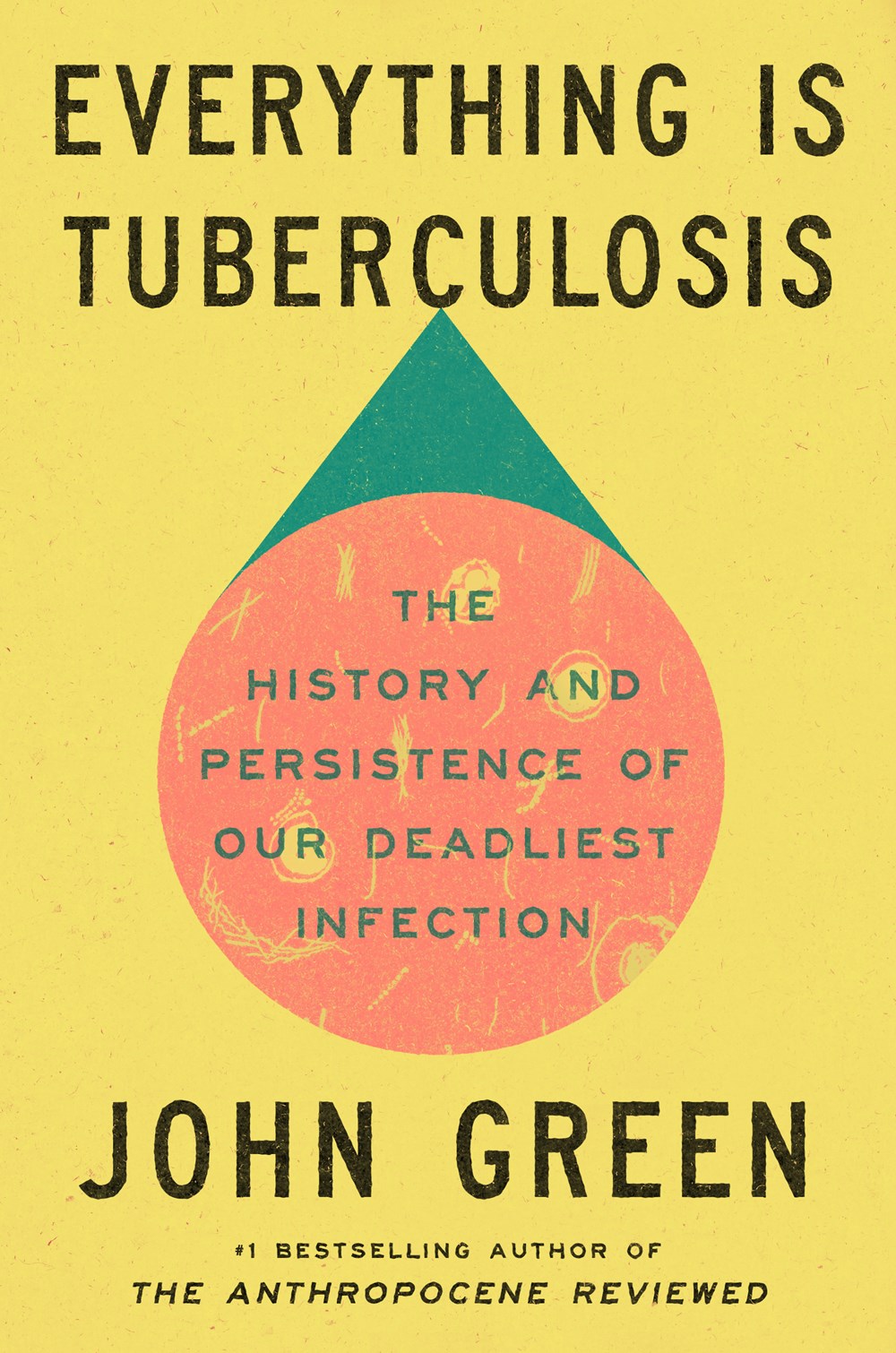
John Green’s, ‘Everything is Tuberculosis’ is a great piece of writing. It is also an excellent, expansive and accessible introduction to the world of tuberculosis. By number, it’s the world’s most deadly disease, but one that is often overlooked by those of us in the wealthier, western countries, where it is largely controlled. This is a history of the human experience and the way that we have gone about treating it, or not. Tuberculosis (TB), is a disease that was an undeniable fact of life around the world for the majority of ‘modern’ human existence, before germ theory and our ability to develop and implement effective treatments. There was literally no place in the world ‘untouched’ by it. It killed indiscriminately. Author Green, mostly known for his young adult fiction, tackling problems of teen angst, love, loss and grief, here goes beyond this, asking the question, that since TB is treatable and curable today, generally even those forms that have developed resistance to several of the drugs used to control it, why is it still killing 1.25 MILLION people around the world every year? The answer isn’t difficult to find, but it reveals an ugly fact of modern life. The disease still kills to the degree that it does today because of prejudice, poverty, underfunded health care systems, a misguided reliance on cost ‘effectiveness’ when deciding who is ‘worth’ treating and a pharmaceutical industry far more interested in protecting and increasing its profits than it is in working to bring about a healthier world. Continue reading
Category Archives: Political Action
The Lost Trees of Willow Avenue, a Review
Global climate change, in our current political climate, has been relegated to a
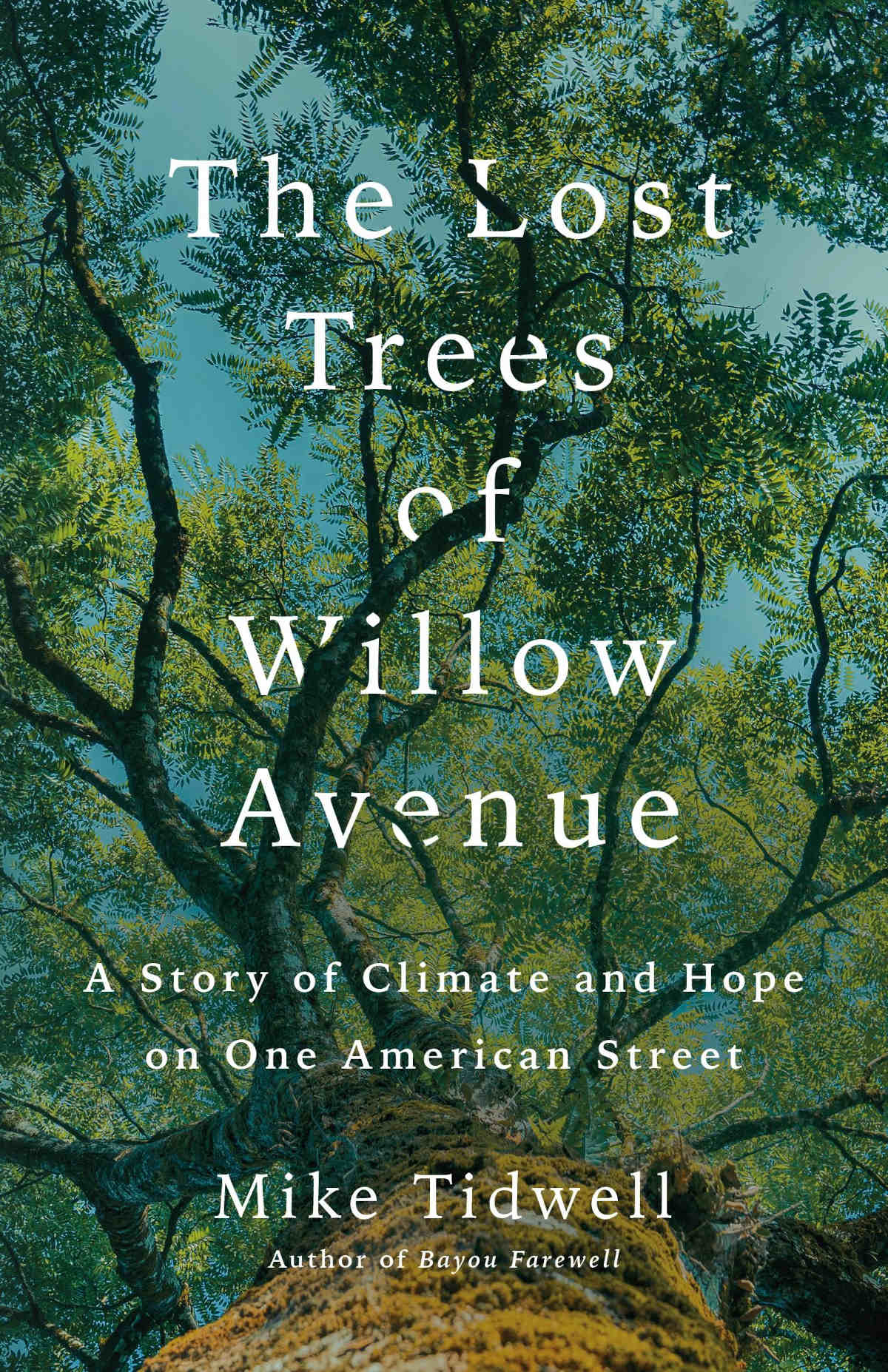
secondary status. There is so much ‘shit’ hitting the fan right now that it gets largely lost in mainstream media coverage. The science that supports it, continues, although at a slower rate. Our transition from fossil fuels to renewable energy has slowed along with the republican denials, their actions to ‘deBidenize’ America, cutting funds appropriated through the Inflation Reduction Act, ‘seed’ monies to fund needed infrastructure investment, along with their cuts to the funding of research into the supporting science and technologies. The topic has been rendered into one of ‘belief’ as if its consequences will have no real world effects, a simple argument of the uninformed, like ‘Ford beats Chevy’, pointless and personal. Author Mike Tidwell, an obvious long time ‘believer’ and lobbyist, has worked over the last 30 years to move the political dial toward climate action, amongst his neighbors, his home state of Maryland and Congress. Here, in his recent book, “The Lost Trees of Willow Avenue”, he tells his and his neighbor’s story, in his DC area neighborhood, of the real world impacts they’ve observed and are attempting to combat. Amongst his neighbors are Congressman Jamie Raskin, his friend, Ning, a college prof who has been working tirelessly on getting a novel carbon sequestration program up and running, a local state legislator who has been working to get massive scale wind generators built off shore and others working in smaller ways, dealing with the fall out of a climate already changing around them which, among other things, is causing crazy weather perturbations, changes in rainfall and temperature swings that are leading to things like a large increase in Lyme disease, because the milder winters are killing fewer of the disease carrying ticks, while also leading to the massive die off of mature trees across their neighborhood. Continue reading
Our Central Problem is Economic

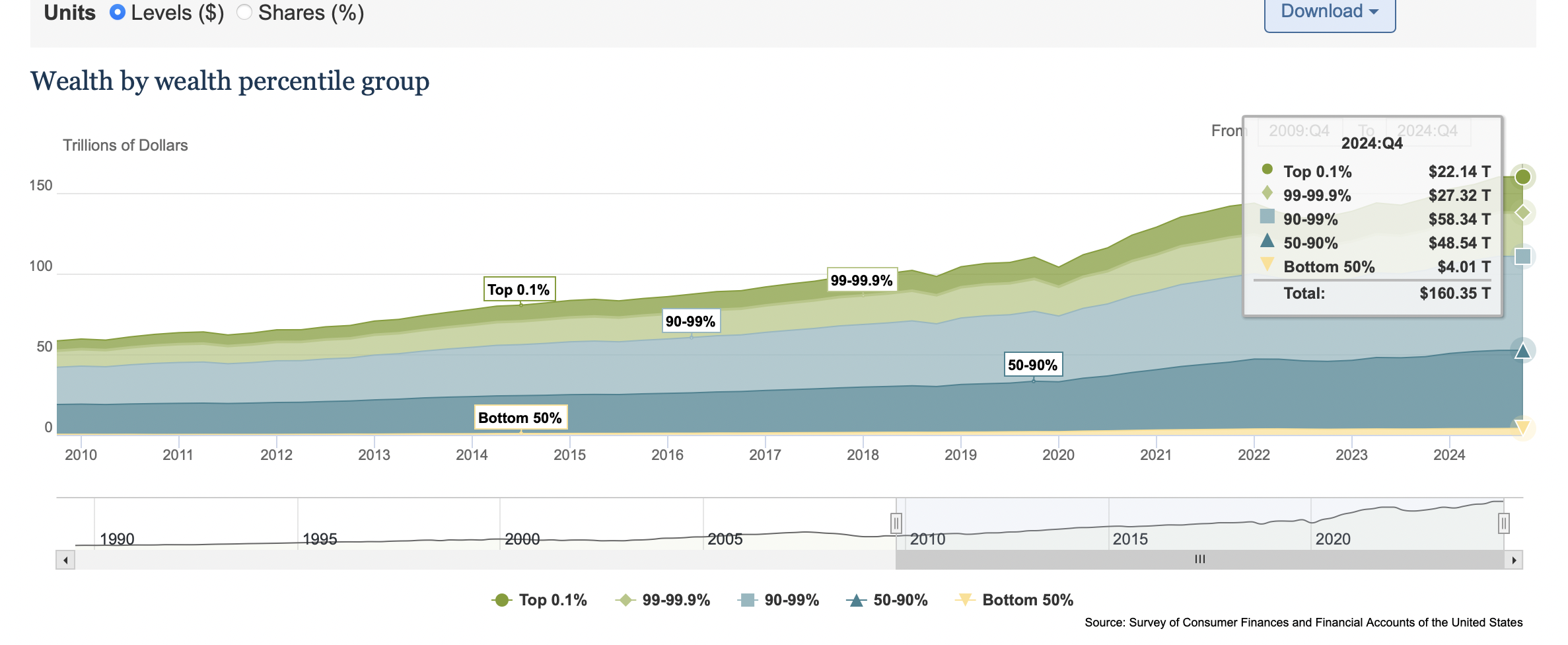
Go to: https://www.federalreserve.gov/releases/z1/dataviz/dfa/distribute/chart/#range:2009.4,2024.4
to examine this interactive graph in more detail.
If you follow the pundits, social and mainstream media, the problem in America would seem be one of a splintered society, one fatally compromised by a mix of peoples that simply cannot be reconciled. The American ‘melting pot’ separated into battling bits, the ‘recipe’ that formerly held it together proven to be a ‘suspension’ of parts that never really belonged together and now, without, enough support, is failing…but is this true? If you go to a more primal, basic, level and ask what do people need, it always begins with survival and how when one’s survival, our security, feels in doubt, when we are confronted with overwhelming threats, fear begins to take us over. We become less nuanced and subject to manipulation, by slick talkers and those who would use us. Truth, becomes malleable as we struggle for something ‘real’, something ‘solid’. Continue reading
Being Transgender: On Gender Dysphoria, Biology, Evolution, Human Survival, and a Look at One Person’s Story
Yesterday, our local book group met to discuss, “Tall Annie: A Life in Two Genders”, with its author and her husband of 18 years. The book is about her often painful, very personal, story of growing up with gender dysphoria, a recognized condition now, but not then, in which a person is born with the genitalia, the physical features of their sex, in conflict with their own gender identity, how they see themselves. These are two separate qualities, one’s physical sex and one’s gender. I won’t get into how one’s physical sex can be intergraded, except to say that an individual, every individual, is born along a continuum between the two poles of being, female and male, some individuals born intersex, with neither male nor female fully formed genitalia, genitalia that may only be partially functional. We are each more or less male or female. Sex and gender are not a simple either/or questions. Continue reading
Redmond’s New Community Center/Pool and the Anti-Government Bias: This is What Community Failure Looks Like

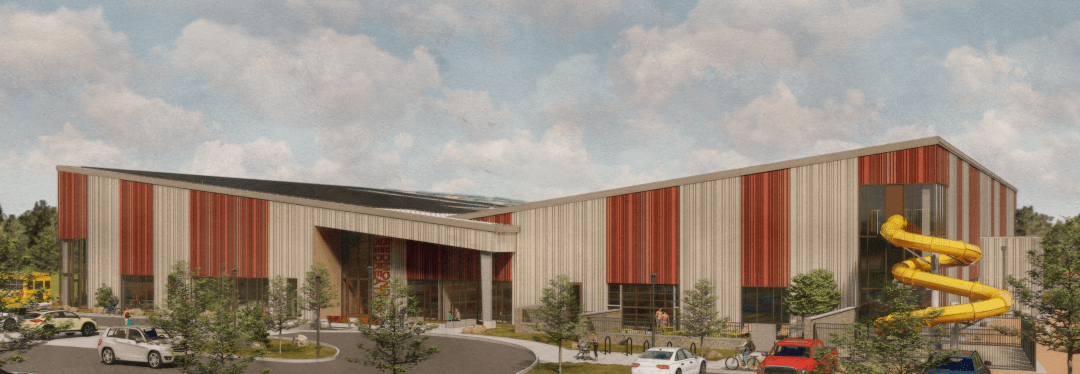
This is the rendering of the new facility’s south entry. It’s the banner on the RAPRD’s announcement of Novembers funding levy for the new facility.
Much of what I write of and post here are topics concerning ‘place’, its centrality to life, including our own. This post is specific and narrow, focusing on a non-gardening, non-horticulture, activity important in my life, swimming. I am recently turned 70 years old and their are many physical things I can no longer do and others I have had to modify, given my record of injuries and ‘weaknesses’ of my body particular to it. I have always ben physically active, craved movement and enjoyed the sensations of moving through ‘space’, of strength and competence, of engagement with….I would run, climb over things in my path, do things to prove that I could, explore the world in front of me; physically, and test that understanding. I enjoyed, and still do, the feeling of being ‘capable’. It is a necessity for me, just as is my mental engagement. It is of the same piece. As I age now, while my physical capacities have lessened, sometimes because of my past efforts, I, like a machine, have been wearing out. But, unlike machines, that physical activity, that stressing and testing of ourselves, allows us to stay capable and strong, a response within limits, to the stressing we subject ourselves to, as long as we get enough rest, have a healthful diet and recognize our own limits.’
I haven’t been able to run or participate in sports that require it, without significant consequence, for quite a few years now. The recognition of my own limits, lead me first to yoga, which I practiced regularly and incorporated into the physical movement of my daily work during my working years. While not ‘slavish’ to my practice, I still do this adding in some specifically core strengthening exercises. When, almost thirty years ago, a local public pool was significantly renovated, I began to lap swim, to help with my upper body and core strength as well as my flexibility. The demands of my work were such that if I didn’t do something, the physical demands of my work, which were greatly lessened during the continuous running around of summer, lead to a weakening of my upper body, just as I would be back to placing it under most demand. As I was aging my spinal anomaly was becoming an ever bigger limitation and I was looking about for solutions. I wanted to be able to continue my work in horticulture/parks and was afraid my career might end with me in chronic pain and incapable of doing the things that gave my life purpose and direction. I overcame the idea of boredom and tediousness of swimming face down in a pool lap after lap, as well as my unease with breathing while face down in water, and both my health and sense of well being improved. I still swim. It has become essential. I know what stopping for a significant amount of time means for me. So when we moved, having ready access to a pool was a top priority for me. We bought a home in a community with a lot on which I could garden, with a view of the Cascades and a pool…at least the promise of one. The pool has not yet been built. Continue reading
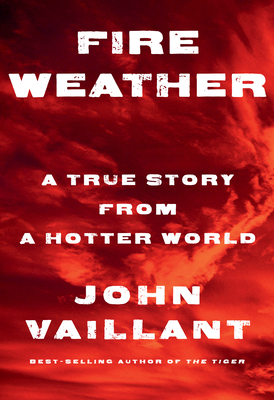
John Vaillant’s, “Fire Weather: A True Story from a Hotter World”
‘Global warming’ and ‘climate change’ have become trigger phrases, hot buttons for millions of Americans. What were originally coined as descriptive, short hands to signify a complex climatological process induced and accelerated by human action, has been thoroughly politicized. Today they separate ‘us’ from ‘them’.
For those on one side, the earth, is a closed, limited and complex system we are ‘pushing’ beyond its inherent abilities to maintain dynamic balance within margins which organisms can live in a vital, healthy state, biological processes continuing in a familiar manner. This ‘side’ understands that we are adding vast quantities of carbon to the atmosphere causing the earth to retain more heat, heat which ‘spins’ the entire system faster, potentially beyond the limits that life evolved with. Such a more ‘carbonized’ atmosphere resembles that here of many millions of years ago, of a warmer earth, that was nonsupportive, too warm, for the vast majority of organisms which exits today. Too much carbon released into the atmosphere? These effects are easily demonstrable in a lab experiment. These people have some understanding of what they must do to slow and halt these changes, what we must do to ameliorate the damage we’ll inevitably face. Pushed too far the system won’t return to the old ‘normal’ in a few weeks, months or years. It will be with us for generations to come. Continue reading
Weeds, Weeding and the Health of Our Public and Private Landscapes: an example from the ‘hood
Every gardener is a weeder. Gardens are created landscapes, often expressions of the individual gardener or, lacking of intent and design sense, those of a chosen designer. We live in our landscapes as active, responsible, creators, participants and stewards. Gardeners are trying to create a particular look or to grow particular plants native to their area, or with ornamental value or food plants to feed themselves and their families. Some of us are simply pursuing what we understand to be a healthy relationship with one’s place, to undo the damage and allow a new healthy and vital landscape to grow. These are landscapes of our choice. Our intention and control results in various volunteers and weeds finding their own place and so follows the need for weeding.
We watch carefully, monitor the impacts of our work, attempt to understand what result is moving us closer to our goal and which might be indicators of further loss. Landscapes and gardens are incredibly complex systems and anyone who claims to have all of the answers is fooling himself and you. Our landscapes are broken, by us and our predecessors. The Pandora’s Box of weeds and disruption was burst open long ago. The only way ahead is to find a new path. Weeds are here filling the niches we have collectively made and maintain for them. The more one is surrounded by aggressive, well adapted weeds, the more time we must spend controlling them. While this can be significant, gardeners mostly take the work in stride, a necessity to reach our goal, a goal which may be the simple act itself, of working in concert with our place…open to its teachings. Gardening, is a way of life, a smaller scale version of farming and the management of large ‘natural areas’ with their attendant commitment, rhythms and demands. Continue reading
Notes on Complexity: A Scientific Theory of Connection, Consciousness and Being, Thoughts on the Book
[My ‘reviews’ are not strictly book reviews. I’m not trying to distill the author’s ideas down into a simpler ‘bite-sized’ piece or discuss their ‘style’. These are my thoughts after having read these books. My attempts to make sense of them, usually after several rewrites, as I work to fit them into what I already ‘know’, an attempt to make the ideas presented in this book, consistent with those which I’ve read by other authors. They include ideas not covered by this author. Rarely, if ever, can you come to an understanding from a singular perspective. This is a link to an annotated bibliography on my Blog of several of the more significant books which have influenced me on this topic,]
Complexity theory? Do we need a theory to determine what is complex? No, that’s not what this is about. Theise’s book does not layout a system for determining what should be considered complex/complicated or not. This is a book about systems and structures in nature and how they come about. He discusses how mainstream science has fallen short in explaining this and why, the author believes, without changes in approach, we will continue to fall short. He goes on to present an alternative, or, rather, a ‘sister’ approach which can provide a previously excluded way of ‘knowing’, and in so doing, can account for the ‘gaps’. The problems are not just that this is a difficult concept to understand, but that at the most basic, quantum, level, that at which nothing can be divided smaller, where all things ‘begin’, actions and processes do not follow human logic and contemporary expectation….
I remember reading the book “The Limits to Growth” in the early ’80’s, which introduced me to ‘systems theory’, an approach which required looking at all of the parts and actions within a system, consider their relationships and how they work together, in order to understand its ‘working’. A system could be ‘modeled’, mathematically and the long complex equations run on a computer. There were generally multiple possible models to run. This gave us a degree of ‘predictive’ power, but these would always be approximations, because no model could be perfect and every situation, every starting point, would result in a somewhat different ‘answer’. I followed this with James Gleick’s book on Chaos Theory and its ‘ability’ to explain certain types of patterns, which appear spontaneously in nature, while introducing me to the idea and maths of ‘fractals’. There were multiple books on ecology which necessarily take a wholistic approach. James Lovelock and Lynn Margulis, published their book on Gaia Theory, a product of their collaboration which began in the 1970’s, a theory of the Earth itself functioning as a self-regulating system, as if it were a gigantic, single, organism of which we ourselves are a part. All of these were related, coming out over a short span of years. These were ‘new’ hypotheses and theories, never before seriously considered by science back then, but now being investigated, their validity, and the answers they suggest, impossible to ignore.
Science often advances this way. Seemingly radical ideas, rejected by the majority of the mainstream…until resistance worn down, their validity demonstrated through thoughtfully conducted and reviewed experimentation, the scientific community then coming around to more broadly adopt them and reshape science and our understanding. (Some argue that this ‘process’ requires some number of the old guard to literally die, younger minds being more free to consider the new.) Margulis and Lovelock’s ideas were just too far out there for most at the time. For many, such thinking then belonged to the realm of metaphysics, or fanciful science fiction, frivolous exercises in thought and belief. Exploring these ideas, testing their validity, only became possible with the computational capacity of ever more powerful computers and an openness to branches of thought once rejected by science. ‘Game Theory’ and cybernetics played a role in all of this as well. Complexity Theory has far more capacity to explain how matter and functional systems emerge, or manifest, than mainstream science could historically. Nature, through the conditions and forces in play at any given moment, ‘drive’ the universe toward order along with the ‘creation’ of complex structures and functions, at the cost of energy spent, ‘held’ in the new structures and dissipated away as lost heat. All of countless processes linked to one another through a myriad of relationships and the feedback loops which comprise them. The universe continues to evolve, and as it does, it continuously spins off everything in it, from sub-atomic particles to human beings over time, a process which it itself is directly influenced by its evolving ‘self’.
The Dawn of Everything: The History of Humanity; a Review
David Graber, an anthropologist, and David Wengrow’s, an archeologist, book, “The Dawn of Everything: A New History of Humanity”, is more than ‘just’ a history of humanity, which would on its own suggest a massive tome of thousands of pages. it is an examination of how we ‘do’ history drawing many examples of peoples and societies across time from the Paleolithic through the colonization of North America. It is not simple reportage, rather a look into the correctness or accuracy, of how we have been telling history. I enjoy such questions and their capacity to rock the academic and intellectual ‘boat’. My reading has spurred the formation of links to two other books I’ve read recently, Stephen Jay Gould’s, “The Burgess Shale” and Pekka Hamalainen’s, “Indigenous Continent”. All three of these call into question previously widely accepted thinking on their subjects. More than this, they question foundational ideas upon which the science they examine are founded. This appeals to me. But more than this, there is an idea central to them all which really rings ‘true’ for me. Continue reading
Democracy, Inclusion and Full Citizenship as Biological Imperative: Arundhati Roy and the Politics of the World
When we open ourselves up to the world, travel to other regions and countries, see and live in different geographies, experience other cultures, climates and biomes, we have the opportunity to be intimate with and understand world’s very different than our own. The world is vast and its peoples and organisms, though astoundingly diverse, are closely related. Even if we could travel ‘everywhere’, having a meaningful experience with all of it is simply not possible. It is dangerously presumptuous to assume that anyone of us might understand all of this. Such travel, should we want to, isn’t possible for the large majority of us, which does not mean that there is therefore no point in traveling to where we can. If our goal is deeper than simply ticking off places and experiences, if we are seeking to understand, to ‘grow’ ourselves, our limited travels can still serve us. For the rest of us it is through reading and the sharing of stories that we can gain such insight, as long as the authors, our guides, are themselves astute observers who are engaged in the places and peoples of which they write. There are many such writers…I can think of none better than Arundhati Roy who writes so beautifully, imaginatively and painfully of her beloved home India. Continue reading