Himalayan Cloud Forest Garden: Update…Plant Pilfering

Hmmm.  Sadly, someone has decided that, once again, plants planted in public places are available for the taking.  I’ve been informed the a few Arisaema, among other perennials have disappeared after they began to bloom.  Having gardened myself for many years in the public sphere, it is aggrevating, and disturbing, how some people decide they can take plants, because, after all, they pay taxes.  I’ve actually had people tell this to me when they were confronted.  Others, I imagine see it simply as an opportunity to get ‘free’ plants.  The worst times have been when I’ve had plants pulled up that I find elsewhere, broken, dried and dead.  Once, I had a Fejoa sellowiana, now Acca, dragged across the lawn at Waterfront Park, they left a dirt trail, to where they tossed it into the Willamette over the seawall!  Several years back, I came back the next day to finish a planting and all of the Spiarea I had planted the day before was gone, more than 20 plants, so probably by a landscape company, and this was from a utility planting to shield a parking area.  Many public gardens, maybe most, around the world, are protected by fencing and locked gates after hours.  This adds more costs upfront and can often make regular maintenance more difficult for access reasons.  One alternative is to plant ‘unattractive’ plants that no one will want…, but what’s the point of that.  We can’t ‘nail’ every plant down, so in Parks we would just go back and do it again.  Don’t get me started on the just stupid vandalism of broken trees….

Hiking in Phoenix’s South Mountain Preserve

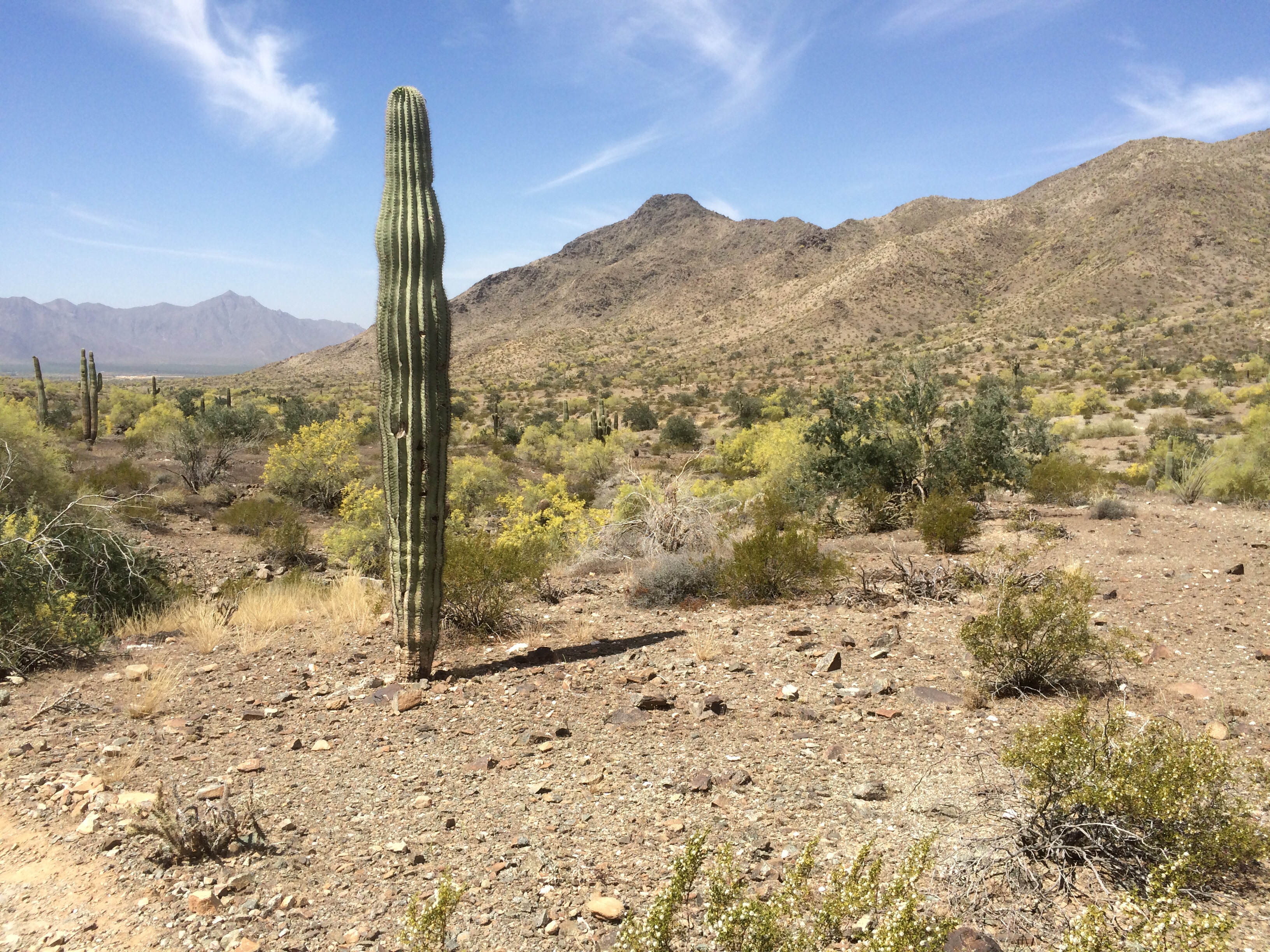
A Saguaro along the Bajada Trail looking toward the Estrella Mountains in the distance to the west and Ma Ha Tauk Ridge above me to the right.

A Saguaro along the Bajada Trail looking toward the Estrella Mountains in the distance to the west and Ma Ha Tauk Range above me to the right.

(This will be one of several entries describing hikes, botanical gardens and arboretum I visited in southern Arizona this April, 2015.)

Today Julie has work to do (She’s on a buying trip and I tagged along!) so I’m going out, down to the Phoenix South Mountain Preserve to hike a loop on the Bajada (the incline at the base of a mountain formed by the erosion of the mountain) and Alta (or high) trails. The Preserve, at over 16,000 acres is the largest municipal park in the US (Portland’s Forest Park pales at 5,172 acres.) I began my hike going the ‘wrong’ way on the Max Delta Trail having incorrectly read the directions so I added an unnecessary mile by the time I figured it out. The Bajada Trail climbs only 40’ but it constantly wends its way around rocky barriers and down and back up washes filled with tumbled granites…. The hike and region lies within the Sonoran Desert Scrub region, Sonoran, because the majority of the plants are sub-tropical in origin and are associated with the plants of Mexico’s Sierra Madre Occidental and Baja Region, not plants from the Rocky Mountain Plateau. The Salt River, that ‘flows’ south and west through Phoenix, is the northern boundary of this region, where the area becomes transitional as it gains elevation climbing to the Verde River and Mogollon Rim. Okay, too much. Continue reading

Adaptive Management and the Dynamic Maintenance of Sustainable Landscapes


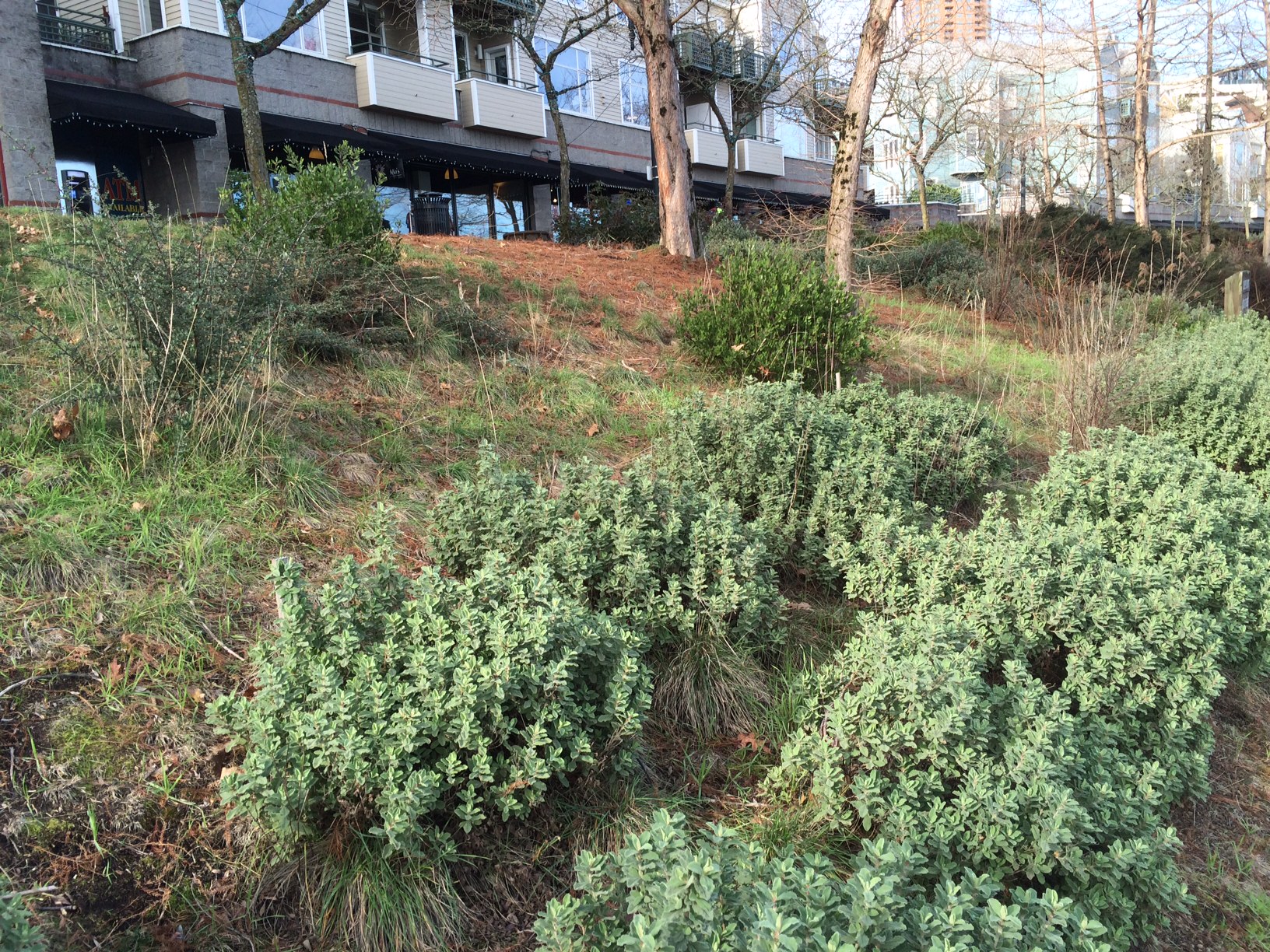
The second grassy bay, below the Harborside Restaurant, between the Taxodium clumps from the south end. A sweep of Cistus pulverulentus 'Sunset' at the bottom, Ceanothus cuneatus 'Blue Sierra' at the left and two Arctostaphylos x 'Harmony'. The grasses are Kohleria macrantha, native, Festuca rubra commutatta and a few nasty invaders.

The second grassy bay from the south end, below the Harborside Restaurant at Riverplace, above the marina, between the Taxodium clumps. The ’04 planting included no shrubs or perennial forbs in this area.  It was a monoculture of Koeleria macrantha, a native early season bunch grass that goes dormant by mid-July leaving the entire area vulnerable to invasion by weeds and offering no ‘barrier’ to either people or dogs, which enter frequently. A sweep of Cistus pulverulentus ‘Sunset’ at the bottom, Ceanothus cuneatus ‘Blue Sierra’ at the left and Arctostaphylos x ‘Harmony’ have been added to this site along with Festuca rubra var. commutata a low, fine textured spreader to help fill in the spaces and scattered native perennials.

We, all of us, are part of the landscape.  Just as individual plants belong to a local native plant community, and its place, so do we. That we live in highly disturbed and contrived landscapes does not change the fact that we live in relationship with it, that we are a functioning part of it. Deny this as we may, many of us as a group likely admit to very little connection to our ‘place’. It’s just where we live, for now. Our understanding of it and any involvement with our landscape, other than as a simple stage for our lives, is minimal, a condition which has become pervasive in modern society. Some professionals, who work with children have come to refer to this state as NDD, or Nature Deficit Disorder, a dissociative relationship now that was once basic to human survival. Today this condition is pervasive and our landscapes, as a result, severely disturbed, damaged and compromised, lack the capacity to return to their former state. There is a general ignorance amongst the public and our leaders of the severity of the problem and our necessary role and responsibility to correct it.  We are locked into a strategy that views landscape as incidental, the natural world as backdrop for our activities, not central to our well-being.  Today landscapes, as long as they meet our grossly simplified idea of our needs, a modern minimalist aesthetic, that does not over tax our ‘pocketbook’, are forgettable. From a horticultural viewpoint this is becoming an increasingly deteriorating disaster, something that not only we can do something about, but one that is imperative that we do so.  Adaptive Management describes a responsive relationship between people and the place in which they live. It is centered on a positive and workable strategy we can adopt that addresses this situation and turns it around, reengaging us with our landscape. Continue reading

A Look into Colony Collapse Disorder (CCD) and the Use of Neonicotinoids: A View from two Extremes, part 2

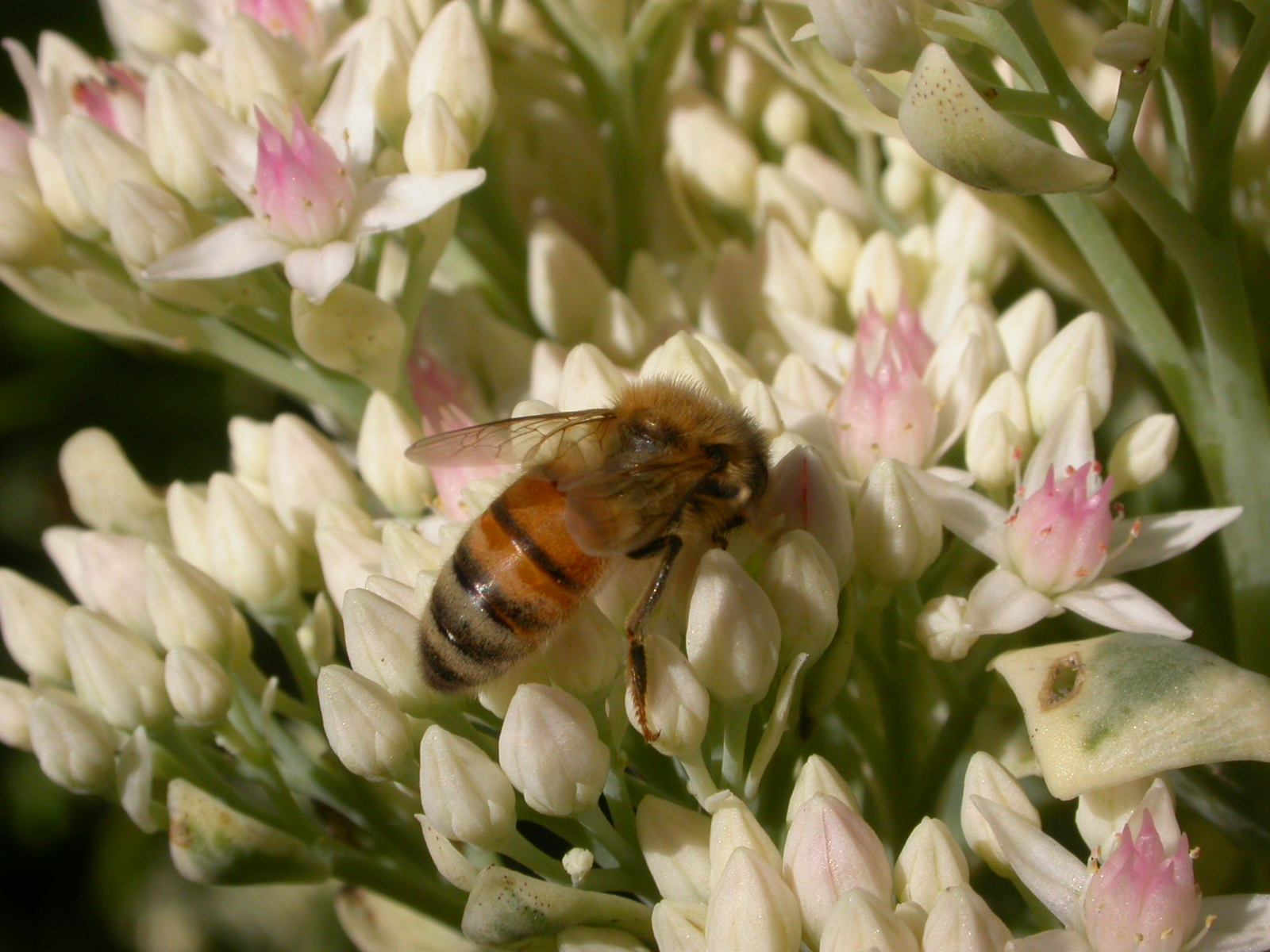
A bee working the large inflorescence of a Heptacodium miconoides.

A bee working the large inflorescence of a Heptacodium miconoides.

This is the second and last installment of my look at Jon Entine’s articles and the strategies he employs.  Here is a link to the first of my postings on this.

Part II: Bee Deaths And CCD – Flawed Chensheng Lu Harvard Studies Endanger Bees

By Jon Entine | November 24th 2014

Last week, in Part I of this two part series, “Bee Deaths Mystery Solved? Neonicotinoids (Neonics) May Actually Help Bee Health”, we explored the claims by Harvard School of Public Health researcher Chensheng Lu, heralded by anti-pesticide and anti-GMO advocacy groups, for his research that purportedly proves that the class of chemicals known as neonicotinoids are killing bees and endangering humans. And we saw how many journalists, our of ignorance or for ideological reason,s promote dicey science. 

(Some advocacy groups have latched on to Lu’s work looking for legitimacy and support. There has been a growing community of resistance to much that has been going on in the agro-chem-gentec industry that pre-dates Lu and his research. They have been challenging the multi-billion dollar industry on multiple fronts. On the other hand, it only takes a little checking to discover that Lu is often viewed as a ‘liability’ within the scientific community and a hinderence to their efforts by many in the community who have been advocating for good science in the political process that regulates these industries. They did not choose Lu nor do they now claim him as their champion. Entine, in his previous article strategically chose Lu as a ‘straw dog’ to represent his opposition, the “anti-pesticide and anti-GMO advocacy groups”, a target that he could then ‘tear down’ and then apply to the opposition groups as a whole, as if Lu, with his biases and ‘sloppy science’ were truly representative of them. In these articles, at least, Entine gets to choose. This strategy is becoming increasingly common when ‘industry’ and their front men, under attack, seek to ‘confuse’ the public thus reducing political pressure that might seek to limit them and their ability to conduct ‘business as usual’. Continue reading

A Look into Colony Collapse Disorder (CCD) and the Use of Neonicotinoids: A View from two Extremes, part 1

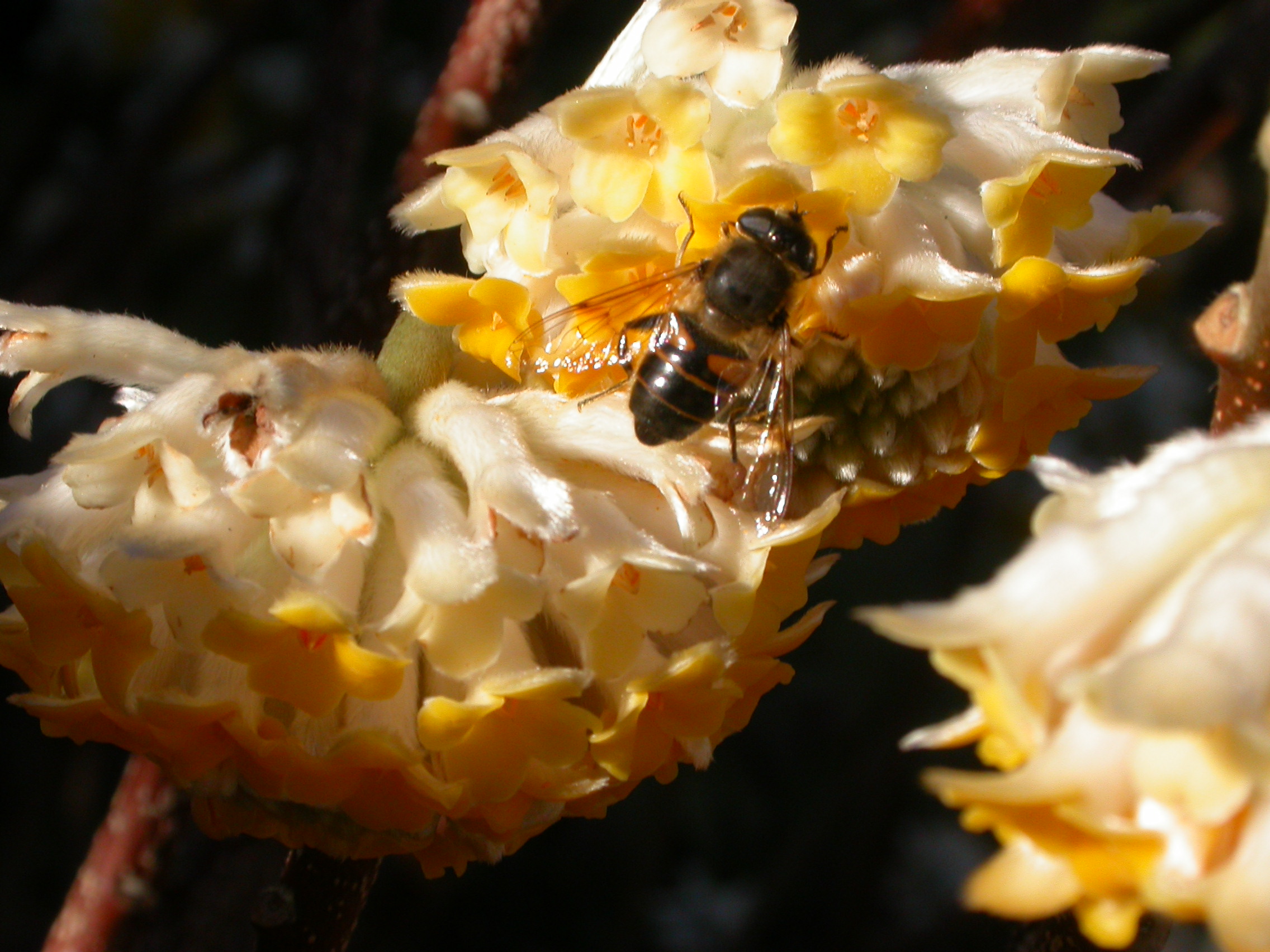
A bee visiting the flowers of an Edgewortia chrysantha in Washington Park.

A bee visiting the flowers of an Edgewortia chrysantha in Washington Park.

The following posting is built around an article written by Jon Entine in response to Chensheng Lu’s claims that Neonicotinoides, synthetic Nicotine, a commonly used ‘group’ of insecticides in modern conventional agriculture, are at the heart of CCD.  There is a link to the original Entine article posted on his site, the Genetic Literacy Project ,it also appears, on the Science 2.0, website.  There is a second Entine article as well addressing more directly Lu’s ‘science and Entine’s conclusions that I will deal with in a later posting.   I began this after reading it several weeks ago on Facebook and was initially, convinced by it that Lu was in fact practicing bad science and that bothered me, because Entine’s article was ‘pushing’ me so hard to get to that conclusion.  Later, the topic kept popping up on my radar as I saw calls for bans of neonics here in the US.  I more recently was puzzled by what I found on the Xerces Society website regarding the issue…so I decided to look a little deeper.  What follows is still a beginning, an attempt to winnow the ‘wheat from the chaff’.  There are many more questions to ask if we are to make a responsible decision on this issue.  Such things are never simple when fallible humans and corporations are involved. Continue reading

The Himalayan Cloud Forest Garden in Washington Park: A Collection of Species Rhododendron & Asian Companions

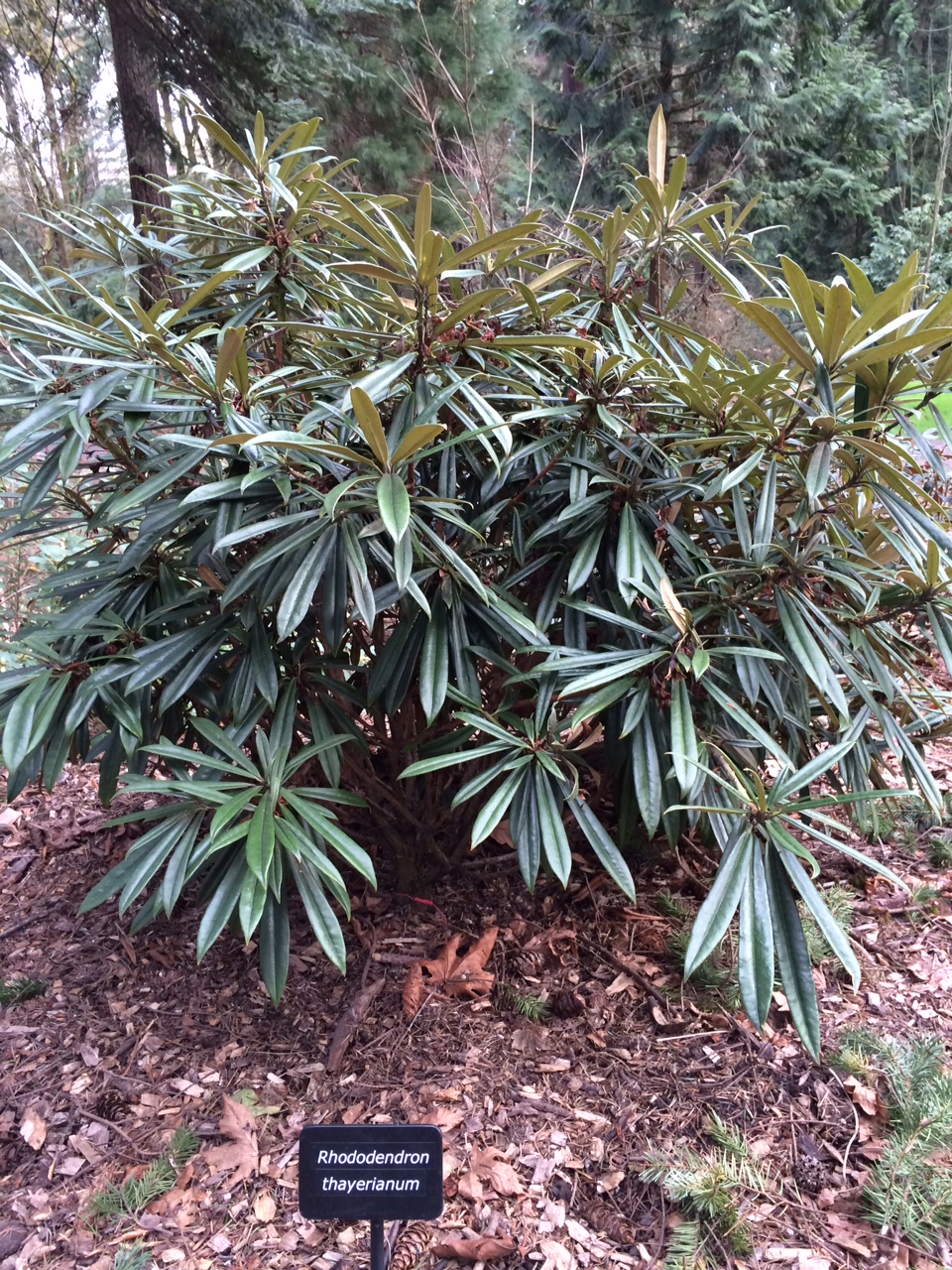
R. thayerianum has wonderful glossy narrow leaves with a prominent mid-rib. The leaves stand out in whorls to great effect!

R. thayerianum has wonderful glossy narrow leaves with a prominent mid-rib. The leaves stand out in whorls to great effect!

A few years ago the Washington Park crew started to joke about their new ‘Himalayan Cloud Forest Garden’ on the north slope of the Park above west Burnside. I was still working in the Downtown Parks and though not part of the project, was greatly excited by its creation. What began as an Ivy removal/ restoration project had quickly morphed into an idea for a species Rhododendron display garden (Or, perhaps, the idea came first!). Washington Park, minus the Zoo/ Arboretum acreage is about 160 acres. Much of the terrain is rough and undeveloped. For years, due to budget constraints, maintenance has been focused on the high use impact areas.   Neglected areas included the ‘Cloud Forest’ portion above the ‘Canyon Walk’ which follows the draw down to the old Stearn’s entrance on Burnside where it begins to carve its way through the trees. Over the years English Ivy built up to a smothering blanket. Other plants, like English Holly had reached mature size and were seeding in alarmingly. While on the crew myself, some years earlier, I spent many hours cutting, treating stumps and dragging the Holly trees off. That effort accelerated in recent years when the two staff ‘Rhody-philes’ began feeding off each other’s energy.

Continue reading

Trip to Lan Su

And Now for Something Completely Different....(M.P.)

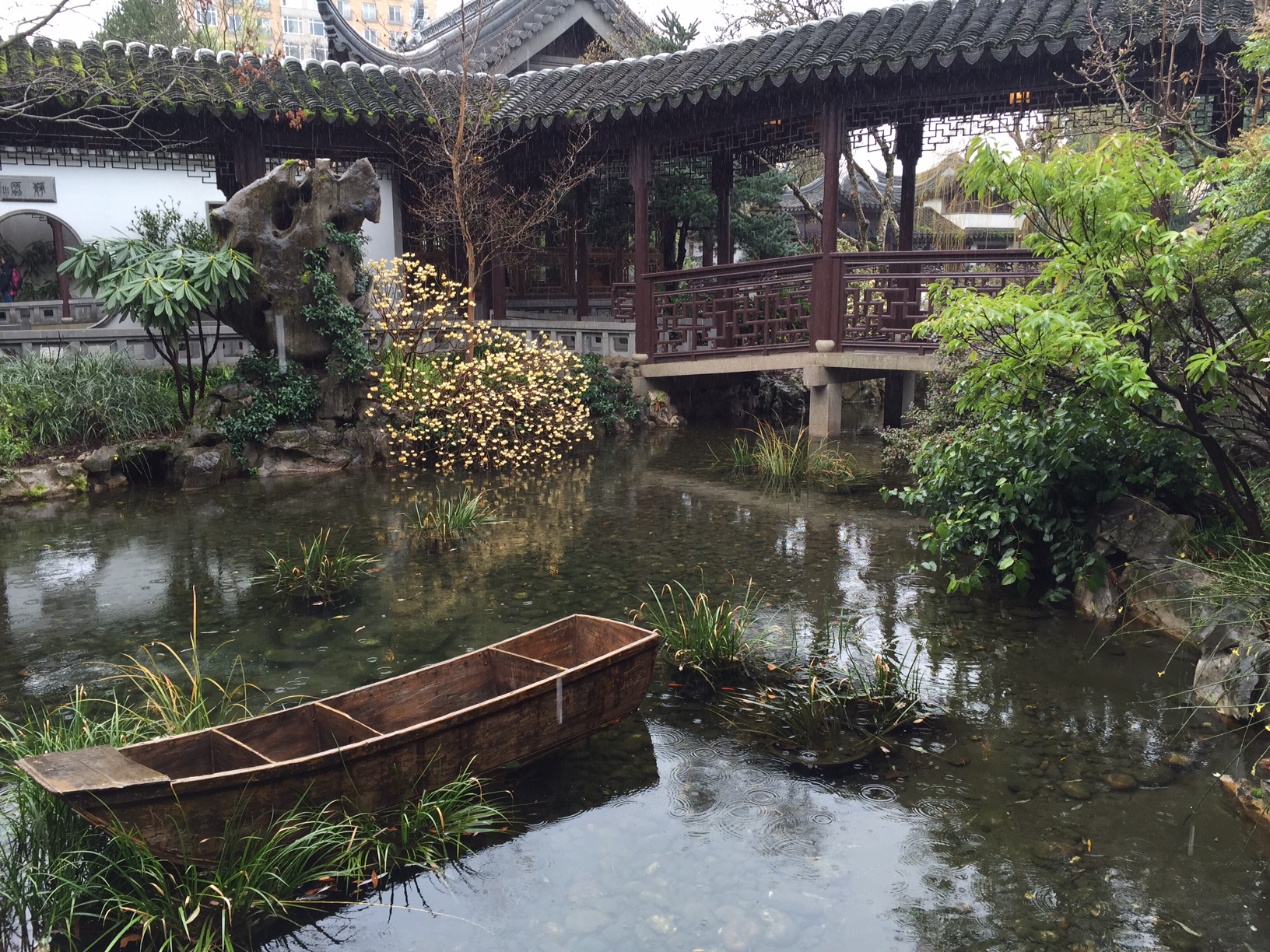
Lan Su Portland's Classical Chinese Garden - photo by Stephen Morgan

Lan Su – Portland’s Classical Chinese Garden – photo by Stephen Morgan

Rain spotting glasses

Wheels carving narrow arcs

Down wet pavement, hissing…

Between emptied houses

Over-arching trees, waking

Storefronts, hulking warehouses…

Drawn to the river, hot breakfast

With a friend. I warm

And dry quickly.

Rain drops spotting a quiet

Pattern across the pond

The cool wet February air

Stills the droplets hanging

From twig & petal capturing

Blossom’s scent in their

Tentative grasp drawing our

Attention…, holding it

Beneath a quiet leaden sky

Perfectly. The day pulls us ahead.

Public Portraits of Xeric Plantings at Riverplace and South Waterfront, part 2

This little tour begins from the traffic circle at the intersection of SW Montgomery St. and River Dr, by the sign to South Waterfront Park and Garden.  It has you walking north along the esplanade in front of the shops and restaurants.  It concludes about 900′ to the north at the Riverplace Hotel.

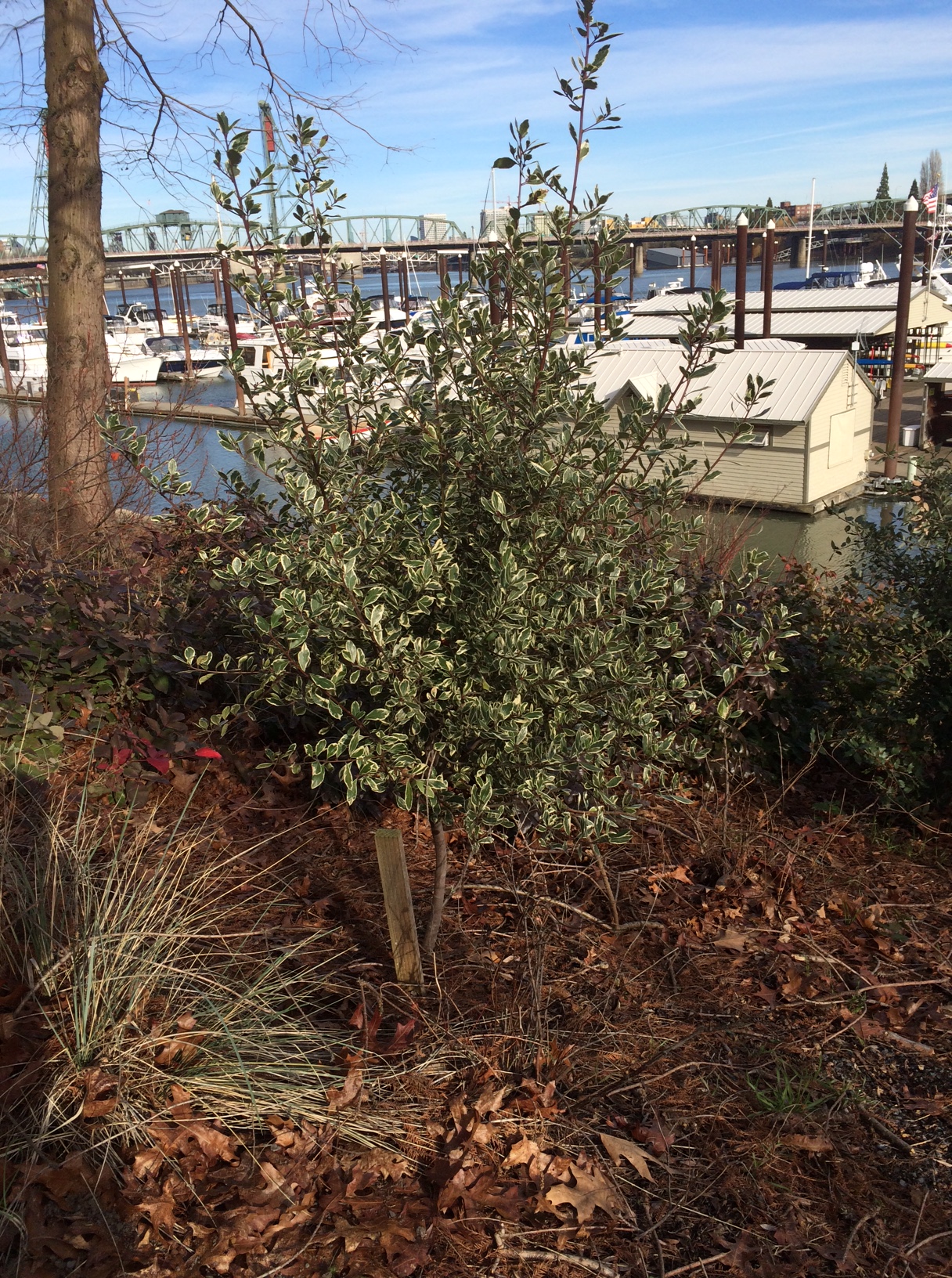
Rhamnus alaternus 'Variegatus' planted between the Blue Oat Grass and gradually dying out Cornus 'Kelseyii'.  It has been very slow. Understandable given the horrendous fill soil conditions.

Rhamnus alaternus ‘Variegatus’ planted between the Blue Oat Grass and gradually dying out Cornus ‘Kelseyii’. It has been very slow. Understandable given the horrendous fill soil conditions. In the immediate area are also a young Quercus chrysolepis, Arbutus menziesii, Arctostaphylos x ‘Pacific Mist’, Cistus x ‘Blanche’, Philadelphus lewisii, Cotinus coggygria ‘Golden Spirit’ and Holodiscus discolor

Continue reading

Palms I Have Grown: A Look into Trachycarpus and its Intimates


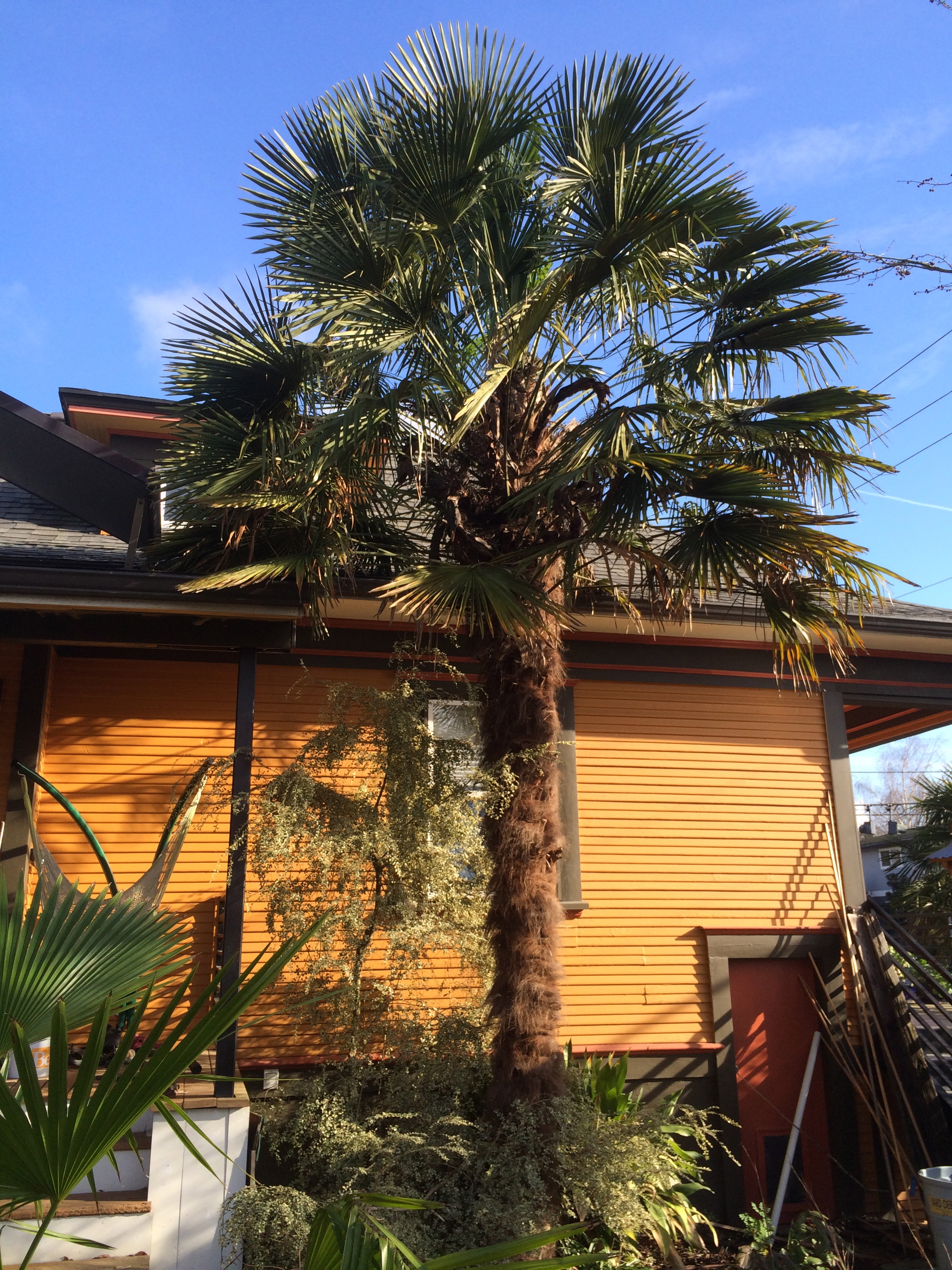
Trachycarpus fortunei - My oldest tree.  The house's gutter is at 13'.  This is the most robust, stoutest, of the 5 T.f. that I have with the broadest canopy.  It's male.  I've just finished cleaning up its rattiest older fronds.

Trachycarpus fortunei – My oldest Palm tree. The house’s gutter is at 13′. This is the most robust, stoutest, of the 5 T.f. that I have with the broadest canopy. It’s male. I’ve just finished cleaning up its rattiest older fronds.  I remove 15-20 every year and have been annually while it’s been in its adult active growth phase.  It will slow down when it begins to approach its maximum height and maturity.

Continue reading