Category Archives: Evolution

On Biology, Ecology, Evolution: Health as a Product of an Engaged Life Aided by Science

Biology, the ‘life sciences’, botany, evolution, cell biology, ecology, health and disease, plant communities, our relationship as humans with each other, geology and the life around us, are all topics that interest me. My most recent reading choices have focused on embryology and an organism’s capacity to maintain homeostasis, what is meant by ‘health’. Earlier I focused on the big question of ‘What is life?’ I’m an integrator, an intuitor, an assembler of conceptual puzzles. For me understanding is the goal and that usually involves understanding the ‘pieces’ of the puzzle and fitting them together into coherent wholes. That’s what I do when I select books and read. While my fiction choices are relatively wide and varied, when it comes to this question, I am far more focused, purposeful. I am not overly concerned with being correct in terms of conventional thought or even regarding that which is accepted as being scientifically correct. I’m looking for what makes ‘sense’. I ‘test’ what I read.

Science is conservative and rightly so. It works to define a foundation from which we may build on. Many, if not all scientific advances, came at the expense and pain of researchers who reach beyond the established to address the problems that accepted theory has revealed as the process advances. Egos and careers can get crushed. Arguably, every significant advance in science began as a controversial idea. Over time, with repeated experimentation, advances in technologies that enable scientists to address questions not previously possible, new insights and ways to ask the ‘question’, the new gains support, or alternatively, is revealed to be ‘wrong’. In this process other questions arise, that move us toward a more complete ‘truth’, a truth that enlightening and revealing, can never be the ultimate answer. What preceded it was not necessarily ‘wrong’, but more likely incomplete, unable to fully explain the world as our understanding of it itself changes. Science becomes a process of understanding at an ever finer scale. What once served, still does, but in a coarser grained way. Occasionally, it demands a radical rethink of our basic understanding of reality. Continue reading

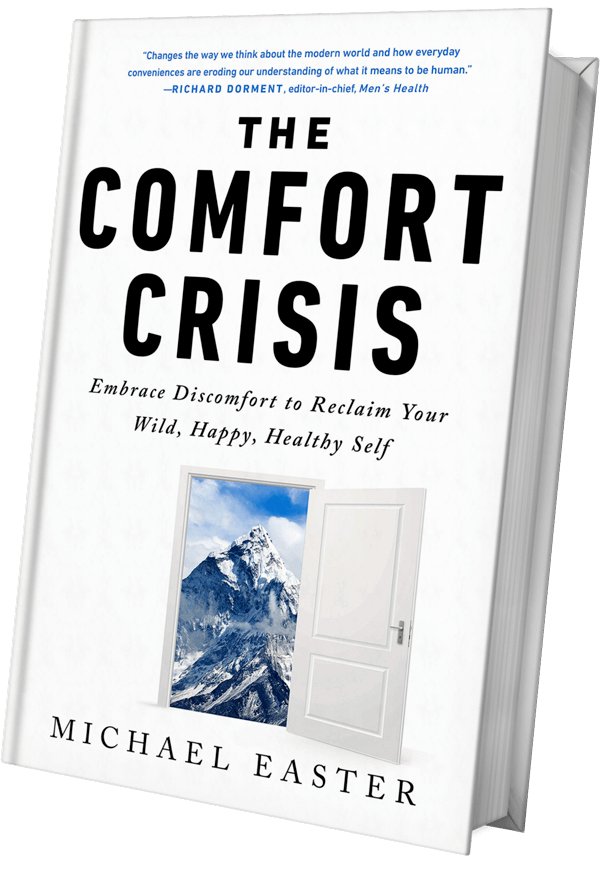
The Comfort Crisis, Thoughts on one of those books that just resonated

I have always been physical. There’s a picture of me and my brother, I must have been four or five, sitting on a pile of boulders, on a hilltop. We had raced, which was common for us, to be the first to the top. I won. I’m grinning and my knee is bloody. It didn’t matter. 

I remember another time playing football in the yard with the older, bigger, kids, being excited after tackling one of them, no pads, no helmet, with my well earned bloody nose. No tears. I wasn’t masochistic, it was a sense of physical accomplishment, of doing something, beyond myself. Such events, not generally ending in blood, but having required physical effort, the outcome unassured, became habitual, even necessary…Sometimes I did get hurt, never catastrophically, although, in retrospect, there was some degree of luck or ‘grace’ in my efforts not having ended with more permanent physical consequences. It was a regular testing of myself. These were important learning experiences, a learning of my limits, the kind of lessons that stay with you. Continue reading

Everything is Tuberculosis: a Disease as an Object Lesson On How to Better Live Our Lives


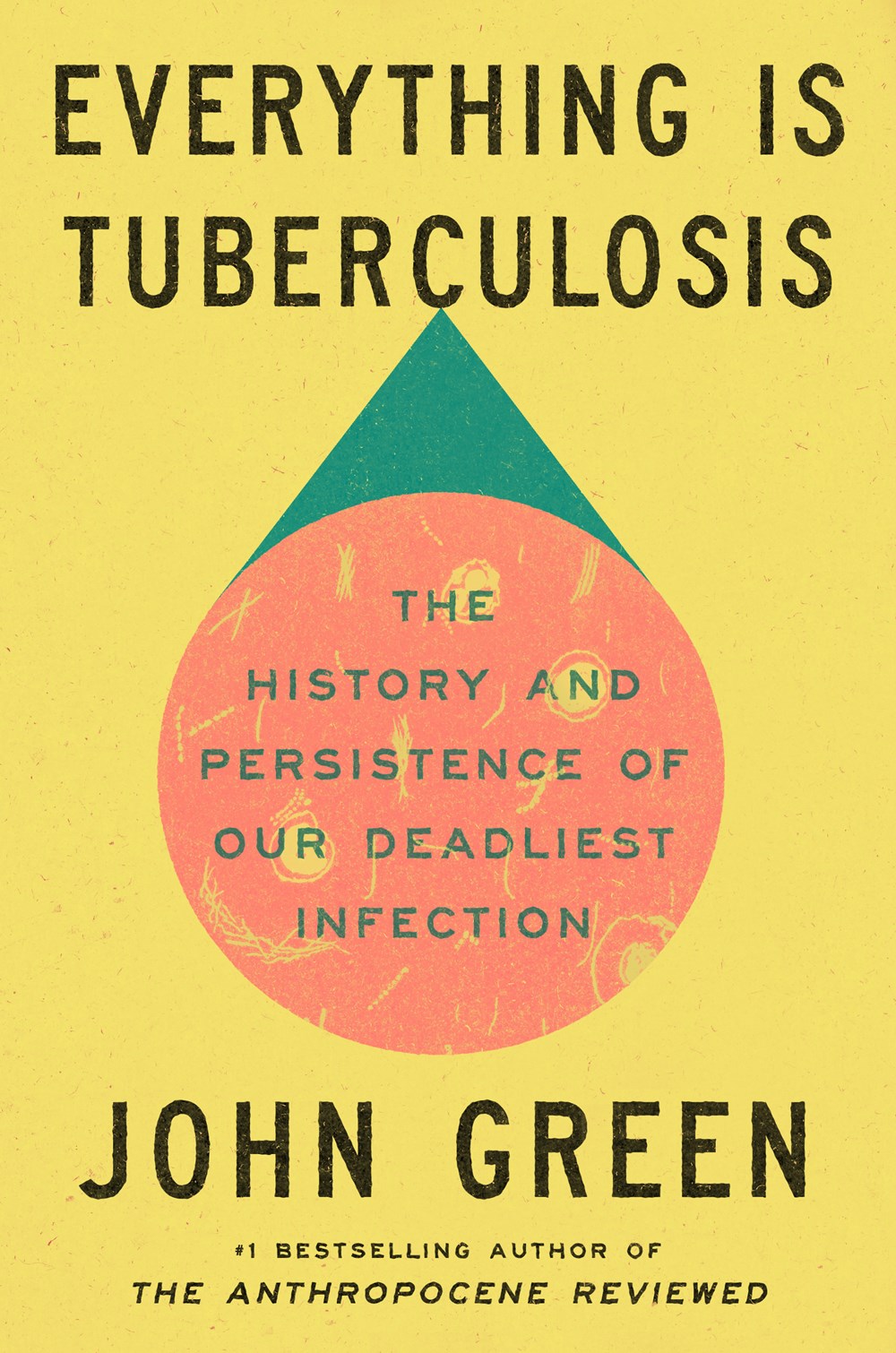
John Green’s, ‘Everything is Tuberculosis’ is a great piece of writing. It is also an excellent, expansive and accessible introduction to the world of tuberculosis. By number, it’s the world’s most deadly disease, but one that is often overlooked by those of us in the wealthier, western countries, where it is largely controlled. This is a history of the human experience and the way that we have gone about treating it, or not. Tuberculosis (TB), is a disease that was an undeniable fact of life around the world for the majority of ‘modern’ human existence, before germ theory and our ability to develop and implement effective treatments. There was literally no place in the world ‘untouched’ by it. It killed indiscriminately. Author Green, mostly known for his young adult fiction, tackling problems of teen angst, love, loss and grief, here goes beyond this, asking the question, that since TB is treatable and curable today, generally even those forms that have developed resistance to several of the drugs used to control it, why is it still killing 1.25 MILLION people around the world every year? The answer isn’t difficult to find, but it reveals an ugly fact of modern life. The disease still kills to the degree that it does today because of prejudice, poverty, underfunded health care systems, a misguided reliance on cost ‘effectiveness’ when deciding who is ‘worth’ treating and a pharmaceutical industry far more interested in protecting and increasing its profits than it is in working to bring about a healthier world. Continue reading

I Contain Multitudes: An Excellent Starting Point for the Beginner to Understand this Life

Ed Yong’s, “I Contain Multitudes” takes a different angle into the biology of organisms, looking not so much at the functioning of the individual as it does those countless single celled organisms, protists and tiny ‘critters’ that live within and upon us, bacteria, fungi, nematodes, viruses, dust mites etc. There are bacteria living within larger, multi-celled organisms with viruses living inside these….And these are not unusual relationships. Such relationships dominate all of life. Their exception is the rare event. Together, in their multiplicity, these constitute living communities, living in the very specific ‘biomes’, found on larger, seemingly independent organisms. Numbering in the thousands, millions, billions, even trillions, these tiny residents live in dynamic symbiotic, mutualistic, parasitic and antagonistic relationships with their hosts, often filling more than one role, depending on the host, the conditions and constitution of the biotic community. Whew! Yong’s book introduction, of the reader to this world, should lay to rest the idea that ‘we’ are truly ‘individuals’. The countless microbes that occupy and ‘invade’ us, have previously been considered unnecessary or consistently compromise our health, sources of disease.…The idea that we can ‘sterilize’ our way to better health denies the necessity of these organisms, or at least most of them, in the health of individuals.

No, he presents a variety of cases which illustrate the absolute dependence of an individual on these microbes, bacteria that breakdown our otherwise indigestible foods into forms that we can then absorb and utilize. Others that may live on our skin, defending us from attack, by providing a defense against other microbes that could otherwise infect us. Their are microbes that infect other microbes (see Martinez Arias’ book, “The Good Virus”), tiny ‘organisms’ that infect that disease’s vector, killing it before we become infected or blocking the disease causing microbe from infecting the vector, keeping it free from the organism which can cause disease in us. Continue reading

The Good Virus, A Review and Thoughts About the Necessity of an Informed Public

Every book tells a story, even the driest academic tome…or rather, utilizes the form of a story. Humans communicate through story. It’s how we give some communicable ‘form’ to our thoughts which we can share. Without it everything is disconnected reportage of facts, personal impressions, emotions. Raw data. Zeros and ones. incomprehensible. To communicate through story requires that we share enough elements of the story, its language, form and ideas, with our ‘listener’, that they can understand what we are saying/writing. If it is too alien, communication does not happen. The listener/reader, hears the words, but the meaning eludes them. Meaning and experience are not shared. Without these, connection, communication, fails. The more esoteric the topic, the more important it is that both ‘parties’ share a common language, that  each is ‘educated’ to some degree, about the world the other is attempting to communicate. As science and technology become ever more specialized and schools and social institutions become more isolated from their larger communities, communication fails more often than not. Especially when the ‘other’ is viewed in a negative light, as untrustworthy. Communication then requires a leap of faith, because as our understanding of the world becomes deeper and more complex, we cannot all become expert in all things. There is just too much to learn. This is when effort, trust and faith, become essential. We must share a commonality, a trust in the other. As shared knowledge, and ‘ways of knowing’ decline, assumptions then dominate. Intentions then become suspect and the very possibility of community and communication evaporate. What we ‘see’, is what ‘we’ see, not what someone else does. Whether or not that is shared is the crux of the communication problem.  Continue reading

Master Builder: How the New Science of the Cell is Rewriting the Story of Life, Alfonso Martinez Arias, a Review

The 20th century brought to the fore the supremacy of genetics, the time in which the secret of life was about to be explained by the DNA held within the double helix of our chromosomes. With our mapping of the human genome, at the last century’s close, after only a short time of examination and study, the secrets of life would begin to be revealed and, with them, the keys to defeat disease and, through our manipulations of these genes, our ability to design improvements that would make us resistant, or even immune, to many of our maladies. Available to us as well would be the ability to select desirable qualities in our progeny. It might even make possible the knowledge and technologies to stop, or even reverse, aging. Genes held the key within their previously unknowable ‘blueprint’ guiding the development of each individual, of every species. Industries have sprung up around this. Billions, even trillions of dollars, stand to be made as we approached our coming futures. But, as is so often the case with science, advances in knowledge bring with it entirely new questions, and what once promised to be explicable, becomes shrouded in an unexpected haze of complexity. Continue reading

On the Danger of Being ‘Normal’ and Exclusive: The ‘Queer’, Diversity and its Essential Nature

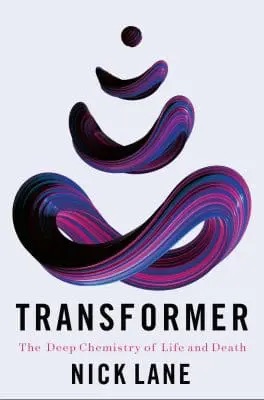
  • I’m a thematic reader, certain topics appeal to me. My tendency is to dive in when they fit into the puzzle that intrigues me, particularly the big one about life; what it means to be alive; what organisms share in terms of their biological function as well as what connects us…all of us, as a species and more broadly across species; the ecology of life, how we fit together, necessarily; how this life would not exist  were we truly individuals, separate, isolated, independent organisms and how we delude ourselves when we insist otherwise. One book often leads me to the next. Sometimes several. So I read about quantum physics and how as we integrate that into biology, it transforms that science, adds an element of ‘magic’ to it. Neurobiology. Ecology. Evolution, The embryogenesis of that single egg cell to the the dividing undifferentiated blastula, to a mature organism with its multiplicity of differentiated cells, unique tissues and specialized organs. Metabolism. Gender and sexuality. Perception and consciousness, its complexity and variety. Relationship, function, communication, internal ‘signaling’ and ‘switching’.  How concepts of sentience and beauty, language and art, the soul, all spring from the complex act of living…. Integral to it. How species and individuals all play roles, simultaneously in every level of ‘community’ in which they belong/participate, indispensable and replaceable, all related parts of an ongoing, evolving, process; one that we are so embedded in that we cannot possibly discern the value of anyone ‘member’s’ contribution, each an element in the larger dance, a ‘process’ which itself, is the point. As Shakespeare once wrote in his play, “As You Like It”:

All the world’s a stage,
And all the men and women merely players;
They have their exits and their entrances,
And one man in his time plays many parts….

We do not and cannot know the ending. There is none, or rather each ending marks a beginning, any guess that we might offer of an ultimate purpose, of a goal, remains unknowable, beyond the continuing unfolding of life…endless change.. Progress? It’s difficult to say as the earth system collapses and ‘reboots’ over time. The expression of the whole is observable only in moments, in its parts.

The aphorism, ‘it takes a village to raise a child’, begins to get at what it means to be alive, that we all depend on each other, connected, related through the dynamic processes of being, of the flow of energy and its ‘in-forming’, its translation into matter and form. We are each a unique expression of this process. If we are ever to fulfill our potential, if we will ever be able to discern what that might be, we must recognize these connections. Our individuality is a selfish story we tell ourselves, one that fires our ambition to differentiate ourselves, to put ourselves ‘above’ others, to claim exceptionalism, and in so doing, lose the larger game playing out before us. As ‘individuals’ we are incomplete, hobbled in our larger social and ecological roles, we devalue ourselves when we fail,  and in so doing see ourselves as separate, individuals rather than the ‘collectives’ that we are. We may act individually, actions which are informed by both our past and the actions of all around us, but are in fact linked directly by lines of dependency, recognized or not. We are forever a part of something much larger than ourselves. We are bounded composites, never truly independent, as both individuals and a species, communities integrated into these unique wholes, even our consciousness is a product of this collective relationship. ‘Shaped’ by and shaping the conditions in which we live. The synapses in our brains both fluid and solid, responding to the world around us and with in, with our use and disuse. Connected in countless unseen ways, essential and impactful never the less. Continue reading

The Serviceberry: Abundance and Reciprocity in the Natural World, A Review

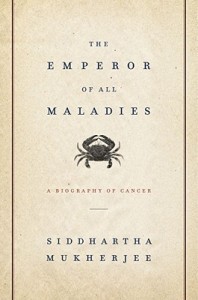
Robin Wall Kimmerer is a botanist, ecologist, a teacher and a member of the Potawatomi people of the Great Lakes region, from whom she learned her people’s particular world view, one once common amongst many indigenous peoples and in stark contrast to that of our present day dominant culture, which has lead us to powerfully shape our our world today. Her three popular books, “Gathering Moss”, “Braiding Sweetgrass” and her latest, “The Serviceberry”, present to the reader a glimpse into the natural world as seen from this ‘alternative’ world view. All three are enlightening reads and not overly technical. They are ‘invitations’ to see the world from a different perspective. The latest is the smallest, a book barely over 100 pages, with large type and in a small page format…a quick read, unless you pause to give what she presents some additional thought. The best, and the one I read first, is “Braiding Sweetgrass”.  Continue reading

On Ornamental Trees and the Remaking/Unmaking of Place: Revising the City of Redmond’s Tree List, Part 1

Perhaps an odd tree to start this with, Juniperus scopulorum ‘Woodward’, is not a ‘shade tree’. It is not deciduous. It is a narrow, fastigiate form of Rocky Mtn. Juniper that, growing to a height of 20′ with a 2′-3′ spread can serve as a formal accent in colder climates like ours as a ‘replacement’ for the more tender Italian Cyperss, and it can do quite well here with very little supplemental water.

Trees, specifically ornamental shade trees, have become an expected and desired part of our urban lives, at least util their leaves fall and await our cleanup. Many associate long tree lined streets and avenues with urban living. Broad Maples. Lofty Elms. Plane Trees and, in tighter spaces, perhaps Cherrys, Crabapples and flowering Plums. Urban trees provide several notable ‘environmental services’ increasing our comfort level with their cooling shade, their capacity to remove pollutants from the air, cover and nesting places for birds and the sequestration of carbon. Trees are generally viewed as a public good, necessary even for our lives. We can get quite emotional about them. So it seems a bit ‘wrong’ to suggest that this ‘ideal’ may not always be ‘best’ or even desirable.

Broadleaved deciduous shade trees are ‘naturally’ members of mesic, temperate to cold-temperate regions of the world. That is where they evolved and where when we plant them out, where they do best. When we begin planting them outside of their historic natural ranges, especially when we ignore the conditions, the disparities and the extremes between their natural ranges and those where we choose to plant them, then we can have some serious problems. The trees may struggle along, or if we remain committed to making up for our local area’s lacking, usually in the form of supplying more water, they can do reasonably well. But this suggests possible real problems as one moves further away from the conditions of a tree’s natural limits and increase the numbers planted out. Where is this water coming from and what are the impacts of removing this water from its normal and healthy cycling of which it is a part? What will be going without? And, is that cost worth the losses it creates? Our selection and planting decisions depend on how we value that which is lost! In short, the typical deciduous shade tree of our imaginings does not belong here in a desert. Continue reading

Crisis Averted and Other Good Books to Help Prepare You (Us) for the Next Pandemic

COVID-19, it’s pandemic, the fumbling attempts to head it off, all of the politicizing, the race to develop a vaccine, its distribution and administration and the curious and potentially disastrous attempts to undermine our confidence today in vaccines proven decades ago or for any disease, seem to be a fact of life today. While public acceptance of advice and programs advocated for by epidemiologists has always been difficult, many of us unknowingly owe our lives to their efforts, efforts that were they not made in years past, would have resulted in a world whose present populace might not be here, or if they were, in significantly compromised health and numbers. That is the nature of an epidemiologist’s life. Public doubt, fear and speculation, their work’s value invisible to the vast majority of us, because of what did not happen. Continue reading