Category Archives: Plant Choice

Tri-Met’s Orange Line Landscapes: Bybee Stop to Oak Grove

Part 2 of the Orange Line series
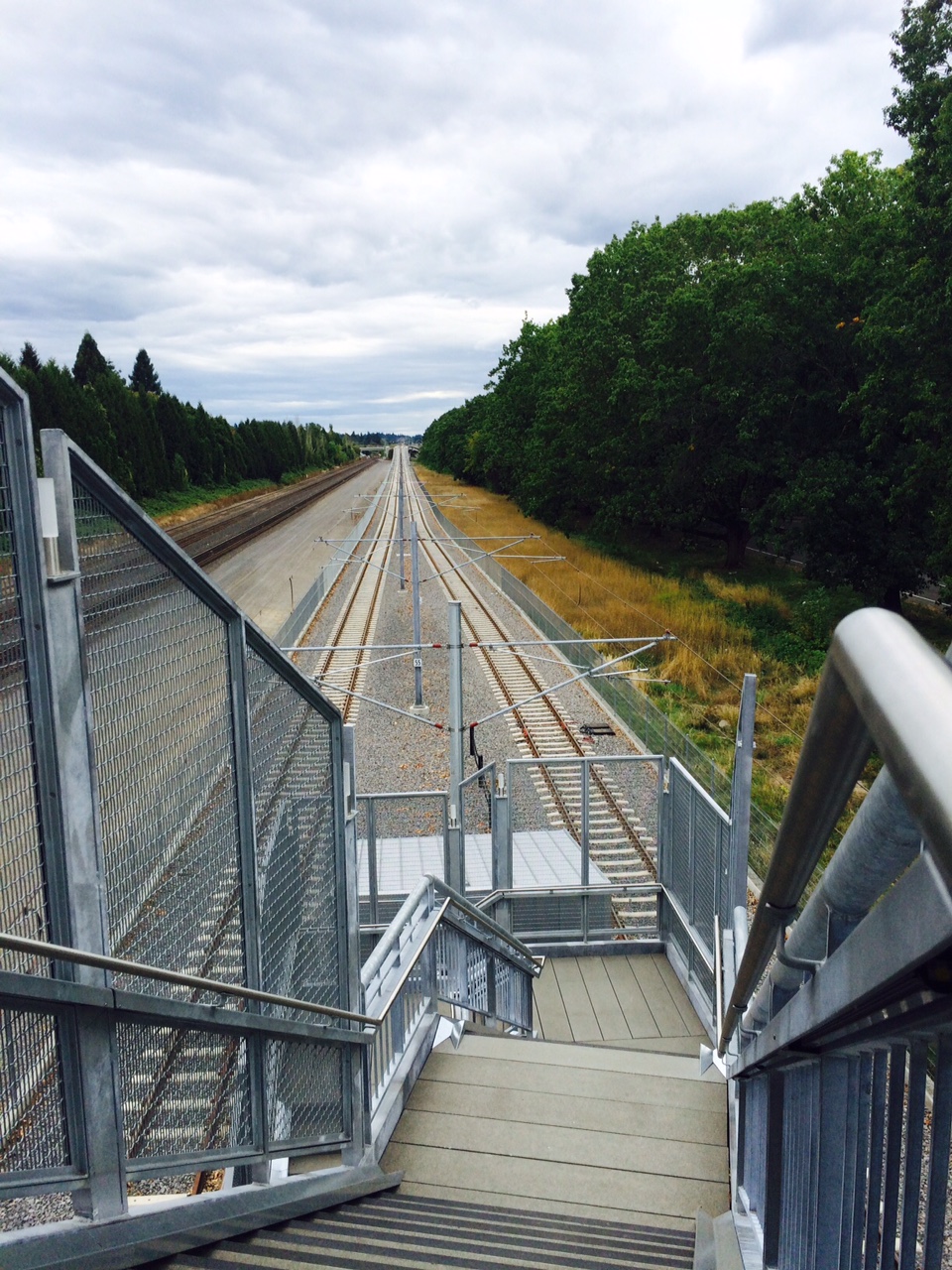
Looking south from the top of the stairs at the Bybee Stop. This is pretty much the same view as looking north with respect to the landscape.

Looking south from the top of the stairs at the Bybee Stop. This is pretty much the same view as looking north with respect to the landscape.  BNSF’s tracks lie to the left, the east.  The railroads have their own ‘landscape’ maintenance standards set primarily for safety reasons.  Within so many feet of their tracks they have a zero tolerance for plant growth and use sterilants.  There is also a zone within which the will ‘brush back’ trees and shrubs to keep site lines open.  Metro will have its own standard.  The two side by side show their combined effect.  Also, typically railroads do not fence off their tracks making clear sight lines a more pressing safety concern.  Trimet has fenced off the tracks from casual pedestrian ‘conflicts’.  Fencelines are problematic for maintenance unless ‘dead zones’ are expanded to include both sides.

Heading south of the Harold St. overpass the Orange Line leaves the most urbanized portion of its route, or at least its most densely populated stretch.  Traveling south to the Bybee, the Tacoma/Sellwood and then the Milwaukie stops, the line run alongside the BNSF tracks and there is very little ‘landscaping’ of the corridor.  The railroads contract out maintenance of their thousands of miles of tracks. (For a brief look into their approach check this link.) Continue reading
Tri-Met’s Orange Line Landscapes: Clinton & SE 12th to Harold St.

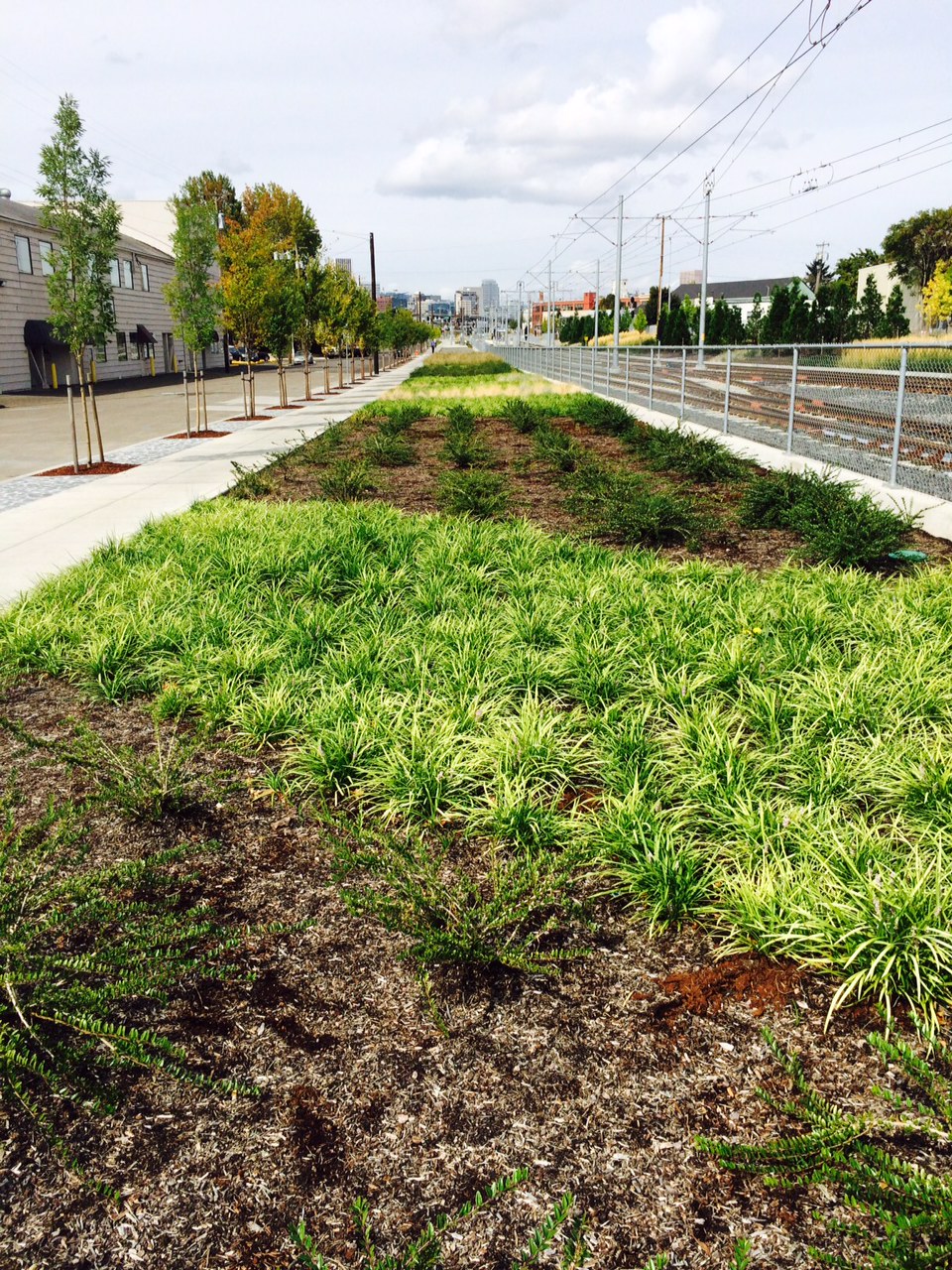
This shows the banded pattern common today in long mass plantings each swath a single species.

This shows the banded pattern common today in long mass plantings each swath a single species going for a kind of landscape scale ‘graphic’ pattern that is less concerned with ‘fit’.  This is near the Clinton/ SE 12th stop.

Size matters.  In horticulture it changes everything.  Things that are inconsequential, or maybe even enjoyable in the backyard garden, can quickly become daunting or onerous when the scale is ramped up.  Working at a commercial or institutional scale has to change your entire approach to the landscape.  In a small garden it is easier to accommodate mistakes, the conflicted combinations and those issues of horticultural ‘fit’ that we missed when we design or install.  Scale, however, rubs our faces in it everyday, makes us pay with aching backs as unintended consequences play out across the thousands of sq.ft. and acres.  It becomes a matter of physical survival and undermines your professionalism.  You become perforce part laborer, part diagnostician, designer, plantsman and critic….Out of necessity you sharpen your critical thinking skills and the last thing you ever wanted, your sales skills, as you work to sell your ideas to management who are absurdly ignorant of the problems you face everyday in the field.  And, then, eventually, you retire, but you don’t turn it off…you can’t.

Which brings me to the MAX Orange Line and its landscapes.  When I did horticultural design review for large capital Parks projects, it often felt like a dueling match.  I would pour over the design, whatever the stage it was in, match that with my particular knowledge of site conditions and my maintenance experience within Parks.  I would state my concerns on paper and in meetings with the Project Managers and Architects.  I was stubborn and consistently found myself up against a process that undervalued horticulture and my input.  Good horticultural practice was regularly placed in a losing position opposite not just that of the Landscape Architects but of a very political process that tried to give the public what it wanted as long as it fit within the Architect’s vision.  Horticulture always came out a poor third, even though good horticulture always saves money in the mid and long runs.  It was exasperating.  The public, by and large is ignorant of horticultural practice and no effort is made to educate them at any level. Continue reading

Gardening in Public: The Duniway Park Experiment

Portland Parks: horticultural profiles series

I’m almost a little embarrassed to post this article….  Most of my earlier project were much smaller, more like bandaids.  This is the first Park I went through more systematically assessing, horticulturally, and trying to correct landscape ‘problems’ with entirely different plantings. We generally weren’t expected to do more than little fixes and bandaids.  Larger issues were considered beyond our scope and should be addressed by our Planning Division, with master plans and all of that.  The Bureau was, however, neither staffed nor funded to do master plans which is a laborious and time consuming process.  They were few and far between.  So, as I said, this was my first go at it, though I don’t claim to have created a master plan in the process.  My time was even more limited. Continue reading

Water, Irrigation, Xeric: Related and Essential Garden Vocabulary

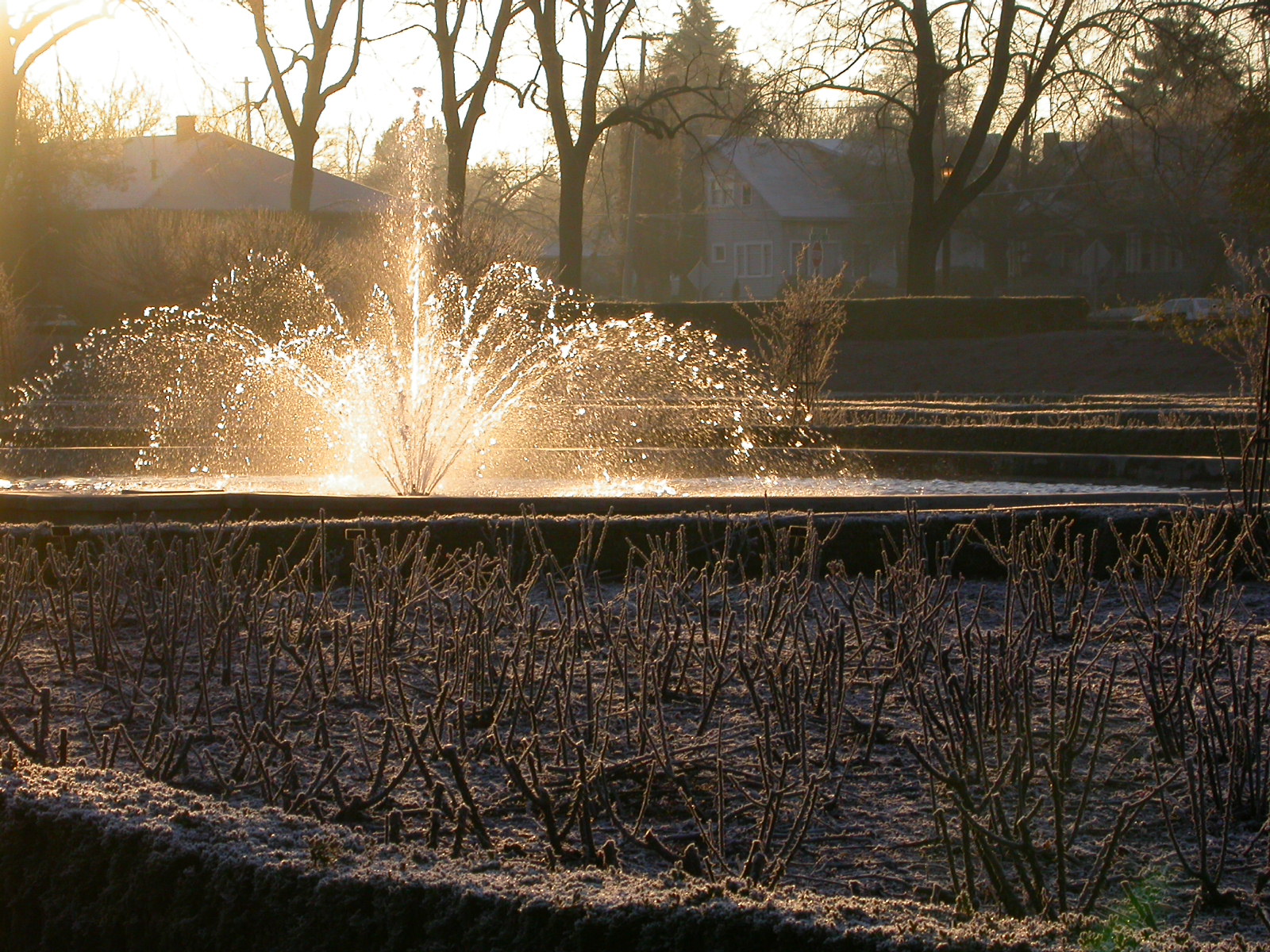
The fountain in the Peninsula Park Rose Garden, a frosty February morning

Water, beautiful and essential.  The fountain in the Peninsula Park Rose Garden, a frosty February morning

First in the Water Series

Water is essential to all life on Earth. It comprises a very significant percentage of the mass of every life form. It is the vehicle without which the various metabolic processes would cease. It dissolves and carries in solution the many elements organisms require to build their tissues. It helps produce the conditions necessary for other supporting life forms.  In it’s heating and cooling it creates the weather that helps define the parameters and limits to life in any given place. It works as an erosive medium breaking down landscapes and helping create new ones upon which life adapts and grows. Water moves across and through the surfaces of the Earth in a dynamic yet stable manner helping create the conditions within which life may evolve. It fills that sweet spot moving readily from gaseous form to liquid to solid where our water/carbon based life forms can take advantage of its transformations.  Without it life as we know it would end.  With our disruption, we have altered the pathways and cycling of water across the landscape and so have altered the conditions under which life must live, cutting down forests, draining wetlands, channelizing streams, grading and paving the Earth’s surface. Our actions have directly impacted every habitat, every landscape, on Earth. We are even changing the weather patterns themselves, changing the conditions within which it operates driven by the sun’s energy.  We are massively altering the Earth’s landscapes and its atmosphere in which all of this happens. It is taking on a ‘life’ of its own as we accelerate the rates of deforestation, desertification, expanding urban heat islands, while we continue the mining and burning of carbon previously sequestered for millions of years pressing us on into massive perturbations in our climate patterns. Everything is connected to water. Continue reading

My Garden: Behind the Scenes

Photo thanks to Josh McCullough

Photo thanks to Josh McCullough

Overall, mine is a sunny warm garden.  Like any landscape or garden it is defined or described by its: place, design and plant choices. Where these three all come together, you have a garden. Each one presents itself as, what some might view, a daunting array of options or possibilities.

What exactly do I include under ‘place’?  Certainly climate, exposure, aspect, slope, soils and the ‘history’ of gardening and ‘disturbance’ on the site. It also includes the larger surrounding landscape, the context within which it is located and the physical ‘features’ built and natural with which it will be a part.  The story of a place is important.  Place, is the major limiting factor in a garden. Gardens are also defined by the choices we make. Each choice precludes others. In a very real sense gardening is a process of limitation. ‘If this then not that’.  What we need to be aware of is that these, design and plant choices, these limitations, can either work together or compound each other when not made with awareness.  When design and/or plant choices ignore place, the gardener must overcome all of the ‘conflicts’ this choice has put in to play, or face ‘failure’.
Continue reading

Adaptive Management and the Dynamic Maintenance of Sustainable Landscapes


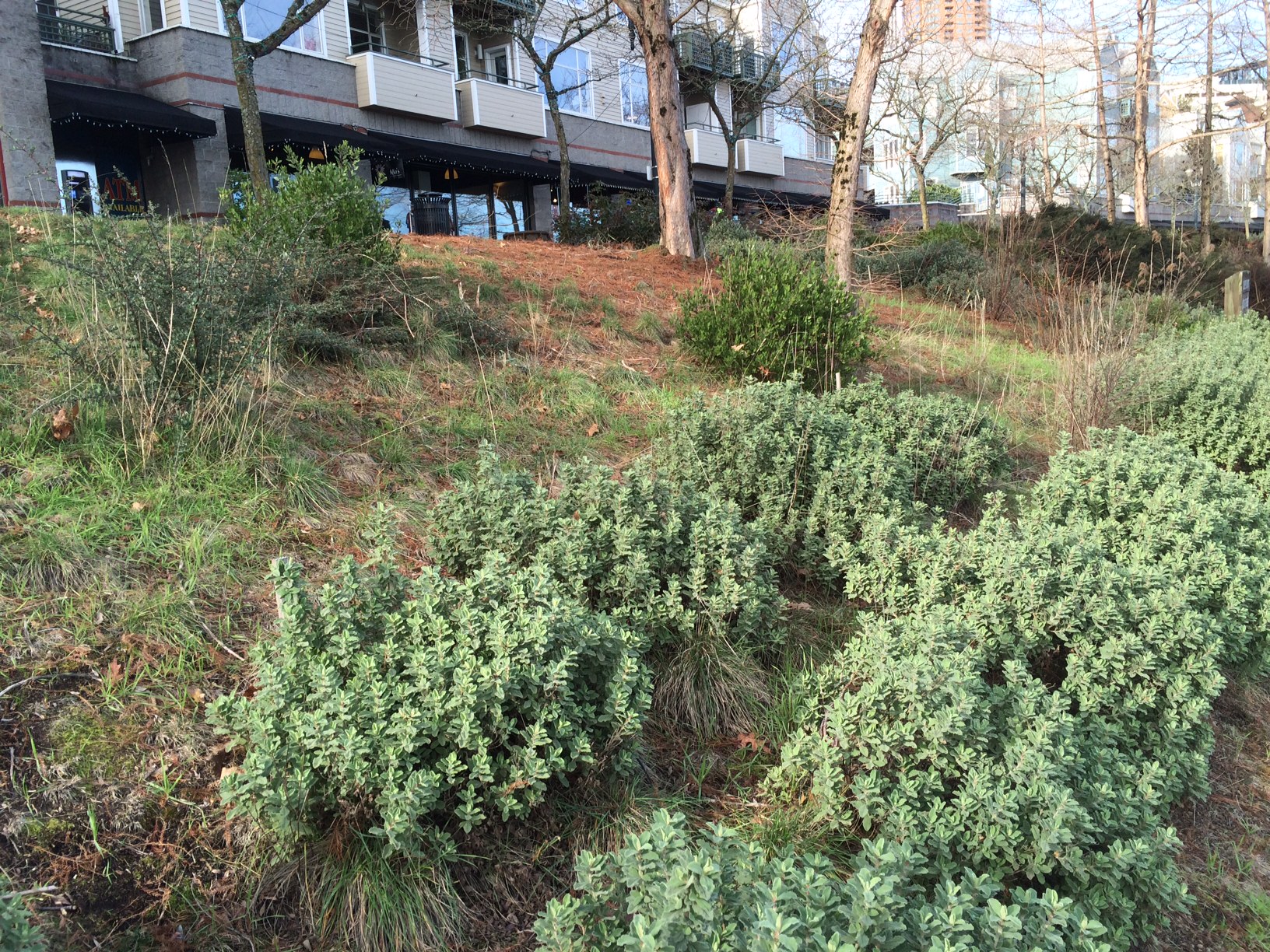
The second grassy bay, below the Harborside Restaurant, between the Taxodium clumps from the south end. A sweep of Cistus pulverulentus 'Sunset' at the bottom, Ceanothus cuneatus 'Blue Sierra' at the left and two Arctostaphylos x 'Harmony'. The grasses are Kohleria macrantha, native, Festuca rubra commutatta and a few nasty invaders.

The second grassy bay from the south end, below the Harborside Restaurant at Riverplace, above the marina, between the Taxodium clumps. The ’04 planting included no shrubs or perennial forbs in this area.  It was a monoculture of Koeleria macrantha, a native early season bunch grass that goes dormant by mid-July leaving the entire area vulnerable to invasion by weeds and offering no ‘barrier’ to either people or dogs, which enter frequently. A sweep of Cistus pulverulentus ‘Sunset’ at the bottom, Ceanothus cuneatus ‘Blue Sierra’ at the left and Arctostaphylos x ‘Harmony’ have been added to this site along with Festuca rubra var. commutata a low, fine textured spreader to help fill in the spaces and scattered native perennials.

We, all of us, are part of the landscape.  Just as individual plants belong to a local native plant community, and its place, so do we. That we live in highly disturbed and contrived landscapes does not change the fact that we live in relationship with it, that we are a functioning part of it. Deny this as we may, many of us as a group likely admit to very little connection to our ‘place’. It’s just where we live, for now. Our understanding of it and any involvement with our landscape, other than as a simple stage for our lives, is minimal, a condition which has become pervasive in modern society. Some professionals, who work with children have come to refer to this state as NDD, or Nature Deficit Disorder, a dissociative relationship now that was once basic to human survival. Today this condition is pervasive and our landscapes, as a result, severely disturbed, damaged and compromised, lack the capacity to return to their former state. There is a general ignorance amongst the public and our leaders of the severity of the problem and our necessary role and responsibility to correct it.  We are locked into a strategy that views landscape as incidental, the natural world as backdrop for our activities, not central to our well-being.  Today landscapes, as long as they meet our grossly simplified idea of our needs, a modern minimalist aesthetic, that does not over tax our ‘pocketbook’, are forgettable. From a horticultural viewpoint this is becoming an increasingly deteriorating disaster, something that not only we can do something about, but one that is imperative that we do so.  Adaptive Management describes a responsive relationship between people and the place in which they live. It is centered on a positive and workable strategy we can adopt that addresses this situation and turns it around, reengaging us with our landscape. Continue reading

Public Portraits of Xeric Plantings at Riverplace and South Waterfront, part 2

This little tour begins from the traffic circle at the intersection of SW Montgomery St. and River Dr, by the sign to South Waterfront Park and Garden.  It has you walking north along the esplanade in front of the shops and restaurants.  It concludes about 900′ to the north at the Riverplace Hotel.

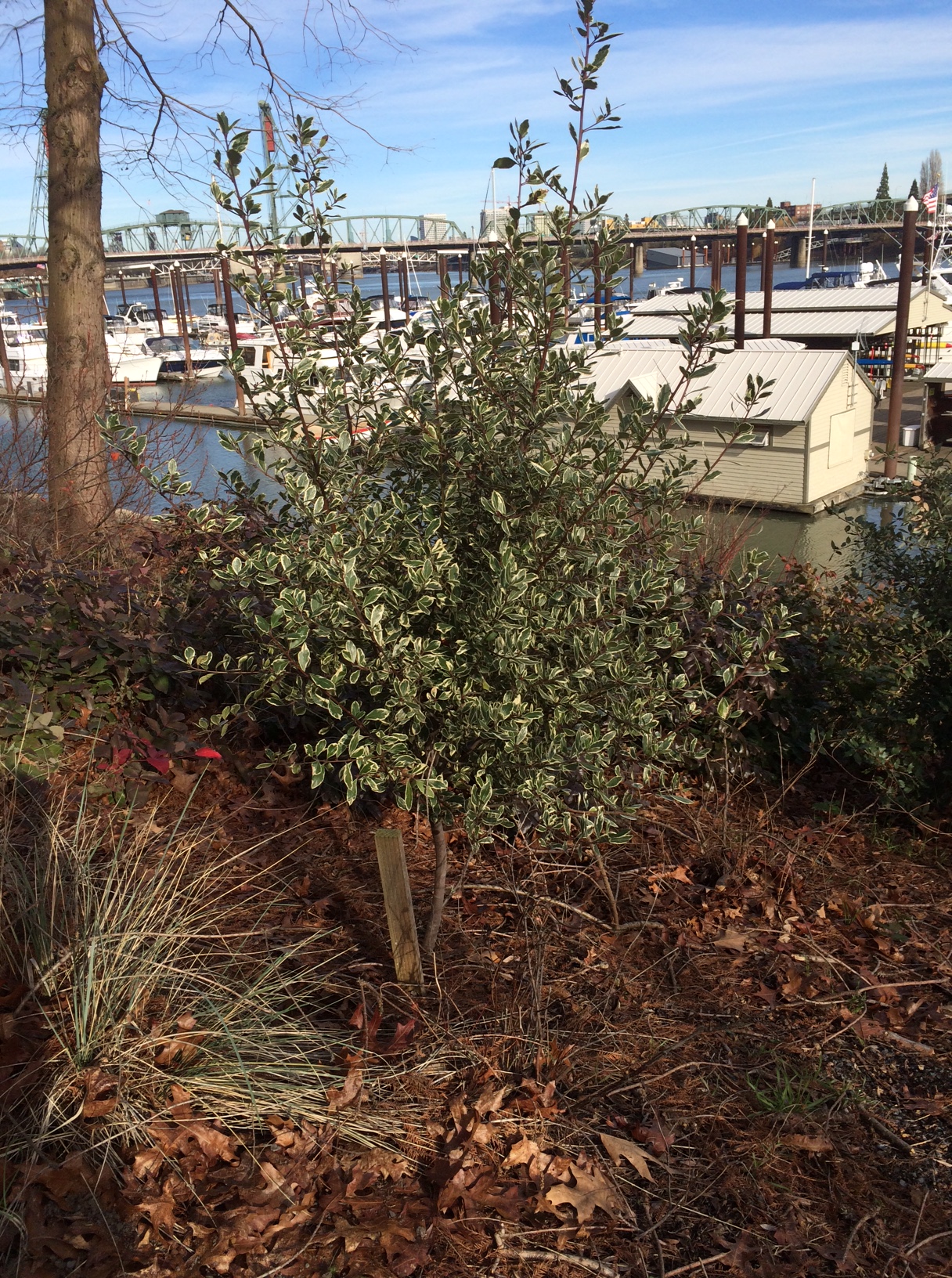
Rhamnus alaternus 'Variegatus' planted between the Blue Oat Grass and gradually dying out Cornus 'Kelseyii'.  It has been very slow. Understandable given the horrendous fill soil conditions.

Rhamnus alaternus ‘Variegatus’ planted between the Blue Oat Grass and gradually dying out Cornus ‘Kelseyii’. It has been very slow. Understandable given the horrendous fill soil conditions. In the immediate area are also a young Quercus chrysolepis, Arbutus menziesii, Arctostaphylos x ‘Pacific Mist’, Cistus x ‘Blanche’, Philadelphus lewisii, Cotinus coggygria ‘Golden Spirit’ and Holodiscus discolor

Continue reading

Palms I Have Grown: A Look into Trachycarpus and its Intimates


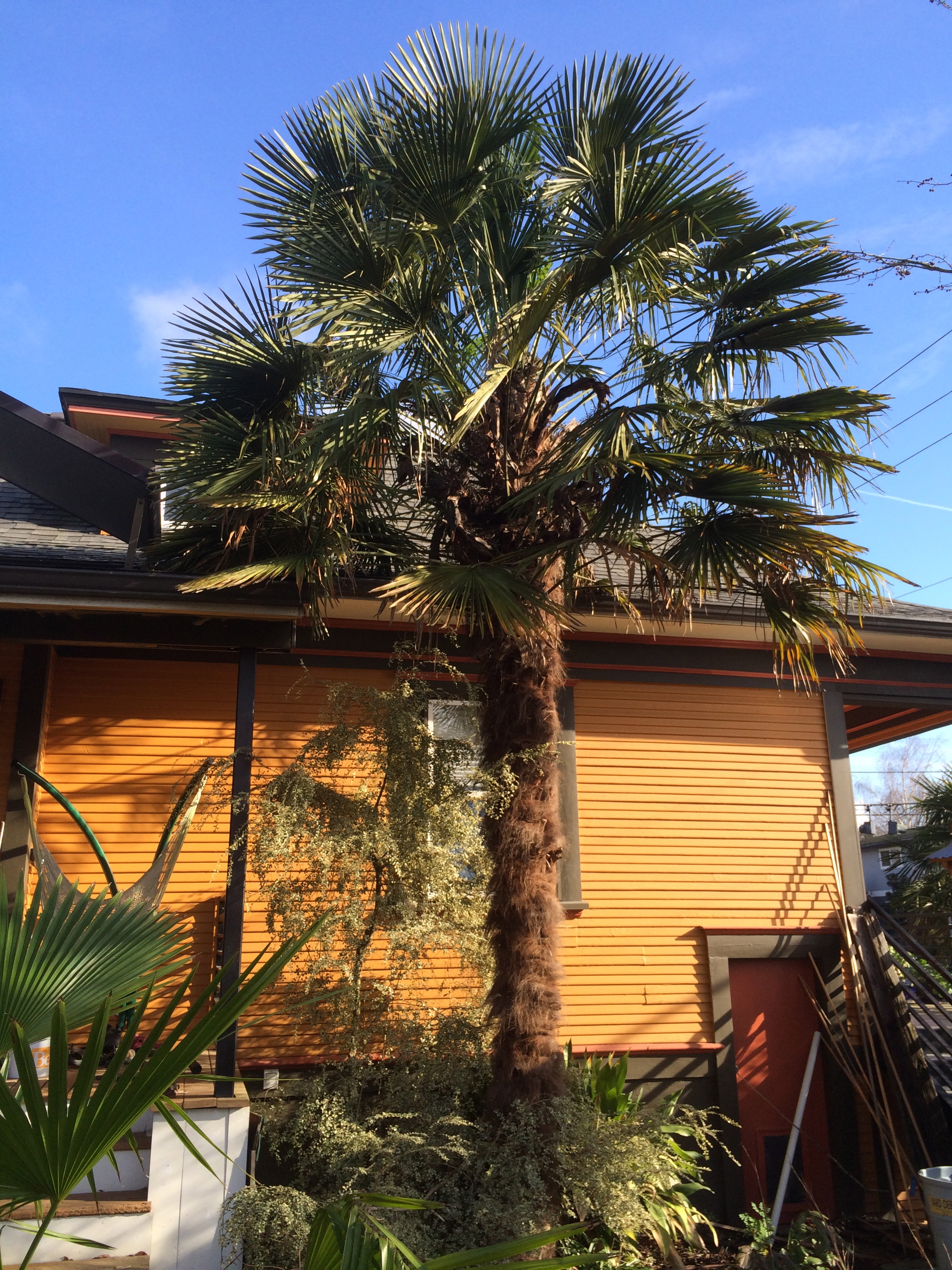
Trachycarpus fortunei - My oldest tree.  The house's gutter is at 13'.  This is the most robust, stoutest, of the 5 T.f. that I have with the broadest canopy.  It's male.  I've just finished cleaning up its rattiest older fronds.

Trachycarpus fortunei – My oldest Palm tree. The house’s gutter is at 13′. This is the most robust, stoutest, of the 5 T.f. that I have with the broadest canopy. It’s male. I’ve just finished cleaning up its rattiest older fronds.  I remove 15-20 every year and have been annually while it’s been in its adult active growth phase.  It will slow down when it begins to approach its maximum height and maturity.

Continue reading

Seed Banks and the Future of our Gardens and Landscapes

Another article in the ‘Over Thinking Series’

Old growth coastal Douglas Fir forest biome, the Ponderosa Pine – Juniper Sagebrush ecotone, your meticulously cared for back garden and the neglected median strip running down a divided street all occupy our ‘landscape’ and include soil unique to their sites.  The soil type and structure is relatively easy to describe as it is defined by its physical properties…its biological components are considerably more complex and change over time in the long and short term as a landscape ages and/or suffers human disruption…and, can, in turn, affect some of the physical properties. (see:  The Biology of Soil Compaction.) Continue reading

Eucomis: Pineapple Lilies– Exotic Looks/Common Tastes

This posting was first published in the HPSO Bulletin Spring 2010 and is here revised

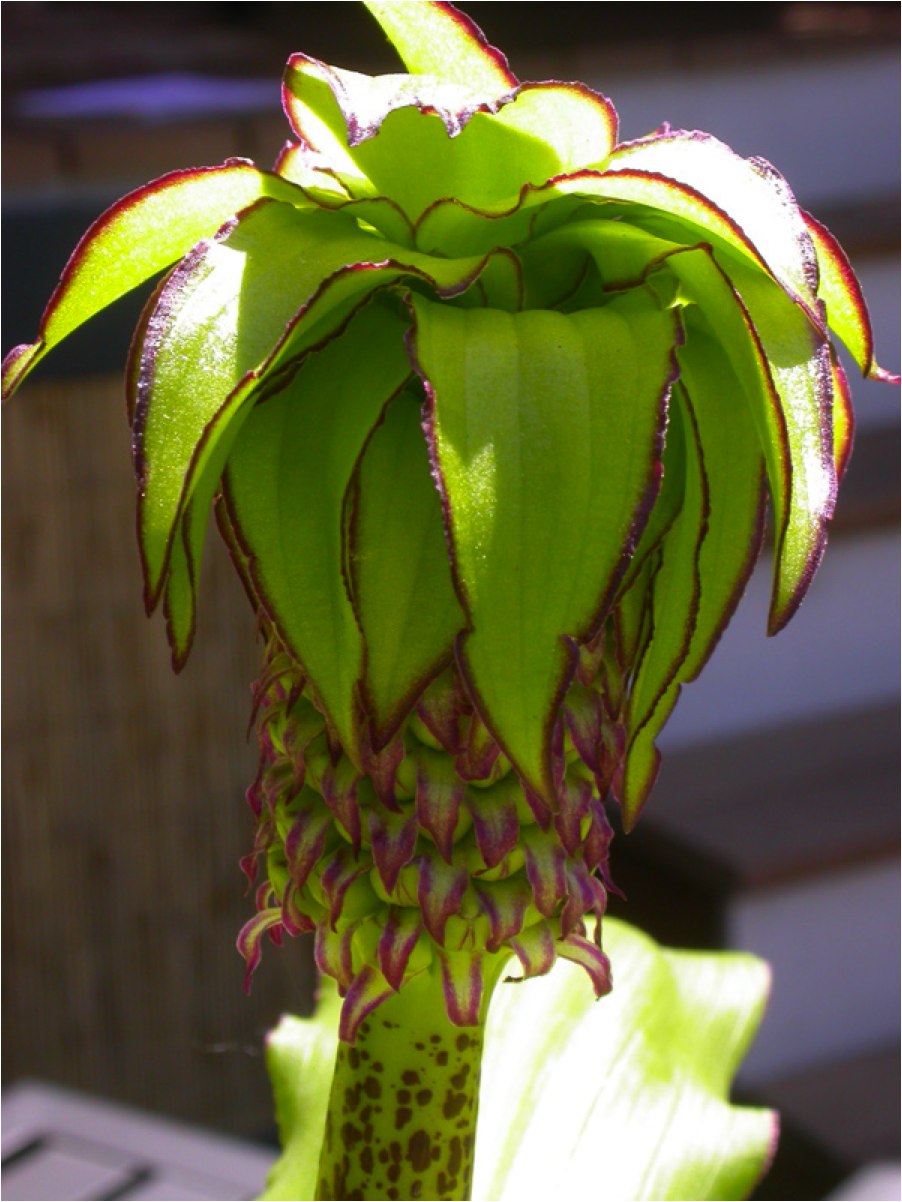
Eucomis bicolor

Eucomis bicolor

South Africa is one of the most botanically rich regions of the world. Within its boundaries is the Cape Floristic Region (with 0.08% of the world’s land and 3% of all plant species), containing some 8,700 species, two-thirds of which are endemic, existing nowhere else in the world. It is one of only six such regions in the world. By comparison, the Boreal Floristic Region includes all of North America, Europe, and the northern portions of Asia and Africa, and is thus considerably larger. Each region has a distinctive “suite” of plants with particular families that are endemic to them. One would feel a familiarity when exploring anywhere within one’s own region. Outside it, you might feel the world was populated with the alien plants of other star systems. For example, forests are not to be found in the Cape (though nonnative species have been introduced and have spread); instead, these areas are characterized by heaths, proteas, and restios. Included in the region are 2,700 species of bulbs in 15 different families. These include gladioli, freesias, amaryllis, agapanthus, and many others, most of which would be unrecognizable to the average temperate area gardener. One such genus of bulbs is Eucomis. Continue reading