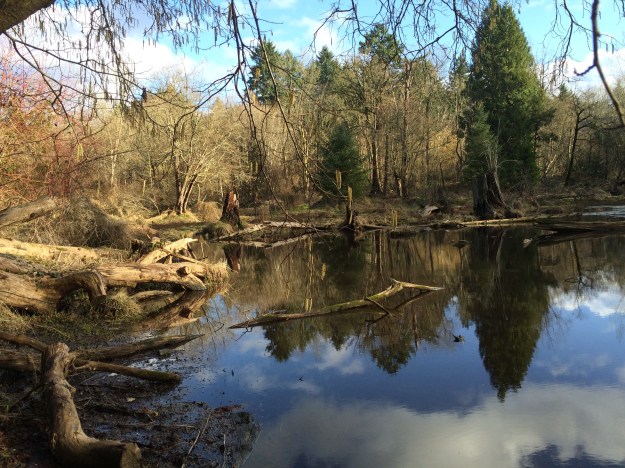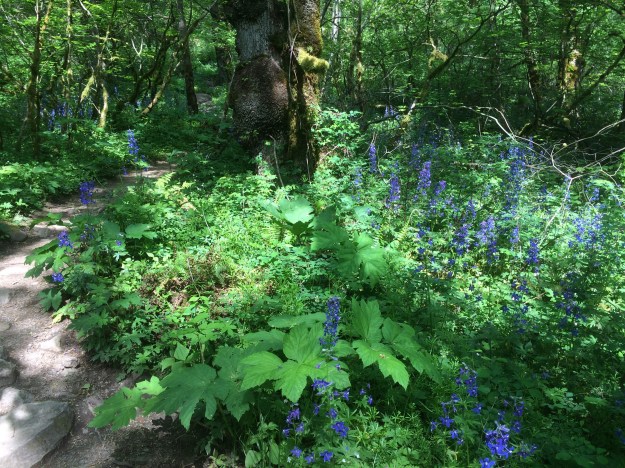
I took this at Cape Horn in early May ’15 in one of the ‘wet’ woodland ‘terraces’. The native Delphinium gives it a fantastical appearance. If we could create this landscape anywhere in the City I can’t imagine that it would withstand the level of use and inevitable abuse it would receive let alone the ‘weed pressure’ it would suffer. Perhaps there are a few places that such a landscape could work but it would require that we have all of the surrounding landscapes ‘under control’ and that we educate the public so that they would understand and respect it enough to stay away. Our numbers alone even if most behaved themselves would make its survival difficult. Ultimately, this is just what is necessary, re-establishing the public’s relationship with nature and the wild world.
(I’ve made earlier postings on this topic, but this piece actually predates those. I wrote this in 2013 while still working as a horticulturist for the City of Portland Parks and Recreation as a member of a Bureau committee that was working to define ‘sustainable landscapes’ so that we could begin to make our policies and practices more consistent with our ‘desire’ to create sustainable landscapes and protect the relatively intact ones that remain. This was a difficult process. We spent a lot of time discussing/arguing about what constitutes a sustainable landscape and ultimately the direction that Parks should be headed.
There was a large divide between those of us who saw ultimately, that the only truly sustainable landscape was one that recreated those native landscapes that preceded the massive changes that European Americans brought with them, so that our efforts should be on these, and those of us who, having spent much of our professional lives in the field doing maintenance in created/urban landscapes, arguing that these new landscapes played a necessary role in the modern world and that our designs and maintenance of them could be moved in a more ‘sustainable’ direction. These urban/functional landscapes, whether for active sports, community gardens or even many passive uses, provide places and venues for activities that native landscapes cannot.
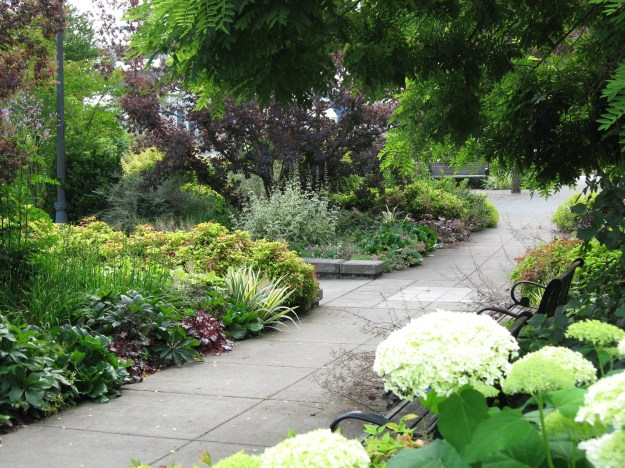
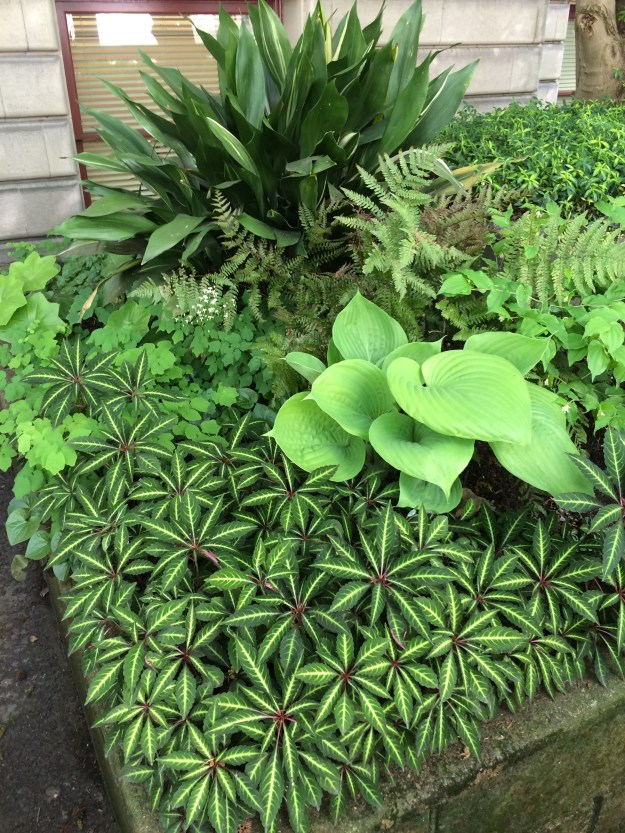
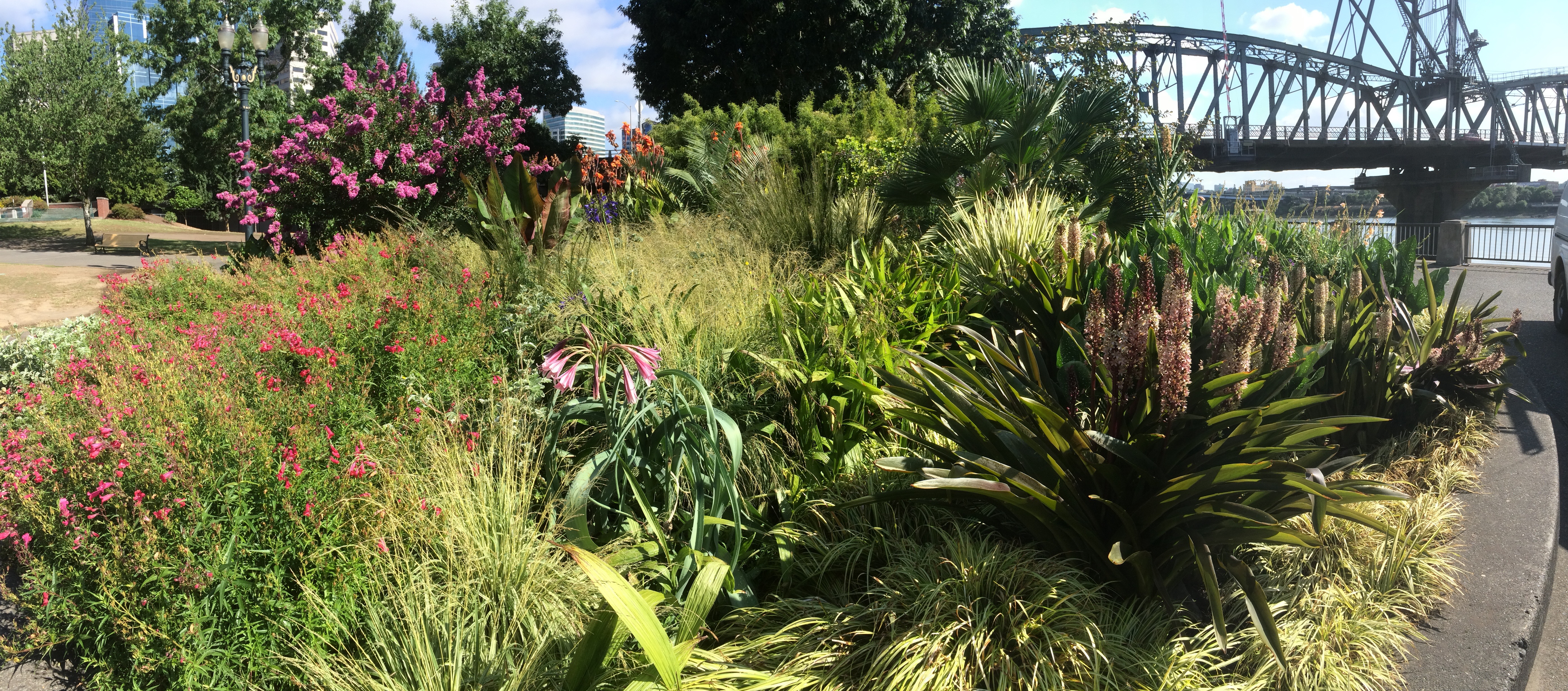
There is space and need for many different landscapes in an urban area. This is in the garden at South Waterfront Park along the Willamette River and is intended to be a contemplative refuge from the business of the city. It is layered and carefully orchestrated though its goal is more aesthetic than to be a ‘natural’ plant community. It requires considerable regular ‘grooming’ and editing to maintain in order to show off the plants to their best advantage. This garden was designed for multi-season interest especially through the summer when our native Willamette prairie landscape slides into dormancy.
The organizational structure of the Bureau has been built around three primary landscape ‘types’: ‘natural landscapes’ which tend to be larger and border more densely populated sectors of the City, ‘contrived landscapes’ that are dispersed throughout the City and serve the more traditional Park functions for sports and more casual social use and the ‘enterprise landscapes’ of Golf and PIR that serve very narrow functions and depend on those uses for much of the revenue that supports them. These are operated and maintained by discrete groups within the Bureau, have different cultures and priorities and view sustainability very differently. Because these are all in a highly urbanized area the degree of historical disturbance and the continuous pressures that a concentrated population apply to them, they can never by truly ‘sustainable’ in that they will always require our active stewardship to counterbalance these pressures. This is not to say that we give up on the idea of balanced/dynamic landscapes of appropriately chosen plant communities. We just need to remember that these are urban areas and be good stewards of the land. We can even move ‘high use’ landscapes in a more sustainable direction, both in their design and in their maintenance. It is incumbent upon us to do this to ultimately minimize the pressures put upon them and natural areas by weeds, invasives and human use.) Continue reading