Category Archives: Xeric

Growing Agave in My Maritime NW Garden

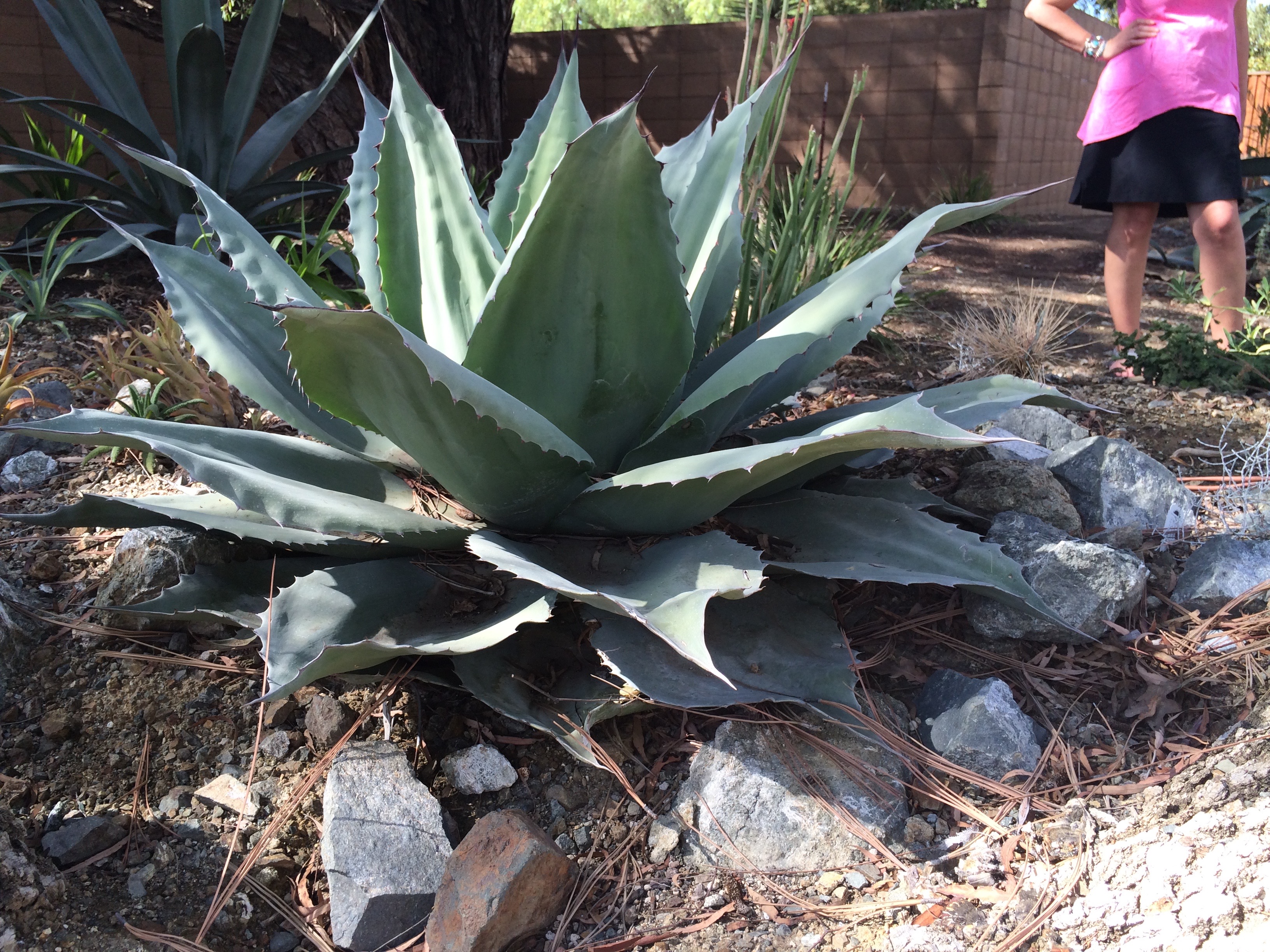
My picture, but not my plant. Alas! I just potted my start up to a 1gal purchased from Sean at Cistus. Agave ovatifolia 'Vanzie'. Several of these big beautiful cultivars are growing in the Bancroft Garden. It is distinguished from the species by its undulating longitudinal waves across the wide guttered leaves.

My picture, but not my plant. Alas! I just potted my start up to a 1gal purchased from Sean at Cistus. Agave ovatifolia ‘Vanzie’. Several of these big beautiful cultivars are growing in the Ruth Bancroft Garden, in Walnut Creek, CA.  We visited on a nice 80F+ day last October.  It is distinguished from the species by its undulating longitudinal waves across the wide guttered leaves.  Each leaf can be over 10″ across.

When we garden in the public view, and most of us do, at least where we front along the street, or even when we invite others into its more private and inner sanctum, and we grow plants successfully, people are going to ask you: ‘What’s that?’  ‘I didn’t know you could grow those here!’ and, ‘What did you do? they always die for me!’  In short, if you’re successful, people will regard you with respect and assign to you the attributes and position of ‘expert’…when all you did was try to follow the gardening maxim of ‘Right Plant, Right Place!’  In short, you tried not to kill it.  Genuine expertise requires broader experience, study even, that the simple buying and planting of one particular plant cannot earn you.  If you’re like me such easy success and adulation, can be embarrassing and often serves as a prompt, to look through books, search the internet and ask others, that you know who have way more practical growing experience than you yourself do, and gradually, the assignation of ‘expert’ feels a bit less flimsy, maybe even ‘earned’.  I often tell gardening friends that I consider myself to be more of a dilettante, flitting from one plant or group of plants to the next.  Inquisitiveness has always been a part of me and growing one Penstemon, one Banana or one Agave, never adequately ‘grounds’ me.  Grow a few more and I feel a little more comfortable with it.  Look into some of its ‘cousins’ and the particulars of where something grows, its climate and soils particularly, and I feel ‘better’, much like I did when I was preparing for mid-terms at school.  And then I move on, my interest sated for the time being, somewhat comfortable in what I know and curious about the next group.  Over time they all start forming a bigger picture out of what once seemed like a massive, unknowable puzzle and I enjoy solving puzzles.  Having said this, I still don’t consider myself to be an expert, just an avid and focused gardener. Continue reading

Iris x pacifica: Hybrids & Jewels of the West Coast

PCH Native Warrior w: Stachys Primrose Heron DSCN2479

Iris x pacifica ‘Native Warrior’ next to Stachys byzantina ‘Primrose Heron’  These Iris are very garden worthy and can combine beautifully with plants  with similar cultural requirements

(I wrote this several years ago for the HPSO Bulletin, when it was actually printed on paper, and thought re-issuing it today, edited and expanded, might be helpful to some as we are about to enter their flowering season.  The iris pictured on my Blog’s masthead is Iris x pacifica ‘Simply Wild’ poking out from the base of the Chilean shrub Fabiana imbricata ‘Violacea’)

Gardening is no more or less subject to the vagaries of fad and fashion than the other activities we dabble in.  Marketers prey on us luring us with plants possessing new and alluring characteristics, promises of larger flowers, more disease resistant, floriferous, more exotic or environmentally responsible, less maintenance intensive… the list goes on.  Gardening is a very personal endeavor and as such we will always be subject to such Siren calls.  There will be the righteous amongst us convinced of their own focused vision who seem to be immune (but what, we might ask, are they missing?) and there will be those who simply surrender completely to the beauty and bounty around them making themselves easy prey.  In the long run, who is to say who is right?   Our knowledge is imperfect and we are weak…. The act of gardening strengthens us, provides us with the opportunity to learn and in so doing puts us into relationship with the living world around us.  We become better gardeners capable of making better, though still imperfect, decisions.  Whether we garden to augment our own diets with what we grow or are trying our hand at healing a small piece of a damaged earth, or building a place of respite for ourselves and friends or trying to model ‘right’ behavior for our children and neighbors, we are out in our gardens and landscapes learning something of how incredibly complex this earth is…and that is all good. Continue reading

Manzanita, Arctostaphylos, a Genus Whose Time has Come: Advocating for a Plant

IMG_4669

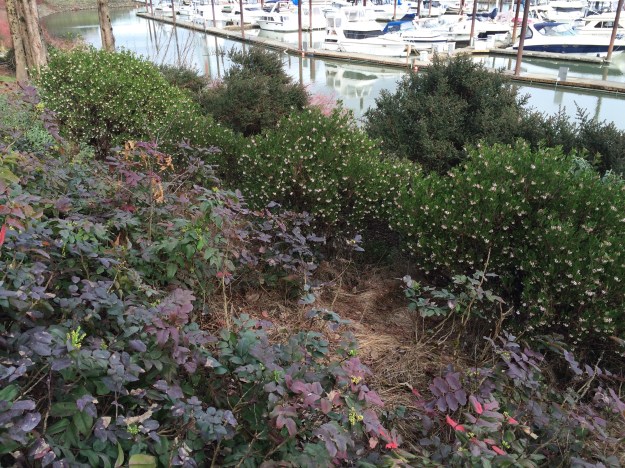
Many Arctostaphylos, like these A. densiflora ‘Howard McMinn’ make admirable landscape plants on xeric sites. This is above Riverplace Marina on the east facing bank of the Willamette in nutrient poor, compacted fill. It shares the site with Compact Oregon Grape and a variety of local dry site natives, Mediterraneans and Californians.

Thirty years ago, when I first moved here to the Portland area from the Central Oregon High Desert country, very few people were growing Manzanita.  Those plants that you did see were local natives that you had to search out, remanent populations of widely scattered stands, in western Oregon, in the Cascades, parts of the Gorge and Siskiyous or on old stabilized dunes above the beach, e.g., near Manzanita.  They were mostly ignored in the trade, barely recognized by anyone other than those in the Northwest native plant societies and hikers who would go out on forays botanizing. When I still lived in Bend, I would occasionally order dry-land native plants, like Cercocarpus, that could be seen in the Ochocos, from Forest Farm in southern Oregon.  My first two horticulture books, other than the many vegetable growing guides I bought from Rodale Press and Steve Solomon’s guide, were the Sunset Western Garden Guide and Arthur Kruckberg’s, “Gardening with Native Plants of the Pacific Northwest”…I went through them over and over again.  In the small space Kruckberg devoted to Manzanita he wrote, in the first paragraph, “Only Arctostaphylos uva-ursi…, A. nevadensis…and possibly A. patula are hardy in colder areas.”  Because I lived in one of these ‘colder areas’ this stayed with me, effecting my view of the genus.  I’ve already posted on A. patula, of it growing in Central Oregon, the eastern slopes of the Cascades and as a specimen outside of our breakfast window in my childhood home.  Other than A. columbiana, a denizen more of the western Cascade slopes and the high ground of the Coast Range, Kruckberg barely mentions the other species and forms…of which there are argued to be between 50 and 100, primarily in California and  southern Oregon.   Continue reading

Chilling, Freezing & Surviving: Understanding Hardiness & Preparing Your Plants for Winter

IMG_4248

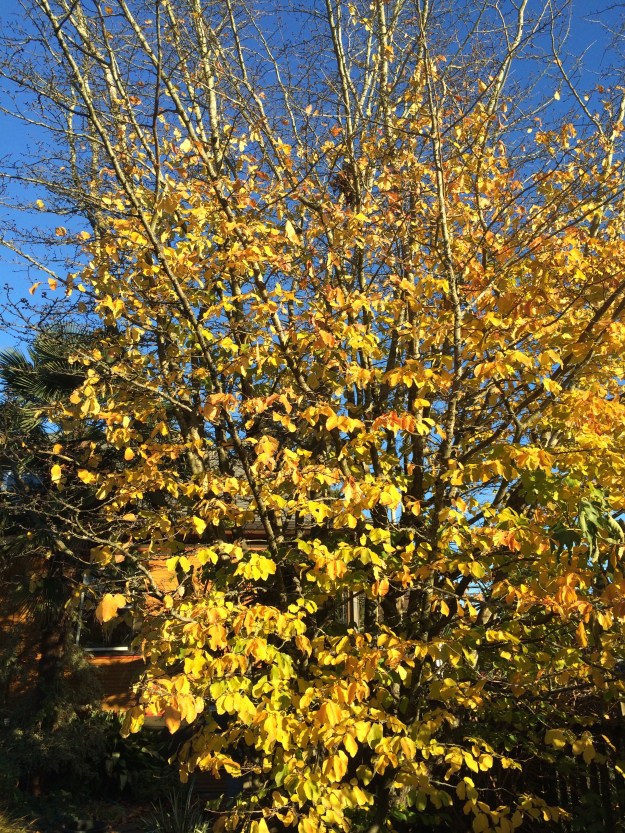
Parrotia persica, Persian Ironwood, has long been among my favorite trees, for its leaf shape, substance, fall color, the overall plant form and for its exfoliating puzzled bark. Hardy to zn4 this plant is tough as nails here requiring no protective effort at all.

[A note to the reader. This is not a scholarly treatment of all of the peer reviewed material on this topic.  There are no footnotes or listed sources.  This is a product of my more than 35 years of horticultural field experience and gardening along with what I’ve gleaned from reading several technical peer reviewed articles on the subject.  Such material is difficult to read and can be off putting and intimidating to even the educated layperson.  This posting is my attempt at interpreting the research and reviews that I read in a way I think is understandable without overwhelming the reader with bi0-chemistry and the technical esoterica scientists must consider in their pursuit of understanding.  Any faults are mine.]

I’ve been thinking about plants and their response to cold having watched the deciduous trees drop their leaves, dug tender plants out of the garden and moved pots around to where they would be adequately protected from freezing temperatures.  We all know what happens to water when it freezes, going from a liquid state to a solid one, its molecules forming crystalline structures, expanded and rigid, responsible for burst water pipes and snowflakes.  Water possesses some amazing qualities, as a solid, kind of counter-intuitively, it becomes less dense floating rather than sinking even taking on some insulative qualities and stopping the convective flow of heat that is normal in liquid water.  At the instant of freezing water releases a small but measurable amount of heat. What happens inside plants when temperatures drop below freezing? How does the plant keep from bursting its own cell walls like the water in pipes within an unheated crawl space or wall cavity of a building?  You’ve seen what happens to plants like Coleus and the sodden black heaps they become upon thawing out. Continue reading

Tri-Met’s Orange Line Landscapes: Clinton & SE 12th to Harold St.

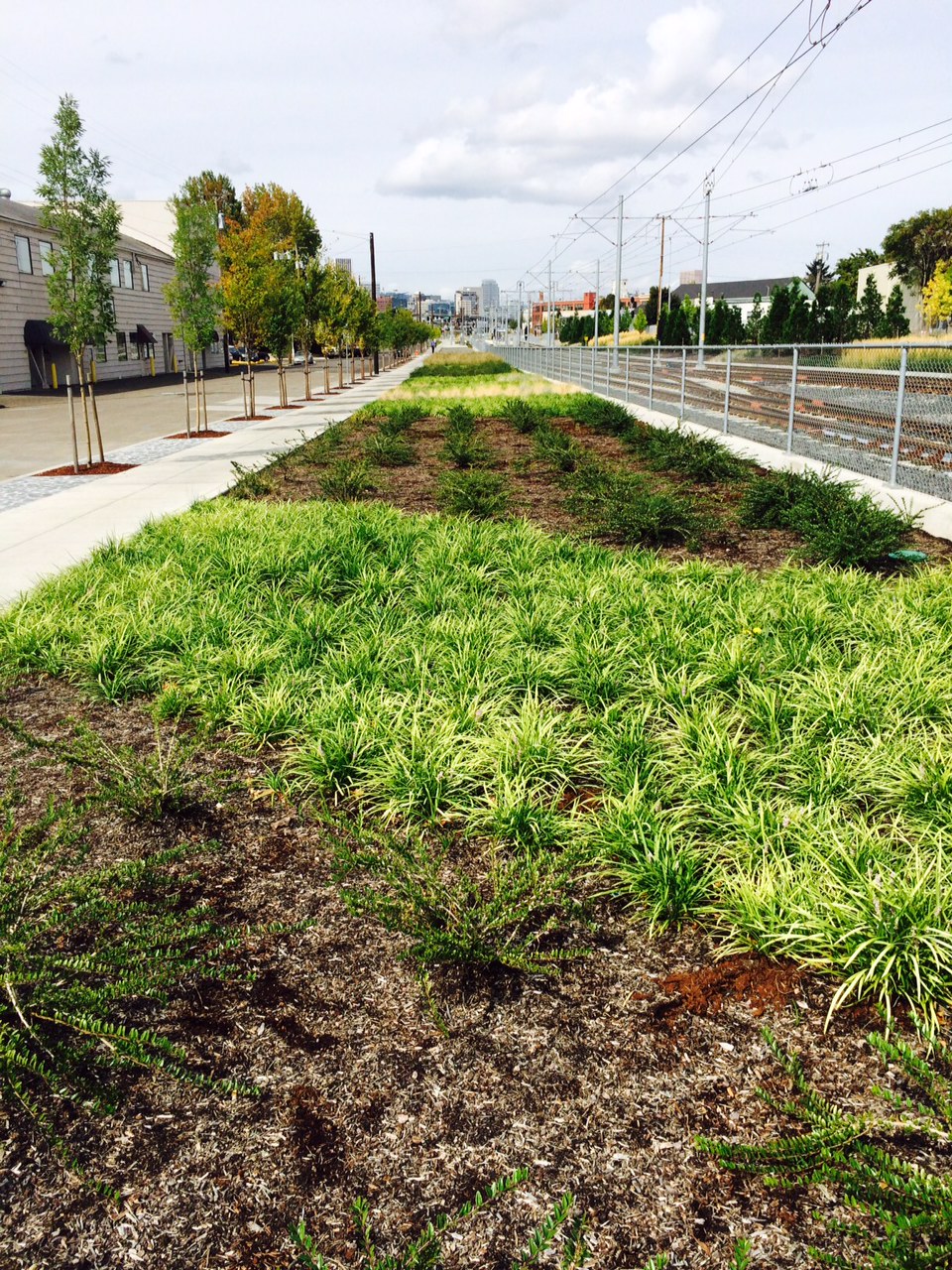
This shows the banded pattern common today in long mass plantings each swath a single species.

This shows the banded pattern common today in long mass plantings each swath a single species going for a kind of landscape scale ‘graphic’ pattern that is less concerned with ‘fit’.  This is near the Clinton/ SE 12th stop.

Size matters.  In horticulture it changes everything.  Things that are inconsequential, or maybe even enjoyable in the backyard garden, can quickly become daunting or onerous when the scale is ramped up.  Working at a commercial or institutional scale has to change your entire approach to the landscape.  In a small garden it is easier to accommodate mistakes, the conflicted combinations and those issues of horticultural ‘fit’ that we missed when we design or install.  Scale, however, rubs our faces in it everyday, makes us pay with aching backs as unintended consequences play out across the thousands of sq.ft. and acres.  It becomes a matter of physical survival and undermines your professionalism.  You become perforce part laborer, part diagnostician, designer, plantsman and critic….Out of necessity you sharpen your critical thinking skills and the last thing you ever wanted, your sales skills, as you work to sell your ideas to management who are absurdly ignorant of the problems you face everyday in the field.  And, then, eventually, you retire, but you don’t turn it off…you can’t.

Which brings me to the MAX Orange Line and its landscapes.  When I did horticultural design review for large capital Parks projects, it often felt like a dueling match.  I would pour over the design, whatever the stage it was in, match that with my particular knowledge of site conditions and my maintenance experience within Parks.  I would state my concerns on paper and in meetings with the Project Managers and Architects.  I was stubborn and consistently found myself up against a process that undervalued horticulture and my input.  Good horticultural practice was regularly placed in a losing position opposite not just that of the Landscape Architects but of a very political process that tried to give the public what it wanted as long as it fit within the Architect’s vision.  Horticulture always came out a poor third, even though good horticulture always saves money in the mid and long runs.  It was exasperating.  The public, by and large is ignorant of horticultural practice and no effort is made to educate them at any level. Continue reading

Revisiting Holgate Overpass: A Mistake Repeated

Holgate Overpass - the northeast approach. This was taken Aug. 28 of the landscape cut down in April showing regrowth in a hot drought year.

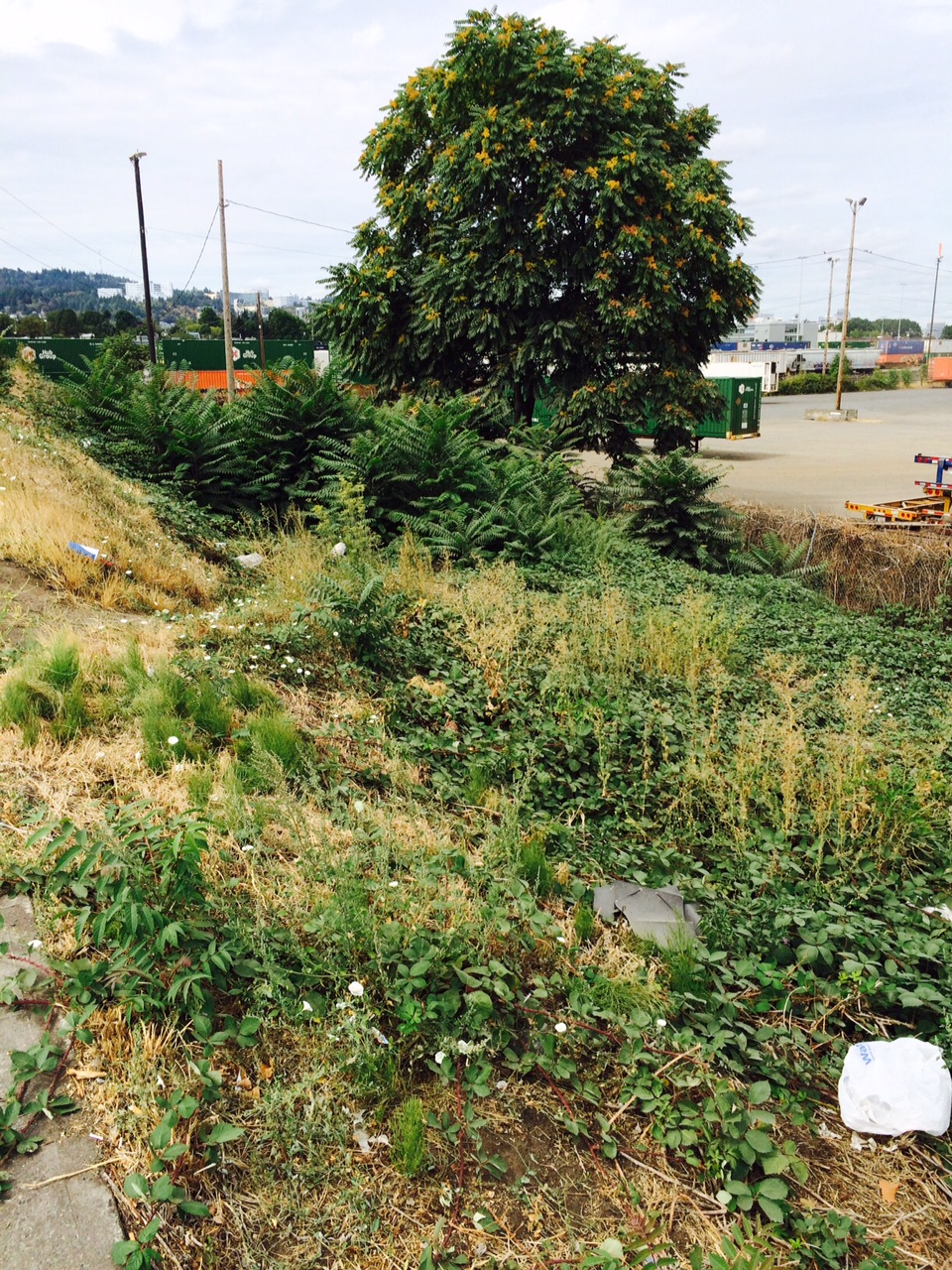
Holgate Overpass – the northeast approach. This was taken Aug. 28 of the landscape cut down in April showing regrowth in a hot drought year.

Holgate Overpass Update:

It finally rained this last weekend!  Somewhere around .3″.  Woohoo!  It will be the most rain that we’ve received since March.  It’s been dry!  In April the City cut down the ‘weedscape’ on the northeast approach of the Holgate Overpass.  It’s rained very little since and we’ve had record warm temperatures all summer.  No one has come back to spray, plant or do anything.  No one’s even picked up the trash.  If you compare the four ‘weedscapes’ on the two approaches they are very similar.  The NE, by volume has had the most regrowth.  This is for two different reasons: first, this site was cut earlier in the season when there was more moisture still in the soil to enable regrowth, and secondly, because the site is dominated by Blackberry and Tree of Heaven, both perennials, well established and of larger stature than the plants dominating the other approach landscapes. Continue reading

Gardening in Public: The Duniway Park Experiment

Portland Parks: horticultural profiles series

I’m almost a little embarrassed to post this article….  Most of my earlier project were much smaller, more like bandaids.  This is the first Park I went through more systematically assessing, horticulturally, and trying to correct landscape ‘problems’ with entirely different plantings. We generally weren’t expected to do more than little fixes and bandaids.  Larger issues were considered beyond our scope and should be addressed by our Planning Division, with master plans and all of that.  The Bureau was, however, neither staffed nor funded to do master plans which is a laborious and time consuming process.  They were few and far between.  So, as I said, this was my first go at it, though I don’t claim to have created a master plan in the process.  My time was even more limited. Continue reading

Water, Irrigation, Xeric: Related and Essential Garden Vocabulary

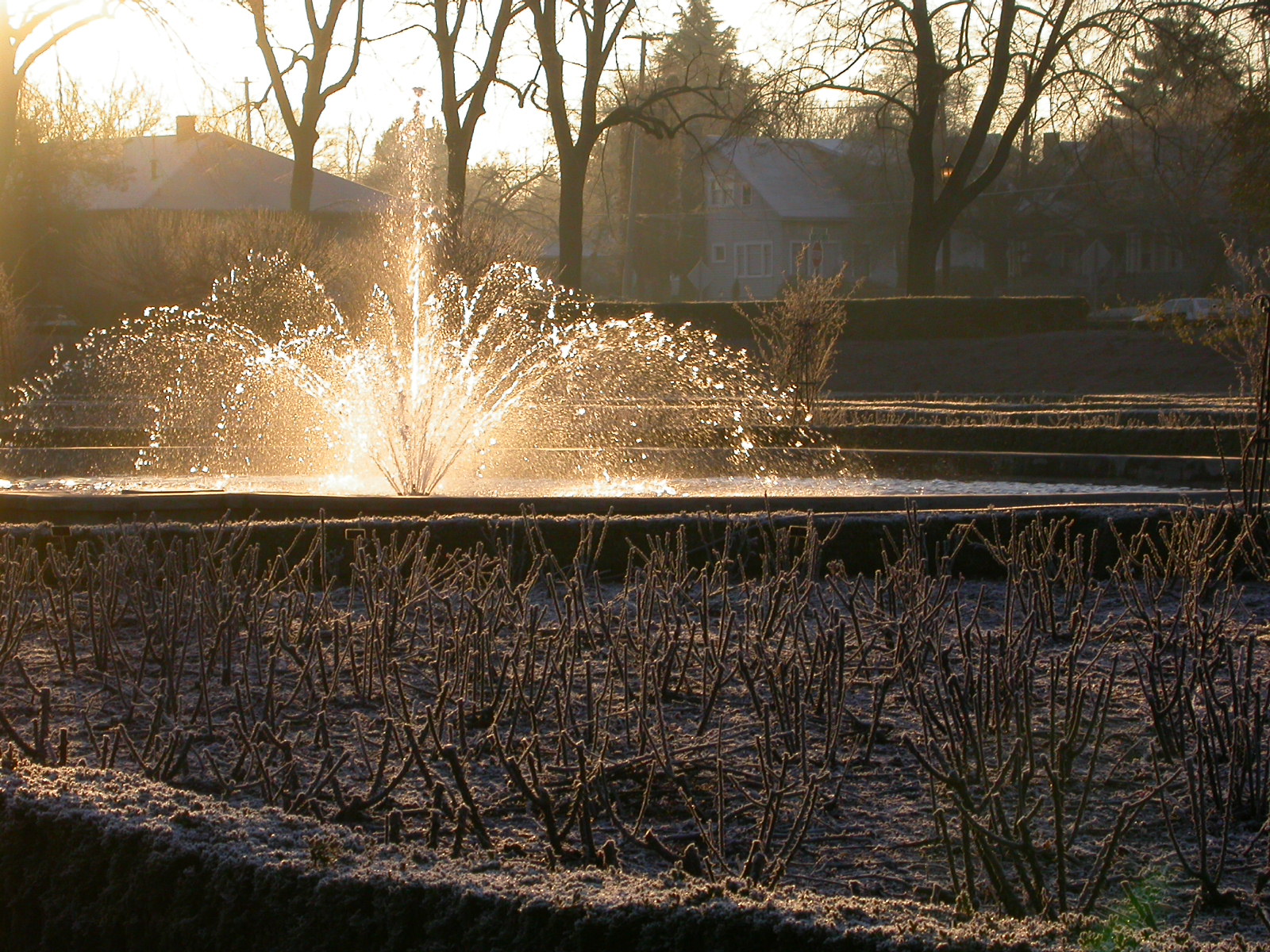
The fountain in the Peninsula Park Rose Garden, a frosty February morning

Water, beautiful and essential.  The fountain in the Peninsula Park Rose Garden, a frosty February morning

First in the Water Series

Water is essential to all life on Earth. It comprises a very significant percentage of the mass of every life form. It is the vehicle without which the various metabolic processes would cease. It dissolves and carries in solution the many elements organisms require to build their tissues. It helps produce the conditions necessary for other supporting life forms.  In it’s heating and cooling it creates the weather that helps define the parameters and limits to life in any given place. It works as an erosive medium breaking down landscapes and helping create new ones upon which life adapts and grows. Water moves across and through the surfaces of the Earth in a dynamic yet stable manner helping create the conditions within which life may evolve. It fills that sweet spot moving readily from gaseous form to liquid to solid where our water/carbon based life forms can take advantage of its transformations.  Without it life as we know it would end.  With our disruption, we have altered the pathways and cycling of water across the landscape and so have altered the conditions under which life must live, cutting down forests, draining wetlands, channelizing streams, grading and paving the Earth’s surface. Our actions have directly impacted every habitat, every landscape, on Earth. We are even changing the weather patterns themselves, changing the conditions within which it operates driven by the sun’s energy.  We are massively altering the Earth’s landscapes and its atmosphere in which all of this happens. It is taking on a ‘life’ of its own as we accelerate the rates of deforestation, desertification, expanding urban heat islands, while we continue the mining and burning of carbon previously sequestered for millions of years pressing us on into massive perturbations in our climate patterns. Everything is connected to water. Continue reading

On Healing the ‘Broken’ Urban Landscape: Portland’s Holgate Overpass & the Brooklyn Yards

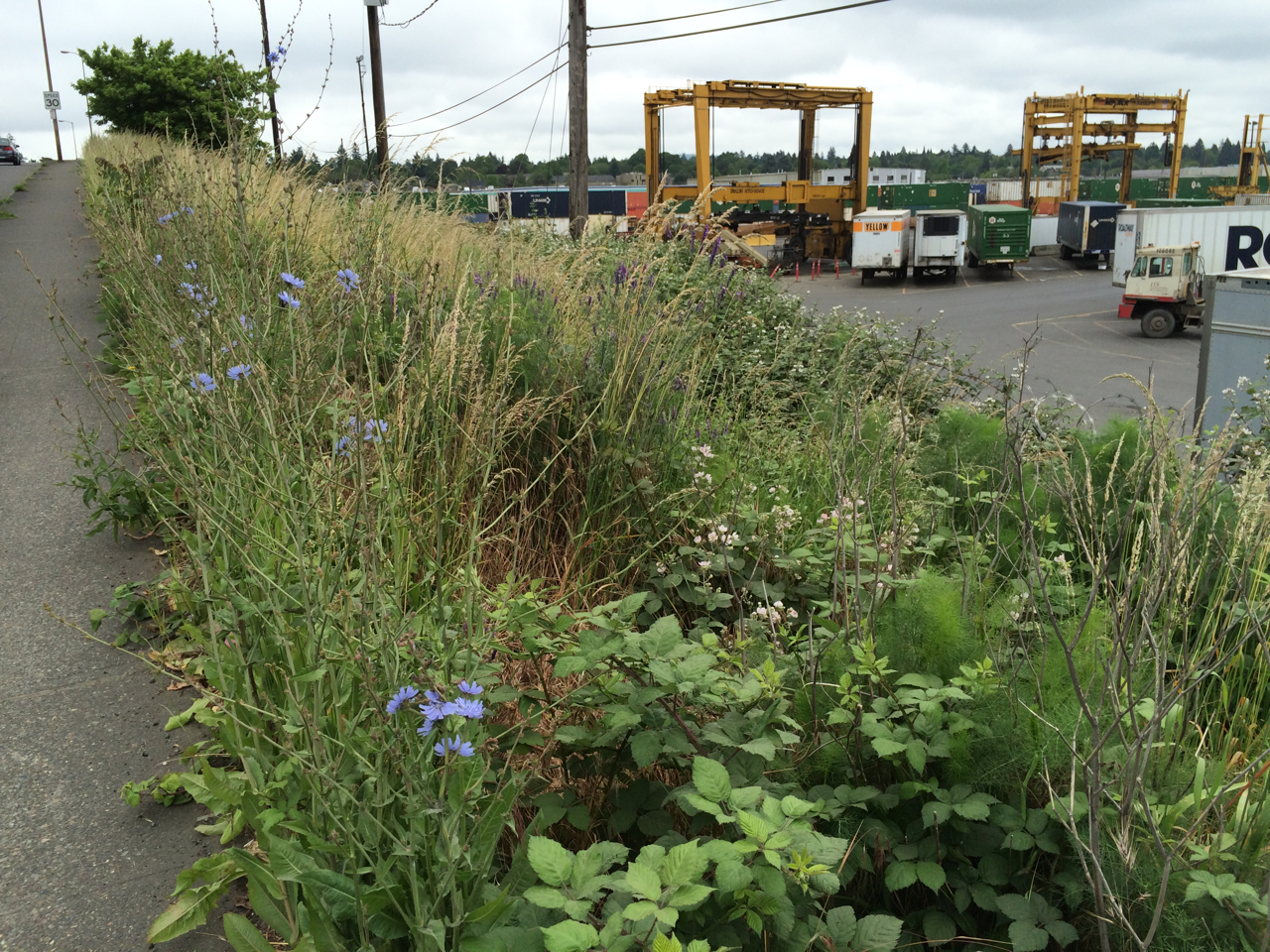
This is the section south and adjacent to the west approach. It was rough mown in early June down slope to the Blackberries and east to the Box Elder in the background.  You can see the blue flowers of the Chickory.

This is the section south and adjacent to the west approach. It was rough mown in early June down slope to the Blackberries and east to the Box Elder in the background. You can see the blue flowers of the Chickory and the Fennel.

Walking the Holgate overpass across the Brooklyn Switching Yard, with its adjacent container operation, is anything but pleasant. Trucks, trains, blasting horns and the four lanes of traffic whizzing by next to the 5′ wide sidewalks wipe away the positives of the views across the river and to downtown.  Most people probably don’t think of places like this as ‘landscapes’, but in the broader sense they are. Landscapes, most simply, are the places that we occupy, whether they are artfully designed, narrowly utilitarian, neglected, forgotten or simply dismissed. They become ‘landscapes’ through our occupying them or merely perceiving them. They are places we are in relationship with. Holgate is a traffic corridor for automobiles. Here is where it crosses the north south railroad line and the region’s major container handling yard. Car and truck traffic are heavy, at times, nearly non-stop. This is the only east-west route between Powell Blvd. and Bybee, and Bybee is intended for, and used by, more local traffic. It is loud. Traffic typically is moving a 35-45 mph although it’s posted 30.  The sidewalk is relatively narrow and this zone of unpleasantness is over a third of a mile long, an expanse from which there is no ‘escape’ for the pedestrian beyond enduring it. Since I retired, and weather permitting, I walk it once or twice a week on my way to the gym for a swim. Continue reading

My Garden: Behind the Scenes

Photo thanks to Josh McCullough

Photo thanks to Josh McCullough

Overall, mine is a sunny warm garden.  Like any landscape or garden it is defined or described by its: place, design and plant choices. Where these three all come together, you have a garden. Each one presents itself as, what some might view, a daunting array of options or possibilities.

What exactly do I include under ‘place’?  Certainly climate, exposure, aspect, slope, soils and the ‘history’ of gardening and ‘disturbance’ on the site. It also includes the larger surrounding landscape, the context within which it is located and the physical ‘features’ built and natural with which it will be a part.  The story of a place is important.  Place, is the major limiting factor in a garden. Gardens are also defined by the choices we make. Each choice precludes others. In a very real sense gardening is a process of limitation. ‘If this then not that’.  What we need to be aware of is that these, design and plant choices, these limitations, can either work together or compound each other when not made with awareness.  When design and/or plant choices ignore place, the gardener must overcome all of the ‘conflicts’ this choice has put in to play, or face ‘failure’.
Continue reading