

One of my most current reads and the book that prompted this posting.When Darwin wrote “Origin of the Species” in 1859, he clarified and developed ideas that had been kicking around by those studying natural history and the origin of life, even the possibility of it’s evolution. Lamarck, von Humboldt, Darwin’s own grandfather, Haeckel and others had been speculating, arguing about certain pathways to ‘now’, but without having done that much serious research into life’s intricate relationships. There’s were less bold challenges or conceived theories. Christian orthodoxy shaped the thinking of the time, and opposing it, well that wasn’t done. Creation was pronounced a one time event, that all life forms that existed, had from the beginning by the grace and workings of God. But Darwin, himself a devout Christian, and Alfred Russel Wallace, did do the research, did examine the relationships in depth, adding their insights, the idea of ‘natural selection’, a process that ‘sorts’ through the accumulations of adaptations across a community and populations, ‘selecting’ those that give them a competitive advantage. These, over time would produce progeny at higher rates and would come to dominate a population and species. Since then one question led to another, as is the way of science. Where do these adaptations, these mutations, come from? How frequent are they? Aren’t our chromosomes ‘protected’ from this random degradation and mutation? Are mutations truly random? What drives them? Evolution ‘shows’ that over Earth’s 4.5 billion years, life has evolved towards greater complexity, organisms innovating new structures, variations and with it an increase in the sheer bulk of life, as more species create and fill more niches. Life on life. This can’t then be an entirely random event. Wouldn’t a truly random process result in no net ‘gain’? Wouldn’t it be a 50:50 proposition? One step forward, one step back? What is going on in this mutating?
Roxanne Khamsi, in “Beyond Inheritance”, takes the reader on a guided tour of our rapidly evolving understanding of the mutation of our cells and what it means. Mutation is an essential fact of life, one central to natural selection and the ongoing health of every living individual, and, perhaps our demise. Mutation, however, is commonly understood to be a negative, a degradation of the ideal held in our chromosomes. What’s going on here? Is it necessary or is it bad?
Mutation, it turns out, is pervasive. Every species, every tissue every cell and cell type is subject to it. We’re not talking about what occurs in ‘germ cells’, our egg and sperm, those all important passers on of our genetic code. There are 30-40 trillion cells, in a mature human body, depending on our size, colonized by a like number of bacterial cells. These cells too, as they are going through a continuous process of metabolizing, internal and external maintenance, repairing and replacing themselves, are much more prone to mutation in this endless process of living. Some human brain cells are thought to survive over the course of our entire lives, but all of the rest, are being replaced at widely varying rates. Those epithelial cells of our intestinal lining are replaced every 3-4 days; we replace around 170,000,000,000, 170 billion red blood cells in our bodies, EVERYDAY. Every single cell replaced in our body, requires that the cell replicate its DNA, the two sets of chromosomes each containing 3.1 billion base pairs, the rungs in the helically shaped ladder of DNA’s structure. 3.1 billion base pairs, each consisting of a specific four ‘letter’ group of Adenine (A), Thymine (T), Guanine (G), and Cytosine (C), a 4 digit quarternary code….Perfect replication of each cell, billions and trillions of times over our lives…‘mistakes’, mutations happen. Organisms, cells, are not machines. We have this idea that machines can perfectly produce products endlessly, but that is wrong. Our continuous ‘cloning’ of our cells is far more precise a process. As the bumper sticker once so popular used to say, Shit happens…and the numbers within a complex, multi-celled animal such as ourselves, are astronomical. Mutations happen. We get stressed, sick, exposed to toxic substances, free radicals, physical trauma, various types of radiation, we age, become sedentary, our systems slow, we slow…as the necessary processes of life go on, within bodies and cells. Most must replicate themselves perfectly over our lives. Nevertheless, given the numbers, mutations accumulate. Some of these enable our continued ‘good’ health, some are benign, while others become ‘negative’ change agents, altering the operation and conditions within us, in what can be very harmful ways.
While disease is generally accepted as a negative, a ‘foe’ to be ‘defeated’ if possible, we need to understand that it too is one of life’s processes. Disease is often the result of an imbalance in the individual, in the system, the larger system that includes our community and the world itself. Bacteria, viruses, fungi, protists all life forms, are also undergoing mutation in response to the stresses that they face, where the process works very much for them as it does for us. There are differences in their rates of replication, the size and stability of their genome and their capacity for what geneticists refer to as horizontal gene transfer, in which existing bacteria that have for example survived a ‘threat’ at a higher rate can sometimes transfer advantageous genes to closely related bacteria without the advantage and so gain the capacity, such as resistance to drugs and pesticides.
Collectively, all life drives evolution, a process that works in similar, ways within all of the ‘bodies’ of all living organisms as well as in the more familiar relationships between species of the same communities. Disease is always in the ‘background’. It is in this way a shaper of adaptation and evolution. When disease ‘flares up’, when the virus or organism that causes it finds a suitable habitat for its proliferation, like us, it tends to increase its population. Disease is both biological success on the one hand and an ‘indicator’ of imbalance on the other. Ill health, in the system, is a mechanism within the larger community that works to keep the system, as a whole, in homeostasis, in dynamic, healthy, balance. Organisms must consume nutrients/energy in order to sustain themselves and for life other than plants, we all do that by consuming other life, in ways not that dissimilar to how a ‘disease’ organism does, ‘feeding’ off of our bodies. But as any system moves too far out of balance, it become much more difficult to maintain. ‘Corrections’ within the system begin to occur. Our bodies gear up to ‘fight’ the disease in various ways.
Populations of species that feed too heavily on its prey species or the plants they require for proper nutrition, begin to decline and die. It is a very dynamic system, within limits. Species tolerate a certain level of disease, of stress, of variation from the norm. In fact some is necessary for healthy survival. Species and individuals only exist with it within margins. The concept of an environment’s carrying capacity is very complex, having many relationships, negative and positive feedback loops. It is not a ‘fixed’ path. In that variation lies both the threat and the promise of good health and renewal. It is a process that involves and engages the individual and the ‘disease’, the predator, the herbivore, operating within livable conditions, conditions that are a ‘product’ of the interaction of all of the relevant parts. Disease plays a role as a ‘corrective’ force, as disruptive and undesired as it may be for an individual. An individual, who in their ‘effort’ to maintain homeostasis, plunges beyond those ‘margins’ within which their species can thrive, begins to utilize its various defenses to bring itself back to a state of health, to regain homeostasis…if it can. It is a process parallel to that operating at every moment within the individual as it metabolizes, respires and ages; as the event of our existence continues.
Our health is linked to that of others through our relationships with our community and the larger system, a system which when pushed outside of healthy margins, puts all members under increasing stress. Mutation is a part of this process, of the increasing threat posed by a particular disease, as well as of our repair and our return to a state of health. In part, the ‘source’ and the ‘cure’, of the disease. Our genetic variability between individuals, as well as that within each of us, has been ‘tuned’, over time, in such a way that it supports the population, the community and larger system within which we exist. Even when it may lead to decline and disease within an individual, this genetic variability, remains essential to the survival and health of the whole of life, our community, our species and selves. As individuals we are biased toward our own survival and must continually remind ourselves of the larger picture, our relationships, and exercise caution before we attempt to excise those mutated cells, those community ‘members’ we perceive as threats, and remember that over the millions of years of evolution those problematic cells, that lineage that produced those we perceive as threats today, may have once served essential functions in our, our species’, early development, or may be the basis for ‘tools’ our species needs to defend itself against as yet unforeseen threats.
Khamsi skillfully leads us along the historical trail of our own evolving understanding. The practice of science is essential to this effort. Given the fact that through our sheer numbers, over 8 billion individuals, our consumptive economy and our technologies which enable us to shape our world in ways barely imaginable even 50 years ago, we have found ourselves pushing up against the limits of an Earth now struggling in terms of its capacity to support us. It is not the time to throw out science. In fact we have never needed it more….If only we had the will to act on this knowledge. Life is not only a numbers game. It is at least as much about how we conduct ourselves. How we view the ‘other’. About our relationships, who we interact and we respond to one another. All the players. All species. We are incredibly dynamic and complex beings and the variability in our capacity to mutate, think innovate here, has played a central role in shaping who we are today and what we, later generations, can become. Not every iteration can be successful. In fact, it has become essential that we redefine what it means for an individual to be ‘successful’. Death will always be with us.
Darwin and others of the early thinkers/questioners of life and the natural world, were already suggesting that this idea of evolution by natural selection, went beyond the species level. Natural selection, they proposed was operating at a smaller scale as well, within individuals. Mutation was not just some rare event that resulted in one species gradually replacing another, but a continuous process from birth on, within each individual. This idea was first and most fully embraced by Émile Roux, a French physician and immunologist who worked with Pasteur and was an early and passionate adopter of Darwin’s natural selection. Khamsi goes into Roux’s work in some depth and how his extension of it into the inner workings of the body, was widely disregarded at the time. Today, this is driving much of the research in the life sciences and medicine today. The cells of our bodies are alive and evolving, mutating, throughout our lives. As biologist Kenneth Walsh at University of Virginia has said, “The genome you are conceived with, is very different from the genome you die with.” Our bodies themselves are stages upon which continuous change takes place. Mutagens, free radicals, UV radiation, viral and bacterial disease and age itself, ‘tilt’ the ‘stage’ upon which our lives play out, through genetic mutation of our somatic tissues, those of our bones, muscles, blood and solid organs themselves. We carry this idea of ourselves as individuals, somehow fixed, changeable through our own self-determined actions. But this has never been the case.
Quantum biologists and those who study the thermodynamics of organisms, would say that we are, more realistically, ‘events’, fixed and solid only as a result of our own limits to perceive ourselves. We are systems in a state of continuous change. While the ‘germ cells’ we pass on to the next generation, our sperm and egg cells, are relatively stable, our somatic cells, all of those that comprise our bodies, are an evolving response to the world around us. We ‘respond’ internally, as fully integrated, communities, quite beyond our direct, conscious, control. Our bodies work continuously toward homeostasis, adapting, mutating, to our environments and the stresses across our internal community. Those mutations that grant them/us advantages in this dynamic and evolving process, clone themselves at a higher rate than do those less well adapted, much as do individuals of a species in response to the living conditions around them. In doing this they can replace their predecessors over one’s cycle of cellular replacement, and do so more successfully than do those cells less so advantaged.
Mutations may be beneficial or they may not be. Khamsi takes many of her pages to describe how such mutations can help or hurt us as individual organisms. If the process were faultless, if every mutation gave us an advantage…well, we wouldn’t suffer as so many do. We would be in a ‘race’ of constant improvement over our original guiding DNA…our would we? The process of evolution, would be skewed. Our cells, our bodies, don’t correct every error. Not every individual lives to a ripe old age. The constant give and take within an individual’s life, the mixing of DNA, adds variability as well as a conservative dampening to the process. Evolution then moves more in step with the slower pace of overall biotic and abiotic change across the Earth system.
When we identify individuals as ‘weaker’, ‘inferior’, we are moving into dangerous territory. These are labels we assign, that ignore other ‘values’ those individuals likely possess which ignore the moral and ethical ties the bound us all together. ‘Physical fitness’ is a limited and very human and volatile standard. Evolutionary ‘fitness’ is not just a matter of survival of the strongest, the most aggressive. The dog eat dog world is a human invention some impose on the processes of life. It ignores cooperation, community, creativity and so much more of what make a successful human society, which is undeniably central our own survival and advancement as a social species.
Part of the slipperiness of ‘fitness’ is that, ultimately it is the ‘fitness’ of the living community, not that of particular individuals, which is at the core of evolution. This is just as true for all other forms of life. While we dismiss those other species communities, we do so at our collective peril. Our efforts to bias it in our own favor pushes the larger system out of balance, into what physicians would term, a state of dysregulation, in which the individual/system becomes unable to regulate itself. Systems, communities, at this point, will continue to degrade until it reaches a point in which it can regain a new balance point. From there it will begin to rebuild complexity in a new pattern. Fitness requires the dynamism of evolving, increasing, although conservative, options. Without this, any organic/living system, environment, would move into a more chaotic state, until it becomes able to reestablish a new dynamic equilibrium, with a ‘new’ mix of actors, species capable of survival in the changed circumstances. An individual, a species, has a very limited capacity to move beyond its margins. If they aren’t consistent with the perturbations of a now chaotic system…they lose and are eliminated. Each individual, each species has a limited ‘bag of genetic tricks’. The conservative nature of the process tends to favor an overall balance between populations and species.
Individuals degrade and die. Species, over generations, adapt, increase, decline and even go extinct, fulfilling available roles in the ecosystem. Our cells mutate somewhat randomly, depending on their origin and their ‘histories’, producing options, alternatives, which shape future possibilities. Individuals, within our own limited ways, adapt, or die, or, rather, die eventually anyway. It is the larger process of evolution, that of life at the species level, that matters ultimately. Death is a part of evolution. Mutation is then a process of incremental creativity, that provides the ‘opportunities’ for evolution, the material that makes natural selection possible, affecting the overall resultant pattern of increasing complexity and diversity, as it also does the decline and death of the individual. Organisms, like matter itself, endlessly cycle from state to state, between matter and energy. Mutation of our cells is accumulative, good and bad and gradually, very gradually, over generations, our genomes change in ways that reset the ‘bar’ from which the process continues.
Aging, and dying, allows our, or any species, to continuously reestablish a baseline in a changing world. In this sense, as we and our contemporaries push the earth into narrower margins AND work to lengthen our individual lives, we slow our own species evolutionary process, while putting everything at greater risk, as the Earth’s overall margins for survival, narrow, we are making our chances for survival, that much more precarious. Life is all about relationships and in favoring one over another, by limiting the system’s capacity to maintain itself, we put the entire system at risk. Mutation is not just a matter of change within the chromosomes we pass on through our egg and sperm, which results in heritable changes to one’s offspring, it occurs in all of our cells and tissues as well.
Somatic mutations don’t necessarily, lead directly to disease, nor do they lead directly to changes in our germ plasm, our heritable DNA. We don’t pass these on to our children at least not directly. In terms of heritability somatic cell mutation is far more conservative. Surviving adults that reproduce, pass on, their particular heritable genomes, and the possibility that they possess the adaptability to not just survive, but thrive. Over time, over generations these somatic mutations, in biasing which individuals survive and reproduce, those successful survivors will gradually acquire heritable genes, they can pass on.
Many of our mutations are neutral, at least singularly. Some are outright positive. Our immune systems rely, at least in part, on this adaptability to stay effective in a world of changing threats, but pushed too far, it too can ‘go south’, resulting in autoimmune diseases in which we attack our own tissues and cells, and ‘seed’ cancers that can eventually rob healthy cells of what they require. Cancer cells, don’t simply arise from a faulty gene in our genome. A few may. They more than likely arise from undesirable mutations of the cells that comprise our tissues. Even these mutations don’t necessarily lead directly or quickly to cancer. They generally require crossing a ‘threshold’ before they can dominate healthy cells, or require a ‘suite’ of other ‘supportive’ mutations, before gaining advantage and outproducing and replacing ‘healthy’ cells, where upon they may rapidly drain our bodies of our health and vigor…runaway successes, if you will, of this process of internal ‘natural selection’ working alongside our body’s efforts to maintain homeostasis. Many of us carry some of these cancer linked mutations, but don’t develop cancer. Understand too that these cancer cells arose from healthy cells that once served a vital purpose.
Khamsi takes us to the labs around the world where the studies and research are being carried out into these questions. Some researchers are working to improve the cell’s own capacity to ‘repair’ its own chromosomal ‘errors’; others are looking into the role of anti-oxidants in curbing the mutagenic action of particular free radicals which can increase mutation rates; others are studying the ‘suites’ of mutation required before a particular disease or cancer becomes capable of action; those examining aging and the consistent pattern of increasing rates of mutation with age; and those taking the rapidly increasing international database of genetic mutations and crunching massive numbers in the millions and billions, in their search for patterns in mutation. Why are they doing this? Because mutations are pervasive throughout our bodies, occurring at an increasing rate as we age, suffer stresses and exposures to particular ‘toxins’. We all contain them. Single mutations, even those believed to be essential in the development of a particular cancer or disease, don’t automatically lead to it. Millions of individuals carry those problematic mutations, yet don’t develop the cancer or heart disease. We are, in the terminology, ‘mosaics’ of healthy and mutated cells. The particular unique genetic package we each begin with, the epigenetic factors that lead to our growth and development, endows us with a kind of morphological ‘inertia’, what we are, in terms of our structure and function, possessing a kind of physical and functional momentum that singular somatic mutations don’t generally effect.
Remember, these mutations Khamsi is writing about, are in somatic cells, in the tissues that comprise our many organs. They form what researchers and doctors are coming to term mosaics, healthy cells alongside mutated. They can exist for many years, held in check in relatively few cells, without problems manifesting, or if they do, doing so in limited tissues. Our body’s have the capacity to recognize and repair much of this. We are, as she points out, dynamic mosaics, composites of mutated and non-mutated cells, some that benefit our existence, others that seem neutral and others still which may or may not become problematic. At whatever level you choose to examine life, w are complex systems. Life is a nested system of interrelated, even dependent parts, divisible by our science that examines it in its parts, but understandable, ultimately, when considered as a whole. Individuals follow their own path, determined only in part by the genetic packages of our parents, entirely subject to the uncountable moments in our lives that can influence our health, all of the relationships which join us to our communities and the world…so, ultimately, inseparable.
The Intersection of Life with the Quantum Universe
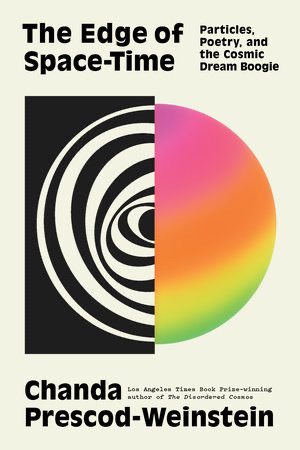
Another one of those books on quantum physics, dark matter, dark energy and cosmology written by minority woman scientist
Khamsi is a long time science journalist who has been writing for years about the intersection between genetics and health. This is an exciting topic for me that fits in with my own study of the intersections between health, quantum mechanics, the quantum field, the thermodynamics of far from equilibrium systems, living communities and evolution….How does all of that come together?
In the world of physicists, ‘quanta’ are those tiniest bits that anything can possibly be broken down into. Atoms and molecules? Nope. Protons? Neutron and Electrons? Almost. Smaller yet are the elementary particles like quarks and leptons, some of these ‘massless’, that determine the characteristics of matter and govern the processes, movements and behaviors of the universe and all that it contains. When brought together these quanta produce the universe of elements, molecules and the endless forms they beget. They give them heft and density, hardness, solidity, conductivity, all of the physical characteristics of everything around us, within our bodies and the surrounding universe. They determine which forces are active on them and how they work together. The quarks themselves possess characteristics that do not exist in our perceivable world. At our scale, at the gross level of our own perceptions, the quantum world remains invisible and largely undetectable, unknowable in any direct sense. We can only sense its gross effects, its ‘behavior’ in mass and relationship. In speaking or writing of it, we find ourselves without the language to do so in any direct way…so we talk around it, utilize metaphors and story, pose questions of possibility, or, if you are a theoretical physicist, describe it more directly via esoteric maths. How does one speak of that which has not and cannot, be directly experienced, of which we have no words, which never-the-less must be, when one critically examines the working of the universe.
At the level of the quanta, everything exists as both particle and wave. Elementary particles exist in ‘super positions’, waves, ‘smears’, areas, that take on fixity only in their combination with others, in the ‘blurr’ time allows. It is at the intersection of quarks, electrons, nutrinos, ‘fermions’, where they combine in limited and essential relationships, that matter, mass, emerges. When disassociated, out of such relationships, that mass, dissolves into energy. Mass and energy. Einstein’s theory and the experiments that went on to prove it, demonstrated the ‘equivalence’ of the the two. Matter, mass, life itself, springs from this basic underlying complex of quantum relationships.
Think of perceivable masses as collectives of these, which at our scale, take on the characteristics we ‘know’ and ‘understand’. We ‘see’ the collective ‘behaviors’ of mass and energy over time periods we can experience and understand…but what lies ‘below’ that level? What is actually going on? Quarks have very particular properties that aren’t manifested at human scale. They take on more character, substance and energies as they are ‘assembled’ into atoms, molecules and bodies…they begin to take on characteristics we understand…disassembled, if that were possible, in the space where any object exists, there is nothing we can directly understand. Einstein ‘proved’ that mass and energy are equivalent, they can be transformed back and forth, at these subatomic scales. It is through relationship, through structure composed of this ‘stuff’ that mass, and life, exists.
Matter, at human scale, becomes experienceable. It exists within the larger encompassing space within which we perceive it. We see masses as bounded, discrete, structurally ‘complete’ and fixed ‘objects’, separate from their ‘space’. ‘Space’ in the world of quantum physics and ‘fields’ is not ‘empty’. This is the quantum field, that space in which matter and energy exist, altering their form and state. That ‘fuzzy’, dynamical space in which everything ‘exists’. Where ‘fact’ and possibility exist simultaneously. Space-time is where/when everything can exist. It is the ‘geography’ of the quantum field in which all of this creation/annihilation occurs. The quantum field is the source of all possibility, the energizing field of existence within which everything exists…that makes all things and experience possible.
The difference between any ‘object’ and the field itself is in how it is structured. Our bodies, a steel bar, gain their mass, their solidity, their characteristics, from the particular arrangement and type of the Quarks and other elementary particles, that comprise it in their endless trillions. Any object appears solid because of the energies that comprise its internal relationships with one another. Possibility comes from this and is limited by it. Steel appears dense to us, but compared to that of the core of a White Dwarf Star, it isn’t at all. Mass is a product of these combined ‘energies’. The subatomic structure of a mass gives it its relative and apparent fixity. Its edge. Its solidity, that, in a sense, ‘disappears’ as one examines it at the level of the quanta. This is why one cannot move through a wall. What gives them their integrity. The apparent bonds that joins one mass together. In a sense matter is an ‘agreement’. A playing by the ‘rules’ that define matter’s parts at its tiniest possible scale. Why under entirely different conditions that same mass, such as those within a white dwarf or neutron star, can be fused into matter of incomprehensible density and why when such matter is exploded, its energy released, capable of such unimaginable damage.
E=MC2, Einstein’s most famous equation, speaks to the power contained in the energies in the bonds that hold atomic nuclei together. These are the ‘strong’ and ‘weak’ nuclear forces that hold nuclei together. Fire, the result of the combustion of carbon based molecules, releases far less energy, as the energies involved at a molecular level, are minuscule in comparison. This is the same scale of energy ‘harvesting’ that our bodies utilize when we consume and power our cells with carbohydrates, all-be-it at a rate much slower than the uncontrolled combustion of carbon fuels. All mass exists only in relationship with…including we organisms. At every ‘level’ of existence, relationship is key and defines the balance between energy and matter.
The integrity and characteristics of any ‘object’ is defined by its relationships…and all ‘things’ exist only in space-time. Because of the characteristics and properties of those elementary particles that make up all matter, all organisms, at the level of the atom and each successive form, molecules, crystals, cells, tissues, organs and organisms, each is structured and functions as it does. These are not random assemblages. Their properties, characteristics and structures are ‘probable’ and varied across ranges, although some are very small. Time is itself, like mater, only divisible so far as well, reducible to the briefest possible moment, an interval in which existence disappears. Without time matter, nothing can exist. Without space, physical dimension, nothing can exist. The two exist tougher. As time advances mass comes into existence a product of the quantum field. Matter/mass in occupying it ‘bends’ it around itself, the bending of which is expressed on all mass and space-time as gravity. Heat, the result of kinetic change, and the flow of energy, is directly linked to the flow of time, the same time that permits existence, mass and life. All is inextricably linked.
In the frozen moment, no one thing exists, every possibility waits. Theoretical physicists speak of the ‘superposition’ of quarks, how existence comes into being in their continuously moving, changing relationships with each other, from moment to moment. The advancement of time makes existence possible and it is born out of the quantum field that pervades the universe and every aspect of our lives. From the quantum field comes every ‘thing’. The quantum field exists across all of space-time, all of the universe…not just out in space, but all around us. We exist within it. An ongoing event. A ‘product’ of it, as is the moon and stars. To it every ‘thing’ returns, continuously at speeds far beyond our capacity to detect, billionths of a billionth of a second. This is what is meant by ‘dimension’. They exist as a whole. Inseparable. Space-time, the quantum field, the universe, all of existence, are all one with each other. Everything is linked. The creative force of the universe, the phenomenon of life as well as its evolution. We, all things are ‘of’ the whole. We exist within it. A single unfolding process. Emergent.
Thermodynamics, the study of the flow of energy through matter, its animating, transformative and ‘informative’ flow of energy through us, through all organisms, in which we exists as events, as if we and all things are riding the crest of a wave through space-time, in that/this universe. All ‘things’ exists as ‘informed’ energy, energy ‘given’ form, that interaction of all quanta, from one moment to the next, transitory. Our pattern, our ‘selves’, possess a dimensional momentum, beyond our capacity to fully see. We, all things, are in a continuous process of manifestation and annihilation, in a continuous flow of change. Every cell, tissue and organism are in an emergent state, suspended between life and death, from moment to moment. We are, in a very real sense, created every moment anew, disassembled every moment. Life is dynamic, an experience, between possibilities, each necessary, each incomplete, even in conflict with the other in an endless process of what doctors refer to as homeostasis. In this mutation is another part of the unfolding process. Neither good nor bad on its own…a state of existence.
The universe is a similar composite of energized particles, of matter moving continuously from one state to another, simultaneously, until such a time, theoretically, that it no longer can. Inert, non-living matter, in the quantum field, is in a similar, although differently organized state. Even though it may seem fixed to us. That is a part of the same illusion of scale and our human limits of perception. This directly perceivable world is that in which the Classical Physics of Newton and others operates. It has not become ‘wrong’ with the development of the new physics, of quantum mechanics. Classical Physics or Mechanics, is still operational at our human scale. It is in a sense a surface mechanics. It does not address what is going on within, and it cannot explain away, all of our questions. To insist on it makes so much appear inexplicable. Magic! It cannot explain the ‘behavior’ of matter. Why what is is structured and ‘behaves’ as it does. It cannot explain the phenomenon of life or the cosmology, the story of the universe’s origin. That is still an ongoing and developing story, which admittedly, is incomplete. That doesn’t mean that the new ‘stories’ are wrong, it only says that questions remain and our knowledge is imperfect, that the universe and all that it contains is infinitely complex.
Within the quantum field every Quark, every atom, the undetectable Dark Matter and Dark Energy that comprise an estimated 95% of the universe, is at work, along with that which we can ‘see’, creating and sustaining this unfolding process across space-time. Every ‘thing’. Whether an object/organism stands still, which because the universe itself is in constant motion is a matter of perception, not ‘reality’, everything is continuously being ‘remade’ and broken down. The pattern remaining the same identifiable. Knowable. Even ourselves. An object’s appearance may appear static. Familiar. Fixed. Solid….at human scale, in humanly conceivable time scales, but it isn’t.
Matter isn’t just an ‘expression’ of an arrangement of energies, it is a conductor of them. Atoms, molecules their particular structure as plasmas, gases, crystals, amorphous substances, cells, tissues, organisms themselves, In the case of organisms the throughput of energy allows its constituent molecules, ions, cells and larger structures to exist as emergent phenomenon, transient, alive, self-organizing and repairing, following those patterns that remain ‘true’ to their parts, while existing as something greater, more extravagant, more inexplicable, but possible all of the same. Pattern following more ‘basic’ patterns into possibilities which, when properly energized, bring about emergent structures and processes. As organisms are scaled up, as we become larger and more complex, energy flows through our structures sustaining us, remaking us, permitting our existence, every moment. It is doing this right now! We call this the state of being alive. We exist within certain critical margins, which should we stray outside of, for a critical length of time…we die. The Quantum Field within which Quantum Mechanics operates, with its elemental ‘bits’/waves, sets the basic operating parameters for the universe. Living organisms exist only within very narrow margins of the universe’s extremes, a niche space that the quantum field is resonant with…margins that, however, are ‘favored’ by the characteristics of the quanta itself, the energies and fields all in ‘play’. It is a music if you will, that can have endless iterations, but can only exist within certain limits…unbreakable rules of harmony and energetics. From the several types of quarks, up through the prokaryotic cell to eukaryotic cells, to multi-celled organisms, each species, each individual must remain within these system wide limits, set by the field, its constituent elemental ‘parts’, the conditions active in its environment, even its own ‘history’. The basic ‘mechanics’ of matter are the same, regardless of the matter’s, characteristics, its form and shape. The quantum world is in operation continuously, in every thing! Within the framework of space-time. While new forms and functions emerge in properly energized structures, their limits, structural and functional, while perhaps surprising on first discovery, are nonetheless determined by the quantum behavior that underlies it all.
The dynamism of mutation, is consistent with the flow of energy through every organism, their continuous process of building/repair/replacement, parallels that occurring across the quantum field as all matter moves from informed to uninformed and back again, in continuous creation and annihilation, at the quantum scale, where ‘fixity’ does not exist. Our individual histories, our experiences, go to shaping/directing how our matter/energies is expressed and that too is infinitely variable. But it follows the same ‘rules’. It is in this way, a comparable process, toward a necessary and probable outcome, following the essentials of its pattern, ’selected’ over time, an evolving process and dance of pattern and existence throughout the universe. The basic state of everything. Matter, informed energies, follow the larger patterns and ‘laws’ of existence, that manifest at sufficient scale.
Emergence and the Quantum World
Is this progress? Perhaps. But if it is, it is a progress which lies beyond our capacity to predict with any accuracy and each iteration beyond that, becomes that much more difficult to predict. This is the nature of the ‘3 body problem’. The future can only be discussed in terms of probability. The further ‘ahead’ you look, the more variables in play that there are, well, it becomes practically impossible, and, what follows from this, the more your attempt to ‘steer’ future outcomes, the more likely you are pushing the system to instability and potential collapse. A much simplified model of this problem would be one in which we are a single celled organism within a flowing stream of water. We might understand that at some point, we, or clones of ourselves, might end up in the ocean and through the cycle of water, be carried back to the same stream, or another stream, or percolate down through strata of rock spending centuries or longer in vast aquifers, or perhaps be consumed by another organism be incorporated into their bodies. We can’t know what will follow, only that something will and we can predict probabilities of such occurrences with limited confidence. What we can only know for sure is that the ‘process’ of living, of creation and annihilation within the quantum field, is continuing and changing as a result of the billions of billions of relationships and uncountable mutations within every living organism. We can also deduce that while the particulars are always changing, that there is an overall trend toward increasing complexity. There is no assurance that a particular species will continue. As with all individuals, everything ends. Something, however, will follow, at least until space-time ends.
For now, at our scale, across geological and universal scales of time, pattern exists, ‘carrying’ matter’s initial state and structure, at each level, quantum, atomic, molecular, cellular, organismic. Forms are sustained across time periods, degraded or develop over time. These structures, qualities and capacities are ‘emergent’, meaning that they are derived from the whole and are not simple sums of their parts, but may possess characteristics entirely absent from the reality of the parts. Emergence as a quality, is characteristic of complex objects and organisms in a quantum universe. When ‘we’, matter, becomes something, emergence may create new structures, allow new properties…unpredictably. The ‘impossible’ becoming probable, when the conditions are met. Emergence defies the laws that apply at lower levels of structure and complexity. Understand that these ‘laws’ are ours. We did not design these innovations. Nor did we predict them. These structures and properties presented as anomalies, exceptions to the laws as we had understood them…until we become capable of understanding their emergence from their new or previously unrecognized state. This complexity is of them. It is nothing magical. It is in our recognition of something previously unknown to us. These additions to an organism’s complexity, can be thought of as asymmetries, instabilities, that on their own, without a continual flow of energy to sustain them, collapse.
As matter moves through space-time, in this state of ‘flux’, between material matter and energy, it in a sense ‘remembers’ itself, reconstituting itself, consistent and identifiable at our human scale. The patterns spring from the component parts their inherent relationships. Such patterns sustain an object or organism’s appearance and performance, its functionality, true as much for a human being as it is for a hydrogen ion or an up spinning quark. Everything is in constant flux, not unlike the energy of life flowing through an organism, in which, physicist Jeremy England says, life is continually being ‘kicked’ back up the energetic ‘hill’ from which it is ‘falling’. In an organism maintaining itself, metabolizing its necessary molecules, for internal regulation, intercellular signaling, the enzymes and hormones that enable and control its biochemical processes, the building ‘blocks’ with which it repairs itself and replaces its cells and tissues, mutation occurs, disrupting the perfect replication of cell and self, the ‘system’ by which any organism survives, providing the species the necessary ‘agency’ it requires, a process ‘perfected’ over several billion years. This operates at the cellular, tissue and individual level as well as one’s community. Yes, ‘mistakes’ are made. Many of these are contextual and recognized as such only over time. The ‘future’ is unpredictable. Given an organism’s complexity, individual mutations in one’s somatic cells, the ‘impact’ of a particular mutation may not be readily obvious. Mutations accumulate bringing possibilities, which over time reveal themselves as good, neutral or bad. They can pair and interact in unexpected ways. Many ultimately go ‘nowhere’. Others still are ‘corrected’ by an individual’s ‘repair system’ or eliminated by its immune system.
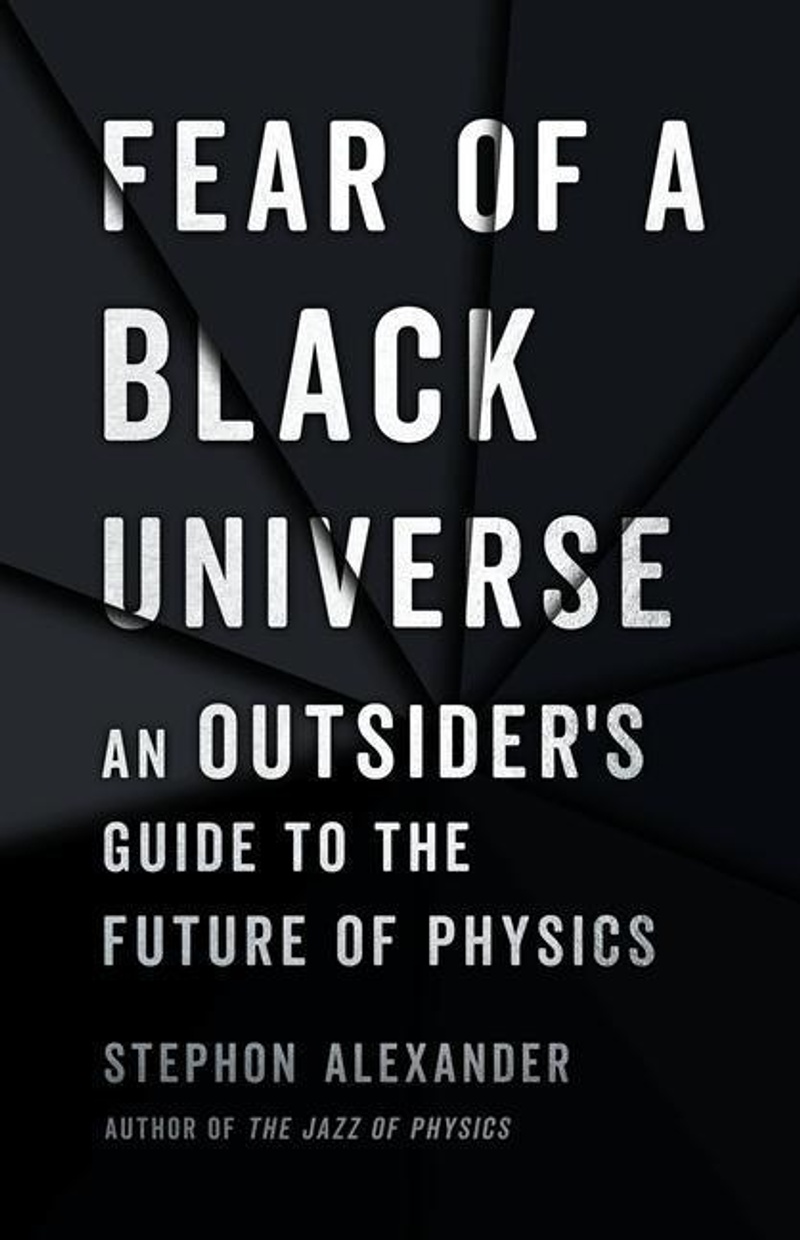
Written by a black Trinadadian physicist, a professor at Brown University, who studies the beginnings of the universe and often champions ideas and theories more speculative than main stream science and physics would consider. He, like Prescod-Weinstein often seem to see the mainstream of their science as too conservative to find the answers we seek.
Life, like the universe, is only probable. It continues within a range of conditions external and internal. Health is not a static state. Mutation provides the opportunity, the ‘vehicle’, for change and adaptation…within limits. Organisms, are very complex, asymmetric, far out of balance systems, that require very particular flows of energy and ‘materials’ to sustain them. In contrast, the physical elements such as Carbon, Oxygen, Hydrogen and Nitrogen, which comprise much of the building blocks that compose an organism, themselves exist under a much broader range of conditions, and so are very stable. They are elemental. Forged with the pressures and heat of stars, the bonds that bound them containing incredible energies. When they interact chemically with other elements, forming molecules, they form very particular structures, which give them emergent qualities. These molecules are bound with weaker bonds and so are less stable. The energy contained in these molecular bonds is more available to the biochemical processes within organisms. These exchanges enable and power organisms, which are themselves, far less stable. Organisms absolutely require a continuous throughput of appropriate energies and an environment in which they can ‘dump’ the waste heat produced by its continuous consumption of energy. Every organism lives within its own particular range of temperatures. On earth, with a few exceptions, those are very narrow. This issue of waste heat and the capacity of the environment to conduct it away from us is critical. We produce heat. We exist only in a very narrow range in which we can maintain our internal body temperature at or with a couple degrees of 98.6º F. Two degrees either way and we are very sick. We have to return to that nominal temperature or our health will decline. This is why a couple degrees increase of our environment is critical. Our access to technologies to regulate our immediate conditions has lulled us into thinking that such seemingly minimal changes can be critical to a species existence.
[A note: It is commonly thought that cold blooded animals and plants don’t produce heat. That isn’t true. ALL organisms as they metabolize fuels, release energy…including plants. But these do so at a slower rate. That which they cannot use directly is released as heat. ‘Cold blooded’ organisms, Ectotherms don’t possess the capacity to regulate their own body temperatures. They require outside heat sources or ‘sinks’ to help them maintain their optimal body temperatures. Warm blooded animals, Endotherms, have high enough metabolism rates that they can use the ‘waste’ heat to maintain their core temperatures and often some capacity, such as sweating or panting, to cool their body’s when over warm…within limits.]
Natural selection is driven by a dynamic, evolving and unpredictable, though probable, of ‘fitness’ attaining. It is a process of searching, variation, trialing and adaptation…of evolving. It is, in this sense, directional, one subject to the ‘mistakes’ made, and therefore unpredictable. The necessary failures produced by cellular mutation, are an essential part of the process. They aren’t purposeful, but they allow ‘us’, at the individual, all of the way to the universal scale, to test and prepare for incremental changes to the boundary of our limits. The rate of mutation is variable and while it is not possible, or desirable, to eliminate it, it is in some ways in response to a volatile, stress inducing environment increasing in a positive relationship. Mutation is a necessity in a dynamic world even one in which significant changes, to us, may move at geological time scales. Change is inherent to conditions on Earth, to the conditions everywhere. Through mutation, and the endless links of relationship, life continues.
The miracle and inevitability of life is a response to the universe and the characteristics of what is elemental. Individuals adapt and species evolve, within limits, or not. The emergence of new capacities to tolerate changes in living conditions, is not predictable, nor do they occur within the life of an individual of any species, except perhaps in rare occasions in which particular mutations, grant them. As a relatively long lived and complex species our ability to successfully ‘respond’ to such change, is much slower than that of say a bacteria. Speciation does not occur, over the course of an individual life. It is not miraculous. It isn’t done in a singular creative event, but out of accumulating mutations and adaptations, over time across entire populations, over generations. Advantage ‘pays off’ in this way. Without mutation, the ‘simple’ mixing of parental genes, is likely not sufficient for a species to continue in the face of significant environmental change. Static genetics is a dead end. Complexity and speciation are ‘built’ into the system. Life on Earth is not paring down to simpler and simpler, more stable forms. Nor is it favoring an aggressive few while sacrificing the majority…it is diversifying, becoming more varied and complex, while adhering to proven patterns and the ‘testing’ of new ones.
The universe did not begin with the full complement of elements. Those were made in the furnaces of stars, white dwarfs and neutron stars, that themselves developed over time. Hydrogen, the most basic of elements with its single proton nucleus and single electron, is itself a composite of quarks. Quarks preceded atoms, molecules, matter. Stars began to form when vast amounts of Hydrogen began to aggregate drawn by gravity and forces cosmologists and physicists are still investigating, that drew the Hydrogen into isolated and massive proto-galaxies. At a critical mass, stars ‘ignited’ due to immense pressures formed by their increasing mass of Hydrogen…and they began fusing Hydrogen into Helium. Carbon, with its comparatively ‘massive’ nucleus of 3 protons and 3 neutrons, its 6 electrons, fused together in stars comparable to our sun, under temperatures and pressures impossible to create and sustain on earth.
Each progressively heavier element requires higher heat and temperatures to forge, their nuclei containing that much more energy, their quarks and other ‘fermions’ combining their energies in unique ways that set each element apart from the others, giving them different characteristics, each capable of forming a greater array of molecules. Over time and the life of early stars, as they consumed and transformed matter creating more complex atoms, the stars sometimes exploding as super nova, scattering themselves, others forming into even more massive neutron stars with the internal conditions capable of fusing the larger elements.
Over these additional billions of years earlier stars, in their endless billions, releasing the elements to populate the universe before gravity began to aggregate them forming planetary systems around younger stars, some of which will have had planets of the right characteristic and mix of elements, the right amount of radiation from its own nearby ‘sun’. CHNOPS, the shorthand for Carbon, Hydrogen, Nitrogen, Oxygen, Phosphorous and Sulphur, the most commonly occurring elements that comprise the bulk of molecules around which life is built…which are all assembled around the Carbon atom. that they could drive biochemical processes, some undoubtedly, began to organize these ‘products’ into the proteins, fats, carbohydrates, DNA, RNA and all of the other metabolites upon which organisms depend, many of them requiring tiny, but essential, trace amounts of other elements. These are the building blocks of life on Earth. The particular combinations making this possible taking more than a billion years on Earth before this process of natural selection and recombination got to the point where it birthed the earliest cells. Multi-celled organisms came only after more than another billion years of the process.
Fungi, Plants and Animals evolved over vast stretches of time, not in recognizable ‘wholes’, but in intermediary ones capable of being sustained by ambient conditions and the flow of energy through them, in parallel entropic processes, the energy sustaining their forms in the process that continues through today. Each species in its day a success, working inexorably toward more complex, and ‘elegant’ forms. Those most ‘primitive’ forms, the bacteria and archea, even those that preceded them, were not necessarily replaced. Bacteria today out number all ‘higher’ life forms by orders of magnitude, still fulfilling essential ‘services’ to maintain the conditions livable for them and us. The earliest stages of evolution are still being pieced together. Those earliest organisms, like us, continue adapting, to changing circumstances, evolving, fulfilling essential functions for life, often performing essential functions cooperatively within and on larger organisms themselves. They serve invaluable roles in the systems that regulate Earth’s conditions, notably its atmosphere with its buffering and protective capacities. Symbiotic. Parasitic. Saprophytic, and roles in between. These tiny, simpler, ‘creatures’, possess the capacity to evolve at a much higher rate than do multi-celled organisms such as us. They support and consume us. They are essential to the systems upon which we depend and it would be very foolish to do anything that compromises their ability to continue doing so. While we may represent some ‘pinnacle’ of evolution at this ‘moment’ in Earth’s history, we are not the crowning evolutionary achievement of the process and we may find that we are not as essential to its continuing progression as we might think.
Again, the definition of ‘fitness’ is beyond us. To think otherwise, is the heart of hubris and the door to failure. Complexity brings about both changes and resilience, in the governing conditions of the Earth system so that success by one species or population, requires adaptation by others. References to the music of the spheres, the dance of life, are closer than any selfish accounting and cost-benefit analysis can ever get us. to understanding this.
The stresses and conditions for life change in each moment, while the larger driver, the engine of space-time itself keeps pushing it ahead. The work of those Khamsi describes in her book, the work of quantum physicists, of those working on Quantum Field Theory, those attempting to understand the origins of the universe itself, shows how we have begun to understand how this works at the internal scale. These are not magical processes, there is an inherent logic and pattern to existence, life, evolution, the mutations that threaten, drive and support life at an individual level. It’s a proven system, over 3 billion years old to the beginning of life on Earth, 4.5 if you go back to the Earth’s beginning, over 14 billion if you go back to the beginning of the universe. This is the system within which we exist.
The dynamism of life, the genetic mutation of both our germ and somatic cells, the necessity of the sustaining flow of energy through the matter of living organisms which maintains their/our structure and function, the very structure of our communities and the patterns of their activities; some are arguing that even our very awareness, our sentience and consciousness, on to the products of our culture that follow, are evidence of these same basic relationships, all of these a reflection and result of the quantum structure and behavior of energy and matter at its foundation, Everything linked. Einstein’s spooky action at a distance, which he so mistrusted and questioned, as it was undetectable, immeasurable by any technological means available to us as the Dark Matter that must exist to explain the structure of the universe given gravity and the Dark Energy that drives the expanding universe. These remain largely unknown to us, but they, or something even grander, must lie behind them. Dimensions, physicists argue, beyond the the four we can directly sense which define our knowable space and time, cannot explain all of this. There are other patterns behind these and our simple ignorance of them, is hardly ‘proof’ that they don’t exist, and are in action, in every ‘thing’.
To some it may sound fanciful, or childish, to say that we are stardust…but we ‘are’ literally comprised of the stuff forged in stars. That we, when looked at at the tiniest possible scale share the same physical/chemical characteristics, should not be a surprise…that they pass below our daily notice is inevitable. This apparent conflict is not a reason to toss out the science. We are a living legacy of now long ‘dead’ stars. We are that stardust activated by, animated by, the same energies that went into its original formation and ongoing evolution. We are within and of it. Until we understand this and align our lives with these relationships and the animating energies driving everything within this universe, we put ourselves, and the lives of everything around us at risk. While we possess the capacity to observe and assess the world around us and how our own, and the behaviors of those around us, impact this world and the life upon it, we continue to deny the reality of our relationships WITH the Earth, putting ourselves and it at risk. Introspection and humility have never been our species strong suit.
Economics and Biology
Economics is not something most people are going to think of when they consider biology, but economics ‘describes’ much of our physical relationship other members of our species and with the Earth. It is about the exchange of materials and services between us that go to sustaining both our lives and society. An economy describes how members of a nation, community or system meet their individual needs, our basic survival needs, as well as many of our physical, psychological, intellectual and spiritual needs. It is a defining structure between us. It is through these ‘agreed’ upon shared, social structures, laws and norms that we find meaning, value and purpose in our own lives…as we go about meeting our physical needs. An economy ‘explains’ much of how we interact as a group. An economy that excludes some portion of its ‘members’, needs, and here I’m defining members as all of the species that comprise the larger community, that ‘cares’ more about money, for example, a human abstraction, than the health and well being of all its members, its community and the world which makes it possible, is inherently weak. Many modern day economists, of course, argue that limits on wealth, money and trade, are ‘unnatural’ and should be removed, that the ‘market’ should be ‘free’, not impeded. Some influential economists, are also working to structure the economy to further the positions of the already wealthy and powerful, at the detriment of all others. That is hardly a ‘free’ market economy. It is tightly constrained. These self styled laissez-faire advocates are anything but. The opposite is actually the truth.
Biology functions far closer to a laissez-faire system that does our contrived, directed and restrained economy. Our economy today is narrowly focused on money, and through its use, the control of the laws that regulate it. It claims that infinite growth, and with it the accumulation/concentration of wealth as its goal, while biology understands that the unlimited growth of anything in a closed/limited system, will bring about its collapse. Endless growth and the accumulation of wealth are the effective goal of our economic system, despite its apologists claim of its goal to improve the lives of all. It denies the worker who actually provide the work to created the wealth, fair access to it. It fails to recognize the ultimate purpose of any legitimate economy, providing for the welfare of its people and assuring the world and the economy, remain healthy so that the people can as well into the future. The effective ‘rules’ of an economy are abstractions, creations that serve their designers. That not explicitly described and ‘protected’ are sacrificible, in this case to the explicit goals of profit and the concentration of wealth and power. In excluding them they are at best secondary, without protection and subject to loss…at worst, the economy becomes a machine that consumes and destroys, converting whatever it can to profit while disregarding the unprotected remainder. This is not how nature, how healthy biological communities, and our own bodies, work. We are all of a shared whole.
In our so called modern capitalist economy, workers (Understand that ‘workers’ is a very narrow and truncated way of defining human organisms, a definition that limits them in such a way, that a system that so regards them, can only diminish them in a like manner!) take raw materials, owned and controlled by capitalist ‘owners’ (Defined in such a way that confers a superior position to them ‘over’ workers below them…there is otherwise nothing superior to them.), or those already processed in some way by other workers, still under the owner’s control; and through their work, add more ‘value’ to them. That value can be measured in terms of a product or service’s utility, its capacity to fulfill a need, or in economic parlance, the ‘demand’ for it, although ‘demand’ itself can be distorted through advertising and branding. Demand can be so ‘distorted’ that it compels ‘consumers’, another economic reduction of us, to forego our own genuine needs and those of others, to satiate this created need…actually a ‘desire’. a pure creation of ‘demand’, a deformation of it, which can be damaging to the economy if it is large enough, such as the demand for those ‘luxuries’, the production of which undermine the production and delivery, of unmet , genuine, community needs. These distortions in demand are the result of ‘cultivated’ desires.
Workers in our economy are reduced to their labor contribution. They are denied their rightful ‘full membership’ in the economy, through the legal structures imposed on the economy, and must negotiate for rights held by the powerful owners/bosses, whose power derives from the government which writes and imposes the laws. Workers in such an economy ‘own’ no part of the value they added to the product. They must ‘beg’ the owner for some portion that they are willing to give up. Ownership is multiplicative. Labor is marginally additive. Labor does not ‘own’ its ‘work’. No part of the product they produce is theirs in this system. We exist only at the permission of the owner…by law. Man made laws.
All biological communities, have an effective economy that define its relationships with both its individual species/members and those of its surrounding community of which it is a part, biotic and abiotic.
In a healthily functioning economy the labor of the workers/members, is ‘owned’ by the worker/member. ‘Resources’ belong to all of the members, not just to the limited owners. All things, all members, are a ‘product’ of their environment, of its ‘resources’ and the collective cycles and forces at play operating between them. Life is generative, self-organizing, self-replicating and self-repairing. life creates more life, more complexity, more diversity. In doing this it increases its resilience, its ability to respond to adversity, and decline, both individual and collective. Through this resilience it assures its healthy continuation and so works to ‘secure’ its own, as well as the health of the community and the whole. Our economy today, does not do this. It fosters and protects a predatory class that can only diminish the whole. It is extractive and seeks profit through ‘taking’.
The relationship of worker/members with owners, needs to be more of one of ‘partners’. The roles of each is a part of the larger system. The lion is nothing without its prey. The lion’s carcass will one day return to the Earth and feed the cycle of which it is a part. The argument that owners own the resources, the technologies and facilities, have special privileges, that set them outside and above the needs of the larger system, is a short term, self-serving fiction. So too is their determining the worth of the workers labor. This is patently and morally wrong. No such relationship exist in nature. These are abstract human claims traceable back to the erroneous idea that, in nature, ‘might makes right’. This is unsupported by biology. An imbalance in nature always ‘corrects’, the system adjust to changed circumstances. When the imbalance continues to worsen, it will reach the point where the violator declines, often suddenly and catastrophically. The ‘damage’ is not just limited to the ‘violator’. The system seeks homeostasis, species and populations are one of the tools that system will use to attain it. Nature’s ‘economy’ is consistent with the homeostasis of living systems. ‘Owners’ in our economy claim what is not theirs to claim. They do so, only through conspiring with other owners and power brokers, to deny workers/members what is naturally theirs. In the same way they claim resources, based on laws that are biased in their favor. The ‘benefits’/profits, in such a system flow to a select few. This is intentional. Our economy is not the ‘best’ option. It is the largely unexamined one that we have that has been manipulated by a powerful few. In the world of science, when you seize on an idea and look for evidence of its ‘rightness’, it is called pseudoscience. In the world of modern economics it is called politics and its ‘rightness’ is a measure of the power behind it.
The idea of ownership implies that some will have and others will not. The current system is biased toward those who have built their lives around the accumulation of wealth and the willingness to pursue that above all other things, people and nature itself. To do this they consolidate their relationships with political leaders to assure that the playing field is tilted in their favor and the more successful they are, the richer and more influential they can become, while the unorganized, unrepresented workers/members, who are not so involved in the accumulation of wealth and power, who lack the relationships with power brokers, fall increasingly further behind and find their lives ever more insecure and precarious. The endless accumulation of wealth and power cannot be satiated in its accumulation. The pursuit of money and power feeds itself. It is what systems thinkers call a positive feedback loop. When out of balance, it tends to move further and faster out of balance. Others might call it addictive behavior, in which the wealthy seek to fulfill themselves with more wealth and power when what their lives are missing isn’t that at all. So consumed they see nothing else. It is a self reinforcing cycle.
Recall that ‘desire’ is a substitute, a target set up that cannot ever fulfill what is promised. Desire is always paired with the absence or denial of the capacity to fulfill a base or more substantive need. Such a ‘hole’ in one’s self can never be filled indirectly in this way. The arrangement, it should no longer be called an economy, places many in the lower rungs of the ‘arrangement’ in increasingly desperate positions, so they willingly ‘choose’ to serve those oppressing them and sacrifice whatever moral or ethical standards they may have once had, in order to survive, in an attempt to give their individual lives even the slightest amount of security. It is a pathology. They ‘sell’ themselves to survive and attain a piece of that promised them by the powerful, which is forever dangled just out of reach. And they will come to do whatever they are told, however morally repugnant or even brutal the task they are assigned. Survival coming at the loss of themselves.
All of this works to bring about a collapse of society and community as those social and economic structures that once benefited us, are undone and abandoned. Those common bonds that we once shared no longer their to defeat or even question the destructive forces tearing us apart. The solution is a revival, a renewal of those connections and relationships that once bound us together and an honest appraisal of those other latent forces in our society we’ve always refused to look at. Until we do this, we will continue to suffer in our subordinate position imposed on us by a selfish elite. One of the owner’s problems is that many of the disenfranchised and now impoverished majority, remembers a past of if not security, at least an opportunity to reach it. They/we still have hope. They/we openly acknowledge the inherent wrongness of our economy and the structures that support it. We are only awaiting courageous leaders that have a positive vision, that rejects the divisive status quo with its punitive and exclusionary, backward looking goal. Work, should respect and honor life. It is an intrinsic feature of ourselves and our well being. A healthy community works to meet its bona fide needs and is done so with respect and sensitivity, with an eye on beauty, because it is through the creation of beauty, the nurturance of life, the meeting of genuine need, that we in our own lives find purpose and discover meaning. This too is a feature of ‘fitness’. Fitness, again, works toward the furtherance of the health and vitality of the whole.
Overall, work can be an additive and ‘healthy’ process. It can serve the genuine needs of the community and so be satisfying. Or, it can be a demeaning drudgery that takes the inherent value of what it touches and reduces the lives of those engaged in it. Good work does not diminish the whole. It doesn’t compromise the health of the community or the environment within which it is practiced. To do otherwise is to impose a ‘cost’ on that community and/or the environment within which it is done. In human society, work is that which is done that directly and indirectly supports the community. Biology does this. Biology works.
A healthy biological community/system doesn’t diminish or compromise itself over time. While it consumes itself, it does so in a balanced way. It does not waste. It does not diminish its capacity to continue. It is transformative. Biology, in fact, increases its biological capacity, its diversity and complexity, its over all health, as it evolves, creating an increasing mass of living organisms in existence…adding species, shaping others, that in turn alter the conditions of life in ways that enrich it, creating more niches, places, and opportunities for more life. Its increasing biological complexity adds to the stability of the overall living community, its resilience, its capacity to respond to stress and threats. The individual exists for the larger community, while, in its life, it is a reflection of the health and vitality of the species and the overall living community. Life itself, like its accompanying economy, advances in service to its entire self. It is not an end in itself, but a process…as is the universe.
A healthy economy works in the same supportive manner, creating more jobs, more opportunities, more work that enriches, diversifies, choice and life, without compromising/diminishing the ability of the whole. It is not simple cost cutting or the maximization of profit, of taking. It is not about some gross measure of more. It requires that participants/members understand what is enough and the richness that an inclusive belonging brings. It is enriching in terms of the entire system. It respects all of its members and all are members. It creates beauty and prepares the way for more, if one defines beauty by the innumerable ways that life can enrich itself. Ultimately it is a creative process, not an extractive one. It understands, as Robin Wall Kimmerer, has written so eloquently, that we practice reciprocity, that we understand our relationship with the whole, its needs and conduct ourselves in ways that assure its health, its capacity to keep producing and in so doing, assure that the ‘gifts’ may continue, securing the future for generations to come. Wealth, is only that which may be harvested without diminishing the whole. It is a product of the community’s work, and the larger world upon which we depend. Only then can it be shared. Not doing this, taking too much profit, distributing it inequitably, not ensuring the health of the overall economy/system damages the whole and the individual members of it. Nature is not overly ‘concerned’ with any particular individual, but it is with the larger system, the community. It builds richness. Taking profit, removing it from the system does damage to the whole whether we speak of an economy or a biological community. Biology ‘takes’ only what it needs to sustain itself and reinvests the rest in the whole.
The biological processes operating within every individual, parallels the processes working throughout biotic communities. In biology, life requires that we recognize this. Life, ultimately, works to support life as a whole. When we ‘forget’, ignore or reject this, we compromise, impede and diminish the system upon which we depend. In reducing it we threaten its emergent qualities, those things, that require specific conditions, thresholds that the previously impossible manifests and so too may disappear when we force it back across a line we do not understand. We habitually ignore the necessity and power of ‘wholes’ and inflate the importance of parts and individuals. The health of an individual is important, but it is not more important than that of the whole, of the community of the countless systems that make life here possible.
Individuals serve the community and are served by it in return. They do that best when all individuals are ‘operating’ optimally. Society is a complex assemblage of living parts, each at a different stage along it path with different ‘gifts’ to offer. So stability requires a mix of ages within communities of diverse populations and species due to the natural cycle of birth, maturation to adulthood, reproduction, child rearing, mentoring, decline and death. We depend on ideas and innovations that are spawned from supported diverse individuals and interactions. At every stage an individual varies in its capacity to contribute, bracketed by periods of dependence. That our lives are productive and vital, that we can perform to our fullest potential, in terms of our capacity to contribute to the community, to realize ourselves, is what matters. The value of that contribution is reflected in the vitality of the larger community. Not in an increase in the GNP! Not in the increase of our own wealth or our ability to command others. Those are restrictive, reductive, impediments to richness and vitality. That is an abstraction to keep us focused on continuous growth and the pursuit of the concentration wealth at the cost of all other factors and others. In such a system all others are considered ‘outside the transaction’ and as such denied. In biology there is no ‘outside the system’. Wealth gained at the expense of others is not wealth, but a ‘taking’. A crime against life. If sacrifice is expected, then it is made to insure the health of the whole, not the enrichment of select individuals.
Scale matters. Relationship matters. The individual matters. At each level, all of the ‘parts’ play a role with the long term beauty, health, complexity, the evolving process, as the goal, because life is NOT static or fixed. It is a dynamic and variable process at every scale that works overall toward increasing the vitality and ‘flowering’ of the whole system. That is where the greatest benefit is. That Elon Musk, that anyone should strive to become a trillionaire, is a vanity project, simple greed. He, and others like him, can only exist outside the community as perversions. They and their ilk are unsupportable in a healthy system, community, nation. What ultimately matters is what he, or anyone, adds to the health and vitality of the whole community. Biology, the universe, does not play favorites…that is not what ‘fitness’ is a measure of. The ‘powerful’ are dependent on those that support it.
Predation is a part of the a healthy biological community, but a shark, a wolf, any predator, a human, fails in its taking of too much, when the viability and population of its ‘prey’ drops the community ‘reboots’. Resets its numbers. Homeostasis, that tendency toward balance, toward health, remains in effect and ‘corrections’ large and small, will work to keep it so. Species are in dependent and supportive roles. A species may gain advantage over another, but if that ‘advantage’ ultimately threatens the whole, then it isn’t an advantage at all…it is a simple misuse of power. Strength alone, the old ‘might makes right’ strategy, may work in short term power politics, but it cannot work in the universe and life on this little planet, which is a microcosm of the universe. Life at human scale derives from the same forces and rules in effect at the quantum level. All is universal. In this sense god, does not play favorites. We are parts of a whole and our best interest lies with the best interest of the whole.
We aren’t taught to think of economics in this way. We instead have the idea that it is an esoteric science, quite beyond us. One subject to expert practitioners and far more malleable than it is. We forget the dependence that goes with mutualism, the ‘magic’ of cooperative behavior, of symbiosis and emergence, stories that repeat in nature when one is knowledgeable, when the ‘parts’ form integrated wholes. The individual dies. On his own his struggle to survive to early childhood is impossible, We are an extremely dependent species. Only in a ‘healthy’ community, with the support of others to breathe, grow and celebrate, do we have a chance, and in a ‘healthy’ relationship we have the chance to more fully realize ourselves and have a full and satisfying life. We look to economists as if they were high priests of something essential but indecipherable. But economics, however much they might disguise it, is about our relations with the world around us, how it supports us, how we, necessarily, cooperate to meet our shared and individual needs. It is a reflection of our philosophy, how we see ourselves fitting in. It shows how our demands for hierarchy, the wounds and emptiness that can drive our needs, can distort our relationships. Our modern economics ignores our actual relationships and goes to explaining how little we value the lives of all others. We don’t teach the economics of life, of biology and survival. We teach a competitive economics, of taking and dominance, an economics of scarcity and ultimately of death. Our economics doesn’t value life. And, in so doing puts everything at risk.
All of this life! And, all of it existing as ‘far out of balance dissipative organic systems’ dependent upon the continuous flow of energy supplied to us through our food and the beneficent conditions here on Earth. Alexander Stephon, the author of, “Fear of a Black Universe”, suggests that the entire universe can be though of as such a structure, each of its bodies conducting energy through itself while maintaining itself in a state of becoming, dependent upon the whole, exhausting out what remains to the environment around them, radiating ‘waste’ heat out into the wider universe. Nothing ultimately lost. The universe is a closed, while expanding and transforming, system. Earth’s biological organisms are a unique form of the transformative flow of energy from one state to a lower state, modifying whatever it comes in contact with. Light, all forms of electromagnetic energy stream through the vastness of open space, ‘exciting’ whatever it comes upon, transforming it, empowering the currents of a planets’ oceans, driving their circulating atmospheres and, where possible, providing the energy to transform matter, enabling it to manifest its opportunities.
Quantum physics, and its multiple paths of inquiry, biology, evolution, thermodynamics, the transformative power of the flow of energy through all matter, including those organic materials and the organisms it all makes possible, are essential to understanding life, where it came from, where it’s going, how it is doing so. What is our proper role is in the process? Our individual behaviors are part of the same process and all work toward what is coming next, a something we can never accurately grasp, beyond our role. Like the mutations within our somatic cells we move ahead setting the ‘stage’ for the next generation, the next stage of development and evolution.
We struggle and try as best we can. Like those mutations within us, our lives may offer inconsequential alternatives, positive ones or ultimately destructive possibilities. It is not ours to know. It is the collective effect of the literal trillions of trillions of players in the process that will determine the future, the outcome. In the short term, over the course of our lives and our species existence, it would behoove us to behave more humbly, more conservatively with regards to the life around us, because it is those extremes which in the body’s process of homeostasis, that it struggles to control, for the health of the whole. Our bodies, the universe, everything, ultimately, on a parallel course.
It is the out of control cancer cells that threaten us, the body and life, the autoimmune system that begins attacking its own healthy tissues. Biology does not follow some fixed plan. There is no ultimate, at least knowable to us, goal. We are all in process. Shouldn’t we seek to understand what that means for ourselves. Who are we? What is this life? Shouldn’t we understand that we share all of this? That our lives are inter-dependent and that meaning and purpose in this life is found both in our self expression and our relationships with the world and lives around us?
________________________________________________________________
I have posted several other articles on the thermodynamics of life earlier on this blog including:
-What is Life, Biology and the Non-equilibrium State: The Quantum World of the Organism
-Physics, Evolution, Natural Selection and the Generative Power of Far Out of Equilibrium Dissipative Structures (Organisms), part 1 and 2
-Every Life is on Fire: How Thermodynamics Explains the Origins of Living Things: A Review…and a Deeper Look Into the ‘Fire’ of Life..
About my words on economics, its relations to community and labor. Understand that my first degree is in sociology. I also studied economics, community and labor history while at the University of Oregon so this is my ‘base’, that formative structure of my Weltanschauung, a German word that translates to “worldview” or “philosophy of life”. It refers to an individual’s fundamental cognitive orientation, perspective, or overarching lens through which we, culture, or society perceive and interpret the universe and our place within it. I have read extensively over the years on these topics and the ‘errors’ of our history and modern culture. Not only are all organisms ‘related’, in a biological sense, so to are all things of this world, including the abiotic, and the abstractions with which we structure our lives, our history, politics, economics, medicine, art and architecture, philosophies, social norms and mores, religions, recreation, all of these go to how we relate to the world, shaping our paradigm, our cultural view of the world, our relationship with it, how we live our lives. Everything is a part of the whole, of the universe. Because what we attribute to ourselves as unique energies and forces, does not make them separate. Everything springs from the whole. When our thoughts and actions are inconsistent with the universe we diminish it and ourselves. All things are either consistent with one another, or are, in lying outside of the broader sphere of life, destructive of it.


