Category Archives: Maintenance

Pruning: The Aesthetic Choice, Consistency & Good Horticultural Practice

The Pruning Series, 3

Illustrations from 'Pretty Deadly', written bj Kelly Sue Deconnick, art Emma Rios, colors Jordie Bellaire, Image Comics 2015

Illustration from ‘Pretty Deadly’, written by Kelly Sue Deconnick, art Emma Rios, colors Jordie Bellaire, Image Comics 2015, (007-002).  Straight-up classic art, whether oil painting or illustration, like these two pages from a graphic novel that I find beautiful, involve ‘craft and, an understanding of one’s materials and techniques, that are necessary for any artist to create work. In illustration, like this, the art must resonate with the story to be successful. Horticulture and pruning are no different.

Plants often present pruning challenges to the gardener.  I’ve already introduced the issue of understanding ‘why’ you are choosing to prune, the physical structure of a ‘normally’ growing individual and how it will respond to the cuts you choose to make.  There are several good books out there that discuss how and what constitutes a ‘good’ individual cut and what approach you might take with different types of growers…it should be the goal of any gardener to understand the technical details of pruning, so that they become ‘natural’, reflexive. (In an earlier posting, I discuss pruning tools and provide an introduction to what constitutes a ‘good’ pruning cut.) Like all artists we develop a style that may distinguish us from others.  Even understanding all of this and possessing the technical competencies there are the ‘aesthetic’ decisions the gardener/pruner must make.  Two different gardeners can prune in the same landscape and it can be obvious when they are finished that they have very different aesthetics.  The results can be ‘disjointed’ or harmonious.  Every plant, every branch, every internode, presents a choice and because each individual plant of a given species or variety, though it may grow following a shared genetic code, will grow uniquely in response to the physical conditions it faces…and the damage and pruning it has received over its life.  Like most things in life our control of a plant is limited and the more we attempt to control it the less like itself it will be. Continue reading
Pruning…Why do we do it? Cutting Woody Plants Down to Size

The Pruning Series, 2

IMG_4297

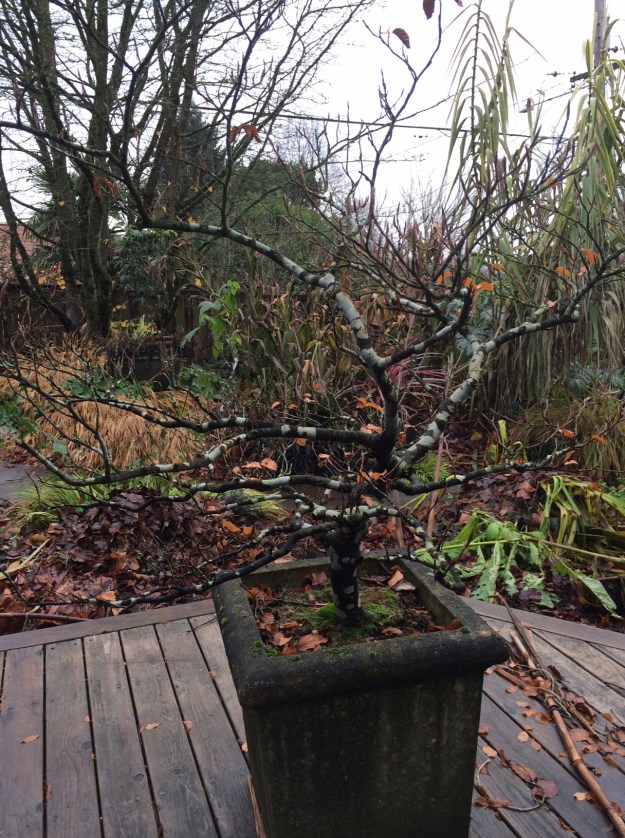
This Fagus sylvatica has been in this pot around 20 years. I grew it from seed 30 years ago from a mother tree in Sellwood that has a canopy 100′ across. It is approximately the same age as the trees pictured below.

I’ve heard it said often enough that trees and shrubs got by just fine for millions of years before we started pruning them, so why do it now?  That’s a good question and if you can’t answer it, you shouldn’t be pruning.  Horrible examples are all around us.  Trees repeatedly stubbed off their natural branching form and elegance destroyed.  Others sporting long scars where someone removed a branch with a single top cut causing the branch to drop pulling a long tongue down the trunk where it was still attached.  Still more with split trunks and scaffold limbs where multiple sprouts, vying for dominance fail and tear down.  Poor pruning has lead to the collapse and premature deaths of many trees and reduced many shrubs to inelegant space fillers jammed up agains buildings.  The first thing you should ask yourself is, ‘Why I’m I doing this?” Continue reading

Chilling, Freezing & Surviving: Understanding Hardiness & Preparing Your Plants for Winter

IMG_4248

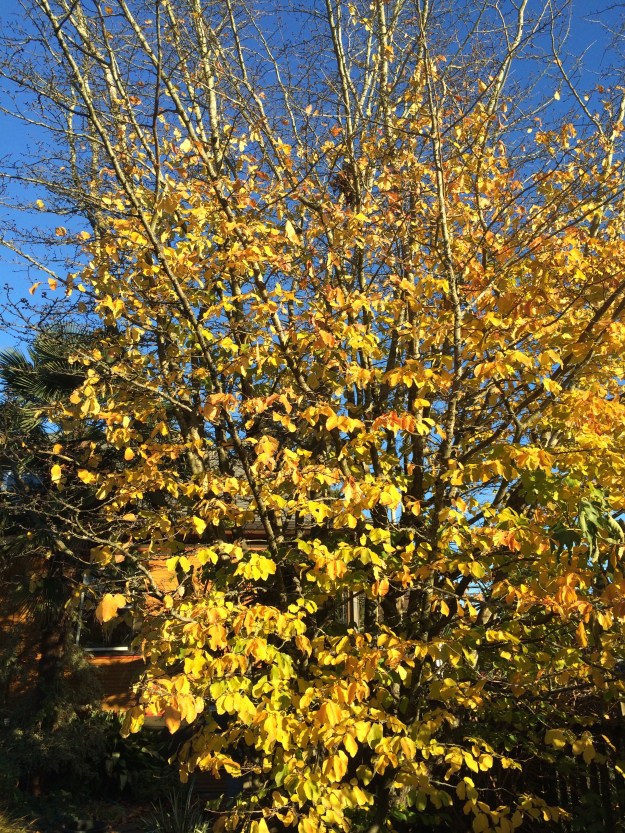
Parrotia persica, Persian Ironwood, has long been among my favorite trees, for its leaf shape, substance, fall color, the overall plant form and for its exfoliating puzzled bark. Hardy to zn4 this plant is tough as nails here requiring no protective effort at all.

[A note to the reader. This is not a scholarly treatment of all of the peer reviewed material on this topic.  There are no footnotes or listed sources.  This is a product of my more than 35 years of horticultural field experience and gardening along with what I’ve gleaned from reading several technical peer reviewed articles on the subject.  Such material is difficult to read and can be off putting and intimidating to even the educated layperson.  This posting is my attempt at interpreting the research and reviews that I read in a way I think is understandable without overwhelming the reader with bi0-chemistry and the technical esoterica scientists must consider in their pursuit of understanding.  Any faults are mine.]

I’ve been thinking about plants and their response to cold having watched the deciduous trees drop their leaves, dug tender plants out of the garden and moved pots around to where they would be adequately protected from freezing temperatures.  We all know what happens to water when it freezes, going from a liquid state to a solid one, its molecules forming crystalline structures, expanded and rigid, responsible for burst water pipes and snowflakes.  Water possesses some amazing qualities, as a solid, kind of counter-intuitively, it becomes less dense floating rather than sinking even taking on some insulative qualities and stopping the convective flow of heat that is normal in liquid water.  At the instant of freezing water releases a small but measurable amount of heat. What happens inside plants when temperatures drop below freezing? How does the plant keep from bursting its own cell walls like the water in pipes within an unheated crawl space or wall cavity of a building?  You’ve seen what happens to plants like Coleus and the sodden black heaps they become upon thawing out. Continue reading

TriMet’s Orange Line Landscapes: SW Lincoln & 4th to SE Milwaukie Ave

[I had been delaying the posting of this entry as I was waiting to meet the project manager with TriMet.  As I’ve heard nothing back from him, I’m going ahead and posting.  It would seem that my earlier posts concerned him, but I suspect now that time has passed and the sky has not fallen…he has moved on to more pressing matters.  It is a common tactic not to engage ‘critics’ so as not to give them any energy.  Ignoring critics can be effective, albeit, a very frustrating treatment to the one who is being ignored.]

Part 3 of the Series

This is an introductory note.  Yes, I realize I started the series in the middle, in a linear thinking world this would have been the first posting, but I live nearest the middle portion of the Line…and I have my own motives. Those of you who don’t know me, I do not mean this to be overly critical in spirit.  I’m a person who is always thinking what next? How can I do this better?  I have similar high expectations of the organizations around me.  Organizations all tend to be conservative in action.  There is a reason mature bureaucracies have a reputation for mediocrity.  It is not my intent to question the intent of TriMet or of its hired contractors.  I am a big supporter of transforming our City into a more livable place and the Orange Line is part of that.  There is nothing to be gained through polarizing a situation or setting someone up as ‘the bad guy’ and putting them unnecessarily on the defensive…having said that, sometimes a ‘push’ is in order.  We live in times of rapid change, many of them destructive, and it does no one any good to not work toward the changes that they see as positive.  That is my intent here.

I began this series with a discussion of scale and how it acts as a magnifier.  I spent some time talking about the problems caused by compacted, heavily disturbed, soils and I emphasized the issues created by a history of bad weed management…this first section of the Orange Line landscapes, from SE 11th to its beginning at SW Lincoln and 4th is heavily impacted by these factors.  Built on heavily graded and or imported fill, often on abandoned industrial sites, on or adjacent to sites that have been out of control weed generators for decades, this section may pose the biggest problem for landscape maintenance of all.

It is dangerous to assume that a new urban landscape is created on a ‘blank slate’.  Merely scraping a landscape off and beginning anew does not return it magically to its ‘pristine’ condition prior to the arrival of ‘modern’ white American culture and all of our accumulative impacts.  To be successful some effort must be expended to ameliorate at least the worst of these conditions.  Even if we make our ‘best’ effort to do this, landscapes such as these with their ‘heavy’ impact histories will present a powerful challenge to those charged with maintenance.  It is easy to underestimate the severity of this problem.  We have developed an ‘alien’ aesthetic that really doesn’t belong anywhere and as such is outside the bounds of the function of the normal cycling of energy and resources common to nature.  We impose this aesthetic and our designs on our landscapes and then expend a great deal of energy, in the form of labor and chemistry, to maintain them, or they quickly degenerate.  In some ways it would have made maintenance much simpler to have buried all of the surface beneath concrete sealing the problems beneath it.  But then the priorities of urban tree canopy, the capture and ‘treatment’ onsite  of stormwater would have been negated, the possibility of groundwater recharge further reduced and the ‘softening’ of a very hard edged urban ‘landscape’ stymied. Continue reading

Selecting Trees: Surviving in Hell(Strips)!

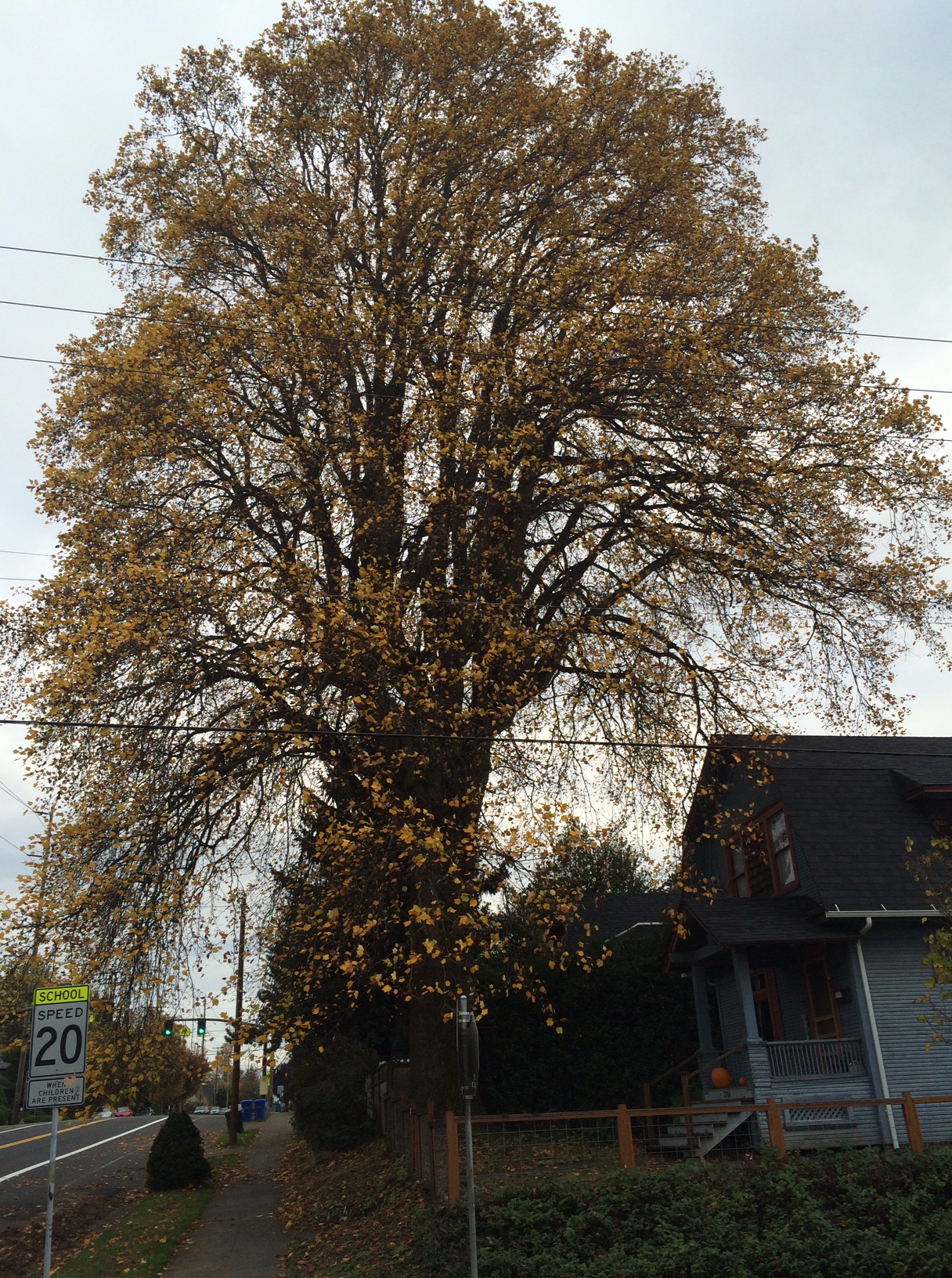
This Liriodendron tulipifera, a heritage tree in my neighborhood, has a canopy over 90' across. It is a beautiful and dominating tree dropping tons of drain clogging leaves and negating any need for actual street trees in the vicinity.

This Liriodendron tulipifera, a heritage tree in my neighborhood, has a canopy 90′ across. It is a beautiful and dominating tree dropping tons of drain clogging leaves and negating any need for actual street trees in the vicinity.  Little can grow in the dry shade beneath it.

I’m a horticulturist, a person trained and practiced in the ‘art and science of growing plants’…a classification to which trees belong. I’m not a ‘tree expert’ though I like to think I’ve learned a few things having spent most of my last 35+ years out working in the landscape, planting, caring for, diagnosing and designing, the bulk of which was maintenance, trouble shooting and tweaking landscapes so that they work ‘better’. Trees were always part of it…so I have opinions.

            [One of the lessons most of us learn on our journey to adulthood is to avoid the topics of religion and politics in casual conversation. These can be very divisive. In Portland the topic of trees can also elicit strong feelings amongst their advocates. The City of Portland has worked toward the protection of its trees. Here we have, in many cases, codified the planting, pruning and removal of trees in an attempt to stop the most egregious offenses and to expand the urban tree canopy. The City, through its Forestry Division, also works to help educate a public that too often has little to no connection to the green growing world. It is a huge task especially when so many other public institutions, like public schools, play almost no role. I spent the biggest part of my professional work life in Portland Parks and Recreation and I know that most Park’s staff have a passion for the work as well, even after years of working in a very political atmosphere with inadequate support. It would wear on anybody. So when I criticize aspects of the City’s tree program I want to be very clear that I am not criticizing the people or their intent.]

Portland loves its trees, except for the malcontents who view each leaf that falls on their property as an affront not to be tolerated, oh, and those developers looking to build and cash in on ever square foot of space that they can appropriate. Yes, these people are out there, just as are there opposite. Continue reading

Tri-Met’s Orange Line Landscapes: Bybee Stop to Oak Grove

Part 2 of the Orange Line series

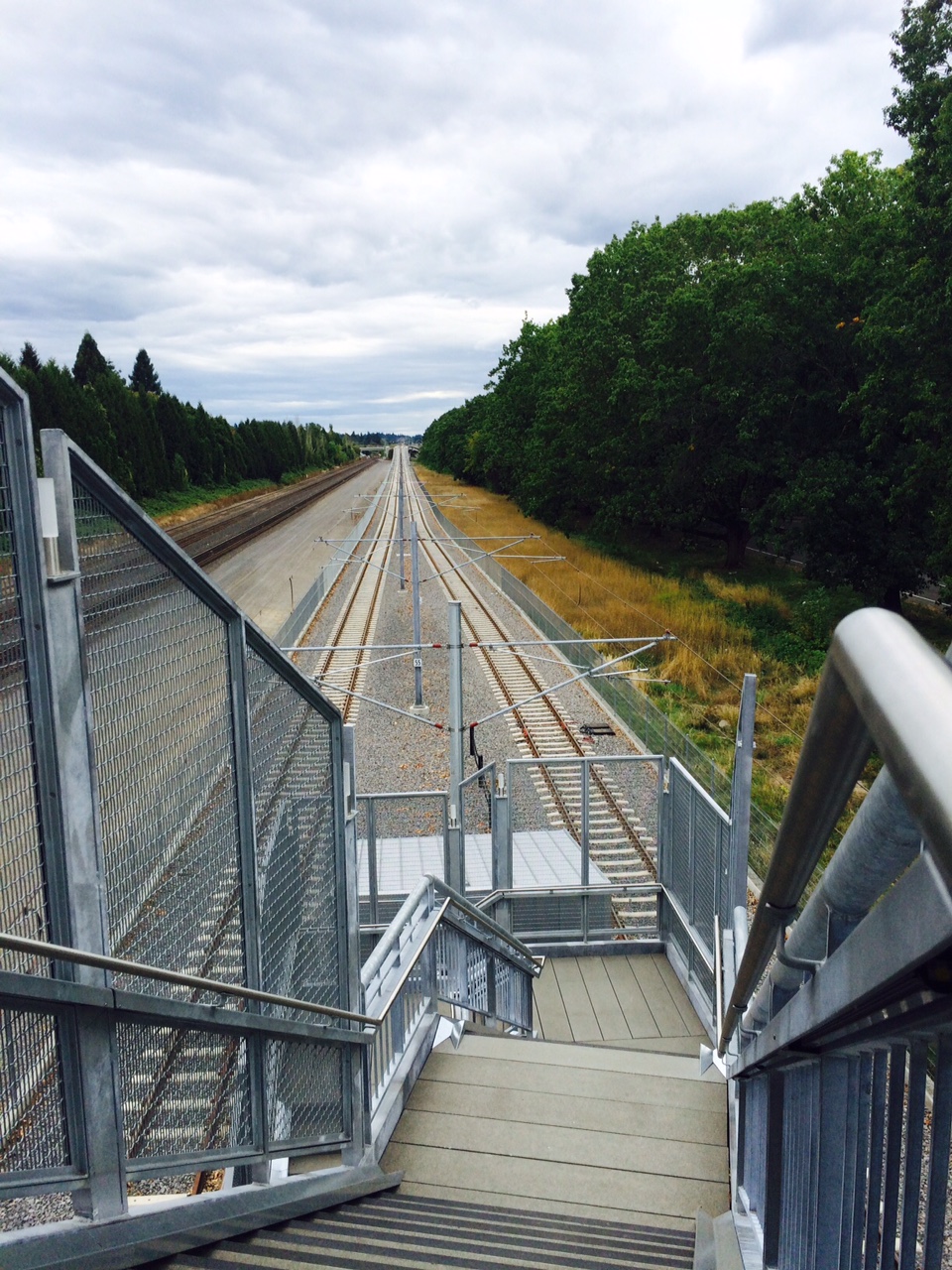
Looking south from the top of the stairs at the Bybee Stop. This is pretty much the same view as looking north with respect to the landscape.

Looking south from the top of the stairs at the Bybee Stop. This is pretty much the same view as looking north with respect to the landscape.  BNSF’s tracks lie to the left, the east.  The railroads have their own ‘landscape’ maintenance standards set primarily for safety reasons.  Within so many feet of their tracks they have a zero tolerance for plant growth and use sterilants.  There is also a zone within which the will ‘brush back’ trees and shrubs to keep site lines open.  Metro will have its own standard.  The two side by side show their combined effect.  Also, typically railroads do not fence off their tracks making clear sight lines a more pressing safety concern.  Trimet has fenced off the tracks from casual pedestrian ‘conflicts’.  Fencelines are problematic for maintenance unless ‘dead zones’ are expanded to include both sides.

Heading south of the Harold St. overpass the Orange Line leaves the most urbanized portion of its route, or at least its most densely populated stretch.  Traveling south to the Bybee, the Tacoma/Sellwood and then the Milwaukie stops, the line run alongside the BNSF tracks and there is very little ‘landscaping’ of the corridor.  The railroads contract out maintenance of their thousands of miles of tracks. (For a brief look into their approach check this link.) Continue reading

Tri-Met’s Orange Line Landscapes: Clinton & SE 12th to Harold St.

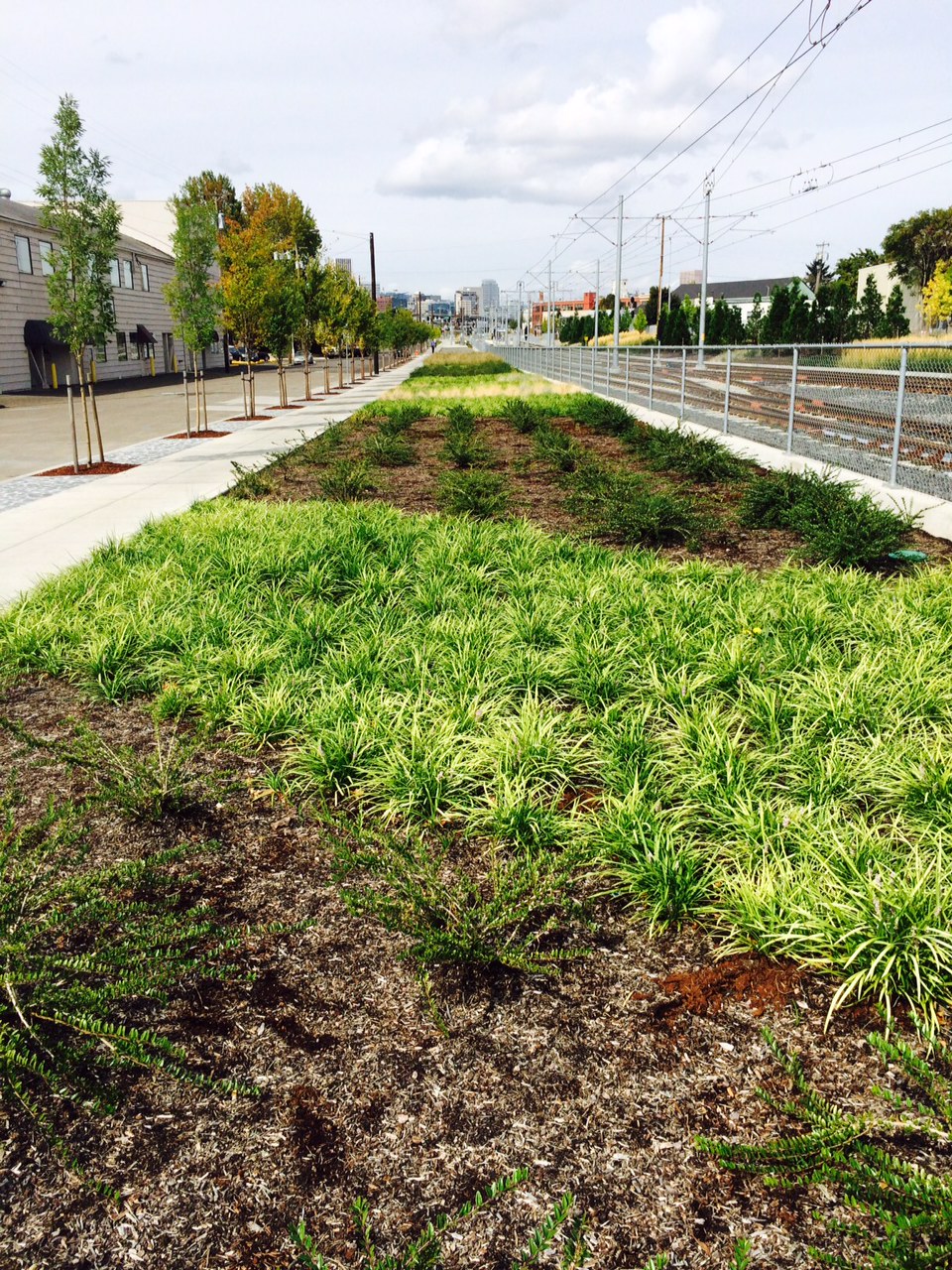
This shows the banded pattern common today in long mass plantings each swath a single species.

This shows the banded pattern common today in long mass plantings each swath a single species going for a kind of landscape scale ‘graphic’ pattern that is less concerned with ‘fit’.  This is near the Clinton/ SE 12th stop.

Size matters.  In horticulture it changes everything.  Things that are inconsequential, or maybe even enjoyable in the backyard garden, can quickly become daunting or onerous when the scale is ramped up.  Working at a commercial or institutional scale has to change your entire approach to the landscape.  In a small garden it is easier to accommodate mistakes, the conflicted combinations and those issues of horticultural ‘fit’ that we missed when we design or install.  Scale, however, rubs our faces in it everyday, makes us pay with aching backs as unintended consequences play out across the thousands of sq.ft. and acres.  It becomes a matter of physical survival and undermines your professionalism.  You become perforce part laborer, part diagnostician, designer, plantsman and critic….Out of necessity you sharpen your critical thinking skills and the last thing you ever wanted, your sales skills, as you work to sell your ideas to management who are absurdly ignorant of the problems you face everyday in the field.  And, then, eventually, you retire, but you don’t turn it off…you can’t.

Which brings me to the MAX Orange Line and its landscapes.  When I did horticultural design review for large capital Parks projects, it often felt like a dueling match.  I would pour over the design, whatever the stage it was in, match that with my particular knowledge of site conditions and my maintenance experience within Parks.  I would state my concerns on paper and in meetings with the Project Managers and Architects.  I was stubborn and consistently found myself up against a process that undervalued horticulture and my input.  Good horticultural practice was regularly placed in a losing position opposite not just that of the Landscape Architects but of a very political process that tried to give the public what it wanted as long as it fit within the Architect’s vision.  Horticulture always came out a poor third, even though good horticulture always saves money in the mid and long runs.  It was exasperating.  The public, by and large is ignorant of horticultural practice and no effort is made to educate them at any level. Continue reading

Revisiting Holgate Overpass: A Mistake Repeated

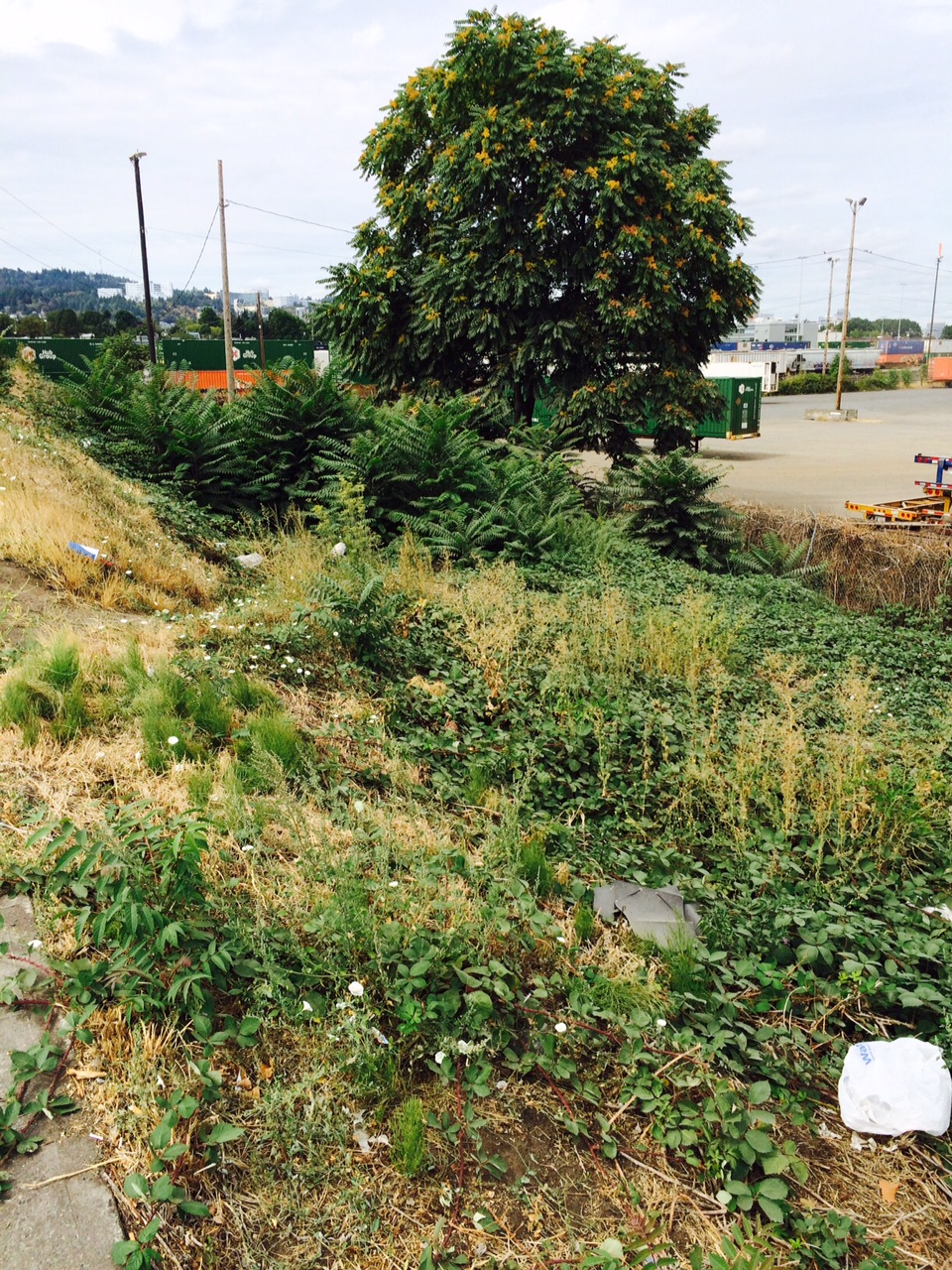
Holgate Overpass - the northeast approach. This was taken Aug. 28 of the landscape cut down in April showing regrowth in a hot drought year.

Holgate Overpass – the northeast approach. This was taken Aug. 28 of the landscape cut down in April showing regrowth in a hot drought year.

Holgate Overpass Update:

It finally rained this last weekend!  Somewhere around .3″.  Woohoo!  It will be the most rain that we’ve received since March.  It’s been dry!  In April the City cut down the ‘weedscape’ on the northeast approach of the Holgate Overpass.  It’s rained very little since and we’ve had record warm temperatures all summer.  No one has come back to spray, plant or do anything.  No one’s even picked up the trash.  If you compare the four ‘weedscapes’ on the two approaches they are very similar.  The NE, by volume has had the most regrowth.  This is for two different reasons: first, this site was cut earlier in the season when there was more moisture still in the soil to enable regrowth, and secondly, because the site is dominated by Blackberry and Tree of Heaven, both perennials, well established and of larger stature than the plants dominating the other approach landscapes. Continue reading

The Plaza Blocks – Practicing Horticulture at Lownsdale and Chapman Squares

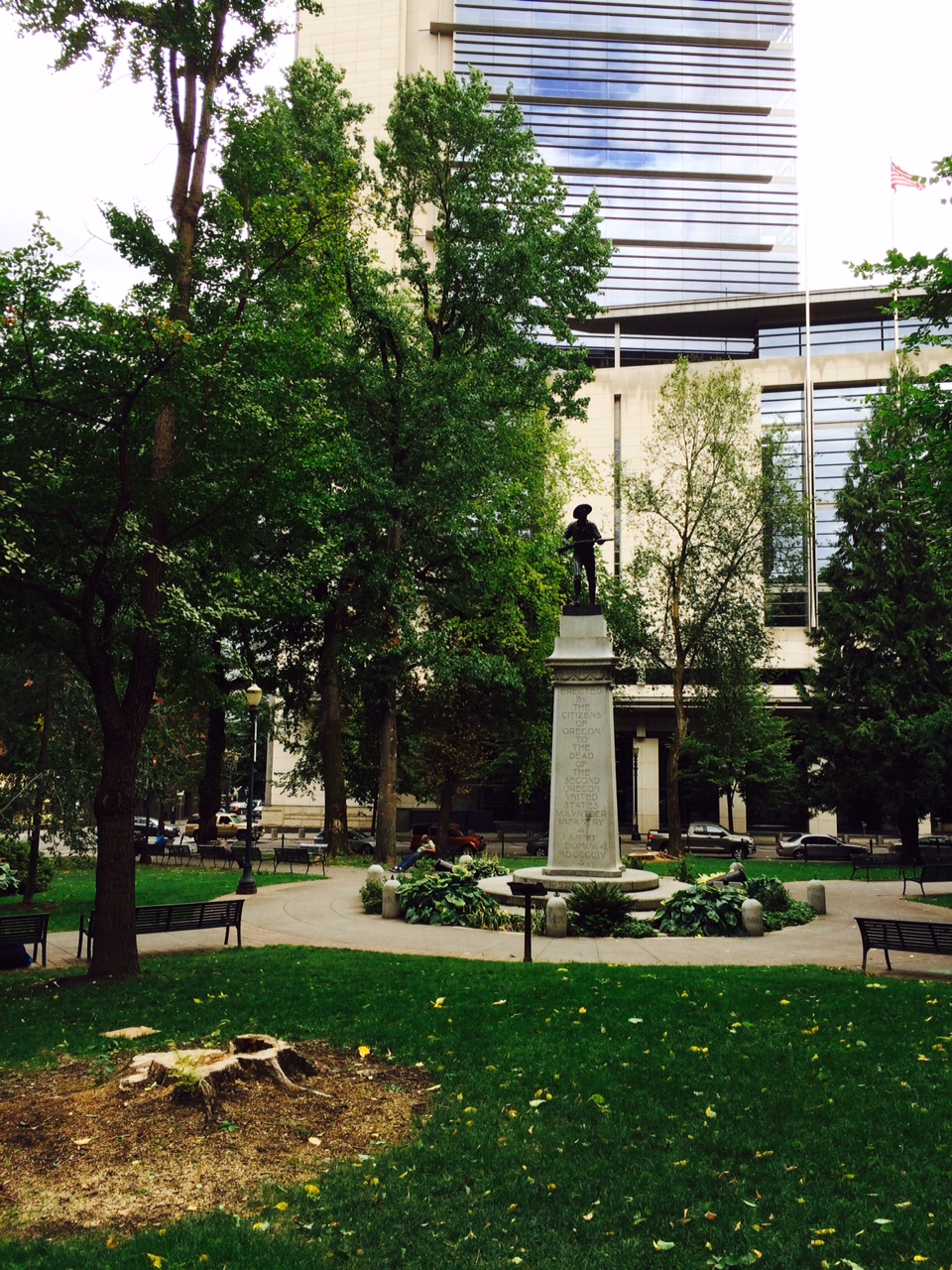
The Spanish American War Memorial the the Federal Courthouse behind. A recent Elm stump in the left foreground and another behind and right of the Memorial. Ringing the memorial is Pachysandra, Hosta and Clethra alnifolia. These take a lot of abuse from playing kids and posing tourists crossing back and forth.

The Spanish American War Memorial with the Federal Courthouse behind. A recent Elm stump in the left foreground and another behind and right of the Memorial, the further had a cavity for several years housing raccoons, but the tree began to split. Ringing the memorial is Pachysandra, Hosta and Clethra alnifolia ;Hummingbird’. These take a lot of abuse from playing kids and posing tourists crossing back and forth.

Chapman and Lownsdale Squares sit aside each other on SW Main with the ‘Elk Fountain’ (the anatomically incorrect Elk, or at least disproportionate)holding the neutral ground in between, the street splitting traffic that flows around it like a boulder in a stream. These are among the City’s oldest Parks. Laid out formally they are nearly mirror images of one another, sidewalks hugging the streets without parking strips to shield them, a crossing pattern of concrete marking them boldly with an ‘X’, lined with metal benches, a center axis and each with a restroom building on opposite sides…the north, on Lownsdale serving as the men’s restroom with the more machismo memorials to the Spanish American War and the south, on Chapman, the women’s with its sculptural tribute to pioneer families Bible in hand. This is a carry over from the early days when each Park served as a respite for the opposite sex where one could publically relax without being ‘bothered’. As were most western territorial towns, Portland’s population was dominated by men and women were often brought here as wives or as part of commercial ventures. Somewhere here was the site of the gallows, erected as need be, up until 1870 or so when the state banned public executions. More recently it has served as a respite for government workers, lawyers, officers and staff of our courts and jail, or visitors to either, taking their breaks, having lunch or getting a few minutes of air as they cross on their way to an appointment. Walking tours and school groups wander through pausing at the monuments. Others congregate here too, sometimes for rallys or protests within earshot of government offices. There are almost always a few members of Portland’s homeless community about taking a few moments or more in the shade of the large Elms and Gingkos. It was also the site of Portland’s own ‘Occupy’ movement in the Fall of ’11. Continue reading

Horticulture: Gardening in Portland Parks

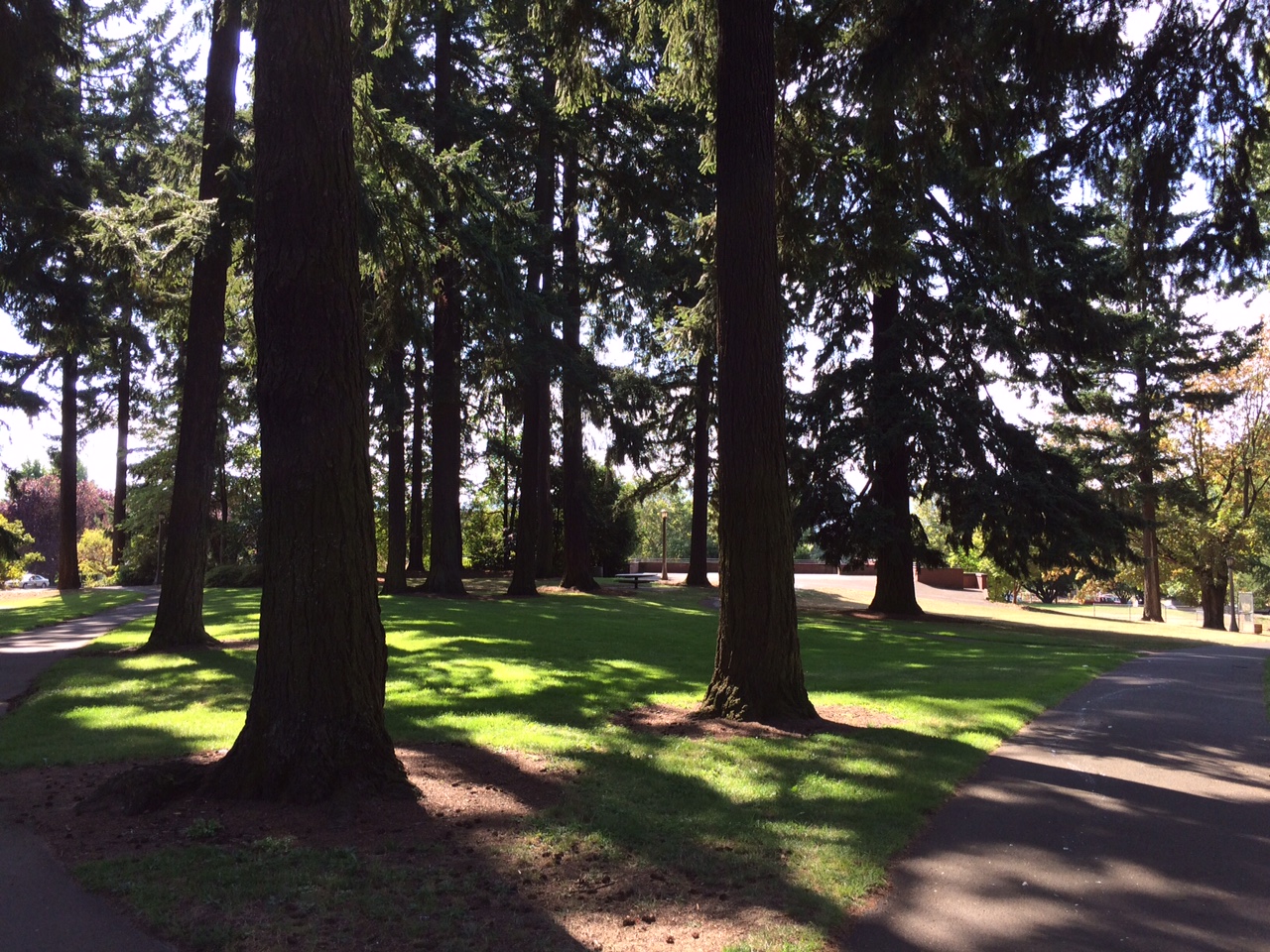
The land occupied by Kenilworth Park and most of the Kenilworth neighborhood was part of the land claim owned by Clinton Kelly, a Methodist minister from Kentucky who settled in the area in 1848. In 1909 the Portland Park Board purchased 9 acres from Kelly with funds from a 1908 bond measure created specifically to acquire land for parks in Portland. In 1910, Park Superintendent Emanuel Mische created a design for the park that was inspired by the park's natural topography and vegetation. The design included a bandstand, tennis courts, sports field, wading pool and play area, sand courts, walkways, and vista points. Today, the basic layout of the park remains intact and is indicative of the strength and appeal of Mische's original design.

One of my favorite neighborhood parks is just a few blocks from my house.  The land occupied by Kenilworth Park and most of the Kenilworth neighborhood was part of the land claim owned by Clinton Kelly, a Methodist minister from Kentucky who settled in the area in 1848. In 1909 the Portland Park Board purchased 9 acres from Kelly with funds from a 1908 bond measure created specifically to acquire land for parks in Portland.
In 1910, Park Superintendent Emanuel Mische, a contemporary of the Olmsteads who conceived the overall plans for Portland’s Park system, created a design for the park that was inspired by the park’s natural topography and vegetation. The design included a bandstand, tennis courts, sports field, wading pool and play area, sand courts, walkways, and vista points. Today, the basic layout of the park remains intact and is indicative of the strength and appeal of Mische’s original design.

Gardening in Public – Full Frontal Gardening

Preface to the series. I worked 27 years for Portland Parks and Recreation as a Gardener later upgraded to Horticulturist, a change in title only. I loved my work and job. I can count as friends many of the people who still work there. I have the utmost respect for the many there who remain positively engaged in their work. It is a wonderful place to work and grow. I also found the organization a continuous source of aggravation. I don’t think this should be interpreted to be damning of the organization or its people. It simply speaks to the nature of the ‘beast’. Like any organization it takes considerable effort and focus to address one’s shortcomings. It is all too easy for any of us to become complacent, because it is difficult and there is little reward when what you seek others interpret as threatening to themselves. It is what it is. I would do nothing different except perhaps had more confidence earlier on to pursue what I thought was both creative and healthy for myself and Portland Parks. I don’t mind being taken to task. It hones my own practice and I try to rise above the personal and wish the same for others. Growth is difficult it does not mean that we should not pursue it. Continue reading