Category Archives: Maintenance

The Plaza Blocks – Practicing Horticulture at Lownsdale and Chapman Squares

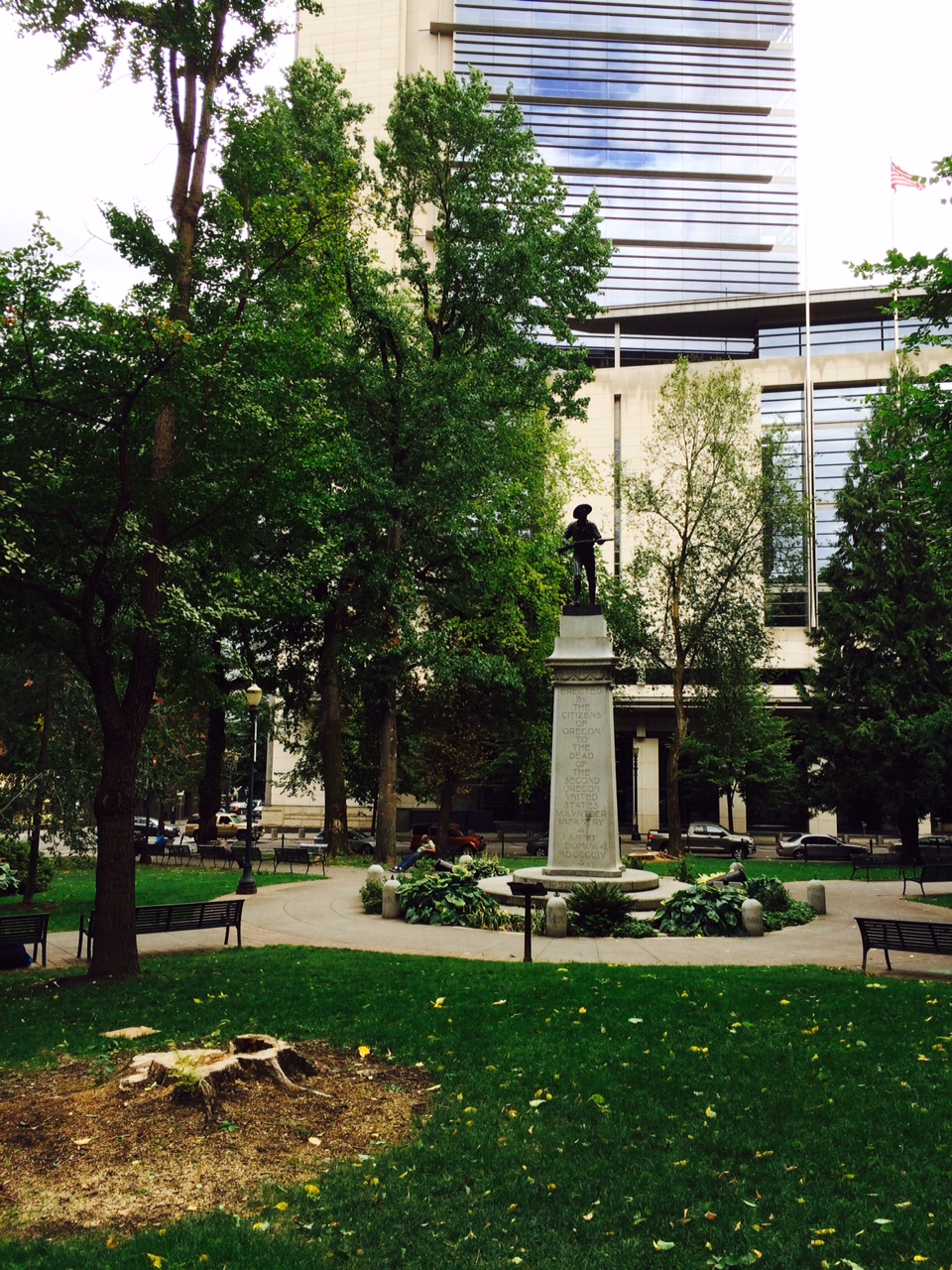
The Spanish American War Memorial the the Federal Courthouse behind. A recent Elm stump in the left foreground and another behind and right of the Memorial. Ringing the memorial is Pachysandra, Hosta and Clethra alnifolia. These take a lot of abuse from playing kids and posing tourists crossing back and forth.

The Spanish American War Memorial with the Federal Courthouse behind. A recent Elm stump in the left foreground and another behind and right of the Memorial, the further had a cavity for several years housing raccoons, but the tree began to split. Ringing the memorial is Pachysandra, Hosta and Clethra alnifolia ;Hummingbird’. These take a lot of abuse from playing kids and posing tourists crossing back and forth.

Chapman and Lownsdale Squares sit aside each other on SW Main with the ‘Elk Fountain’ (the anatomically incorrect Elk, or at least disproportionate)holding the neutral ground in between, the street splitting traffic that flows around it like a boulder in a stream. These are among the City’s oldest Parks. Laid out formally they are nearly mirror images of one another, sidewalks hugging the streets without parking strips to shield them, a crossing pattern of concrete marking them boldly with an ‘X’, lined with metal benches, a center axis and each with a restroom building on opposite sides…the north, on Lownsdale serving as the men’s restroom with the more machismo memorials to the Spanish American War and the south, on Chapman, the women’s with its sculptural tribute to pioneer families Bible in hand. This is a carry over from the early days when each Park served as a respite for the opposite sex where one could publically relax without being ‘bothered’. As were most western territorial towns, Portland’s population was dominated by men and women were often brought here as wives or as part of commercial ventures. Somewhere here was the site of the gallows, erected as need be, up until 1870 or so when the state banned public executions. More recently it has served as a respite for government workers, lawyers, officers and staff of our courts and jail, or visitors to either, taking their breaks, having lunch or getting a few minutes of air as they cross on their way to an appointment. Walking tours and school groups wander through pausing at the monuments. Others congregate here too, sometimes for rallys or protests within earshot of government offices. There are almost always a few members of Portland’s homeless community about taking a few moments or more in the shade of the large Elms and Gingkos. It was also the site of Portland’s own ‘Occupy’ movement in the Fall of ’11. Continue reading
Horticulture: Gardening in Portland Parks

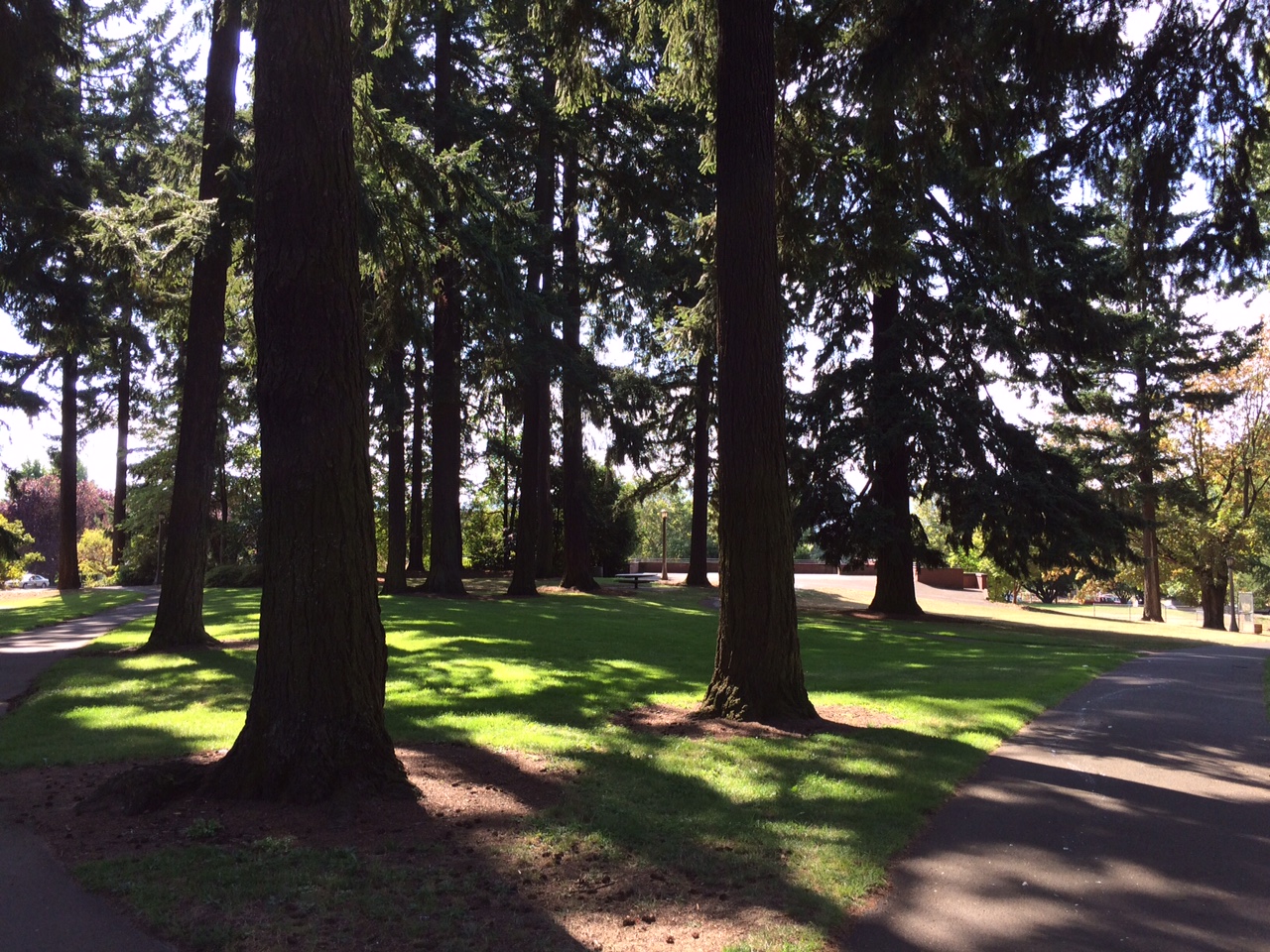
The land occupied by Kenilworth Park and most of the Kenilworth neighborhood was part of the land claim owned by Clinton Kelly, a Methodist minister from Kentucky who settled in the area in 1848. In 1909 the Portland Park Board purchased 9 acres from Kelly with funds from a 1908 bond measure created specifically to acquire land for parks in Portland. In 1910, Park Superintendent Emanuel Mische created a design for the park that was inspired by the park's natural topography and vegetation. The design included a bandstand, tennis courts, sports field, wading pool and play area, sand courts, walkways, and vista points. Today, the basic layout of the park remains intact and is indicative of the strength and appeal of Mische's original design.

One of my favorite neighborhood parks is just a few blocks from my house.  The land occupied by Kenilworth Park and most of the Kenilworth neighborhood was part of the land claim owned by Clinton Kelly, a Methodist minister from Kentucky who settled in the area in 1848. In 1909 the Portland Park Board purchased 9 acres from Kelly with funds from a 1908 bond measure created specifically to acquire land for parks in Portland.
In 1910, Park Superintendent Emanuel Mische, a contemporary of the Olmsteads who conceived the overall plans for Portland’s Park system, created a design for the park that was inspired by the park’s natural topography and vegetation. The design included a bandstand, tennis courts, sports field, wading pool and play area, sand courts, walkways, and vista points. Today, the basic layout of the park remains intact and is indicative of the strength and appeal of Mische’s original design.

Gardening in Public – Full Frontal Gardening

Preface to the series. I worked 27 years for Portland Parks and Recreation as a Gardener later upgraded to Horticulturist, a change in title only. I loved my work and job. I can count as friends many of the people who still work there. I have the utmost respect for the many there who remain positively engaged in their work. It is a wonderful place to work and grow. I also found the organization a continuous source of aggravation. I don’t think this should be interpreted to be damning of the organization or its people. It simply speaks to the nature of the ‘beast’. Like any organization it takes considerable effort and focus to address one’s shortcomings. It is all too easy for any of us to become complacent, because it is difficult and there is little reward when what you seek others interpret as threatening to themselves. It is what it is. I would do nothing different except perhaps had more confidence earlier on to pursue what I thought was both creative and healthy for myself and Portland Parks. I don’t mind being taken to task. It hones my own practice and I try to rise above the personal and wish the same for others. Growth is difficult it does not mean that we should not pursue it. Continue reading

Gardening in Public: The Duniway Park Experiment

Portland Parks: horticultural profiles series

I’m almost a little embarrassed to post this article….  Most of my earlier project were much smaller, more like bandaids.  This is the first Park I went through more systematically assessing, horticulturally, and trying to correct landscape ‘problems’ with entirely different plantings. We generally weren’t expected to do more than little fixes and bandaids.  Larger issues were considered beyond our scope and should be addressed by our Planning Division, with master plans and all of that.  The Bureau was, however, neither staffed nor funded to do master plans which is a laborious and time consuming process.  They were few and far between.  So, as I said, this was my first go at it, though I don’t claim to have created a master plan in the process.  My time was even more limited. Continue reading