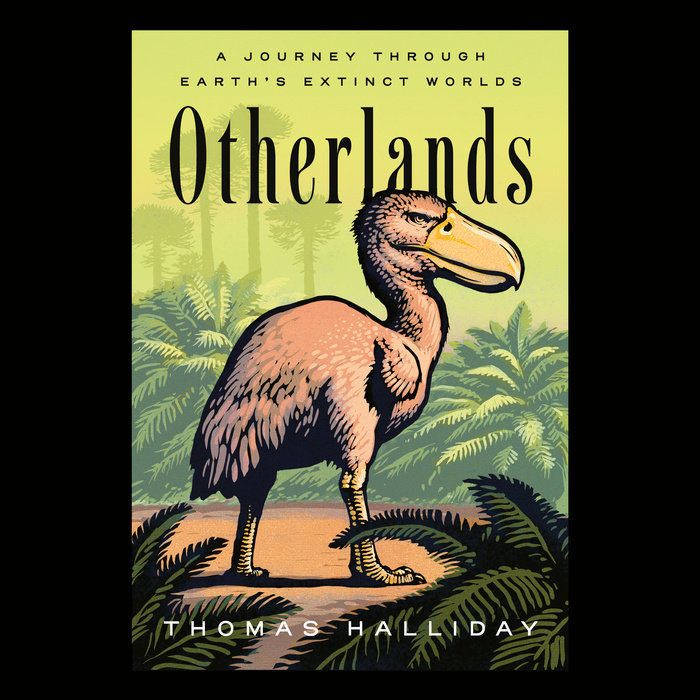
Otherlands: A Journey Through Earth’s Extinct Worlds, a Valueable Entry into Understanding This World
Leave a reply

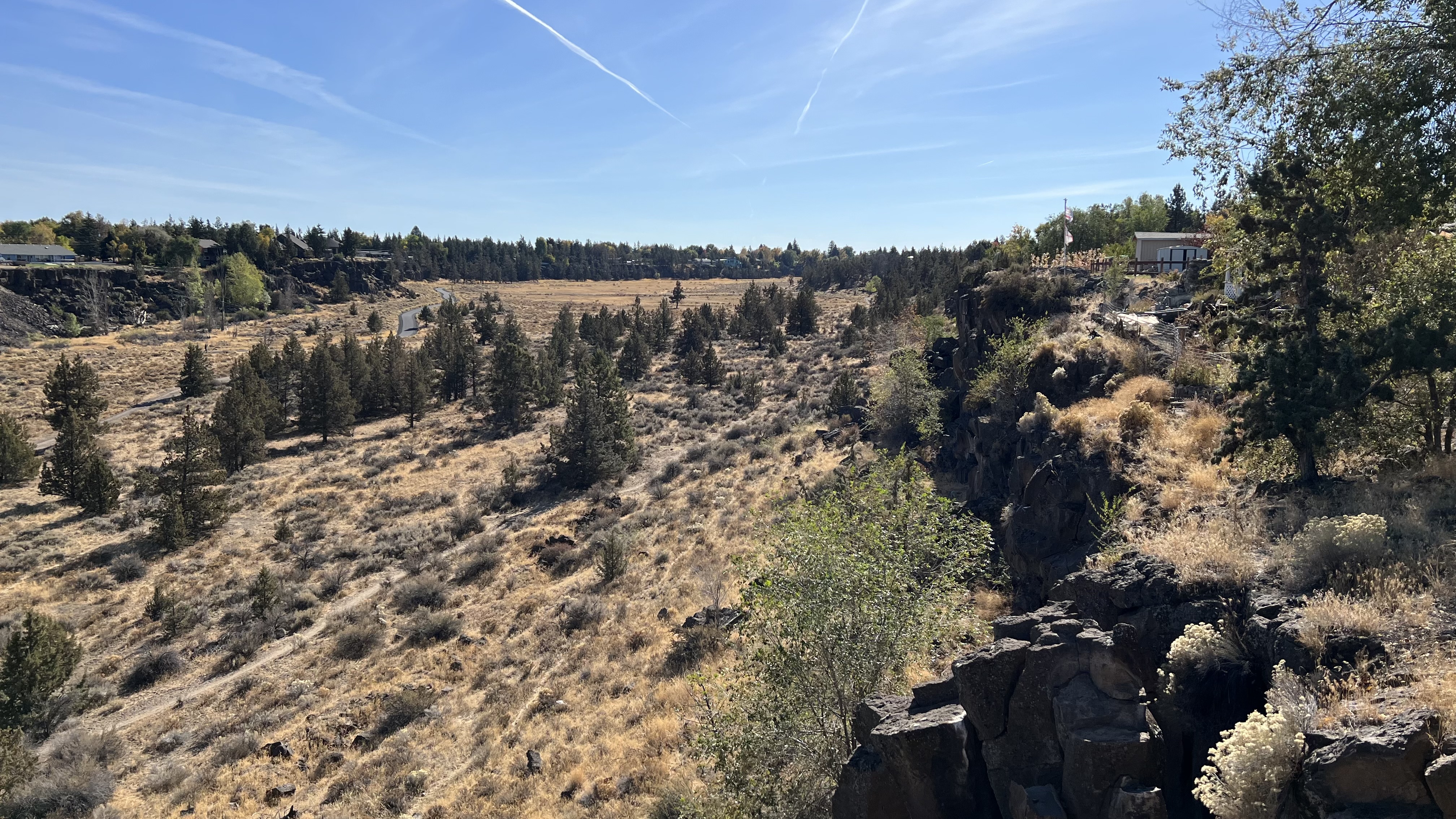
Redmond’s Dry Canyon looking south from the west rim on the Maple Street Bridge. The area in the immediate foreground burned this last summer.
If you garden, or maintain a landscape, you come to understand that not all weeds are the same. Each will have its own ‘strengths’, or perhaps you might call it ‘virulence’. Any particular weed, just like any other plant, will respond ‘positively’ to supportive growing conditions, conditions which often closely align with those which exist in its place of origin. Plant explorers and nursery growers are always looking for ‘new’ plants for landscape use. in a way, they have to walk a fine line. They must find plants, that with reasonable effort on the part of the gardener, can thrive across a range of conditions, unless they are looking for specialty plants, for narrow, niche, markets. The introduction of new plants must be somewhat measured, our enthusiasm tempered, because plants which are too adaptable, too vigorous, may possess the ability to escape our cultured gardens and find a place in the surrounding, uncultivated, landscape.
For Central Oregon, when we look beyond our regional natives, we must keep this in mind. Exotics from similar growing and climatic regions around the world offer both promise and threat. We want our plants to be successful, but not too. Sometimes through the process of trade, the movement of livestock and agricultural products, particularly aggressive species hitch a ride. A few weed seeds can be easy to miss. If they are aggressive enough and go unnoticed, a distinct possibility, it is likely that they wont be detected until a sizable local population asserts itself…and if no one is watching, that can be a fateful error. One group of plants, with many wonderful possibilities, also include species which can be exceedingly problematic here in Central Oregon, these are from regions sometimes referred to as Steppe. Continue reading
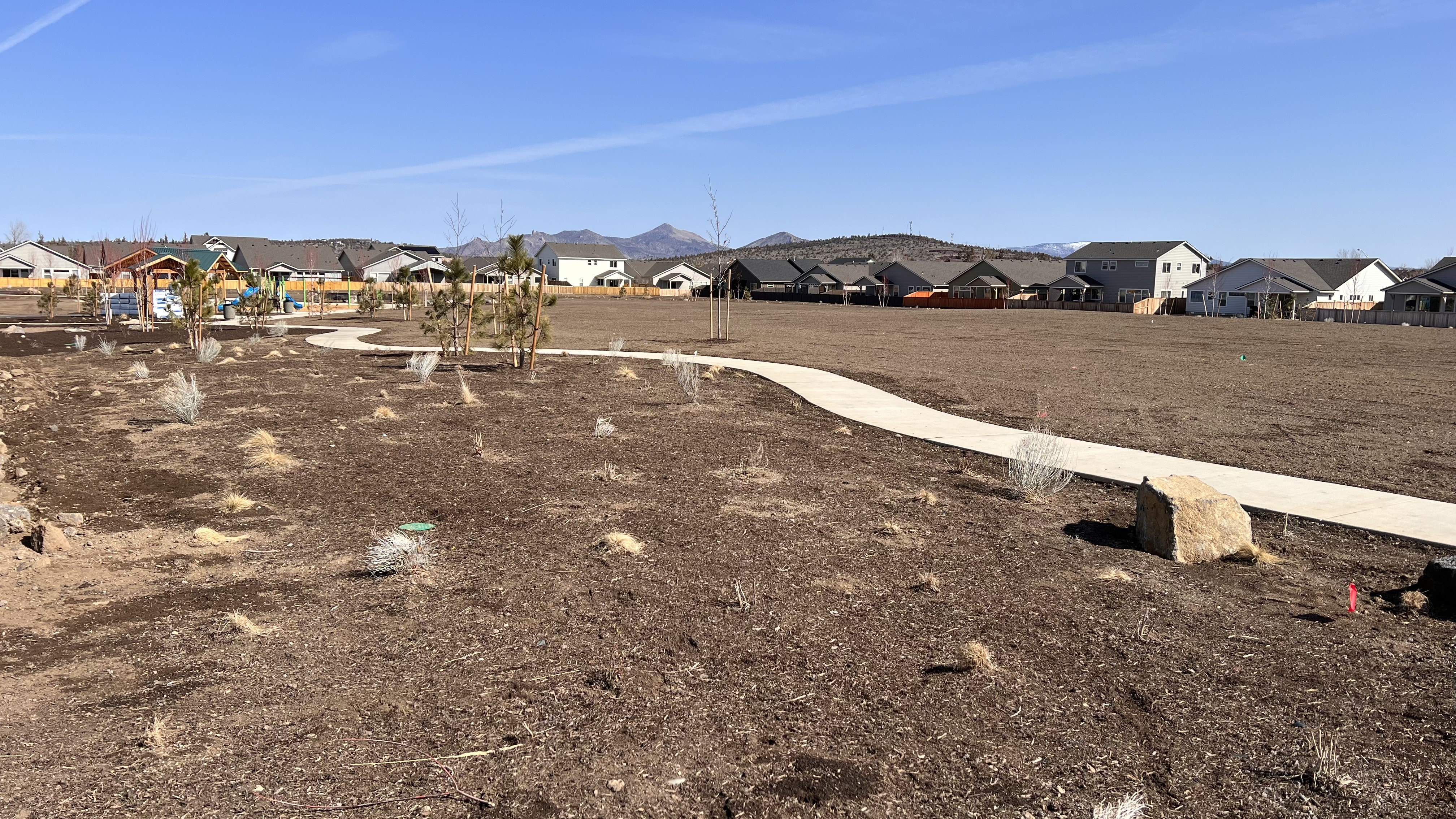
Redmond’s Spruce Park looking NNE from the SW corner toward Gray Butte and Smith Rock in the background. The border beds which follow much of the loop path are ‘native’ plantings according to the conceptual plan. It is common to claim that most of the plants are natives in designed natural areas, but native is not synonymous with ‘natural’. Although natives are used here concessions have been made including such plants as Echinacea purpurea ‘Pow Wow Wildberry’ and Rudbeckia ‘Goldsturm’. In a strict sense Ponderosa Pine aren’t native to this immediate locale either, they require more precipitation than we normally get and the Autumn Blaze Maples are a hybrid of two northeastern North American species.
A landscape, in nature, is a whole, functioning system, capable of perpetuating itself, through out the seasons and years, relying entirely on its own conditions and the cycling of energy and resources occurring on and within it. This is also the definition of a modern sustainable landscape. Ideally they require no inputs or energies supplied from offsite aside from the sun, precipitation and the normal cycling onsite of nutrients and water. A human made, contrived landscape, as all of those built by us today are, may be ‘judged’ by how well they function on ‘their own’, by how well they fit this ideal. Labor and outside inputs necessary to maintain a landscape are then indicators of how out of balance, how far from ‘ideal’ nature and genuine sustainability, a landscape is. A contrived landscape, which ignores the relationships integral to a healthy landscape community ‘demands’ more and more maintenance and support. Given its design and use, a landscape which ignores its site and relationship requirements will deteriorate from the intended design, losing to death component plants while gaining, increasingly, more unwanted available weed species. Design, conditions and use are essential to determine, in this sense, what a ‘good’ landscape is. Continue reading
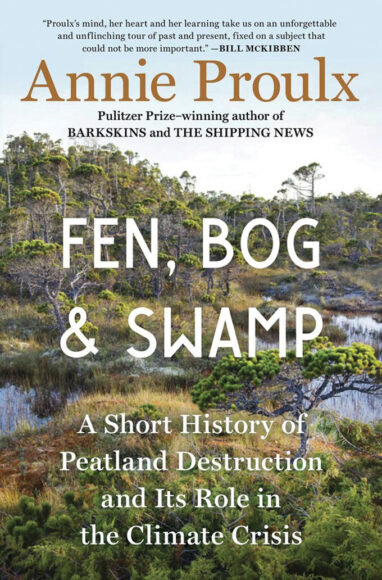
For another review: link
Novelist Annie Proulx, begins her book with her childhood, giving us an idea of who she is, her attachments to the living world. She takes us with her on a walk she took with her mother as a young girl, through the neighborhood wilds, to an ignored patch of swampland. Her mother loved such places. She places her story in the larger story of the times of her birth and coming of age, of the 1930’s and the cruelties we perpetrated on each other and our limited view of the natural world, a world set as a table before us, for our consumption. She writes of her attachments to these abused and devalued wet landscapes, their necessity for a healthy natural world and what their loss means. Earlier, I reviewed Edward Struzik’s book “Swamplands”. Struzik has spent years working with researchers and conservationists in the field, and writing of his experiences. Proulx’s approach is much more personal as she works to place bogs, fens and swamps into a human, historical and cultural context. Continue reading
 The idea of individuality and control, key elements of the American psyche, are a self-deception. We can take an individual action, guided by an intention, and see its effect in the world around us, but after that, the first ‘tier’ of effects, there are secondary, tertiary and others beyond them, as what we have effected spreads out across space and time, effecting those things, beyond our focus, that nevertheless are in relationship, and do and must respond. If we’re paying attention we can see them and attribute them to others, unaware of our impact. The world is so large and complex, while we individually, commonly see ourselves as relatively ineffectual. We often don’t recognize our own agency and how collective effects propagate from our action. This can also support the idea we ‘can’t’, in a significant way, damage the systems and cycles that support life on Earth. What we must understand though is, that as members of societies and cultures, which share economies and technologies, our ‘individual’ actions are ‘shared’, they are multiplied, often many millions of times. We act individually, but we have tremendous collective impacts. By denying this we deny individual responsibility, which in effect, is a cultural denial, permitting the negative impacts to continue. “It’s just me!” “It doesn’t matter.” “It’s their responsibility, not mine!” These collective problems are then left unaddressed.
It is easy to believe this way. There is so much beyond our own control, so many problems, that it must be this way right? No. We are responsible, collectively. We never truly act independently, because we live in relationship with those around us and their, and our, influence over one another blur. Like it or not, we are a part of a larger society. To go against the conventions and norms of society, to act independently, is risky, to ourselves and the world around us…a risk which can bring with it changes, either positive or destructive. However, going ‘along with’ the norms and conventions of society, unquestioningly, is to possibly continue a potentially destructive practice. We are responsible. We have necessary roles o play. We have been relatively bad as a society at discussing our wider actions, of working to understand our impacts and insuring the security of life and its necessary conditions. Too often we comply, go along and continue doing those things simply because we ‘always’ have, forgetting that as our numbers and use continues to grow, so does the potency of our impact. We have been habitually confusing short term gain and comfort, with longer term survival and good. The consequent results of those unexamined actions can become devastating. To continue ignoring our negative impacts on others, in its broadest sense, is ultimately a threat to our own well being and security. Uninformed actions, actions taken selfishly at other’s expense, threaten the whole, because of the ubiquitous and pervasive connections to the world and between all people, places and organisms. Our denials will not change this. So, why do I bring this up? This is a gardening/horticultural post…because, what we do, or don’t do, in our gardens and across our shared landscapes, has impacts well beyond their borders. Continue reading
 GardenRiots