“The Disordered Cosmos: A Journey into Dark Matter, Spacetime & Dreams Deferred”

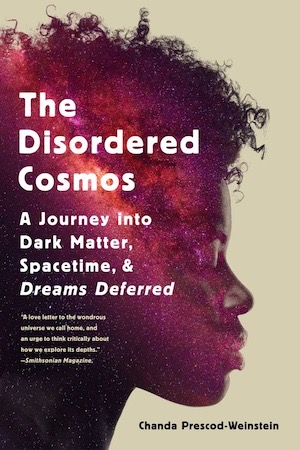
I was not looking for this book. I rarely buy anything on Amazon, but I do use it frequently as a search tool. Bezos doesn’t need any of my money…he has more than enough without the meager amount my book buying habit could send his way. I use the library, rarely buying more than a few books anymore in a year. “The Disordered Cosmos: A Journey into Dark Matter, Spacetime & Dreams Deferred”, turned out to be a valuable surprise. I’m always searching for books that crossover between physics and biology, that examine that complex academic space between the too often clearly demarcated, and isolated, sciences, books that address the question of, ‘What is life?’. This isn’t one of those, but it is about physics, how we do it, how the world we live in colors it and how those ‘physics’ are used to shape the world we all live in. I found this book, in that space labelled, ‘Customers who viewed this item also viewed’. It was not what I expected.

The author, Chanda Prescod-Weinstein, decided to be a particle physicist when she was ten years old. She was a precocious child who loved math and the physics of the quantum level universe, from an early age. I know, weird. She would talk to her fellow students on the bus about quarks and such. The fact that she succeeded in her professional quest, at least so far, is remarkable given the circumstances of her birth, her family economics, being the daughter of a Black Caribbean mother and an Ashkenazi Jewish father, growing up in a mixed Latino neighborhood of East LA. Add to this that she was primarily raised by her single parent mother who was a social activist, suffered a life changing accident when hit by a car while riding a bicycle, identifies as agender while presenting as femme and was raped by a professor in her department. That’s a lot of hurdles to overcome. Continue reading

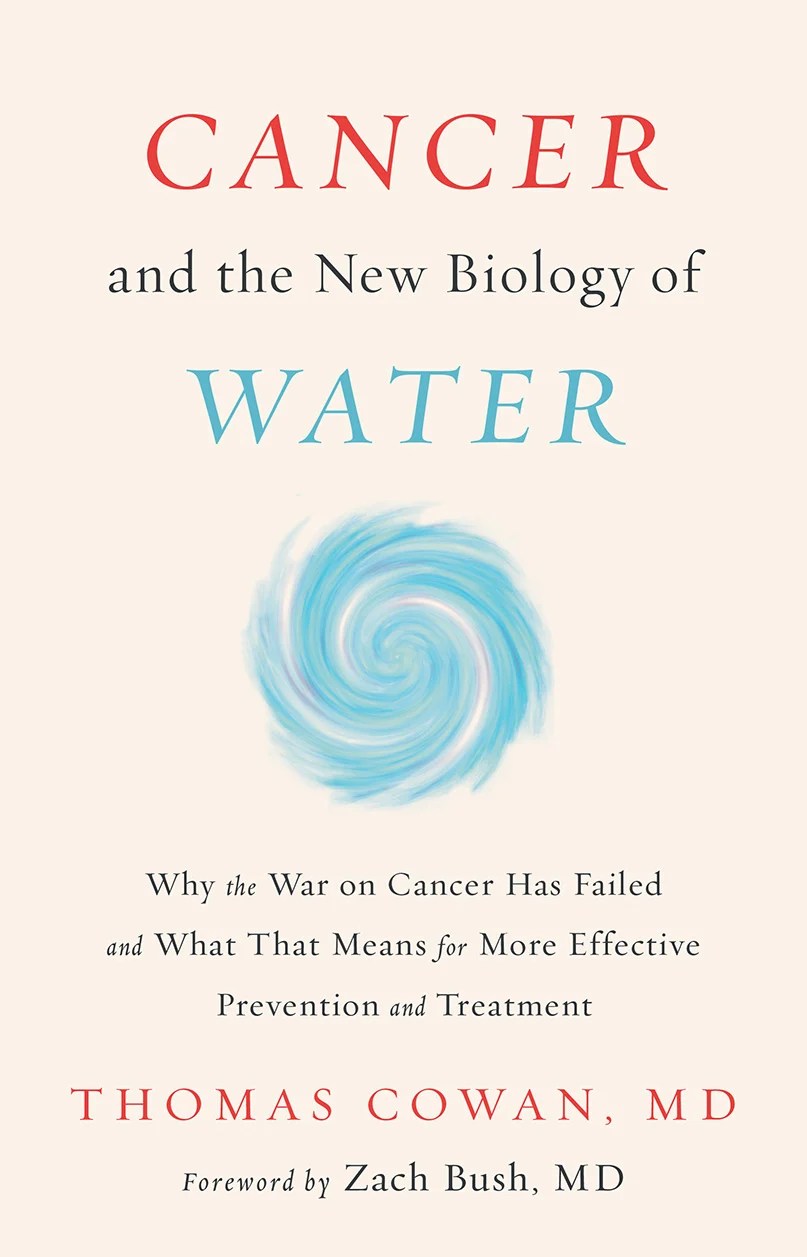
On the book, “Cancer and the New Biology of Water

I began this book with a lot of energy which was sustained through the book’s first part, ‘A New Understanding of Cancer’. Having read fairly extensively on cell biology and the ground breaking work of Gerald Pollack’s study of water, its biological importance and four phases, I found Cowan’s presentation here lacking, describing it only in very broad, simplistic strokes. For me he ‘hints’ around the edges of the problem and asks the reader to simply take his word for his claims. The problem, he says, lies in unhealthy intracellular water….Okay, but what’s that about? Why does that matter? It is just water after all…right? His doubting and questioning of mainstream medicine and its rigid adherence to the oncogene model of cancer, I’m in agreement with. Mainstream medicine and science can become dogmatic and not only reject alternative theories, but work actively against their investigation. Scientists and doctors are not immune to the problems ego can often drag along. What I was hoping for was more specificity, more explanation of how Pollack’s work on water’s fourth phase, not only contributes to, but is essential for, health of the cell and the larger organism’s. It’s not here. Instead the bulk of his little book, it’s only about 170 pages of text, is on alternative therapies, which he introduces, again, without much of an attempt to tie it into his idea of the centrality of intracellular water.

I have another issue with his book, not his idea, in that he spends too much time bashing mainstream science, while at the same time his argument is based on science. I find this disturbing, especially given today’s political atmosphere in which bashing science is so common by those on the far right. They would argue that it’s all about belief, the proper belief. This problem for me was underscored by how he presents his alternative therapies of promise. The reader is left with either believing or not believing him. While he does argue for more extensive testing of these alternatives, he is simply asking us to believe him, not the mainstream docs, concerning the efficacy of these therapies. There is science to support his claims, but it isn’t here. Health is an incredibly complex and important topic. Western civilization has chosen a particular path which, in this case, Cowan correctly points out, has produced the questionable results he criticizes, in terms of cancer, its proliferation and treatment, but it is not enough to simply, and stridently, insist that the problem does not lie in genetics, that it instead lay within the health of the cell and the state of its intracellular water. He needed to spend a lot more of his pages explaining what this means, the science of water and the big question he asks early on, ‘What is life?” His case is strong, but, in my opinion, inadequately presented. 

He barely mentions Pollack who operates a water lab at the University of Washington which has done so much work on water, its physical capacities, suggesting important and central roles in biology and life processes. Pollack’s two books: “Cells, Gels and the Engines of Life: A New, Unifying Approach to Cell Function” and “The Fourth Phase of Water: Beyond Solid, Liquid and Vapor”, are both relatively accessible sources if you have a basic understanding of biology, atoms and molecules. Pollack’s writing is accessible. Unlike so many scientists he possesses a capacity to explain relatively complex problems in laymen’s terms. This is what Cowan needed to do with his book.

https://campbellmedicalclinic.com/book-review-cancer-and-the-new-biology-of-water-by-thomas-cowan-md/

https://www.ncbi.nlm.nih.gov/pmc/articles/PMC4244968/

The Fourth Phase of Water

Notes on Complexity: A Scientific Theory of Connection, Consciousness and Being, Thoughts on the Book

[My ‘reviews’ are not strictly book reviews. I’m not trying to distill the author’s ideas down into a simpler ‘bite-sized’ piece or discuss their ‘style’. These are my thoughts after having read these books. My attempts to make sense of them, usually after several rewrites, as I work to fit them into what I already ‘know’, an attempt to make the ideas presented in this book, consistent with those which I’ve read by other authors. They include ideas not covered by this author. Rarely, if ever, can you come to an understanding from a singular perspective. This is a link to an annotated bibliography on my Blog of several of the more significant books which have  influenced me on this topic,]

Complexity theory? Do we need a theory to determine what is complex? No, that’s not what this is about. Theise’s book does not layout a system for determining what should be considered complex/complicated or not. This is a book about systems and structures in nature and how they come about. He discusses how mainstream science has fallen short in explaining this and why, the author believes, without changes in approach, we will continue to fall short. He goes on to present an alternative, or, rather, a ‘sister’ approach which can provide a previously excluded way of ‘knowing’, and in so doing, can account for the ‘gaps’. The problems are not just that this is a difficult concept to understand, but that at the most basic, quantum, level, that at which nothing can be divided smaller, where all things ‘begin’, actions and processes do not follow human logic and contemporary expectation….

I remember reading the book “The Limits to Growth” in the early ’80’s, which introduced me to ‘systems theory’, an approach which required looking at all of the parts and actions within a system, consider their relationships and how they work together, in order to understand its ‘working’. A system could be ‘modeled’, mathematically and the long complex equations run on a computer. There were generally multiple possible models to run. This gave us a degree of ‘predictive’ power, but these would always be approximations, because no model could be perfect and every situation, every starting point, would result in a somewhat different ‘answer’.  I followed this with James Gleick’s book on Chaos Theory and its ‘ability’ to explain certain types of patterns, which appear spontaneously in nature, while introducing me to the idea and maths of ‘fractals’. There were multiple  books on ecology which necessarily take a wholistic approach. James Lovelock and Lynn Margulis, published their book on Gaia Theory, a product of their collaboration which began in the 1970’s, a theory of the Earth itself functioning as a self-regulating system, as if it were a gigantic, single, organism of which we ourselves are a part. All of these were related, coming out over a short span of years. These were ‘new’ hypotheses and theories, never before seriously considered by science back then, but now being investigated, their validity, and the answers they suggest, impossible to ignore.

Science often advances this way. Seemingly radical ideas, rejected by the majority of the mainstream…until resistance worn down, their validity demonstrated through thoughtfully conducted and reviewed experimentation, the scientific community then coming around to more broadly adopt them and reshape science and our understanding. (Some argue that this ‘process’ requires some number of the old guard to literally die, younger minds being more free to consider the new.)  Margulis and Lovelock’s ideas were just too far out there for most at the time. For many, such thinking then belonged to the realm of metaphysics, or fanciful science fiction, frivolous exercises in thought and belief. Exploring these ideas, testing their validity, only became possible with the computational capacity of ever more powerful computers and an openness to branches of thought once rejected by science. ‘Game Theory’ and cybernetics played a role in all of this as well. Complexity Theory has far more capacity to explain how matter and functional systems emerge, or manifest, than mainstream science could historically. Nature, through the conditions and forces in play at any given moment, ‘drive’ the universe toward order along with the ‘creation’ of complex structures and functions, at the cost of energy spent, ‘held’ in the new structures and dissipated away as lost heat. All of countless processes linked to one another through a myriad of relationships and the feedback loops which comprise them. The universe continues to evolve, and as it does, it continuously spins off everything in it, from sub-atomic particles to human beings over time, a process which it itself is directly influenced by its evolving ‘self’.

Continue reading

Determined: A Science of Life Without Free Will, a Review and Look Into its Consistency With the Sciences

Long ago I took a couple philosophy classes at U of O; one on existentialism, in which we read several novels and discussed their themes; and another, an upper division, class on ethics, because I was curious…I dropped the ethics class after sitting around the table in seminar discussing particular authors’ thoughts, like Kierkegaard and Butler. Majors seemed to take pleasure in making fun of what I got from them in discussions. Hated this. I still have trouble reading philosophy. It seemed like a game to them in which they argued a position to show off their cleverness, their superiority, the ideas themselves of relatively little importance…while hiding their biases. It must have been so self-assuring for them to ‘know’ these author’s precise thoughts and bash those who don’t get it…or saw something different (like the newbie, me). To quote someone isn’t to understand, it is only miming, presumably in hope of getting a reward. I read for understanding. It’s not a competition. So, this book, “Determined: A Science of Life Without Free Will”, taking a science approach to evaluate a philosophical concept, was difficult to begin. The author, neuro-biologist Robert Sapolsky, argues that those philosophers and theologians who claim that people have free will to do whatever they desire or set their minds to, are wrong. This appealed to me immediately. Continue reading

Otherlands: A Journey Through Earth’s Extinct Worlds, a Valueable Entry into Understanding This World

Otherlands by Thomas Halliday | Penguin Random House AudioI mostly read non-fiction, books on history, the ‘natural sciences’, about life. I get my fiction in the form of television and movies, graphic novels and no, there is a lot more out there other than the limited, repetitive genre of super-heroes from the DC and Marvel universes. I’m drawn to the speculative stories, alternative tellings of this world, of life lessons, attempts to reimagine the past, or invent possible futures, stories that question what we are generally taught in this life. But really, I’m a science guy, reading those authors who draw from the leading edge of science, and the scientists themselves, who are skilled enough communicators, not something that necessarily is companion to those ‘doing’ science, those who can clearly discuss what they’ve learned and present reviews of entire fields of study, which strive to show the reader how our understanding of the world is changed.  Continue reading

The Rediscovery of America: Native Peoples and the Unmaking of U.S. History, a review

Ned Blackhawk’s book, “The Rediscovery of America: Native Peoples and the Unmaking of U.S. History”, is not just another history of the clash between European colonizers and Native peoples. It is a book of relationship, how over time, this country has gained much of its current and evolving form, from the extended conflict between us and native peoples, from their refusal to acquiesce, who have instead demanded that this country recognize native sovereignty and honor the treaties made between us, treaties which, along with our Constitution, are the ‘supreme law of the land’. Some of the most momentous changes to this country, its policies, laws and court decisions, resulted from these ongoing conflicts and this country’s attempts to resolve them. I was unaware of this book, and Blackhawk, until I read a review he wrote of Hamalainen’s, “Indigenous Continent” which I’d just finished. Continue reading

The Dawn of Everything: The History of Humanity; a Review

David Graber, an anthropologist, and David Wengrow’s, an archeologist, book, “The Dawn of Everything: A New History of Humanity”, is more than ‘just’ a history of humanity, which would on its own suggest a massive tome of thousands of pages. it is an examination of how we ‘do’ history drawing many examples of peoples and societies across time from the Paleolithic through the colonization of North America. It is not simple reportage, rather a look into the correctness or accuracy, of how we have been telling history. I enjoy such questions and their capacity to rock the academic and intellectual ‘boat’. My reading has spurred the formation of links to two other books I’ve read recently, Stephen Jay Gould’s, “The Burgess Shale” and Pekka Hamalainen’s, “Indigenous Continent”. All three of these call into question previously widely accepted thinking on their subjects. More than this, they question foundational ideas upon which the science they examine are founded. This appeals to me. But more than this, there is an idea central to them all which really rings ‘true’ for me. Continue reading

Knapweeds in Redmond’s Dry Canyon and the Pursuit of a Healthy Landscape

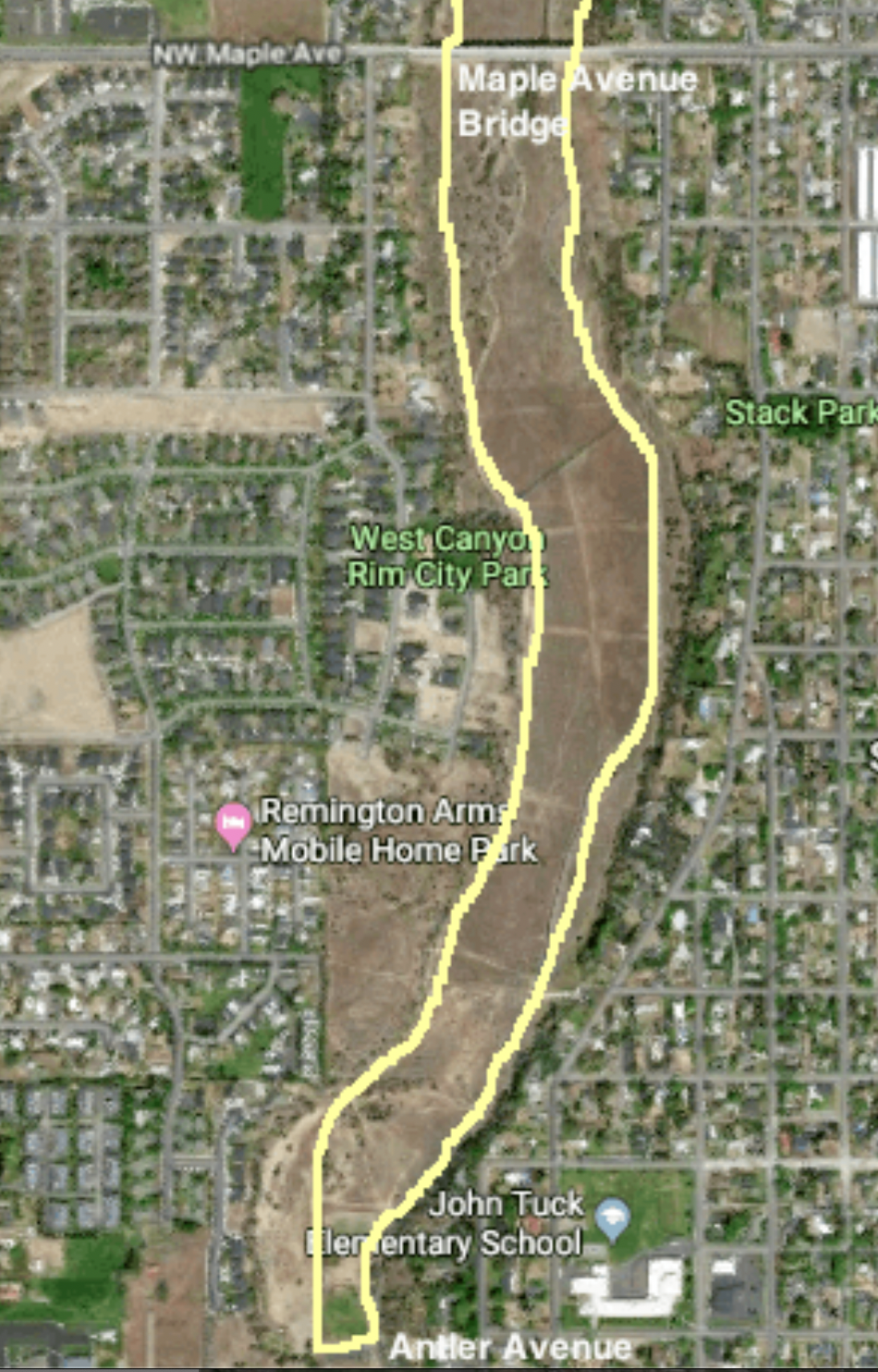
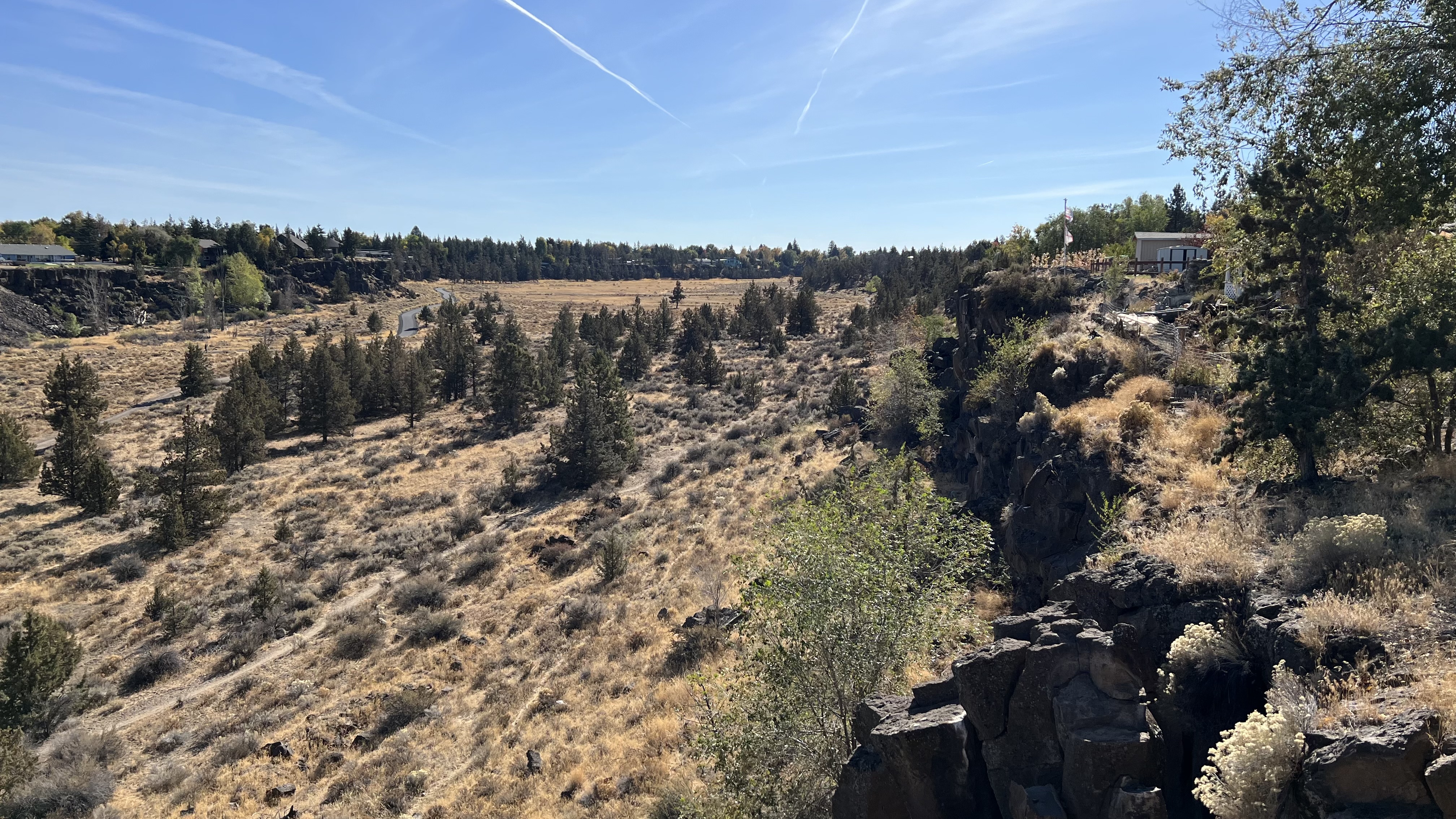
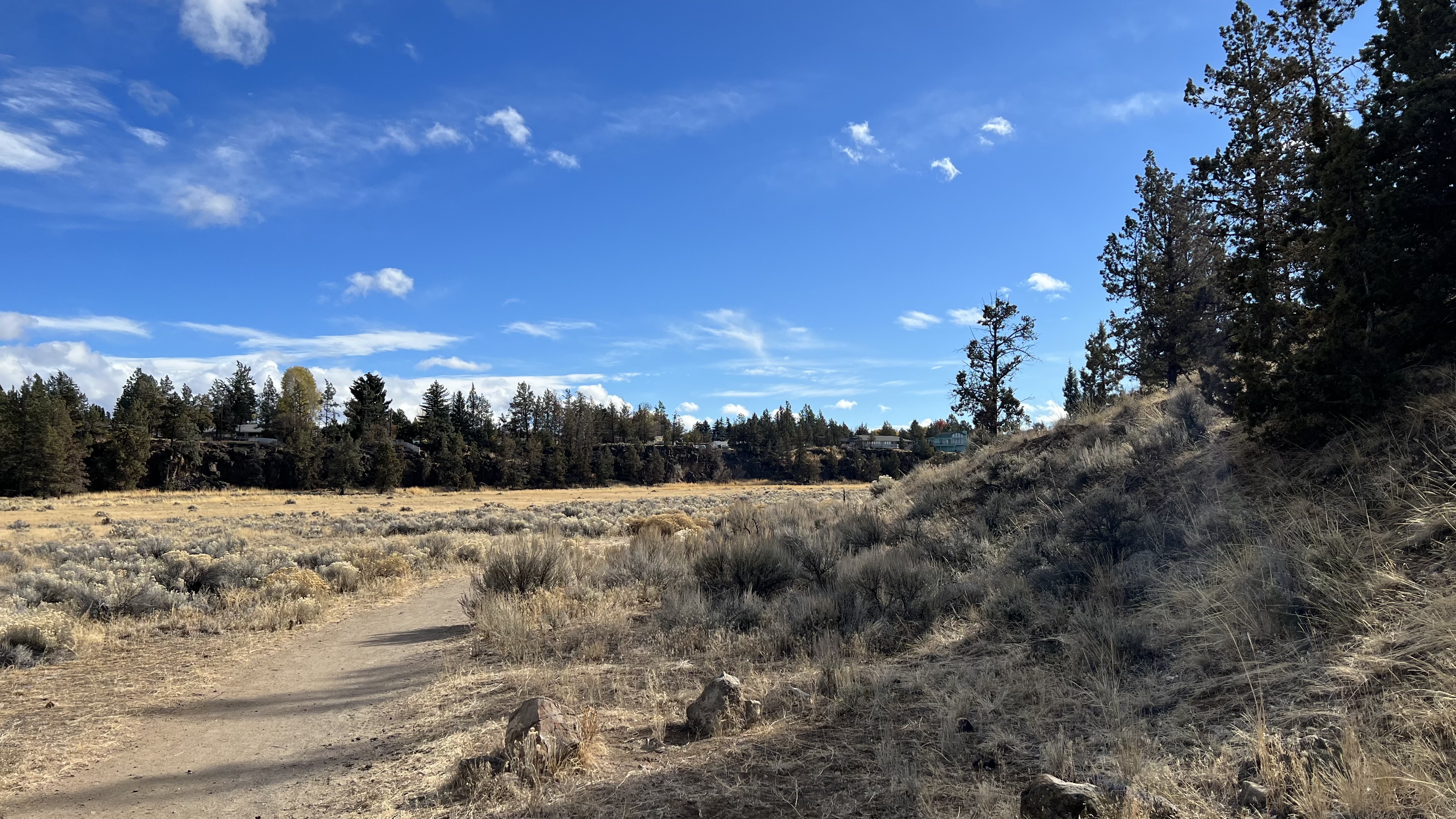
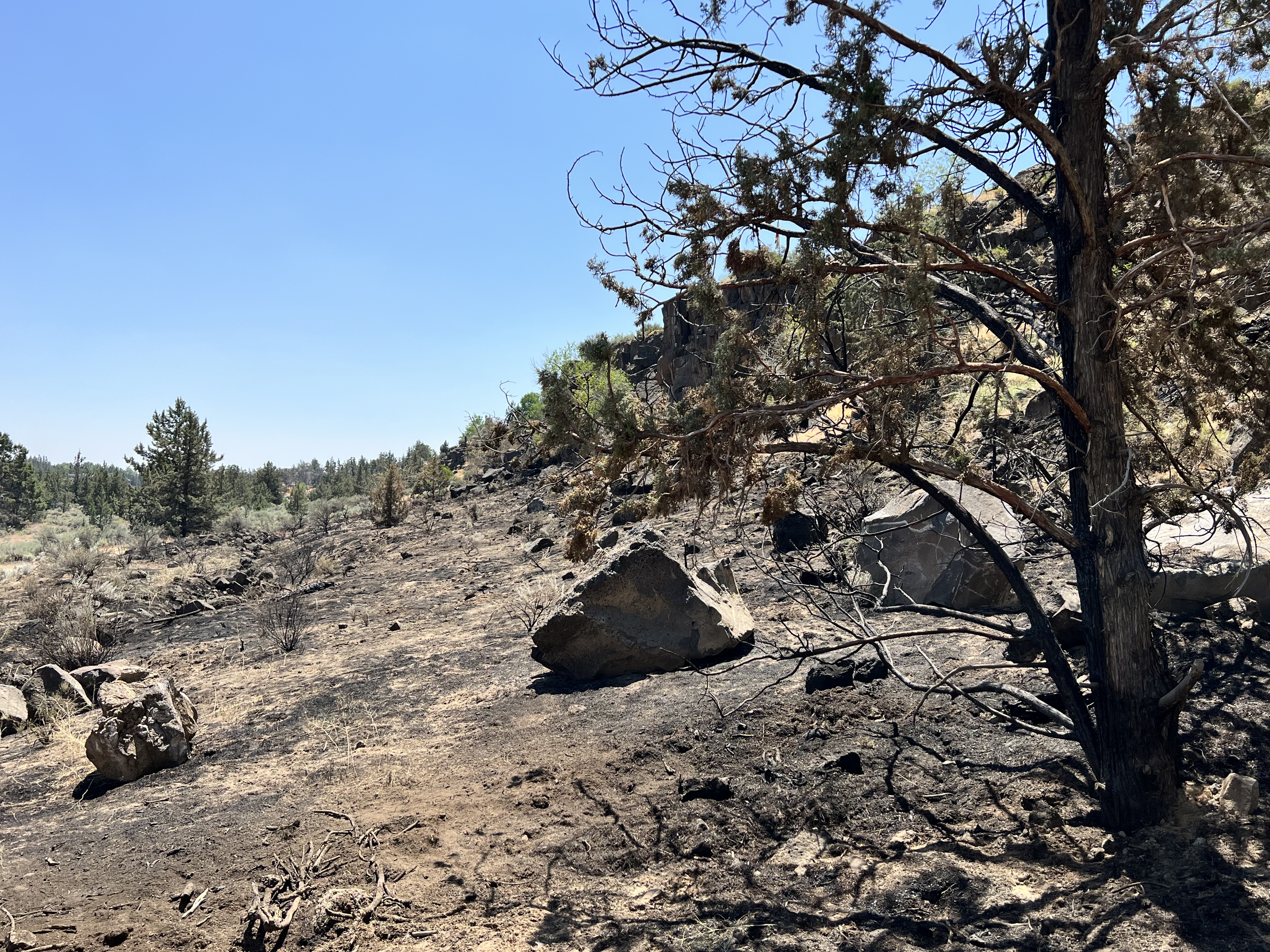
Redmond’s Dry Canyon looking south from the west rim on the Maple Street Bridge. The area in the immediate foreground burned this last summer.

If you garden, or maintain a landscape, you come to understand that not all weeds are the same. Each will have its own ‘strengths’, or perhaps you might call it ‘virulence’. Any particular weed, just like any other plant, will respond ‘positively’ to supportive growing conditions, conditions which often closely align with those which exist in its place of origin. Plant explorers and nursery growers are always looking for ‘new’ plants for landscape use. in a way, they have to walk a fine line. They must find plants, that with reasonable effort on the part of the gardener, can thrive across a range of conditions, unless they are looking for specialty plants, for narrow, niche, markets. The introduction of new plants must be somewhat measured, our enthusiasm tempered, because plants which are too adaptable, too vigorous, may possess the ability to escape our cultured gardens and find a place in the surrounding, uncultivated, landscape.

For Central Oregon, when we look beyond our regional natives, we must keep this in mind. Exotics from similar growing and climatic regions around the world offer both promise and threat. We want our plants to be successful, but not too. Sometimes through the process of trade, the movement of livestock and agricultural products, particularly aggressive species hitch a ride. A few weed seeds can be easy to miss. If they are aggressive enough and go unnoticed, a distinct possibility, it is likely that they wont be detected until a sizable local population asserts itself…and if no one is watching, that can be a fateful error. One group of plants, with many wonderful possibilities, also include species which can be exceedingly problematic here in Central Oregon, these are from regions sometimes referred to as Steppe. Continue reading

On Weeds, Disruption and the Breaking of Native Plant Communities: Toward a More Informed Working Definition of Weeds

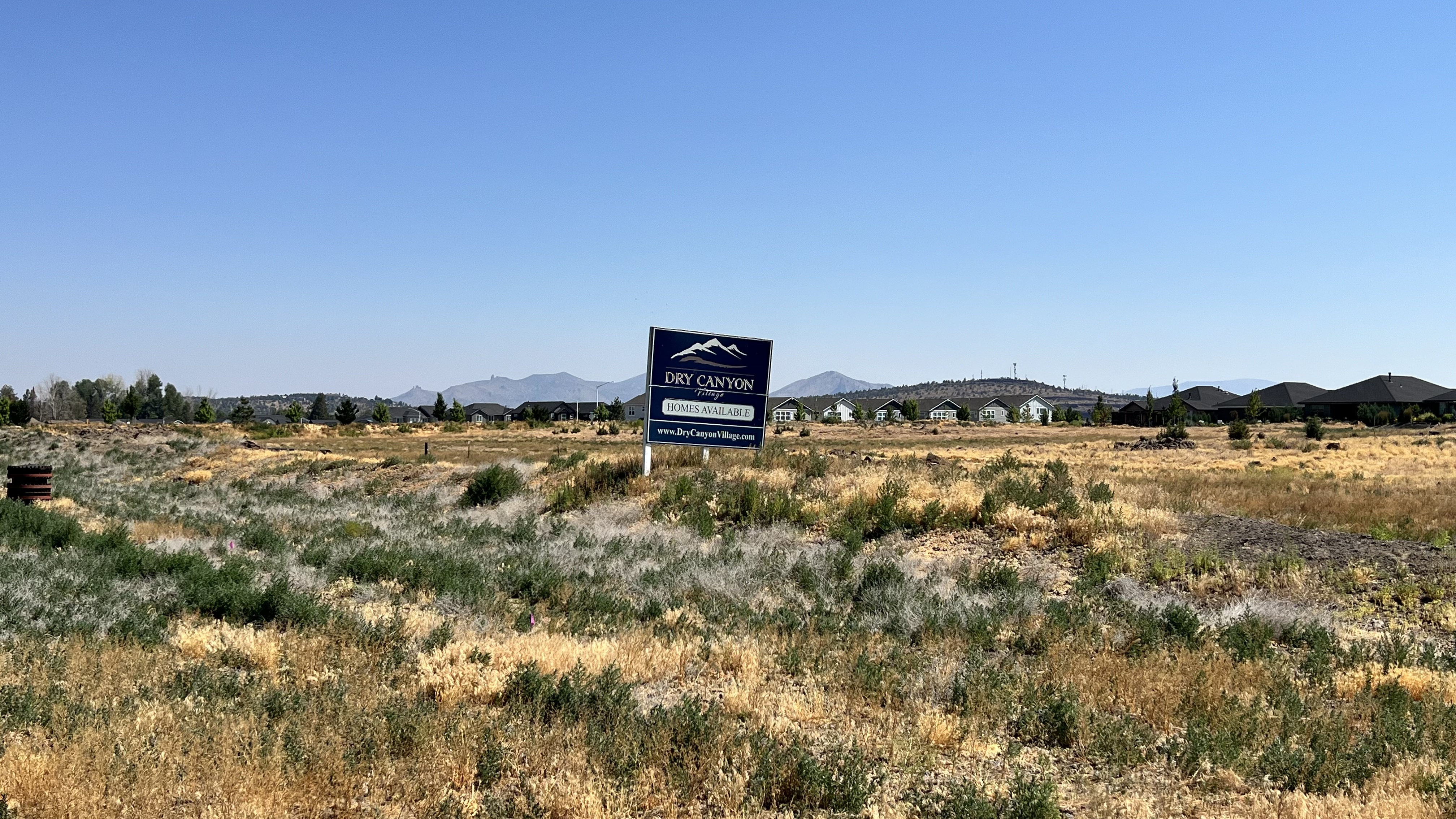
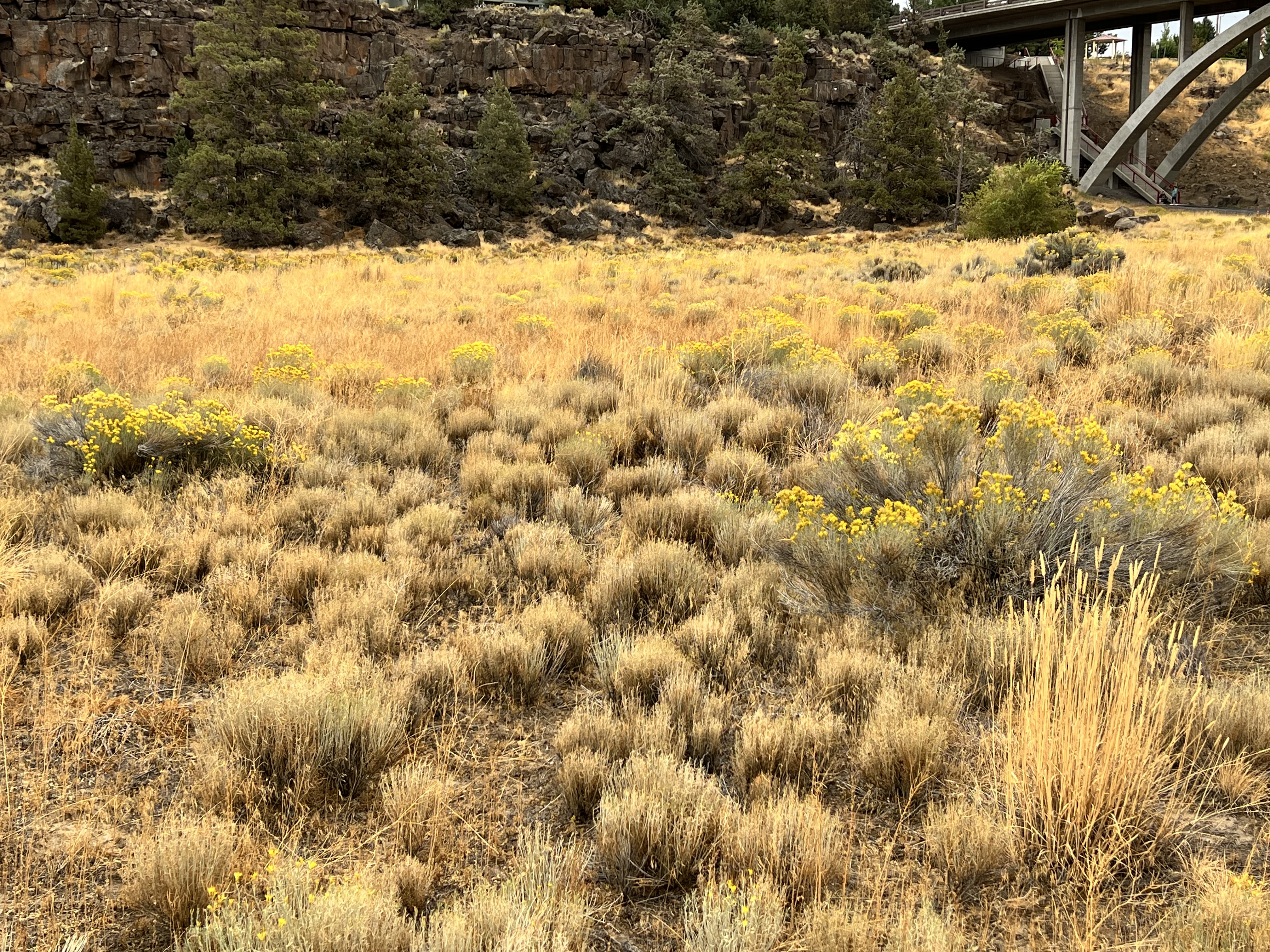
The bottom land in Redmond’s Dry Canyon was used for decades as low quality pasture, the native community pretty much obliterated. Those areas with surface rock are more likely to retain more of the original plant community, although Cheatgrass has invaded much of those areas as well. The is looking southerly over one of the larger ‘pasture’ areas near the disc golf course. There is very little Cheatgrass through this section south of West Rim Park. It includes a few native seral species which typically occupy disturbed sites as a site transitions, including Gray Rabbitbrush you see here. Found in this area too is Secale cereale, Annual Rye, a non-native, which appears to have been planted along more formal paths to limit Cheatgrass spread(?).  Junipers are moving in. Sagebrush hasn’t yet.

It is commonly said that a weed is a plant out of place…and of course ‘we’ are the one’s who decide this. Some will try to argue that there are no weeds, that all plants belong and if we only left weeds alone landscapes would reach a balance on their own. If one’s time frame is long enough this may be the case, though this will take considerably longer than one of our lifetimes, and then there is our inability to actually leave landscapes on their own, or to at least consciously moderate our disturbance of them. Weeds are plants. They are not a separate classification of plants. They are plants removed from their places of origin and released into another where they have competitive advantages. Most people still simply tend to refer to plants they don’t like or want as weeds. These positions are at odds with one another. This leads to confusion and a lack of clarity, undermining any urgency to take action.

Weeds have become ‘personal’, their status a matter of ‘opinion’….A weed is a weed only if “I” agree that it is, or perhaps some ‘expert’, such as when agricultural scientist identify them as an economic threat to farms and label them as ‘noxious’. Without agreement and urgency there is a tendency to do nothing about them. Plants in general are attributed little intrinsic value. For many people they are just there. Native plants we vaguely understand as belonging to a place, but most people would be hard pressed to identify and name many at all. Quite different species are often lumped together, their relationships unnoticed. Natives are reduced to being ‘background’, their status reduced to decoration, attractive or not, a ‘space’ filler, perhaps a hinderance to what we would chose to do with a place. Continue reading

Indigenous Continent: The Epic Contest for North America, A Review

We live today in a very divided and polarized world. You can take almost any characteristic used to define a group of people today and it is now being used to separate and divide. We do this sometimes out of pride, others, out of fear and desperation. We thus define our individuality, or our ‘people’, in a process of reduction, eliminating variation and possibility. This is who I am. This is my world, the world that matters. When we do this our world shrinks. That outside of it, becomes a threat and ‘threats’ proliferate. The causes of our problems are commonly reduced to ‘them’. Most of the divisions are, however inconsequential. Having been pried open we find ourselves separated by seemingly giant rifts, animosities greatly exaggerating the actual differences. Too many ‘leaders’, in bids to gain power themselves and cement their own advantage, beat the drums of division, gaining followers, customers and believers to their cause…which is often something very different than what they may publicly say. A world built on such differences is a precarious one, as groups strive for security by focusing on the differences rather than on the infinitely more common shared links which join us. This country was, in many ways, built on such differences. Continue reading