Category Archives: Adaptive Management

On Our Western Juniper Survey in Redmond’s Dry Canyon

This is an explanation of the importance of the survey work being done by the Friends of North Dry Canyon Natural Area, FNDCNA, and it’s role in the creation of a broader management plan, and a fire management plan, that addresses both community safety needs, as well as those of the Western Juniper and Sagebrush steppe plant communities in Dry Canyon. This is a 160 acre portion of the Canyon Park that stretches 3.7 miles, north to south, through the City, a remnant of one of the canyons formed by one of the previous courses of the paleo-Deschutes River, (There were at least two, one some distance east of Redmond’s location, joining with the Crooked River at present day Smith Rock State Park. The current Deschutes River flows 4 miles to the west of this location through a canyon carved in its earlier stages by Tumalo Creek.) Continue reading

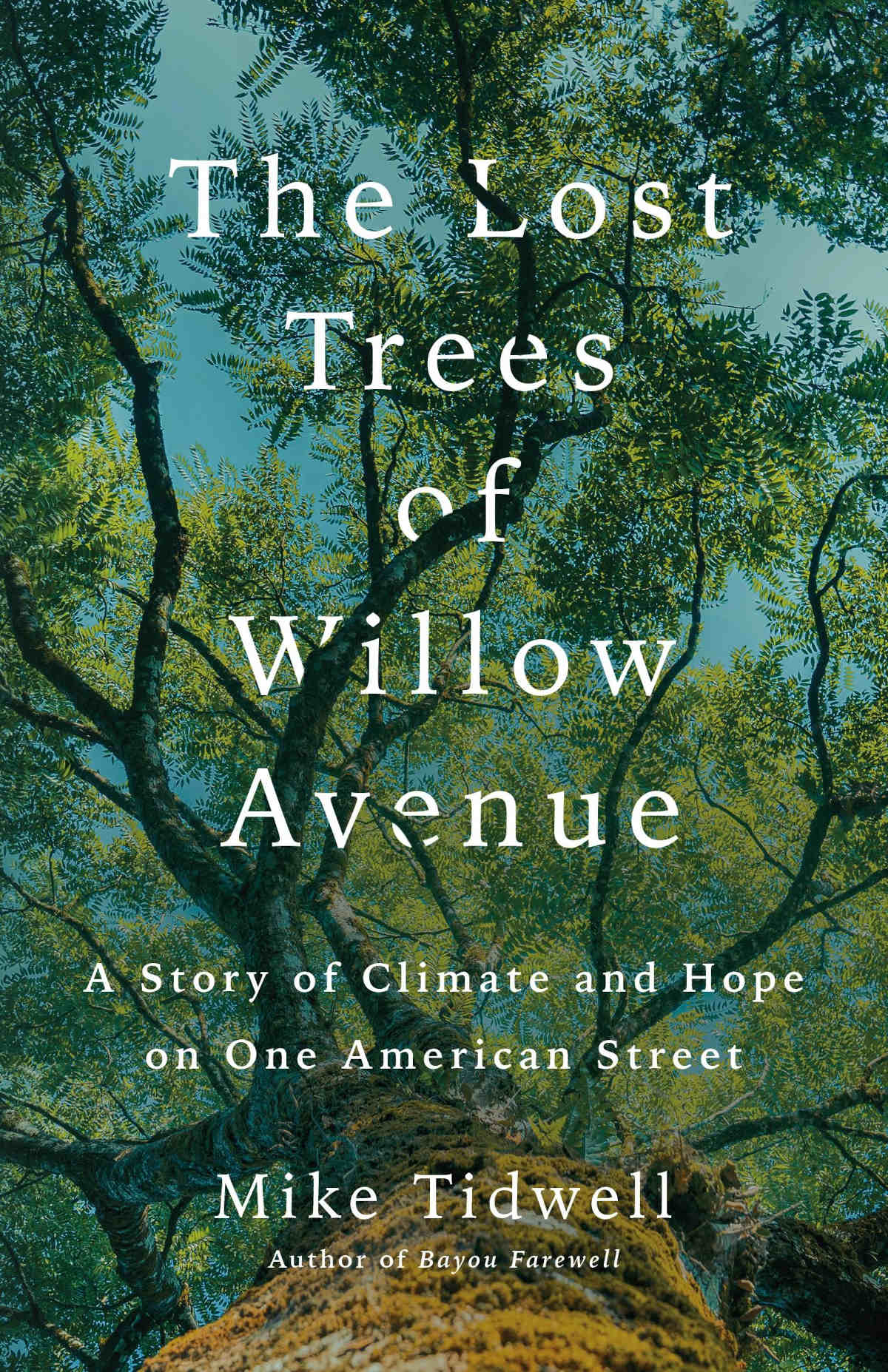
The Lost Trees of Willow Avenue, a Review

Global climate change, in our current political climate, has been relegated to a secondary status. There is so much ‘shit’ hitting the fan right now that it gets largely lost in mainstream media coverage. The science that supports it, continues, although at a slower rate. Our transition from fossil fuels to renewable energy has slowed along with the republican denials, their actions to ‘deBidenize’ America, cutting funds appropriated through the Inflation Reduction Act, ‘seed’ monies to fund needed infrastructure investment, along with their cuts to the funding of research into the supporting science and technologies. The topic has been rendered into one of ‘belief’ as if its consequences will have no real world effects, a simple argument of the uninformed, like ‘Ford beats Chevy’, pointless and personal. Author Mike Tidwell, an obvious long time ‘believer’ and lobbyist, has worked over the last 30 years to move the political dial toward climate action, amongst his neighbors, his home state of Maryland and Congress. Here, in his recent book, “The Lost Trees of Willow Avenue”, he tells his and his neighbor’s story, in his DC area neighborhood, of the real world impacts they’ve observed and are attempting to combat. Amongst his neighbors are  Congressman Jamie Raskin, his friend, Ning, a college prof who has been working tirelessly on getting a novel carbon sequestration program up and running, a local state legislator who has been working to get massive scale wind generators built off shore and others working in smaller ways, dealing with the fall out of a climate already changing around them which, among other things, is causing crazy weather perturbations, changes in rainfall and temperature swings that are leading to things like a large increase in Lyme disease, because the milder winters are killing fewer of the disease carrying ticks, while also leading to the massive die off of mature trees across their neighborhood. Continue reading

On Ornamental Trees and the Remaking/Unmaking of Place: Revising the City of Redmond’s Tree List, part 2

How Much to Water?

Recommending trees from climates with significantly wetter growing seasons needs to stop if we are to continue growing our population. Landscapes as designed, and managed, are the single largest user of residential water. Recommending trees which ignore this problem is irresponsible. Lower water use residential landscapes are possible. Local codes and recommendations must, however, reflect this priority.

Additionally, how much to water is a bit of a mystery to all of us and especially so to non-gardeners. How much? How often? Our watering practices should be determined by the local precipitation and the tree’s needs. What is commonly done, however, is that we water for our lawns and that largely determines what our trees receive, unless we have separate drip systems. A tree’s root system doesn’t stay neatly between the lines. They quickly extend out well beyond the span of the tree’s leafy canopy. In many cases even 2-3 times as far, taking up water and nutrients. A roots of a tree, planted in a small bed, adjacent to an irrigated lawn area, will move out into the lawn. A tree isolated in a xeric bed with only a few drip emitters, will quickly demand more than such a meager system affords it and such a tree, if it requires summer moisture, will struggle while competing with its nearby  ground level growing neighbors. Again ‘neighbors’ should share compatible requirements so all can thrive on the same ‘diet’ and moisture regime. Continue reading

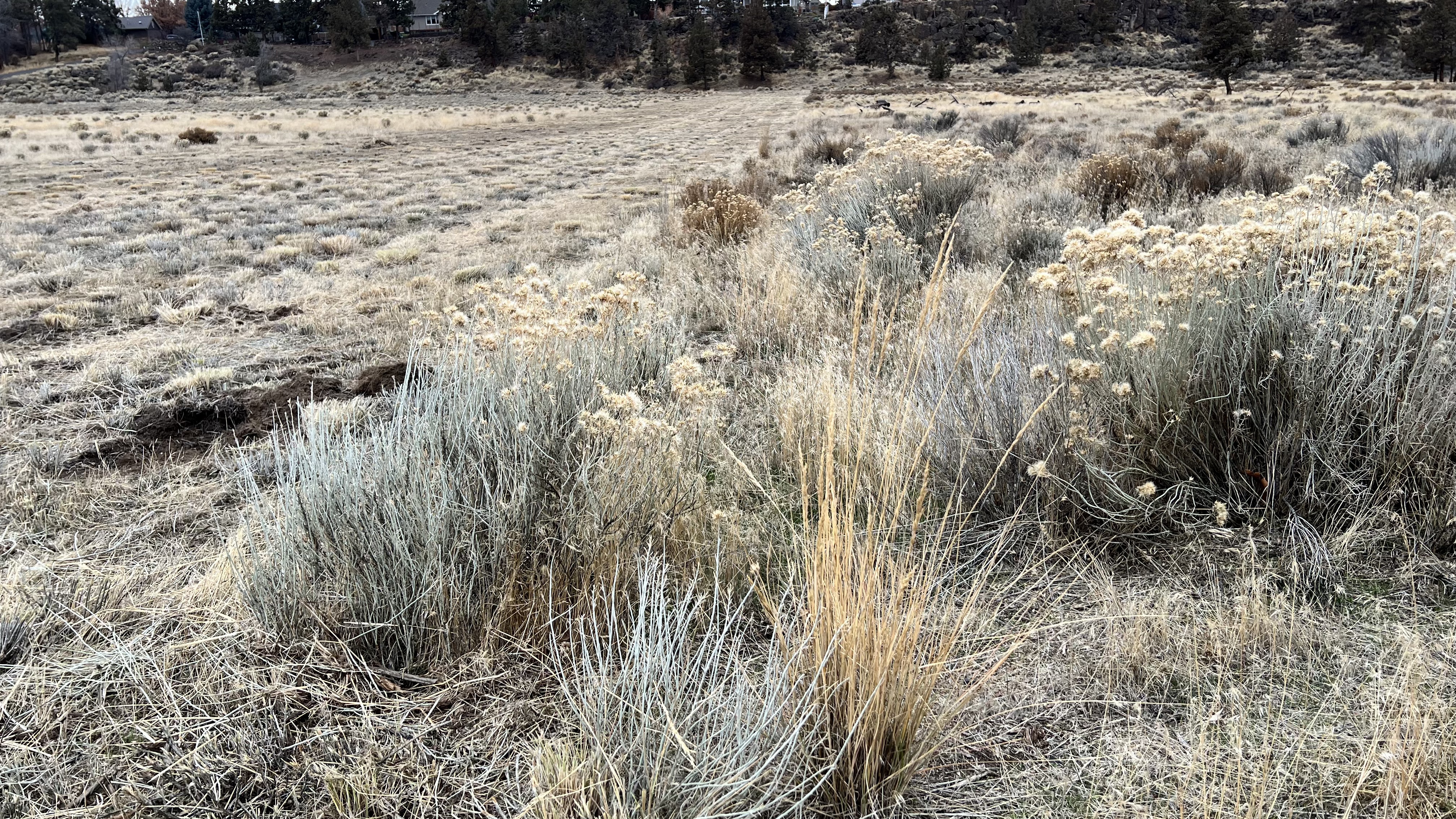
Mowing Firebreaks Across the Dry Canyon Bottom, Good Idea or No?

Mowing weakens the native plant community and aids the growth of weeds.

Mown adjacent to unmown. Aggressive spreaders will fill in more quickly and because of the weeds already in place, they will sieze a larger proportion of the mown area as they grow and spread.

While recently walking home through the Canyon, last month in December, I noted 8 new  strips, presumably ‘fire breaks’, mown across relatively flat and uniform sections of bottomland, each maybe 50’+ wide, spanning the bottom between the paved eastern path and the the main dirt western bike path. While I understand the thinking here, removing ground level fuels, this is a single purpose treatment that works counter to the Park’s purpose as a natural area preserve. Mowing down the Rabbitbrush, a ruderal, transition species of the Sagebrush Steppe plant community, delays the development of a healthy native plant community and encourages an increased array and density of weeds and invasives. Mowing this way provides open space for weed species already in Dry Canyon, as well as those not yet here, giving them larger ‘launch points’ from which they can spread into the rest of the Canyon. Mowing weakens natives, which are naturally slower to rebound from the damage than the aggressive weed species. Continue reading

John Vaillant’s, “Fire Weather: A True Story from a Hotter World”

‘Global warming’ and ‘climate change’ have become trigger phrases, hot buttons for millions of Americans. What were originally coined as descriptive, short hands to signify a complex climatological process induced and accelerated by human action, has been thoroughly politicized. Today they separate ‘us’ from ‘them’.

For those on one side, the earth, is a closed, limited and complex system we are ‘pushing’ beyond its inherent abilities to maintain dynamic balance within margins which organisms can live in a vital, healthy state, biological processes continuing in a familiar manner. This ‘side’ understands that we are adding vast quantities of carbon to the atmosphere causing the earth to retain more heat, heat which ‘spins’ the entire system faster, potentially beyond the limits that life evolved with. Such a more ‘carbonized’ atmosphere resembles that here of many millions of years ago, of a warmer earth, that was nonsupportive, too warm, for the vast majority of organisms which exits today. Too much carbon released into the atmosphere? These effects are easily demonstrable in a lab experiment. These people have some understanding of what they must do to slow and halt these changes, what we must do  to ameliorate the damage we’ll inevitably face. Pushed too far the system won’t return to the old ‘normal’ in a few weeks, months or years. It will be with us for generations to come.  Continue reading

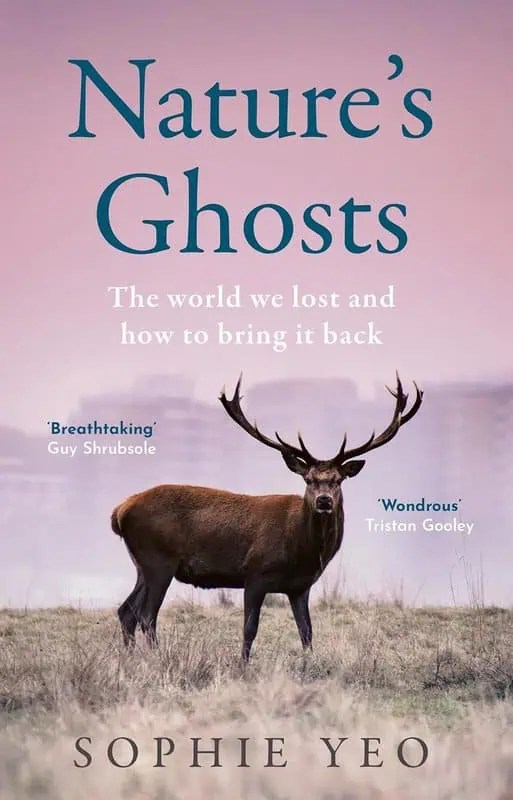
Climate Change and the Limits to Life: a couple reviews and examination

Not to ‘rain on anyone’s parade’, but walking home last night at 10:30 from a neighbor’s, the air was still, it was 81F and 51% humidity…ugh. Normally, it cools off significantly here in the high desert once the sun goes down. This summer is different.
Today, August 2, we’re forecasted to break 100F again. That will be the 26th day over 90 this year, the ninth over 100F…with less than 1/4” of rain since June 1. I’ve mentioned before that our average high temp for July is 85F. We were at or below that only four days in July.
Our old normals no longer hold. They are shifting consistently higher from year to year. This is happening worldwide. Its effects are greater, and more devastating, at equatorial latitudes and polar.
It is estimated that at or above a wet bulb (W/B) temperature of 35C the human body cannot cool itself. We cool down by evaporating away sweat on our skin surface. W/B temps mimic this by placing a wet cloth sleeve around a thermometer bulb, the evaporation taking away heat in the same way. W/B temps are then cooler, ‘chilled’ by the water evaporating away, drawing heat away from the thermometer’s temperature sensitive bulb, than ‘dry bulb temps. When these rise higher than W/B 35C, our internal organs and systems begin to falter and will fail in relatively short order, depending on our state of health. Some of us will have greater tolerance than others, but all will die at these levels if they have no way to cool their core temperatures. Some argue that this begins happening below this. Many areas are already experiencing such ‘events’. Governments are still slow to act We continue to build out our cities in patterns that maximize energy use and consume resources and products from around the world which must be transported to us, removed from where they other wise occur. Profit driven businesses, still refuse to change their practices and goals, insisting that the market will solve this…the same market that has created the problem…and we ‘demand’ this, these patterns, goods and services, ever more ‘divorced’ from the places we actually live, the limits and constraints with which we’d otherwise have to live.

Continue reading

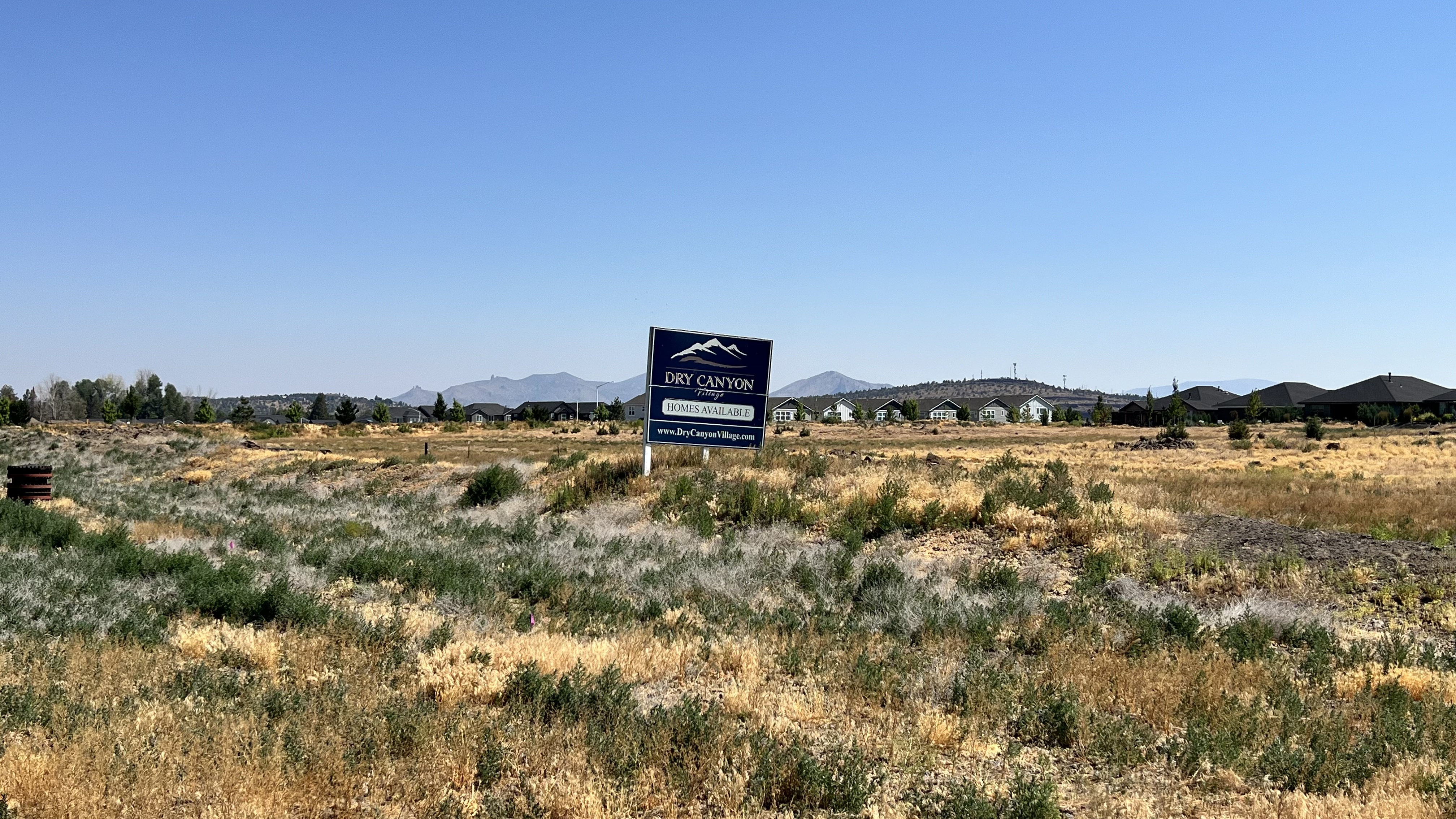
Weeds: What We Need to Do at DCVS

Looking NE from the gate at Northwest Way, other than a handful of juvenile Juniper there is literally nothing native of value across this roughly 9 acre spread. The other two undeveloped phases are equally bad, having a similar mix of weeds.

The question I keep hearing is, ‘What do we do?’ Many, if not most people living here now, have expressed frustration and more about the Dry Canyon Village South, DCVS’s, landscapes, specifically the berm, the mini-parks,  the Circle and the 25+ acres of undeveloped, uncared, for property we share space with. They ask me because they know I cared for Park landscapes, as a field horticulturist, for almost 30 years, Parks which often included natural areas of over 100 acres, to little neighborhood parks and intensively developed and used urban parks in the downtown core. I also haven’t been shy about my criticism of the lack of care, or of even a plan, for the neglected property we are saddled with. Anyone who has cared for a landscape can see the problem here. Leaving disturbed and neglected properties on their own is not a plan and can lead only to their further deterioration and continuing, worsening, ‘weed pressure on the adjacent developed landscapes. Continue reading

Weeds, Weeding and the Health of Our Public and Private Landscapes: an example from the ‘hood

Every gardener is a weeder. Gardens are created landscapes, often expressions of the individual gardener or, lacking of intent and design sense, those of a chosen designer. We live in our landscapes as active, responsible, creators, participants and stewards. Gardeners are trying to create a particular look or to grow particular plants native to their area, or with ornamental value or food plants to feed themselves and their families. Some of us are simply pursuing what we understand to be a healthy relationship with one’s place, to undo the damage and allow a new healthy and vital landscape to grow. These are landscapes of our choice. Our intention and control results in various volunteers and weeds finding their own place and so follows the need for weeding. 

We watch carefully, monitor the impacts of our work, attempt to understand what result is moving us closer to our goal and which might be indicators of further loss. Landscapes and gardens are incredibly complex systems and anyone who claims to have all of the answers is fooling himself and you. Our landscapes are broken, by us and our predecessors. The Pandora’s Box of weeds and disruption was burst open long ago. The only way ahead is to find a new path.  Weeds are here filling the niches we have collectively made and maintain for them. The more one is surrounded by aggressive, well adapted weeds, the more time we must spend controlling them. While this can be significant, gardeners mostly take the work in stride, a necessity to reach our goal, a goal which may be the simple act itself, of working in concert with our place…open to its teachings. Gardening, is a way of life, a smaller scale version of farming and the management of large ‘natural areas’ with their attendant commitment, rhythms and demands. Continue reading

The Flushing/Testing of Redmond’s New Municpal Well Into Dry Canyon’s Natural Preserve

This shows the effected portion of Dry Canyon Park from Antler, at the bottom, where the new municipal well is located, north to the Maple St. Bridge. The Fir connector trail shows up faintly cutting diagonally across the canyon from Fir Ave, 3 blocks north of John Tuck School. West Canyon Rim Park is labelled on the the left. The trail/dam cuts up, northeasterly from it, gray as it is asphalted, faintly in the pic. The water travelled 200 yds north of it, a bit short of halfway up to the Maple Bridge.

I’ve adopted Redmond’s Dry Canyon Park as a project, so I’ve gotten kind of possessive about things that threaten and effect it…but it is a City Park and cities often have competing demands and priorities. In this case the City is under considerable pressure to keep growing. People and businesses are still arriving here at a high rate and this puts demands on its public infrastructure, in this case its water supply. A city of its size also finds itself in need of more Park lands as people’s private space shrinks, population density increases and we all turn to the same limited landscapes for recreation. Compound this with the demand of wildlife and plants for relatively undisturbed landscapes on which they can simply live. Well, this is a case where two of these priorities have come into conflict, and as usual, the utilitarian demands have won out over those for the living natural world (There is no division of the City or local advocacy group, at this point, speaking up for the natural landscape and the life it supports). The utilitarian ‘needs’ of the community are simply a higher priority than those of the natural world. The State is responsible for our water resource and has control over adding new wells and how that is to be done. It is in at least part a health and safety issue. In this role they require that municipalities flush the wells and conduct a flow test to determine rate, drawdown and recovery. This was to be done by running it at full volume 24 hours a day for four days. At 3,500 gals./min. That’s 5 million gals per day. 20 million gals total. That water must go somewhere. It would have overwhelmed our wastewater treatment plant which is running at close to capacity already so it couldn’t be wasted down a manhole…so, it had to be wasted into the landscape of the Canyon itself.

The City contested this amount. This is almost double the amount used by by all residents on a typical winter day of 2.7 million gallons (In summer, due to landscape irrigation the daily amount jumps to 15.8 million gals.). This was all to be ‘wasted’ across the canyon floor. The City had concerns with damage to area infrastructure and paved paths. This requirement was cut in half and eventually to a single 12 hour period as the flooding/washing problem played out. The amount flushed was 2.5 million gals.

April 14, 2024

The filling ‘reservoir’ abutting the north path.

I was unaware of the details of this as I walked the stretch of path this afternoon  going north along the west side dirt path, from the trail connector between the main paved trail, extending from the Fir Ave. stairs. I was surprised at all of the surface erosion on and around the dirt path. In some places a foot or more of path had been scoured away, flushed out into the surrounding landscape, its Bitterbrush, Rabbitbrush and other low plants. This erosion continued north following the contours and the trail.

The northern extreme of the test run, where the flow slowed and settled all of the light organic debris.

As the flow spreads and slows larger denser material settles out. Here sediment was deposited in the trail itself and on the ground where the water fanned out.

The flooding had continued a couple hundred yards to where the flow stopped depositing a layer of organic debris the water had carried along.

(I learned on the 17th that this was the result of a test to see what kind of damage might occur and to gauge how the water would spread across the site. This is why the crew was there on the 17th. The test was an attempt to determine the flow pattern so that they could minimize damage.) Continue reading

Creating a Survey of Redmond’s Dry Canyon Park Flora: getting the table set to create an effective maintenance and master plan

My wife and I are recently returned Central Oregonians, both having grown up here, me in Redmond. As a child my friends and I spent many hours playing and exploring in the central portion of Redmond’s Dry Canyon, many years before it was a Park. In those days it was all privately owned. Large sections of it had cycled through some years as pasture. Remnants of that era’s ditches are still evident in some areas. For several years plans were being prepared to turn a large portion of it into a golf course, which fortunately, was never built. The result is that as a ‘natural area’ the original plant community is severely degraded. The City’s master plan for the Park designates a large portion, the northern section, north of the dog park and disk golf area, north of Antler, as a natural area preserve.

I still feel a strong connection to the canyon and am beginning work that I hope will contribute to its health and diversity in the years ahead. I’m a retired horticulturist who spent the majority of my career caring for Park lands, previously with time spent maintaining private gardens and installing landscapes, mostly west of the Cascades. I began working for sever landscapers in Central Oregon. Continue reading