Category Archives: Plants in the Dry Canyon Natural Area

The Nutrient Cycling Role of Fire in Central Oregon’s Arid Landscapes

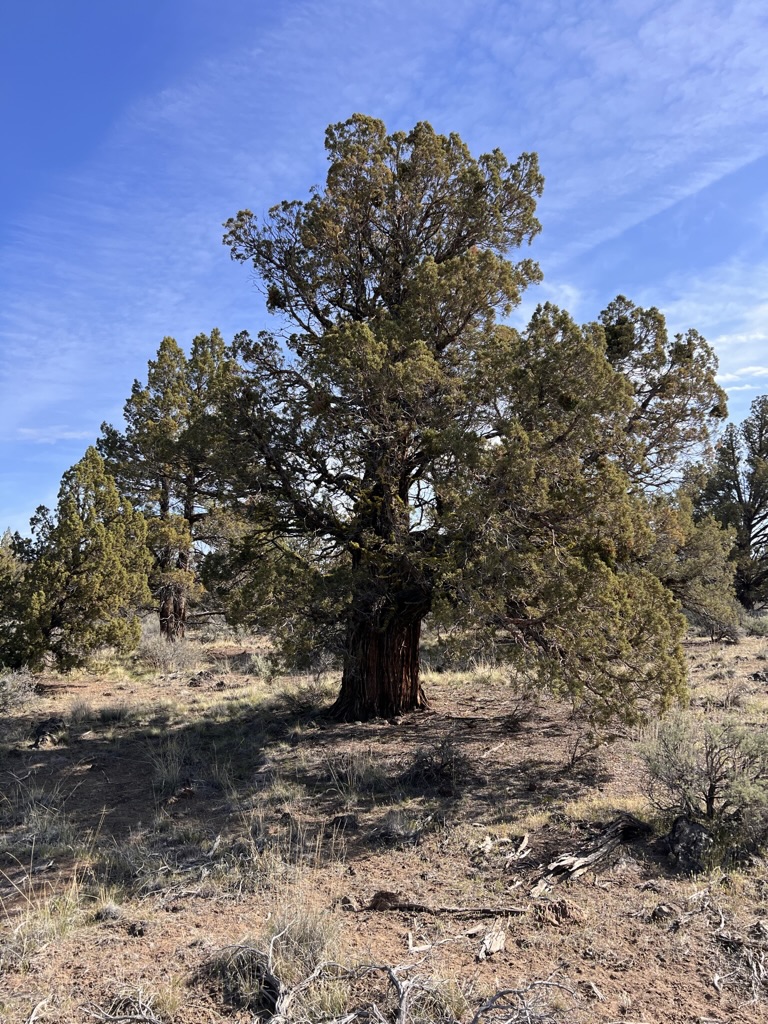
A Juniper like this one, growing out on BLM land around Cline Buttes, attains this squat and sturdy stature only after hundreds of years. Growing as they do on shallow, raised rocky areas, not only do they grow slowly, but there tendency is to caliper up. In irrigated pastures, these grow overly fast, spindly and upright. Look at that taper!

Ecologists will regularly claim that fire plays an essential role in the life and dynamics of the Juniper woodland, our sagebrush steppe and the grasslands of our arid and semi-arid plant communities, that without it, the landscape will deteriorate. Okay, but what does that mean? How can fire actually lead to a landscape’s improved vitality and diversity? What does fire actually do and what happens when it is eliminated? The short answer is that fire, in burning the collected fuels on the ground, breaks them down and returns them in nutrient form to the soil and the cycle of life. It provides the space necessary for a healthy and diverse landscape. To get there requires more thinking.

First some essential definitions and clarifications are needed: what are these ‘types’ of landscapes that together can be found in the arid reaches of Central Oregon; all landscapes are dynamic, evolving, changing over time according to the forces in effect on them, they are not static or fixed; what is meant by arid and semi-arid; fire, what is it, what is actually occurring when something ‘burns’; what is going on at a molecular level when an arid landscape burns; if this is so necessary, what fulfills this role in wetter landscapes; what’s the relationship between fire, rot and digestion; how, and does it, serve the nutrient availability and the necessities of organic growth. In understanding these basic parts we can better understand the self-renewing CYCLE of life as an ongoing process and how disruptions to it negatively influence its capacity to continue. Continue reading
Redmond’s Dry Canyon Firewise Management Plan, a Critique and Call to Action

Those who follow such things know that I’ve been involved in the preservation and enhancement of Redmond’s Dry Canyon, joining with others to form the Friends of North Dry Canyon Natural Area as an advocacy group, working to educate the public about its qualities and fragility, while also providing ‘boots on the ground’ with clean up projects and the control of threatening Invasive plants. Most recently we’ve been supporting other groups and participating with a guided naturalist walk, a bat walk and a recent Botany and Birds, walk with the High Desert Chapter of the Oregon Native Plant Society and Queer as Flock, a bird watcher’s group. We’ve been advocating for better signage, a trails management plan and for increased efforts to control the illegal use of electric and gas powered motorcycles in the Canyon. Additionally we have be doing the Juniper survey work for the City, to help create a plant data base linked with the City’s GIS program to aid them/us in the development of an effective management plan for Dry Canyon. We’ve only been recently notified, along with the rest of the public, that the City has a new Dry Canyon Firewise Management Plan (a PDF is linked below), which we were assured included participation by foresters, local natural resource and conservation groups…yet, somehow, they’ve produced a one dimensional plan with the singular priority of eliminating the chances of a catastrophic fire, while ignoring virtually all other priorities!!!! Continue reading

Holodiscus microphyllus, Rock Spiarea in Dry Canyon

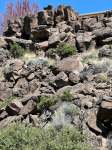
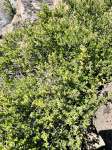
Another less common slope dweller is Holodiscus microphyllus, or Bush Ocean Spray, a deceiving name, or Rock Spiarea, which is also somewhat confusing. Confusing because Spiarea is the genus name for an entirely different genera of shrubs. So I call it simply Holodiscus. ( Botanical names can be confounding to the uninitiated. I’m not a big user of mnemonics, but I still remember first learning this plant’s close relative, Holodiscus bicolor, and the phrase immediately came to mind, ‘Holy Discus, Batman!” I know, silly, but I doubt I will ever forget that plant.)

This typically occurs on the eastern flank of the Cascades and in the mountains of SE Oregon. The common name, ‘rock’, suggests its preferred sites. I’ve not seen one in Dry Canyon bottomland. It seems most common below the east rim north of the Maple Bridge. Continue reading

That Gray Stuff? It’s All Sagebrush…Nope

Part of the Dry Canyon plant series

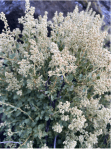
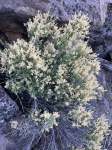
Everybody knows Juniper and I suspect that a lot of people who think they know Sagebrush, that ubiquitous gray shrub you see everywhere, may be confusing it with other plants, blurring all ‘gray’ shrubs into one. Now this may not seem to be a big deal, but if you are trying to manage a landscape with these in them or trying to create a landscape which reflects the local plant communities, then it becomes much more important that you know what you have so that you can evaluate your landscape’s condition and decide upon what you may need to do, or stop doing, to meet your goals. Continue reading

The Cut Leaf Thelypody in Dry Canyon

[Plants of the Dry Canyon Natural Area – This will be the start of a new series focused on the plants of Redmond’s Dry Canyon. I’m creating them to be posted for ‘local’ consumption on the Friends of North Dry Canyon Natural Area. It’s a City Park including about 166 acres at the north end of Dry Canyon Park which the City has identified as a Natural Preserve. The group works as an advocate with the City, on public education and helping with on the ground work projects. I’ll identify each such post here.]

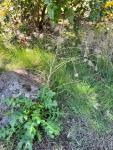
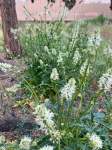
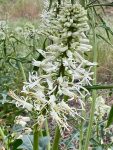
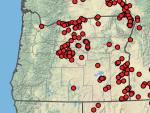
As you walk the trails below the canyon rims you will be seeing these growing scattered and in bunches. This is the Cut Leaf Thelypody, Thelypodium lacinatum. These are common where ever there’s a bit of soil between the rocks on the slopes below the rims growing amongst the tumble of massive basalt. I’ve seen these elsewhere growing in other eastside Oregon canyons with similar conditions.
These are members of the Mustard family, prolific seed producers and quite competitive. Another plant that, at least so far, doesn’t venture out into the canyon’s bottomland.
Elegant when it first starts flowering, like so many native annuals and perennials, these start declining while they proceed through their flowering season detracting from their appearance. What do I mean…each spent flower, begins to form its narrow, linear, Mustard seed capsule, quickly maturing its tiny seed and then drying, twisting and browning, while the inflorescence continues to bloom out towards its terminal end. A little messy, yes, but characteristic of these plants. We humans are relatively intolerant of such decline in our garden plants and so generally refuse them admission. Under the local wild conditions, as dry as they are, species tend to either be early flowering, when soil moisture is still most available or those like this that begin to decline before the show is over. Summer drought is a ‘cruel’ taskmaster. There are exceptions to this rule but….

https://oregonflora.org/taxa/index.php?taxon=8778