Category Archives: Ecology

On Ornamental Trees and the Remaking/Unmaking of Place: Revising the City of Redmond’s Tree List, Part 1

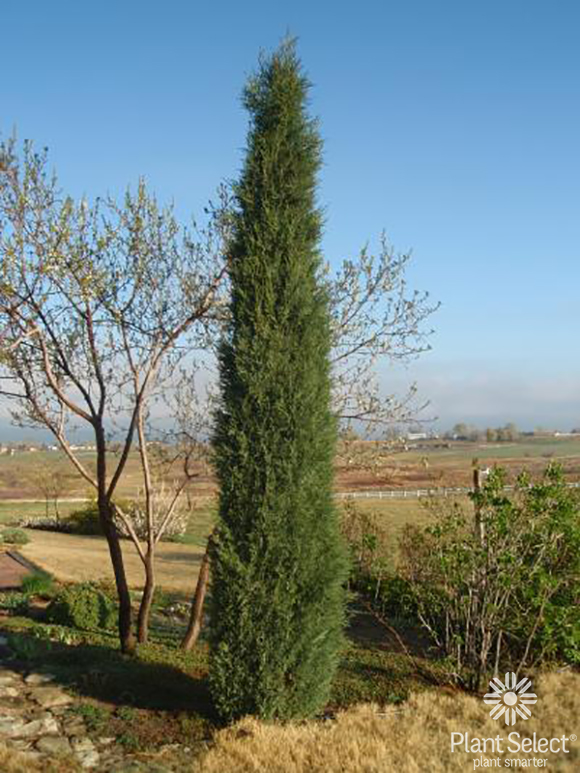
Perhaps an odd tree to start this with, Juniperus scopulorum ‘Woodward’, is not a ‘shade tree’. It is not deciduous. It is a narrow, fastigiate form of Rocky Mtn. Juniper that, growing to a height of 20′ with a 2′-3′ spread can serve as a formal accent in colder climates like ours as a ‘replacement’ for the more tender Italian Cyperss, and it can do quite well here with very little supplemental water.

Trees, specifically ornamental shade trees, have become an expected and desired part of our urban lives, at least util their leaves fall and await our cleanup. Many associate long tree lined streets and avenues with urban living. Broad Maples. Lofty Elms. Plane Trees and, in tighter spaces, perhaps Cherrys, Crabapples and flowering Plums. Urban trees provide several notable ‘environmental services’ increasing our comfort level with their cooling shade, their capacity to remove pollutants from the air, cover and nesting places for birds and the sequestration of carbon. Trees are generally viewed as a public good, necessary even for our lives. We can get quite emotional about them. So it seems a bit ‘wrong’ to suggest that this ‘ideal’ may not always be ‘best’ or even desirable.

Broadleaved deciduous shade trees are ‘naturally’ members of mesic, temperate to cold-temperate regions of the world. That is where they evolved and where when we plant them out, where they do best. When we begin planting them outside of their historic natural ranges, especially when we ignore the conditions, the disparities and the extremes between their natural ranges and those where we choose to plant them, then we can have some serious problems. The trees may struggle along, or if we remain committed to making up for our local area’s lacking, usually in the form of supplying more water, they can do reasonably well. But this suggests possible real problems as one moves further away from the conditions of a tree’s natural limits and increase the numbers planted out. Where is this water coming from and what are the impacts of removing this water from its normal and healthy cycling of which it is a part? What will be going without? And, is that cost worth the losses it creates? Our selection and planting decisions depend on how we value that which is lost! In short, the typical deciduous shade tree of our imaginings does not belong here in a desert. Continue reading

Mowing Firebreaks Across the Dry Canyon Bottom, Good Idea or No?

Mowing weakens the native plant community and aids the growth of weeds.

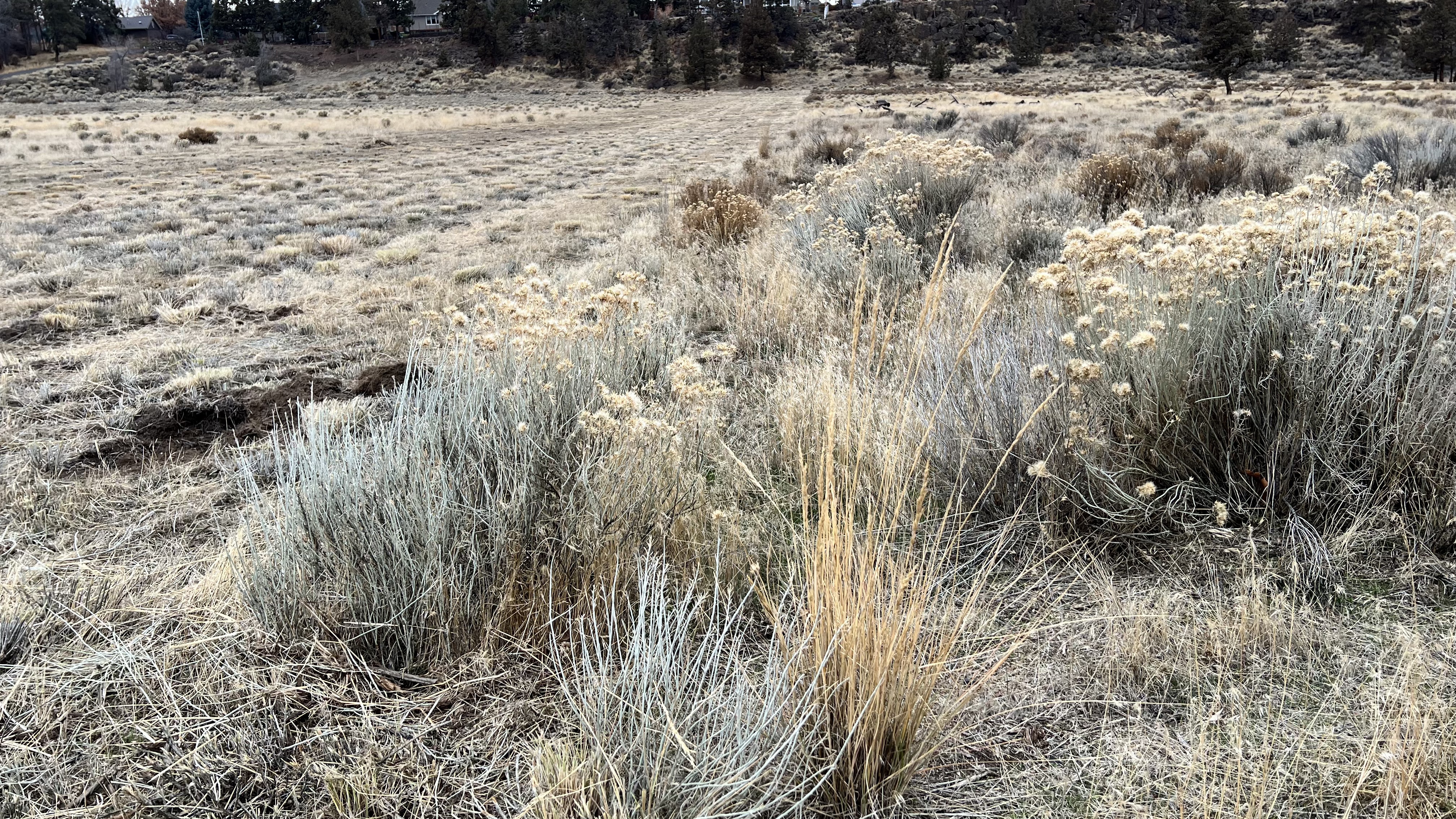
Mown adjacent to unmown. Aggressive spreaders will fill in more quickly and because of the weeds already in place, they will sieze a larger proportion of the mown area as they grow and spread.

While recently walking home through the Canyon, last month in December, I noted 8 new  strips, presumably ‘fire breaks’, mown across relatively flat and uniform sections of bottomland, each maybe 50’+ wide, spanning the bottom between the paved eastern path and the the main dirt western bike path. While I understand the thinking here, removing ground level fuels, this is a single purpose treatment that works counter to the Park’s purpose as a natural area preserve. Mowing down the Rabbitbrush, a ruderal, transition species of the Sagebrush Steppe plant community, delays the development of a healthy native plant community and encourages an increased array and density of weeds and invasives. Mowing this way provides open space for weed species already in Dry Canyon, as well as those not yet here, giving them larger ‘launch points’ from which they can spread into the rest of the Canyon. Mowing weakens natives, which are naturally slower to rebound from the damage than the aggressive weed species. Continue reading

From 0’ – 3,000’ in 70 Million Years:  Building Oregon, Dry Canyon, The Shaping of Redmond and the Geology of the Paleo-Deschutes, Part 3

Cascade Volcanic Arc –

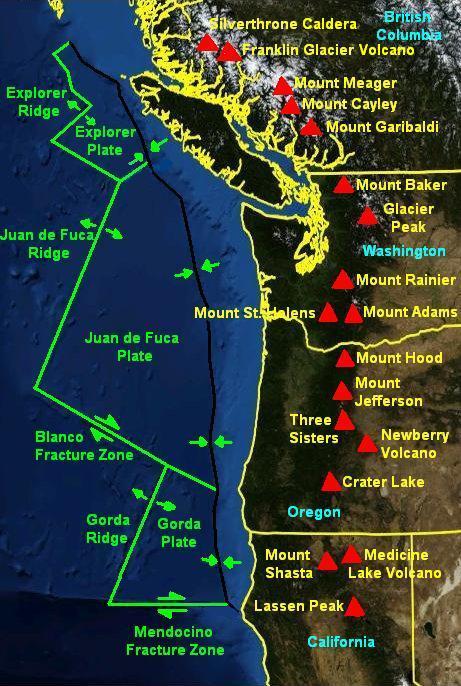
Over the last 2.5 million years, roughly corresponding with the Pleistocene Ice Age, there have been at least 1,054 volcanoes in a ‘belt’ from Mt. Hood running 210 miles south to the California border and then, after a break, continuing to Mt. Shasta and Mt. Lassen, in a band 16 to 31 miles in width. These latter two, southern most of the Cascades, show no effect of glaciation from Glacial Periods. They were far enough south of the Glacial Ice to be unaffected. The material ejected and flowing from these many volcanoes and vents come from the crustal material of the subducting Juan de Fuca plate. The Cascades are a defining feature of our region in terms of aesthetics, but also as a shaper of climate, as well as being a physical barrier limiting the movement of organisms and thus goes to determining the ‘shape’ of our lives here. The Arc is still active, magma is still being ‘delivered’, building incredible pressure below through these same processes which have shaped this place to date. While we may assess its various mountains as ‘active’ or not, the volcanic arc, is still very much a factor in determining our long term future. Where it will next erupt from, and what form that will take, is impossible to say within any degree of confidence. But the earth’s tectonic plates are still in movement. Magama is still slowly, but inexorably, coursing through its crustal layers and the movement and pressures will continue to result in further eruptions. Continue reading

From 0’ – 3,000’ in 70 Million Years:  Building Oregon, Dry Canyon, The Shaping of Redmond and the Geology of the Paleo-Deschutes, Part 2

Clarno Formation – 54 to 39 million years ago.

Getting back to Central Oregon, the Clarno Formation formed much of the region’s base rock, an accumulation of volcanic rock, their sediments and soils in layers to as much as 6,000’ thickness. 6,000’. The area was what geologist call an ‘extensional basin’, a broad low basin between the Blues and Wallowa Mountains and the accreting and volcanic landscape forming to its west.

As the Clarno was forming so was Siletzia off the coast of Oregon, Washington and British Columbia, building up relatively rapidly from intense and volcanic activity between 56-49 million years ago to the west. Siletzia was then accreted to the continent due to plate tectonics. In Oregon this terrane became the area we now recognize as our Coast Range and Willamette Valley.

This area looked far different before this period than at its end. It looked far different again, from when it attained its maximum elevation, to how it appears today. Trying to tack all of this is a bit like trying to follow a 3 ring circus…with many more rings, all proceeding at the same time, with generous overlaps. When looking at our landscape we are faced with the problem of the never ending processes of ‘addition’ and erosive ‘subtraction’. The ‘end’ of the period we define as the Clarno Formation is not one of some final result. The regions canyons, have today been deeply eroded, cut steep, with broken slopes, below the rim tops we see today. These were very different 39 Ma and they will look far more different in another million or ten million years from today, likely unrecognizable to us. Even if we were able to somehow survive until then to observe them, our ‘snapshot’ and pliable memory of them would have likely transformed over the many centuries. Erosion will have been at work over the intervening time together with those forces working to ‘build’ and ‘lift’, the working of plate tectonics locally continuing to drive the process as they continue in their slow motion crashing, transforming the surface from below.

During the Clarno those forces continued with, explosive eruptions, lava and pyroclastic flows, lahars that poured down from volcanoes of the Mutton Mountains in the formations northeast corner and Ochoco Mountains area, just west and south of the Blue Mountains, along with their mudstone, and conglomerates derived from the erosion of both accreted terranes and that of volcanically ‘built’ structures. And thus was ‘built’ the Clarno and the later John Day Formation. The three largest volcanic structures of the period in the Ochocos remain today as the Crooked River, Wildcat Mountain, and Tower Mountain Calderas. These volcanos have not been active for many millions of years. The center of volcanic activity in the region began to shift westerly during the Clarno with the tectonic changes accruing to the expanding continent’s edge developing into what would be the Cascade Volcanic Arc. The Ochoco Volcanic Area remained an active factor on through the development of the John Day Formation Period. Continue reading

John Vaillant’s, “Fire Weather: A True Story from a Hotter World”

‘Global warming’ and ‘climate change’ have become trigger phrases, hot buttons for millions of Americans. What were originally coined as descriptive, short hands to signify a complex climatological process induced and accelerated by human action, has been thoroughly politicized. Today they separate ‘us’ from ‘them’.

For those on one side, the earth, is a closed, limited and complex system we are ‘pushing’ beyond its inherent abilities to maintain dynamic balance within margins which organisms can live in a vital, healthy state, biological processes continuing in a familiar manner. This ‘side’ understands that we are adding vast quantities of carbon to the atmosphere causing the earth to retain more heat, heat which ‘spins’ the entire system faster, potentially beyond the limits that life evolved with. Such a more ‘carbonized’ atmosphere resembles that here of many millions of years ago, of a warmer earth, that was nonsupportive, too warm, for the vast majority of organisms which exits today. Too much carbon released into the atmosphere? These effects are easily demonstrable in a lab experiment. These people have some understanding of what they must do to slow and halt these changes, what we must do  to ameliorate the damage we’ll inevitably face. Pushed too far the system won’t return to the old ‘normal’ in a few weeks, months or years. It will be with us for generations to come.  Continue reading

The Gene: An Intimate History, a Review

I finished reading Siddhartha Mukherjee’s book from 2016, “The Gene: An Intimate History”, a dense, engaging book, written in a prose style, conversational, thorough, accessible and personal, exceedingly rare qualities to find in a book covering such technical topic. Mukherjee, trained and worked as an oncologist, won the Pulitzer Prize for his earlier book on cancer, “The Emperor of all Maladies: A Biography of Cancer”. He is currently an associate professor of medicine at New York Presbyterian Hospital/Columbia University. Understood to be the ‘best’, or most complete and thorough history of genetics, our understanding of it and the ethical questions of its increasingly influential applications in medicine, society and evolution. Of such broad scope in the changing landscape of medicine and its science, it has expectedly, become subject to an array of criticisms. The practice of science is not perfect. Our understanding is forever evolving and as much as promoters might insist that theirs is solid and fixed, our knowledge will always be imperfect. We circle around a topic, defining it closer and closer, but never quite understanding it fully, questions leading us to more questions, our knowledge shaped by what we already ‘know’, and very occasionally propose entirely new ways of explaining, new theories, that dislodge previous established theory. Continue reading

The Much Maligned Western Juniper: The Role of Juniperus occidentalis in Central Oregon

Old growth Junipers near Cline Buttes. These two rooted down long ago on top of this lava flow. Much of the lavas here were produced during the Deschutes Formation over many thousands of years more than 5 million years ago. Surface lavas, cliffs and slopes define the area with a few sediment filled basins dominated by Sagebrush and Bitterbrush.

The Western Juniper is the  singular native tree of Dry Canyon and the immediate Redmond area. I grew up with it here in Central Oregon. When we moved here in ’61 i remember driving north after passing through miles and miles of various Pine forests, which eventually yielded, riding in our VW bus, as we left Bend. Bend sits within the ecotone, the relatively narrow transition zone, between Ponderosa Pine forest and Juniper steppe. What were these trees? Coming from California’s Salinas Valley, the landscape could hardly be more different to a six year old. So different in form and detail, Junipers squatted darkly across the landscape, nothing like the tall, majestic Pines or Oaks I was more familiar with or even the Lodgepole Pine we drove through across the pumice plain of the LaPine area. Continue reading

Climate Change and the Limits to Life: a couple reviews and examination

Not to ‘rain on anyone’s parade’, but walking home last night at 10:30 from a neighbor’s, the air was still, it was 81F and 51% humidity…ugh. Normally, it cools off significantly here in the high desert once the sun goes down. This summer is different.
Today, August 2, we’re forecasted to break 100F again. That will be the 26th day over 90 this year, the ninth over 100F…with less than 1/4” of rain since June 1. I’ve mentioned before that our average high temp for July is 85F. We were at or below that only four days in July.
Our old normals no longer hold. They are shifting consistently higher from year to year. This is happening worldwide. Its effects are greater, and more devastating, at equatorial latitudes and polar.
It is estimated that at or above a wet bulb (W/B) temperature of 35C the human body cannot cool itself. We cool down by evaporating away sweat on our skin surface. W/B temps mimic this by placing a wet cloth sleeve around a thermometer bulb, the evaporation taking away heat in the same way. W/B temps are then cooler, ‘chilled’ by the water evaporating away, drawing heat away from the thermometer’s temperature sensitive bulb, than ‘dry bulb temps. When these rise higher than W/B 35C, our internal organs and systems begin to falter and will fail in relatively short order, depending on our state of health. Some of us will have greater tolerance than others, but all will die at these levels if they have no way to cool their core temperatures. Some argue that this begins happening below this. Many areas are already experiencing such ‘events’. Governments are still slow to act We continue to build out our cities in patterns that maximize energy use and consume resources and products from around the world which must be transported to us, removed from where they other wise occur. Profit driven businesses, still refuse to change their practices and goals, insisting that the market will solve this…the same market that has created the problem…and we ‘demand’ this, these patterns, goods and services, ever more ‘divorced’ from the places we actually live, the limits and constraints with which we’d otherwise have to live.

Continue reading

On Healing: Life, Place and Relationship in Oregon’s Great Basin Country

The massive fault block of Hart Mountain, Poker Jim Rim in the distance to the north. The gravel county road switchbacks up the more than 3,000′ beginning from the center in the distance here. From here this is how you get to Steens Mountain without doing miles of backtracking.

I woke up this morning to the sound of bird song…nothing else. There were Western Meadowlarks and a multitude of others, I’m sorry to say I don’t know, but beautiful and distinct. I was laying in bed, atop our truck, thinking about how rare an event this is for so many of us…not that the birds aren’t here greeting the morning every day, but that so many of us aren’t ‘available’ to hear them, sequestered away safely in our homes, otherwise occupied or, more commonly, the birds literally excluded from our urbanized and ‘modern’ places of residence, their own places developed/destroyed. Entire neighborhoods and cities excluding all but the most common songbirds and passerine species.  Little quarter is afforded most wildlife in modern development…and that upon which their lives depend.  Continue reading

Weeds, Weeding and the Health of Our Public and Private Landscapes: an example from the ‘hood

Every gardener is a weeder. Gardens are created landscapes, often expressions of the individual gardener or, lacking of intent and design sense, those of a chosen designer. We live in our landscapes as active, responsible, creators, participants and stewards. Gardeners are trying to create a particular look or to grow particular plants native to their area, or with ornamental value or food plants to feed themselves and their families. Some of us are simply pursuing what we understand to be a healthy relationship with one’s place, to undo the damage and allow a new healthy and vital landscape to grow. These are landscapes of our choice. Our intention and control results in various volunteers and weeds finding their own place and so follows the need for weeding. 

We watch carefully, monitor the impacts of our work, attempt to understand what result is moving us closer to our goal and which might be indicators of further loss. Landscapes and gardens are incredibly complex systems and anyone who claims to have all of the answers is fooling himself and you. Our landscapes are broken, by us and our predecessors. The Pandora’s Box of weeds and disruption was burst open long ago. The only way ahead is to find a new path.  Weeds are here filling the niches we have collectively made and maintain for them. The more one is surrounded by aggressive, well adapted weeds, the more time we must spend controlling them. While this can be significant, gardeners mostly take the work in stride, a necessity to reach our goal, a goal which may be the simple act itself, of working in concert with our place…open to its teachings. Gardening, is a way of life, a smaller scale version of farming and the management of large ‘natural areas’ with their attendant commitment, rhythms and demands. Continue reading