Category Archives: Trees

On Ornamental Trees and the Remaking/Unmaking of Place: Revising the City of Redmond’s Tree List, part 2

How Much to Water?

Recommending trees from climates with significantly wetter growing seasons needs to stop if we are to continue growing our population. Landscapes as designed, and managed, are the single largest user of residential water. Recommending trees which ignore this problem is irresponsible. Lower water use residential landscapes are possible. Local codes and recommendations must, however, reflect this priority.

Additionally, how much to water is a bit of a mystery to all of us and especially so to non-gardeners. How much? How often? Our watering practices should be determined by the local precipitation and the tree’s needs. What is commonly done, however, is that we water for our lawns and that largely determines what our trees receive, unless we have separate drip systems. A tree’s root system doesn’t stay neatly between the lines. They quickly extend out well beyond the span of the tree’s leafy canopy. In many cases even 2-3 times as far, taking up water and nutrients. A roots of a tree, planted in a small bed, adjacent to an irrigated lawn area, will move out into the lawn. A tree isolated in a xeric bed with only a few drip emitters, will quickly demand more than such a meager system affords it and such a tree, if it requires summer moisture, will struggle while competing with its nearby  ground level growing neighbors. Again ‘neighbors’ should share compatible requirements so all can thrive on the same ‘diet’ and moisture regime. Continue reading
On Ornamental Trees and the Remaking/Unmaking of Place: Revising the City of Redmond’s Tree List, Part 1

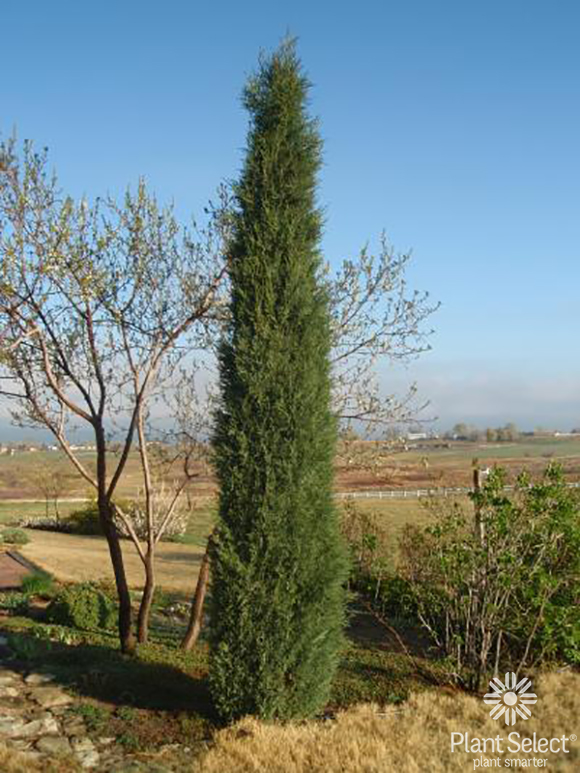
Perhaps an odd tree to start this with, Juniperus scopulorum ‘Woodward’, is not a ‘shade tree’. It is not deciduous. It is a narrow, fastigiate form of Rocky Mtn. Juniper that, growing to a height of 20′ with a 2′-3′ spread can serve as a formal accent in colder climates like ours as a ‘replacement’ for the more tender Italian Cyperss, and it can do quite well here with very little supplemental water.

Trees, specifically ornamental shade trees, have become an expected and desired part of our urban lives, at least util their leaves fall and await our cleanup. Many associate long tree lined streets and avenues with urban living. Broad Maples. Lofty Elms. Plane Trees and, in tighter spaces, perhaps Cherrys, Crabapples and flowering Plums. Urban trees provide several notable ‘environmental services’ increasing our comfort level with their cooling shade, their capacity to remove pollutants from the air, cover and nesting places for birds and the sequestration of carbon. Trees are generally viewed as a public good, necessary even for our lives. We can get quite emotional about them. So it seems a bit ‘wrong’ to suggest that this ‘ideal’ may not always be ‘best’ or even desirable.

Broadleaved deciduous shade trees are ‘naturally’ members of mesic, temperate to cold-temperate regions of the world. That is where they evolved and where when we plant them out, where they do best. When we begin planting them outside of their historic natural ranges, especially when we ignore the conditions, the disparities and the extremes between their natural ranges and those where we choose to plant them, then we can have some serious problems. The trees may struggle along, or if we remain committed to making up for our local area’s lacking, usually in the form of supplying more water, they can do reasonably well. But this suggests possible real problems as one moves further away from the conditions of a tree’s natural limits and increase the numbers planted out. Where is this water coming from and what are the impacts of removing this water from its normal and healthy cycling of which it is a part? What will be going without? And, is that cost worth the losses it creates? Our selection and planting decisions depend on how we value that which is lost! In short, the typical deciduous shade tree of our imaginings does not belong here in a desert. Continue reading

Spruce Park, Redmond’s Newest Park and Our Neighbor: a horticultural critique

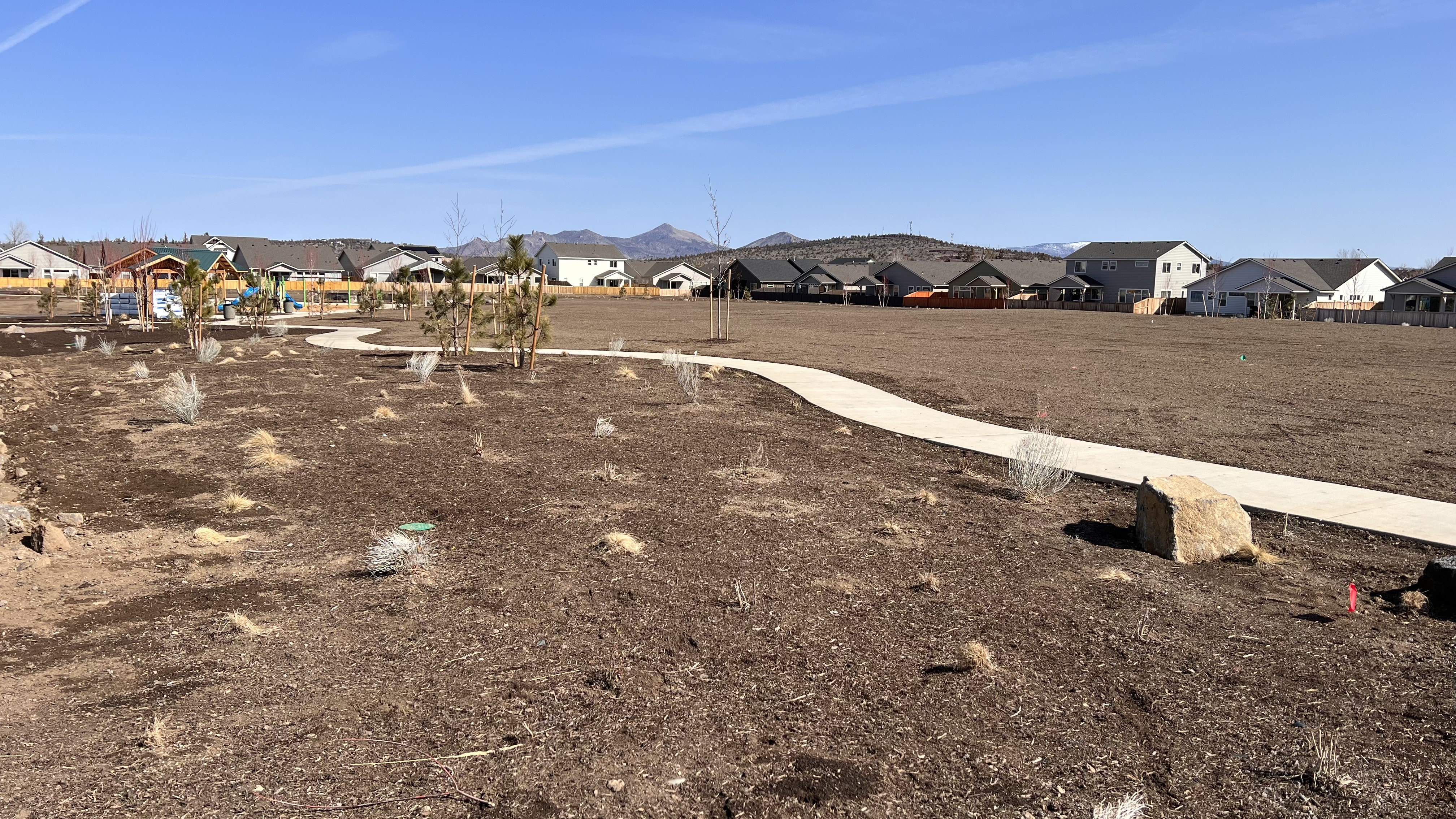
Redmond’s Spruce Park looking NNE from the SW corner toward Gray Butte and Smith Rock in the background. The border beds which follow much of the loop path are ‘native’ plantings according to the conceptual plan. It is common to claim that most of the plants are natives in designed natural areas, but native is not synonymous with ‘natural’. Although natives are used here concessions have been made including such plants as Echinacea purpurea ‘Pow Wow Wildberry’ and Rudbeckia ‘Goldsturm’. In a strict sense Ponderosa Pine aren’t native to this immediate locale either, they require more precipitation than we normally get and the Autumn Blaze Maples are a hybrid of two northeastern North American species.

A landscape, in nature, is a whole, functioning system, capable of perpetuating itself, through out the seasons and years, relying entirely on its own conditions and the cycling of energy and resources occurring on and within it. This is also the definition of a modern sustainable landscape. Ideally they require no inputs or energies supplied from offsite aside from the sun, precipitation and the normal cycling onsite of nutrients and water. A human made, contrived landscape, as all of those built by us today are, may be ‘judged’ by how well they function on ‘their own’, by how well they fit this ideal. Labor and outside inputs necessary to maintain a landscape are then indicators of how out of balance, how far from ‘ideal’ nature and genuine sustainability, a landscape is. A contrived landscape, which ignores the relationships integral to a healthy landscape community ‘demands’ more and more maintenance and support. Given its design and use, a landscape which ignores its site and relationship requirements will deteriorate from the intended design, losing to death component plants while gaining, increasingly, more unwanted available weed species. Design, conditions and use are essential to determine, in this sense, what a ‘good’ landscape is. Continue reading

Why Bad Things Happen to Good Plants?: On Root Problems, Root Washing, Nursery Practices and Customers

“To be, or not to be? That is the question—Whether ’tis nobler in the mind to suffer The slings and arrows of outrageous fortune, Or to take arms against a sea of troubles, And, by opposing, end them?”  Hamlet.

Is the question we face as gardeners as simple as, To ‘root wash’ or not to ‘root wash’, before planting?  To some today it has become ‘heretical’ to suggest that it might not be just a necessary corrective, but an unmitigated good…and not doing so dooms a plant to failure.  The practice of ‘root washing’ in its present form, is relatively new to gardeners.  Horticulture, which is a system of techniques, traditions and science, that goes back to our own species’ first intentional involvement growing and selecting plants, has not always included it.  Practices develop over wide spans of time.  Many are retained, others pass away. Root washing has been around as a method to assess damage to root systems, to ease and make more efficient division, to study root growth or cleanse them of particular infestations.  ‘Bare-rooting’, during a plant’s winter dormancy in temperate regions, has historically been done in the field when harvesting or transplanting many deciduous trees and woody plants for shipping and ease of transport.  In some circles today root washing has become an almost literal flash point, pitting proponent against opponent, ‘science’ against ‘tradition’…yet another fracture line to divide society. The road of the absolutist, as with many other human practices, tends to create conflict as evidence of correctness is lobbed back and forth.  My own view is that, like so many other things today, the subject is somewhat ‘grayer’. Science can be on both ‘sides’, or neither, and reality is rarely so simplistic. Continue reading

The Strength to Stand: Surviving the Load of Ice and Snow in Portland

img_7484

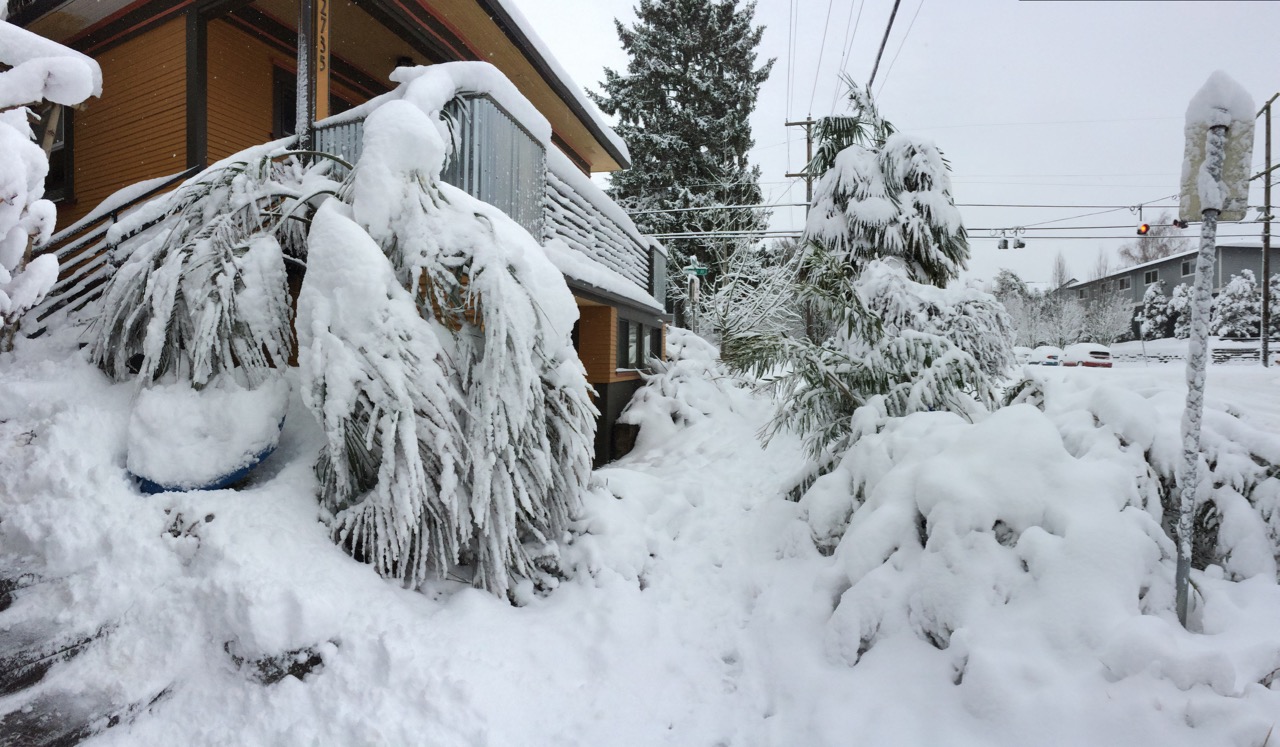
The morning after the big snow along the front of my house. To the left, splayed out and weighted down, is my Butia capitata. This one, from Argentina and not used to snow, had me worried, but it sprung back. The Oleander to the right, next to the sign, was bent down to the ground from its 8’+. Further back is one of my Chinese Windmill Palms, Trachycarpus fortuneii, bent under a snow load it is used to from high in the mountains of southern China.

Many of us who garden in the Pacific Northwest, and especially those of us in Portland this year, will be visiting our garden centers and favorite nurseries this spring and summer with a little more anxiety and need as we look for plants to replace those that have succumbed to this winter’s cold, ice and snow loads, all of which were more severe than what we have come to expect here.  But before we pull on our boots and don our rain gear to head off for shopping there are several questions that we need to consider before we make our purchases.  Not all of us draw up plant lists, but most of us at least carry in our heads a wish list of plants we have seen in other gardens, in magazine spreads and while on vacations, but if we want to avoid some major mistakes and move our gardens toward the kind of landscapes that we really want, we are going to have to put on our reality goggles and critically assess our choices…that is, if we want to avoid unnecessary losses in the future. Continue reading

Summer Tree Failure

IMG_6175

A failed Norway Maple on SE 49th. This picture was taken June 28th, five days after a big rain event. You can see that this tree has been struggling for some time as evidenced by the dead branches still in its crown and the stressed flagging leaves up there. The girth of the trunk is greater than the width of its planting space. It is pinched beneath the overhead lines and the requirements for street trees regarding road clearance. It’s height has been ‘controlled’ and limited over the years.

Trees fail all of the time and when they are older, this can be quite spectacular, or devastating, if your car, home or an individual have the misfortune of being in the its path.  Like most people I used to believe that most such failures happened as the result of storms, and many do, but it is relatively common for trees, or major limbs, to come crashing down with calm conditions in the Spring. The new flush of growth brings with it a great deal more tissue and water weight than a tree in active growth has previously supported or, for a tree struggling, compromised by the burden of significant rot in its core and/or limbs.  Look at any tree and look at its girth, its canopy spread and on many species, its long, often horizontal limbs and try to imagine their weight.  To help with this fill a couple of buckets with water, lift them and try to hold them horizontal away from your body.  Trees are static structures, comprised of countless overlapping fibrous layers, much of it hard and rigid with a great deal of compression and torsional strength.  The were ‘born’ for this.  Few of us would last for more than a few seconds trying to support so much of our own weight on extended arms.  We shouldn’t be surprised when they fail, even as elegant and as well ‘engineered’ as they are. Continue reading

The Fields Park: Brownfields, Compaction & Drainage – a Missed Opportunity

IMG_4444

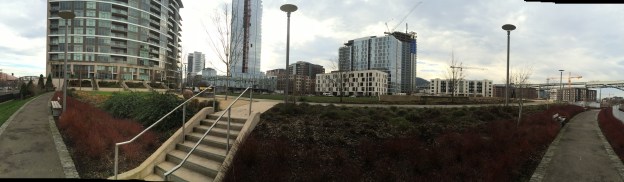
The Park enterance, framed by the four bio-swales (I can’t bring myself to call them ‘water gardens’ as they look very ‘un-garden like’) that take runoff from the adjacent hard surface as well as from the drain system installed across the lawn. They are planted with Betula nigra cultivars along with Cornus stolonifera ‘Isanti’, C. s. ‘Kelseyii and an Iris. As you walk through the Park you will move over eight different hard surface treatments!

The Fields (Click here to see the final design plan), completed in spring of 2013, is Portland’s newest Park in the north end of the Pearl District.   While I was still with Parks I did the horticultural review during the design process and was an on site inspector, periodically, during construction.  New Parks like this one require a huge time commitment by Parks.  Selection of designers, outreach to all of the stakeholders and many other meetings involving more technical aspects of such a project all in an effort to deliver to residents a Park that is beautiful, serves the needs of residents and is affordable in terms of long term maintenance.  Before  the project is offered to the design community functional goals are set for the Park and a general design theme is chosen.  Various firms offer proposals.  Concepts are bandied about.  Eventually, one is chosen.  In this case, the Office of Cheryl Barton, a San Francisco firm, was awarded the design contract (To see what they have to say about it). Continue reading

Pruning: The Aesthetic Choice, Consistency & Good Horticultural Practice

The Pruning Series, 3

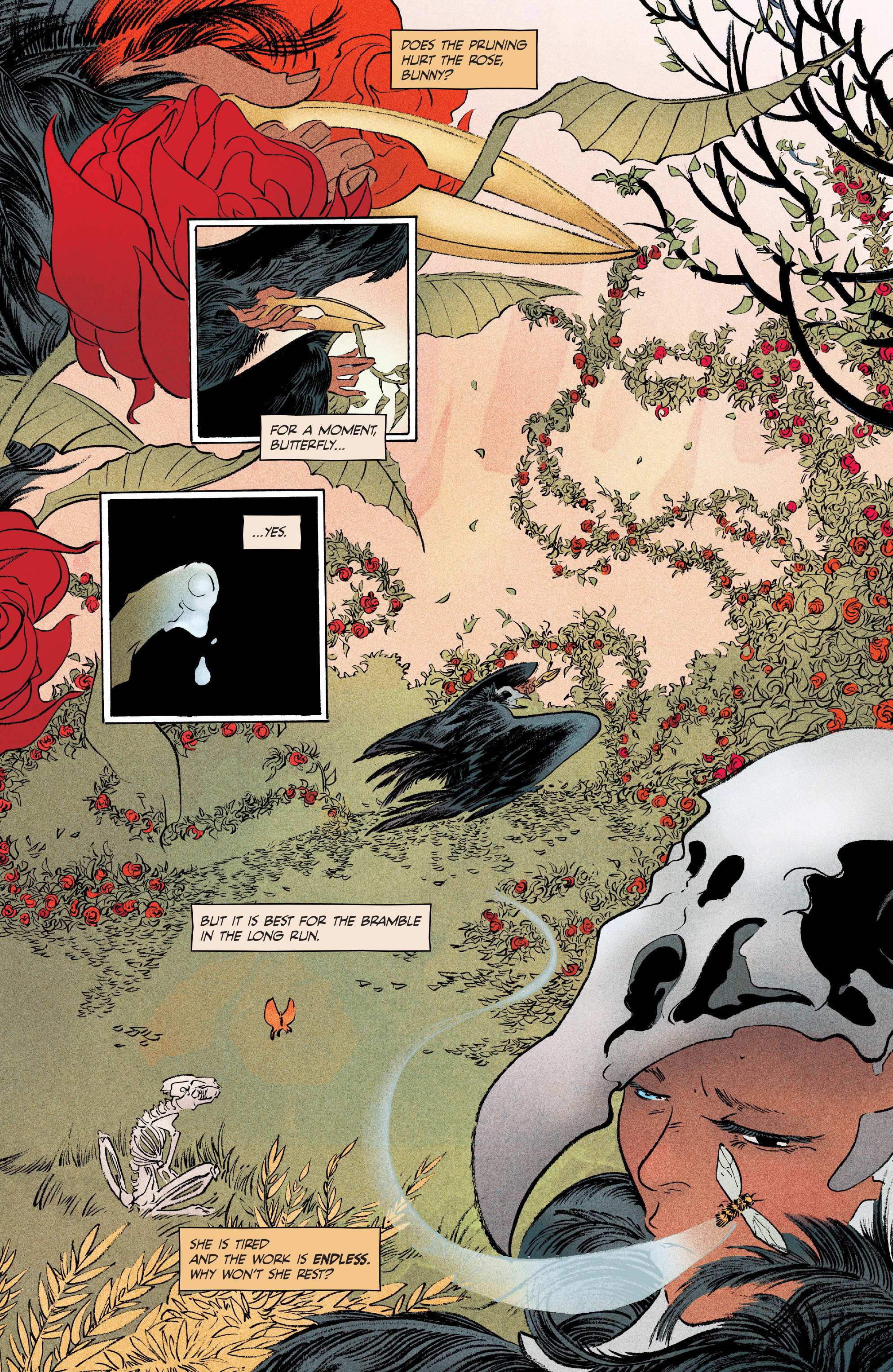
Illustrations from 'Pretty Deadly', written bj Kelly Sue Deconnick, art Emma Rios, colors Jordie Bellaire, Image Comics 2015

Illustration from ‘Pretty Deadly’, written by Kelly Sue Deconnick, art Emma Rios, colors Jordie Bellaire, Image Comics 2015, (007-002).  Straight-up classic art, whether oil painting or illustration, like these two pages from a graphic novel that I find beautiful, involve ‘craft and, an understanding of one’s materials and techniques, that are necessary for any artist to create work. In illustration, like this, the art must resonate with the story to be successful. Horticulture and pruning are no different.

Plants often present pruning challenges to the gardener.  I’ve already introduced the issue of understanding ‘why’ you are choosing to prune, the physical structure of a ‘normally’ growing individual and how it will respond to the cuts you choose to make.  There are several good books out there that discuss how and what constitutes a ‘good’ individual cut and what approach you might take with different types of growers…it should be the goal of any gardener to understand the technical details of pruning, so that they become ‘natural’, reflexive. (In an earlier posting, I discuss pruning tools and provide an introduction to what constitutes a ‘good’ pruning cut.) Like all artists we develop a style that may distinguish us from others.  Even understanding all of this and possessing the technical competencies there are the ‘aesthetic’ decisions the gardener/pruner must make.  Two different gardeners can prune in the same landscape and it can be obvious when they are finished that they have very different aesthetics.  The results can be ‘disjointed’ or harmonious.  Every plant, every branch, every internode, presents a choice and because each individual plant of a given species or variety, though it may grow following a shared genetic code, will grow uniquely in response to the physical conditions it faces…and the damage and pruning it has received over its life.  Like most things in life our control of a plant is limited and the more we attempt to control it the less like itself it will be. Continue reading

Pruning…Why do we do it? Cutting Woody Plants Down to Size

The Pruning Series, 2

IMG_4297

This Fagus sylvatica has been in this pot around 20 years. I grew it from seed 30 years ago from a mother tree in Sellwood that has a canopy 100′ across. It is approximately the same age as the trees pictured below.

I’ve heard it said often enough that trees and shrubs got by just fine for millions of years before we started pruning them, so why do it now?  That’s a good question and if you can’t answer it, you shouldn’t be pruning.  Horrible examples are all around us.  Trees repeatedly stubbed off their natural branching form and elegance destroyed.  Others sporting long scars where someone removed a branch with a single top cut causing the branch to drop pulling a long tongue down the trunk where it was still attached.  Still more with split trunks and scaffold limbs where multiple sprouts, vying for dominance fail and tear down.  Poor pruning has lead to the collapse and premature deaths of many trees and reduced many shrubs to inelegant space fillers jammed up agains buildings.  The first thing you should ask yourself is, ‘Why I’m I doing this?” Continue reading

Choosing Trees for Larger Public Landscapes (and your yard!)

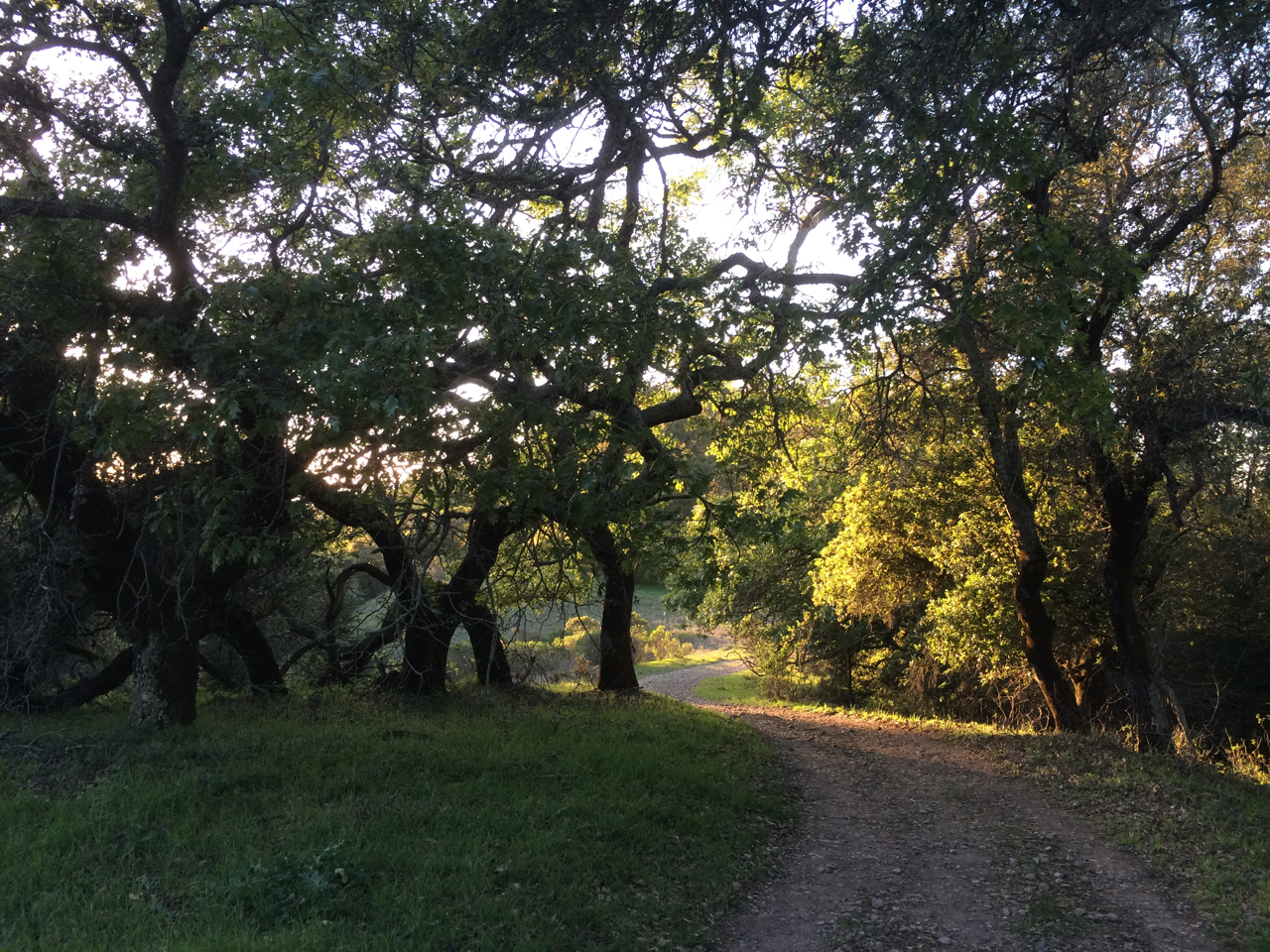
Still one of my favorite Oak photos. This one take in the late afternoon beneath a canopy of Interior Live Oak (I think) at Shiloh Ranch Park, last March.

Still one of my favorite Oak photos. This one take in the late afternoon beneath a canopy of Interior Live Oak (I think) at Shiloh Ranch RegionalPark, near Windsor, CA, last March.

A friend recently asked me if I had some favorite trees that I would recommend for planting on school landscapes, that would be like asking if I had favorite park trees, no I don’t…and I don’t have a list of proven performers either. A planting site being located at a school, only tells me something about the uses/abuses one can likely expect on a site, and nothing more. When we choose plants we need to be paying attention to a lot more than that. Many people are intimidated when it comes to choosing trees, there are so many and potentially, they live so long, growing from year to year…all of this tends to magnify the ‘weight’ of our decision.  People often look for short cuts because there are so many things to keep in mind when choosing. There are two major questions that need consideration first, the site conditions and design, what will the tree have to put up with and what do you expect? Continue reading