Category Archives: Parks

Dry Canyon Proposal: the need for change in maintenance, use and planning

[The following is a piece I wrote and sent to our local Parks staff, its advisory citizens committee, mayor and city manager…I got little back in response. I’ve developed a relationship with one of the city arborists and the park’s planner as well as have met several active neighbors interested in protecting Dry Canyon’s natural areas, several of whom have natural resources backgrounds with agencies. The City has no natural resource or botanical staff. There is no formalized friends group, nor is their an outreach and public education program that addresses these problems and the role of residents in their solution. Signage is minimal and inadequate. Their horticultural expertise would also seem quite limited. This is understandable as the City’s population has grown very rapidly in recent years. The need for such programs and an increase in expertise on staff will only increase as Redmond’s population continues to grow.]


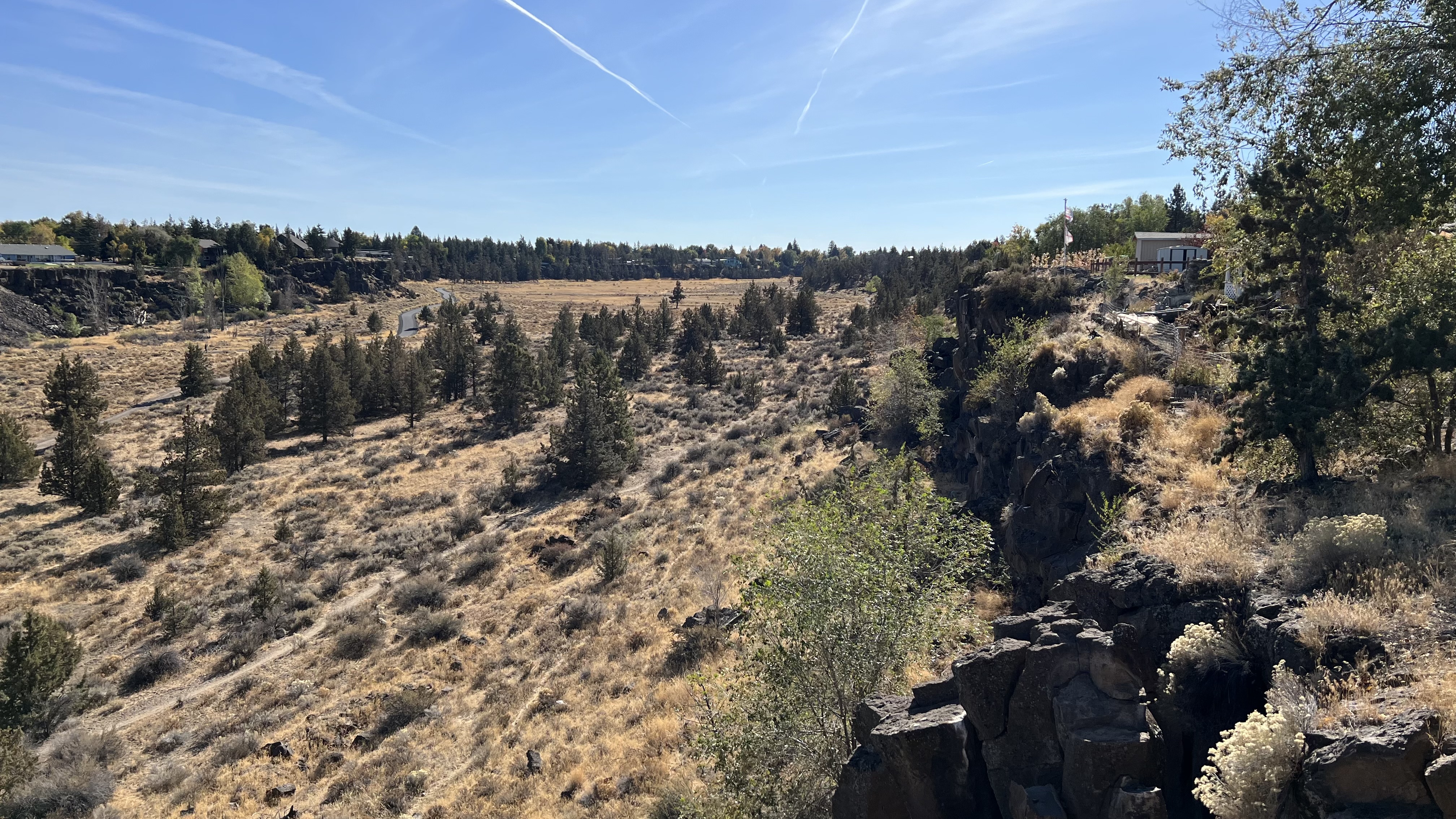
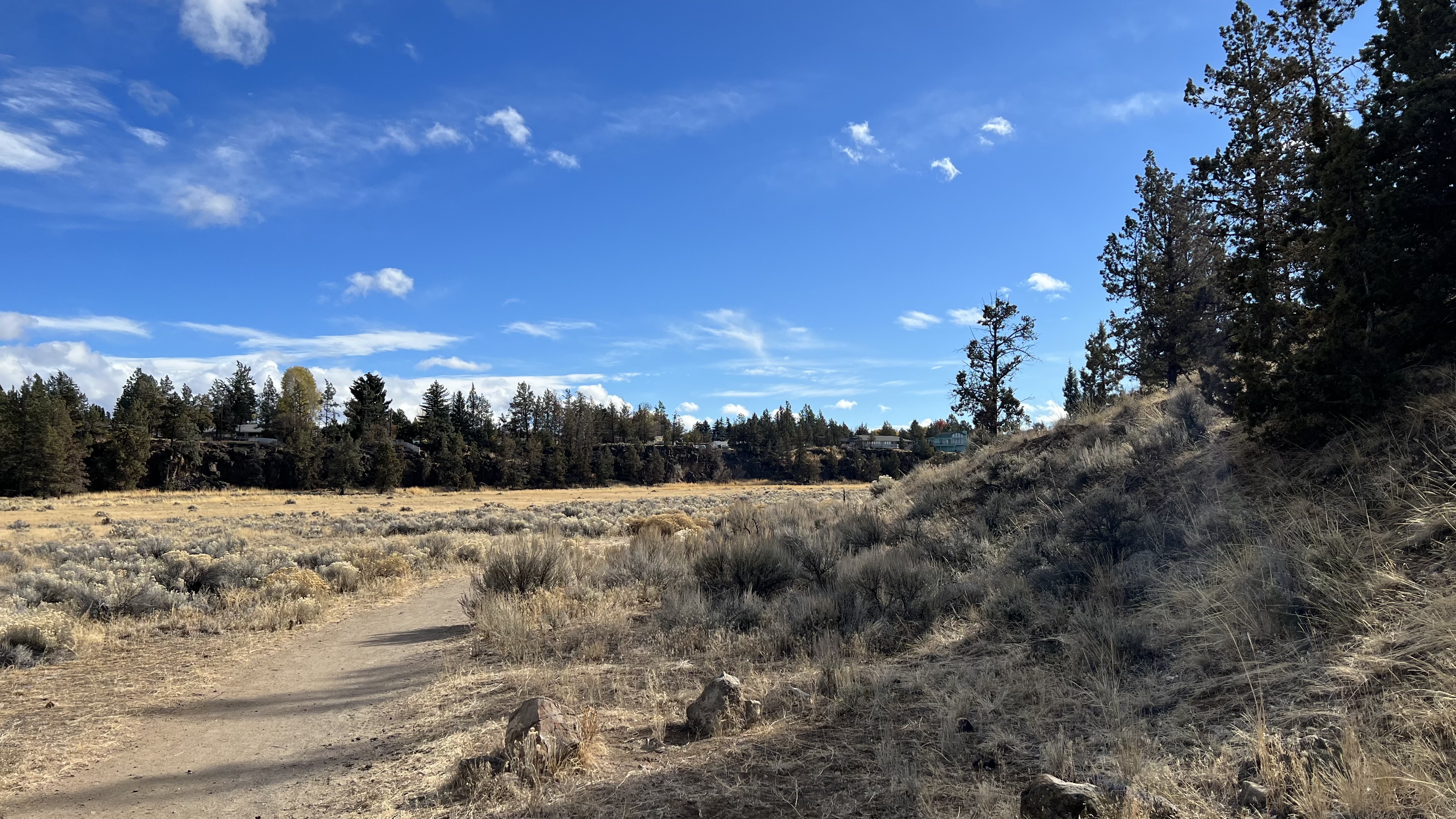
Redmond’s Dry Canyon looking south from the west rim on the Maple Street Bridge. The area in the immediate foreground burned this last summer.

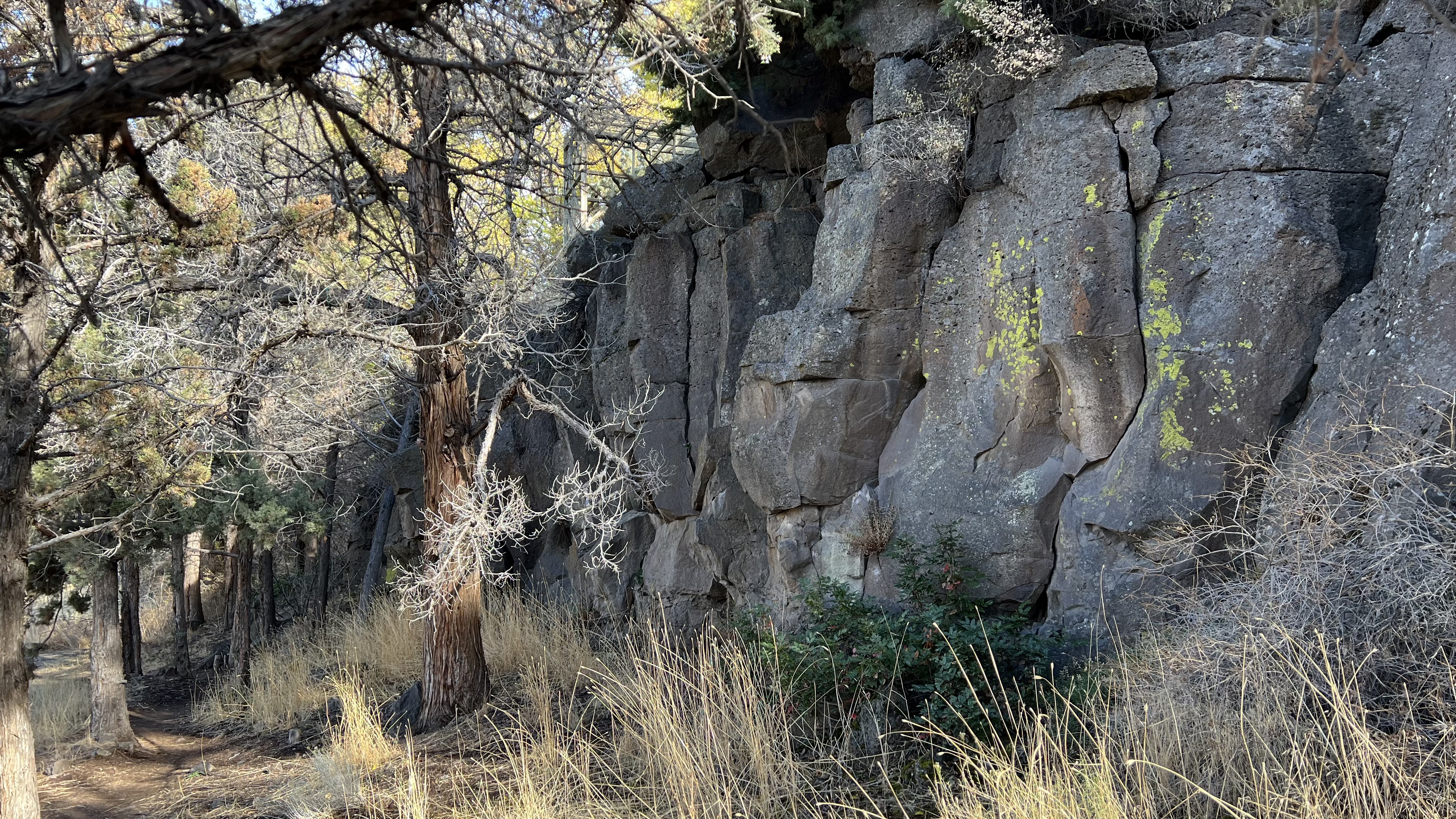
A typical view at the base of a section of relatively unbroken rim on the east side.

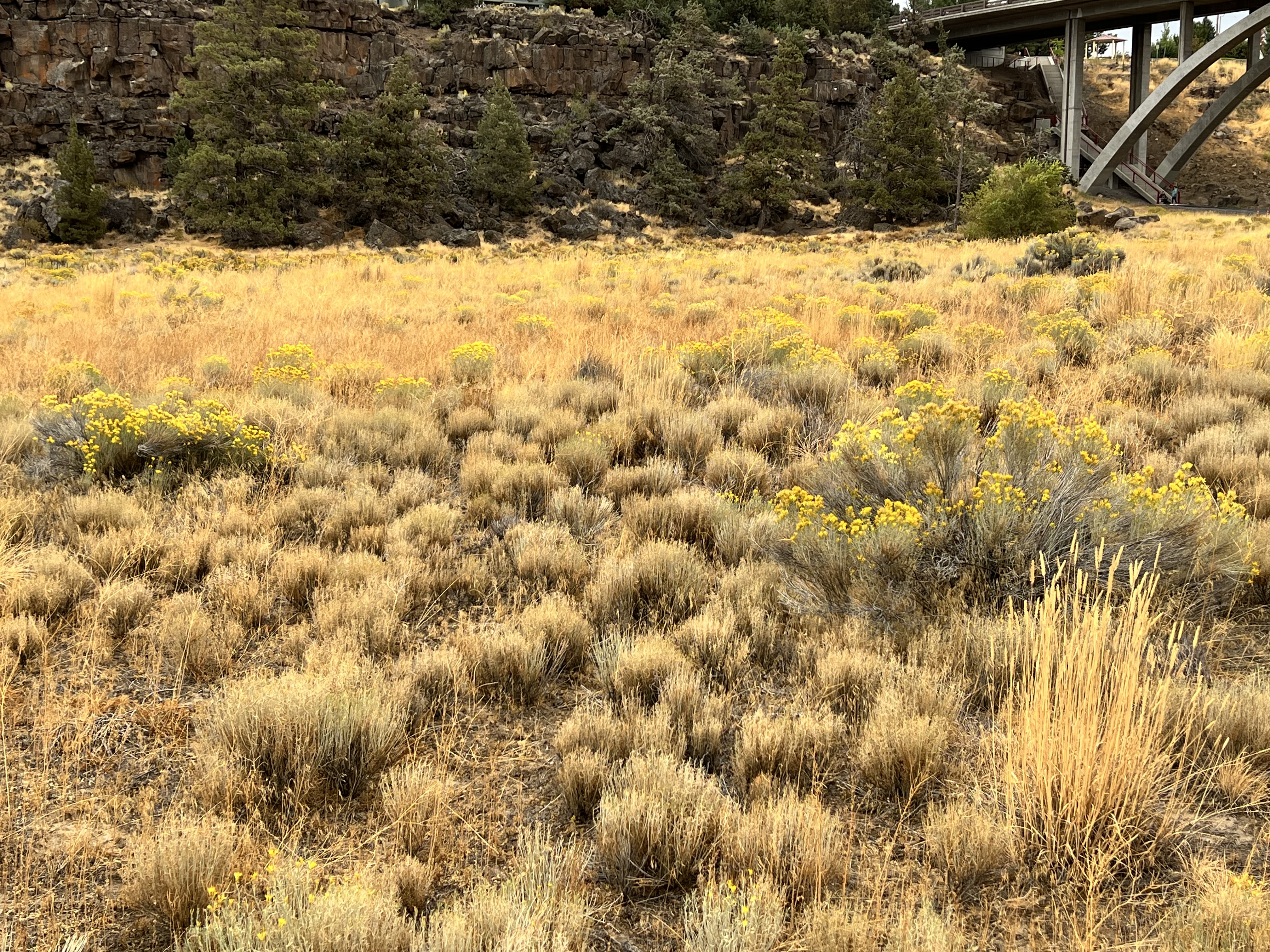
The canyon floor is variable, but as this pic shows, a solid layer of hardened lava underlies what soil is here, either blown in or washed in, a limiting factor of what can grow here. Rabbitbrush is a common and ubiquitous native pioneer.

Match of the canyon floor is recovering from pasture use. These areas have relatively deep soils and are still transitioning with many weedy mustards, annual grasses like Cheat and planted grasses like Crested Wheat and Annual Barley. Native Bluebunch Wheat is scattered as are other natives. Gray Rabbitbrush, a native seral species has moved into much of it, but the weeds are dominant. Sagebrush and Bitterbrush are more at the edges and lower rim areas.

This section of bottomland, former pasture, probably burned not that long ago, has quite a colony of Rabbitbrush coming along, all it would appear of even age, suggesting a fire. Rabbitbrush are early colonizers and ‘prepare’ the way for natives to follow. This is just north of the Maple Bridge.

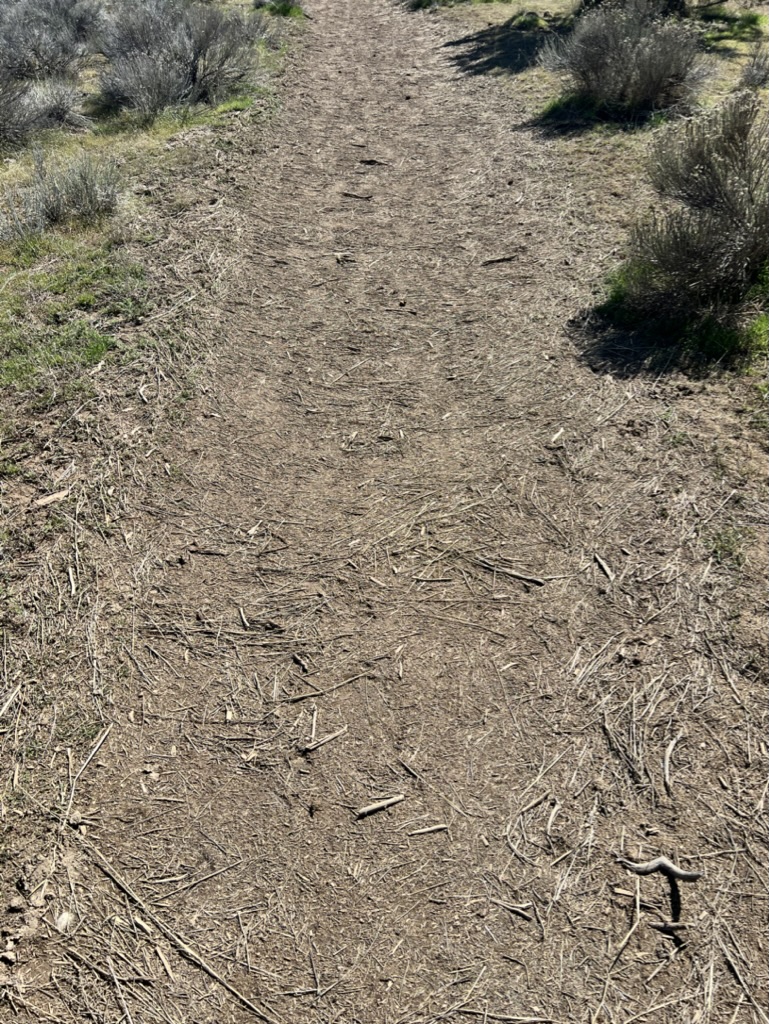
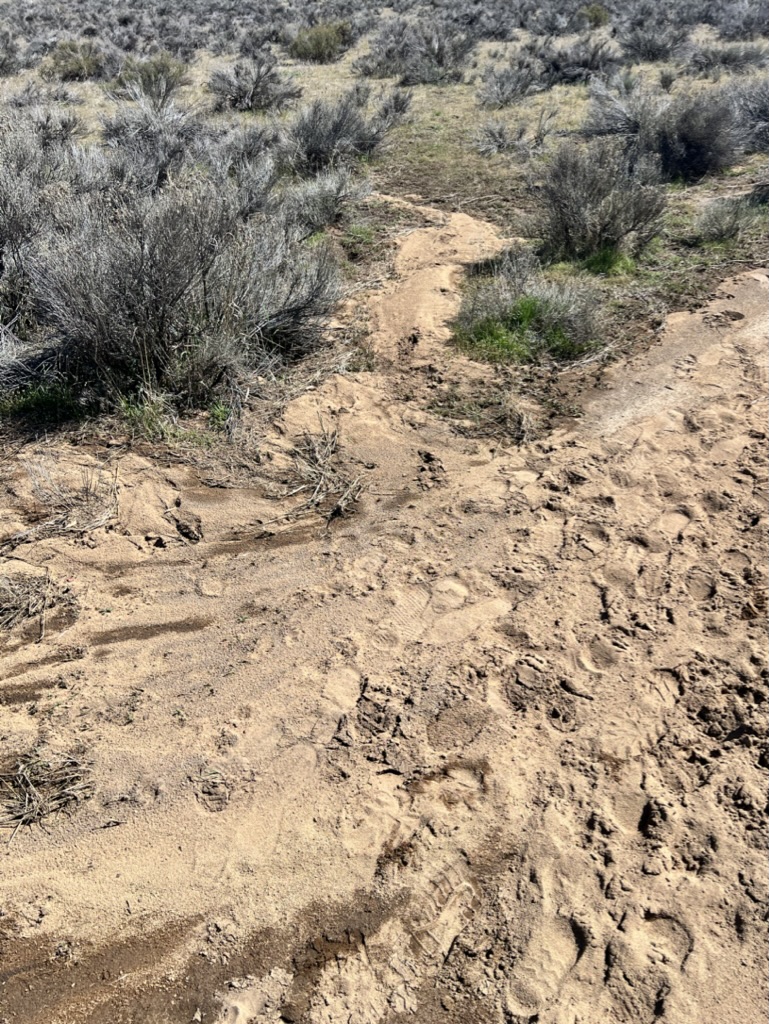
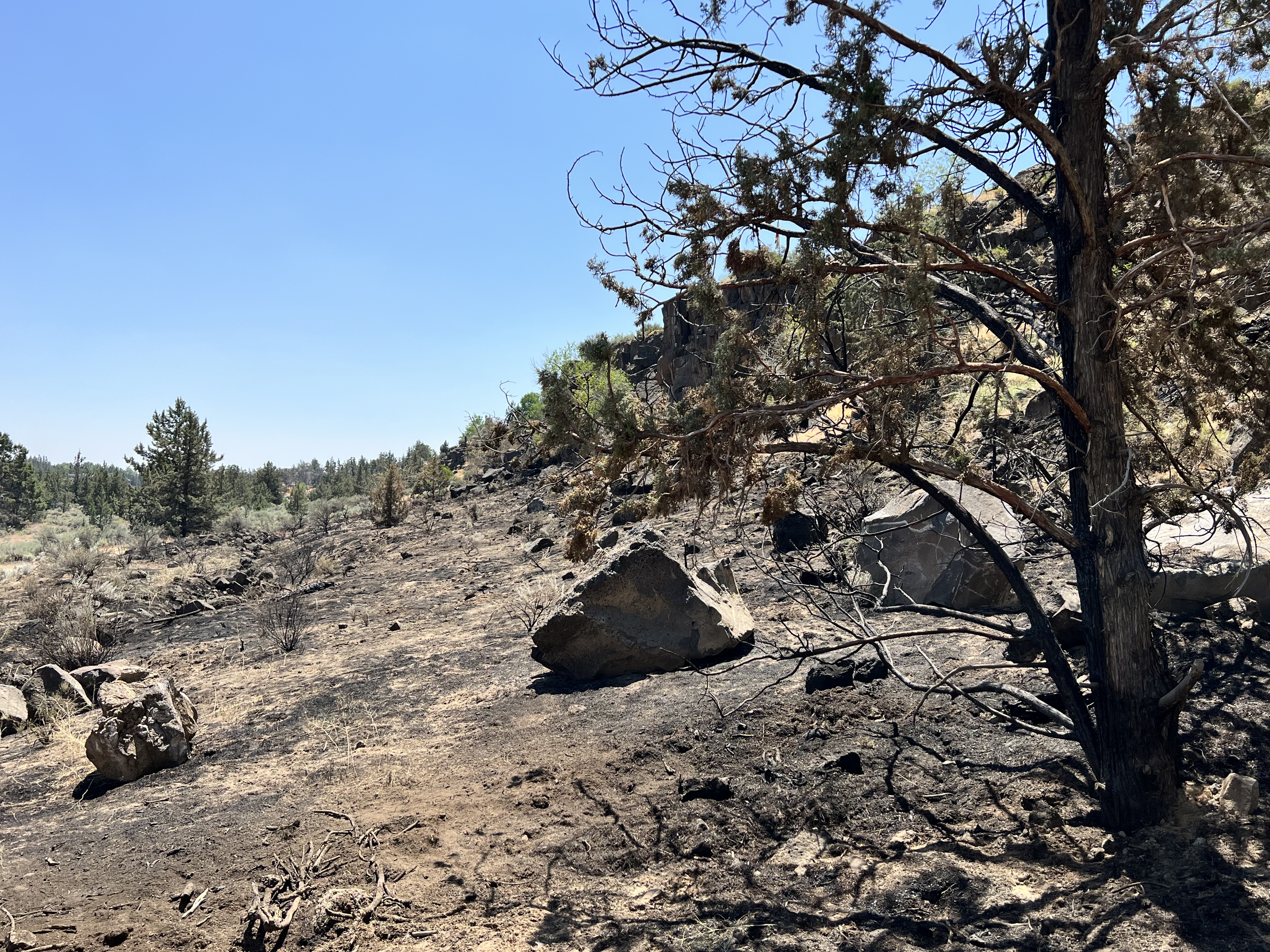
This area, maybe 5 acres, burned in July. It will be interesting to see what comes back and what the City may plant??? Fire kills Sagebrush and Juniper, while it seems to favor Cheatgrass. So far, April ’24, nothing has been replanted. The window for seeding is closed. Rabbitbrush can survive a burn. This site is unfenced, with very fragile soils and we’ve already observed new bike trails in it.

My wife and I are both recent returnees to Central Oregon having both grown up here. We are also frequent walkers in Dry Canyon, a place I spent many hours in playing and exploring as a kid in the 60’s. Redmond has changed a lot over the intervening years…change that continues apace as it grows. I’m not going to whine about the ‘good old days’ and things lost. Much of the change I welcome or at least accept (We did move back!), but population growth, in addition to bringing along economic vitality and stability, new and enriching opportunities and a more diverse community, increases the ‘pressures’ on the naturally limited assets that largely define the place and attract residents. I’m speaking here of the natural landscape, its features and the opportunities which it affords us for recreation and quiet enjoyment. Realtors were once fond of saying that no one is making new land, as a prompt for buying…it is a fixed and limited quantity. This limitation has profound implications for a growing population. We have far more people today ‘enjoying’ a limited, and increasingly over utilized landscape. Continue reading

Knapweeds in Redmond’s Dry Canyon and the Pursuit of a Healthy Landscape

Redmond’s Dry Canyon looking south from the west rim on the Maple Street Bridge. The area in the immediate foreground burned this last summer.

If you garden, or maintain a landscape, you come to understand that not all weeds are the same. Each will have its own ‘strengths’, or perhaps you might call it ‘virulence’. Any particular weed, just like any other plant, will respond ‘positively’ to supportive growing conditions, conditions which often closely align with those which exist in its place of origin. Plant explorers and nursery growers are always looking for ‘new’ plants for landscape use. in a way, they have to walk a fine line. They must find plants, that with reasonable effort on the part of the gardener, can thrive across a range of conditions, unless they are looking for specialty plants, for narrow, niche, markets. The introduction of new plants must be somewhat measured, our enthusiasm tempered, because plants which are too adaptable, too vigorous, may possess the ability to escape our cultured gardens and find a place in the surrounding, uncultivated, landscape.

For Central Oregon, when we look beyond our regional natives, we must keep this in mind. Exotics from similar growing and climatic regions around the world offer both promise and threat. We want our plants to be successful, but not too. Sometimes through the process of trade, the movement of livestock and agricultural products, particularly aggressive species hitch a ride. A few weed seeds can be easy to miss. If they are aggressive enough and go unnoticed, a distinct possibility, it is likely that they wont be detected until a sizable local population asserts itself…and if no one is watching, that can be a fateful error. One group of plants, with many wonderful possibilities, also include species which can be exceedingly problematic here in Central Oregon, these are from regions sometimes referred to as Steppe. Continue reading

Spruce Park, Redmond’s Newest Park and Our Neighbor: a horticultural critique

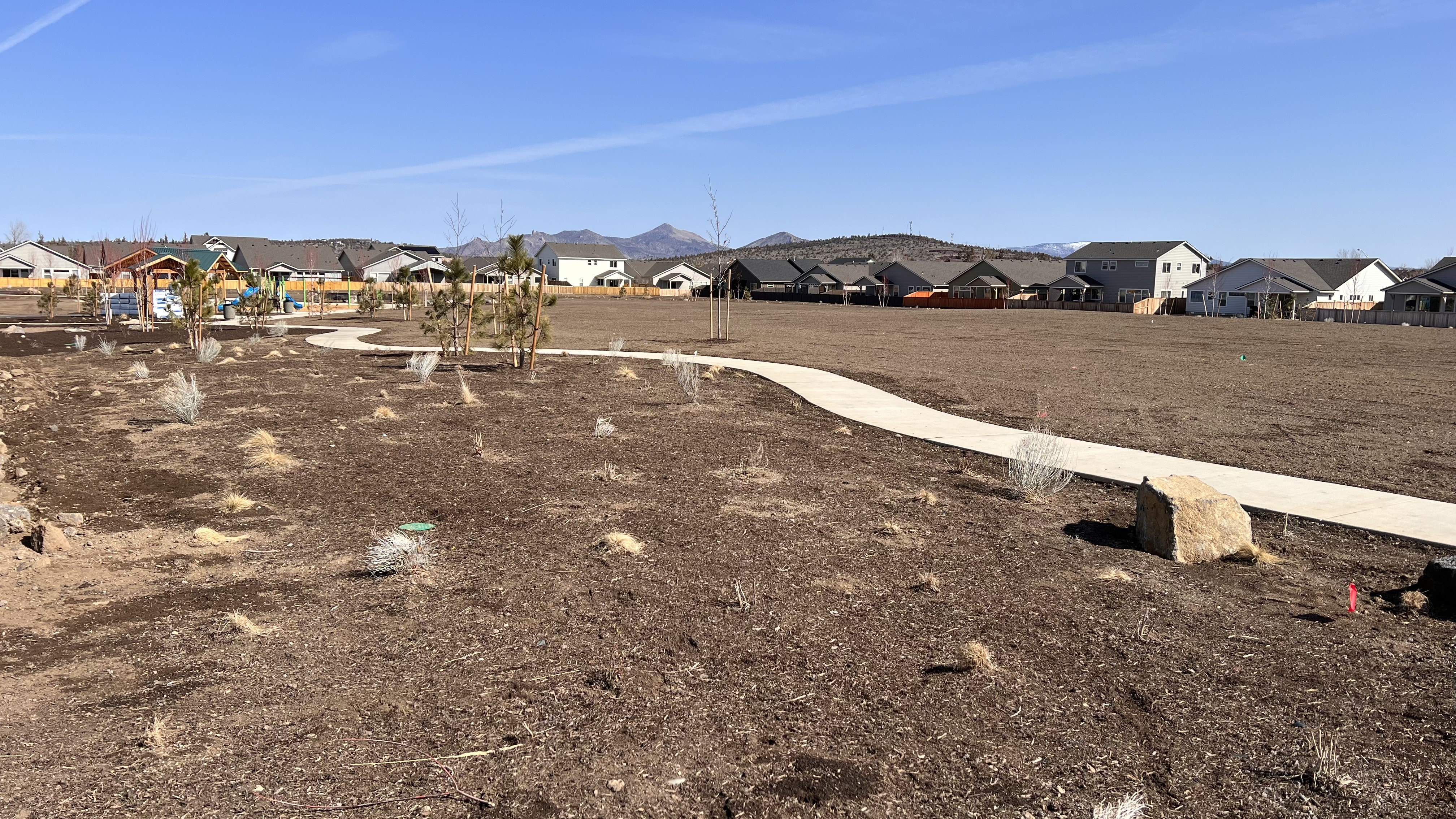
Redmond’s Spruce Park looking NNE from the SW corner toward Gray Butte and Smith Rock in the background. The border beds which follow much of the loop path are ‘native’ plantings according to the conceptual plan. It is common to claim that most of the plants are natives in designed natural areas, but native is not synonymous with ‘natural’. Although natives are used here concessions have been made including such plants as Echinacea purpurea ‘Pow Wow Wildberry’ and Rudbeckia ‘Goldsturm’. In a strict sense Ponderosa Pine aren’t native to this immediate locale either, they require more precipitation than we normally get and the Autumn Blaze Maples are a hybrid of two northeastern North American species.

A landscape, in nature, is a whole, functioning system, capable of perpetuating itself, through out the seasons and years, relying entirely on its own conditions and the cycling of energy and resources occurring on and within it. This is also the definition of a modern sustainable landscape. Ideally they require no inputs or energies supplied from offsite aside from the sun, precipitation and the normal cycling onsite of nutrients and water. A human made, contrived landscape, as all of those built by us today are, may be ‘judged’ by how well they function on ‘their own’, by how well they fit this ideal. Labor and outside inputs necessary to maintain a landscape are then indicators of how out of balance, how far from ‘ideal’ nature and genuine sustainability, a landscape is. A contrived landscape, which ignores the relationships integral to a healthy landscape community ‘demands’ more and more maintenance and support. Given its design and use, a landscape which ignores its site and relationship requirements will deteriorate from the intended design, losing to death component plants while gaining, increasingly, more unwanted available weed species. Design, conditions and use are essential to determine, in this sense, what a ‘good’ landscape is. Continue reading

Gardening in Public, Charismatic Mega Flora and the Need for a Public Horticultural Intervention

We ‘need’ charismatic mega-flora today, plants that scream out to even the most plant blind of us to take notice, those that create such a sudden and uncontrollable ‘stir’ within us that our simple glimpse of them breaks our momentum, our chains of thought, interrupting whatever we’re doing in that moment bringing about a reflexive interjection, cause us to take notice, create an uncontrollable urge to stop what we’re doing and come back for a closer look!  To tell our parents, partners or friends, to drag them back, for a repeat performance or to see if what we saw is really there or merely a mistake of perception.  And they do come back.  I see them every day, sometimes dragging disinterested friends to see this unimaginable impossibility.  I hear them when I’m out working in the private part of the garden with excited voices, sometimes expletives, “Look at this ‘F@#$ing’ thing! Can you believe it?”  I love this. They’ve come for ‘Monte’!

Continue reading

The Carrizo Plain National Monument: Super-bloom 2019, our vacation early in the cycle

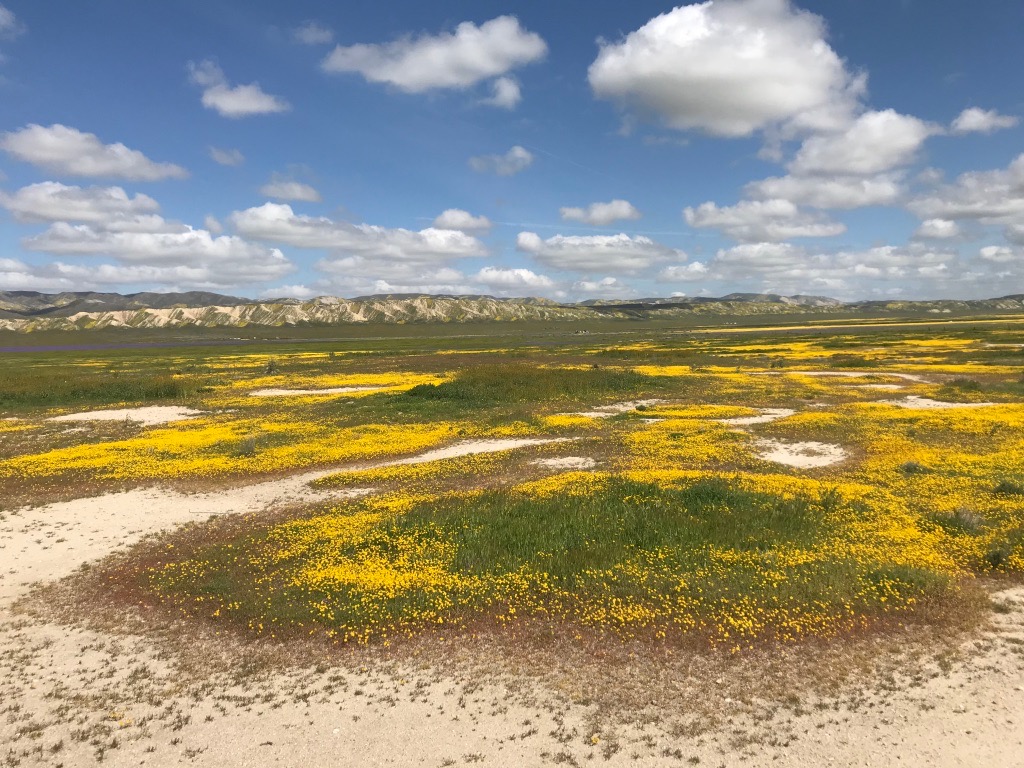
The soils here, on the bottom of the Plain, are quite alkaline and nutritively poor. These bare areas occur almost randomly and aren’t the result of foot traffic. While technically termed a grassland, across much of the Monument grasses appear to be a minor player, occurring much more frequently lower on the framing hills. It makes one wonder what do the cattle eat? I imagine much of this was never farmed either. Dry land farming was always a chancy endeavor in the West. Places like the Millican Valley, east of Bend, OR and points south, were the sites of many a failed dream and such farms, after much promotion and the aid of several moist, milder than normal years. I don’t know the history of dry-land farming on the Plain, but it must have been difficult.  Semi-arid grasslands in general are fragile landscapes. Plowing them can lead to a rapid loss of organic matter and with it the ability to retain soil moisture reducing one’s chances for success even more. The native people left here after having been resident here for centuries. Is it drier today???

Why go visit the Carrizo Plain National Monument?…it is the last, significant, mostly intact, natural grass land in the state of California and puts on a floral performance that can be a showstopper when weather patterns produce sufficient rain over winter and early spring.  This area was largely overlooked as the much larger Sacramento, San Joaquin and Salinas Valleys, also natural grasslands, attracted the interest of agriculture and settlers.  The intensity and scale of agriculture in those valleys is mind-boggling, almost numbing.  Today the big three support only small remnants of their former native biotic communities…much like the Willamette Valley here in Oregon…but Carrizo is different, largely because of its geology and elevation, two factors which strongly effected both the soils and weather, making it less attractive to agriculture and isolating it from markets. Continue reading

The Lower Deschutes River: the Incursion of Invasive Plants and our Failure to Responsibly Maintain Native Plant Communities

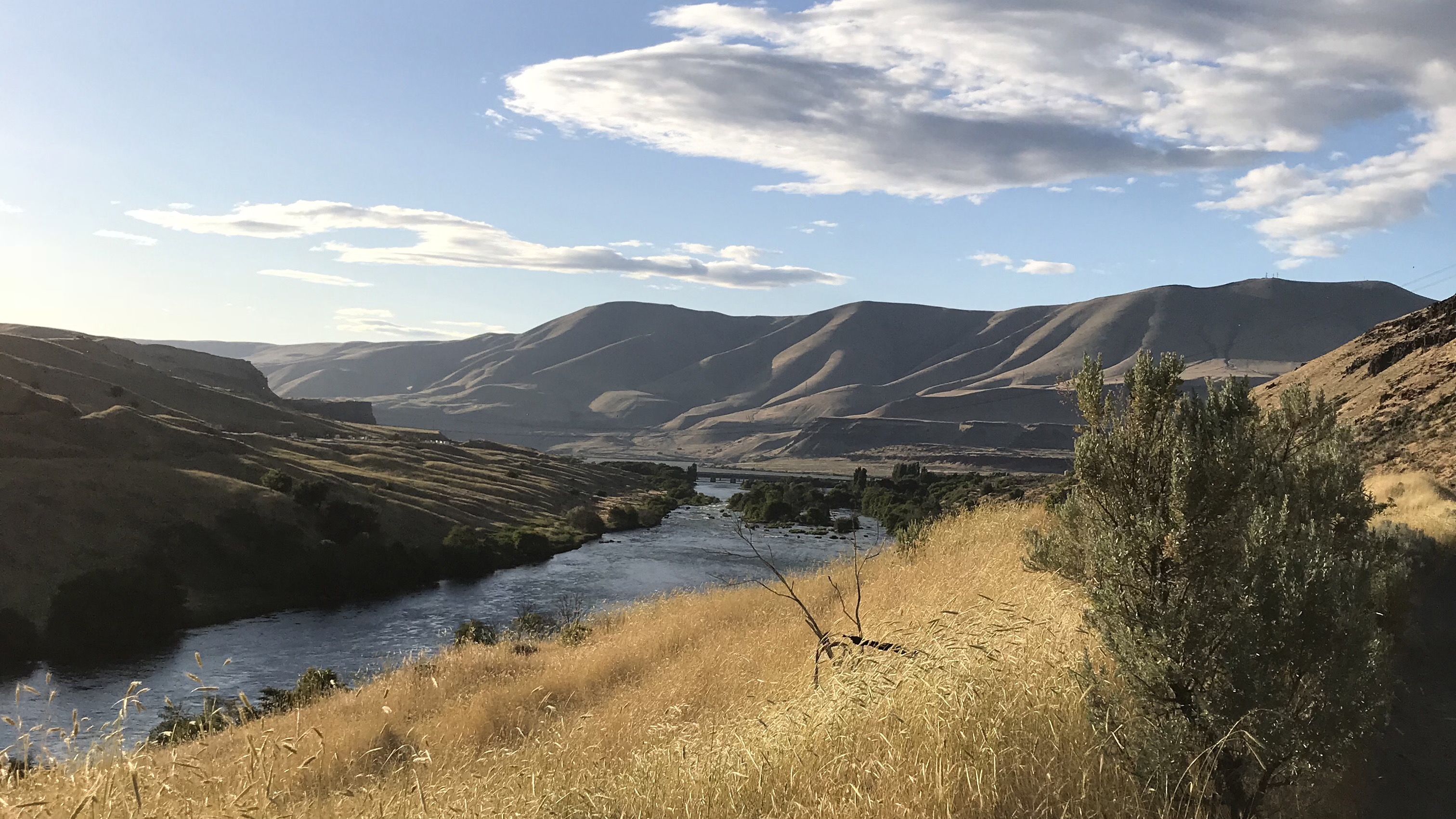
This picture should give anyone more than enough reason to visit here, the Deschutes sliding out its mouth into the Columbia with the Washington side of the Gorge in the distance, the low angled early evening sun illuminating everything sharply.


[As I go over this post yet again, July 21, the 80,000 acre Substation Fire is still burning across canyon and wheat country here.  Included in the blaze are the 20 miles of the Lower Deschutes canyon down to the campground at the confluence with the Columbia.  Much of this burned down to within 2′ or 3′ of the riverbank including the historic Harris Ranch buildings.  So, when you look at all of these pictures, with the exceptions of where the fire hopped and skipped, everything is charred.  The Oregon Wildlife Federation, formed in the 1980’s to purchase and protect this portion of the canyon, has stepped up with $100,000 to help the area recover.  It will take considerably more especially if there is any intention of making headway regarding the spreading invasives problem.]

[Now, another 2 weeks later more massive fires continue to burn across the dried up West that has just experienced another record breaking month of heat, while the president goes on ‘bleating’ and blaming it on our ‘bad’ environmental laws and all of the water we’re diverting into the ocean!  ‘F’ing! moron!]

The last time we came here was eight years ago in December.  My memory of then is much like the experience on this evening…only it was clear and cold.  The light was similar except that then the low angled sun was due to winter, with that season’s urgency, not a late Spring evening like this outing.  This time it is warm, camp is comfortable and nearby and the greens are still gathered around the river and the still moist draws and seeps.  On that day we’d gone to Hood River for my birthday, to get out of town and there was a break in the weather so we drove here to these trails at the mouth of the Deschutes, hiked along the river, returning on the upper springs trail.  Winter or summer, green only sticks around a little longer than we do, before it retreats…life is shier here, tough, but shy.  The starkness of this landscape should be read as a warning to visitors, this is no easy Eden.  Life is earned here or at least requires a strength, patience and frugality that many don’t have.  This is much the same for people as it is for wildlife and plants.   Them that don’t, can’t.  That’s why it may be surprising to some that such a place has a problem with exotic invaders.  What could possibly look on places such as this as ‘favored’?  Well, Central Asia, especially its Steppe, with its continental, cold and dry climate containing many species that see such a place as this as home, or even better, without the competitors they faced back there.  The temperature can swing widely here on any given day while the seasonal extremes can vary as much as 125ºF from high to low.  Relatively few plants can thrive in this.  The dry summers with their very limited and sporadic thunder showers, combined with the ‘wet’ winters, total only 10″-12″ or so of precipitation, plus or minus, is another major limiting factor.  Of course, near the river, the moisture problem is moderated  and a broader range of invasives can find a ‘foothold’.  We, as a people, have ‘brought’ these weeds here with us in our travels, often as a result of our commerce.  Those that have made it here are spreading.  Too many prosper. Continue reading

Cottonwood Canyon on the John Day River: Place, Plants and Experience

IMG_1077

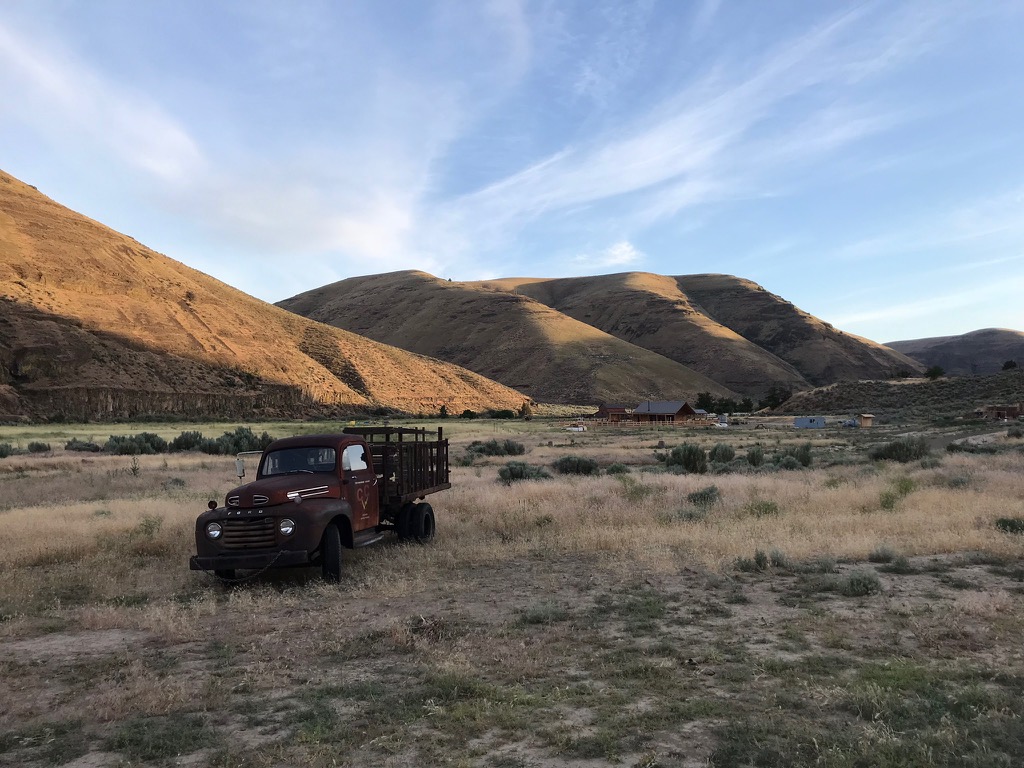
Cottonwood Canyon State Park, near the campground, looking upstream toward the old Murtha barn and common buildings, the evening sun climbing the worn canyon sides. The Park retained some of the old ranch equipment.

Massive lava flows pushed around the lower John Day and Deschutes rivers over the course of several million years leaving them to find and carve new routes, often next to the very ‘plugs’ that filled their former canyons!  Today, deep below the layers of hardened basalt that form the palisades and ramparts projecting out in tiers from the smooth full curves that rise above us, we look through 15 million years of accumulated history.  The fine grained basalt shatters and fractures in line with their mineral structure under the forces of water, weather and gravity.  Sagebrush and grasses dominate revealing an oddly ‘netted’ pattern across the sloping canyon hillsides, lit by the often harsh sunlight, illuminating some kind of subsurface movement of the thin soils that soften the slopes.  The ‘net’ looks as if it had been draped across the land then stretched sideways catching and snagging on what lies beneath in a never the same, but consistent repeating pattern.  It shows best when the angle of the sun comes across the pattern, not when it hits it head on or when clouds make it too diffuse.  Coarse falls of shattered basalt spill down to the canyon’s bottom always seeking their angle of repose.  The sagebrush steppe plant communities cover the surface and in their richness and vigor speak to the soils beneath.  Along seeps and drainages cutting verticallly down the canyon’s face, spring lasts weeks longer, and species crowd in that you won’t see other than near the river.  The surface botanical palette in this way reveals what lies beneath…if one knows what to look for.  Cottonwood Canyon State Park is a great place to observe this. Continue reading

Hiking at Riley Ranch Nature Reserve and Along the Deschutes River

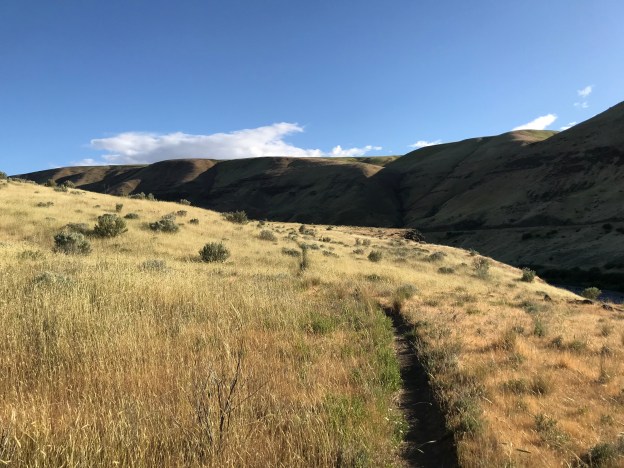
It’s the edges, the margins, that always contain the most diversity.  Large expanses of unbroken landscape take a portion of their character from their scale, a vastness, that the uninterested can often view as monotonous.  Seemingly endless expanses of ocean, desert, prairies even forests, can lull some into indifference, a kind of blindness, in which they lose interest and fail to see the intricacy and richness of that which surrounds them….By overlapping two different landscapes places can take on a complexity that neither has alone…and may even arouse many of those inured to the natural world surrounding them.  Two different landscapes sharing a common edge can form ecotones, where each landscape contributes species in patterns not found across the vastness of each alone.  Cut a river through an arid landscape and it becomes altogether different often with stark changes within a few feet.  Such is the arid canyon landscape of the Deschutes River immediately north of Bend, OR.


Continue reading

A Healthy Lawn, Drought Stressed Turf and a Meadow: Finding Our Way to a ‘Better’ Landscape

IMG_9080

A golf course is dependent upon a healthy, vital and uniform turf. It directly influences a course’s playability. Even if you don’t play golf, the landscape can evoke a calm with their pastoral, expansive lawns and views. This is a view down the 14th fairway at Eastmorland Golf Course. Imagine this drought stressed and brown overwhelmed with weeds…both the play and the ‘feeling’ the landscape evokes will be badly degraded.  The perimeter rough areas receive no water and minimal maintenance. To the left is a swath of Blackberry. Other areas are over grown with weeds with fence lines draped with the invasive Clematis.  Priorities are one-sided.

[The world is like a ball of string…pull on the loose end available to you, and you pull on the entire thing!]

Portlanders, Oregonians, often promote ourselves as being ‘green’ leaders.  Cleaning up the Willamette, the Bottle Bill, preserving our beaches as public property, state mandated land use planning, bicycling, recycling, mass transit…and it’s an apt description…to a point.  Combine this with our relatively low population, our huge, diverse and beautiful natural landscape, our progressive ‘weirdness’, and we are firmly on the national map, the envy of many places and a beguiling destination for those who find themselves looking for the laid back, ‘cool’ place, to be.  Our environmental righteousness is intoxicating and clouds our own vision of where we are and the work to be done.  A steady stream of new arrivals brings with them their own visions of Portland, based more on their own desires and marketing efforts than the on the ground reality, skewed by tinted glasses of Portlandia’s popularity, our own boosterism and the ‘boom’, probably transitory, commitment that big money has showered upon us.  Our little town is not what it once was, if it ever was.  But this is the nature of any place, it is many things, often contradictory, when looked at by its many very different inhabitants with their unique history’s and perspectives. Continue reading

What to do about Bamboo?

[Please note that I wrote this in 2004 as an article in the HPSO Bulletin.  A recent FB posting has prompted me to revive/revise and repost it here.]

My first significant relationship with a bamboo,15 years ago, (this was the summer of ’89 when we moved into our current home) was a fatal one.  Phyllostachys aurea, Golden Bamboo.  I had heard all of the usual stories, yards lost, asphalt heaved and cracked, good neighbors gone bad.  Our new house confronted me with several problems, that I knew would get worse if I put them off.  It was another example of a homeowner picking the wrong plant for a screen, or failing to take the precautions to contain it.  With my limited knowledge and biases I had no doubt about what I needed to do.  I got my shovel and chased every rhizome down.  I was thorough and a good hunter, none survived. Continue reading