Category Archives: Natural Areas

Knapweeds in Redmond’s Dry Canyon and the Pursuit of a Healthy Landscape

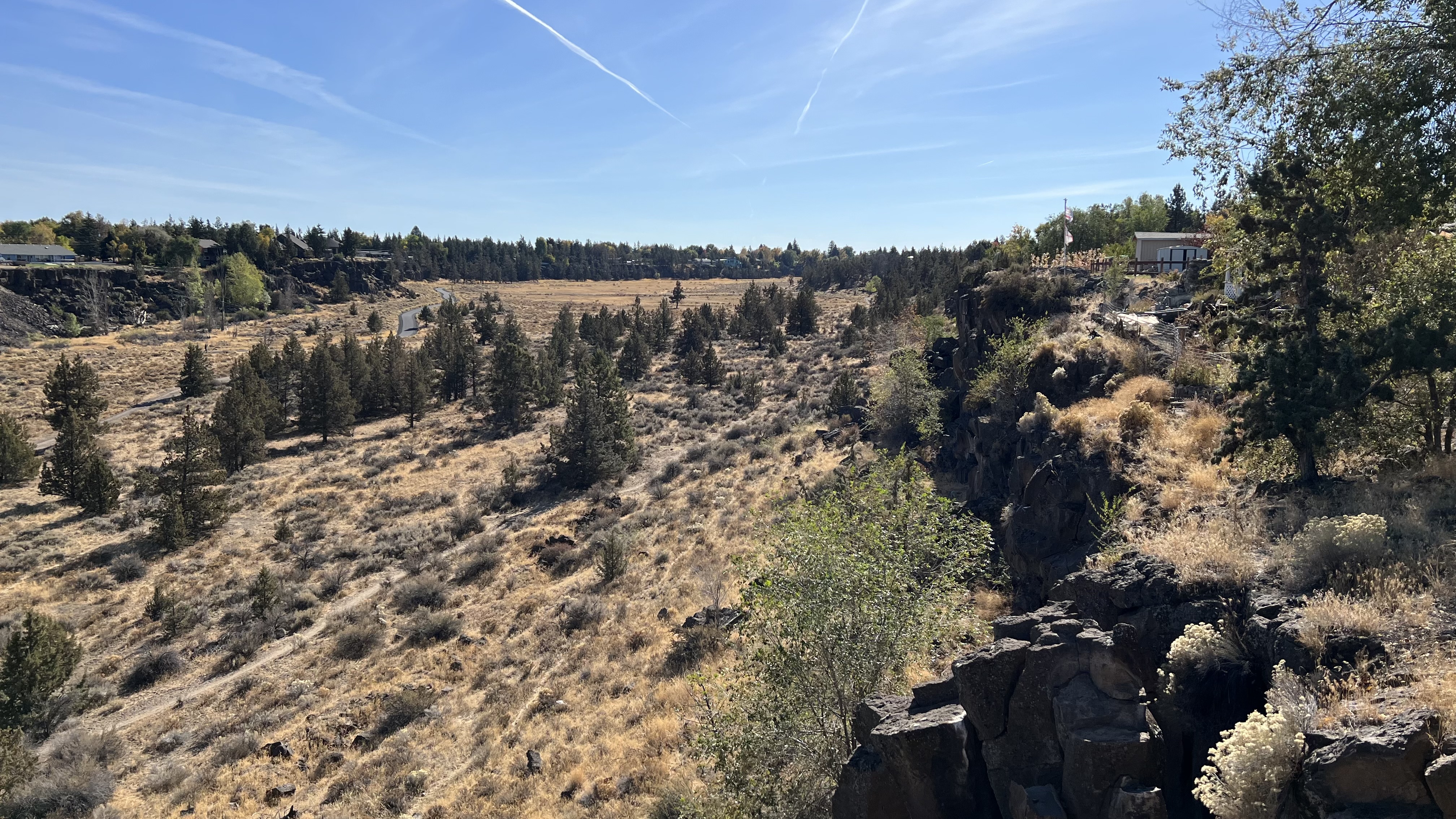
Redmond’s Dry Canyon looking south from the west rim on the Maple Street Bridge. The area in the immediate foreground burned this last summer.

If you garden, or maintain a landscape, you come to understand that not all weeds are the same. Each will have its own ‘strengths’, or perhaps you might call it ‘virulence’. Any particular weed, just like any other plant, will respond ‘positively’ to supportive growing conditions, conditions which often closely align with those which exist in its place of origin. Plant explorers and nursery growers are always looking for ‘new’ plants for landscape use. in a way, they have to walk a fine line. They must find plants, that with reasonable effort on the part of the gardener, can thrive across a range of conditions, unless they are looking for specialty plants, for narrow, niche, markets. The introduction of new plants must be somewhat measured, our enthusiasm tempered, because plants which are too adaptable, too vigorous, may possess the ability to escape our cultured gardens and find a place in the surrounding, uncultivated, landscape.

For Central Oregon, when we look beyond our regional natives, we must keep this in mind. Exotics from similar growing and climatic regions around the world offer both promise and threat. We want our plants to be successful, but not too. Sometimes through the process of trade, the movement of livestock and agricultural products, particularly aggressive species hitch a ride. A few weed seeds can be easy to miss. If they are aggressive enough and go unnoticed, a distinct possibility, it is likely that they wont be detected until a sizable local population asserts itself…and if no one is watching, that can be a fateful error. One group of plants, with many wonderful possibilities, also include species which can be exceedingly problematic here in Central Oregon, these are from regions sometimes referred to as Steppe. Continue reading

On Weeds, Disruption and the Breaking of Native Plant Communities: Toward a More Informed Working Definition of Weeds

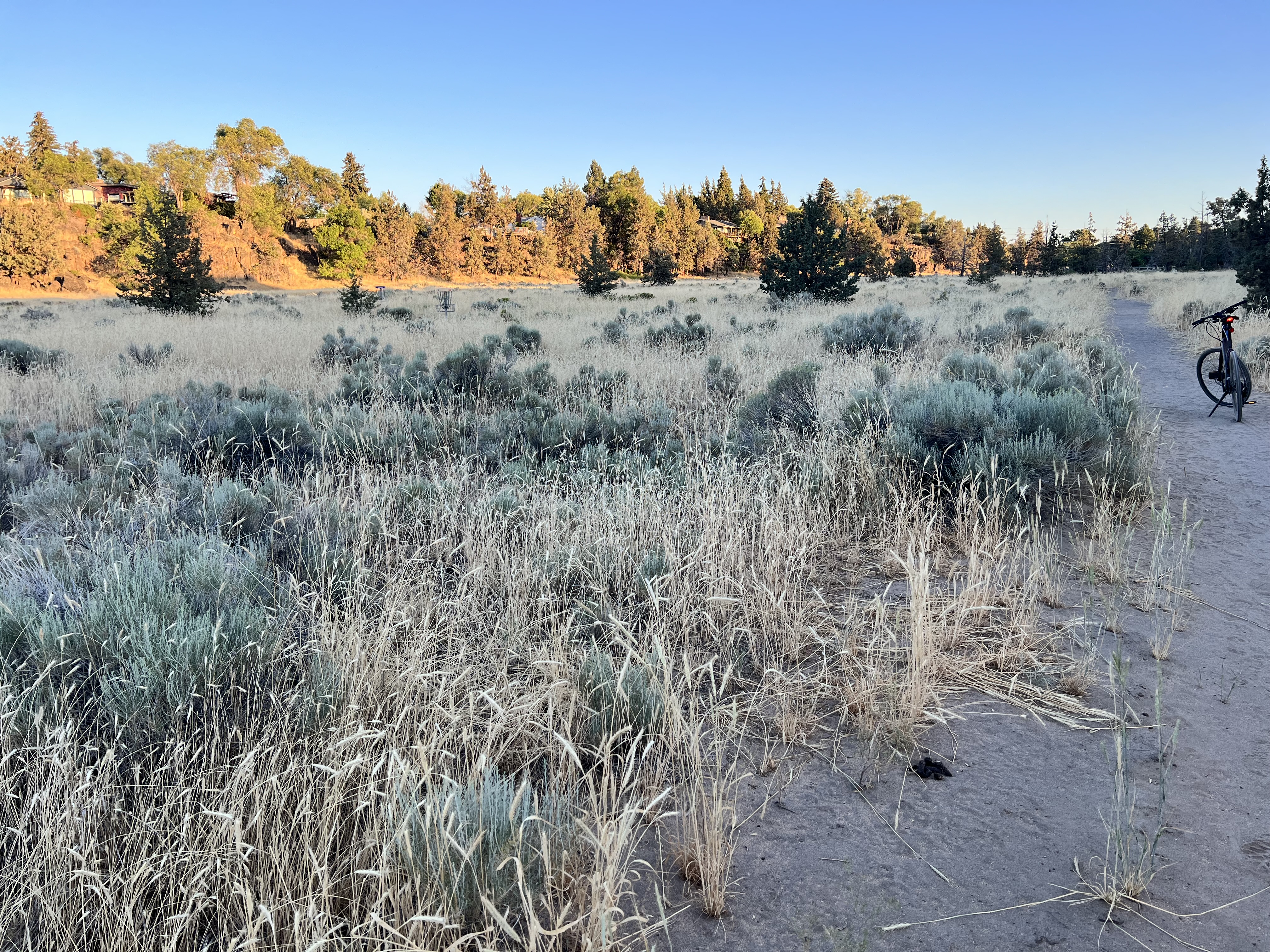
The bottom land in Redmond’s Dry Canyon was used for decades as low quality pasture, the native community pretty much obliterated. Those areas with surface rock are more likely to retain more of the original plant community, although Cheatgrass has invaded much of those areas as well. The is looking southerly over one of the larger ‘pasture’ areas near the disc golf course. There is very little Cheatgrass through this section south of West Rim Park. It includes a few native seral species which typically occupy disturbed sites as a site transitions, including Gray Rabbitbrush you see here. Found in this area too is Secale cereale, Annual Rye, a non-native, which appears to have been planted along more formal paths to limit Cheatgrass spread(?).  Junipers are moving in. Sagebrush hasn’t yet.

It is commonly said that a weed is a plant out of place…and of course ‘we’ are the one’s who decide this. Some will try to argue that there are no weeds, that all plants belong and if we only left weeds alone landscapes would reach a balance on their own. If one’s time frame is long enough this may be the case, though this will take considerably longer than one of our lifetimes, and then there is our inability to actually leave landscapes on their own, or to at least consciously moderate our disturbance of them. Weeds are plants. They are not a separate classification of plants. They are plants removed from their places of origin and released into another where they have competitive advantages. Most people still simply tend to refer to plants they don’t like or want as weeds. These positions are at odds with one another. This leads to confusion and a lack of clarity, undermining any urgency to take action.

Weeds have become ‘personal’, their status a matter of ‘opinion’….A weed is a weed only if “I” agree that it is, or perhaps some ‘expert’, such as when agricultural scientist identify them as an economic threat to farms and label them as ‘noxious’. Without agreement and urgency there is a tendency to do nothing about them. Plants in general are attributed little intrinsic value. For many people they are just there. Native plants we vaguely understand as belonging to a place, but most people would be hard pressed to identify and name many at all. Quite different species are often lumped together, their relationships unnoticed. Natives are reduced to being ‘background’, their status reduced to decoration, attractive or not, a ‘space’ filler, perhaps a hinderance to what we would chose to do with a place. Continue reading

Spruce Park, Redmond’s Newest Park and Our Neighbor: a horticultural critique

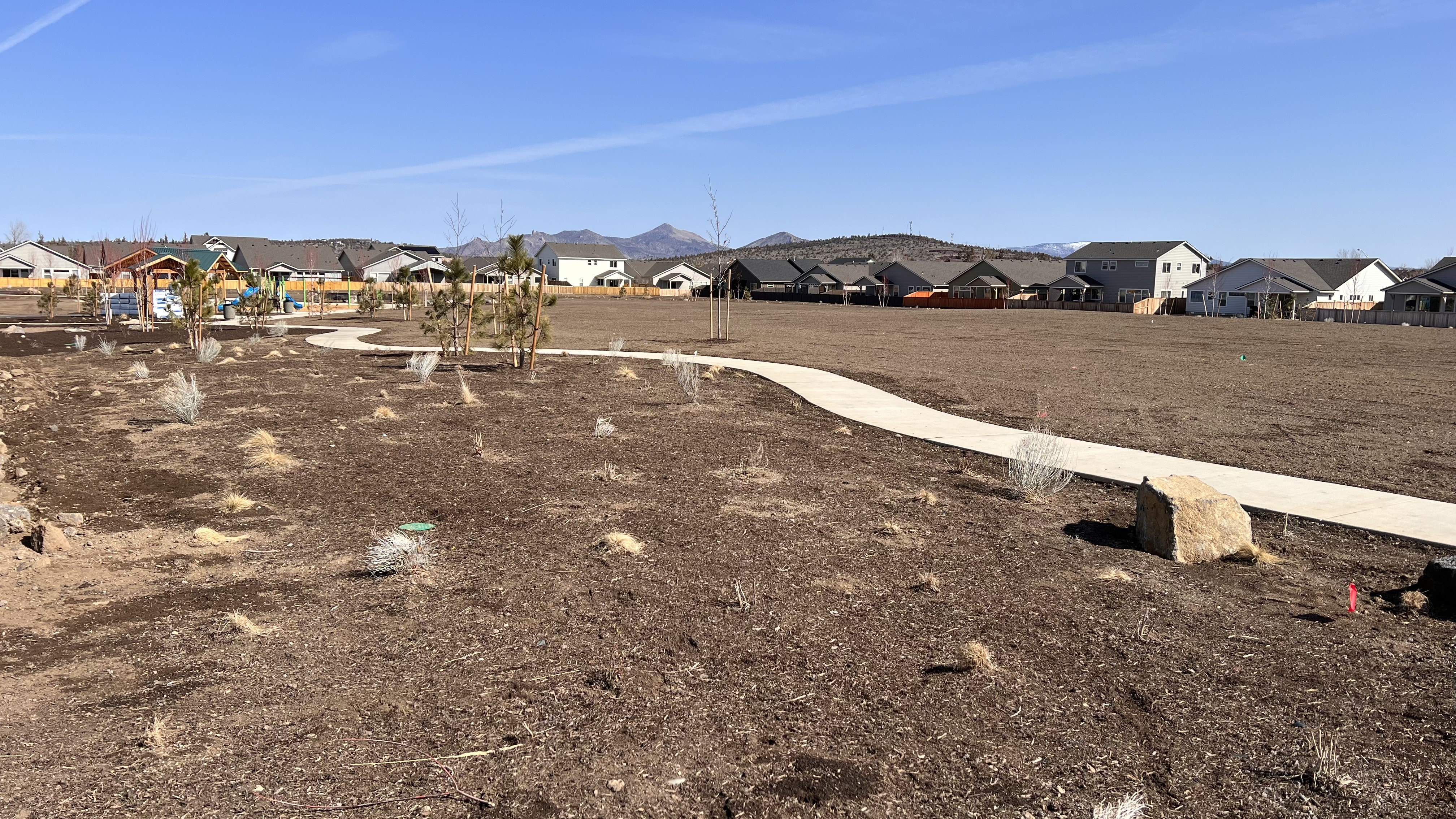
Redmond’s Spruce Park looking NNE from the SW corner toward Gray Butte and Smith Rock in the background. The border beds which follow much of the loop path are ‘native’ plantings according to the conceptual plan. It is common to claim that most of the plants are natives in designed natural areas, but native is not synonymous with ‘natural’. Although natives are used here concessions have been made including such plants as Echinacea purpurea ‘Pow Wow Wildberry’ and Rudbeckia ‘Goldsturm’. In a strict sense Ponderosa Pine aren’t native to this immediate locale either, they require more precipitation than we normally get and the Autumn Blaze Maples are a hybrid of two northeastern North American species.

A landscape, in nature, is a whole, functioning system, capable of perpetuating itself, through out the seasons and years, relying entirely on its own conditions and the cycling of energy and resources occurring on and within it. This is also the definition of a modern sustainable landscape. Ideally they require no inputs or energies supplied from offsite aside from the sun, precipitation and the normal cycling onsite of nutrients and water. A human made, contrived landscape, as all of those built by us today are, may be ‘judged’ by how well they function on ‘their own’, by how well they fit this ideal. Labor and outside inputs necessary to maintain a landscape are then indicators of how out of balance, how far from ‘ideal’ nature and genuine sustainability, a landscape is. A contrived landscape, which ignores the relationships integral to a healthy landscape community ‘demands’ more and more maintenance and support. Given its design and use, a landscape which ignores its site and relationship requirements will deteriorate from the intended design, losing to death component plants while gaining, increasingly, more unwanted available weed species. Design, conditions and use are essential to determine, in this sense, what a ‘good’ landscape is. Continue reading

On Plant Drought Tolerance and Gardening in the Arid Oregon High Desert

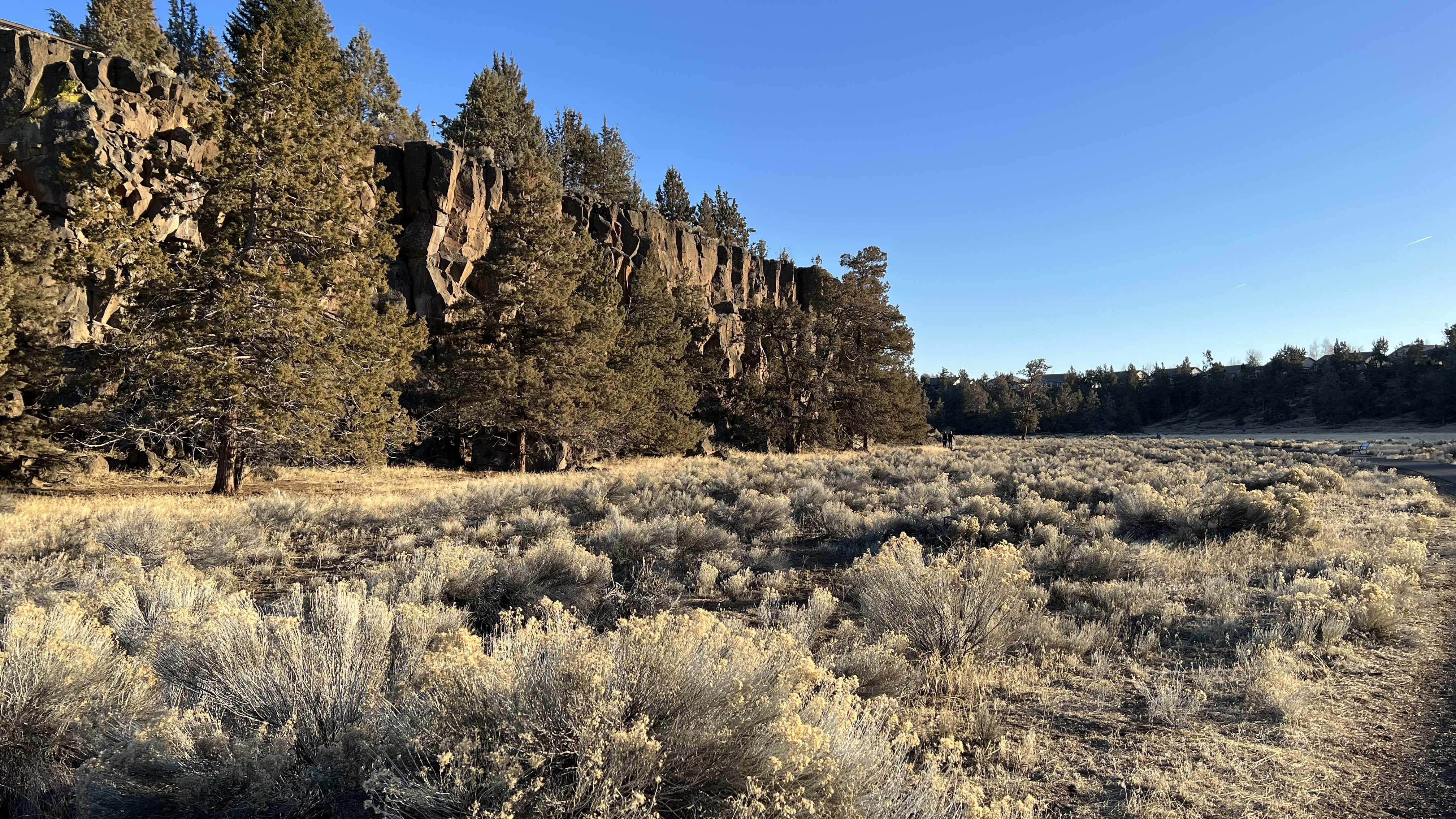
The Dry Canyon in Redmond, Oregon, which for 200-300,000 years contained an earlier version of the Deschutes River. The rivers course was changed by an eruption from the Newberry Volcano, a massive shield volcano with over 400 vents 40+ miles to the south. A later eruption partially filled the canyon with lava. In this section the canyon was filled raising its floor so that it’s around 70′ deep, its two rims separated by about 700′.

Drought tolerance is an interesting topic. I’ve written on it before, but now have some additional thoughts to add, in part because we have recently moved to much more arid Central Oregon. A drought tolerant plant in Portland is a very different thing than one here where annual precipitation can vary from around 13″, very rare, down to as little as 5″, commonly 8″. While Oregon in general is considered to be a mediterranean type climate with dry summers and wetter winters, Redmond’s climate is strongly influenced by drier continental patterns. This last January, ’23, we received only 1/4″ of precipitation while Portland had 7.32″ about 120 miles to our northwest, on the ‘wet’ side of the Cascades. Drought tolerant then means different things in different regions and can vary widely within a region along with soil conditions, slope and aspect (which direction a site is oriented). Generally speaking, drought tolerance refers to the ability of a particular plant to endure periods in which available soil moisture is below that needed to support the plant’s metabolism. A tolerant plant can ‘bridge’ these naturally occurring ‘dry’ periods. An intolerant plant will suffer cellular, even structural damage and may be unable to flower and produce seed. Health is compromised should the drought last too long, resulting in internal physical damage and leaving it more subject to infection or infestation. A drought tolerant plant will have the capacity to respond in a healthy manner when soil moisture levels return to those that support active growth. Within these limits the stress it accrues does not compromise its health…beyond it though….Damage is accumulative. String a series of drought periods together and a plant’s capacity to recover is compromised. Because patterns of precipitation, of water storage and movement, vary widely across the earth, regions and sites have different plant communities associated with them. The condition of drought stress then varies with the location and the species. A drought tolerant plant on one site may crisp on another drier one. Of course this can work in the opposite sense as well, that a site may be too wet, but that’s another story. In the case of the PNW and many other regions, it is also the timing of the precipitation, when it occurs during a plant’s cycle of growth and dormancy. Continue reading

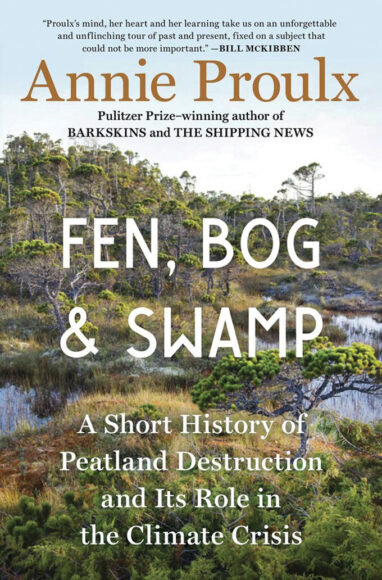
Fen, Bog and Swamp: A Short History of Peatland Destruction and Its Role in the Climate Crisis , a Review

For another review: link

Novelist Annie Proulx, begins her book with her childhood, giving us an idea of who she is, her attachments to the living world. She takes us with her on a walk she took with her mother as a young girl, through the neighborhood wilds, to an ignored patch of swampland. Her mother loved such places. She places her story in the larger story of the times of her birth and coming of age, of the 1930’s and the cruelties we perpetrated on each other and our limited view of the natural world, a world set as a table before us, for our consumption. She writes of her attachments to these abused and devalued wet landscapes, their necessity for a healthy natural world and what their loss means. Earlier, I reviewed Edward Struzik’s book “Swamplands”. Struzik has spent years working with researchers and conservationists in the field, and writing of his experiences. Proulx’s approach is much more personal as she works to place bogs, fens and swamps into a human, historical and cultural context. Continue reading

What Do We Do When the Whole World Feels Like its Falling to Pieces?

In this blog I focus on plants.  Any gardener, botanist or horticulturist knows that plants, all living organisms, live in an incredibly complex, interwoven network of systems, each affecting the others, the health of anyone, in large part determined by the health of the ‘whole’.  Life does not and cannot exist in a vacuum.  We humans are also very much living organisms and subject to the same kind of limits as any species.  What we build and produce, including those more abstract things like our social and economic systems upon which we are very much dependent, are subject to the same natural laws and limits, whether we recognize them or not.  Very much a part of this is how we value other life collectively.  Just because many may say other people and species are of less value, does not make this fact.  The laws and ways of ‘man’ must remain within, and consistent with, the laws of nature.  We are not at liberty to treat other life as expendable.  We owe a debt and responsibility to all life.  Life permits and supports us so it is incumbent upon us to do the same for it.  Such is the natural law of reciprocity. Continue reading

Agave montana: Monte’s Flowering Attempt…and What’s Behind It

It’s October in Portland and my Agave montana is in the process of flowering…I know, we’re heading toward winter, with its rain and average low down into the mid-30’s with potentially sudden damaging temperature swings from mid-November into March dropping below freezing to the low twenties, with extremes some years, generally limited to the upper teens, though historically, some areas have dropped into the single digits, those Arctic blasts from the interior….Winter temps here can be extremely unsupportive of Agave’s from ‘low desert’ and tropical regions.  Combined with these cool/cold temperatures are our seasonal reduction in daylight hours and its intensity (day length and angle of incidence varies much more widely here at 45º north) and the rain, ranging from 2.5″ to 6″+ each month here Nov.- Mar., resulting in a ‘trifecta’ of negative factors which can compromise an Agave, even when in its long rosette producing stage.  Any Agave here requires thoughtful siting with special consideration for drainage, exposure and aspect.  For an Agave, conditions common to the maritime Pacific Northwest are generally marginal, yet I am far from alone in my attempts to grow them here.  Previously, in April of 2016 I had an Agave x ‘Sharkskin’ flower, a process that spanned the summer months, taking 7 until mid-October to produce ripe seed.  I was initially a little pessimistic this time about A. montana’s prospects.  Why, I wonder, if plants are driven to reproduce themselves would this one be starting the process now? Continue reading

Agave colorata and its Blooming Attempt in ’18

img_4196

Agave colorata before flowering initiation, growing nearly horizontal, with a broadly cupped lower leaf holding water. From the Irish’s book, “Agaves, Yuccas and Related Plants”, “The leaves are 5-7″ wide and 10″-23” long [mine were all at the small end of this range] They are ovate ending in a sharp tip….The leaves are a glaucous blue-gray and quite rough to the touch. The margin is fanciful with strong undulations and large prominent teats of various sizes and shapes. A very strong bud imprint marks the leaves, which usually are crossbanded, often with a pink cast [not mine], and end in a brown spine 1-2 in. long.

This is one of the first Agaves I ever grew. Pictures on line of its rosette first caught my
interest, their leaf color, substance and sculptural qualities, the margins of its broad, thick leaves, with their rhythmic rounded ripples, each tipped with a prominent ‘teat’ and spine. This is not a large plant, typically growing 23″- 47″ in diameter and my plan was always to keep it in a pot as it is from coastal areas of the Mexican state of Sonora, found sporadically in a narrow ‘band’ south into Sinaloa.  Agave colorata is very rare and uncommon in nature and growing on steep slopes of the volcanic mountains in the coastal region in Sinaloan thornscrub. It often emerges from apparently solid rock cliffs sometimes clinging high above the water below.

Growing in Sonora and at Home

It is poorly adapted to our wet winter conditions though it is reputedly hardy into USDA zn 8, or as low as 10ºF.  Its natural northern limit is thought not due to cold, but by excessive aridity in the northern parts of Sonora.  I didn’t test it, leaving it outside under the porch roof, bringing it in when forecasts called for below 20ºF, as any plant is more susceptible to cold with its root zone subject to freezing. With perfect drainage and overhead protection, you might be able to get away with this in the ground, but the combination of significant wet with our cold is likely too much…still if someone wanted to try….At best I suspect this one would still suffer from fungal leaf diseases, disfiguring the foliage.

This is usually solitary, but it can be found occasionally in small clumps/colonies up to nearly 10′ across, pushing up against each other on their slowly growing and short ‘trunks’ to 4′ high.  My plant produced just a few pups over the first third of its life.

Fig4-5-color

I wanted to include a climate map of Mexico. This one utilizes the classic Koppen system designating the various climates based on temperature and precipitation and their seasonal patterns. Here it has been modified by Mexican climatologists to better reflect Mexico’s complicated geography…even so, because of the abrupt changes in elevation, and land forms, different climatic conditions can occur in close proximity to one another. Mountains can create wetter and drier areas that on a map of this scale are lost.

Sonora has three distinct geographic areas all running along a ‘line’ from the northwest toward the southeast, the Gulf of California and its associated coastal landscape paralleling the Sierra Madre Occidental, sandwiching plains and rolling hills in the middle.  The coast and plains/rolling hills are arid to semi-arid, desert and grasslands, while only the higher elevation of the easterly mountains receive enough rain to support more diverse and woody plant communities, scrub and Pine-Oak forests.

This map comes from the Arizona Sonoran Desert Museum. The link takes you to one of their pages which discusses the natural history of the desert, thornscrub and tropical deciduous forest of Sonora.

This region also varies north to south, the climate drying as you go north into the Sonoran Desert.  Moving south on down into Sinaloa, and further, is the some what wetter ‘dry deciduous forest’ biome with an array of woody leugumes, including several Acacia.  Agave colorata resides in the transition zone in between, in the portion of  ‘thornscrub’ near the Sonoran/Sinaloan border.  North and south the Thornscrub itself changes in composition.  The Sinaloan Thornscrub serves as a transition zone between the desert and the slightly wetter, taller growing, Tropical Deciduous Forest that continues the south.  All along this band running north on into Arizona’s Sonoran Desert are various columnar cactus a food source for Mexico’s migrating nectarivorous bat species.  It is a unique flora community, containing species from bordering floral regions and other species unique or endemic to this transition zone itself.  The area continues to be under threat, primarily by cattle ranching that moved into the region in the ’70’s and ’90’s bringing with it clearing and the introduction of non-native and invasive Bufflegrass, Pennisetum ciliare, also known under its syn. Cenchrus ciliaris, for pasture.  Bufflegrass is also a serious problem north into Arizona.  In Sonora many of the cleared woody species have since begun moving back in, while the smaller, more sensitive species have not.  Climate change promises to further squeeze it. (The World Wildlife Fund maintains a website with good descriptions of many eco-regions I sometimes find it very helpful when trying to understand the conditions of a plant I’m less familiar with.)

When growing plants like this, one should keep in mind the concept of heat zones.  The American Horticultural Society has created a map of the US delineating its ‘heat zones’.  It is based on the average number of days an area experiences temperatures over 86ºF.  At that temperature most plants begin to shut down their metabolic processes…they slow their growth.  Check out the AHS map (AHS US Heat Zones pdf.) and keep in mind that we are warming up!  The AHS map has us, Portland, OR, in zone 4, meaning we experience 14-30 days with highs over 86ºF each year.  Last summer, ’18, we actually had a record 31 days over 90ºF!  Now consider that the coastal/plains region of Sonora likely experiences between 180-210 such days!  Agave colorata may not need this, but it is certainly adapted to such a level of heat stress.  Something to think about, especially when you consider that we receive the bulk of our rain over the winter when our daily highs and lows average for Nov. 40º-53º, Dec. 35º-46º, Jan. 36º-47º, Feb. 36º-51º and Mar. 40º-57º…keeping in mind that we could freeze on most any of those dates.  The Sonoran Desert receives its minimal rainfall in a summer/monsoonal pattern….This is why bringing such ‘low desert’ plants to the Pacific Northwest can add another degree or two of difficulty to your success!


Growing this in a pot made perfect sense to me, but every decision carries consequences, not all of which I anticipated. Most Agave don’t form a ‘trunk’ growing its leaves, in a tight spiral, crowded along a very abbreviated stem, which adds little to its length to separate each consecutive leaf., but Agave colorata adds a little ‘extra’ slightly separating its leaves, resulting in a weak and kind of puny stem. If you’ve ever shuffled pots containing Agave more than a few years old, you understand that their crown, their substantial top growth, is relatively heavy, A. colorata is no exception, in fact their leaves each seem more substantial than leaves on many other similarly sized Agave. This results in a plant that as it grows begins to lean over, eventually, laying flat across the ground. As a Monocot the stems of Agave don’t caliper up over the years as does wood. These have no cambial meristem which would add secondary growth, and diameter, to the stem and as I said, with its relatively massive and heavy crown, it leans.  This is the same characteristic that gives their small colonies their height.


Continue reading

A Course Correction: The Wild and the Human, On Repairing the Relationship Between Politics, Economics and the Environment

“We are the odd ones, with bright eyes, that see the wonder of a bountiful world.  We don’t look through rose colored glasses…we’ve only removed the veil that breaks and blinds….Now, to cut the strings that tie us to the lie. ”  Lance Wright, Jan. 2019

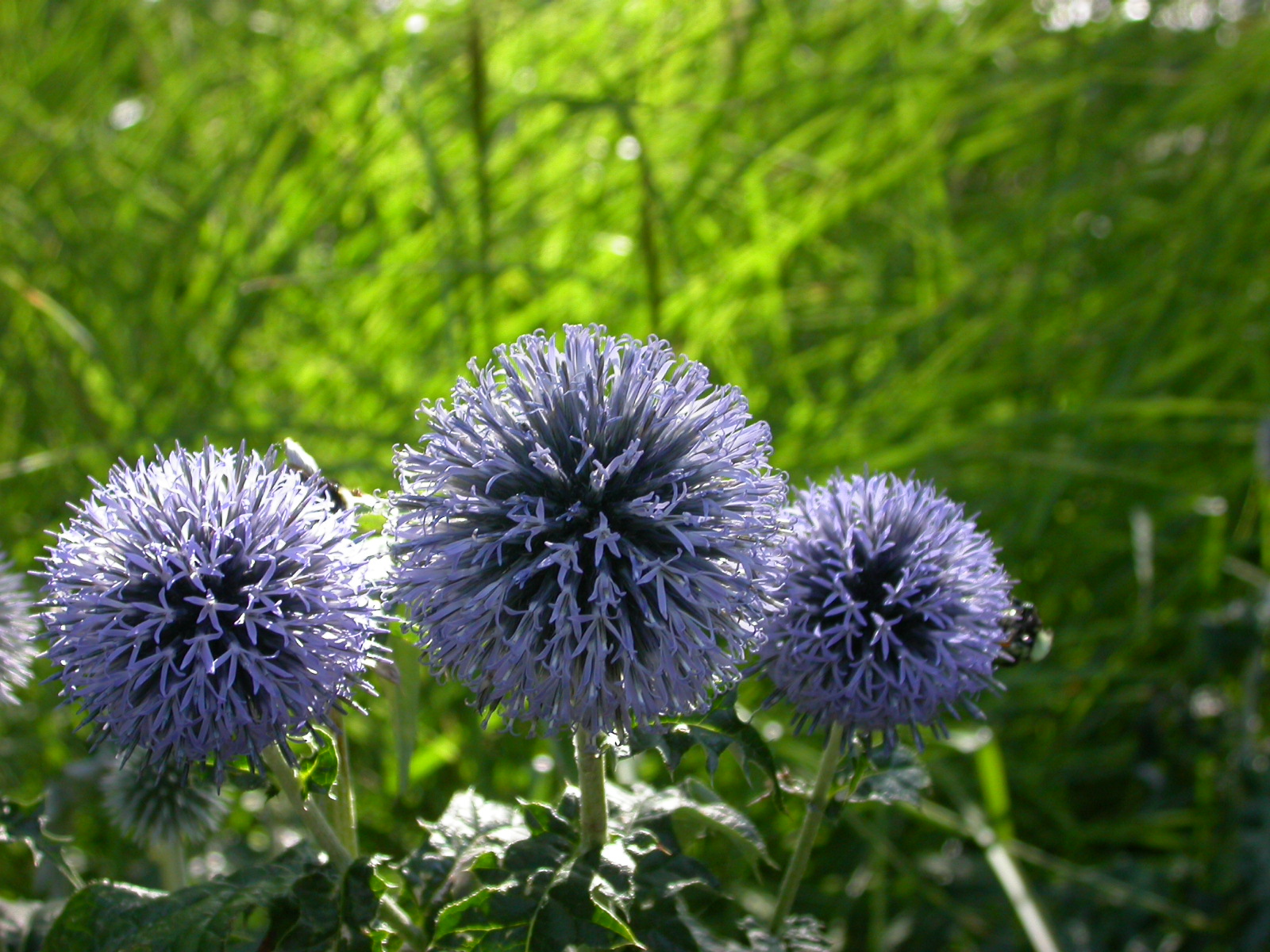
Echinops ritro in front of a Miscanthus gracillimus several years ago at Holladay Park. A series of perennial beds were created with help from a notable local designer. For a variety of reasons related to budget, staffing and vandalism, the beds declined.  Beauty, that necessary elixir, truly abounds, but we must be cognizant of the forms in which we accept it and be committed to what it requires to flourish.

Gardeners are my people…well, actually, so are botanists, horticulturists, entomologists, ecologists, the weekend outdoor adventurers who in regular moments of awe, pause to take in the daily wonder of the world…anyone, really, who works with or has become enamored with the living natural world (and I’m going to include geologists too, at least those not taking their livelihood from resource extraction).  I have a theory, that as our modern world becomes increasingly urbanized, and transformed by our use to that which supports urban living, more of us are becoming consciously aware of what we are losing, of the natural world that has been sacrificed, developed, along the way…and in ways, large and small, many, but still far too few of us, are choosing to make our lives reflect this understanding. We question the ‘stuff’ we have crowded our lives with, that ‘stuff’ we’ve spent our lives to procure while following the dream we’ve all been sold on.  Many of us garden on whatever we have available to us whether it’s a quarter acre, a Juliet balcony or a kitchen counter space.  We plant gardens for food or to support pollinators, to have something green and growing in our homes, we grow small succulents for their simple beauty, flowers for the vase or plants that provide cover and fruit for songbirds, there are many reasons…and we do this for the pleasure that it gives us, for the satisfaction that we are doing something to heal an increasingly ‘broken’ world.  Yet the world continues to spiral down into more ugly chaos, in spite of our increasing awareness…it is not enough.  I find myself drawn even more into the wonder and beauty of a single plant, the ‘miracle’ of life and the amazing complexity, the inter-relatedness of living communities…because, in spite of how our society views this planet and the countless organisms it routinely dismisses as secondary, and unnecessary or of little commercial value…life is in fact the center of meaning and value. Continue reading

The Carrizo Plain National Monument: Super-bloom 2019, our vacation early in the cycle

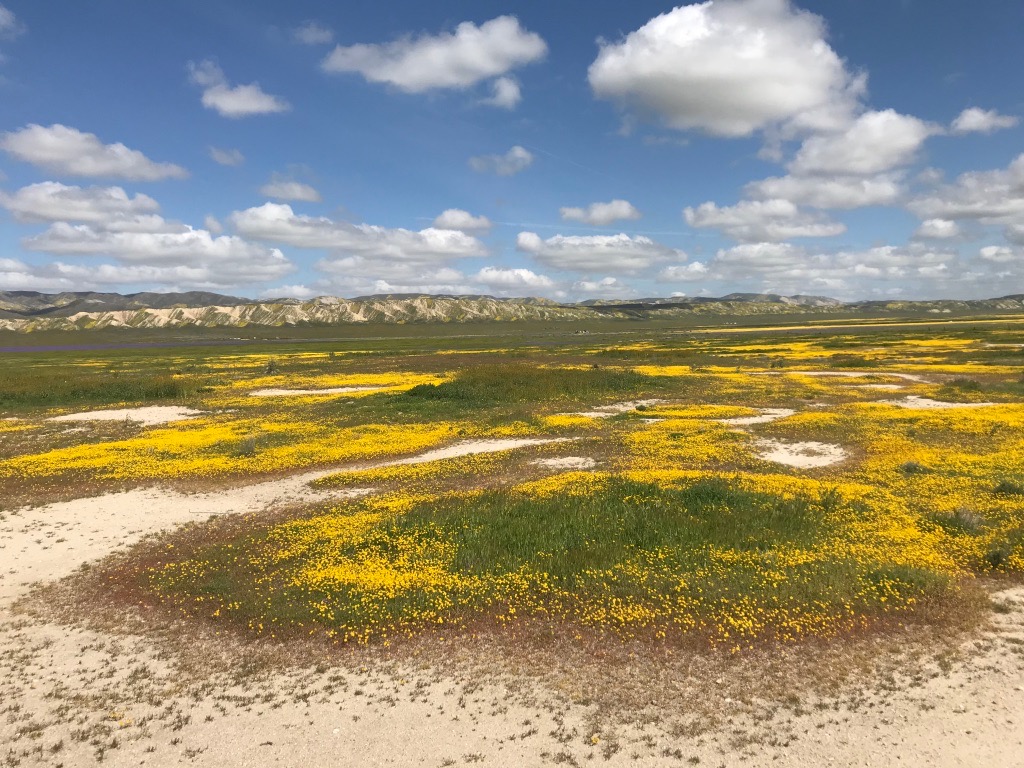
The soils here, on the bottom of the Plain, are quite alkaline and nutritively poor. These bare areas occur almost randomly and aren’t the result of foot traffic. While technically termed a grassland, across much of the Monument grasses appear to be a minor player, occurring much more frequently lower on the framing hills. It makes one wonder what do the cattle eat? I imagine much of this was never farmed either. Dry land farming was always a chancy endeavor in the West. Places like the Millican Valley, east of Bend, OR and points south, were the sites of many a failed dream and such farms, after much promotion and the aid of several moist, milder than normal years. I don’t know the history of dry-land farming on the Plain, but it must have been difficult.  Semi-arid grasslands in general are fragile landscapes. Plowing them can lead to a rapid loss of organic matter and with it the ability to retain soil moisture reducing one’s chances for success even more. The native people left here after having been resident here for centuries. Is it drier today???

Why go visit the Carrizo Plain National Monument?…it is the last, significant, mostly intact, natural grass land in the state of California and puts on a floral performance that can be a showstopper when weather patterns produce sufficient rain over winter and early spring.  This area was largely overlooked as the much larger Sacramento, San Joaquin and Salinas Valleys, also natural grasslands, attracted the interest of agriculture and settlers.  The intensity and scale of agriculture in those valleys is mind-boggling, almost numbing.  Today the big three support only small remnants of their former native biotic communities…much like the Willamette Valley here in Oregon…but Carrizo is different, largely because of its geology and elevation, two factors which strongly effected both the soils and weather, making it less attractive to agriculture and isolating it from markets. Continue reading