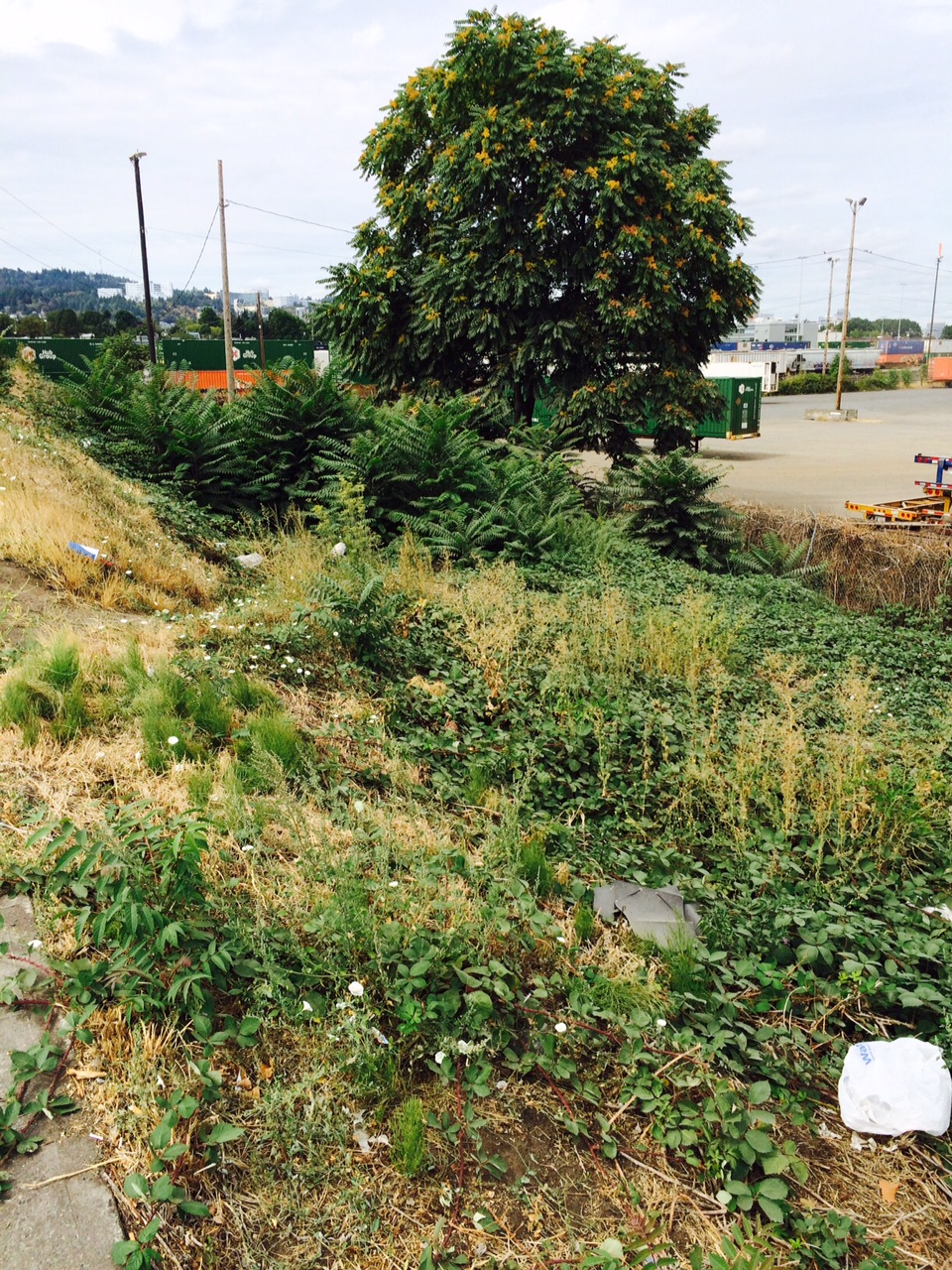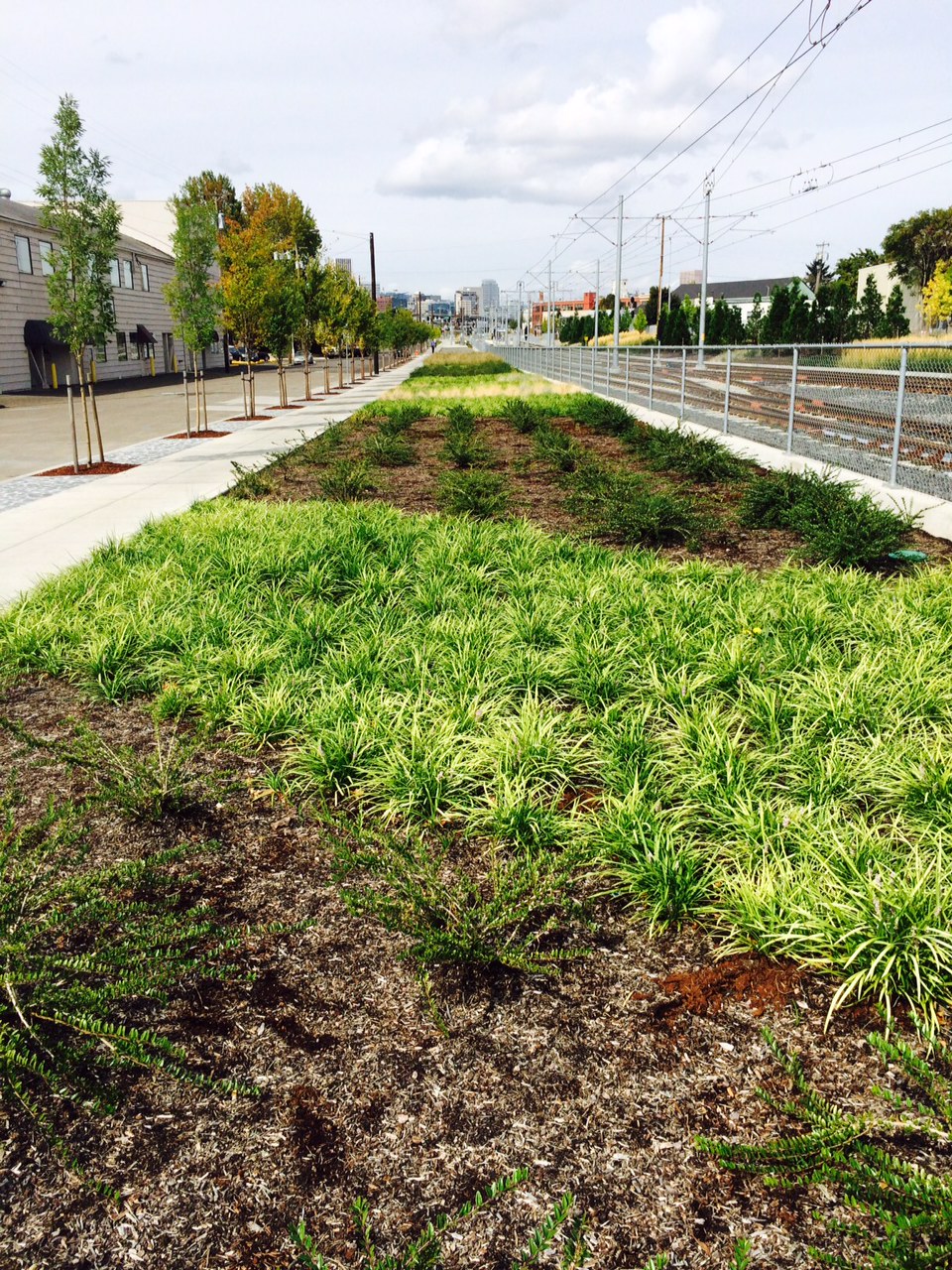
This shows the banded pattern common today in long mass plantings each swath a single species going for a kind of landscape scale ‘graphic’ pattern that is less concerned with ‘fit’. This is near the Clinton/ SE 12th stop.
Size matters. In horticulture it changes everything. Things that are inconsequential, or maybe even enjoyable in the backyard garden, can quickly become daunting or onerous when the scale is ramped up. Working at a commercial or institutional scale has to change your entire approach to the landscape. In a small garden it is easier to accommodate mistakes, the conflicted combinations and those issues of horticultural ‘fit’ that we missed when we design or install. Scale, however, rubs our faces in it everyday, makes us pay with aching backs as unintended consequences play out across the thousands of sq.ft. and acres. It becomes a matter of physical survival and undermines your professionalism. You become perforce part laborer, part diagnostician, designer, plantsman and critic….Out of necessity you sharpen your critical thinking skills and the last thing you ever wanted, your sales skills, as you work to sell your ideas to management who are absurdly ignorant of the problems you face everyday in the field. And, then, eventually, you retire, but you don’t turn it off…you can’t.
Which brings me to the MAX Orange Line and its landscapes. When I did horticultural design review for large capital Parks projects, it often felt like a dueling match. I would pour over the design, whatever the stage it was in, match that with my particular knowledge of site conditions and my maintenance experience within Parks. I would state my concerns on paper and in meetings with the Project Managers and Architects. I was stubborn and consistently found myself up against a process that undervalued horticulture and my input. Good horticultural practice was regularly placed in a losing position opposite not just that of the Landscape Architects but of a very political process that tried to give the public what it wanted as long as it fit within the Architect’s vision. Horticulture always came out a poor third, even though good horticulture always saves money in the mid and long runs. It was exasperating. The public, by and large is ignorant of horticultural practice and no effort is made to educate them at any level. Continue reading