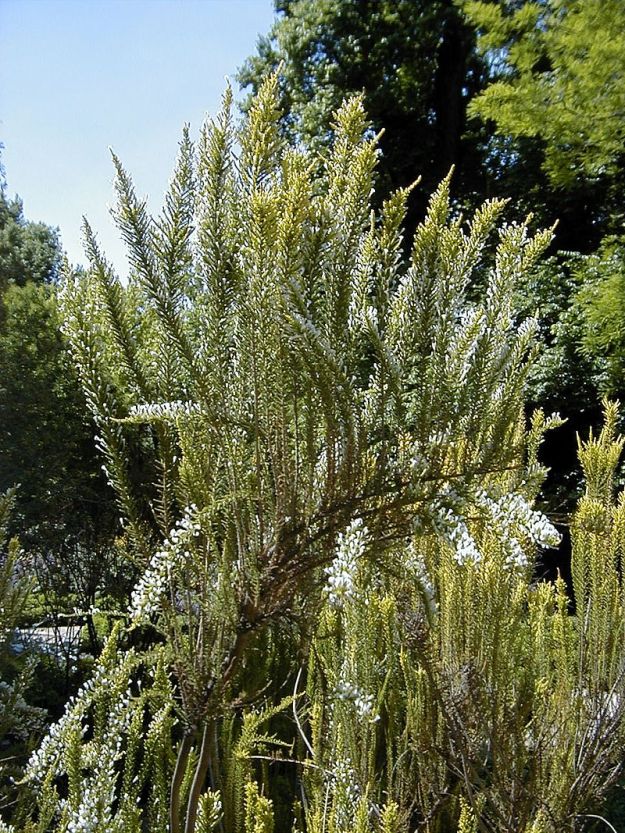
Sonchus palmensis: One of the Giant Tree Dandelions

Sonchus palmensis from the Annie’s Annuals catalog.


At the Northwest Perennial Alliance’s Study Weekend in 2018, Jimi Blake’s slide of this plant reminded me of seeing this plant growing in the San Francisco Botanic Garden in Golden Gate Park.  It was a standout and prompted me to immediately start looking for it.  Annie’s Annuals carries it and I discovered that it was a zn 9b plant, cooling my ardor somewhat…still…..I returned a couple years later to the Botanic Garden, rekindled my interest and made a stop at Annie’s on our return trip to home, but it wasn’t available, so it went back to  my wish list.  Then Jimi’s presentation at the Seattle Study Weekend moved it up in the queue.

I am most familiar with the species of Sonchus that are weeds.  I have pulled more than my share of Annual and Prickly Sow Thistle, Sonchus oleraceus and S. asper, but like many genera Sonchus contains several plants of horticultural merit.  Most Sonchus are annual species, a few are perennial and fewer still are ‘woody’ species all of which occur on the Canary Islands alone, like Sonchus palmensis. Continue reading
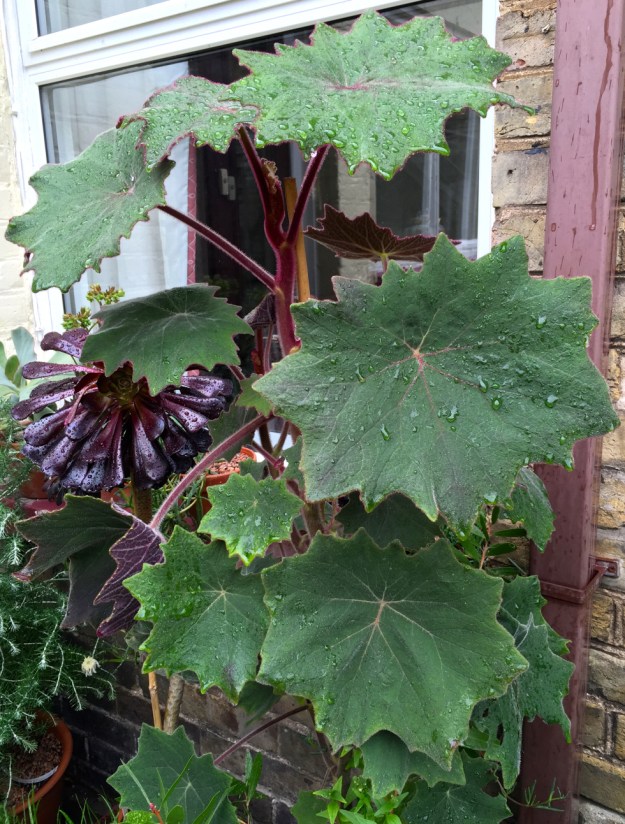
Musa sikkimensis ‘Red Tiger’ (Bengal Tiger) and the Banana Story: Evolution and Cold Adaptation

Musa sikkimensis ‘Red Tiger’ taken three years ago…before this Tiger lost its stripes!

Musa sikkimensis ‘Red Tiger’ backlit. If I saw this plant in a nursery today, I’d be sorely tempted to buy it…again.

Another Jimi Blake plant.  I have history with this choice of Jimi’s…and the NW has a history with Bananas as well!

There’s an old hand colored postcard floating around the Washington Park office of bananas as part of an elaborate bedding out scheme around the ‘Chiming’ Fountain, near the Sacajawea statue.  If memory serves, it is Ensete ventricosum, which have a uniquely identifiable form.  Back in the day, Ensete v. seems to have been a thing.  It is a non-suckering species, unlike the spreading, mat forming Musa spp. and cultivars, and is commonly grown from seed.  It is interesting to me that they were available prior to the 1900’s and relatively common, probably up to 1929 and the stock market crash…at least for  the more horticulturally involved, as specimen in annual display beds.  Gardeners must have dug them out in the fall and hauled them to greenhouses to ‘protect’ them for use in the following year.  I did some research in the early ’00’s of catalogs and area nurseries to get an idea what was available in the 19 teens, and of a few Park’s planting plans of this period, influenced by the Olmsted’s and under the direction of Emanuel Mische…. Compared to typical planting plans of more recent years these were relatively adventurous, especially given that acquiring such plants was often a much bigger deal in the nineteens and twenties than it is today.  Back then if you weren’t wedded to a particular clone and you could find seed for it, exotic bananas were a possibility.  There was an excitement around the novel and exotic that had spilled over from Europe.  Local inventories also included a wide array of bulbs which could be more easily shipped than grown plants widening the range of choices.  They often times had choices that you would have to spend some time searching for even today.  With the economic collapse of ’29 it is no surprise that tastes and possibilities became much more conservative.  There were those who clung to the use of some of the old exotics, but you would have to look hard for them in public places and gardens. Botanical gardens became refuges for the forgotten and newly collected.   It took many years before enough of the gardening population reclaimed their sense of wonder and awe enough to create a new market for the plant’s of the world.  We experienced a similar contraction of the nursery industry in the Fall of 2008 when the real estate boom stalled and demand for plants collapsed causing the closure of many nurseries and a reduction in the selection available from local garden centers.  Locally gardeners have become increasingly interested in such plants and have continued to support the many small specialty nurseries that provide them Continue reading
Anisodontea capensis ‘El Rayo’: A Closer Look at Jimi’s Beautiful Obsession and the Growing Conditions in South Africa

This is from the catalog of Andre Brian a nursery in France as once again this particular variety is not very common in the trade here.

Another Choice Plant From Jimi Blake’s NPA Seattle Study Weekend Presentation

‘El Rayo’, in english is, ‘Lightning’!  One should expect something pretty spectacular, flashy even, with this plant…or not.  ‘El Rayo’ in Portland is a taqueria!…in Portland, ME that is.  I would hope that the name of either doesn’t over sell their product!  Does anybody know? About the tacos I mean?  Gardeners should always be wary of cultivar names.  While they serve as identifiers of a particular, and allegedly unique form or clone, and sometimes as a helpful and memorable descriptor, they can too often tread across the line into misleading hyperbole!  Names are often assigned to a plant that have been in the trade for some time under other names.  These ‘new’ and unique names are then ‘trademarked’, legally protected, as the nursery heavily markets the plant.  The gardening public then comes to recognize and associate this protected name with the plant and begin to ask for it by that name.  Unlicensed growers cannot supply the plant by that name and so some nursery producers carve out a larger share of the market.   After experience we may come to recognize these marketing ploys…or not.  Oft times a little celebration or indulgence is called for. Continue reading
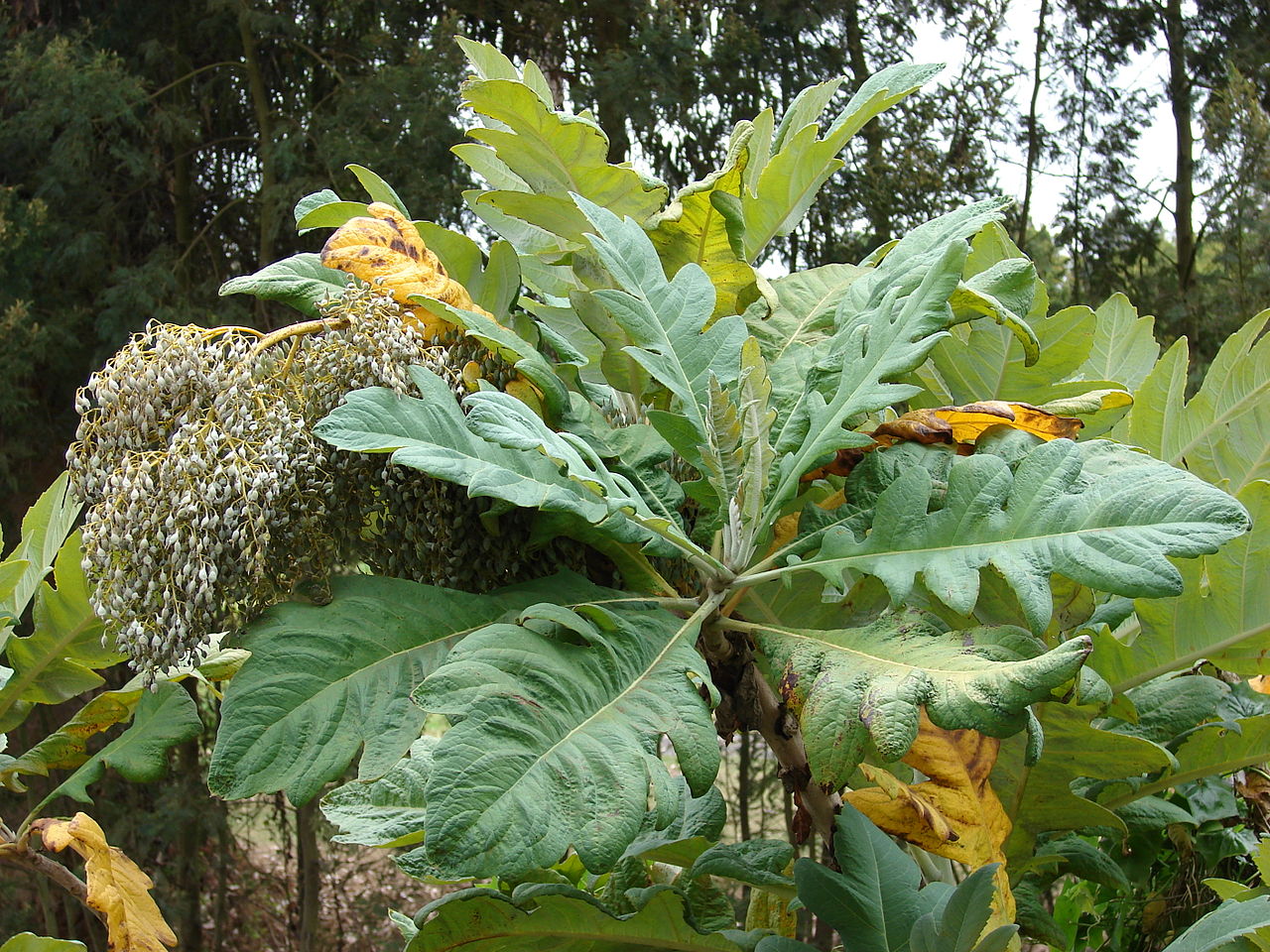
A Closer Look at Jimi’s Beautiful Obsession, A Review of Chosen Plants From his Presentation, Part 3 Asteraceae

CeIn this installment of Jimi’s plants, I decided to look at a group of his favorites from the Aster family, one of the largest plant families, in terms of number of species, in the world and the most recently evolved…bear in mind that ‘recent’ in evolutionary terms can still be millions of years ago.  All of us are familiar with the classic aster or sunflower form of inflorescence that occurs on many, but far from all, of these species.  We’ve all grown many of these in our gardens and recognize many species as local and regional natives.  As ‘common’ as many of us may view this family to be, it contains a great many species with both beautiful and unique characteristics for use in our gardens.

A note here (Mar. ’20) on one of Celmesia spp. neighbors, the Aciphylla spp.  Since writing this post I’ve met a few gardeners who’ve grown a couple different species of Aciphylla, another mostly heat intolerant genus endemic to New Zealand.  Some of these are found in sub-alpine areas alongside the Celmesias. These too do relatively well in the maritime environments of Victoria, BC down in to the Kitsap Peninsula area of Washington state.  This enviable plant community from the Southern New Zealand mountains are largely intolerant of temps over 90ºF, but if a cooler micro-climate is available….I recently came across this blog posting on genus Aciphylla.

Inulanthera dregeana (calva subsumed)

IInula magnifica which grows to 6’+.

Continue reading
A Closer Look at Jimi’s ‘Beautiful Obsession’, A Review of Chosen Plants From his Presentation, Part 2

I think it’s safe to say that the longer that I garden, the more plants that I grow and learn about, the deeper my appreciation for all plants and the living world becomes. Life itself takes on a more ‘miraculous’ quality and I am both humbled by this and saddened by the indiffference and wide spread disregard and destruction that dominates the relationship of so much of the human population with regards to the green world. (sigh) How, I sometimes wonder, can so many people not ‘see’ what is around them, the beauty and the miraculousness of it?  Having said that, I dive back into another installment of Jimi’s ‘Obsession’!

Impatiens omeiana ‘Sango’

Everyone has grown Impatiens, right!  It’s one of those ubiquitous bedding annuals even many non-gardeners know that they might put in a pot on their shady porch. I used to grow these by the hundreds when I put together display beds for Parks as they were one of the few freely flowering options available from the bedding plant industry that could ‘produce’ on shade sites. It’s so well known that its common and genus name are the same, a relatively rare occurence in the plant world. As they tend to do, hybridizers pushed the limits on these and, over the years, have developed a good number of cultivars that are tolerant of direct sun, probably increasing their popularity while at the same time teaching an unhelpful message to the general public, that it isn’t really necessary to pay attention to a plant’s requirements…ours are what matters, but that is an entirely different issue than what I want to cover here. Continue reading
A Closer Look at Jimi’s Beautiful Obsession, A Review of Chosen Plants From his Presentation, Part 1

It would seem that gardeners are a difficult lot!  For those of us intent on gardening with ornamental plants we are continuously drawn to the exotic and novel, sated less and less by the plants in yesterdays’ garden…at least until those have had suitable time to have fallen out of fashion and are rediscovered. For most of us it is the plants we’ve never grown, or even seen before, that draw us.  This is as true when we ourselves are novices as it is many years later.  Sure, we all have more than a few long term relationships with particular plants, but we seem forever subject to the seductive calls of the unknown (to us)!  For many of us this is at no time more true than when nurserymen, on the ‘cutting edge’, and plant explorers come to town, especially if they come bearing pretty pictures…Even mores so when paired with the opportunity to acquire them.  Instant gratification.  It is a conspiracy you know. Continue reading

The Lower Deschutes River: the Incursion of Invasive Plants and our Failure to Responsibly Maintain Native Plant Communities

This picture should give anyone more than enough reason to visit here, the Deschutes sliding out its mouth into the Columbia with the Washington side of the Gorge in the distance, the low angled early evening sun illuminating everything sharply.


[As I go over this post yet again, July 21, the 80,000 acre Substation Fire is still burning across canyon and wheat country here.  Included in the blaze are the 20 miles of the Lower Deschutes canyon down to the campground at the confluence with the Columbia.  Much of this burned down to within 2′ or 3′ of the riverbank including the historic Harris Ranch buildings.  So, when you look at all of these pictures, with the exceptions of where the fire hopped and skipped, everything is charred.  The Oregon Wildlife Federation, formed in the 1980’s to purchase and protect this portion of the canyon, has stepped up with $100,000 to help the area recover.  It will take considerably more especially if there is any intention of making headway regarding the spreading invasives problem.]

[Now, another 2 weeks later more massive fires continue to burn across the dried up West that has just experienced another record breaking month of heat, while the president goes on ‘bleating’ and blaming it on our ‘bad’ environmental laws and all of the water we’re diverting into the ocean!  ‘F’ing! moron!]

The last time we came here was eight years ago in December.  My memory of then is much like the experience on this evening…only it was clear and cold.  The light was similar except that then the low angled sun was due to winter, with that season’s urgency, not a late Spring evening like this outing.  This time it is warm, camp is comfortable and nearby and the greens are still gathered around the river and the still moist draws and seeps.  On that day we’d gone to Hood River for my birthday, to get out of town and there was a break in the weather so we drove here to these trails at the mouth of the Deschutes, hiked along the river, returning on the upper springs trail.  Winter or summer, green only sticks around a little longer than we do, before it retreats…life is shier here, tough, but shy.  The starkness of this landscape should be read as a warning to visitors, this is no easy Eden.  Life is earned here or at least requires a strength, patience and frugality that many don’t have.  This is much the same for people as it is for wildlife and plants.   Them that don’t, can’t.  That’s why it may be surprising to some that such a place has a problem with exotic invaders.  What could possibly look on places such as this as ‘favored’?  Well, Central Asia, especially its Steppe, with its continental, cold and dry climate containing many species that see such a place as this as home, or even better, without the competitors they faced back there.  The temperature can swing widely here on any given day while the seasonal extremes can vary as much as 125ºF from high to low.  Relatively few plants can thrive in this.  The dry summers with their very limited and sporadic thunder showers, combined with the ‘wet’ winters, total only 10″-12″ or so of precipitation, plus or minus, is another major limiting factor.  Of course, near the river, the moisture problem is moderated  and a broader range of invasives can find a ‘foothold’.  We, as a people, have ‘brought’ these weeds here with us in our travels, often as a result of our commerce.  Those that have made it here are spreading.  Too many prosper. Continue reading

Resurrection: My Butia and its Near Death Experience

We woke up the morning of Jan. 11th with this about ten hours after the snow began to fall. What may have been more damaging was the extended period of cold weather through much of the month. It included too many days in which our high temps did not move above freezing. With the fronds bent down so much it was easier for water to move down into the trunk and do its freeze/thaw/freeze thing. Had I been on top of it I would have put an informal tent over it to keep this area dry and protected.

Last summer was a sit, wait and worry, summer. The previous winter of ‘16-‘17 was a hard one here. Because my Butia capitata had been sailing through its previous nine winters, in this location, without damage, I assumed it would be OK this time, but it wasn’t. Our 12” snowfall weighted the fronds down splaying it open and no doubt allowing moisture, ice etc. to penetrate down into the trunk to the meristem, the critical tissue from which all growth in the plant begins. Last summer not one new frond emerged, an indicator that the meristem was damaged or killed. The good thing was that there was no sign of rot. The new ‘spear’ could not be pulled free….The same winter killed my Trachycarpus martianus darkening and shattering much of the fronds’ cell walls and structure in a way typical of many freeze damaged plants.  Its center spear, the newly emerging fronds, pulled free.  My Butia spent last summer in a kind of limbo. This last winter was much more mild. Now, finally, with the heat settling in around us, those old spears are growing again, their leaflets opening wide, while their long rachis/stems, fully extend and arch!  New spears are forming still pressed tightly against the most vertical and longest of these whose leaflets you can see below just beginning to fan open. This is slower growing than the Trachys, working on opening its third frond of the year! Typically my Trachycarpus fortuneii form 15-20 fronds in a year. I’m wondering now how this lost year of growth will effect the Butia’s trunk diameter. Because of how Palms as monocots grow, I suspect that it will result in a narrowing of its ‘waist’, with a swelling back to normal above when more normal winters prevail. Continue reading

On Choosing Salvias for My Garden

Salvia confertiflora in the San Francisco Botanical Garden, October

I can’t get Jimi Blake’s HuntingBrook Garden out of my head…that’s a good thing, though a little odd since I’ve never been there. The images and ideas, the energy that both Jimi and his sister, June, who gardens nearby, projected at the NPA Study Weekend was infectious and inspiring. Their gardens are both beautiful and, obviously, central to each of their lives. They are dynamic, like the minds of each of them, endlessly creative and curious…botanical dabblers of the highest order. Apparently, their gardens don’t stand still.  No plant or bed is ‘safe’ from revision, in part or from wholesale revision.  I have no pictures, their’s, however were gorgeous and seductive. I have to rely on the few they have posted to their websites. Please, go to them.  (Jimi’s HuntingBrook Garden.)

Of the two, Jimi spoke first, his topic, Salvias, those that he’s found to be worthy of a place in his garden.  With such a relatively large garden he can ‘trial’ many plants, and, if you’re like Jimi, evaluate them in terms of both aesthetics and performance.  He loves Salvia…there are nearly 1,000 species and who knows how many hybrids and selections!  He grows many from seed, others he’s rooted from cuttings, like minded Salvia-philes gift him with treasures and Jimi works them into his beds, artfully.  You won’t see any sterile lab like rows, he trials them in mixed borders and beds.  In Seattle he presented his ‘winners’, 33 different species, hybrids and selections.  The list is comprised primarily of plants ‘durable’ enough for his conditions with long bloom periods…with a few exceptions, late bloomers, and those of short duration…need not apply. Continue reading

On Being a Defacto Pteridophile (fern lover)

This is the NW corner of my garden where I’ve tried many of my ferns. Palms, the fence, our bamboo and steel pagoda and a large Mahonia x media provide more shade than most of the garden ‘enjoys’.  Some of the ‘squirrel tails’ of my Sanguisorba hakusanensis hangs in the foreground.

How many different species and cultivars of a particular plant group do you ‘need’ to grow before you can be said to have a serious problem? I am not an ‘Agave-holic’! Isn’t a statement like this, one of the surest signs of such an affliction? I know other people who grow a lot more of these! What does it mean when you persist in growing a group of plants in spite of the fact that many of them die? And what constitutes too many? It can’t be a set number. If a group comprises comparatively few plants when compared to Orchids say, a group of over 20,000 species, growing a 100 plants might seem obsessive, while in the Orchid world it may not be. My name is Lance and I grow ferns…in a garden that suggests I should grow something else.

The one healthy frond left on my ‘rescued’ Woodwordia unigemmata.  This single leaf is almost 3′ long.

While at the NWPA’s Seattle Study Weekend, I noticed a couple of ferns in particular that I have in my own garden, only growing much better, apparently vigorous and ‘carefree’, including Woodwardia unigemmata and a couple of different forms of Asplenium. One of the first things I did on my return home was to dig my own Woodwardia unigemmata. freeing it from the thirsty roots of my neighbors Kwanzan Cherry. I did the same for a Dryopteris wallachiana which had also been struggling with too little water, only it was under my own large Parrotia persica and Actinidia kolomikta.

Asplenium scolopendrium ‘Furcatum’ happy near the gate growing with Asarum splendens. Aspidistra, more Acorus and an Astrantia also grow in this bed, but other genera, whose names start with a letter other than ‘A’ also abide in it.

Asplenium scolopendrium ‘Furcatum, the Fork Crested Hart’s Tongue Fern, pfeeew, whaat a name!,  is another very nice form of a beautiful species.  I saw various forms of this at the study weekend, all of them looking vibrant and neat.  The first of these I’d bought several years ago was the straight species and was devastated by root weevils notching its leaves.  With that exception, it has grown well for me. Continue reading