Category Archives: Growth

On Biology, Ecology, Evolution: Health as a Product of an Engaged Life Aided by Science

Biology, the ‘life sciences’, botany, evolution, cell biology, ecology, health and disease, plant communities, our relationship as humans with each other, geology and the life around us, are all topics that interest me. My most recent reading choices have focused on embryology and an organism’s capacity to maintain homeostasis, what is meant by ‘health’. Earlier I focused on the big question of ‘What is life?’ I’m an integrator, an intuitor, an assembler of conceptual puzzles. For me understanding is the goal and that usually involves understanding the ‘pieces’ of the puzzle and fitting them together into coherent wholes. That’s what I do when I select books and read. While my fiction choices are relatively wide and varied, when it comes to this question, I am far more focused, purposeful. I am not overly concerned with being correct in terms of conventional thought or even regarding that which is accepted as being scientifically correct. I’m looking for what makes ‘sense’. I ‘test’ what I read.

Science is conservative and rightly so. It works to define a foundation from which we may build on. Many, if not all scientific advances, came at the expense and pain of researchers who reach beyond the established to address the problems that accepted theory has revealed as the process advances. Egos and careers can get crushed. Arguably, every significant advance in science began as a controversial idea. Over time, with repeated experimentation, advances in technologies that enable scientists to address questions not previously possible, new insights and ways to ask the ‘question’, the new gains support, or alternatively, is revealed to be ‘wrong’. In this process other questions arise, that move us toward a more complete ‘truth’, a truth that enlightening and revealing, can never be the ultimate answer. What preceded it was not necessarily ‘wrong’, but more likely incomplete, unable to fully explain the world as our understanding of it itself changes. Science becomes a process of understanding at an ever finer scale. What once served, still does, but in a coarser grained way. Occasionally, it demands a radical rethink of our basic understanding of reality. Continue reading

The Good Virus, A Review and Thoughts About the Necessity of an Informed Public

Every book tells a story, even the driest academic tome…or rather, utilizes the form of a story. Humans communicate through story. It’s how we give some communicable ‘form’ to our thoughts which we can share. Without it everything is disconnected reportage of facts, personal impressions, emotions. Raw data. Zeros and ones. incomprehensible. To communicate through story requires that we share enough elements of the story, its language, form and ideas, with our ‘listener’, that they can understand what we are saying/writing. If it is too alien, communication does not happen. The listener/reader, hears the words, but the meaning eludes them. Meaning and experience are not shared. Without these, connection, communication, fails. The more esoteric the topic, the more important it is that both ‘parties’ share a common language, that  each is ‘educated’ to some degree, about the world the other is attempting to communicate. As science and technology become ever more specialized and schools and social institutions become more isolated from their larger communities, communication fails more often than not. Especially when the ‘other’ is viewed in a negative light, as untrustworthy. Communication then requires a leap of faith, because as our understanding of the world becomes deeper and more complex, we cannot all become expert in all things. There is just too much to learn. This is when effort, trust and faith, become essential. We must share a commonality, a trust in the other. As shared knowledge, and ‘ways of knowing’ decline, assumptions then dominate. Intentions then become suspect and the very possibility of community and communication evaporate. What we ‘see’, is what ‘we’ see, not what someone else does. Whether or not that is shared is the crux of the communication problem.  Continue reading

On Ornamental Trees and the Remaking/Unmaking of Place: Revising the City of Redmond’s Tree List, part 2

How Much to Water?

Recommending trees from climates with significantly wetter growing seasons needs to stop if we are to continue growing our population. Landscapes as designed, and managed, are the single largest user of residential water. Recommending trees which ignore this problem is irresponsible. Lower water use residential landscapes are possible. Local codes and recommendations must, however, reflect this priority.

Additionally, how much to water is a bit of a mystery to all of us and especially so to non-gardeners. How much? How often? Our watering practices should be determined by the local precipitation and the tree’s needs. What is commonly done, however, is that we water for our lawns and that largely determines what our trees receive, unless we have separate drip systems. A tree’s root system doesn’t stay neatly between the lines. They quickly extend out well beyond the span of the tree’s leafy canopy. In many cases even 2-3 times as far, taking up water and nutrients. A roots of a tree, planted in a small bed, adjacent to an irrigated lawn area, will move out into the lawn. A tree isolated in a xeric bed with only a few drip emitters, will quickly demand more than such a meager system affords it and such a tree, if it requires summer moisture, will struggle while competing with its nearby  ground level growing neighbors. Again ‘neighbors’ should share compatible requirements so all can thrive on the same ‘diet’ and moisture regime. Continue reading

The Gene: An Intimate History, a Review

I finished reading Siddhartha Mukherjee’s book from 2016, “The Gene: An Intimate History”, a dense, engaging book, written in a prose style, conversational, thorough, accessible and personal, exceedingly rare qualities to find in a book covering such technical topic. Mukherjee, trained and worked as an oncologist, won the Pulitzer Prize for his earlier book on cancer, “The Emperor of all Maladies: A Biography of Cancer”. He is currently an associate professor of medicine at New York Presbyterian Hospital/Columbia University. Understood to be the ‘best’, or most complete and thorough history of genetics, our understanding of it and the ethical questions of its increasingly influential applications in medicine, society and evolution. Of such broad scope in the changing landscape of medicine and its science, it has expectedly, become subject to an array of criticisms. The practice of science is not perfect. Our understanding is forever evolving and as much as promoters might insist that theirs is solid and fixed, our knowledge will always be imperfect. We circle around a topic, defining it closer and closer, but never quite understanding it fully, questions leading us to more questions, our knowledge shaped by what we already ‘know’, and very occasionally propose entirely new ways of explaining, new theories, that dislodge previous established theory. Continue reading

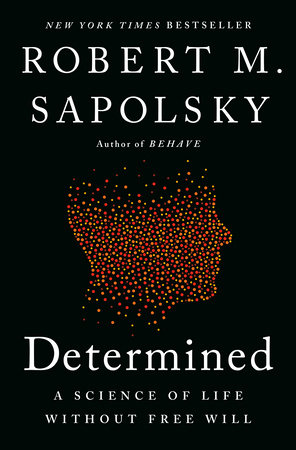
Determined: A Science of Life Without Free Will, a Review and Look Into its Consistency With the Sciences

Long ago I took a couple philosophy classes at U of O; one on existentialism, in which we read several novels and discussed their themes; and another, an upper division, class on ethics, because I was curious…I dropped the ethics class after sitting around the table in seminar discussing particular authors’ thoughts, like Kierkegaard and Butler. Majors seemed to take pleasure in making fun of what I got from them in discussions. Hated this. I still have trouble reading philosophy. It seemed like a game to them in which they argued a position to show off their cleverness, their superiority, the ideas themselves of relatively little importance…while hiding their biases. It must have been so self-assuring for them to ‘know’ these author’s precise thoughts and bash those who don’t get it…or saw something different (like the newbie, me). To quote someone isn’t to understand, it is only miming, presumably in hope of getting a reward. I read for understanding. It’s not a competition. So, this book, “Determined: A Science of Life Without Free Will”, taking a science approach to evaluate a philosophical concept, was difficult to begin. The author, neuro-biologist Robert Sapolsky, argues that those philosophers and theologians who claim that people have free will to do whatever they desire or set their minds to, are wrong. This appealed to me immediately. Continue reading

Song of the Cell: An Exploration of Medicine and the New Human, A Review

The cell is the basic, irreducible, unit of life. Whether an organism is animal, plant, fungal or bacterial, the cell is its basic unit. While it can be broken down into its ‘parts’ for examination, none of those parts are capable of independent life, none are able to continue fulfilling their functions on their own. The cell and its ‘community of parts’ operate as a ‘social’ unit, as a whole. Each ‘part’ fulfills one or more roles in the ongoing life of the cell. This book is a review of cell biology, of the development of our, human, understanding of the life of the cell and its centrality to our understandings of what it is be alive, how it has and continues to transform our practice of medicine. The author, Siddhartha Mukherjee, is a doctor and researcher who has spent his professional life studying blood and its cancers, trying to understand and treat disease. Continue reading

The Way of the Cell: Molecules, Organisms and the Order of Life – A Review (Read This Book if any of the Life Sciences are of even remote interest to you)

I’m an integrator, a contextual learner and a big picture kind of guy. I am willing to ‘slog’ through the details, the analyses of experts, to understand what is going on, when the details help me understand, in this case, the operation or ‘life’ of the whole organism. What are the processes, how do they influence one another and how does that result in the condition we recognize as the dynamic, animated phenomenon of living. Franklin Harold, a professor emeritus in biochemistry at Colorado State University when he wrote, “The Way of the Cell: Molecules, Organisms and the Order of Life”, in 2003, has produced the ‘best’, and most comprehensible, review I’ve found of the life in the cell, to date. This book does not require an advanced degree to follow. It requires an interest in biology. A botanist, horticulturist or even avid gardener pursuing a more thorough understanding of what life is and what is occurring within the plants and animals around will find much that is accessible to them here. This book is not a slog. It is readable and readily comprehensible, though for those with less of a science background, a little more challenging, but hey, nothing ventured, nothing gained. The jargon he uses I would say is necessary. Science can be very precise in how it views its subject, necessarily so, because meaning becomes lost when the precision of language is too generalized. I’m adding it to my own library. I include some extensive quotes here to give you a sense of his style and philosophy. I also gleaned much from these particular passages. In school I endured too many professors and lecturers who seemed more interested in impressing their students with their own brilliance, and our inferiority, and came to relish those who were true teachers, who were able to impart to their students, there own love and fascination with their topic. Harold is one of these. He set out to write a book that would reach out to the reader making his topic more accessible, more comprehensible and thus widen the circle of understanding…and he has succeeded.

The cell, scientists would agree, is the smallest fully functional unit of an organism, any organism. It is the basic structural unit that has been joined together to create larger, more complex organisms. If you attempt to reduce it any further, divide it into its component parts, which science typically does in its process of reduction to understand it in its parts, it loses functionality and dies. Single celled organisms, bacteria, archae, and the larger single celled eukaryotic organisms, like amoebas, comprise the majority of living species on earth, by both number of species and by sheer mass. They are as complete as any single organism, like ourselves, a Redwood or Blue Whale, can be. Whether a single celled organism or a massive multi celled organism made up of several billions of many thousand ‘types’ of different specialized cells, almost all cells are capable of all of their essential functions, as long as they are supplied with proper nutrients and flows of energy. Cells, as Harold describes them, are highly coordinated ‘societies’ comprised of many millions of individual proteins, enzymes, lipids and ions, with various forms of RNA, bound within a protective, limiting and self-regulating membrane, often with other internal membranes, which protect and allow other more specialized functions within the cell…and DNA, or in the cases of some bacteria, RNA, which contain the ‘code’ which prescribes the organism. It is within the cell membrane where the particular mixes of their constituent parts are held in dynamic flux, where the ‘work’ of living occurs. Within what was once described as a ‘soup’ of chemicals, suspended within a virtual sea of water, the cell conducts the ‘business’ of life. Today we understand that within a single cell water molecules far out number any other substance. Cells possess a complex internal structure, a cytoskeleton, grown from proteins, that is integral to the transport of metabolites, the regulation of its thousands of internal processes, the structure of the cell itself and essential to its ability to respond and move. The actions within the cell are largely self-regulating, influenced, certainly, by outside, and internal energy gradients. The various reactions influence the rate of other reactions in a complex system of feedback loops, with a ‘logic’ often compared to that utilized by a computer. Processes are chemical, electrical and ‘mechanical’ as one reaction induces a conformational change, a change in ‘shape’, of a particular protein or enzyme, which directly influences what it can do. These changes in ‘shape’ act as effective ‘switches’ within the cell, switches operating amongst thousands of other such switches, creating an intricate system of feedback loops which regulate just what the next step will be. Only functions tend not to be linear. They can be extremely complex, with a redundancy that also allows the cell to vary internally widely, while maintaining itself, overall, in a relatively stable state. Its internal complexity then accounts for its responsiveness and adaptability. It imparts a degree of flexibility, of adaptability to a system within the cell. All of this going on at a molecular level that plays out, with powerful effect, at the organismic level. Continue reading

Every Life is on Fire: How Thermodynamics Explains the Origins of Living Things–A Review…and a Deeper Look Into the ‘Fire’ of Life..

This is a book about ‘life’, that which animates particular organic structures, organisms, while other, non-living, ‘structures’ remain fixed, but for the physical and chemical forces which wear them down. From our human perspective, this sets ourselves, and all other living things, apart from the inert, nonliving, matter that comprises our world and the universe. England, as a physicist, sees the world of nature and all matter within it, differently than most of us. Science has demonstrated that the universe tends to operates under consistent ‘laws’. Organisms, while a special ‘class’ of matter, are still ‘of’ matter, composed of the same atoms, only joined together in complex macromolecules not found outside of organisms, created wholly within organisms. They are a ‘family’ of complex, shared, organic structures. This complexity of structure goes to determining their functionality. Function increases and diversifies as complexity increases. Capacities are expanded with the flow of energy through them, an effective and sustaining agent in their ‘being’ and evolution. England’s view is consistent with the many other physicists who have looked into life and view it as an inevitable outcome of the processes, energies and materials that comprise Earth’s particular corner of the universe. Earth appears to be a relatively rare occurrence, but it is extremely doubtful that it is a singular one. The ‘ability’ of energy to organize and structure matter is universal. Given the particular mix of ‘ingredients’ and energies here on Earth, matter has come together over the course of over 4 billion years to form life as we know it, because it could, and whatever is possible/probable tends to happen with a degree of frequency. Particular patterns precede those to follow, not necessarily determining them, but increasing the likelihood that they will. The flow of energy through matter tends to ‘favor’ a range of outcomes. Those outcomes tend to favor the next, building from one ‘success’ to the next.


These patterns and energy flows occur at subatomic to molecular levels, well below our ability to observe and measure them. We can only directly observe the ‘results’. The underlying patterns are not generally obvious to us.  Our perceptions are shaped by our the physical limitations of our sense organs and our beliefs about the world. We tend to ‘see’ what we expect to see, not necessarily what is there. We shape our perceived world into the commonly shared story that has been passed on to us, a very human story. Our particular indoctrination, our educations, all go toward determining what we see, how we interpret it, and then taking our experience, we use it to reinforce that understanding. In a sense we ‘choose’ and make our reality. From the moment we each open our mouths or put word to page, we do this. Our language and knowledge limit us. It requires that we distill our perceptions, our experiences and our understanding into a comprehensible form. We are all at a ‘remove’ in this sense, apart from the world in which we live, although we are intimately immersed in it. And that is the source of much of our difficulty, for like fish swimming in a stream, we are ‘of’ this place, a part trying to understand its extended self, our boundaries, self-imposed, insistent upon our individuality and our misunderstanding of what that means in a world that fully integrated and interwoven.

As ‘western’ people we tend to see ourselves as separate from it. Independent agents. When in actuality, we can never be so. To be so independent, separate, would negate that which is essential to our lives, the flux and flow of energies through us, as parts of a larger, complex and whole system. England looks into this question of what life is by taking our modern and still developing theories of ‘thermodynamics’, our study of energy and the way that it ‘works’ on the stuff of the universe, on matter, as his way into this ‘story’. Energy is transformative. Matter, is arguably, a particular expression of energy. One can be translated into the other.


England is a theoretical physicist. You will not find in this book a detailed explanation of the living organism or description of the flow of energy through one. That is within the purview of the cell biologist, the biochemist, the quantum biologist. Thermodynamics, and his understanding of dissipative adaptation are larger concepts that can give us a framework for understanding the bigger picture of an almost unfathomably complex topic. England joins with those today who would argue that any living organism is not so much a thing as it is a process, in a state of continuous change, a process which both follows a probable, understandable, path, and is itself a part of the larger/longer process of evolution, of becoming, building on itself and life’s many patterns, as it moves ahead through time toward something unknowable to us. We exist from moment to moment, a ‘response’. Fall out of that moment and we are dead. Through us, the flux and flow of matter and energy, drive an organism, along a path, a path that follows one of a particular and massive set of more or less likely probabilities, each which influences what will follow, within a universe of definable ‘law’. Here England gives us an intellectual framework for understanding the processes at play in this process of living. Living organisms are conductors of a continuous flow of energy through themselves, from outside and back, after it has degraded. This flow of energy acts in very particular ways on the molecules, cells, tissues and organs of an organism…until it no longer can. An organism, is in a sense, a conductor, a channel through which energy flows from a higher, more available state, to a lower, less available state. Energy drives them, permits them and enables them, so that they are in this sense ‘self’ sustaining…as long as the energy flows and the organism can maintain the integrity of its structure at all levels.


The following is an extensive quote from his book: Every Life is on Fire: How Thermodynamics Explains the Origins of Living Organisms, pp. 113-116.


“…a plant—for example—has to be thought of as holding steady on a steep [energy] hillside in a constant state of free fall. Much like the chemicals in a battery powering a flashlight, many molecules in a plant are constantly undergoing reactions that convert them into other, lower-energy forms. At the same time, randomizing thermal fluctuations are taking the specially ordered components of each cell that have been assembled in a particular fashion and wreaking havoc with them, either through chemical damage or via larger-scale physical rearrangements. In permanent darkness, a plant is therefore on a slow road to death, for dying in physical terms is nothing more than sliding downhill in a variety of chemical and physical ways. Of course, plants can survive just fine for a while in the dark, but not forever. [Animals, for the most part exist in a much more precarious balance requiring much higher energy flows for a given mass.] Eventually, the twin tendencies to lower energy and higher disorder that are required by the fall to thermal equilibrium will win out, and the pile of matter that was originally a live organism will start to look less and less like one.
Continue reading

A Review and thoughts on Peter Hoffmann’s book, “Life’s Ratchet: How Molecular Machines Extract Order from  Chaos”, Basic Books, 2012. 

This is a relatively technical book, one whose title, with its definite mechanistic spin, nearly stopped me from reading it. In this Hoffmann begins with a history of science and how we have looked at life as a remarkable process from the days of Aristotle to today and how that has shaped our inquiry and our capacity to understand it. Is life possible only because of some inexplicable, and yet unknown, ‘vital’ force? Are organisms endowed with this gift of life by a creator? or are there physical laws which shape and determine life? There has been a long ‘battle’ waged between the various ‘vitalists’ and mechanists, the later who once viewed an organism as a special machine, popularly comparable to a watch or clock, animated by a ‘vital’ force, who over time evolved their search into that of more recent times of seemingly fantastical molecular mechanisms, ‘engines’, within an organism which, because of their nano-scale can perform and behave in ways that appear incredible to the layperson. Continue reading

“Entangled Life: How Fungi Make our Worlds, Change our Minds & Shape our Futures”: A Review

Sheldrake, Melvin, “Entangled Life: How Fungi Make our Worlds, Change our Minds & Shape our Futures”, Random House, 2020.

I have spent most of my life outside amongst, growing, observing or studying plants and yet, every page here has caused me to take at least a moment to reconsider the life I’ve been so involved with. Everything here underscores what I’ve read and learned elsewhere, sometimes casting it in an entirely different ‘light’. While we learn to think of organisms as discrete individuals, fungi, a class of organism separate from the bacteria, plants, animals, even viruses which I’ve been examining, are impossible to consider on their own without looking into their vital relationships with the other forms of life.  While all organisms depend in many ways, great and small, upon other organisms for their support and sustenance, fungi are nearly impossible to imagine separately, their ‘bodies’ being literally intertwined in and around those of others.

Relatively early in the book, Sheldrake describes the difference between fungi and animals in this way, animals put food into their own bodies, fungi put their bodies in their food, digesting what they require by secreting acids and then drawing the broken down nutrients back into their mycelial bodies and transporting them to where needed. Continue reading