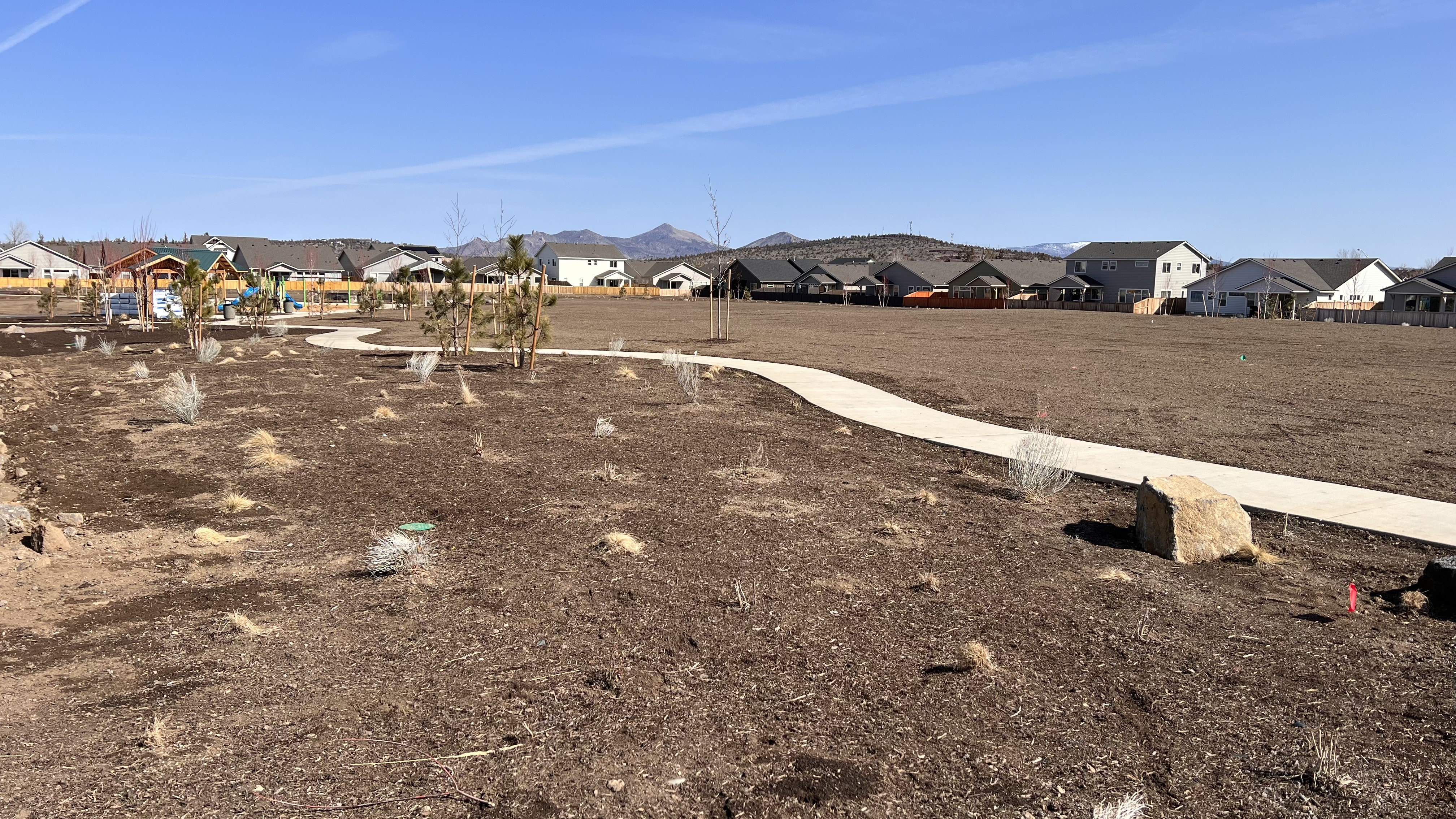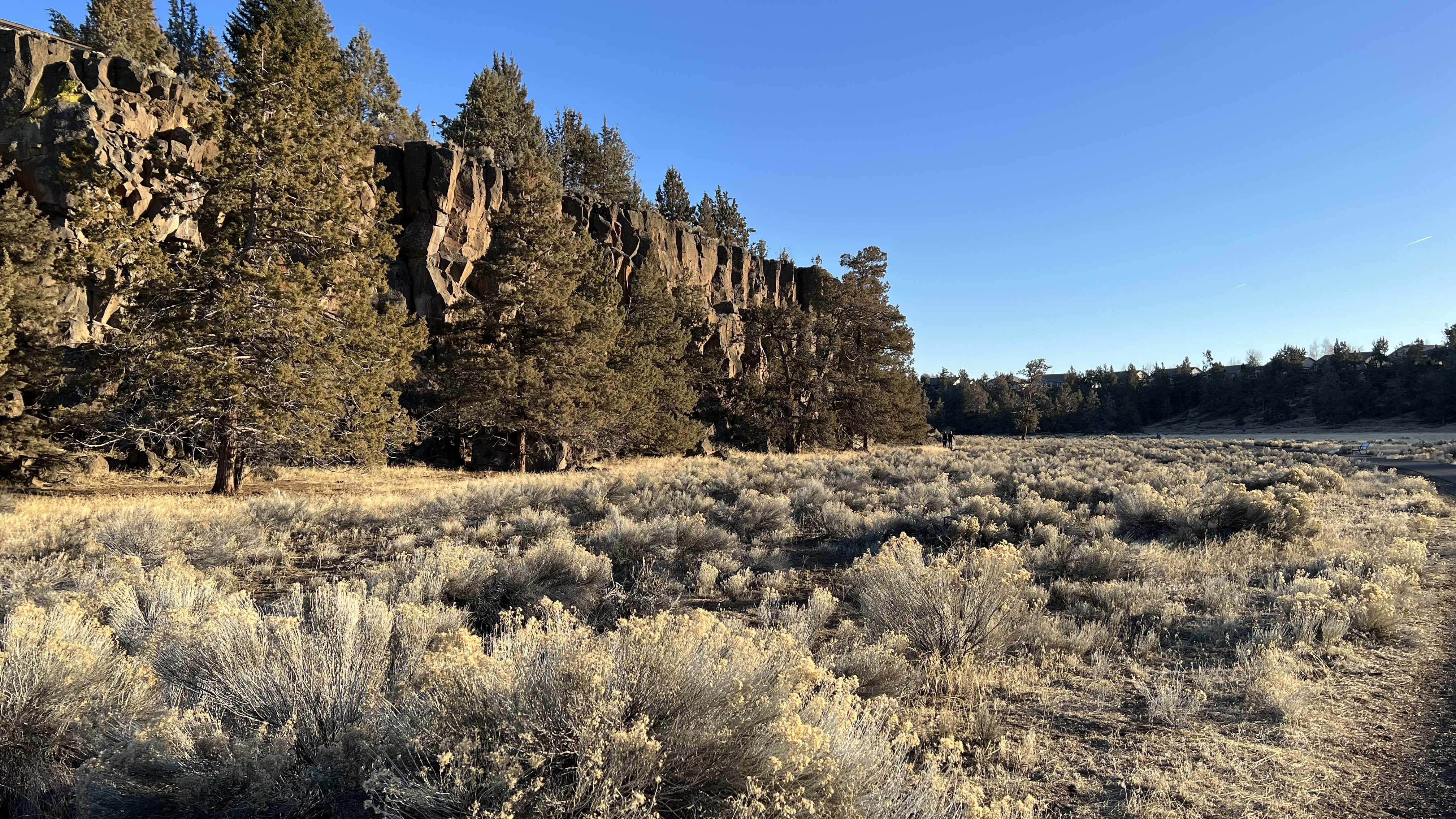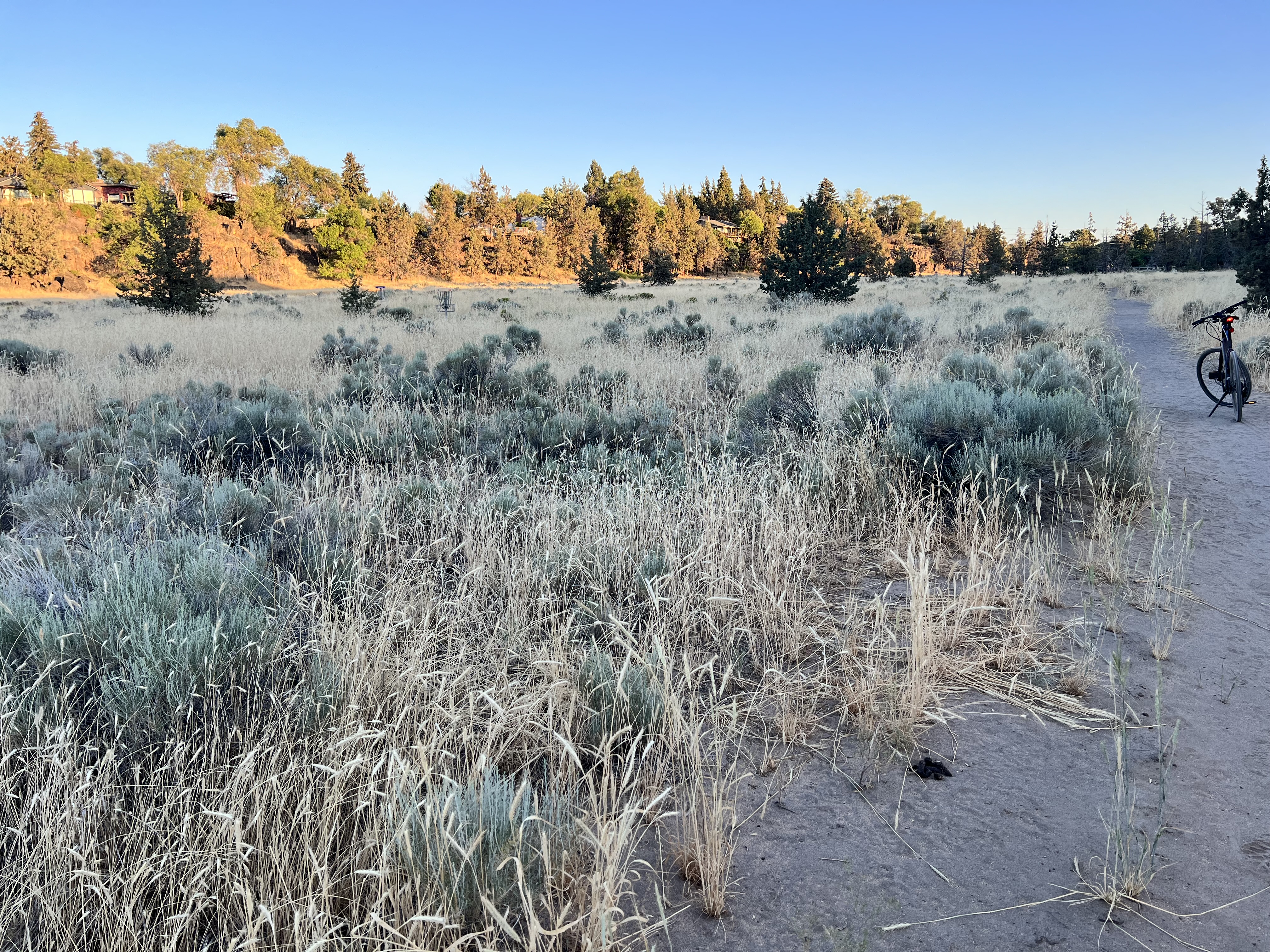
The bottom land in Redmond’s Dry Canyon was used for decades as low quality pasture, the native community pretty much obliterated. Those areas with surface rock are more likely to retain more of the original plant community, although Cheatgrass has invaded much of those areas as well. The is looking southerly over one of the larger ‘pasture’ areas near the disc golf course. There is very little Cheatgrass through this section south of West Rim Park. It includes a few native seral species which typically occupy disturbed sites as a site transitions, including Gray Rabbitbrush you see here. Found in this area too is Secale cereale, Annual Rye, a non-native, which appears to have been planted along more formal paths to limit Cheatgrass spread(?). Junipers are moving in. Sagebrush hasn’t yet.
It is commonly said that a weed is a plant out of place…and of course ‘we’ are the one’s who decide this. Some will try to argue that there are no weeds, that all plants belong and if we only left weeds alone landscapes would reach a balance on their own. If one’s time frame is long enough this may be the case, though this will take considerably longer than one of our lifetimes, and then there is our inability to actually leave landscapes on their own, or to at least consciously moderate our disturbance of them. Weeds are plants. They are not a separate classification of plants. They are plants removed from their places of origin and released into another where they have competitive advantages. Most people still simply tend to refer to plants they don’t like or want as weeds. These positions are at odds with one another. This leads to confusion and a lack of clarity, undermining any urgency to take action.
Weeds have become ‘personal’, their status a matter of ‘opinion’….A weed is a weed only if “I” agree that it is, or perhaps some ‘expert’, such as when agricultural scientist identify them as an economic threat to farms and label them as ‘noxious’. Without agreement and urgency there is a tendency to do nothing about them. Plants in general are attributed little intrinsic value. For many people they are just there. Native plants we vaguely understand as belonging to a place, but most people would be hard pressed to identify and name many at all. Quite different species are often lumped together, their relationships unnoticed. Natives are reduced to being ‘background’, their status reduced to decoration, attractive or not, a ‘space’ filler, perhaps a hinderance to what we would chose to do with a place. Continue reading
 We live today in a very divided and polarized world. You can take almost any characteristic used to define a group of people today and it is now being used to separate and divide. We do this sometimes out of pride, others, out of fear and desperation. We thus define our individuality, or our ‘people’, in a process of reduction, eliminating variation and possibility. This is who I am. This is my world, the world that matters. When we do this our world shrinks. That outside of it, becomes a threat and ‘threats’ proliferate. The causes of our problems are commonly reduced to ‘them’. Most of the divisions are, however inconsequential. Having been pried open we find ourselves separated by seemingly giant rifts, animosities greatly exaggerating the actual differences. Too many ‘leaders’, in bids to gain power themselves and cement their own advantage, beat the drums of division, gaining followers, customers and believers to their cause…which is often something very different than what they may publicly say. A world built on such differences is a precarious one, as groups strive for security by focusing on the differences rather than on the infinitely more common shared links which join us. This country was, in many ways, built on such differences.