Category Archives: Natural History

On Healing: Life, Place and Relationship in Oregon’s Great Basin Country

The massive fault block of Hart Mountain, Poker Jim Rim in the distance to the north. The gravel county road switchbacks up the more than 3,000′ beginning from the center in the distance here. From here this is how you get to Steens Mountain without doing miles of backtracking.

I woke up this morning to the sound of bird song…nothing else. There were Western Meadowlarks and a multitude of others, I’m sorry to say I don’t know, but beautiful and distinct. I was laying in bed, atop our truck, thinking about how rare an event this is for so many of us…not that the birds aren’t here greeting the morning every day, but that so many of us aren’t ‘available’ to hear them, sequestered away safely in our homes, otherwise occupied or, more commonly, the birds literally excluded from our urbanized and ‘modern’ places of residence, their own places developed/destroyed. Entire neighborhoods and cities excluding all but the most common songbirds and passerine species.  Little quarter is afforded most wildlife in modern development…and that upon which their lives depend.  Continue reading

Dry Canyon Proposal: the need for change in maintenance, use and planning

[The following is a piece I wrote and sent to our local Parks staff, its advisory citizens committee, mayor and city manager…I got little back in response. I’ve developed a relationship with one of the city arborists and the park’s planner as well as have met several active neighbors interested in protecting Dry Canyon’s natural areas, several of whom have natural resources backgrounds with agencies. The City has no natural resource or botanical staff. There is no formalized friends group, nor is their an outreach and public education program that addresses these problems and the role of residents in their solution. Signage is minimal and inadequate. Their horticultural expertise would also seem quite limited. This is understandable as the City’s population has grown very rapidly in recent years. The need for such programs and an increase in expertise on staff will only increase as Redmond’s population continues to grow.]


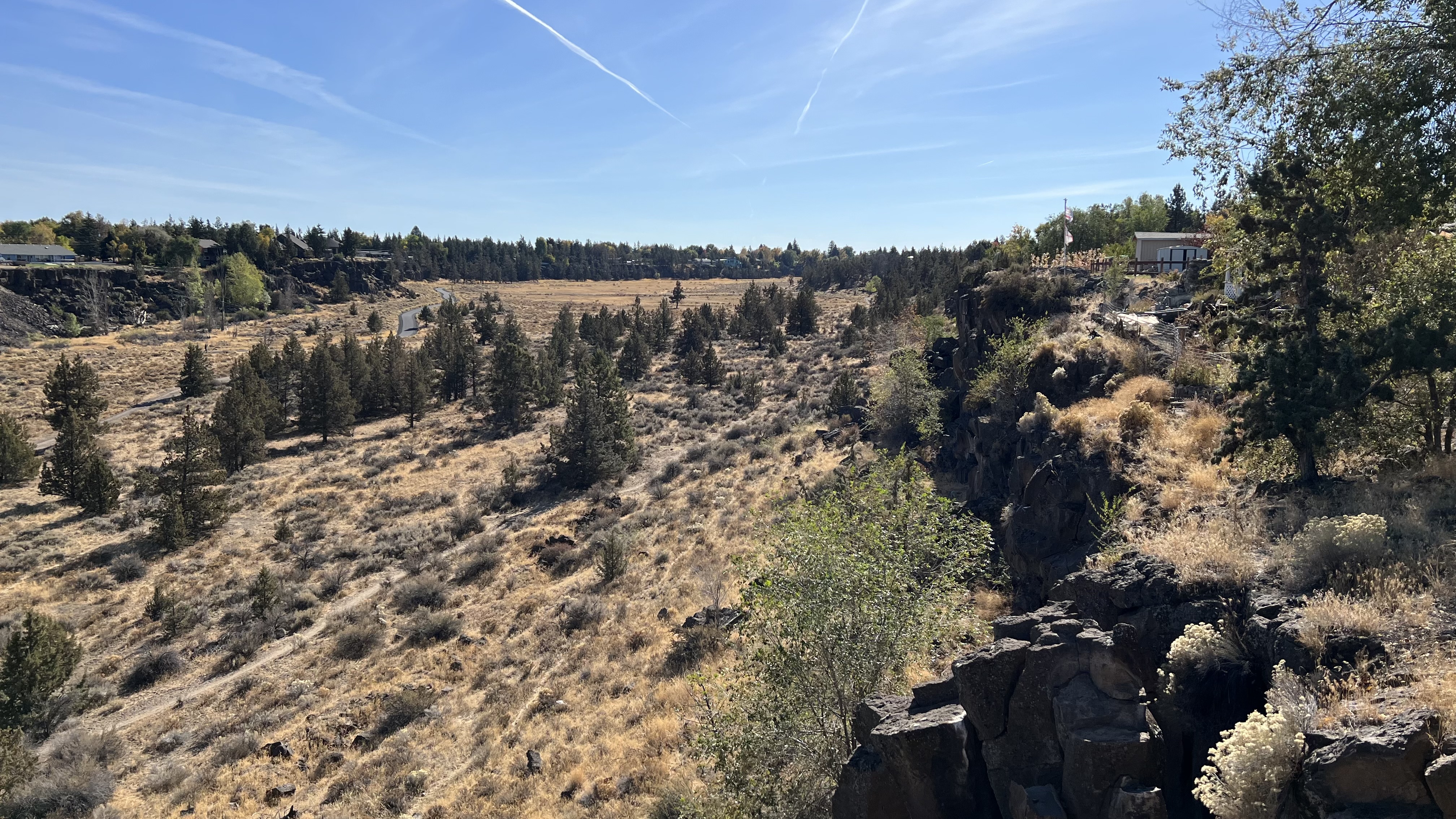
Redmond’s Dry Canyon looking south from the west rim on the Maple Street Bridge. The area in the immediate foreground burned this last summer.

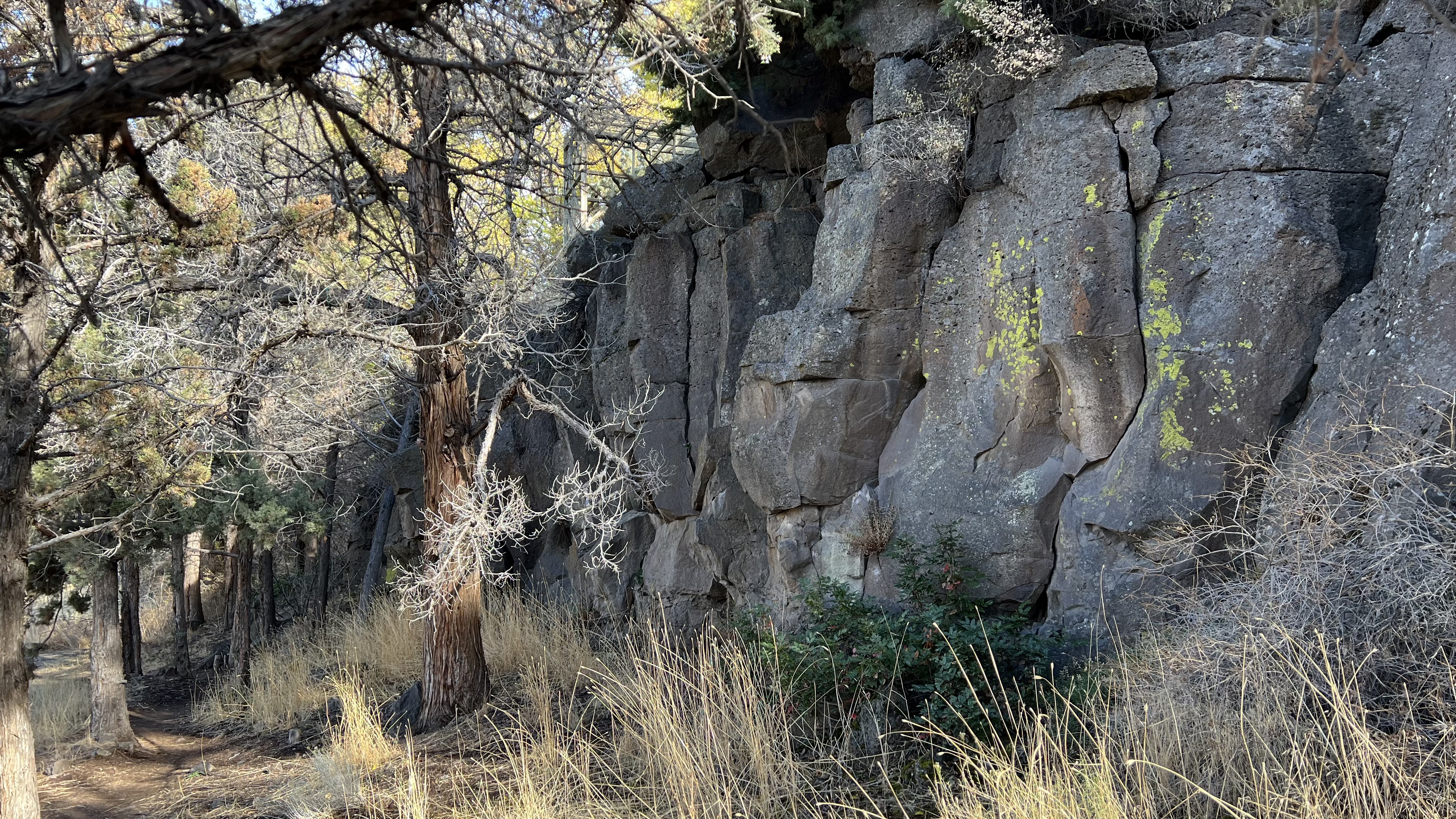
A typical view at the base of a section of relatively unbroken rim on the east side.

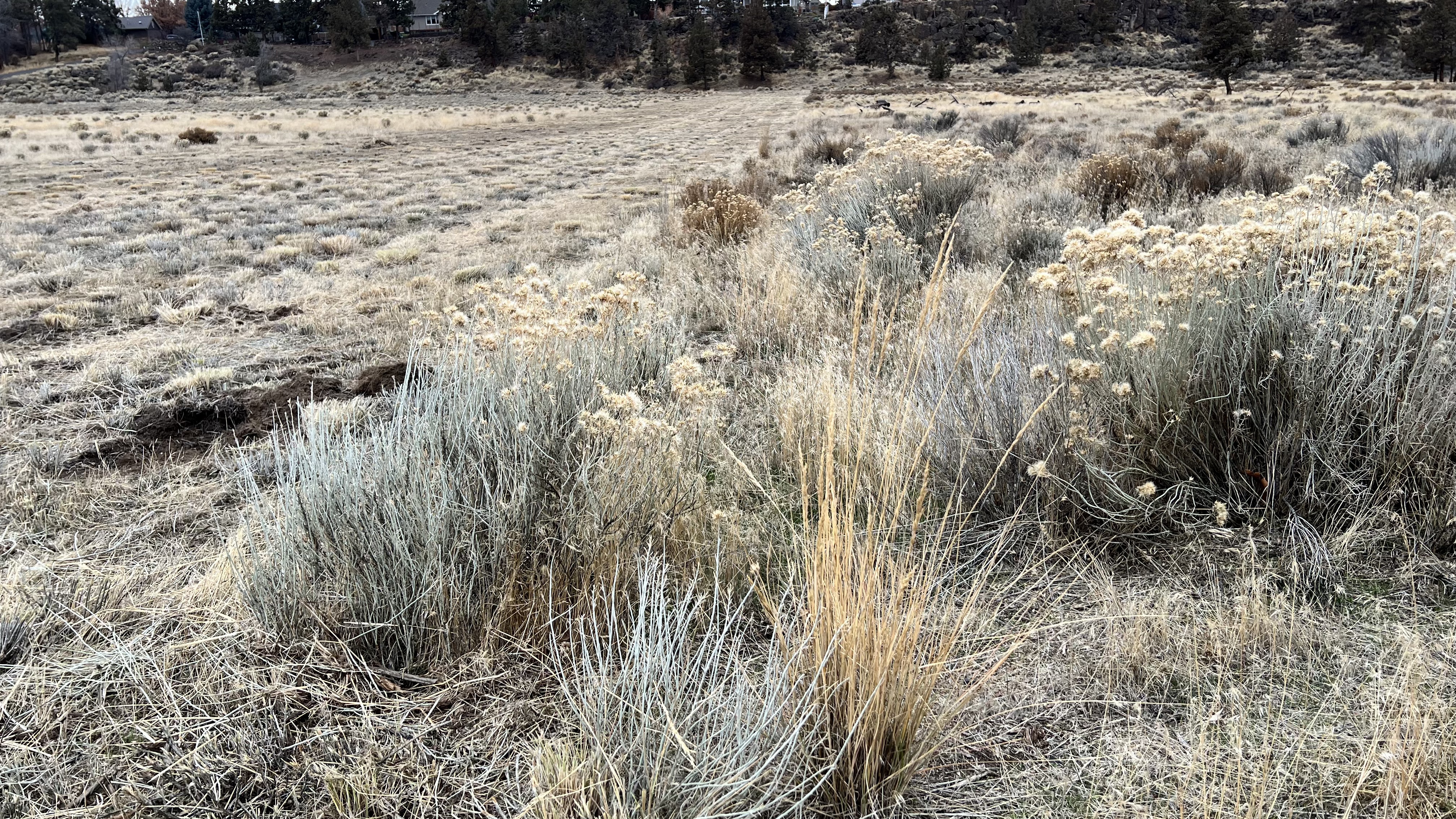
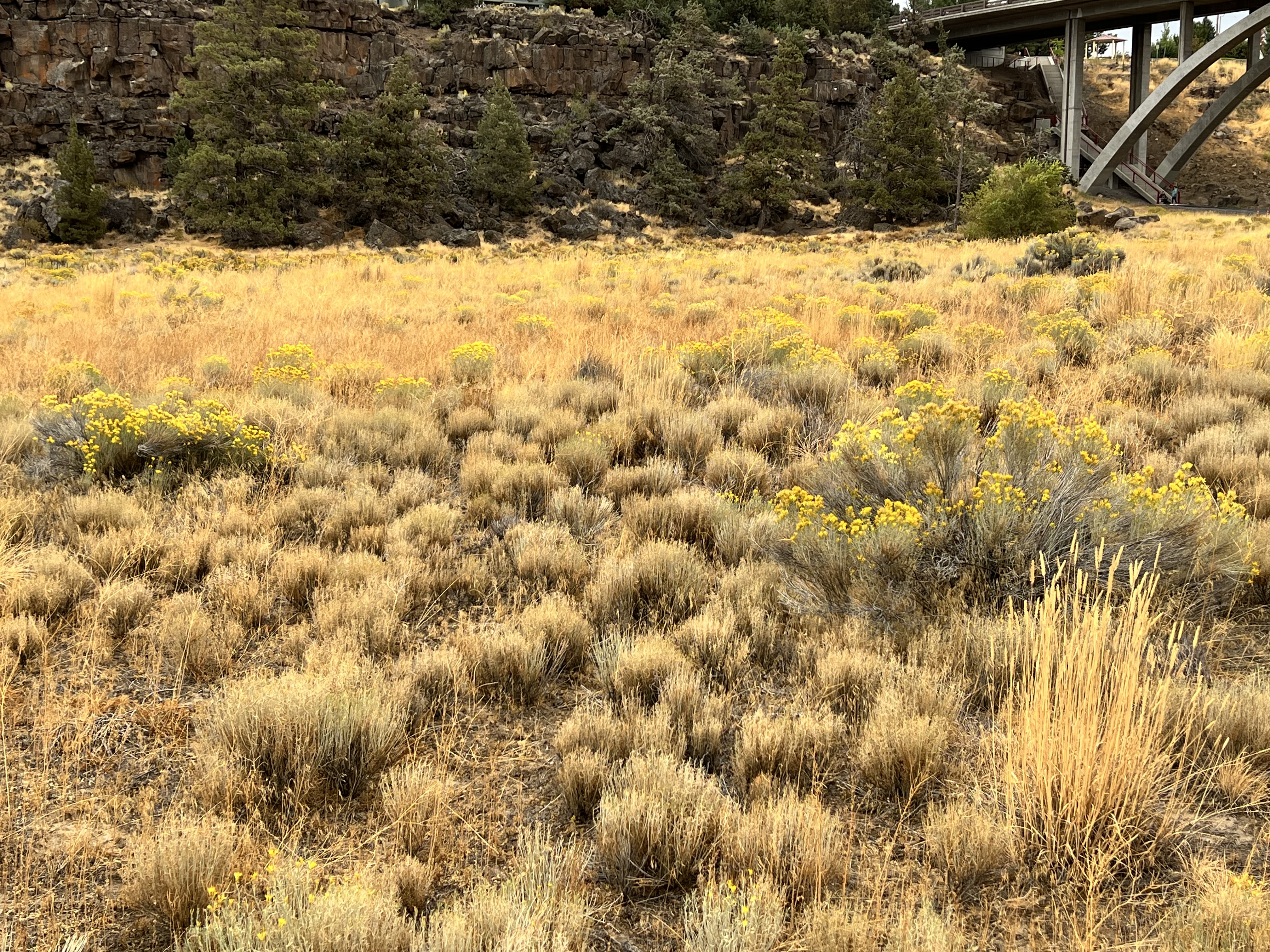
The canyon floor is variable, but as this pic shows, a solid layer of hardened lava underlies what soil is here, either blown in or washed in, a limiting factor of what can grow here. Rabbitbrush is a common and ubiquitous native pioneer.

Match of the canyon floor is recovering from pasture use. These areas have relatively deep soils and are still transitioning with many weedy mustards, annual grasses like Cheat and planted grasses like Crested Wheat and Annual Barley. Native Bluebunch Wheat is scattered as are other natives. Gray Rabbitbrush, a native seral species has moved into much of it, but the weeds are dominant. Sagebrush and Bitterbrush are more at the edges and lower rim areas.

This section of bottomland, former pasture, probably burned not that long ago, has quite a colony of Rabbitbrush coming along, all it would appear of even age, suggesting a fire. Rabbitbrush are early colonizers and ‘prepare’ the way for natives to follow. This is just north of the Maple Bridge.

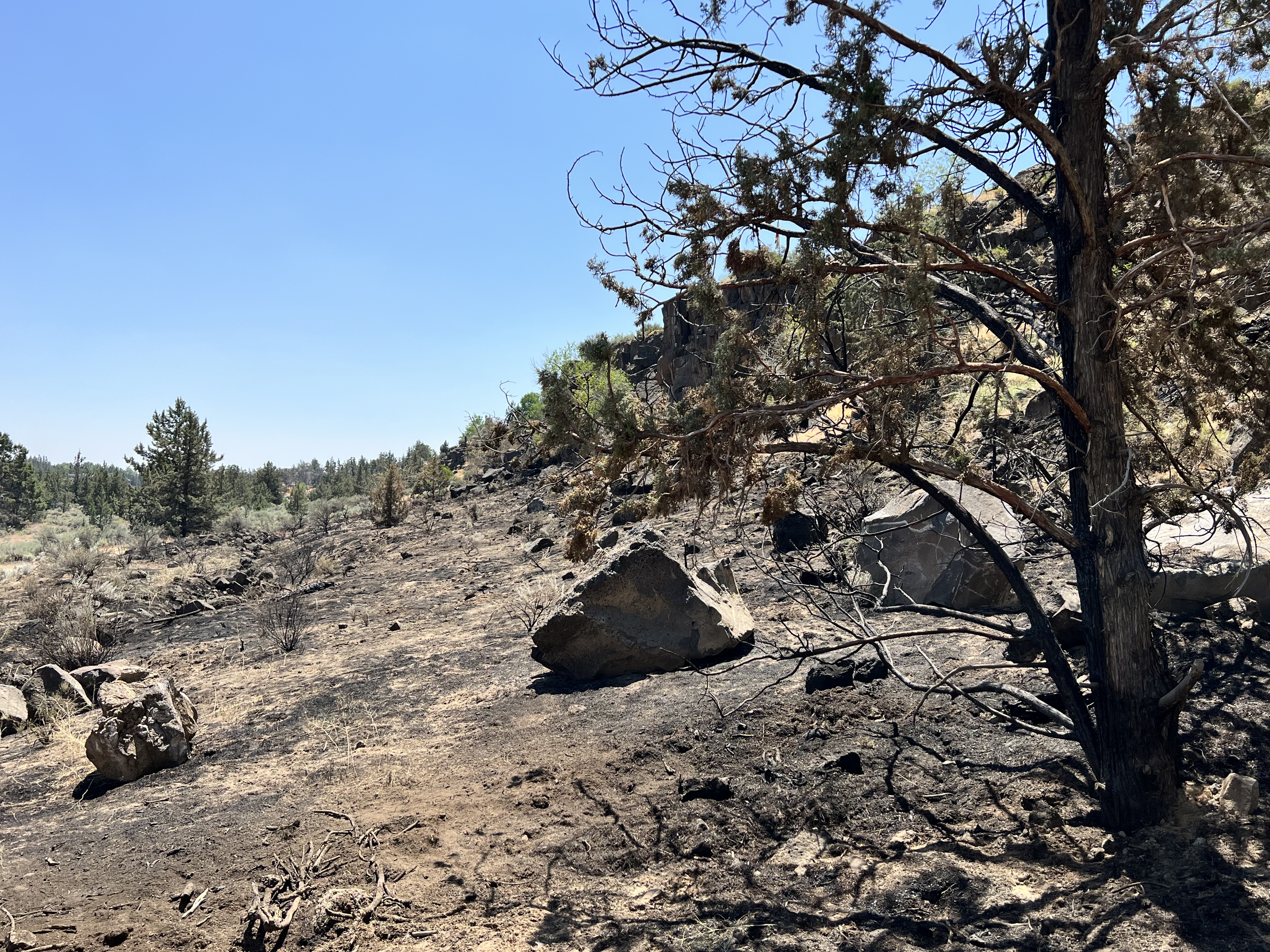
This area, maybe 5 acres, burned in July. It will be interesting to see what comes back and what the City may plant??? Fire kills Sagebrush and Juniper, while it seems to favor Cheatgrass. So far, April ’24, nothing has been replanted. The window for seeding is closed. Rabbitbrush can survive a burn. This site is unfenced, with very fragile soils and we’ve already observed new bike trails in it.

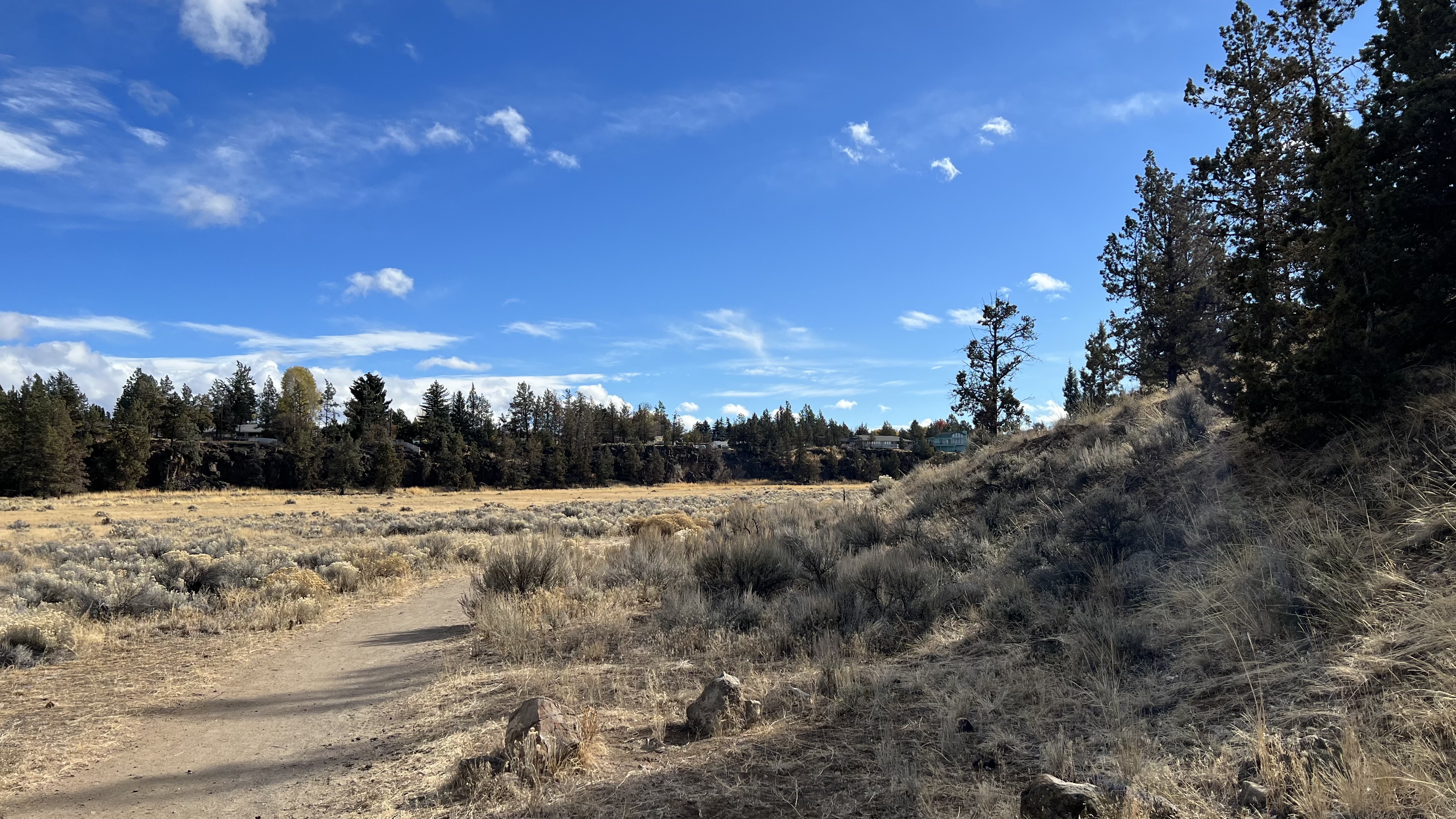
My wife and I are both recent returnees to Central Oregon having both grown up here. We are also frequent walkers in Dry Canyon, a place I spent many hours in playing and exploring as a kid in the 60’s. Redmond has changed a lot over the intervening years…change that continues apace as it grows. I’m not going to whine about the ‘good old days’ and things lost. Much of the change I welcome or at least accept (We did move back!), but population growth, in addition to bringing along economic vitality and stability, new and enriching opportunities and a more diverse community, increases the ‘pressures’ on the naturally limited assets that largely define the place and attract residents. I’m speaking here of the natural landscape, its features and the opportunities which it affords us for recreation and quiet enjoyment. Realtors were once fond of saying that no one is making new land, as a prompt for buying…it is a fixed and limited quantity. This limitation has profound implications for a growing population. We have far more people today ‘enjoying’ a limited, and increasingly over utilized landscape. Continue reading

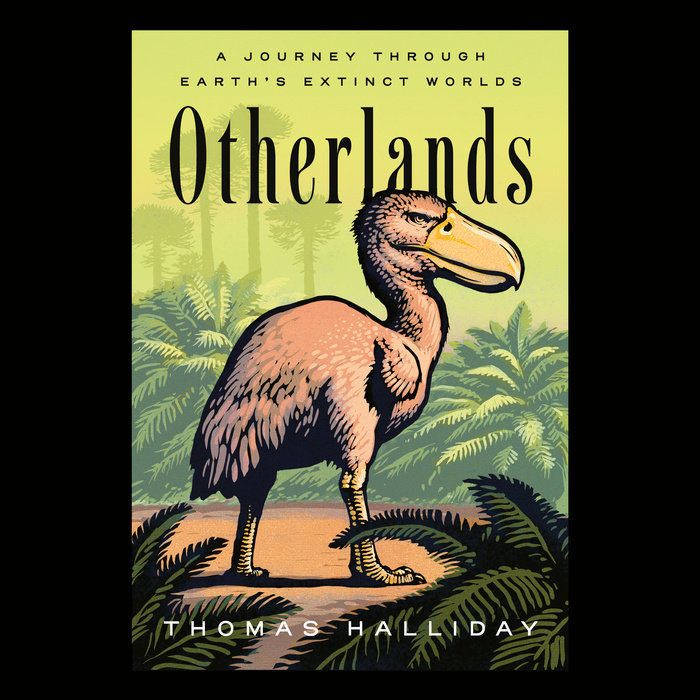
Otherlands: A Journey Through Earth’s Extinct Worlds, a Valueable Entry into Understanding This World

Otherlands by Thomas Halliday | Penguin Random House AudioI mostly read non-fiction, books on history, the ‘natural sciences’, about life. I get my fiction in the form of television and movies, graphic novels and no, there is a lot more out there other than the limited, repetitive genre of super-heroes from the DC and Marvel universes. I’m drawn to the speculative stories, alternative tellings of this world, of life lessons, attempts to reimagine the past, or invent possible futures, stories that question what we are generally taught in this life. But really, I’m a science guy, reading those authors who draw from the leading edge of science, and the scientists themselves, who are skilled enough communicators, not something that necessarily is companion to those ‘doing’ science, those who can clearly discuss what they’ve learned and present reviews of entire fields of study, which strive to show the reader how our understanding of the world is changed.  Continue reading

Knapweeds in Redmond’s Dry Canyon and the Pursuit of a Healthy Landscape

Redmond’s Dry Canyon looking south from the west rim on the Maple Street Bridge. The area in the immediate foreground burned this last summer.

If you garden, or maintain a landscape, you come to understand that not all weeds are the same. Each will have its own ‘strengths’, or perhaps you might call it ‘virulence’. Any particular weed, just like any other plant, will respond ‘positively’ to supportive growing conditions, conditions which often closely align with those which exist in its place of origin. Plant explorers and nursery growers are always looking for ‘new’ plants for landscape use. in a way, they have to walk a fine line. They must find plants, that with reasonable effort on the part of the gardener, can thrive across a range of conditions, unless they are looking for specialty plants, for narrow, niche, markets. The introduction of new plants must be somewhat measured, our enthusiasm tempered, because plants which are too adaptable, too vigorous, may possess the ability to escape our cultured gardens and find a place in the surrounding, uncultivated, landscape.

For Central Oregon, when we look beyond our regional natives, we must keep this in mind. Exotics from similar growing and climatic regions around the world offer both promise and threat. We want our plants to be successful, but not too. Sometimes through the process of trade, the movement of livestock and agricultural products, particularly aggressive species hitch a ride. A few weed seeds can be easy to miss. If they are aggressive enough and go unnoticed, a distinct possibility, it is likely that they wont be detected until a sizable local population asserts itself…and if no one is watching, that can be a fateful error. One group of plants, with many wonderful possibilities, also include species which can be exceedingly problematic here in Central Oregon, these are from regions sometimes referred to as Steppe. Continue reading

Spruce Park, Redmond’s Newest Park and Our Neighbor: a horticultural critique

Redmond’s Spruce Park looking NNE from the SW corner toward Gray Butte and Smith Rock in the background. The border beds which follow much of the loop path are ‘native’ plantings according to the conceptual plan. It is common to claim that most of the plants are natives in designed natural areas, but native is not synonymous with ‘natural’. Although natives are used here concessions have been made including such plants as Echinacea purpurea ‘Pow Wow Wildberry’ and Rudbeckia ‘Goldsturm’. In a strict sense Ponderosa Pine aren’t native to this immediate locale either, they require more precipitation than we normally get and the Autumn Blaze Maples are a hybrid of two northeastern North American species.

A landscape, in nature, is a whole, functioning system, capable of perpetuating itself, through out the seasons and years, relying entirely on its own conditions and the cycling of energy and resources occurring on and within it. This is also the definition of a modern sustainable landscape. Ideally they require no inputs or energies supplied from offsite aside from the sun, precipitation and the normal cycling onsite of nutrients and water. A human made, contrived landscape, as all of those built by us today are, may be ‘judged’ by how well they function on ‘their own’, by how well they fit this ideal. Labor and outside inputs necessary to maintain a landscape are then indicators of how out of balance, how far from ‘ideal’ nature and genuine sustainability, a landscape is. A contrived landscape, which ignores the relationships integral to a healthy landscape community ‘demands’ more and more maintenance and support. Given its design and use, a landscape which ignores its site and relationship requirements will deteriorate from the intended design, losing to death component plants while gaining, increasingly, more unwanted available weed species. Design, conditions and use are essential to determine, in this sense, what a ‘good’ landscape is. Continue reading

Fen, Bog and Swamp: A Short History of Peatland Destruction and Its Role in the Climate Crisis , a Review

For another review: link

Novelist Annie Proulx, begins her book with her childhood, giving us an idea of who she is, her attachments to the living world. She takes us with her on a walk she took with her mother as a young girl, through the neighborhood wilds, to an ignored patch of swampland. Her mother loved such places. She places her story in the larger story of the times of her birth and coming of age, of the 1930’s and the cruelties we perpetrated on each other and our limited view of the natural world, a world set as a table before us, for our consumption. She writes of her attachments to these abused and devalued wet landscapes, their necessity for a healthy natural world and what their loss means. Earlier, I reviewed Edward Struzik’s book “Swamplands”. Struzik has spent years working with researchers and conservationists in the field, and writing of his experiences. Proulx’s approach is much more personal as she works to place bogs, fens and swamps into a human, historical and cultural context. Continue reading

Swamplands: Tundra Beavers, Quaking Bogs and the Improbable World of Peat, a Review

The idea of individuality and control, key elements of the American psyche, are a self-deception. We can take an individual action, guided by an intention, and see its effect in the world around us, but after that, the first ‘tier’ of effects, there are secondary, tertiary and others beyond them, as what we have effected spreads out across space and time, effecting those things, beyond our focus, that nevertheless are in relationship, and do and must respond. If we’re paying attention we can see them and attribute them to others, unaware of our impact. The world is so large and complex, while we individually, commonly see ourselves as relatively ineffectual. We often don’t recognize our own agency and how collective effects propagate from our action. This can also support the idea we ‘can’t’, in a significant way, damage the systems and cycles that support life on Earth. What we must understand though is, that as members of societies and cultures, which share economies and technologies, our ‘individual’ actions are ‘shared’, they are multiplied, often many millions of times. We act individually, but we have tremendous collective impacts. By denying this we deny individual responsibility, which in effect, is a cultural denial, permitting the negative impacts to continue. “It’s just me!” “It doesn’t matter.” “It’s their responsibility, not mine!” These collective problems are then left unaddressed.

It is easy to believe this way. There is so much beyond our own control, so many problems, that it must be this way right? No. We are responsible, collectively. We never truly act independently, because we live in relationship with those around us and their, and our, influence over one another blur. Like it or not, we are a part of a larger society. To go against the conventions and norms of society, to act independently, is risky, to ourselves and the world around us…a risk which can bring with it changes, either positive or destructive. However, going ‘along with’ the norms and conventions of society, unquestioningly, is to possibly continue a potentially destructive practice. We are responsible. We have necessary roles o play. We have been relatively bad as a society at discussing our wider actions, of working to understand our impacts and insuring the security of life and its necessary conditions. Too often we comply, go along and continue doing those things simply because we ‘always’ have, forgetting that as our numbers and use continues to grow, so does the potency of our impact. We have been habitually confusing short term gain and comfort, with longer term survival and good. The consequent results of those unexamined actions can become devastating. To continue ignoring our negative impacts on others, in its broadest sense, is ultimately a threat to our own well being and security. Uninformed actions, actions taken selfishly at other’s expense, threaten the whole, because of the ubiquitous and pervasive connections to the world and between all people, places and organisms. Our denials will not change this. So, why do I bring this up? This is a gardening/horticultural post…because, what we do, or don’t do, in our gardens and across our shared landscapes, has impacts well beyond their borders. Continue reading