Category Archives: Plant Communities

Death and Life in the Garden: Learning in the Garden Classroom

As gardeners our hands are ‘bloodied’ with the chlorophyll of plants…while it may not stain us as ‘murderers’, we are never the less complicit in their deaths…as much as we are necessary for their lives.  Without us, as a group, these garden plants would never would have been propagated and, if not for our ‘selfish’ acts in the garden, choosing, designing and displaying them, many would be passing into obscurity, most of us knowing nothing of them or of their loss, their passages into decline and extinction, even more quiet, unnoticed, as too many already do today.  While we may acquire and attempt to grow them with the ‘best’ of intention, eventually, they will all die, ill fit or not, suddenly or after many years in our gardens, as a result of our ignorance, impatience, simple curiosity, our desire for something ‘different’, or even in spite of our best informed efforts.  Death comes to all things and our gardens are no exception.  Our gardens art artificial after all, creations of our making and they do not comprise a viable population that will out live us, reproducing in place, making the adjustments that they must over time to survive.  To do this would take an unprecedented amount of effort and coordination on our part and that of our neighbors.  The setting of our gardens are unique to us and their purposes are much narrowed and more intentional than are the places their progenitors come from, the ‘gardens’ of their origination.  For many of these plants our relationship with them might best be thought of as student to teacher as nature sacrifices itself in an attempt to teach us of what is being lost, ever since we stepped out of the loop that once put us in daily direct contact with nature and came to embrace this modern world and its expectations of consumption, ‘ease’ and never ceasing growth…so it is not ‘murder’, it is life, an attempt to return and reclaim.  There is purpose to be found in our gardens, well beyond surface amusement and distraction in what is too often becoming an ever uglier world, or for some of us our need to impress in a game of one-upmanship.  Nature demands more of us, that we accept our role as student and become careful observers, willing acolytes…maybe even crusaders….Too much? no, I don’t think so. Continue reading

Our Gardens as Teachers


Of all the things our gardens do for us, arguably the most important is their role as our teachers, even in winter when a temperate garden ‘rests’, its surface crust or top few feet, frozen, maybe sheltered beneath the cover of snow, or, as ours so often are, simply too cold for active plant growth, the soil wet, the rain too heavy to percolate fast enough down through its layers, without the active aid of either the direct heating of the sun or its effect on plants, through evapotranspiration, pumping water back into the air as the plants grow.  Gardens teach patience.  They encourage us to become more careful observers…to think and plan, to anticipate and prepare, to understand that there is more going on here than we can readily see…and they teach us about faith and trust in the natural world, that there is always more going on than we can see. Continue reading

A Closer Look at Jimi’s Beautiful Obsession, A Review of Chosen Plants From his Presentation, Part 1

It would seem that gardeners are a difficult lot!  For those of us intent on gardening with ornamental plants we are continuously drawn to the exotic and novel, sated less and less by the plants in yesterdays’ garden…at least until those have had suitable time to have fallen out of fashion and are rediscovered. For most of us it is the plants we’ve never grown, or even seen before, that draw us.  This is as true when we ourselves are novices as it is many years later.  Sure, we all have more than a few long term relationships with particular plants, but we seem forever subject to the seductive calls of the unknown (to us)!  For many of us this is at no time more true than when nurserymen, on the ‘cutting edge’, and plant explorers come to town, especially if they come bearing pretty pictures…Even mores so when paired with the opportunity to acquire them.  Instant gratification.  It is a conspiracy you know. Continue reading

The Lower Deschutes River: the Incursion of Invasive Plants and our Failure to Responsibly Maintain Native Plant Communities

This picture should give anyone more than enough reason to visit here, the Deschutes sliding out its mouth into the Columbia with the Washington side of the Gorge in the distance, the low angled early evening sun illuminating everything sharply.


[As I go over this post yet again, July 21, the 80,000 acre Substation Fire is still burning across canyon and wheat country here.  Included in the blaze are the 20 miles of the Lower Deschutes canyon down to the campground at the confluence with the Columbia.  Much of this burned down to within 2′ or 3′ of the riverbank including the historic Harris Ranch buildings.  So, when you look at all of these pictures, with the exceptions of where the fire hopped and skipped, everything is charred.  The Oregon Wildlife Federation, formed in the 1980’s to purchase and protect this portion of the canyon, has stepped up with $100,000 to help the area recover.  It will take considerably more especially if there is any intention of making headway regarding the spreading invasives problem.]

[Now, another 2 weeks later more massive fires continue to burn across the dried up West that has just experienced another record breaking month of heat, while the president goes on ‘bleating’ and blaming it on our ‘bad’ environmental laws and all of the water we’re diverting into the ocean!  ‘F’ing! moron!]

The last time we came here was eight years ago in December.  My memory of then is much like the experience on this evening…only it was clear and cold.  The light was similar except that then the low angled sun was due to winter, with that season’s urgency, not a late Spring evening like this outing.  This time it is warm, camp is comfortable and nearby and the greens are still gathered around the river and the still moist draws and seeps.  On that day we’d gone to Hood River for my birthday, to get out of town and there was a break in the weather so we drove here to these trails at the mouth of the Deschutes, hiked along the river, returning on the upper springs trail.  Winter or summer, green only sticks around a little longer than we do, before it retreats…life is shier here, tough, but shy.  The starkness of this landscape should be read as a warning to visitors, this is no easy Eden.  Life is earned here or at least requires a strength, patience and frugality that many don’t have.  This is much the same for people as it is for wildlife and plants.   Them that don’t, can’t.  That’s why it may be surprising to some that such a place has a problem with exotic invaders.  What could possibly look on places such as this as ‘favored’?  Well, Central Asia, especially its Steppe, with its continental, cold and dry climate containing many species that see such a place as this as home, or even better, without the competitors they faced back there.  The temperature can swing widely here on any given day while the seasonal extremes can vary as much as 125ºF from high to low.  Relatively few plants can thrive in this.  The dry summers with their very limited and sporadic thunder showers, combined with the ‘wet’ winters, total only 10″-12″ or so of precipitation, plus or minus, is another major limiting factor.  Of course, near the river, the moisture problem is moderated  and a broader range of invasives can find a ‘foothold’.  We, as a people, have ‘brought’ these weeds here with us in our travels, often as a result of our commerce.  Those that have made it here are spreading.  Too many prosper. Continue reading

The 2018 Garden Riots Awards for the Northwest Perennial Alliance Seattle Study Weekend!

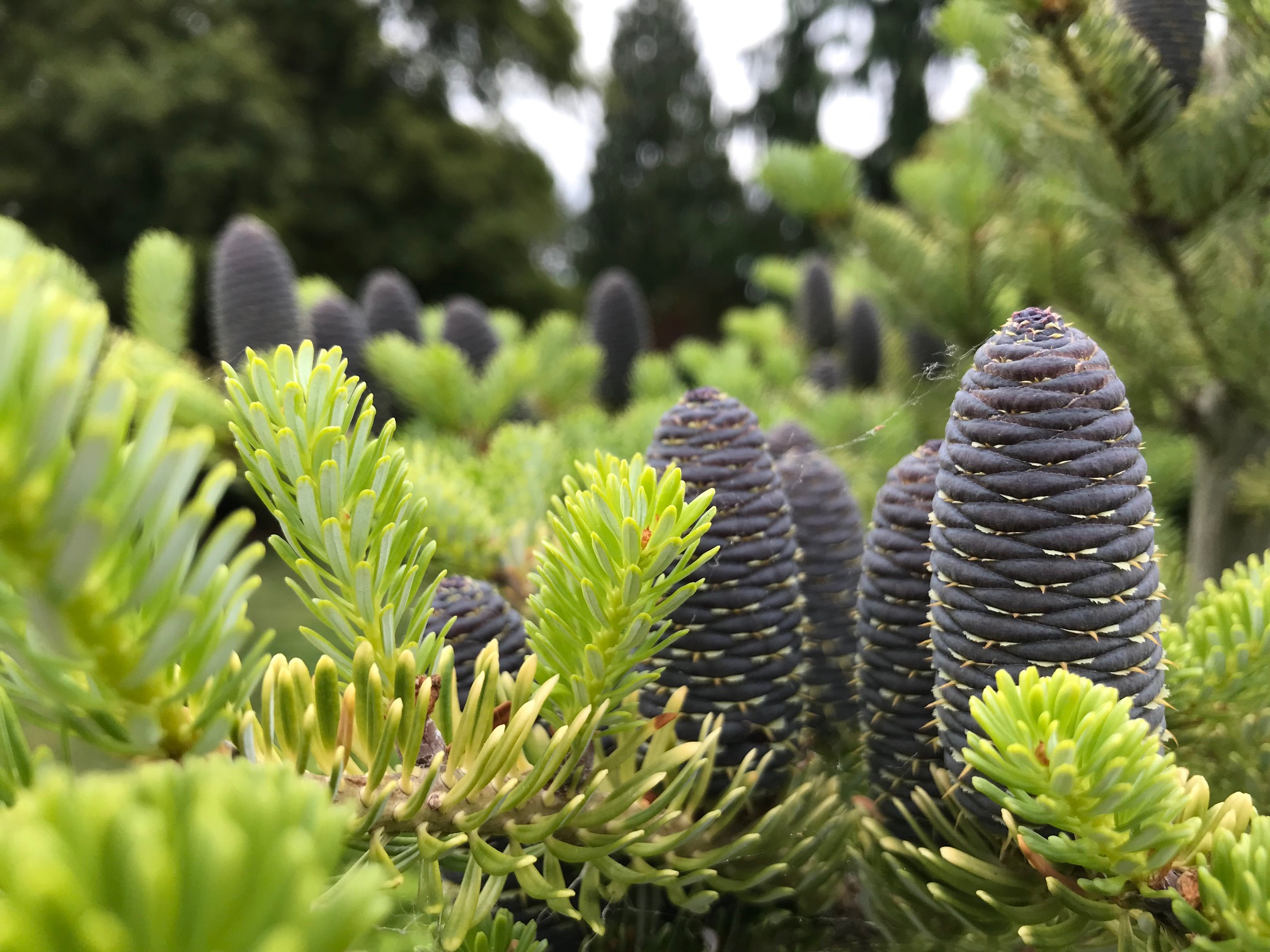
Abies koreana, in Jim Gutherie’s garden, looking exquisite.

These are my own personal favorites for the Northwest Perennial Alliance’s Study Weekend in Seattle. This is not official, nor the result of even a casual survey of attendees, just my own selfish opinions….

All of the speakers were great!!! I mean this, seriously. I am not known for my PC’ness or empty platitudes. First, goes to the brother and sister team Jimi and June Blake from Ireland for their informative and infectious talks on their gardens and plant loves, for the attention that June brought to us of the history and unique contexts of the place where she gardens, her design sense and ways of working. I particular enjoyed Jimi’s understated wit and sense of humor and our shared plant sympathies, including his for Salvias and his many other favorites as well as willingness to tear into and completely revamp his own garden. If I’d only had the list of plants that they chose to talk about, that would have been plenty enough to have gotten my attention, but their abilities as presenters, as interesting people and characters, brought it all ‘home’. Loved the ‘blue’ Jimi. You’d never catch me dead in it, but on you…it fit perfectly. Continue reading
Cottonwood Canyon on the John Day River: Place, Plants and Experience

IMG_1077

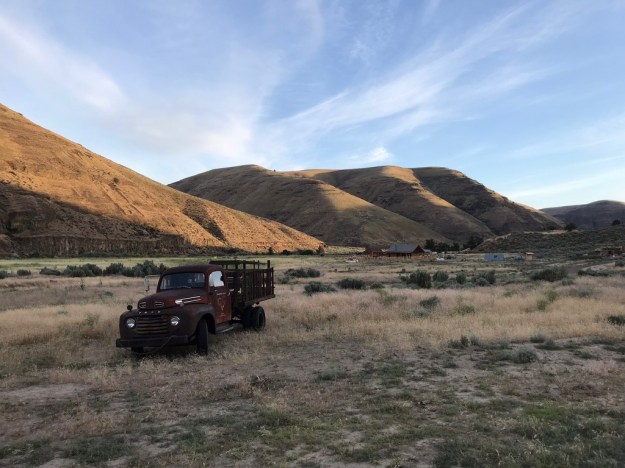
Cottonwood Canyon State Park, near the campground, looking upstream toward the old Murtha barn and common buildings, the evening sun climbing the worn canyon sides. The Park retained some of the old ranch equipment.

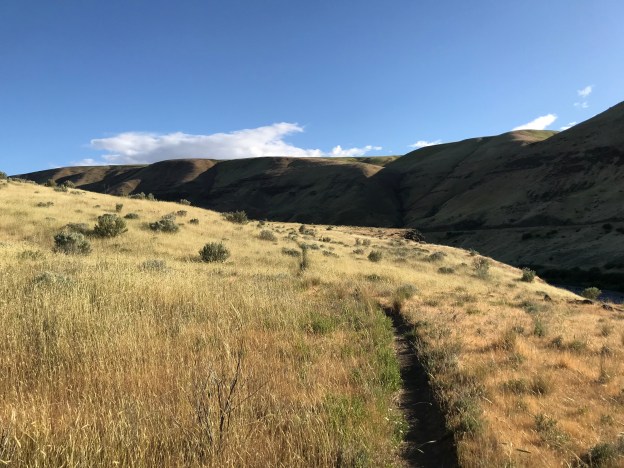
Massive lava flows pushed around the lower John Day and Deschutes rivers over the course of several million years leaving them to find and carve new routes, often next to the very ‘plugs’ that filled their former canyons!  Today, deep below the layers of hardened basalt that form the palisades and ramparts projecting out in tiers from the smooth full curves that rise above us, we look through 15 million years of accumulated history.  The fine grained basalt shatters and fractures in line with their mineral structure under the forces of water, weather and gravity.  Sagebrush and grasses dominate revealing an oddly ‘netted’ pattern across the sloping canyon hillsides, lit by the often harsh sunlight, illuminating some kind of subsurface movement of the thin soils that soften the slopes.  The ‘net’ looks as if it had been draped across the land then stretched sideways catching and snagging on what lies beneath in a never the same, but consistent repeating pattern.  It shows best when the angle of the sun comes across the pattern, not when it hits it head on or when clouds make it too diffuse.  Coarse falls of shattered basalt spill down to the canyon’s bottom always seeking their angle of repose.  The sagebrush steppe plant communities cover the surface and in their richness and vigor speak to the soils beneath.  Along seeps and drainages cutting verticallly down the canyon’s face, spring lasts weeks longer, and species crowd in that you won’t see other than near the river.  The surface botanical palette in this way reveals what lies beneath…if one knows what to look for.  Cottonwood Canyon State Park is a great place to observe this. Continue reading
Hiking at Riley Ranch Nature Reserve and Along the Deschutes River

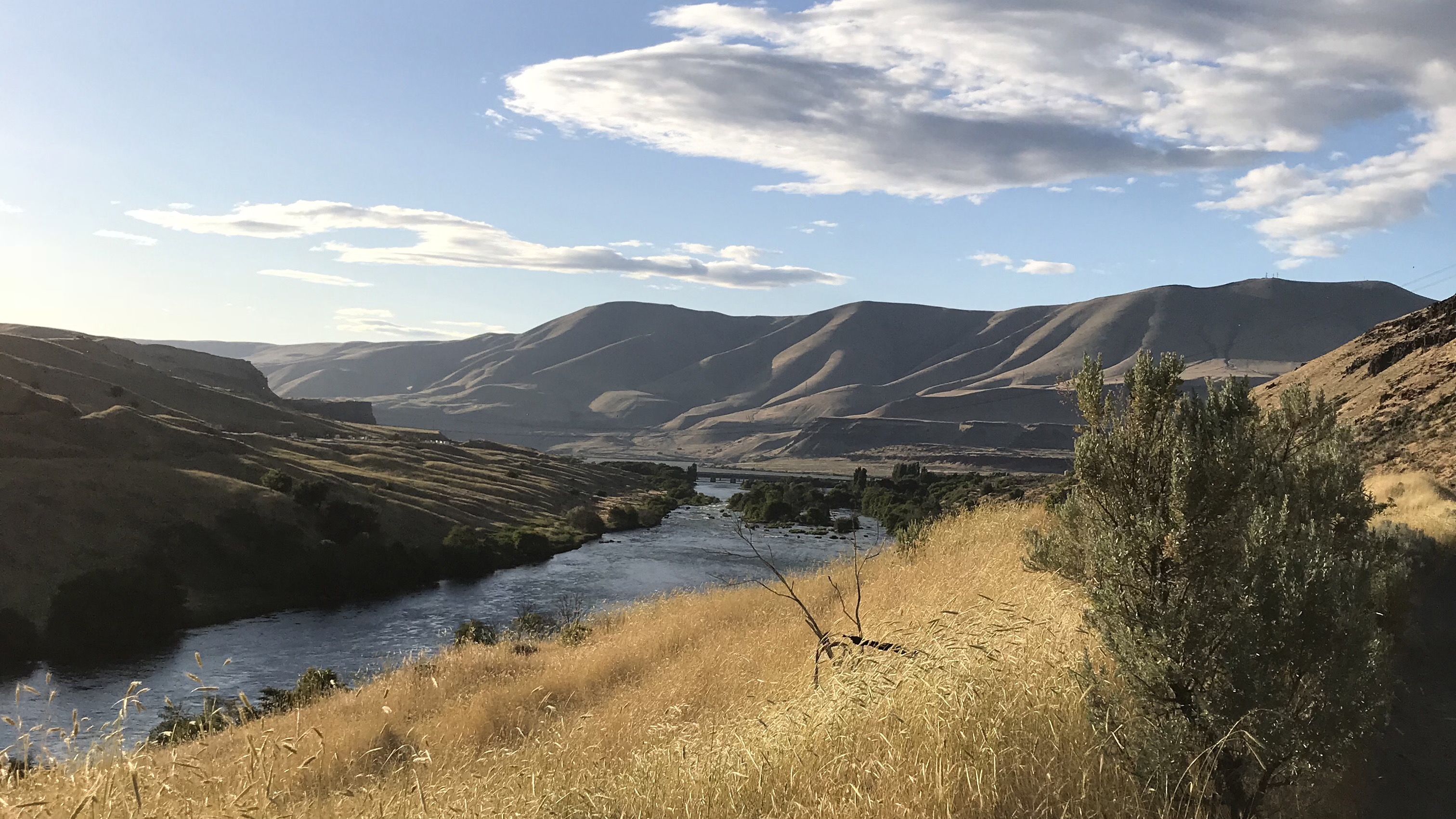
It’s the edges, the margins, that always contain the most diversity.  Large expanses of unbroken landscape take a portion of their character from their scale, a vastness, that the uninterested can often view as monotonous.  Seemingly endless expanses of ocean, desert, prairies even forests, can lull some into indifference, a kind of blindness, in which they lose interest and fail to see the intricacy and richness of that which surrounds them….By overlapping two different landscapes places can take on a complexity that neither has alone…and may even arouse many of those inured to the natural world surrounding them.  Two different landscapes sharing a common edge can form ecotones, where each landscape contributes species in patterns not found across the vastness of each alone.  Cut a river through an arid landscape and it becomes altogether different often with stark changes within a few feet.  Such is the arid canyon landscape of the Deschutes River immediately north of Bend, OR.


Continue reading
Rimrock Springs, on the Crooked River National Grasslands: A Look at the Eastside’s Sagebrush Steppe Region

IMG_6395

In the comics world this would be called my ‘splash page’, a picture related to but not exactly honest, done for effect. This is taken from the top of the popular destination Smith Rock State Park, on top of Misery ridge, the trails up and down of which have been the cause behind many an emergency run to the local hospital. Here we’re looking across irrigated pasture lands in the middle distance, that would be steppe if not for all of the added water and on to the Cascades along the horizon.

You cannot make someone like something.  To many, a desert will always only look brown and dead, but for those attuned to them, deserts can be beautiful, awe inspiring, expansive, places of raw earth and geology, intimately tied to sky, filled with little jewel boxes, hidden just out of view and down at your feet…places of rock, delimited by the scarcity of water, with plants that not only tolerate its paucity, but require it, where the sun and wind seek it out.  My wife and I grew up in the ‘Sagebrush Steppe’, the Oregon High Desert and on its edge where it meets the Ponderosa Pine Forest.  I often spent hot summer days with my family water skiing on reservoirs in the dammed up canyons of the Deschutes and Crooked rivers, while she often found herself living out of places like Summer Lake and northern New Mexico for the summer.  We both still feel the draw of these places, while others only hunger for more green and lush landscapes where the scale is shifted and plants cover the earth often with flowers that you can’t help be pulled to.  As a horticulturist, I actually appreciate both. Continue reading
Argyle Winery: A Look at a Landscape in Dundee as an Example for Those on the Trail to Xeric Design and Sustainability

IMG_9186

This strip planting dominated by a Carex and a taller, 7′ or better, spine of the feathery Rhodocoma capensis from South Africa, rated at zn 8b. Mine, in my home garden, survived two nights down to 15ºF this last January with very little damage.

I don’t usually do this, write about a particular landscape with which I have no history, so this is a bit of  a departure for me.  I’ve know Sean Hogan for quite a few years, consider him a friend and a highly influential mentor of sorts.  His encyclopedic knowledge of plants, his boundless enthusiasm, has been infectious and inspirational over much of my career as a horticulturist while I was working for Portland Parks and Recreation.  I’ve benefited from the existence of his nursery and his commitment to horticulture picking his brain for plant and design suggestions as I attempted to broaden my own repertoire. Continue reading
My ‘Droughted’ Weedy Lawn: What do I do With it Now?

IMG_9160

This little stucco house, in the Woodstock neighborhood, is one of Julie’s favorites. It sits on a little rise clothed in an unbroken sea of Juniperus sabina Tamariscifolia (?) punctuated with several Italian Cypress. This landscape has been here for decades and appears to be completely weed free. It’s xeric with enough density to choke out weedy interlopers.  By not adding supplemental water many of our more common weeds are discouraged. Even if you wanted to apply a pre-emergent herbicide I don’t know if it could get to the soil. There is no way for anyone to enter this to remove volunteer Blackberries, Clematis, Canada Thistle or anything else for that matter. Junipers are strongly allelopathic containing chemicals in their shed foliage that build up in the organic layer on the soil surface discouraging successful weed germination.  Many other plants including our West coast Manzanita are allelopathic as well and can be used similarly.  Generally, allelopathic plants require several years to build up an effective layer of weed controlling old leaves to be effective, so our efforts will be necessary for some time.  At minimum don’t remove this layer of old and decaying leaves!  Junipers are also highly competitive in terms of their roots for water and nutrients.  Do I recommend this landscape…not necessarily, as it provides little ‘useful’ space offering little more than a very ‘defensible’ border, though it does have its attraction.   It provides shelter for some birds and critters, including rats, unfortunately, and fruit to those interested, while posing a minimal weed/seeding hazard to other landscapes.  It is a very simple landscape.

We can do much better than we have been doing with our landscapes…we have to!  It is incumbent upon each of us to grow our landscapes well, whatever they are, whatever they demand of us.  Our inability or unwillingness to do this is symptomatic of a society today that doesn’t  place priority and value on life, first!  (If you are reading this, you probably aren’t part of this ‘we’.)  The fact that we don’t have the time, resources or interest is indicative of how far out of balance our own lives are.  This isn’t a new phenomenon.  I don’t mean to shame or blame anyone here.  Modern societies have long been out of step.  We place a premium on our personal freedom, the idea that we have moved beyond nature, that technology will do for us whatever we need.  Nature will keep ‘chugging’ on without us so that we can devote ourselves to our more personal goals…and so ‘nature’ has been left largely on its own as if what we do will have no significant or damaging effects…but that isn’t really the way it is.  So, what do we do about that dead weedy lawn out front? Continue reading