Category Archives: Assessment

On Ornamental Trees and the Remaking/Unmaking of Place: Revising the City of Redmond’s Tree List, part 2

How Much to Water?

Recommending trees from climates with significantly wetter growing seasons needs to stop if we are to continue growing our population. Landscapes as designed, and managed, are the single largest user of residential water. Recommending trees which ignore this problem is irresponsible. Lower water use residential landscapes are possible. Local codes and recommendations must, however, reflect this priority.

Additionally, how much to water is a bit of a mystery to all of us and especially so to non-gardeners. How much? How often? Our watering practices should be determined by the local precipitation and the tree’s needs. What is commonly done, however, is that we water for our lawns and that largely determines what our trees receive, unless we have separate drip systems. A tree’s root system doesn’t stay neatly between the lines. They quickly extend out well beyond the span of the tree’s leafy canopy. In many cases even 2-3 times as far, taking up water and nutrients. A roots of a tree, planted in a small bed, adjacent to an irrigated lawn area, will move out into the lawn. A tree isolated in a xeric bed with only a few drip emitters, will quickly demand more than such a meager system affords it and such a tree, if it requires summer moisture, will struggle while competing with its nearby  ground level growing neighbors. Again ‘neighbors’ should share compatible requirements so all can thrive on the same ‘diet’ and moisture regime. Continue reading

Mowing Firebreaks Across the Dry Canyon Bottom, Good Idea or No?

Mowing weakens the native plant community and aids the growth of weeds.

Mown adjacent to unmown. Aggressive spreaders will fill in more quickly and because of the weeds already in place, they will sieze a larger proportion of the mown area as they grow and spread.

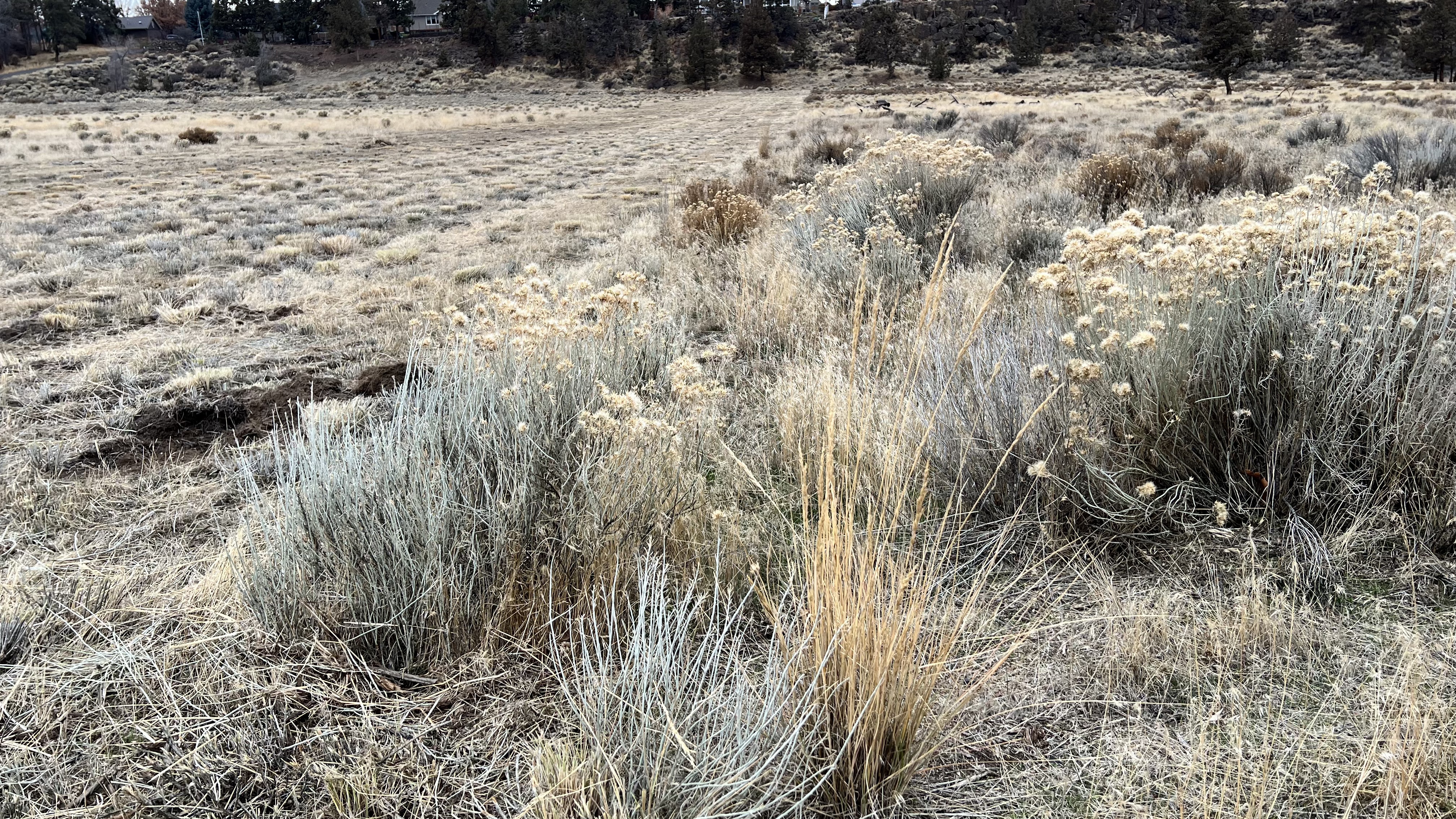
While recently walking home through the Canyon, last month in December, I noted 8 new  strips, presumably ‘fire breaks’, mown across relatively flat and uniform sections of bottomland, each maybe 50’+ wide, spanning the bottom between the paved eastern path and the the main dirt western bike path. While I understand the thinking here, removing ground level fuels, this is a single purpose treatment that works counter to the Park’s purpose as a natural area preserve. Mowing down the Rabbitbrush, a ruderal, transition species of the Sagebrush Steppe plant community, delays the development of a healthy native plant community and encourages an increased array and density of weeds and invasives. Mowing this way provides open space for weed species already in Dry Canyon, as well as those not yet here, giving them larger ‘launch points’ from which they can spread into the rest of the Canyon. Mowing weakens natives, which are naturally slower to rebound from the damage than the aggressive weed species. Continue reading

Weeds: What We Need to Do at DCVS

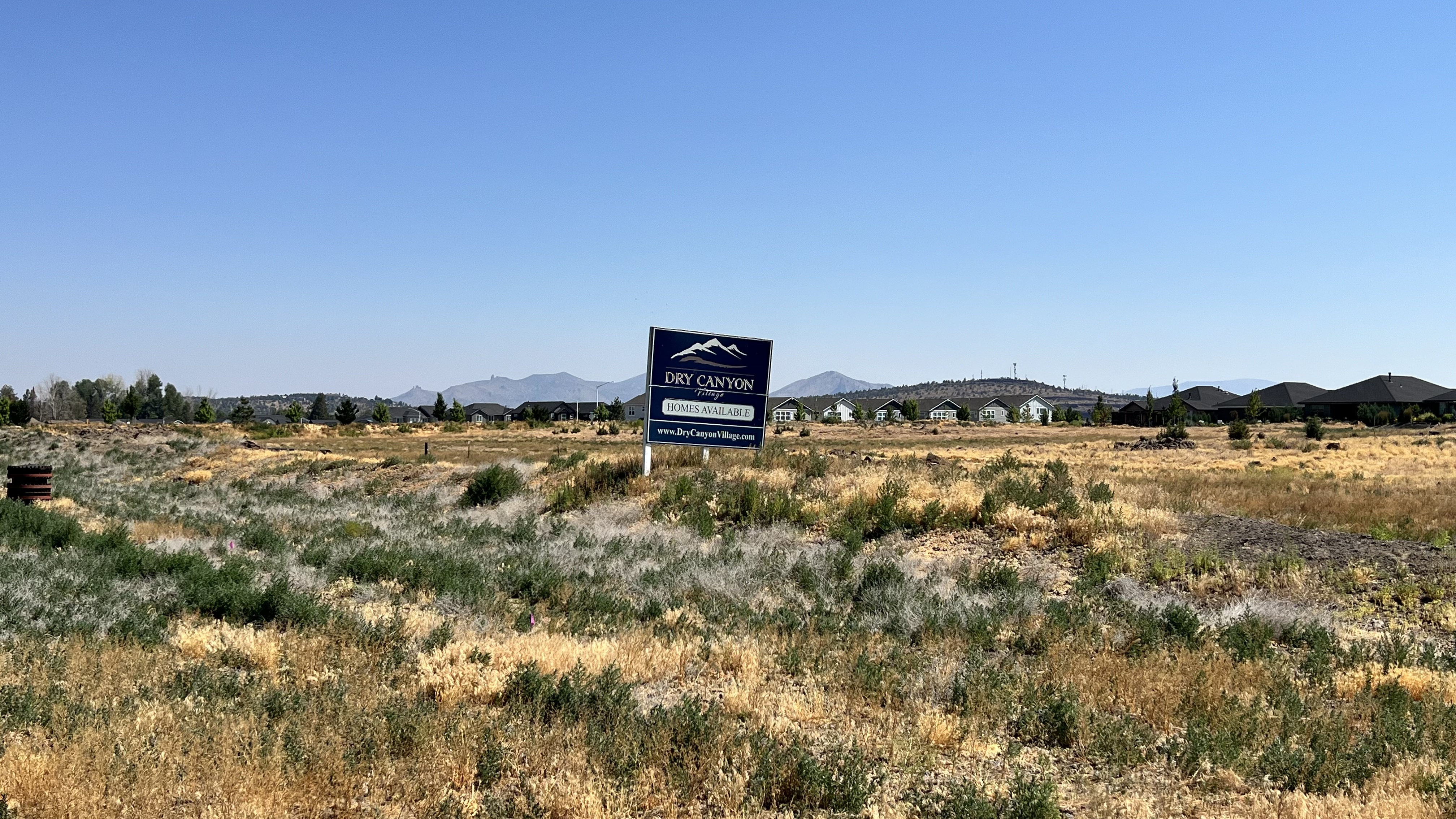
Looking NE from the gate at Northwest Way, other than a handful of juvenile Juniper there is literally nothing native of value across this roughly 9 acre spread. The other two undeveloped phases are equally bad, having a similar mix of weeds.

The question I keep hearing is, ‘What do we do?’ Many, if not most people living here now, have expressed frustration and more about the Dry Canyon Village South, DCVS’s, landscapes, specifically the berm, the mini-parks,  the Circle and the 25+ acres of undeveloped, uncared, for property we share space with. They ask me because they know I cared for Park landscapes, as a field horticulturist, for almost 30 years, Parks which often included natural areas of over 100 acres, to little neighborhood parks and intensively developed and used urban parks in the downtown core. I also haven’t been shy about my criticism of the lack of care, or of even a plan, for the neglected property we are saddled with. Anyone who has cared for a landscape can see the problem here. Leaving disturbed and neglected properties on their own is not a plan and can lead only to their further deterioration and continuing, worsening, ‘weed pressure on the adjacent developed landscapes. Continue reading

Creating a Survey of Redmond’s Dry Canyon Park Flora: getting the table set to create an effective maintenance and master plan

My wife and I are recently returned Central Oregonians, both having grown up here, me in Redmond. As a child my friends and I spent many hours playing and exploring in the central portion of Redmond’s Dry Canyon, many years before it was a Park. In those days it was all privately owned. Large sections of it had cycled through some years as pasture. Remnants of that era’s ditches are still evident in some areas. For several years plans were being prepared to turn a large portion of it into a golf course, which fortunately, was never built. The result is that as a ‘natural area’ the original plant community is severely degraded. The City’s master plan for the Park designates a large portion, the northern section, north of the dog park and disk golf area, north of Antler, as a natural area preserve.

I still feel a strong connection to the canyon and am beginning work that I hope will contribute to its health and diversity in the years ahead. I’m a retired horticulturist who spent the majority of my career caring for Park lands, previously with time spent maintaining private gardens and installing landscapes, mostly west of the Cascades. I began working for sever landscapers in Central Oregon. Continue reading

Knapweeds in Redmond’s Dry Canyon and the Pursuit of a Healthy Landscape

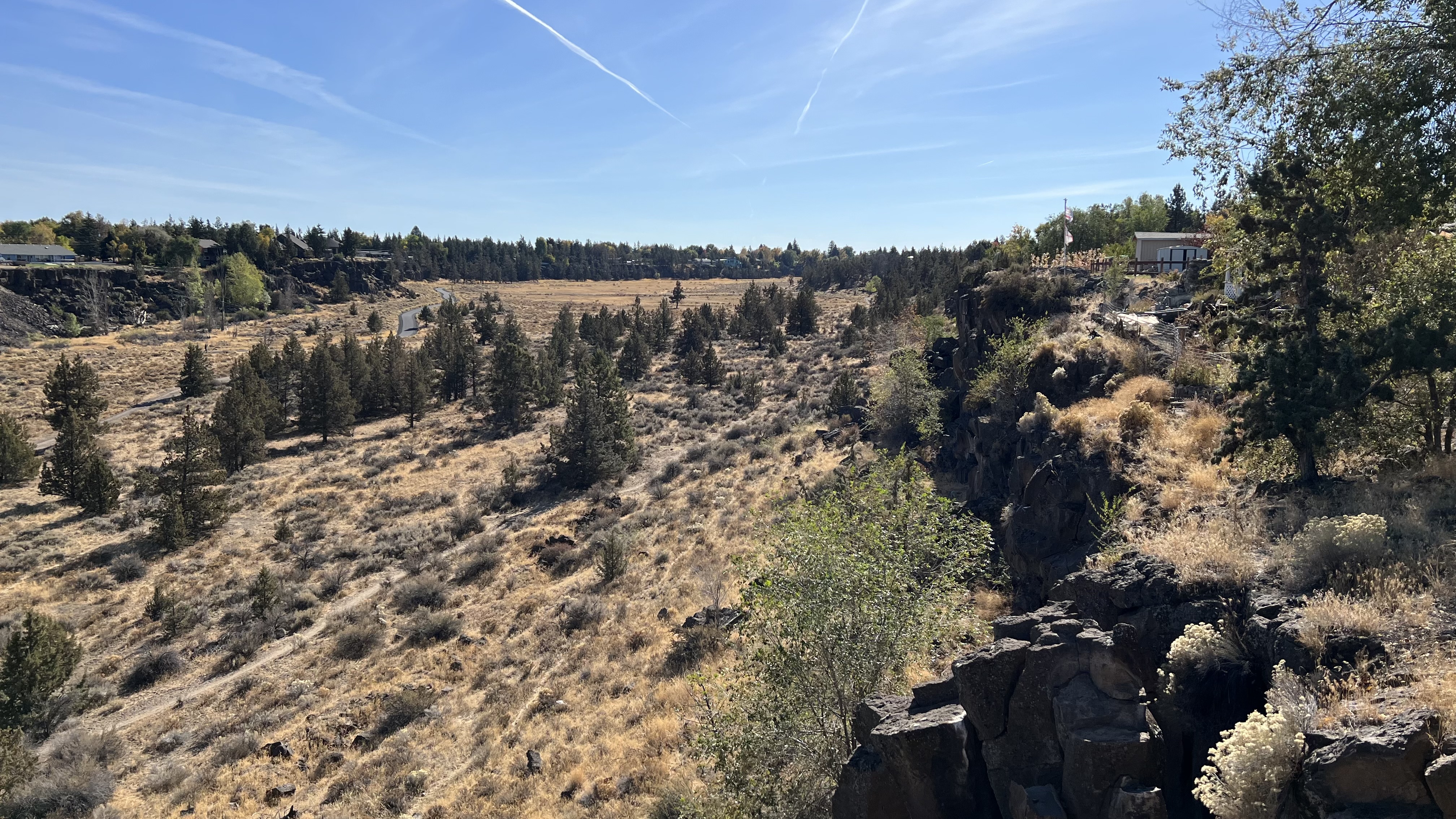
Redmond’s Dry Canyon looking south from the west rim on the Maple Street Bridge. The area in the immediate foreground burned this last summer.

If you garden, or maintain a landscape, you come to understand that not all weeds are the same. Each will have its own ‘strengths’, or perhaps you might call it ‘virulence’. Any particular weed, just like any other plant, will respond ‘positively’ to supportive growing conditions, conditions which often closely align with those which exist in its place of origin. Plant explorers and nursery growers are always looking for ‘new’ plants for landscape use. in a way, they have to walk a fine line. They must find plants, that with reasonable effort on the part of the gardener, can thrive across a range of conditions, unless they are looking for specialty plants, for narrow, niche, markets. The introduction of new plants must be somewhat measured, our enthusiasm tempered, because plants which are too adaptable, too vigorous, may possess the ability to escape our cultured gardens and find a place in the surrounding, uncultivated, landscape.

For Central Oregon, when we look beyond our regional natives, we must keep this in mind. Exotics from similar growing and climatic regions around the world offer both promise and threat. We want our plants to be successful, but not too. Sometimes through the process of trade, the movement of livestock and agricultural products, particularly aggressive species hitch a ride. A few weed seeds can be easy to miss. If they are aggressive enough and go unnoticed, a distinct possibility, it is likely that they wont be detected until a sizable local population asserts itself…and if no one is watching, that can be a fateful error. One group of plants, with many wonderful possibilities, also include species which can be exceedingly problematic here in Central Oregon, these are from regions sometimes referred to as Steppe. Continue reading

On Weeds, Disruption and the Breaking of Native Plant Communities: Toward a More Informed Working Definition of Weeds

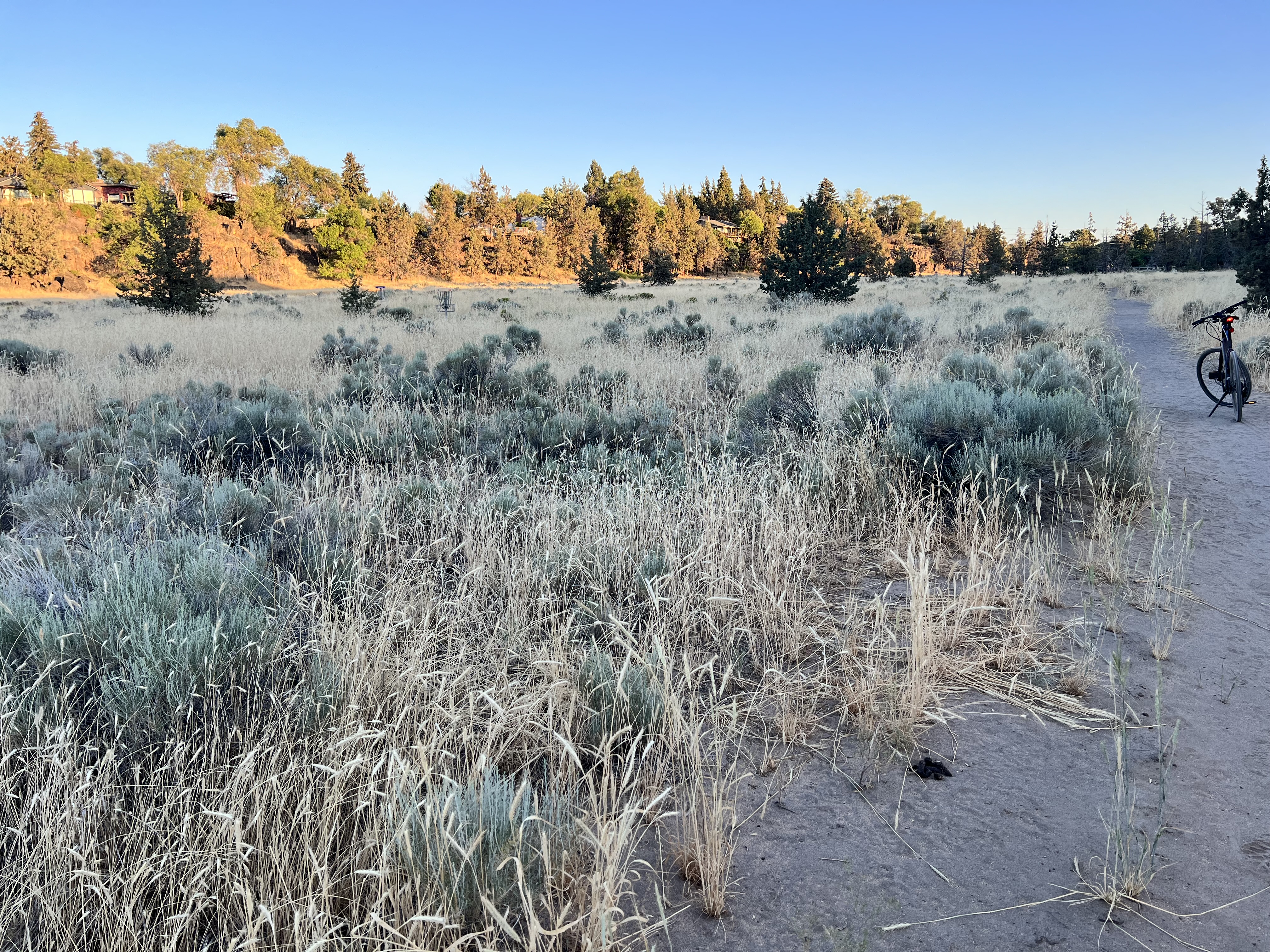
The bottom land in Redmond’s Dry Canyon was used for decades as low quality pasture, the native community pretty much obliterated. Those areas with surface rock are more likely to retain more of the original plant community, although Cheatgrass has invaded much of those areas as well. The is looking southerly over one of the larger ‘pasture’ areas near the disc golf course. There is very little Cheatgrass through this section south of West Rim Park. It includes a few native seral species which typically occupy disturbed sites as a site transitions, including Gray Rabbitbrush you see here. Found in this area too is Secale cereale, Annual Rye, a non-native, which appears to have been planted along more formal paths to limit Cheatgrass spread(?).  Junipers are moving in. Sagebrush hasn’t yet.

It is commonly said that a weed is a plant out of place…and of course ‘we’ are the one’s who decide this. Some will try to argue that there are no weeds, that all plants belong and if we only left weeds alone landscapes would reach a balance on their own. If one’s time frame is long enough this may be the case, though this will take considerably longer than one of our lifetimes, and then there is our inability to actually leave landscapes on their own, or to at least consciously moderate our disturbance of them. Weeds are plants. They are not a separate classification of plants. They are plants removed from their places of origin and released into another where they have competitive advantages. Most people still simply tend to refer to plants they don’t like or want as weeds. These positions are at odds with one another. This leads to confusion and a lack of clarity, undermining any urgency to take action.

Weeds have become ‘personal’, their status a matter of ‘opinion’….A weed is a weed only if “I” agree that it is, or perhaps some ‘expert’, such as when agricultural scientist identify them as an economic threat to farms and label them as ‘noxious’. Without agreement and urgency there is a tendency to do nothing about them. Plants in general are attributed little intrinsic value. For many people they are just there. Native plants we vaguely understand as belonging to a place, but most people would be hard pressed to identify and name many at all. Quite different species are often lumped together, their relationships unnoticed. Natives are reduced to being ‘background’, their status reduced to decoration, attractive or not, a ‘space’ filler, perhaps a hinderance to what we would chose to do with a place. Continue reading

Physics, Evolution, Natural Selection and the Generative Power of Far Out of Equilibrium Dissipative Structures (Organisms), part 2

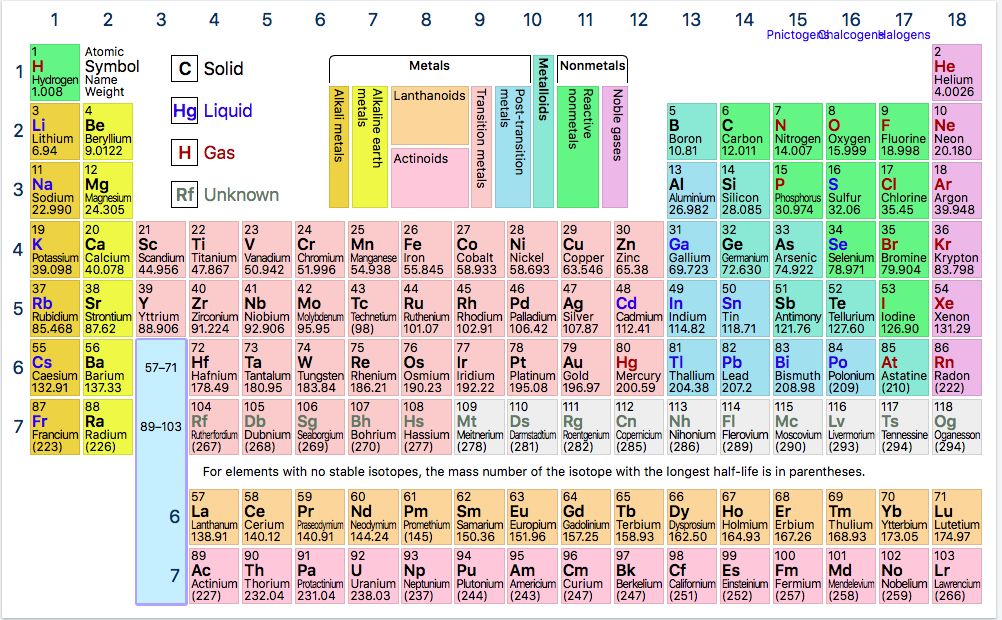
Chemists have often argued that everything is chemistry and if you don’t know about it, what can you really know of the world? A current Periodic Table, one with considerably more elements than were contained in the table from my high school chemistry days, this one including many of those transient elements created in particle accelerators. These ‘new’ elements are very unstable and breakdown rapidly. Some are thought to have existed only at the beginnings of the universe…sometimes in its first moments or during vanishingly rare exceptions. I know, this is very ‘nerdy’, but I go to the interactive table on the linked site frequently to learn about the particularities of elements of interest to me. That table responds to your questions about changing ambient conditions and their physical ‘behaviors’ and capacities for particular reactions. Check it out.

On Pattern, Chemistry and Life

Pattern builds upon pattern.  Whatever you start with effects and limits everything that follows whether we are talking about masonry bricks and stone or Eukaryotic cells and organic molecules.  A different starting point or ‘decision’ at any point in the process, effects every ‘decision’, or even possibility, there after, effects the likelihood of what is to follow, shapes the possibilities, the future, through the evolutionary process…but does not determine it.  To speculate whether other amino acid groups are theoretically possible does nothing to change the course we are on.  The capacities and characteristics of your most basic components set the stage for all that follows, the brick analogy only takes you so far.  Bricks, no matter what you do with them, are very limited in what they can create…how they will ‘behave’ when structured as a wall.  They do not, when combined into a structure, acquire properties that no single brick had before their assembly…their futures were ‘decided’ the moment they were made into bricks.  They remain bricks. Continue reading

Failing Landscapes, Failing Practices: A Look at Tri-Met’s Landscapes and How We Could Do Them Better!

img_6991

I include this photo, taken beneath the west approaches to the Marquam Bridge, an ODoT property not Tri-Met, as a reference for what is commonly found in transportation rights-of-way. This is not a problem solely with Tri-Met’s landscapes. It crosses the southern end of South Waterfront Park which was one of my responsibilities for 15 years and so I’m familiar with its level of care or lack thereof. The nearest portion, to just beyond the nearest piers, was entirely neglected for the entire period except for where I cut it down to reduce the amount of weed seed I had to deal with in the Park. There is literally nothing that was intentionally planted in the entire space. It is a landscape composed entirely of weeds and it is possible because landscapes for ODoT are of an extremely low priority. It is the neighboring properties that bear the brunt of their decision. It will be interesting to see if they come under increasing pressure over the years as the expensive and undeveloped properties to their south are developed. Currently the Knight Cancer Institute is developing a hundred yards or more away. The Marriot Residence Inn, immediately to its north, has had no effect on its level of care.

About a year ago I posted a series of three articles on Tri-Met’s landscapes along the new Orange Line.  They were a critical assessment of their design with many photos and explanations for my criticisms.  I had a brief correspondence with the project manager after the first two before he stopped responding.  I had asked about the maintenance schedule that they had with the contractor who would be doing the work.  I did not receive it.  Part of the reason was mine, as new ideas came up for me, my interest wavered and I moved on.  Still, I’ve never received anything.  Now, a year later, I decided to reassess the first portion of the landscape that  I wrote about, as it is a section I regularly walk and ride by bike to downtown or to just get out.  I would encourage readers to see my previously posted reviews. Continue reading

‘Reed Canyon’ and Crystal Springs Creek: ‘Reclaiming’ a Natural Area

IMG_4523

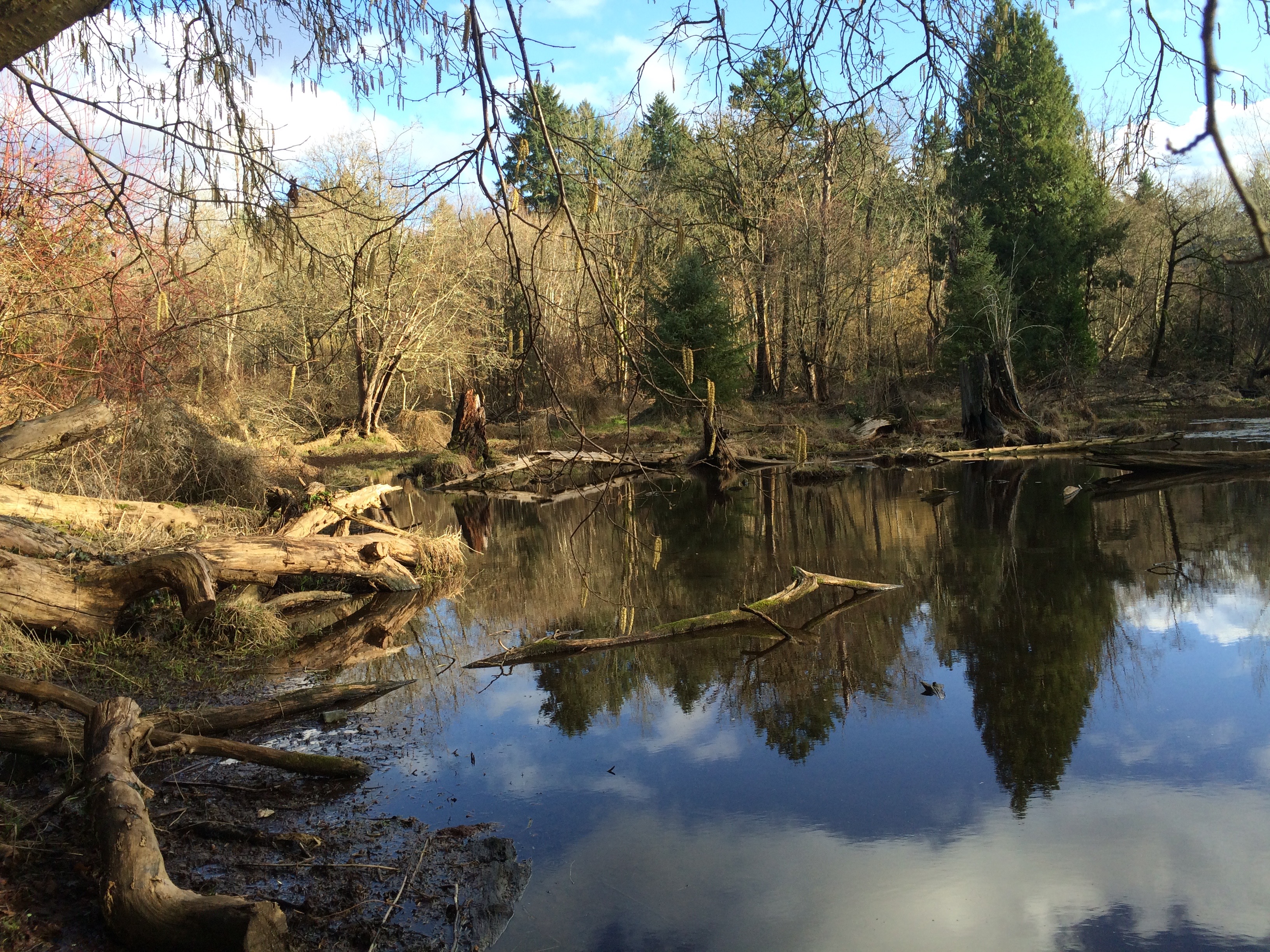
The east end of Reed Lake looking south.

The landscape is the land we live in.  It is the place and the territory that surrounds us: built, disturbed, neglected or purposeful.  A garden is a piece of that landscape that we have defined as special, that we have applied our own purpose to, a theme, above and beyond the natural forces at work across its face to grow plants of our choice.  Many urban places are feral, once domesticated, now gone to ‘weeds’.  A few pockets may be as nature made them, eroding at their edges, surrendering little bits of themselves to exotics tramped in on our boots, the hooves of our horses, the hair of our dogs, floated into place by streams or rivers or flown in by birds and on the wind.  Most landscapes exist somewhere on that continuum between undisturbed nature and the wastelands we have left in our wake of disturbance, vacant land waiting in that limbo, land on its way to purpose, value and development.  As Portland became urbanized over the last 150+ years the land has been literally transformed, become an expression of our culture, via a matrix of values and forces, that act as a particular and devastating template, a process that is still occurring and will continue to do so as long as value is measured in dollars, and demand, fashion and greed, keep cycling and reinventing this place we have made our home.  These in-between places are what French landscape architect, Gilles Clement, calls the Third Landscape.  Few areas are they that have escaped this process.  The Reed Canyon, that contains most of the headwaters of Crystal Springs Creek (another spring lies within the City Parks owned Crystal Springs Rhododendron Garden), the last of the free flowing such creeks on the east-side, may have been spared the heavy handed re-contouring of its terrain, but it has suffered much over the years anyway. Continue reading

Revisiting Holgate Overpass: A Mistake Repeated

Holgate Overpass - the northeast approach. This was taken Aug. 28 of the landscape cut down in April showing regrowth in a hot drought year.

Holgate Overpass – the northeast approach. This was taken Aug. 28 of the landscape cut down in April showing regrowth in a hot drought year.

Holgate Overpass Update:

It finally rained this last weekend!  Somewhere around .3″.  Woohoo!  It will be the most rain that we’ve received since March.  It’s been dry!  In April the City cut down the ‘weedscape’ on the northeast approach of the Holgate Overpass.  It’s rained very little since and we’ve had record warm temperatures all summer.  No one has come back to spray, plant or do anything.  No one’s even picked up the trash.  If you compare the four ‘weedscapes’ on the two approaches they are very similar.  The NE, by volume has had the most regrowth.  This is for two different reasons: first, this site was cut earlier in the season when there was more moisture still in the soil to enable regrowth, and secondly, because the site is dominated by Blackberry and Tree of Heaven, both perennials, well established and of larger stature than the plants dominating the other approach landscapes. Continue reading